The Secret to Better Conversations Isn't Talking | A Bit of Optimism: Feelings at Work | PART 2
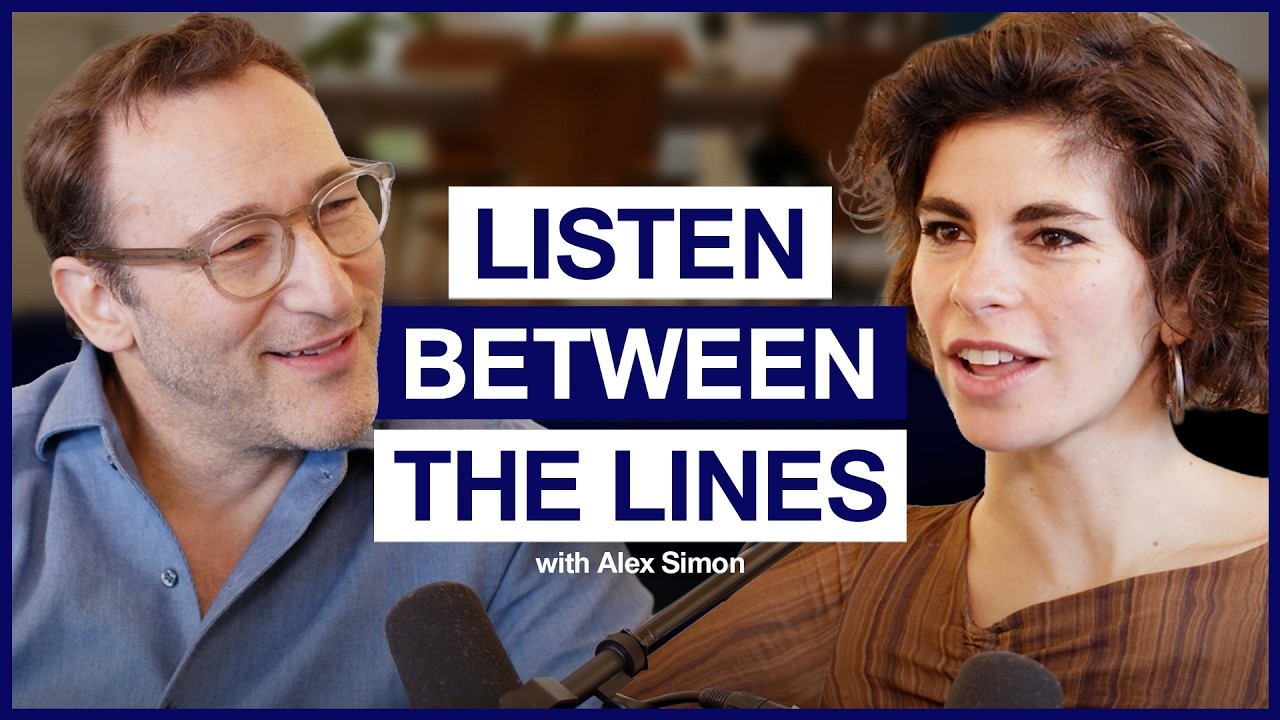
Alex Simon, founder of Life Shop, explains why most people are terrible listeners and what actually works: making someone feel heard through body language, silence, and genuine curiosity. The 4-second pause and repeatedly asking "What else?" train listening like a muscle, creating psychological safety and better collaboration at work.
Chapters
The thing that I try to remind myself of, of my version of listening with curiosity, is am I listening to understand? Same, same, same thing of like, am I listening so that I can find my points to prove why they're wrong and why I'm right, or am I listening because I genuinely want to understand where they're coming from?
Let's say that slower, and let's say that—
let's—
because that is a really important point, which is that am I listening to understand so that I can make my points and be right and make them wrong, or prove that they're wrong, or I'm listening to understand— what was the second part?
Or am I listening to understand, to genuinely hear where they're coming from?
To genuinely hear where they're coming from. And I think that's a very important distinction, which is not listening to understand the argument.
Yeah.
You're listening to understand the person. Have you ever felt frustrated, angry, dismissed, or misunderstood by someone you're talking to? You're trying to tell them how you feel, or you're trying to give them some feedback or resolve some tension or conflict, and they keep interrupting you or acting like they understand when they don't. Worse, when you point out that they aren't listening to you, they parrot what you said back to you as proof that they are. What you're experiencing is talking to someone who doesn't know how to listen. Here's the bad news. That's most of us. It's true. Most of us are bad listeners. But here's the irony. For a conversation to go better, it actually only requires a minimum of one person in that conversation to know how to listen. That magical art of making the other person feel heard. Instead of being angry that they don't know how to listen, if we were better listeners ourselves, it would help the conversation go better. And if both had the skill, ah, well, that's just joy of joys. But most of us don't bother to spend the time to learn or practice listening because most of us think we're already good at it. Instead of taking a summer hiatus, we're presenting a special 5-episode series of A Bed of Optimism to go deep on human skills, the things that help us connect, collaborate, and succeed in any human relationship. That's why I invited Alex Simon to join me, founder of Life Shop, where she teaches emotional intelligence. And over these 5 episodes, we will tackle some of the messier interactions, like having hard conversations, People pleasing, giving feedback and taking accountability, and this one, listening. Here's what you can expect from this episode. First, we'll discuss what people ask for and what they want are very often not the same thing. At work, for example, people may say that they want a raise or to reduce their workload or want to change their team, but often when they get those things, it doesn't actually fix how they feel about their jobs. That's because every so often we think our dissatisfaction at work is because of those things, when it's actually something deeper. If you know how to listen for that deeper thing, it helps us resolve tensions and find more joy at work, both for others and for ourselves. Next, Alex will teach her 4-second rule, a very simple technique to help us become better listeners immediately. It's so simple you can actually use it as soon as you're done listening to this podcast. And finally, we discuss how to listen and how listening can often go haywire when there are power dynamics involved. So settle in. This episode is one of the steps you can take to be a better listener, and I promise everyone in your life will love you for it. And if you enjoy this episode, please remember to subscribe. This is A Bit of Optimism. When you say to somebody, are you a good listener? Most people are like, I'm a good listener.
Really? I think most people know.
You think most people know? I think men think they're good listeners because, because they confuse listening and hearing. Yeah, like, you're not listening to me, and they say back everything they heard as proof of listening, even though I was watching TV while you were telling me.
I think most people know on a deep level that they're not that good listeners, but I think that most people are trying their best. I just think we're not taught how to listen.
So let's start at a high level and work our way down.
Yeah.
Okay, is that— is that— how's that work? Okay, so let's define listening.
Do you know about me that I really hate definitions?
I love definitions.
I know that you do.
I love a definition. You know that I set out once— this is a different podcast— I set out to define art. It was like my— it is my— one of my core goals in college, as a just a personal thing, was to define art. I'll tell you my definition later. But yet, no, I love definitions. You hate them because without definitions we don't know what things are.
Okay, I guess I guess what I believe in is under— like going back to your own experience of what things are, of like I don't really need to define listening because you know what it feels like to be listened to and you know what it feels like to listen and you know when you're not listening.
But if we're going to teach somebody something, they have to know what they're going to be taught or what they're reaching towards. I can't be like, "You'll know when you see it." I think you will absolutely know when you see it. I think that's true, but I'd still like to define it. Okay, you can go for it. Okay, so this will be the Simon part of the podcast, the definition corner. So let's define what it's not.
Yes, let's do that. That sounds great. We can start by not listening.
Okay, so listening is not waiting for your turn to speak.
True.
A lot of people sit there and just nod their heads. Right? No, a lot of people sit there and nod their heads, but they've got their thought, they're ready to say it, they're just waiting for the person to take a breath or be done with what they're saying, completely disengaged. So that I can say my thing. That's not listening.
I feel like— oh, I just did it. I feel like it's mo— yeah, like, just you're waiting to reply.
Waiting to reply. That's not listening. Hearing the words that are spoken, that's not listening. That's hearing, but that's not listening. I've always tried to pursue that listening is the skill— dare I say art— but skill of allowing the other person to feel heard. Listening for meaning. Yeah, rather than— because, you know, listening involves subtext. Listening to people is to look beyond the words, you know. It's paying attention to tone of voice and volume, you know. The joke I always make that if— and we say this at work— which is if the response is above a 5, it's about something else, you know. And you have to be able to listen for that. Yeah, like if somebody's going nuts about something like You brought me the wrong drink. It's not about the drink. There's something pent up. And good listeners are clued into things like that.
Yeah. What else do you think people do? I come to you with something, and instead of listening, what are the other things that people do?
I think, okay, other things that are not listening. You tell me something, and I choose— and I don't explore. I give an answer immediately. So I use whatever you're telling me is just a prompt for me, right? That's not listening.
Yeah. I think relatedly, problem solving, like the knee-jerk, like, oh, why don't you just do this?
The knee-jerk to fix.
Yeah, the fixing, advice giving. I think the problem with knee-jerk problem solving is that often you're solving the wrong problem, right? Like someone comes to you, let's say on your team, and they're like, I'm feeling really overwhelmed by this. I'm feeling overwhelmed by this and this. And you're like, hey, well, like, let's just fix this. Like, let's, we can, you can do it.
Let's change your workload. Yeah, yeah.
It's like, whoa. We don't actually know what's going on. Like, you end up solving the wrong problem if you're not actually understanding the problem. And so I think a true listener in that situation would be like, okay, tell me more. What's going on? What's the context here?
We had this happen on our own team a bunch of years ago where we failed to listen and it caught— we lost an employee as a result. She told us that she was overwhelmed and we immediately went and looked at her workload. Yeah, we were like, what? Like, we adjusted her workload and we looked at— and we— every time she said, I'm feeling overwhelmed, I'm feeling overwhelmed, we—
we—
or I am overwhelmed. And by the way, she thought I knew that it was work.
Yeah, but you can— with true listening, you can be like, okay, what's, what's going on on the subterranean level? Yeah, like, what are the things actually motivating you? What is your felt experience? Creating that 360 view as opposed to just being like the surface level of like, oh, what do you literally think that you want to happen in this situation?
And here's one of the great values of listening, which is most people actually don't want the thing they ask for. Most people want to feel heard. Maybe the first part is a little bit of a generalization, but the point is, is that the number of times in our lives where someone comes to us with a problem or concern or a feeling, they state it, whether they state it well or badly, they state it, and too many of us go into fix-it mode, especially at work. Especially at work. I think, you know, I think we behave slightly differently in our personal lives.
I think we do it a lot in our personal lives. I agree with what you said about oftentimes the thing that we're actually after is to feel understood and heard. And I would maybe disaggregate a little bit further. I think—
I love the word disaggregate. I just want you to know it's one of my favorite words. Yeah, it's very underused. Yeah, and it is a particularly good word, disaggregate, because we know what it means to aggregate, just to bring things together. When you hear disaggregate, it makes you sound much smarter, even though it's just adding "dis-" to a word we all know.
Well, that actually goes to one of the other things I think we do instead of listening, which is trying to sound smart. I think especially at work, we're really trying to prove ourselves and sound smart. We're like trying to like be the person with the idea. And trying to, like, be the one who comes up with the solution or trying to be right. And I think that that often really gets in our way.
But if you want to sound smart, you should use the word disaggregate. I'll tell you another one.
And now you know.
And now you know. And that's one to grow on. And I'll tell you one more word that, um, no, no, I'm just distracted for a moment. This is interesting. One of my absolute favorite words, which nobody knows the definition to, and if you use it, everybody thinks you're a genius, but it's only but it's only changing the part of speech, right? It's the word "hypochondriacal." Oh, isn't that magical? It sounds so beautiful. It's fun to say, too. "Hypochondriacal." All it is is the adjective form of "hypochondriac." "He's a hypochondriac." "That's my hypochondriacal friend Dave." "Hypochondriacal." Such a lovely word. Anyway, let's go back. You were disaggregating. I interrupted your disaggregation.
Um, what was I disaggregating before I got not listened to?
I was just doing a demonstration. It was all a demonstration.
Thank you. Your point was sometimes someone comes and they want— they think that they want a specific thing. They want like some problem to be solved in like a pinpoint solution way. And then you said no, actually what they actually want is to be heard and understood. I think if we were to disaggregate it, it would be sometimes we have— often we have a need to be heard and understood in just in general, which is like I need to be seen, I need to be cared for. There are a bunch of other things there. And then often we do still have a problem at hand. Like I can feel really heard and really cared for and then like I still have a problem.
Yeah, still need to fix that.
And I think you're right that often when we feel that something's wrong, we come with a strategic solution. We're like, I want a raise, or I want us to do this thing, and we come with like what we think the answer is.
We come with this— we come to the boss with the problem and the solution. Yeah, because you told me to be solution-oriented, so here I am.
Sometimes it's best practice, I think, right, come with a solution, to be proactively thinking about things. There's this thing from Nonviolent Communication that I really love, which is they—
from Nonviolent Communication—
Nonviolent Communication, yeah, which is like a It's like a communication skills— it's like a whole world of communication skills, Nonviolent Communication. One of my favorite little frameworks that is in Nonviolent Communication is the difference between needs and strategy. And so like, needs are our core human needs: the need to be respected, the need to be in connection with other people, the need to have autonomy. Like, there are all these kind of universal needs, and then how we get those needs met is the strategy. So like the way that you get your need for autonomy met is maybe different from the way that I get my need for autonomy met. And so often when we're kind of stuck, we're coming with strategies as opposed to being like, okay, what is my need in this situation? It's like, for example, I might come and say, give me a raise, but actually my need is to feel valued and respected and that I'm a valuable member of the team.
And we think that the money will make that feeling of feeling undervalued go away. Yeah. Which it may for a few weeks.
Yeah, but then everything's going back to normal and you're like still like, why does no one respond to my Slack or listen to my ideas? And so I think when we think about listening, exactly what you said earlier of how do we actually listen? What's the need underneath the strategy? Like, they're coming to me with this like surface level thing. What's going on?
I like your use of the word need. Like, what's needed here? And it turns you into an investigator.
Yeah.
Did I ever tell you my, um, did I ever tell you my whole soapbox diatribe about being present? Did I ever tell you that?
No, I can't hear it.
Because it speaks to this. True story. I was at a I was in this meeting once. The person sitting next to me in the meeting was apparently some famous yoga instructor, I don't know. And throughout a lot of the meeting, she was on her phone under the table. And I'm sitting next to her, so I can see what she's doing. She's not like checking in on her grandmother who's in hospital or whatever. She's on social media. I, I'm sitting right next to her, right? She's looking down a lot of the meeting. And at some point in the meeting, we started talking about being present, like as a concept. And her head pops up and she says, "That's why I love yoga, because it helps me be present." And I'm thinking, "You're an idiot," right? And then it got me thinking, all of these sort of practices that we do, we forget the social benefit of them. And meditation is a big one, right? So if you ask people, like, all the science about the benefits of meditation, it helps you do this and helps you regulate all this, but we forget that there's a social component to meditation because We are both individuals and members of groups at all members— at every member— at every part of the day. So if anybody who practices meditation has ever heard anything about it, you know that what you're supposed to do is clear your mind, they say. Well, it's impossible to clear your mind, so what you do is actually you focus on one thing. It could be your mantra, it could be your breath, it could be a sound, it could be a dot on the wall, it could be a sound. It doesn't matter what it is. Focus on one thing, and if something interrupts that concentration, You have a thought, "Oh, I've got to go to the supermarket." You label it a thought, you're like, "Ooh, that's my thought, I will deal with it later," and you push it out of your mind, right? And at the end of this, you may, if you're lucky, get the feeling of being present, right? Which is, "Ah, I'm so present." My attitude is you are not present— the pro-social component of it is, the social component of it is— you are not present until someone else says you are. And the reason we practice meditation is so that we can be there for someone else. So for example, someone comes to you and says, "Something great happened in my life," or "I'm really struggling in my life," or "This thing went horribly wrong at work." And now that practice of meditation that you've been doing, you can apply here, which is you're focused on one thing and one thing only— what the person is telling you. And when you have your own thought of something you want to contribute, you label it a thought, you put it out of your mind, and you're like, "I'll deal with it later." And you know that you have been present, and all of that practice has been worth it. At the end of the conversation, somebody says to you, "Thank you for listening. Boy, I really— wow, I really appreciate this." And that deeply meditative practice makes us better listeners because we understand that it's not about the thoughts in our brain, it's about the one thing we're supposed to be focusing on. And there could be a big boom over there and you just don't— you just don't break focus. And what that does for the person who's feeling it, it is the most wonderful intense feeling to know that someone is completely locked in and dialed in to me. It's such a gift to give to someone, and I think that very often we forget. And when we practice these techniques, both meditation or even some of the stuff that we're going to talk about, we think it's for us, but it really is also— yes, there are benefits to you, 100%. It's a powerful feeling to be the listener, but it is a gift to make someone feel understood, seen, heard, valued. Um, and in a work context, The benefits that the company reaps when as many people as possible get to feel that way is overwhelming, and the data proves it. I think we've made a case for listening and the value of it at work. Let's actually like pivot here slightly and get into actually how to do it.
I can share some of my favorite listening techniques.
So I think the— let's start with the very first one, which is one of the easiest things to do, which is body language. Because if I sit and talk to you like this Even though I'm looking right at you, you don't feel like I'm paying attention.
Squaring your body to the person you're listening to.
So square your body to the person you're listening to.
Another big one is where are your hands? Like, people feel safer when they can see your hands. So if you're fidgeting or if your hands are away, like, it activates like a little bit of a like, oh, be aware of threat, be aware of threat. And so like, what are you doing with your hands?
Interesting. I didn't know that one.
I—
and holding your phone. Makes people feel not heard.
Yes, holding— I mean, holding your phone, having your phone up, even if your phone is down, you're still losing.
Because what's happened— because I know the reason is because we have the— because we still have the dopamine addiction. So when the phone is present, even if it's down, you're like— you keep sort of every now and then your eyes go to it because like, I wonder if something came in, I wonder if something came in, I wonder if something came in. And so out of sight, out of mind. Put it in a drawer, put it in a bag, turn all noises off, you're just instinctively, you're going to be more present for that person.
That's a big one. I mean, for me, eye contact is the biggest one. And when people are not making eye contact, I have a fear of being boring or like not being worthy of speaking. I have a fear of being not being worthy of being heard. And so for me, when someone like moves their eyes, it activates. It's like, oh, well, confirmed.
But what if some people are just really uncomfortable with eye contact? Like when I think I like look around the room.
Yeah.
So the person is— I mean, like, do I have to force myself to stay? But that gets artificial and weird.
I don't think you have to.
I'm just staring at your eyes.
It's hard for me because I listen with presence of— and I make eye contact with someone when I listen. Like, if I'm trying to communicate what you're saying is boring and I don't want to hear it, I would look away.
But how much— if there's a power dynamic, right, and the person with more power, even if it's and it could, you know, much higher in the hierarchy, they're fixated on your eyes and doing eye contact. That can be very intimidating. Yeah, for somebody. And I could make the argument that for that person who has the position in the hierarchy, that maybe learning to adjust eye contact to make the other person feel relaxed is actually beneficial to the listening exercise, even though we've been told make eye contact. Yes-ish.
Yeah, I also think it depends on the spirit with which you're making eye contact. Like, what kind of eye contact are you making? Are you making like barrels down, like this eye contact?
Don't do that. Don't do that. It's not good. It doesn't feel good. I don't like that.
Or, okay, so there's this technique of listening that I studied last year that I really love. It's called co-counseling.
Actually, co-counseling.
You want to hear about it? Yeah, it's called co-counseling, which is basically this idea of instead of paying a therapist to listen to you, which is like a one-way exchange of money to attention. What would happen if we trained everyone in a similar style of listening and holding space for one another, and then we could offer it to each other? So it's like peer-based, but it's not like therapy in a traditional sense. It's mostly just listening. Yeah. And I think it's a really great idea. And so I studied it, and almost all of their whole philosophy of listening comes down to that one very simple thing, which is to look at someone and listen with warm eyes that believe in them. And I was like—
That's a hard instruction.
Oh, really? I was like, that's it? Listening with warm eyes that believe in them? It's like really not that hard. And so when I'm making eye contact, I'm trying to offer someone my attention and show that I'm offering my attention. And the thing that I literally ask myself in my mind is, am I listening with warm eyes that believe in them?
So for you, it's easy because you're very emotionally evolved. I think for a lot of people that they will try in earnest to follow the— it's almost like a little, you know, uh, Asperger-y, which is somebody said, you know, somebody told somebody on the spectrum, you know, find common interests and, and that's how you make friends. And like, you know, do you like battleships? I like battleships. Do you like turtles? I like turtles. It's like, you know, it's like the— they're following the instruction Yeah, but it doesn't work.
Yeah.
And so, you know, I think the reason we look with barrels is because you like make eye contact and it's like, right? And I, and I think when you say listen with warmth and what?
Warm eyes that believe in the person.
Like when, if you were to tell even me, like if you were to tell me listen with warm eyes and be believable, I literally, what's going through my head is listen with warm eyes, Simon, listen with them, right? And like, I'm just like, how the hell do I do that? Do I tilt my head sideways?
Well, try. Try with me. Look at me with like a barrel-down eye contact. No. Yeah. And now try with— like, try— close your eyes for a second, maybe, and try to ask yourself, okay, no, no, how do I listen with warm eyes that believe in the person in front of me?
I would like to adapt the instruction so that I may follow it.
Okay.
Because I— truth, truth, truth, like, that instruction befuddles me. Listen with warm eyes. I, uh, I can't follow that.
Okay.
I literally don't know what to do. What I think produces the same result is if you told me, listen with curiosity, then I'm going to show up and be like, all right, be— just be curious in what they want to say. Don't judge, don't worry, don't fight, don't fix, just listen with absolute curiosity. Be a social scientist, be an archaeologist. I think what you would get from my eyes is that warmth. Yeah, because I'm not making eye contact, but I'm curious. So if you tell me listen with curiosity, that I think that would work for me.
Yeah, interesting. Yes, for some people it's easier to focus on the behavior of like, oh, am I doing this thing? And then the curiosity naturally arises. Maybe for you it's the other way around.
I need to know the reason I'm listening. Yeah, and what you want me to, and then my eyes will follow.
And even that is so powerful because it's so different from what we normally do. Like normally we're not listening, we're trying to get our own thing that we want to say in. We want to interrupt. We want to show the person why we're wrong. We want to defend our intentions. There's so many things that we do instead of listening with curiosity. And so if that is the core, and that's what allows you to engage with presence, and like, great, all of those normal things that you would normally get in the way of your ability to listen with curiosity, those are not all of a sudden front and center in your experience. Like, for me, when, when I'm really struggling to listen to someone and they're saying something that I don't want to hear or that hurts me, like, I find it really hard when someone is sharing something that makes me feel like they think my intentions weren't good. That makes me feel defensive because I know in my heart, like, I believe that my intentions are generally quite good. And so if they're saying something and it's like, well, no, you don't, like, you don't get it. I'm a well-intentioned good person. And so that makes me feel defensive because I want to show why my intentions are good. And that stops me from listening. So the thing that I try to remind myself of, of my version of listening with curiosity, is am I listening to understand? Same, same, same, same thing of like, am I listening so that I can find my points to prove why they're wrong and why I'm right? Or am I listening because I genuinely want to understand where they're coming from?
Let's say that slower, and let's say that— let's— because that is a really important point, which is that am I listening to understand so that I can make my points and be right and make them wrong, or prove that they're wrong? Or I'm listening to understand— what was the second part?
Or am I listening to understand, to genuinely hear where they're coming from?
To genuinely hear where they're coming from. And I think that's a very important distinction, which is not listening to understand the argument. Yeah, you're listening to understand the person. What I find so interesting is we've barely scraped that. We're talking about, you know, squaring your body with somebody, which makes them feel, uh, heard. That's stage 1. We talk about putting away our phones. We talk about— we haven't even talked about the ears yet. We're barely talking about the ears. And yet all of this prep for listening is eyes and, you know, shoulders and devices. And I think that these things, if even if we just start there, already someone will feel way more appreciated and heard before we've even engaged the ears. Yeah, I find this— that's how difficult listening is. It's a whole body exercise.
It is a whole body experience, and it is like difficult, and then in a different sense it's also easy because just not doing the things that are normally tripping you up, you know. It's like, it is really hard, it's so hard, whatever. It's like, just put your phone away, look at the person. Like, it's not that complicated. And, and there are certain things that you can do to improve. And I think when I think about—
people don't prep to listen. When somebody says, hey, do you have a minute? I got something on my mind. Can I— do you have a minute? And usually go, yeah, what's on your mind? Like, we don't think we have to prep for that, that we would turn towards them and put our phone away and then, you know, adjust mindset for curiosity or to understand. And then we say, yeah, what's on your mind? Like, we don't prep for that response. We just go, Yeah, what do you got? Obviously with practice it becomes innate and second nature for people, but, uh, I think we're more casual about it. And let's— there's a caveat to this, which is not all listening needs to be this intense, you know, listen. Yet sometimes stuff is casual and quick and off the cuff. We're talking about when it matters, when it— when it— when its stakes are higher, when it matters, when there is emotion involved, when there's misunderstanding involved, when there's conflict involved, when there's human need involved, like feeling seen or heard, or when somebody comes in too hot, you know, understand where it's coming from as opposed to taking the bait and just responding to the heat. Um, that's when these techniques are most valuable. But there is such thing as just casual easy listening.
Of course, yes, casual.
We're not, we're not obsessive here.
Yeah, and I also think you're right that a lot of it is like, oh, hard conversations, emotions are running high, and then a lot of listening is also, okay, we're in this project, Project of collaboration, like, what are your needs? You know, like, I think with people, like, let's take sales for example. Sales should be 90% listening. Someone will tell you what their needs are, and then you can figure out, oh, I'm gonna now offer it to you in terms of what your needs are. Or you just, like, working with anyone, figure out what is your context, what are, like, what are you looking for in this situation, and then I can frame my thing. But only if I'm listening, only if I'm actually getting the information.
There's a famous sales coach named Jack Daly who told me that the average bad sales call that the salesperson will ask 7 questions, and the average good sales call, the salesperson will ask 32 questions on average. Yeah, an average of 7 questions versus an average of 32 questions. To your point, which is it's not just like going through a checklist of questions, but they're asking questions because they asked one question and it, and it needed a follow-up for understanding, and it needed a follow-up for understanding, and it needed a follow-up for understanding. Then they feel fully abreast and the other person feels fully heard. And then they can be like, actually, we have that. Totally. We can help you with that.
And it's really not that hard. Yeah. But and it's like—
versus sell, sell, sell. And this is what I think people— when we say sales, we should stop calling it sales and we should start calling it listening. Listening.
Right.
Because if you're in sales, you should know how to sell. And the art of selling is your mouth, right? That guy could sell ice to an Eskimo. You know, that's his mouth. But really, the best salespeople are much quieter, and they use their ears a lot more.
And there are so many simple things that you can do. Like, okay, one of my favorite tricks is the 4-second rule, which is basically the average amount of silence that it takes to make someone uncomfortable is 4 seconds.
Let's try it.
So, okay, so the way that I think about it is if you're— if you know that, now you know. If you're willing to stomach the 4 seconds, which by the way are uncomfortable, then they'll take the conversation in some crazy direction.
Immediately what goes through my head is I'll do a speaking engagement and there'll be a Q&A at the end. And the organization that brings me in, they go, "Hey, so we scripted a couple of questions to get it going." And I always say, "Don't do that." And they go, "No, no, you don't understand our audience. They're not big question askers. You know, they're engineers or whatever." I'm like, "No, no." I'm like, "Don't plant any questions, please." They're like, "No, no, but you don't understand our audience. We've been doing this for years and nobody asks questions." I'm like, "Please don't do anything," right? And then at the end, I'll be like, "Are there any questions?" And I know what a lot of speakers do. They go, "Questions? Come on, guys, give me a question. Anyone? Any questions? I'm here for you. Ask me a question." And they don't allow that discomfort. And I'll stand up and go, "Any questions?", and it'll be quiet, and then I'll say, "I just want the audience to know that I would just want you all to know that I am much more comfortable, uh, sitting in uncomfortable silence than you are." And invariably somebody will raise their hand to break the discomfort of the silence and ask me a question. 100% success. It's the exact same thing. It's the exact same thing. Somebody can't stand it. Yeah. And so they'll break it. And the question is, as the listener, do we have the discipline to sit in that awful discomfort until somebody breaks it and just starts talking.
It's really amazing. And I think it works really well with people. So good. It's so good. It works really— I think it works really well in two situations. First of all, when you're kind of like in a rut and someone like, let's say someone's talking the whole time and not asking you any questions and you're asking them questions, you're asking them questions. And then if at some point if you're like, okay, I'm just going to do it. And you sit there and you go, one, two, three. And by the time it's four—
In your head. In your head.
Oh yeah, yeah, yeah. In your head, of course. Then by the time it's four, they're like, oh, what about you? You know, and they're like, I haven't asked you a question. You're like, what about me? What? You've been talking for 30 minutes. And so that's one way.
It's like, this is good on dating. It's really—
yeah, it's really, really good on dates. That's one thing. And then I think another thing is if you can feel that the person has more to say that they haven't yet revealed to you. And so like, to me, true listening, it's like panning for gold. Of like, there is gold— is like the thing that you're supposed to be understanding about the person's experience. And so when you're listening, you're kind of just panning it. So listening with patience and being able to wait those 4 seconds are also a way of signaling like, hey, I care, tell me what, what else is going on, as opposed to interrupting, overriding, defending yourself, like doing all those things that are not listening. One of my favorite other ways to kind of peel back the layers of the onion of what someone's situation is, it's a really beautiful question that comes from a Buddhist monastery in France where I spent several months, and it's the question, is there more? Of someone says something to you and then you say, okay, tell me more. What else? Is there more? And this is an amazing trick. It's like one of my favorite things to do, and I'll often do it many rounds. Like, someone will share something with me, and again, normally, like, if let's say it's a hard conversation, you say something to me, my instinct is to be like, that's not true, you're wrong, that's not exactly what happened. Like, all of the voices going on in your head that want to show them why they're wrong and you're right. And so imagine how relieving to soul and like how powerful it can be when you say, okay, what else?
When we teach people how to do Why Discoveries, we teach listening because you have to get, you know, and we tell— we taught— we teach them, uh, and I've learned this from Why Discoveries, which is whatever somebody says, it doesn't matter. You start with the opening question, whatever the question is, they say whatever they say, which is doesn't matter, and then literally for the next half an hour you're going to be saying, what else? Tell me more. Go on. What else? Tell me more. Go on. What else? Tell me more. Go on. You know?
So those ears, "What else? Tell me more.
Go on." I mean, yeah, I mean, and some permutation of variation of it doesn't really matter. Is there more? I mean, that's, you know, I mean, I like yours too. And sometimes silence does the job too. Just sitting in the uncomfortable silence is another way of signaling "go on." Yeah, you know, and it's magical, and it is, it is magical. And simply those two words, "go on," yeah, meaning I know there's more that you're not telling me, and I give you a safe space to sell me more? So like, hey boss, something went wrong on this project. What happened? Well, this, this, this, and this happened, and nobody really knows what to do. And the instinct is to be like, why don't you guys try this? Maybe that'll work. As opposed to say, well, what else? The vendor blah, blah, blah, blah— and? Well duh-duh-duh-duh-duh! Go on. Duh-duh-duh-duh-duh-duh-duh-duh! You know? And before you know it, not only do they feel heard, they've solved their own problem.
Totally. It's amazing.
It is amazing. Yeah. And awesome. And at the end, you know, they'll be like, okay, all right, got it. All right, thanks, boss. This is great. And you're like, I didn't do anything. I didn't do anything.
Yeah.
So not only does it make people feel heard and supported, it also teaches self-reliance. Yeah. Because it should— because— and I've— again, because I think out loud and it gets in the way for me, which is I'm thinking, but basically what I'm doing is talking, and I give so many answers that what I accidentally do is create a culture of reliance where everybody comes to me with their problems and expects me to answer them, and if I don't answer them, they're like, "What the?" because I'm the one who's created a culture where I just give all the answers so that nobody has to think or problem-solve. I've made that mistake.
Yeah, whereas like when you're actually listening, people can find their own solutions.
And just to put a full stop on it, —because other people have made that mistake too. OK, what if you've created a— because some people who are listening to this, they've been doing everything wrong, even if well-intentioned, trying to give answers, trying to fix, because that's what my job is, I'm here for my people, blah, blah, blah. But now they've created a culture of reliance. How do you now reverse it? OK, you've got some of these new skills that we're talking about, but you've got a culture of, well, come on, tell me. And you guys are like, go on, tell me else. No, no, no, tell me. Just tell me. I mean, I've had people say that to me, just tell me, right? And that was my fault. And to reverse the culture, you have to signal that you're going to reverse the culture. So I did it out loud. I'm like, I have realized, I've come to realize that we have a culture where people come to me with their problems and I naively answer the questions. And I'm going to practice, um, hearing and helping you come to the solutions yourself by asking more questions. So start getting used to it because it's going to change. And it's on— it's— it's— I realize that, and I don't blame anybody, I blame myself. Like, I realize that I have been a bad listener and I'm going to do better so that we can do better. And so I'm signaling that because people are going to be like, what the hell's going— because they'll notice the difference in behavior and they're going to think something's wrong. So I— you have to make the announcement that you have come to realize a behavior about yourself and you are learning to do it differently. In order to better support the team.
Yeah, it's like, think about a coach, like a sports coach. If you are a player on a team and you kick the ball and you don't kick it very well, the coach doesn't come and kick the ball for you into that, like, come onto the field and be like, no, kick it like this. Here's how you shoot a goal. The coach is like, hey, try again. Yeah, then I'm going to teach you how to do it, but I'm going to sit on the sidelines. And so I think it's, it's a mix sometimes. Yeah, sometimes we do need—
we're talking about listening at work, and listening at work is slightly different than listening at home or listening with friends, because at work there very often are power dynamics. Yeah, even with good leaders, there's, there's a power dynamic. There's no, there's no getting away from it, right? So is there a difference in techniques in listening up the chain of command, listening down the chain of command, listening across to colleagues? Like, do I do the same thing always? Like, what if I'm in the position of hierarchical— I'm in the position of, of influence, in, in— I have a leadership position Do I listen differently than somebody who is— and what if you're, you know, 1 or 2 or 3 levels down? Do I— how I listen up to the boss, do I just nod my head and go, uh-huh, uh-huh? Like, is listening just taking it all in and not responding? Like, talk to me about power dynamics and listening technique.
So let's start if you're in a position of authority. How do I listen to someone who's coming to me with something? I think what I try to think about is how do I create an environment so that they feel safe to tell me what they need to tell me. If it's in an environment of fear, then what happens is someone is going to withhold the information that you need as a supervisor. They're not going to tell you what actually is going on. So when you feel heard and understood and your nervous system is not in kind of fight-or-flight mode, that's how you end up being more collaborative, more flexible, more open to different things, more curious, more able to like share your truth, as opposed to when you don't feel that way. When you feel like you're in a threatened state, then that's when you escalate, when you repeat yourself, when you shut down, when you defend yourself. And so when I'm listening from a position of authority, I'm trying to scan for what are the things that can allow you to feel safe so that you don't withhold information.
You said something there that I thought was really interesting, which is when people repeat themselves, and like once or twice is fine because you're kind of like, you're in it, but, you know, I've had conversations where somebody is literally saying the same thing over and over and over and over to the point where I'm like, "I got it, I got it. Like, I got it, you know? I hear you." And is it that they're stuck? Is it that they're emotional? Or is it that they're not feeling heard that they keep repeating? Like, I know unless I get a response from somebody, I will keep saying something over and over again in different ways, thinking that they haven't understood me. You know, it could be like, "Can you put the chair back in?" And they say nothing. I'm like, "Just all you have to do is slide the chair back in." and they don't say anything. Like, the chair goes over there, the chair, and they'd be like, you know, I just need acknowledgement. Yeah. And then I'll stop. So I guess, you know, when we talk about listening, that doesn't mean you can't speak, you know. It's not just this— I mean, my— I had a relationship once where I was saying whatever I was saying and she said nothing back to me. Her body language was good, her eye contact was good, and she would just say nothing. And I'm saying, I'm saying, and she's just looking at me. And I'm at some point, I go, is any of this like connecting here? And she's like, I'm listening. So part of listening is actually giving feedback. When you say, go on, I hear you, go on, tell me more, go on, like that is a— that is feedback. And, um, and reflective listening, saying back in your own words what you think you hear. Um, should reflective listening happen in the middle? Should have happened at the end? Like, when should we reflect back what we think we hear to ensure accuracy and make the other person feel heard.
Yeah, I mean, I think reflective listening is one of the best things that you can do when you're building the muscle of listening. And there's so— there's a wide spectrum. Reflective listening, like you said, is when you reflect back what you heard. And so there's— in your own words.
There are many different ways to do it because parroting is the worst feeling in the world. I think it depends. If somebody just says my words back to them I just put it like—
I think if you're— let's say I'm really frustrated at you and I'm like, I'm really frustrated at you.
So what you're saying is you're really frustrated with me?
I think that there's something beautiful that happens. Okay. What I hear is that you're really frustrated with me. Yeah. How does it feel?
That would drive me nuts. Really? Yeah. That makes me feel like, what are you pretending to be, a therapist?
I think for me, it's again, it's the opposite of doing what normally—
Yeah, I'm frustrated. Can't you hear my voice?
And normally when someone says they're frustrated, it's like, well, why are you frustrated? You did this to me. No, no, no, no, no. And so It's the opposite of— it's acknowledging what I'm hearing.
But I don't need somebody to tell me what I've just told them. I'm really frustrated with you, so I'm hearing you're frustrated with me.
It's like, I think it depends on how you do it.
Yes, therapist.
Yeah.
Woo! You get a grade A. Or what about— what about that? Would that would annoy me. That would make me more frustrated. That would add anger to my frustration.
I hear that. That would add anger to your frustration.
So I think so. If somebody came to me and said, If I went to somebody and said, I need to talk to you, I'm really frustrated, I just need them to open the door for me to express the frustration. I'd want them to look at me like, got it, let me hear it, what's on your mind? I just need the door to open. Yeah, I don't need to be— I don't need my frustration to be acknowledged and validated. And I guess this is part of the problem with listening, which is we all have slightly different needs, right? Some people want that. I can't imagine I love— you like it? I love when someone— so if you say to me, Simon, I just want you to know I'm frustrated, you want me to say to you, Alex, I hear you're frustrated?
I think that— so condescending. I think that there's a way to do it that's condescending, and I think that there's a way to do it that's genuinely valuing someone else's experience. And again, it depends what is it instead of. So like, one of my ex-boyfriends, someone clearly at some point had taught him to say, I hear you. Like, so whenever anyone would say anything, he'd be like, I hear you, I hear you. And I'd be like, Do you hear me? Like, show me that you understand. Don't just say the words, I hear you, because that to me is—
but that goes, that goes back to the, the eye contact, which is the instruction well executed will fail. Yes. You have to understand the reason for the instruction, or you have to be actually doing the thing. You have to be doing the thing.
Like, listening is not a performance, right? Someone told me this, I've meant like 15 years ago, and it really stuck with me, which is Be as you wish to seem.
Like, be as you wish to seem.
Yeah, like if you want to seem like a good friend, be a good friend. If you want to seem like you're a good teammate on your team at work, like, be a good teammate. Yeah, if you want to seem like a good listener, it's not a performance. It's not checking the boxes of listening. It's like actually being with the other person and listening in an authentic way. And so it's like, yeah, we can talk about all these techniques. I find them really helpful. These are all things that I do in my everyday life, but they only work because they're rooted in like, I actually care, I am actually listening, these things help me do it, putting the phone away actually helps.
And I think this makes the case, which is if you're just following the instructions rather than being the thing, um, that is— some executive is like, I'm only doing this crap for optimization, let's get through this and get back to work, and if this helps you get work harder, I'll do it, but whatevs, right? And I think that that's the difference, right? Am I following the instructions because I just want you to get back to work and I want optimization, or am I following instructions because I genuinely I care about the human being who I'm interacting with. Yeah. Which I would argue makes you a good leader. Yeah. You've shared some insight as to someone who has a position of authority in an organization, how they can hold space for someone else, at least a little, some of the techniques. What about in the opposite direction? What about if my boss is talking to me? Um, what am I supposed to do?
The thing that I'm trying to think about often when I'm listening up is how do I listen for the thing that's being unsaid? Is like, what does the strategic alignment actually look like? And so what are their pressures? What is their— what is the context? What is actually being asked of me? It's like the thing of, you know, when you're setting the direction of a boat and you're 1 degree off at the beginning, it won't matter. But after you've been charting that course with just 1 degree off for however many days, you're going to the completely wrong direction. And so I think when we're listening up, it's figuring out what is actually being asked of me? How do I make sure fully understand and that we are completely aligned. That way I'm not wasting all of my efforts. And so that to me is listening up. And then I also think the other thing about listening up is recognizing the kind of impact asymmetry of a situation of your boss says something and maybe they're saying it in a casual way. And for you, it feels like a referendum on your worthiness as a human being. And it really lands with a thud and something— all of a sudden you stop listening because they've said one tiny thing and you're like, wait, is all of my work bad? And so I think also part of listening up is trying not to let all of those things get in the way of being able to fully understand what the situation is.
Great analogies. I've had— I'm thinking of real-life experience. I've had an experience of the one degree off where I've had it in two circumstances. One where I said something casually, it was a thought, and somebody like 3 days later brought me back something and they're like, "Here, I did this." I'm like, "What is this?" They're like, "You asked me to do this." I'm like, "No, I didn't." They're like, "Yeah, you said it on—" in the meeting. I'm like, no, I didn't. They're like, yeah, you said it. I'm like, I mean, the words came out of my mouth. They didn't want you to go do anything. So they've spent 3 days working on something I didn't ask for. And I've also had the other one where I did ask for something and where I've said is like, hey, listen, our social media isn't working. I'm going to show you 3 posts that suck and we're not delivering value. Like, the whole idea is to communicate a message and we're like falling flat. Like, let's, let's do something to fix it. And then like 4 days later they come back with all the wrong things, right? And when you talk about listening up, it's like, "Got it, boss, we're on it, like, yes sir, yeah, we got it, we're gonna make you happy," right? And that's not what I want. And so what do you want? I want people to ask me as many questions as they need to get clarity. Yeah, I'm not giving instructions. I'm saying we have to fix something, and then I'll try and get it. I'd be like, 'Do you have any questions for me?' 'Nope, we understand.' Like, 'Do you have total— you know what we want?' 'Yep, I got it.' 'Yep.' And it's just not true.
And sometimes even as a leader, you don't even have total clarity. And sometimes it's something someone does, something that's not exactly right, that allows you to— or even as a client, like, then you're like, 'Oh no, no, this wasn't it at all.' And so that process of listening up to actually get clarification also helps both people.
And very rarely are instructions like, go put this, you know, square peg in that, you know, square hole. Go do it by Thursday. Like, very rarely is it like that. It's usually like, hey, what about this? Social media should be better, right? Like, hey, make the ads work, you know, like increase sales. And like, got it, you know. Like, they are amorphous instructions very often. Yeah. And so I think what would help me and help the team And this is— and no matter how many prompts I give, they're, they're not doing the— I'm not getting listened to. I'm not getting heard, I guess, is the— and, um, and so it would really help if somebody went, all right, can I just even— and if they— if they— can I just ask some questions for clarity about how— what you're upset about and what we can do better and how we get there? Yes. Does this work? Maybe. How's this? And then I think I think as I think about this out loud, because I've been in both positions, you know, of course, what I think is fascinating about it is my ability to ask my boss questions about the work product that I'm responsible for that they're upset about. My ability to ask questions allows me to depersonalize what the issue is, because I might go, they think I suck, they think I'm bad at my job, oh my God, all my work is problem, oh my God, I gotta get this right otherwise, right? Which absolutely goes through our mind sometimes. A lot of the time., and simply the opportunity to say, "Can I just ask a few more questions for clarity?" Like, ask them permission to do that, and they go, "Sure, go ahead." Me being able to pummel my boss with questions actually allows me to realize it's not me. It's just the work product, and they're just pointing something out, and they want my help to fix it, and they trust me. But if I get to ask a lot of questions, not only do I get to alleviate that emotion and that fear that's driving the wrong thing, but I actually will get more clarity about how we get to the solution, even if it takes multiple steps. So I think learning to listen up, which is the same thing— it's asking questions, it's listening for it to be— to understand, it's being curious, it's all the things we've talked about. But that, that is, you know, I think leaders are taught you have to be a better listener, the power dynamic, you got to do this. But I don't think we— we very rarely teach people the power of listening up actually is so much more beneficial to me and my enjoyment of my own work and my ability to do make a good work product. That one's huge. I, until this moment, I haven't appreciated the importance of that.
Listening is a muscle, and I think at the beginning, learning these techniques, like learning the 4 seconds, learning is there more, asking yourself am I listening to understand, listening with warm eyes that believe in the person, um, there's so many more, figuring out how do you listen with your full body, these are all things that at the beginning require a lot of conscious effort. It's like, oh, square my body to theirs. Put my phone away, this and that. And those things help us, and it's a muscle that we can work. And that's kind of the fundamental thing that I believe about everything, is like everything is learnable. Everything, everything we can, we can do better. But just like we don't expect that we'll be able to run a marathon tomorrow, we, we expect that we'll have to go every single day and train and get stronger and improve. And so to me, listening is exactly like that. And at the beginning, it requires all this conscious attention to like do behaviors differently, and then it becomes a little bit more second nature. It's like riding a bicycle. It's like riding a bicycle. And then soon, all of a sudden, all of your dynamics have changed and everyone's like, you're such a good listener, you know?
That's just part of your— that's just part of your personality. Oh, that Alex, one of the reasons I love her, great listener. And it's just part of who you are now.
Totally. I would say good listening is the number one thing that people have complimented me on in my whole life. Like, it's the greatest source of trust and connection and intimacy in my life. And I just wish that everyone— like, we all want trust and intimacy and connection, and to me, listening is the path that gets you there.
And it really is a muscle we can build, which is the reason I wanted you on this podcast. Alex, thank you so, so much. A Bit of Optimism is a production of The Optimism Company, lovingly produced by our team Lindsay Garbenius, Phoebe Bradford, and Devin Johnson. Subscribe wherever you enjoy listening to podcasts, and if you want even more cool stuff, visit simonsinek.com. Thanks for listening. Take care of yourself. Take care of each other.
More from Clegg

The #1 Skill Gen Z Needs | Simon Sinek + Esther Perel | A Bit of Optimism Podcast







AI Won't Tell You the Full Truth | Arthur Brooks + Simon Sinek | A Bit of Optimism Podcast



How To Make the Best Decision | Arthur Brooks and Simon Sinek | A Bit of Optimism