The Tragedy Of Economic Infidelity
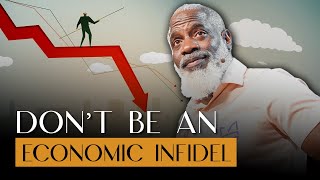
Myron Golden argues that Christian faith demands financial responsibility, not poverty. He cites scripture to show believers should pursue wealth to care for family and the needy, and challenges the idea that Christians should be poor.
Chapters
There is a belief that if you believe in God you should be poor. There's a belief that poverty is piety and wealth is wickedness. And the Bible has a lot to say about money and a lot to say about wealth and a lot to say about poverty. And it gives us some warnings about wealth. The Bible definitely gives us some warnings about wealth around the area of wealth, but it also gives us some warnings around the area of poverty.
And I think it would do us well to know that none of the warnings around wealth say don't be wealthy. That's not any of them. Right. And I know people have lifted out of context verses like it's easier for a camel to go through the eye of a needle than it is for a rich man to enter into the kingdom of God. Like I did a whole video on the camel and the eye of the needle and I've done like an in depth study on it. And I promise you understanding it in context will change your life. But I want to challenge you today because I think what has happened is a lot of God fearing, church attending, Bible believing Christians have.
Relegated themselves to, to live a life of poverty and that all of the rewards are going to come in the sweet by and by.
And I am going to challenge that ideology biblically today.
Because. Well, because the Bible challenges it pretty head on like throughout. So I want to read a passage to you.
Before I do that.
A lot of people believe that it's greedy to have a desire for wealth.
And certainly some people have a desire for wealth because they're greedy, but other people have a desires. Give me that moan again, Ron. Well, there you go. So we all have aging family members. Who's going to take care of them?
I know what we're thinking. Somebody else will do that.
And the somebody else turns into nobody else.
And the reality is there are people in the world who are hurting. There are children who are starving, there are widows who are suffering. And we only have enough ambition to keep the lights on.
So today.
I'm going to talk to you about this subject. Don't be an economic infidel. And I know that's really some strong language, but I'm going to. I got it from the Bible so I didn't put it in there. It was in my Bible when I got it this morning. Here's what it says. First Timothy, chapter 5. Rebuke not an elder, but entreat him as a father and younger men as brethren, elder women as mothers, younger as sisters, with all purity honor widows that are widows indeed. But if any widow have children or nephews, let them learn first to show piety at home and to requite their parents, for that is good and acceptable before God.
What is. What is he saying? So, first of all, let me kind of give you paint a picture. Timothy was the pastor of the church of Ephesus. He was pastoring a bunch of Gentiles who had converted. The Apostle Paul is writing to tell Timothy what to teach the people who were in his church in Ephesus. Because these are people who did not have a foundation that grew up in a Hebrew culture that states that you're supposed to take care of your people and that you're not supposed to glean your fields. And they didn't learn all of that stuff. So make sure you charge these people with this information, okay? He says.
But if any widow have children or nephews, let them learn first to show piety at home and to requite their parents, for this is good and acceptable before God. Now, she that is a widow indeed and desolate, trusteth in God and continueth in supplications and prayers, night and day. But she, she that liveth in pleasure is dead while she liveth. And these things give charge that I may. That I'm sorry. These things give charge that they may be blameless if any provide not for his own.
And especially for those of his own house. He hath denied the faith and is worse than an infidel. Now, I don't have to tell you that God expects for fathers and mothers to take care of their children. I don't have to tell you. We get that already. But God's saying it goes a step further. When your parents get so old that they can't take care of themselves, you have an economic responsibility to take care of them or help take care of them. And I love the fact that it says, if a widow have children or nephews. So this is not just the people who are our parents. This is talking about aunties and uncles.
Wait a minute. I have an economic responsibility to people in my family who are older than me, who have aged out of the workplace. I've got an economic responsibility to them. God said, if you don't take care of them.
You'Ve denied the faith.
Denied it and are worse than an infidel.
That's tough language. Y' all.
Denied the faith. The scripture doesn't say, if thou dost not attend church Sunday morning, Sunday night and Wednesday night, thou hast denied the faith and the worth. And that's not what it said.
It didn't even say that if you don't give a tithe and an offering, you've denied the faith and are worse than an infidel.
It said, if you don't provide for your own.
Especially for those of your own house, you've denied the faith and you're worse than an infidel. Why is it saying that? So I'm going to back up a little bit. I was at. I was an assistant pastor, but I always had a business. Well, not always, but when I was assistant pastor, the whole time I had a business, I just had business on the side. Why? Because I wasn't gonna let a bunch of.
Broke church members.
Determine how my family was gonna live or if my family was gonna live.
That may sound hard, but I've been the pastor and the church had the motto, lord, you keep him humble, we'll keep him broke.
I've served in full time ministry and came home and had a Motel 6 refrigerator. Say, what's a Motel 6 refrigerator? Motel 6. And motto is, we'll leave the light on for you. And you open the refrigerator door and the only thing in there is a light.
I've been down that road.
And I said, I'm not going to do this to my family. I might be in ministry, but my family is my responsibility, ministry or not.
Okay, so just. So.
It'S amazing. It's amazing how small we think we're supposed to live when God gives us all these big commands. Take care of your children. Take care of your spouse. Take care of your aging parents and aunties and uncles and widows and orphans. Oh, and by the way, do that while you're broke.
It doesn't like, it can't make sense. I can't make sense of it.
There's nothing about that that harmonizes.
It doesn't. It don't match up.
There's a whole lot of wrong beliefs going on in there that are causing us to say, okay, every time I get up to album, I got to go back. I've got a little bit too close to financial freedom. Right.
I want to read another verse to you.
Proverbs, chapter 13, verse 22. In fact, let me read.
Yeah, verse 22. A good man leaveth an inheritance to his children's children, and the wealth of the sinner is laid up for the just. It didn't say, a good man leaveth an inheritance to his children. Said to his children's children. Do you understand? If you have nothing.
Nothing is not the inheritance that God's talking about in here. He's not talking about. Papa was a rolling stone and all he left us was a loan. He ain't talking about that kind of inheritance. Some of you are like, what is he talking about?
You're just too young. You can't appreciate.
God said, good man leaves inheritance to his children's children, and the wealth of the sinner is laid up for the just. So we have a responsibility to become economically empowered so that we can be a blessing to people in need.
We talk about the story of the Good Samaritan. You know, the Good Samaritan is not a story in the Bible. There's no story in the Bible about the Good Samaritan. Did y' all know that?
It's not in there. There's a story about a certain Samaritan. Jesus said there was a certain Samaritan. It didn't say it was good. When we say the Good Samaritan, we're inferring that all the other Samaritans were bad. Like, it's, It's. It's. It's a. It's a scotoma. It's a blind spot. The Bible didn't say it was a Good Samaritan. It's just there was a certain Samaritan. Go read it. And it says. It says a man fell among thieves. And then the priest walked by.
Passed over to the other side. Levi walked by, looked at him, kept on going. But then a certain Samaritan came by. And here's what it says. It says he dressed his wounds, he poured in wine and oil, he put him on his beast. He took him to an inn, he paid for the man long enough for him to recover, and then told the man at the end, if he owes anything else, when I come back, I got you. And the man believed him.
This was not some broke joker.
Like, he had to have a beast.
He had to have some resources to pay for somebody else's room. He had to have.
A good enough reputation. That where he told the man, if he owes you anything else, when I come back, I'm good for his debt. And the man believed him.
And see, we act like we're being persecuted as believers when the reality is we're driving the vehicle of our lives down the highway of experience with one foot on the gas and one foot on the brake.
Why is this passage saying.
That? I have a response that my financial responsibility cannot be separated from my faith. I mean, what is this pastor saying? It's saying my financial responsibility cannot be separated from my faith responsibility.
See, here's what we do we got our financial responsibility over here and our faith responsibility over here and there the twain shall meet.
No, that ain't in the Bible.
See.
What if you just got to the place where you believed it was okay for some believers to be wealthy? I ain't talking about you right now.
What if you just got to the place where you weren't working hard to stay broke enough so you could still get into heaven? You know there are people who have that belief.
Because the scripture says what? It's easier for a camel to go through the eye of a needle than it is for a rich man to enter into heaven. But see, out of context, I'm not. You go watch the video that I did on the camel and the eye of the needle. It'll explain the whole thing to you. But I'm going to give you the problem with the rich man was not that he was rich in money. That wasn't the problem Christ had with him. The problem that Christ had with this man was that he was rich in self sufficiency. He was rich in self righteousness. I know that because the word rich in that passage is the exact same word rich that's used in First Corinthians, chapter 8, verse 9, where it says, you know the grace of our Lord Jesus Christ, that though he was rich.
For your sakes he became poor. Wasn't talking about Christ was rich. It wasn't saying Christ was rich in money and then he became poor in money. Christ was rich in righteousness and then he became sin. For he God hath made him Jesus to be sin for us who knew no sin, that we might be made the righteousness of God in him. Or you know the grace of our Lord Jesus Christ, though he was rich, yet for your sakes he became poor. That you through his poverty might be rich.
Or the love of Christ constraineth us. Because we thus judge that if one died for all, then were all dead. And they which lived should not henceforth live unto themselves, but unharmed, which died for them and rose again. So the scripture is telling us clearly that this man was rich in self righteousness. How do we know he was rich in self righteousness? Because he came to the Lord and he said, good master, what good thing must I do that I may inherit eternal life? And Jesus said, why callest thou me good?
And people think Jesus was saying, why are you calling me good? Because Jesus wasn't good, but he wasn't saying it. Jesus was saying, why are you calling me good? If you think some good thing you are going to do is going to get you eternal life. He said. Jesus said, why are you calling me good? We can't both be good. Either you're good or I'm good, which is going to be.
But I'll tell you what you do. Keep the commandments.
Now, if the man were honest, he would say, I've attempted to do that my whole life, and I am not good at it.
Right? Can I get a witness? Where are my people? Right? See, they just said, I'm not good at it. Because the law was given to us, our school, as our schoolmaster. Bring us to Christ. The law was given to us to show us that we are crooked and it is straight.
Y' all tracking. He said, keep the. So the man said. He said, well, you know, while I'm. I got. I got momentum now. Which ones.
Which ones you want me to keep? Jesus started naming some he knew the man had kept. And then he named one he knew the man had not kept.
He said, well, you know.
Honor your father and your mother.
Thou shalt not steal. Thou shalt not commit adultery. Don't do any murder. Dude's like, check, check, check, check, check. Then Jesus threw him a curve. He said, and love your neighbor like you love yourself. By the way, the scripture does tell us he was a rich young ruler, which means he was probably some kind of political or religious leader.
And he was wealthy. So he's probably a political leader. And he had probably politically exploited because political exploitation is not a new thing in 2020. Foe.
And Jesus said, love your neighbors yourself. Here's what the man said. He had enough nerve to say all these things. Have I kept from my youth up. What lack I.
The ability to tell the truth? The only thing you missing is the ability to tell the truth.
So Jesus gave this man an individual prescription that we've adopted as a universal principle. And the universal, the individual prescription was, okay, you say you love your neighbor like you love yourself. Prove it. Go sell everything you have and give them proceeds to the people in need.
Put your money where your mouth is. You said you love your neighbor like you love yourself. And I can tell by them shoes you got on you like you. I can tell by that chariot you pulled up in you like you a lot. That robe. That's custom.
I know you like you. You said you love your neighbor like you love you. Go sell everything you have and give it to your neighbors who are broke as a joke and ready to choke and prove that you love your neighbor as yourself. And the man went away sorrowful, because he had much possessions. But the real reason he went away sorrowful, because his possessions had him. And he was, he sold himself down the river of self righteousness.
The disciples were as confused as they could possibly be. And Jesus said, Jesus said, hardly shall a rich man enter into the kingdom of heaven.
In fact, verily I say unto you, or truly I say unto you, it's easier for a camel to go through the eye of a needle. It is for a rich man to enter into the kingdom of God, enter the kingdom of heaven. Disciples were like, wait, what?
They said, well, who then can be saved?
Because if you look in the Old Testament, like.
Economic prosperity on earth was a sign of the blessing of God in the mind of a Jewish believer.
Why do we believe? Where do we get this whole idea that followers of Christ are supposed to be poor? From Greek mythology and Roman mythology and Roman Catholicism.
It'S pagan. The whole idea that a follower of God is supposed to be broke as a joke is pagan. It's not biblical.
Why did the disciples say, well, who then can be saved? But what about Abraham over there? In Genesis chapter 13, verse number two, it says, and Abram was very rich in cattle and silver and gold. He can't get to heaven. David was rich, Solomon was rich. We're businessmen, we ain't broke. Who then can get to heaven? And here's what Jesus said. I mean, all you got to do is read it in its context.
He said, with men it is impossible. With men, what is impossible? Salvation. It's impossible for a man to save himself by his good works. But with God all things are possible.
Oh, and by the way, the story in its context is not even about the rich young ruler. It's about the children and the rich young ruler. It's interesting that In Matthew chapter 19, if you want to know where this passage is, for those of you who are watching on YouTube, in Matthew chapter 19.
They bring the children to Christ that he would lay hands on them and lay hands on them and bless them. And the disciples said, no, get these kids out of here. Jesus said, suffer the little children to come unto me and forbid them not for of such as the kingdom of heaven. And immediately after that, the rich young ruler comes. So why is Jesus saying, let the little children? Because the scripture says we have to have childlike faith. It doesn't say children have to have adult like faith.
And so what is it about childlike faith? Children understand that in order for them to live, they have to put faith in someone other than themselves. When a child, you must be born Again, when a child is born, they can't take care of themselves. That's what God gave him parents for. And so that passage has nothing to do with not having money so you can get to heaven. Nothing at all. Go do Greek word study like I already did the word study. I know people disagree because their pastor said it really, really loudly.
But you didn't ask him if he studied it.
Anyway, why is it. Why is this passage, my financial responsibility cannot be separated from our faith. Your financial responsibilities can't be separated from your faith. I had a woman ask me one time who went to the church where I was an assistant pastor. She said, myron, why do you talk about money and business all the time? And I said, because I do not want to misrepresent Christ in the marketplace. I don't want to be walking around talking about a God of abundance, like promoting a God of abundance. And then I can't even take care of my family. That's why when somebody has a need, I can't even help them. We take up a love offer. I went to a church one time. I was a visiting evangelist. On a Wednesday night, there were 30 people there. It was a little. There were maybe less people there than are here right now.
They made an announcement. There's a church family. His house burned down. Let's take up a load offering for them. Sounds like a good idea to me. So I put $100 in the plate. I didn't know the family. If they had walked like, if I had seen them next day, I wouldn't have known it was them. So the next day, I asked one of the elders, how much did we collect for the family whose house burned down? They said, $137. I was so confused. These are people, you know, and they house burned down, and all of y' all together, $37.
Lord, please don't let my house burn down.
But we bought into this idea that God wants to be broke. That is a satanic lie. I'm not saying God wants everybody to be rich. That's not what I'm saying. But I am saying it is God's design for all of us to create more wealth than just enough to be comfortable.
This is design. Now, there may be some exceptions to that, but that's the rule. But there may be some exceptions to that.
Okay, so why is this passage saying this?
I believe the reason the passage is saying this is because of what it means to be man and what it means to be a father in particular. But in general, what it means to be Human.
We are responsible to each other, and we are responsible on some level for each other.
That's just how it works. God gave you stuff he didn't give me, so I need you. He gave me stuff he didn't give you, so you need me. So while we're being independent, we're also supposed to be interdependent.
Because somebody's good at what you're bad at. And see, here's the problem. When we make money, the objective. Here's what I mean. Making or saving money the objective. We will not serve people at the highest level because we'd rather like. One of the reasons I take my car to a mechanic instead of fixing it myself.
Is because it gives them business.
One of the reasons, like, there's stuff that I pay people to do that I could do myself, but how does that help them?
What if your vision was bigger than just saving money? What if your vision were bigger than just making money? What if your vision were leaving an impact on the world every single day of your life? What would that look like financially?
If we're made in the image of God, that means he made us to be fruitful. That's to produce on the outside based on what God put on the inside. To multiply, to increase, to fill up the earth and to have to stomp everything that attempts to stop us. And then to have dominion. If I was made for dominion, why am I under circumstances?
Because dominion ain't under. It's on top.
Are y' all picking up what I'm putting down? So.
The word man means in the image of God. You have a brain. Make your brain sweat.
Make your brain sweat. Make yourself ask more and better questions so that you can discover more and better answers. Okay, the word father. In Hebrew is the word abba.
In English, it's a B, B, A. It's four letters. In Hebrew, it's two letters. Aleph, Beit. Aleph is the letter that represents God. Beit is the letter that represents the house. The word abba is God in the house.
When we do not take our financial faith responsibility seriously, we are misrepresenting God to our family. One of the reasons I decided to get rich when my children were young is so that they would be able to hear my voices, my voice, my wife and I's voice more clearly than somebody who had more money than us, that had a worse message than us. Because the scripture says wisdom is better than strength. But a poor man's wisdom is despised. I didn't have any desire for my children to despise My wisdom, because we were broke. And every time they asked me for something, I had to say no.
God in the house. That means if the Father is God in the house, that means he's the progenitor of the house. He's the provider of the house. He's the protector of the house. He's the promoter of the people in the house. That's the Father's job. If you're not doing those things, and if you can't do them economically, you're misrepresenting God. I didn't want to misrepresent God.
I didn't want my words to be over here and my actions to be over here.
Okay, so what do we do? What can we do to avoid economic infidelity?
Seek to serve others. Stop thinking that all of our financial awareness and all of our financial focus is for our own consumption.
Seek to go from the land of Just Enough.
Through the Valley of Not Enough to the mountain of More than Enough so you can get to the place in your life where you have more than enough for just you and yours.
Because why?
It's a good idea. Because it's a God idea. This whole idea that you're supposed to be broke as a joke and ready to choke because you are a follower of Christ is a satanic lie. Let's stop believing that. Can we stop believing that? Can we just go ahead and like people say, well, how much money do you want to make? Well, I don't. I can't speak for you, but for me, as much as I can.
I said that to somebody that's fairly close to me one time. They said, man, how much money do you want to make? I said, as much as I can. They said, surely you can't mean that. I said, surely I do.
If you said it, you might not mean it. But I mean as much as I can.
And some people. That's so greedy. Is it? You're assuming my motive is I want to make it so that I can go buy something I can't already buy.
What if that has nothing to do with it? What if I just want to make as much money as I can just because I don't want to live below my potential? How long would you like to live? Not that long. Just long enough to be comfortable.
How healthy would you like your children to be? Not that healthy. Just healthy enough to be comfortable. How smart would you like your children to be? Don't want them to be too smart. I want them to leave some smarts for somebody else. Just smart enough to be Comfortable. The only arena we say that about is money. It doesn't make any sense. It's a double standard that's nonsensical that we say to gain approval from people whose approval does absolutely nothing from us, for us.
I don't have a desire to be a billionaire at all. That's not a desire. But I ain't opposed.
I ain't gonna block the flow.
I want to maximize every aspect of my life. I want to be as strong as I can for as long as I can and live my life like a light bulb that doesn't get weaker and sicker, less mobile and less cognitive and less aware. As I get older, and less money as I get older, I want to get stronger.
More alert, more aware, learn more, live more, love more, earn more. As I get older, I want to earn, like my desires, to earn more in my 70s than I could have conceived in my 60s. To be stronger in my 70s than I was in my 60s. I'm already stronger in my 60s than I was in my 50s.
You don't have to get weak just because you're getting old. Old doesn't equal weak. Bad habits over a long period of time equals weak.
But we've got like. It's.
One of the greatest experiences I've ever had in my life.
Was dancing with my daughter at her wedding.
It's one of the greatest experiences I've ever had in my whole life on planet Earth. And you know what? My daughter was 21 when she got married.
I have a desire to dance with my granddaughter at her wedding.
And she's 4. And if she gets married when she's 21, that'll be 17 years from now.
And I will be 79 and cutting the rug.
Stop buying into all the lies of the world.
I beseech you. Therefore, brethren, by the mercies of God, you present your bodies, living, sacrifice, holy, acceptable unto God, which is your reasonable service. And be not conformed to this world, but be transformed. How? By the renewing of your mind.
The word renewing literally means renovation. You know what happens when you renovate something? You tear out all the old raggedy stuff, make room for some new stuff. Some of us have been walking around with too many raggedy components in our mind for too long. It's time to tear them out and be transformed by the renewal of your mind. That you may do what? Prove what is that good and acceptable? Perfect will of God.
Don't be an economic infidel. Make as much money as you can. Do as much good as you can. Leave as much impact in the world as you can.
Max out your potential in all of your life. I promise you, you'll be glad you did.
Thanks for watching. Stay blessed by the.
It.
More from Clegg

The #1 Skill Gen Z Needs | Simon Sinek + Esther Perel | A Bit of Optimism Podcast







AI Won't Tell You the Full Truth | Arthur Brooks + Simon Sinek | A Bit of Optimism Podcast



How To Make the Best Decision | Arthur Brooks and Simon Sinek | A Bit of Optimism