Simon Sinek argues the Great Resignation is a market correction in the labor market caused by years of companies treating employees as disposable line items. COVID reduced fear of the unknown for many workers, prompting large numbers to leave jobs they find merely "fine"; a minority leave for government support or to pursue dreams, but a large segment simply reject the status quo. Sinek frames this as a wake-up call for organizations to double down on culture and leadership so employees feel seen, heard, and connected to meaningful work.
Chapters
The great resignation, I think, is it's a market correction. You know, we know what happens to public markets when they become unbalanced. Right.
Laws of nature intervene and there is a correction. That's what happens. And I think what we're experiencing is a massive correction in the labor market where for too many years, let's be honest, companies have taken advantage of their people, especially low level employees, because they could and they actually had attitudes like, if you don't like it here, get a job somewhere else. You know.
And we didn't treat people as human beings. We treated them as line items, disposable line items, and the front line suffered the most, you know, and.
That balance got more and more and more tipped. And now what we're experiencing is a great correction where now.
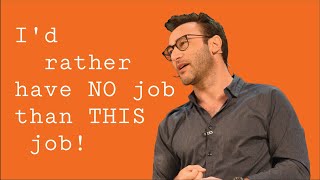
Labor has much more influence and says, and thanks to Covid, says, I don't want to be treated this way and I'd rather have no job than this job. Now remember, prior to Covid, fear of the unknown was enough to keep somebody in an okay job. Doesn't mean it was toxic. It was just fine. Right, but like, who wants to be in a fine relationship? You don't mean a fine job either. Like, how was work? That was fine. How's your marriage? It's fine. Right.
But the fear of the unknown was too scary. Why don't you quit? I would, but I mean, I don't know. Right. And then Covid happened and some people were furloughed, some people lost their jobs, some people didn't lose their jobs, but they were filled with fear and we made it through. And so all of a sudden the unknown a lot less scary because I made it. And so when you give me fine and you offer me unknown, I'll take unknown. And I'm really surprised by how many people are leaving. Look, you're going to have a small percentage of people who are leaving because of government checks. That's a very small percentage. And that goes away. You have a small percentage of people who are like, you know what? I want to be a singer and I want to follow my dreams. We love that. Right. And that should continue. But there's a large percentage of people saying, I just don't want this and I don't even know what I want, but it's definitely not this. And they're choosing the unknown. And so I think it's a huge shot across the bow to most companies that you've not focused on culture and leadership for far too long. And you better fix that, because this is kind of an environment of your making.
It affects all ranks, as you know, it's not just junior ranks. But I think it's a great opportunity, and again, I think it's an opportunity for your practice that. To help companies who are concerned about this to double down on culture and give people a place that they want to go to work, that they feel seen, that they feel heard, that they feel like they have a voice, they feel like their work contributes to something bigger than themselves, that their energy is not just about helping somebody else.
Make money, but rather they get to share in the joy and the spoils. I think it's a huge, huge opportunity for your practice to teach companies how to do this. I think they've, you know, you're used to solving business problems while ignoring cultural problems. And look at, look at a lot of the unicorns, whether it's Groupons or Ubers or gamestops. I mean, pick your. Not Gamestop. I mean, Robinhood. Robinhood. Yeah, pick your unicorn. Almost every single one of them. The reason things got shaky had nothing to do with the business model, had everything to do with the leadership and the culture and the fact that they were completely ill prepared for anything going other than perfectly according to plan, which, as it turns out, you know, no plan ever goes according to plan. I think it's a huge opportunity for you to actually change the face of how business works and react to what companies are, we know, struggling with.