Top 7 Phone Interview Questions & Answers (Cheat Sheet Included!)
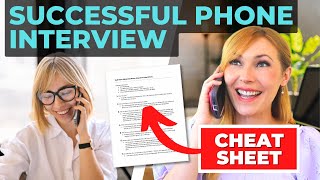
Madeline Mann walks through seven phone interview questions hiring teams ask, with scripts and a downloadable cheat sheet. She covers small talk, company research, your background, why you're leaving, and how to handle compensation discussions without getting caught reading notes on video calls.
Chapters
What will you be asked in a first interview? Phone screen Phone interview and how should you prepare and what will secure you the next interview? In this video you'll get a phone interview cheat sheet of the top seven questions you'll likely be asked and how to answer them. I'll link a free document below to write notes along with this video and stay to the end because I'll show you a clever, sneaky way to to use your cheat sheet during the first round interview. If you're new here, this is self made Millennial I'm Madeline Mann. I am a human resources leader and job search strategist. You may have seen me in these places New Videos on Thursdays A few years ago I created a video about how HR recruiters score your phone interviews and I shared some tips on how to pass the interview. The success stories came rolling in like a bowling ball hitting pins like this one from Marie. And there were so many stories like Marie's that I decided to make you a cheat sheet of exactly the points you need to hit for your top 7 most common interview questions. So let's go. First question you are most likely going to be asked is some pleasantries like how are you? How is your week going? Now, I know this doesn't seem like an important question, but the way you respond is important. I fully agree that it is a bit silly, but bringing your energy to the initial introduction can determine their initial feeling feeling about you if it'll be positive or negative. Now I'm going to throw some biology terms at you here. It's going to get a bit technical, but I have trained thousands of people inside companies on how to interview candidates and there is a part of the human anatomy that accounts for the majority of the decision making in your interview. And it's not the brain, no matter how much I wish it was. You may have heard of it. It is the gut. These gut feelings drive everything. So if the interviewer asks you how are you? Have an energetic sentence that shows warmth and shows you're in control. You're not afraid to ask them questions back such as I'm great. I'm feeling energized from the three day weekend where I read a good book on the beach. How are you? The secret to small talk is that it doesn't really matter what you say, people are just grateful that you're talking and not making things awkward. So literally, practice what you were going to say to this inane question and write it down on your cheat sheet. Next, if you're interviewing at a company that isn't as widely known of a brand name, the recruiter will likely ask if you're familiar with what that company does. This is not a test. They're really trying to figure out how long should they make their explanation of what the company does so that you fully understand? Because that's part of the recruiter's job to both evaluate you for the role, but also get you excited, get you pumped and informed about the opportunity. So here's how I recommend you respond. First, it will hurt you if you say I don't know what the company does or ask, yeah, what company am I speaking to Again, I am not joking. People would say these things to me when I was interviewing them. So make sure you've done preliminary research and I will link a video on how to do quick research on a company and put those dang things in your cheat sheet. Your response can be as simple as saying things like yes, I download the app. Yes, I was on your website last night. Yes, I saw the news article of the new product that just launched and that's all you need to know to show that you have a clue. Colonel Mustard. So respond briefly showing that you looked into the company. Show a bit of passion saying it sounds really interesting and then say, but I'd love to hear more about the company and the role from your perspective. It's always helpful to hear from companies how they characterize themselves. The third question you may be asked is of course the infamous Tell me about yourself or Walk me through your resume. If you've been following my channel for a while, you know how essential it is to answer this question. This question is not supposed to be your whole life story. It is to help the recruiter who just quickly skimmed your resume right before getting on this call. And they want to quickly and succinctly understand who the heck you are. Since how to answer this question is the number one question I'm asked and for good reason. I did make a free worksheet for you with the three steps to answer, so I will link that below and make sure you add that response to the good old cheat sheet. The fourth question they may ask you is what are you looking for in your next role? The person on the other end of the phone is trying to play matchmaker here to figure out how to if what you want in your next role is the same as what they are offering now. This isn't meant to be a trick question. They genuinely want to know to make sure that this is a beautiful, magical fit for both sides but of course, if what you describe isn't really the type of role that they are offering, you're likely going to get disqualified here. Depending on your situation, this could be a good thing because if there are certain expectations you have for your next job and this isn't cutting it, then maybe it's time to say Avita Zay for this question you should answer how the role you are interviewing for fits with what you want next. So pull out your cheat sheet and write the key responsibilities of this job you're interviewing for and then write your response based on that. Such as if the job description says you'll be managing a small team whose major focus will be to carry out budget analysis, you can say, I've honed my skills in budget analysis and so in my next role I'm looking to dive deeper into that and lead a team in doing so. Match Made in Heaven Now, a side note, you should also expect questions like can you commute five days a week to our location? Are you legally able to work in this country? When is the soonest you would be able to start for those questions? Answer them directly and if you have a unique situation, that's when I coach my clients to have very specific answers. But most likely it's going to be straightforward for you. The fifth question they may ask you is why do you want to leave your current job? Or why did you leave your previous job? Come on, you've been asked this question, right? Everyone wants to know the tea as to why you want to dump your current company or the reason you left because they want to know that whatever reason ended it before isn't going to repeat itself at their company. When answering this question, you want to remember to keep it to three things short, confident and positive. I go into detail about how to answer this question with specific situational examples like if you were fired, laid off or left voluntarily in a video I made. So I will link that below and make sure you write down your answer on your cheat sheet. The sixth question that is common is what makes you interested in this role and company? You may be sensing a trend here Watson. Again, they're asking this for fit reasons. Companies want people who want them. So share how passionate and interested you are in this role. If what you say about the company and the role is non specific and it could be said about most of their competitors, then you'll need to improve your answer. I'll link a video to help you if you're struggling with this Based on your research, write a few reasons why this job and this company on your cheat sheet. Now remember, do not put any extrinsic motivators like benefits, commute or remote work perks. And number seven is the dreaded money conversation. You may be asked, do you have any compensation requirements? Or what is your targeted salary? Okay, so there's a few steps here. First, you're better off not saying a number. And I explain why extensively and what to do in all different scenarios in this video here. So I'm going to give you the very short version now. But watch that video if you need more clarity or if you're trying to debate me on this because that video is more nuanced. So you are asked these questions. I recommend saying things like I'm open. I'm looking for the best fit and overall package. If they ask for a number again, then ask them what their range is and say you're happy to tell them if that range fits with what you're looking for. And now if they still don't give you a number, bring a research salary range. Go ahead and write down these scripts in your cheat sheet and also your salary range. And check out the sneaky way to use your cheat sheet. Shout out to Jonathan Javier for introducing me to this tool. If you are doing a video call, use transparent note to put your cheat sheet notes across the screen for sneaky reference. Okay, Be sure to like this video video and subscribe to this channel. You've got this wifi high five.
More from Clegg

The #1 Skill Gen Z Needs | Simon Sinek + Esther Perel | A Bit of Optimism Podcast







AI Won't Tell You the Full Truth | Arthur Brooks + Simon Sinek | A Bit of Optimism Podcast



How To Make the Best Decision | Arthur Brooks and Simon Sinek | A Bit of Optimism