What Recruiters are Looking for with These 5 Interview Questions
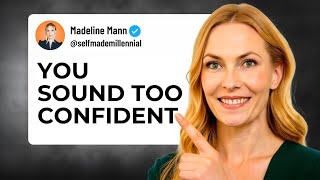
Madeline Mann breaks down five interview questions recruiters use, with real footage from Job Shopper. Learn how to answer "tell me about yourself," highlight an accomplishment, frame a failure as growth, explain job changes, and ask smart questions at the end.
Chapters
Here is exactly what recruiters and human resources professionals are thinking when they ask these five common, challenging questions in the job interview. In this video, you will see real footage of job interviews from a TV show called Job Shopper, where the candidate does well on some questions and struggles in others. And I will break down what the executive recruiter is thinking each step of the way and how you can ace your interviews. If you do not master these questions, watch out. You are likely to lose out on the job offer. I'm Madeline Mann. I'm a human resources leader and job search strategist who turns job seekers into job shoppers. You may recognize me from being a top job search instructor on Spotify and LinkedIn, learning the host of Job Shopper, or you may have seen me on abc, Bloomberg, Wall Street Journal, and more. Be sure to subscribe because what's the best that could happen? You land top job offers for the rest of your career and stay to the end because you'll get to see a real world interview of a recruiter. Grill a candidate on his past of why he left jobs in less than two years, and this will help you a lot. To prepare for this question, let's dive into this real job interview footage so you can see exactly how to answer these questions in this job interview. Rory the recruiter starts off by asking Al a question to get the ball rolling.
So first, just tell me why you're here.
This question is likely to trip you up. Why am I here? To interview for the role you invited me to, you scholar of nonsense. But really, what he's asking is a hybrid question of tell me about yourself and why are you interested in this role? So don't let this one dent your van. Other forms of this question can sound like walk me through your resume, describe your background, or tell me more about your journey. It's giving creepy yoga instructor vibes. Let's see how Al answered the question. Why are you here?
Well, I want to start that off with a rhetorical question. How do you feel about the people that support your it? Statistically, most people don't appreciate their IT staff, and that's usually because they have all kinds of pitfalls and all kinds of bottlenecks. The companies that I work for, I'm a IT support manager. My last position, I decreased SLA response time on a typical IT ticket from three days to 30 minutes.
What is SLA?
Service level agreement. It's basically a standard on a help desk that determines how long should we take to fix a user's problem.
Okay, yeah, good Answer Al did well on this answer. He used a hook at the beginning of his response, which is not something that is important to do, but it works while fishing and it worked in this situation. What is most important when you are starting an answer to an introductory question like this is to make it incredibly clear that you have the right background for this job. What's best is to start off by saying one sentence of exactly the type of professional you are, which is in line with the role you're interviewing for. Such as he could say something like I'm an IT manager for mid sized technology companies who is skilled in scaling and revamping a company's IT systems and processes. Then he starts talking about his top past accomplishments, which is an excellent next step. You'll want to provide a highlight reel of some of your greatest accomplishments from your past few roles, only focusing on accomplishments that are relevant to the role you're going for. And then one thing I would add to the end of his answer is to say what interests him in this role and company. After you walk through a bit of your highlights of your background, it would sound something like and the reason why I'm so interested in this role at your company is because blank or another good transition is and the reason why your company is the best next step for my career is because blank. And this really fully rounds out your answer to why are you here? Why are you? Or Tell me about yourself. This is a lot of information and extremely important. So I created a free worksheet that walks you through the steps to craft your own answer to Tell me about yourself and these intro questions with an example as well. More than any resource, this is the one that I've gotten the most amazing emails and success stories about. So I will link that below in the comments and the description for you absolutely free. Next, if you fail this question in a job interview, you will fail the entire interview and that is what is your greatest accomplishment. But notice that the executive recruiter Rory words it slightly differently.
Many of us have a body of work similar to a musical artist. What's your greatest hit as a professional?
When interviewing, you have to be aware of the variations of different questions. They sound different, but are actually the same question.
My greatest hit as a professional was actually working for a smaller managed service provider which entrusted me to initiate a Citrine Citrix environment. Okay, Citrix is a make it plain for me, a way for people to communicate, get their applications, and work remotely from multiple locations while all having those resources in one central location. Gotcha.
When you're asked about your best accomplishment. Shake your tail feather because the interviewer is rolling out the red carpet for you. To ace this interview, your answer should have two components. First is relevancy. Too many job seekers will pick their favorite, favorite accomplishment, and I want you to resist this urge, sweet Padawan. And the second thing to focus on is being impressive. So choose an accomplishment where you did something where it got great results. Now this next question interviewer Rory asks is a challenging one, but is hugely common.
So let's segue into your biggest failure. What was the hit that flopped?
Another way interviewers ask this question is tell me about a time you failed or when is a time you've made a mistake? Okay, let's see how Al answers this.
The very first time I tried to be a one man IT department, the lessons were a lot more painful to a smaller business owner.
What did you learn from that experience? Does that thread go through your career and you go back to that and say, I remember that. I'm not going to let that happen?
Absolutely. And the common thread in that, and I think in all it is standards and practices. The way that we set up computers has to be uniform across an entire organization.
Interesting.
When picking your answer, look for a story in your past where you truly made a mistake or failed. We do not want to dodge this question, but the most important part is how did you react to that failure? What did you learn? How did you rectify it? A story with a strong lesson is the one you should choose. Because the recruiter is not looking for perfection here. Everyone fails, everyone makes mistakes. Instead, what they are looking for is, is how do you react when those things happen? Are you a good problem solver? Are you a good learner? The next question recruiters ask so often is why did you leave your previous jobs? And they're asking this because your answer can yield some interesting insights, such as if you voluntarily left a role for certain reasons, the company is wondering if you'll leave their company for the same reason. Or maybe you were fired and they are curious to hear why, in case that would impact your work. Here they are trying to predict your future behavior by looking at your past. Rory is much more pointed with his questioning. Watch how this recruiter grills Al for his short time at previous companies.
One thing though, I see on your resume that gives me a little bit of pause is short stints. If I were to represent you, if our firm were to represent you, how do we explain the short stint?
Absolutely. Some of the changes in my, you know, job were not made by my own decision. They were made either financially by a company not able to sustain that employment due to their situation and or me trying to find the best way to, you know, maintain my career, my resume.
So hold on, hold on. You don't have a single experience that's two years or less. That's not because of a performance issue with you?
Correct.
I consider myself, Rory, a unicorn.
The self described unicorn. This is a first.
Rory wants to get real about Al's past and Al is sensationalizing.
Instead of being genuine, My previous managers would consider me a cooler. I got the worst of the worst clients. I would deal with that person's technology issues because nobody else wanted to. So I feel that I'm very flexible to work with any type of personality. Okay, I know it sounds, you know, very.
It sounds too good to be true.
Yeah, I would say that at this point in my career, you're actually getting the best version.
Do you feel that Al came across as the right amount of confidence or maybe too confident here? Put too confident or the right amount of confidence in the comments. Everyone has a different perspective. So I'm interested to hear what's yours. One thing you need to know is companies are fearful of short stints because Rory is an executive recruiter. And these companies are paying Rory tens of thousands of dollars to place a hire in their company. And they are terrified that they're going to pay all this money and then that hire will leave quickly or have a performance issue that will cause them to be fired. In this example, Al is overselling himself in the recruiter's eyes by painting too rosy of a picture. It leaves the recruiter questioning Al's authenticity and honesty. The bottom line is honest. We all have unsavory things about our past. And when answering the question of why you left your previous jobs, you need to keep three things in mind. Number one, make your answer short. I'm talking one to three sentences. A grave mistake so many people make is giving too much description and detail. Say something brief so that the recruiter can put a nice check mark on their list. They can make like a cow and move on. Only expand on your answer if they have follow up questions. Number two, keep it positive. I know this can be challenging to do if your last role was oh so toxic. But if you speak poorly about a company, the interviewer's first thought will be, are they going to talk this way about us if we hire them? The last thing you want to do is have an employer dwell on your past rather than Focus on the exciting future they can have with you. And number three, be confident. We forget that we get to write our own narratives. You get to tell them the story the way you want to. The employer will only see it as a sob story or a difficult situation if you make it out to be that way. So answer quickly, confidently, and then get to the next part of the interview. Capiche? Finally, Rory gave Al an opportunity to ask questions at the end of the job interview.
So Al, as we wrap up, any questions you have for me, I have.
Been in thousands of interview debriefs and I know that interviewers really respect a person who asks good questions at the end of the interview. The best questions to ask are the ones that are researched and based on your conversation. You should be actively asking questions throughout the interview. Here's what Al asked what type of.
Organizations do you represent?
We've worked in the tech sector. We've worked in consumer products, financial services. We're even working with a tech company out of Africa. So it's a global client list and we're trying to make sure sure we match a candidate that has an inflection point in their career with a business inflection point at a company or organization. As I tell our clients, we're trying to return a lost member of their tribe to them.
I like that.
Like I said, what you ask in the interview should be heavily influenced by the role itself and the conversation you have with the interviewer. But you can still have some really strong questions in your back pocket ready to go that you can ask in most interview situation. I wrote a list of 15 absolute banger questions that are great to ask interviews. They're not overplayed. So I will link that list of questions down below in the comments and description for you to get. I will link the full first two episodes of Job Shopper below in the comments and description so that you can see Al's journey and the journey of the other job seekers. Be sure to like this video and subscribe to this channel. You've got this WI Fi high five.
More from Clegg

The #1 Skill Gen Z Needs | Simon Sinek + Esther Perel | A Bit of Optimism Podcast







AI Won't Tell You the Full Truth | Arthur Brooks + Simon Sinek | A Bit of Optimism Podcast



How To Make the Best Decision | Arthur Brooks and Simon Sinek | A Bit of Optimism