What The Bible Really Says About Leaving An Inheritance
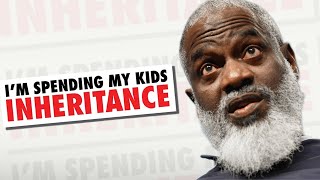
Myron Golden argues that leaving an inheritance is a biblical responsibility, not optional. He uses Genesis, Proverbs, and 1 Timothy to show parents should provide wealth and training so children inherit momentum. Golden warns against the mindset of spending down what you could pass on.
Chapters
Some you've not thought of before. And I think I'm going to stand over here so I can see people. So we're live on YouTube. All right. Good morning, YouTube. Myron golden here. Welcome to this Bible study with Bible success secrets. Bible study. Today, the thumbnail said, I'm spending my kids inheritance.
And I. I wasn't saying that I'm spending my kids inheritance. I was saying that's like. That's, like, a thing people say. Right? And it's even a bumper sticker that people think is cute. Right? Right. But I don't think it's cute. I think it's very. How can I say, Satanic. So maybe that was a. Maybe that was a little bit too. No, I don't think it was. So I think it's really satanic because we have to understand the concept of inheritance and what the purpose of inheritance is. Right? Like, even think about. If we think about, like, the purpose of everything. Right? God created us, and then he told us to create. Right. And you think about children. Children are. Children are one of the greatest blessings that we can ever receive from the Lord. And I know that when I say receive, I mean receive, as they're his children and he loans them to us to prepare them to become responsible adults. Right? And so, like, when we think about the purpose of parenting, and it's to turn these. These moldable, pliable.
Godlike creators into a responsible adult that loves God and that yields to him and that serves people and that rules over an assignment. And so they're responsible and they're respectful and they're responsive. And so the job of parenting is really hard. And I've heard people say that there's no guide for parenting. Oh, there is a guide for parenting. The Bible is an amazing guide for parenting. And maybe I'll share some thoughts about that here in a few minutes. But I want to read. I want to read after I find my glasses. Oops. I know when you're doing a YouTube video, you're not supposed to walk off camera. I know that, but I forgot my glasses. They were over there, so I got them. Anyway, so I'm going to read a story to y'. All. We're going to talk about this whole concept of inheritance, and we're going to start in the book of Genesis with a story that. That you probably wouldn't think a person would start with to start talking about, like, spending children's inheritance. But I think.
We'Re going to see some conclusions. Come to some conclusions today based on what we see in Scripture. But let me do this first. Let me lay some groundwork. So I believe that one of the reasons you have so many denominations and one of the reasons you have so much.
Intense contention around different biblical doctrines is because of the way we have learned about the Bible in our modern day world. And when I say learned about the Bible, I mean learned about the Bible, not learned the Bible. We've learned about the Bible and thought we've learned the Bible. Okay? But the reality is you can't. The reality is you can't just take the Bible and make it mean something that's never meant. You cannot take the Bible and make it say something that it's never said. It means what it means. It says what it says. And my daughter, this is our quote I got from her, I think she got it from Dr. Darius Daniels. But the Bible can never say what it's never said. It can never mean what it's never meant. Right? So it's very, very important for us when we're studying the Bible to read out of the scripture, but not to read into the scripture. And we find ourselves tempted to read into the Scripture because that's unfortunately how it's been taught to us, right? So we'll take a passage of scripture that says something, we'll lift it up out of its context, and then we will assume that's what it means. So understand this. The Bible is not a book about religion. The Bible is a book about life. It's a guidebook for life. It's a book about government, a perfect government. What is that perfect government? The kingdom of God.
And so it's a book about a king, a kingdom, a royal family, the culturalization of a foreign land. That foreign land is called earth. And God created us men and women as human beings to be an extension of his heavenly kingdom, to rule over the earth and, and bring heavenly culture here to earth. That's why we're here. Right? When Yeshua died on the cross and he rose again from the dead, he did that to redeem a people to himself that he could graft into the Hebrew tree. Right? Grafting gentiles into the Hebrew tree. Why am I telling you all this? Because we have to understand the overarching theme of the Bible. Because the Bible is a book of promises and it's a book of principles and it's a book of patterns, and it's a book of precepts, and it's a book of prayers and prophecies and practical application for us to apply to our lives. So we can live the life that God designed for us and that he designed us for, right? And so what happens is we begin to take a bunch of disjointed scripture, a bunch of scriptures that are disconnected and disjointed, and we try to make that mean something. I'm going to show you a bunch of passages this morning in different places, but not as proof text, but to show you, to help you better understand culture. If I'm going to study the Bible, I have to apply the law of definitions, which means I have to look up the words in the passage. If I don't look up the words in the passage in the original language, I don't know what the words mean. And if I don't know what the words mean, I can't know what the word means, right? So I have to know the definitions, number one. So law of definitions. Then there's the law of context. Law of context is like who's talking? Who are they talking to? What are they talking about? When are they talking? Who does it apply to? Does it apply to the person that's mentioned in the scripture? Does it apply to every human being on the face of the earth? Like there are all of those things are things to take into consideration when understanding context, right? So you have to understand context. You have to understand the law of first mention. And the law of first mention is however God first mentions something in scripture that's his original design for that thing. Because God doesn't change. So, so and when we think, when we, A lot of times when, when, when, when Bible believers, they, they, they, they clash, they clash because.
One or both of those clashers has taken something out of context. Maybe because that's what their pastor did, maybe it's because what their mom did or their dad or their grandfather or whoever. But the reality is we.
To study the word of God and to read it and to meditate on it individually.
Irregardless of whether or not we have some man or some woman telling us that this is what the Bible says. Like here's, it's really interesting. Paul said that the Berean believers in Berea, they were more noble than the believers in Thessalonica because they searched the scriptures daily to see if the things Paul was preaching were true, right? And if Paul said it was noble of this belief of these believers to search the scriptures. And by the way, when it says search the scriptures, it was talking about the Old Testament, by the way, because the New Testament does not contradict the Old Testament. It does not replace the Old Testament. It fulfills the Old Testament. They're not. Anyway, so they search the scriptures daily to see if the things that Paul was saying were true. If the apostle Paul, who wrote 14 out of the 27 books of the New Testament, that's more than half. And he thought it was a good thing for the people he was speaking to to check up on him. Who am I to think that you shouldn't check up on me? Like, I invite you to keep me straight. I implore you, I urge you to make sure that if I say something that's not according to sound doctrine, like, bring it to my attention, I'll be the first to admit it. Like, oh, yeah, I got that wrong. And I don't. I am not naive enough to think I got it. All right. Okay. So anyway, so I'm gonna read a story. And the reason I'm gonna read. Start with this story is because it's really a good story for what we're talking about. And it shows what happens.
Like, it shows how children.
Feel about parents who spend their inheritance. So that's. We're gonna start. Okay, so in Genesis 31, and the whole story is the story of Rachel and Leah.
Jacob worked for Laban. Laban was Jacob's uncle. And back then, like, cousins married, close cousins married. Like, I'm so glad I live now, right? Hey, Marin, this is your cousin. You're going to get married. I don't know. I ain't feeling that right. So anyway, but back then, like, the gene pool was stronger, and so it didn't create all of the stuff that can be created today. Anyway, I'm not going to chase rabbits there because I just thought of a whole, whole crazy conversation rabbit trail that I could go off on, but I'm not going to do that. So. So. So Jacob made a deal with Laban for his daughter.
Rachel. And Rachel. Jacob saw Rachel and said, oh, man. Like, I work for this woman for seven years. Okay. By the way, that. Hey, ladies, that's called a clue, right? That's called a clue. Brother ain't willing to work. He might not be the one. I'm just saying. Just saying. He might not be the one, right? Okay. Anyway, an aside said, I worked for this woman for seven years. And then he worked for her for seven years. It was time for him to get married. And apparently, while they didn't have streetlights. And so when it came time for him to get married, his father brought Leah instead of Rachel. He woke up, he said, dude, what did you do to me? I didn't work seven years for her. Now, I want you to. I want you to feel the family tension that's going on in this. I didn't work seven years for her. I worked seven years for her sister. Now I'm already married. How could you deceive me, bro? I like, I gave. I gave you my best, right? And he said, okay, well, yeah, but it's not our customer. He said, it's not our custom that the younger should get married before the older. Here's the problem with that. He didn't have that conversation with him up front. Right? So one of the things that we have to understand that we need to do as, as. As. As people of integrity, we want to make sure that we have our conversations about outcomes that we expect up front and not after the fact. Right? Okay, cool. So. So then he said, tell you what, you fulfill her week, and then I'll give you Rachel, but you work for me, for her, for another seven years. So now you got to do the work again. Well, Jacob could have got an attitude, right? He could have, but he didn't. What do you do? He said, okay, I'll do that. Now here's the problem, though. Now it's creating a problem between the two sisters, which is going to create a problem between their children, which is going to create a problem like where. Where, like, Leah's children are going to want to kill, like, Rachel's firstborn, Right? And then they're going to sell him into slavery. Right? And by the way.
I'm not even too. What I'm where I'm going yet. But what's really fascinating about that is there's so much wrong going on in this story that was like, things that were outside of Rachel's control, things that were outside of Leah's control, things that were outside of Jacob's control.
But at the end of the day, I'm fast forwarding down to Jacob now because this. I mean down to Joseph now, because that's where my mind went. Joseph is in Egypt. Decades later, Joseph is in Egypt. He becomes a prime minister. He comes together with this plan. His brothers and his. His brothers come to buy food, and then he moves their whole family, brothers, father, and all to Egypt. Jacob. Jacob dies. His brothers think, oh, my goodness, he's going to get us back. Now that dad's dead, what are we going to do? Jacob said, you don't understand. You don't get it. All I wanted was my brothers. I don't care about that stuff. I don't want revenge. See, a Problem with a lot of us in the world today is we want revenge on people.
For something that was ordained by God for our benefit.
Am I talking too fast?
You say what, Meyer? What do you mean? Jacob said to his brothers, you. When you sold me into slavery, you meant it for evil. Watch this. God meant it for good. God can ordain that the evil deeds of human. Humans work out for our good.
Hmm. Isn't that fascinating? By the way, this is not something that happened one time in scripture. This is something that happened over and over and over and over again. So I've got news for you. Now, I know they probably were wrong and did you wrong. I get it. They did you wrong. I get it. They meant it for evil. God meant it for good. The problem is not necessarily like, the problem. Your problem. I should say it that way. Your problem. My problem is not necessarily that they did us wrong. Here's our problem. Our attitude about the wrong they did us not understanding that there's somebody bigger than them.
And so it's so bad. Like, I think about this. Like, I got this brace on my leg, and I walk with a limp. And. And when I hated it, like, you don't. You can't even imagine. I hated it when I was growing up. I was, like, so irritated, and kids would make fun of me, and I'd punch them in the face, just keeping it real. That's what I did.
Okay, you probably didn't do that when people made fun of you. You just said, oh, way to go. But I punched them in the face, okay?
And I hated the fact. And I've got six brothers and they can all run and I can't run. I've never run anywhere in my life. That's why I learned how to fight, because I couldn't run. You're gonna fight and run. I ain't running, so let's go. Right? Okay, so. But all of that, to say this.
I can't look at my life and say it was, oh, by the way, I had polio because I was born in a segregated hospital in Tampa, Florida, in 1961, almost 100 years after the Civil War.
When you think about that, like, this should not have even been a problem. This was six years after the polio vaccine was discovered. What am I telling you? I'm telling you, in life, there are two types of factors. There are contributing factors, and there are determining factors. Contributing factors. All the stuff we're going on outside of us, around us. I have polio. I don't wear that brace in my Leg. I wear it on my leg. So it's a contributing factor. I had polio. That's a contributing factor. It is not a determining factor. Here's how you can tell the difference. Contributing factors are all outside of us. Determining factors are all inside of us. And see, what you got to learn how to do is you got to learn how to develop and strengthen your determining factors so your contributing factors don't get you off track. Anyway, I know what you're all thinking. Man, I wish he'd get into this story. Me too. That's what I was thinking. I wish I'd get into this story. So, so, so Jacob. So Jacob now is married to these two women. Now.
They have. He had. They have. They have children. He has children by both of them. They. They have. He's got his. He made a deal for certain cattle with stripes and ring strakes and speckled, et cetera, et cetera. So he's got that going on. So now he's got all of his. He's got his. He's got all of that going on. He's got his, His. His inheritance from his father in law. He's got his wives, he's got his children. And they sneak out in the middle of the night and Jacob has to have a conversation with. Not Jacob.
No, Jacob. Jacob. Jacob's right. Jacob had. I've told so many stories this morning. I'm like, which generation am I in? Okay, so Jacob, Jacob had to have a conversation with his wives and his children, say, hey, we are leaving tonight. We're not going to tell your dads because I don't want him trying to pull the Okie doke on me again. And I don't want him to try to kill me. And I don't want him and your brothers coming at me like that. So we leaving now. Here's what. Here's what. So that's where we are in this story. I wanted to give you the groundwork. Okay. It says, and the angel of God spake unto me in a dream. So Jacob is saying this to his family. The angel of God spoke unto me in a dream, saying, Jacob. And I said, here am I. And he said, lift up now thine eyes and all the rams which leap upon the cattle are ring straked and speckled and grizzled. For I have seen all that Laban doeth unto thee. And I am the God of Bethel. By the way, Bethel Beit Beit in Hebrew means house. El means God. So I am the God of the house of God. And what it was Bethel. That was the place where Jacob, when he was running from Esau, he fell asleep. He had the dream about the ladder and the angels going up, and he made an altar. And when he. He called the name of, he said, surely the Lord has visited me, and I'm going to call this place Beth El. Okay?
Right. Okay. Bethel. Okay. That's where you get Bethel from. So where thou anointest the pillar, where thou vowedest unto me a vow, now arise and get thee out from this land and return unto the land of thy kindred. So the vow that Jacob made was, okay, Lord, if you will allow me to not be killed by my brothers, by my brother and his people, I will know that you are the God of my father, and I will serve you. Okay, so that's the vow. Okay. So.
Now arise, get thee from this land, and return to the land thy kindred. And Rachel and Leah answered and said unto him, is there any portion or inheritance for us in our father's house? Are we not counted of him, strangers? For he has sold us and have quite devoured our money.
What? Their money? I would have said.
Quite devoured our money for all the riches which God has taken from our father, that is ours and our children. Now, then, whatsoever God has said unto thee, do.
So. What we see is we see two. We see two opposing perspectives. By the way, Laban was an idol worshiper, right? He was a pagan. I mean, he was a. He was an idolater. He worshiped idols. His daughters were, too. Rachel stole one of his idols and a couple of his idols. Anyway, he was an idolater. The apple doesn't fall far from the tree, by the way. So, parents, hey, we have to make sure we're careful not to tell our children one thing and then to show them something different. Because as parents, when it comes to our children, more is caught than taught.
Did I say that too fast? Okay, cool. So we're not just teaching our children by the words that come out of our mouths, but we're teaching our children by the actions we take and the reactions or responses we have to situations that are unfavorable. Y' all tracking? Okay, so.
We shoot. Should we see this pagan idolater? What did he do? He wasted his children's inheritance, he said. But now God has given what was our father's that he was supposed to live up. God has handed our father's stuff over to you. Which, by the way, and I've taught on this before, and I know a lot of people disagree with it, but like it says, in Ecclesiastes 2:26, it says, For God giveth to the man that is good in his sight, both wisdom and knowledge and joy. So what does God give to the man that's good in sight? Wisdom, knowledge, and joy. Then it says, but to the sinner. In fact, I'm gonna do this on the board because this is. This is really good. So we got two different people that are being mentioned here. Good sinner. Right.
And in the middle, we have this word, but we don't have the word. And. Right. So God gives you a man that's good insight, both wisdom.
Knowledge.
And joy, which is kind of cool when you understand that the scripture tells us in the same book of Ecclesiastes with what much wisdom is much greed. See, here's the beautiful thing about God. God can give you, when you do things his way. He can give you the good stuff without the bad stuff.
Right. He can give you the good stuff without the consequences. He said, in much wisdom is much grief. And we know. We understand way more of the stuff that's going on in the world now as adults than we understood as children. Right. I remember when I was a little kid, I was so literal and so strange.
I know some of you're still pretty strange. Okay. So I remember the first time I heard. I heard somebody say that one of our neighbors had a heart attack. I literally, a heart attack. And I envisioned soldiers going in and attacking this person's heart. Like, that's what I envisioned, because we had seen, like, war movies on tv. Anyway, so obviously, a heart attack has way more meaning than that now. Right? Right. Cancer has way more impact and meaning than it had then anyway. So God giveth to man that's good in his sight with wisdom and knowledge and joy. And then it says, but to the sinner, he giveth travail.
What's travail? Travail is hard labor. We could call that the hustle.
Travail to gather.
What's that called? We call that the grind. To heap up.
What's that called? Like creating wealth. God giveth to the man, to him there is good in his sight, wisdom, knowledge, and joy. But to the sinner, he giveth travail. Hard labor to gather and to heap up. Why does God give the sinner travail to gather and heap up? Laban had worked his entire life for this fortune that he had, which was a small fortune when Jacob came to work for him. But it was a much bigger fortune when Jacob got ready to leave. Right. Well, it says, for God Giveth to a man as good his sight, both wisdom and knowledge and joy. But to the sinner, he giveth travail to gather and heap up why that he may give to him the that is good before God. That is exactly what happened in this story.
Anyway, so I'm going to keep so many. Like, everything is reminding me of another verse. That's reminding me of another verse. So I'm going to stay on task now. So this whole idea of an inheritance. An inheritance is the parent's responsibility to the children. Y'. All. Did y' all hear this? Like, an inheritance? Like, this whole idea. Ah, I'm. Now they go, my kids gonna have to figure it out just like I did. Well, that's dumb as a box of rocks. You know what that does? When our children have to figure it out just like we did, now we lose even more momentum. Like our family name. See, my family is bigger than just me. Isn't it interesting that God is the God of families and communities and people, but he's not. Like, he's not a person. He's personal, but he's not just a person's God, but he's a community, Scott. He's a group of people's God. He's a family's God. He's not a person's God. Right? And it's so fascinating that we have this idea that God wants to bless just me. Well, if he doesn't want to bless me, he wants to bless me to bless somebody else. Why? Because that's why he created me. He created me for creation. He created me for connection, and he created me for contribution. That's why I'm here. So if I've got creation and no connection, no contribution, I feel miserable. If I've got creation and connection, but I have no contribution, I feel a little bit better than I did before, but I don't feel fulfilled if I've got connection but no creation. Now me and all my friends are broke, right? Like, God gave us the whole formula. And it's so fascinating. It says. It says that like a lot of people, like, I teach people how to make money. One of the reasons I teach people how to make money on my YouTube channel and in my business, I'm a business consultant. I teach people how to grow businesses. I teach financial literacy. I've written books on the subject. One of the reasons I teach that is because that is a problem people know they have. Okay, I'm going to say that again. That is a problem people know they have. I'm going to tell you something, a lot of people, oh, just preach Jesus. Like, what does that even mean? Like, what does that even. Just preach Jesus. Like, that's some kind of magical incantation. And I'm not being disrespectful. I'm just saying, like, that's what we've been programmed to believe. But the reality is, you go look at the ministry of Yeshua Hamashiach, Jesus the Christ. Go look at his ministry and you will see over and over and over and over again. He gave the people what they knew they needed before he gave them what he knew they needed. We want to force our beliefs on people before we impact their lives in a way that they can feel it. That's not what Christ did.
Jesus said, make the people sit down. Okay, let's feed them. They ain't gonna be able to hear me. I'm about to teach them some good stuff, but if their stomach is growling, they won't hear me. He healed the sick, he raised the dead, he opened blind eyes, he fed people. Why? Those were problems they knew they had. We're going around trying to fix the problems we know everybody has instead of fixing the problems they know they have so they will be willing to hear us.
Okay, now why did I bring that up? Because I've had many people say to me and even quote on my YouTube channel, but, Myron, the Bible says, lay not up for yourselves treasures upon the earth, where moth and rust are corrupt and thieves do break through and steal, but lay up for yourselves treasures in heaven. When the moth and rust are corrupt, no thieves do breakthrough and steal. I know that's in the Bible.
So here's the question then, which one is wrong?
The blessing of the Lord. It maketh rich, and he addeth no sorrow to it. Or lay not for yourselves treasure upon the earth. Which one's wrong? Neither one of them is wrong. They're two totally different situations addressing two totally different issues.
Like, because the scriptures, like the first time the Bible uses the word rich, go read it for yourself. It's in Genesis, chapter number 13, verse number two. And Abram was very rich in cattle and silver and gold. It didn't just tell us he was rich. It told us how rich he was. He was very rich and didn't just tell us how rich he was. It told us how he was rich. He was rich in cattle and silver and gold. Why did he do that? Because some over spiritualizing, ethereal people, God knew would say, well, that's not talking about money. That's just talking about a Rich and spiritual heritage. No, it's not. It's talking about cattle and silver and gold. It's in there.
Now. Lay not for yourselves treasure upon the earth where moth and rust is corrupt, but thieves do break through and steal. That is a Bible passage. So guess what? I am not supposed to lay up treasure for myself upon the earth. Guess what? I don't lay up for myself treasures upon the earth. I'm not laying up any treasures for myself upon the earth. The millions and millions of dollars we've made and the millions and millions of dollars we will make and the millions and millions of dollars that we will leave to our children. I wasn't laying it up for me. I was laying it up for them.
It's not. This whole idea that every generation should start over from scratch is so dumb. It's so evil. It's so satanic. Imagine you looking at me right now on this YouTube video. Imagine if your parents had given you a house and a pocket full of money when you got married.
You'd be in a different space today. Why? You would have started with momentum. Your parents would have overcome the inertia of poverty for you and then taught you how to work and then made sure you work and then left you with an inheritance that you could multiply and leave to your children. Why? Because they understand it is their responsibility. It is my responsibility as a father to make sure my children don't start from scratch. My grandchildren don't start from scratch. That's exactly why the Jews are rich. Because every generation. Every generation is the fathers and sons and daughters and fathers and sons and daughters and fathers, mothers, sons, parents and children and parents and children. Parents and children. Why? Because it's a God pattern.
Okay, Myron, see here, we want to. We want to. We want to use Bible verses out of context to excuse ourselves from the work that God has shown us clearly we should do.
And so we lay in the lap of. Of laziness because.
We think, well, I just want enough to be comfortable. Enough to be comfortable.
Where's that in the Bible?
Well, the Bible says, having therefore food and raiment there with be content. So why are you living in a house and driving a car? Am I talking too fast?
I think I might be talking a little fast this morning. Do I need to slow down? Because the reality is. The reality is we need to stop lifting verses out of context to prove our point. I'm not talking about lifting a verse out of context. I am talking about every scripture is verifying like nothing's being contradicted. Here. I'm not. I am. I am. I am doing everything in my power. I'm not saying that God wants everybody to be rich, but I'm saying it is God's plan for his people to be wealthy, unless otherwise. He has ordained for his people not to be rich for a specific purpose for their life other than that. That's his. That's God's plan. That's. I see it over and over and over and over in Scripture anyway. It's another conversation for a different day. So Proverbs 13:22 says, A good man leaveth an inheritance for his children's children. A good man leaveth inheritance. Now, if you're watching this, you want to consider yourself to be a good man or a good woman. Let me see. I want to. Oh, I don't. I don't have my Bible app open. I wanted to look up that word man and see if it was the word Adam or see if it was the word Ish. Because the word Adam includes men and women because God called their name Adam in the beginning. Adam later called her name Eve. Like, the word for male is ish. The word for female is isha, the word for man. The word man is Adam, aleph dalad mem, a godlike creature with flesh and blood. So that's. So we have to understand that there's. Anyway, a good man leaves an inheritance to his children's children. Now.
That I don't know about you, but that makes me feel a sense of urgency and a weight of responsibility. That's kind of heavy, right? Most folk out here trying to make it themselves. You mean I gotta make it for me and I gotta make it for them, right?
That's what it says. A good man leaves an inheritance for his children's children. But guess what else it says in that same verse? And the wealth of the sinner or the wicked. The wealth of the sinner is laid up for the just. We just read about that in that story. See how it's all connected, this whole idea? Well, and people say like. And I know people think Warren Buffet's brilliant because he says, I'm not leaving my wealth to my children. I don't think that they should. I don't think that they should be. Have more money than other people just because they won the sperm lottery. First of all, they already do. So let's start there. Like, the little bit you're leaving them is more than most. But the fact that you're not leaving them everything doesn't make me think, oh, you're such a great philanthropist. It makes me think perhaps you realize in your parenting there's something, you know, you did not do.
If we can't raise up responsible children who can handle money, how will they handle any of the hard stuff in life? Money. Just money.
Okay.
A good man leaves an inheritance for his children's children. And by the way, like, so y' all don't really know this, but, like, I was.
I was an itinerant evangelist who would travel around and speak in churches, and I still do speak in churches from time to time when pastors invite me. I travel around speaking churches all over the world. Like, all over the world. I charge churches nothing, by the way. So, like, nothing. How much do you. How much do you. You don't have to pay me anything. You have to pay my expenses to get there. Or you can wait until I'm there and I'll let you know I'm coming, and then you can just have me come in. You don't have to pay me. You don't have to even pay my expenses. I'm already gonna be there anyway. Like, I'm that guy, right? Anyway. Not that that makes me wonderful, but that's just how I choose to do it. Right? Okay, cool. So.
I used to travel around as an itinerary Adventist. I was an assistant pastor and youth pastor in a bunch of different churches, like, in my 20s, 30s, and 40s. Right. I was a senior pastor in my 40s at a church in Brunswick, Georgia. So, like, I am not. I am not a stranger to what goes on in churchianity at all. I have lived up close and personal with it. And the problem is, one of the big problem is we've gotten so far from the Bible that now we've got all these rules of human beings that men have made up, and now we're acting as if it's doctrine. But here's what Christ said to the religious people in his day. He said, you do make the word of God of none effect by your traditions.
What? I don't want to have traditions that supersede the word of God in my life.
Hey, do you. I want to make. I want to be the kind of follower of Christ that is yielded to God's plan for my life before I know what it is, after I learn what it is, even when I'm doing what it says it is. And it's hard.
Y' all hear me.
So I have a responsibility. I have a responsibility to my children to show them how to do hard things. I have a responsibility to My children, to show them how to use my creativity to create wealth. Now, you may not feel like that's your responsibility, do you? But I feel like that's my responsibility. Here's one of the problems. We tell our children, you can do anything you want to be. You can do anything you want to do. You can be anything you want to be. And then they watch us do nothing and be nothing and have nothing. And they wonder, and we wonder why they don't respect us. They're not going to tell us what they're thinking.
By the way. Even if they're thinking you're awesome, they ain't going to tell you that either until much later, trust me.
I used to think. I used to think that my kids thought I was the biggest idiot in the world. I'm like, your lives are better than anything I could have imagined. How can you think I'm an idiot? And they didn't think I was an idiot. They just. A lot of times they just disagree with me. And by the way, that's one of the things children do. They have to learn to disagree with you so they can learn to agree with you. Right? Sometimes you got to let them bump a stump, like. Anyway. So anyway, I'm thinking. My kids think that I am the biggest chucklehead ever. I'm thinking, why don't my kids, like, people pay me to get the advice they get for free? And they just like, I ain't think about you, dad. Right? And so. And so one day, my son was talking to me. I don't think he. I don't think he knew. It slipped out. This was why he was still pretty young. Like, this was before he was 20. He says. He says, yeah, my teacher said, if I don't get do better in school and I don't get better grades, I'm just gonna be flipping burgers, and I want to be an actor. And I just said. When he said that, I just ignored him. I said, I'm not gonna be flipping burgers if my plan to be an actor doesn't work out. I'll just do what my dad does. I'm like. I tried not to be shocked. I was like, okay, I'm going to act like that was not just a thing, but for me, that was a thing. I had a moment. Okay? Y' all might not. I had a moment, right? Yeah. And it's so fascinating. And even after. Even after, like, we had seven years of, like, really hard difficulty, I'm not. I'm not talking about, like, oh, the car broke down. No, no, no, no, no. I mean, real tragic stuff we went through for seven years. And so we started. We joined Russell Brunson's inner circle, and Russell was like multi, multi, multimillionaire. Tony Robbins is Tony Robbins, right? And so we were going to this. We were going to Russell's event.
And. And.
And when we first started going to the inner. Russell's inner circle, being dad, Russell said, do it this way. Do it this way. Like, yeah, I'm gonna do it that way, but this part I'm not gonna do that way because I'm gonna do it this way. Right. And so. And so. But then, like, a couple years in.
My son says to me, says, yeah, yeah, Russell's stuff is good. He's got really good principles. Tony Ramon stuff is good. He got really good principles. But, dad, you go all the way down to the Hebrew. I'm like, I just had another moment.
So. It's amazing that our children hear stuff they don't want us to know they hear.
And I promise you, parents, if you got children, if you're doing your best to be a good example and you're not just telling them they can do anything they want to do, but you're showing them by doing something you want to do, not just telling they can be anything they want to be, but by showing them by being something yourself as an example, not by just telling them they can have anything they want to have, but showing them.
Like, more is caught than taught. Okay? So a lot of people say, yeah, but man, that's not.
A good man. Leaves inheritance to his children. That's not talking about money. Okay, see, the problem is you're making that up from something you heard somebody say. I'm talking about what the Bible says here. That was in Romans. I mean, Proverbs, chapter 13. Here's what it says. Here's what the scripture defines as inheritance. You ready? Proverbs 19:14. House riches are the inheritance of fathers, and a prudent wife is from the Lord. Hmm. Wow. Sounds like money to me.
Imagine, where would you be in your life if, when you got married, your parents had given you a house that was paid for or a house that they paid for and then also gave you some money to get started with. Would your life be different? Like, crazy different.
That's Bible. See, when we start doing stuff God's way, like, we get blessings that don't make sense. Like. Like. Like supernatural. Okay, now, why is all this important so. Well, here's what it says over in First Timothy, Chapter 5, Verse 8, Let me, let me give you the context. So Timothy, Timothy was, he was.
He was a spiritual leader that was left, that was ordained by the apostle Paul to lead the believers in Crete. So in Ephesus, not in Crete, in Ephesus. So he's in Ephesus. I've been to the ancient city of Ephesus. If you haven't been there, you gotta go. It's mind blowing. Like they built stuff like thousands of years ago and it's still standing. It's craziness. Anyway, that was, had nothing to do with what I'm talking about. Anyway, Timothy was there, so I was in the same place Timothy was. How crazy is that? Anyway, so Timothy was there and.
He'S telling Timothy how to teach the people, the new believers, how to take care of the widows and orphans. Okay.
So, so this, this verse here has like a lot of connotations to it, more than just what we think when we read it. But I'm going to read it to you anyway. It says, but if any provide not for his own, and especially for those of his own house, he hath denied the faith and is worse than an infidel. The Bible does not say if a man doesn't go to church. In fact, the words go to church are not in the Bible. Anyway, I'm just saying, I'm not saying it's wrong to go to church. I'm just saying we need to understand that if we are, quote, going to church, that we're going to church to be the church, not just going to church to go to church. Anyway, another conversation for a different day. Okay, so he said. So he said.
Make sure that you take care of the widows and orphans. And he said, and if any widow have children or nephews.
And they're a widow, the children and the nephew should be taking care of their mama or they ain't. God's plan.
For under privileged people, whatever we want poor people to be taken care of is called this really amazing concept. It's called family.
Not government. Family.
Yes, I am my brother's keeper.
I'm my brother's keeper. My brother's my keeper. I may not want to be my brother's keeper. He may not want to be my keeper. Too bad. Family.
I am responsible. I am responsible for my parents. I'm responsible for my wife's parents. I'm responsible for my children. I'm responsible. I'm going to show you something when we end. And I know I've been taking a long time and I don't mean to take A long time. But I can't help it because everything reminds me of something else. Okay, now where does this whole pattern of inheritance come from? It comes from the father. Isn't it interesting that God refers to himself as the father?
So let's look at this father. Wonder what he does.
Interestingly enough, in the story about the prodigal son. Y' all remember the story about the prodigal son? The word prodigal, by the way, means wasteful. So the wasteful son, the younger son, comes and says, hey, dad, you know it's taking you a little too long to die. I just like my inheritance right now. Which, by the way, I don't know that that's necessarily the case because I don't believe that children, the parents should have to die before their children start receiving inheritance. Like, I want to watch my children enjoy the blessings that are a part of being my children. I want to watch them enjoy that anyway. Just sayin. So he gets his inheritance, he leaves, he goes into a far country and he wastes. Here's what it says. He wastes his living.
With riotous living. I mean, he wastes his substance with riotous living. Okay, so whose substance? His substance. Where'd the substance come from? It came from the father. He comes back, his father throws this big party for him. His brother is livid. I ain't going to no party for him. He left me here to do all this work by myself. And now he's coming. He was already favorite Sunday. Well, I ain't going in there celebrate for what.
He said. And he said to his father, he said, I've been with you all these years. I've done all this work while he was out there wasting your living with harlots. And you never killed a kid for me that I might make merry with my friends. But now as soon. And this is what he said. As soon as this, thy son has come. As soon as your son, your precious son.
Kill for him the fatted calf. He said, son, I want you to notice the first word he says when he talks to his older brother. He says, son.
Thou art ever with me.
All that I have is thine. What?
All that I have is yours. Like, people think I'm joking when I say, like, this building. Yeah. This building is in the name of my company. Like, yeah. And I own the company. But my granddaughter, she owns everything. She's three years old. She'll be three years old this week. She owns everything. I'm not just saying that. That's like, that should be our. Our Desire should be to bless our children with an inheritance. That should be our desire. Why? Because it's. Well, I'm not. I don't want to tell you yet. So he said, all that I have is thine. And now he said this. Thy brother has come. He said, you think he's just my son, but he's not just my son. He's your brother.
We should make Mary. Because he that was lost is found. He that was dead is alive again. We should be rejoicing right now anyway. John 3. 35. Here's what it says. The Father. This is talking about God, the Father. The Father loveth the Son and hath given all things into his hand. Okay, that's the picture. Say what picture, Myers? Well, it's the picture of the pattern that illustrates the principle of the promises. From the father, you say? What are you talking about? Well, the word for father in Hebrew, because words are built. They're not just spelled. What did I do? I made a highlighter. How did I do that? Okay, so the word for he. The word in Hebrew for father is the word abba or av. It can be pronounced either way. Abba or av. And this letter represents God.
This letter represents the house. We talked about that earlier. Right? So what is the Father? The Father is God in the house.
Hmm. What does that mean? What does that mean? What. What it means is.
That the Father is God's representative in the house. In what way? Well, we talked about creation. He's the progenitor of the house.
I think I spelled that right. Progenitor of the house. Not only that, he's the provider of the house.
So as a. As a father, I can't just have kids and have them and have them. Leave them. Have them and leave them. Have them and leave them. Here's more of that. Have some more of that. It's not God's plan. Why? Because you are misrepresenting God to your children.
He's a pretender. He's a provider. He's the protector.
The house.
He's the promoter. The Father is the one who promotes the people in the house. Promoter. Promoter of the house. What does that mean? Remember what happened when John got. When John baptized Jesus. What happened? He went down, came back up. The heavens opened. This is my beloved Son in whom I am well pleased. Remember what happened on Mount Transfiguration? The Father is the one that blesses children. By the way, I'm not negating the job of mothers when I'm talking about this. It's just different. It's different. Father's job, mother's job are different. I don't have time to go in the wild. They're different today. I. I will. I will one day. I promise. Okay? And by the way, there are some moms out here. You really got a hard job. You're doing a job of mother and father. I wish I had some help in here. Right?
Let us be seeking to be more like our heavenly father when it comes to our earthly children. May we seek because we are blessed by them and because we are blessed by God with them, may we seek to bless them.
Change the game if I can. If I can not misrepresent God in the marketplace. Hallelujah, man. To those who know me most, know me best. If I can not misrepresent God to them.
I've lived a life.
That bumper sticker I'm spending my children's inheritance. Not only is it not funny.
It'S satanic.
Why? Satan doesn't care about his children.
He cometh not but for to steal, kill and destroy. And he don't care if he's coming to his house or somebody else's.
God, our Father wants to bless us.
In ways that we cannot imagine. We have to stop religizing his word and start living it, start seeking to do it. And if any man will do his will, he he shall know the doctrine. What does that mean? That means the more I do what he already showed me, the more he's going to show me.
A good man leaves an inheritance to his children's children. If any man provide not for his own, especially for those of his own house, which doesn't just include his children.
Family.
He'S denied the faith and is worse than an infidel. May we not misrepresent God and deny the faith and be worse than infidels by not creating.
An inheritance for our children, connecting with those children so they know what to do with it, and then contributing that inheritance to those children. Even before we go, some before, we go, some after. They ain't getting all of it now because I still got some work to do. But this business is just as much theirs as it is mine because that's God's way. Anyway, I hope this blesses you in some way, shape or form. In the meantime, in between time, by the grace of God, I'll look forward to seeing y' all in a couple weeks live. We'll have some videos next week, some. We'll be posting some Bible study videos next week and the week after. I'm gonna be on vacation for a little bit. So in the meantime, in between time, stay blessed by the best. Peace out, my peeps.
More from Clegg

The #1 Skill Gen Z Needs | Simon Sinek + Esther Perel | A Bit of Optimism Podcast







AI Won't Tell You the Full Truth | Arthur Brooks + Simon Sinek | A Bit of Optimism Podcast



How To Make the Best Decision | Arthur Brooks and Simon Sinek | A Bit of Optimism