Why Lazy Gets Hired and Promoted
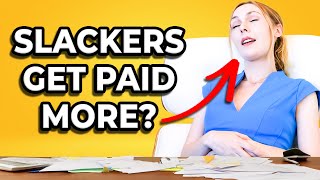
Madeline Mann explains why hardworking employees get passed over for promotion. Managers don't see the full scope of your work unless you make it visible. Harvey Coleman's research shows performance counts for only 10% of career success, while exposure and image make up 90%. One client, Tina, landed a Toyota job with a $40,000 raise by changing how she presented herself.
Questions this video answers
10%
30%
60%
$40,000
Toyota
Chapters
Just found out that I got passed over for a promotion that I worked pretty hard to get.
I don't understand why I keep getting passed over for promotion.
It's not okay though.
It's not.
You know, on Roblox, who put this thing together? Me, that's who. Tears rolling down in your face. The hardest working people and the most loyal people get passed up for promotions and job opportunities all the time. Who gets the job? A guy like George Costanza, the character in Seinfeld who isn't the best worker nor is he the shining penny in the jar but gets promoted. How does he do it? What do you do all day?
Not that much.
I thought that new promotion was supposed to be a lot more work. Yeah.
When the season starts right now, I sit around pretending that I'm busy.
How do you pull that off?
I always look annoyed.
When you look annoyed all the time, people think that you're busy.
The comment section for this clip are flooded with people who swear by this technique, saying things like, I use this every day at work. They just gave me a raise that really works. Always think I'm busy and I built a successful career on the back of this clip. I do very little. We are going to dive into the phenomenon of who actually gets hired. Who actually gets promoted and why is frequently the most qualified person overlooked. There are a lot of complex factors at play and this video will make you see your job and the way you interact with your manager and in job interviews in a completely different light. And stay to the end because I give a real world example of a visibility campaign that could transform your ability to get bigger promotions. If you're new here. So good to meet you. I'm Madeline Mann. I'm a human resources leader and career coach who turns job seekers into job shoppers. You may have seen me on Bloomberg, abc, New York Times and more. Subscribe to Supercharge your career. I remember one of my clients came onto a coaching call and was complaining about their manager. Oh, I keep getting so much work I'm drowning. I stayed up until 3am on Monday redoing the report and now my manager wants me to deliver the project plan by Friday. It's too much. And I asked, does she know that you stayed up until 3:00am well, no, but how else could I have gotten that done so quickly? Well, did you share with your boss that you had too much on your plate and ask for help reprioritizing? No, I wanted to be seen as a dependable and hard worker. This is the false idea that so many people don't realize. They think that by staying at work late and working around the clock that they're sitting status will be elevated. But that is often not true. They kill themselves to get things done, never complain, and meanwhile that coworker who only has six emails in their inbox and agonizes about being so slammed is lauded and promoted. The thing that many people don't realize is that it's challenging for your manager to know how much work you're doing for multiple reasons, such as, let's say they ask you to compile data for the top 20% of customers. They may think that's a basic task, whereas on the other side you find all of this data is muddled. So you have to contact three different departments and sift through dozens of pages of numbers, painstakingly reorganizing spreadsheets. Ugh. And you're over here fuming that you have this Goliath of a task on top of all of your other duties. Meanwhile, your manager is blissfully unaware at her desk doing her work, listening to string quartet versions of some 41 songs, and she truly has no clue that the task was so big and would be such a burden on your workload. Can we sit here and say, well, she should know? Sure, but that's not a productive use of our energy. Making her aware is the most important thing. Which brings us to the second reason, which is no one at work thinks too much about you. Sure, there are micromanagers, but even those managers have stuff to do. We think these managers will notice the hard work we've done, but they're often too distracted and busy to notice until we present it to them and a dazzling PowerPoint deck. The saying goes, if a tree falls in the forest and no one is there to hear it, did it make a sound? It's the same at work. If you work your booty off to hit a deadline and no one knows it, did you actually go above and beyond? If we're being honest, it's a no. An article by Meg Walters in the Stylist touches on the idea of performative work, where hours of our weeks are dedicated to work that's purpose is almost entirely to show that we have done work. This includes a debriefing what you've done in a day, creating weekly reports that never really get read, and even setting up meetings to discuss work to be done instead of more efficiently planning and executing that work. I call performative work the cinnamon toast crunch of professional tasks because it's the work you can see the article points out how this is largely a waste of time and employees could be using this time to be much more productive. But unfortunately there is a level of performative work that is important to do to make sure folks know that you're making things happen, such as Harvey Coleman introduced the concept of PI in his book Empowering Yourself the Organizational Game revealed. Coleman became discouraged when he hit a ceiling in his career while others continued to surpass him with promotions. After extensive research, he came to realize that while he was a top performer, he needed to also bolster his image and exposure. PI stands for the three factors to determine career success. P stands for performance AKA how well you do your job, which is what we are led to believe is what sets us up for career success when really it only accounts for 10% of our career success. I stands for image, which is how you are perceived by colleagues and this attributes to a chunky 30% of our career success. And that leaves E which stands for exposure, which is defined as people know what you've done and how it matters to the organization and hold on to your flip flops. That accounts for 60% of your career success. That means someone who does a modestly good job in their role, but they have strong relationships with those around them and their work is highly visible and understood to be valuable. That person is skyrocketing to the C suite of Zack and Cody. The same is found in the job search. One of the reasons my coaching clients are often so successful in their job search so so quickly is because in order to land more job offers, you usually don't have to change your skills and qualifications. You just have to change how you present and talk about them. Because being good at your job and being good at job searching are two different things. My client Tina was interviewing for her top choice company, Toyota when they rejected her saying she didn't have automotive experience so she couldn't be a fit. Then she joined my coaching program and I helped her to transform the way she presented her experience from her resume to her LinkedIn profile to job interviews and within three months I had her back at Toyota interviewing and she blew them out of the water. She was interviewing for nearly the same role, yet this time they were obsessed with her.
To my surprise, I was told that I was the perfect candidate. I mean so perfect that I ended up getting $40,000 increase in my salary. With the negotiation skills I learned from their course, I became their top choice. So they gave me a sign on bonus and they also gave me a car as part of the whole benefit package, so it couldn't have been better.
Tina was the same person who interviewed with them 90 days prior, except she had new tools on how to talk about herself and how to show up in interviews. It's so frustrating to hear this because it feels like a game, but fortunately it's a game you can learn and it's a game you can win. I'll link a free job shopping class below that goes over some of the strategies that made Tina so successful. Switching gears a bit have you heard of the term organizational citizenship behavior? These are actions we may do outside of our job descriptions that make a company or workplace better. When people do these activities, it can go a a long way towards improving the social and psychological environment in a workplace. Such as there are things like volunteering to help a new hire out by explaining to them the business model, remembering coworkers birthdays, helping to neaten up the kitchen at the office, working hard and staying positive when the client imposes a sudden challenging deadline, and putting together a team happy hour even though that's not part of your job. Many of these tasks fall officially to no one, so it's crucial that in the workplace people on these tasks in order to create a harmonious environment. Here's the catch though. These tasks are often fairly thankless. Sure, maybe you spent six hours this week planning the Software Engineering Team Karaoke night, which was a massive hit and such a touchstone moment for your team to bond. But then when it comes to your performance review, you won't be promoted based on how many parties you planned, but how much code you pushed. Your co worker Eduardo, also took an additional project that week, but it was to present the new software update to the leadership team. He chose a high visibility project while you contributed meaningful work that isn't valued as much in your vertical. Here lies the issue. Unfortunately, corporations don't properly reward organizational citizenship behavior, so the people who are the backbone of the team actually don't get the proper recognition. I was so acutely aware of this when I led human resources at a tech company that I had managers and employees rate themselves on how much they engaged with various organizational citizenship behaviors to show that the company values those actions and also that the company will take those contributions into account when doling out promotions and salary increases. Additionally, the idea of being a personality hire also rings true here for landing jobs one is not quite qualified for or earning promotions when you're not quite the top performer. That is because a personality hire is a term for someone who is able to match the energy of the interview panel and co workers bond with people and ultimately climb the ladder from being enchanting an example of a personality hire is the mayor of Idlewild Max. He clearly had no political experience before taking the office, but earned the position of with a 2/3 majority due to being such a good boy. And I get it. I mean look at him. I have a full video where I dive into the impact of personality hires and how also you could get hired based off your personality alone. I will link that below. On a personal note, at one of my past jobs I made it known to my manager that I wanted to be on the path for a promotion and a salary increase since I had taken on a lot of new duties and when a manager left I took over leading her direct reports, further deepening my workload. My manager said that each comp adjustment period she went to bat for me and the C level executives would say what impact is she really making? I'm not seeing it. So we did what we called a visibility campaign where I would meet with executives prior to starting projects to get their input and then I would update them along the way to make sure I had their buy in and that they could see the importance of my work. Additionally, the president of the company would consistently praise my direct report and since their work was very visible to the whole company, my manager would chime in and say things like yes, that team did a great job and Madeline's leadership through the execution of that initiative was so impactful so that he would understand that while I wasn't the first front person of that work, I was heavily involved in every step to ensure my team was successful. It took over a year to finally get that promotion, which was pretty demoralizing that it didn't happen sooner. And cue the comments that say corporate world is dumb. Leave and go and live in a van with a labrador and your favorite human. And you know you're not wrong, but I tell you the story so that you see the reality of how much campaigning you make need to do to get a promotion. The most important thing you can do is if you're not getting a promotion at work is to make sure you have options. Always have a plan of how you're going to land your next job and if you don't already have that plan, we will make one for you for free. I will link a quiz below that will help you get your job search plan so that you can land more interviews and more job offers putting you in the ultimate job shopper position. It really is my pleasure to make these videos for you, and I love reading the comments. So do share your experience below. Hit a like on this video. That's a huge help. And subscribe if you haven't yet. You've got this wi fi high five.
More from Clegg

The #1 Skill Gen Z Needs | Simon Sinek + Esther Perel | A Bit of Optimism Podcast







AI Won't Tell You the Full Truth | Arthur Brooks + Simon Sinek | A Bit of Optimism Podcast



How To Make the Best Decision | Arthur Brooks and Simon Sinek | A Bit of Optimism