Why the Best Person Won't Land the Job [The Undeniable Rise of Personality Hires]
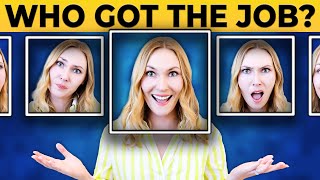
Madeline Mann explores why companies hire for personality over qualifications. Research shows the "airport test"—would you want to sit next to this person?—often trumps actual ability, a legacy of old boys' networks that persists in modern culture fit hiring. The result: talented people get passed over while likable underperformers stay employed.
Chapters
I had to tell a candidate who had gotten all the way through the interview process that she didn't get the job I was hiring for a project manager. We were down to two candidates. The one I encouraged the technical team to go with wasn't hired. She was level headed, a great communicator, well qualified, and when I broke the news to her that she wasn't getting the job, I could tell she was heartbroken. I told her that the team loved her and it was really close and they went with someone else. The detail I didn't tell her was that she was elbowed out by a personality hire. What's a personality hire? Cue the footage.
Hi, I'm the personality hire. I wasn't hired based on any skills or professional expertise. I was hired based on the simple fact that I was able to match the energy of everyone that was interviewing me. I have the unique ability to identify exactly what people want to hear. It pays well to be an extrovert in corporate America.
That's right. This hire watched the same shows as the software engineers, was able to joke with them and match their energy, energies and rhythms. Based on my interactions with the person we ultimately hired as her recruiter who guided her through this whole experience, I had flagged to the team that even in my short time knowing her, she showed tendencies to get flustered and anxious, which can be detrimental in a project management role. But her personality was so dang sparkling that even those warnings were overlooked and she was hired. Her tendency to get flustered and shut down in times of sensitive work situations ended up making her a difficult project manager to work with. But her dang personality saved her time and time again from termination. This example is one of a larger phenomenon that is happening in the corporate world and that is most open jobs get hundreds of applications and yet companies consistently don't hire the best person for the job. Companies will even hold on to mediocre or poor poor performing talent or even wilder promote them. There are several reasons for this, but one somewhat adorable reason is because some people are too dang likable to not keep around. Look around your office, how many people there are personality hires. Maybe even your one. We are going to dive into the insane long standing history of personality hires. The dark side of how the hiring process is truly messed up. But there's also the positive side of personality hires. And why is actually a really good strategy to get hired and get promoted. And you can do it if you approach it the right way. If you're new here, I'm Madeline Mann. I am a human resources leader who turns job seekers into job shoppers. You may have seen me in these places. If you're liking these videos, go ahead and subscribe if you haven't already so you can find this channel each time you want a quick shot of Career Juice One thing we have to acknowledge up top is that personality matters when it comes to hiring and promotions. Fast company reports that 70% of employers consider a candidate's personality to be among the top three factors in deciding whether to extend a job offer. Alex Sandy Pentland is an American computer scientist who performed an extra experiment where he analyzed the pitches entrepreneurs performed to a panel of executives. The sociometers tracked only the cues exchanged by the presenter to the audience and none of the actual words and content of the pitch and just based on the cues was able to rank the pitches in nearly the exact same order as the executives. Then the pitches were given to angel investors on paper and the rankings and dramatically changed. This is all to say that the content of a pitch does not matter near as much as how you say it and the vibe you're giving off. That's why in a workplace it isn't enough to do good work. Unfortunately, it's important to convey warmth and competence. Same as in the job interview. It's not simply about being qualified or delivering information, but instead it's important to for the interviewer to see your confidence and get excited to work with you. And these are the indications job shoppers give in interviews. If you'd like to go deeper on those strategies, I will link a free job shopping masterclass below. Let's jump back through history for a minute because while some of your coworkers simply got their jobs because their personality is like a combination of Tom Holland and Dwayne the Rock Johnson, favoritism in hiring has been around forever. It is a proud tradition to hire your son as your director of operations, your brother as cfo, and your college buddy as your chief disruptive innovation evangelist who never produces anything and just claims to be a big picture thinker. Going back in time in the United States in the late 19th and early 20th centuries, leadership in corporations was dominated by white males who would fill open job positions with men from their social circles, leading to what we now think of as the old boys Club or old boy network. It took way too many decades for companies to notice how strange and biased it is to have a business where most of the leadership team is similar from the same schools, same social circles. And according to the Advisory Group on DEI in Health Services research convened by Academy Health the diversity, equity and inclusion movement in the United States has its roots in the 1960s civil rights movement, but it wasn't actually until the early 2000 and tens that there was an increased emphasis on accountability to ensure that diverse groups are represented in leadership positions, often using social media to hold government, corporations and civil society accountable. Now, one could say that the pendulum has swung in the other direction where diversity hires are made simply to increase diverse numbers on leadership teams, leaving more qualified non diverse candidates in the lurch. This certainly happens. My point is if someone landed a job for a reason besides them being wicked qualified, it's highly more likely that it's because they are able to appear similar to the interviewers instead of different from them. The diversity of United States workplaces has increased over the years, though according to Zipia, men continue to dominate leadership roles, as you can see here, broken down by corporate roles, gender and race. Something else happened in the early 2000 and tens and that was the emergence of the concept of culture fit, which had an absolute chokehold on corporate America, especially in the technology industry. Culture Fit was the woke version of acknowledging that people don't just want to hire based on qualifications. Instead they've got to have that sparkle. The concept of a culture fit is innocent enough. It's the idea that you want to hire someone who shares the values of the business and has the right attitude. This makes sense as someone who has the personality tailor made for Apple's fast paced, innovative and highly results oriented culture may not be the best fit for, say, a company like Salesforce, known for its ohana culture, which is based on the Hawaiian concept of family and community. But anyone who was entrenched in this culture fitness fever dream we were all in in the 2000 and tens remembers that saying someone wasn't a culture fit was actually a coded way of saying I think their personality sucks. Top executives touted culture Fit as the hallmark of what makes their teams so great, and thus their foolproof way of hiring was born called the Airport Test. Have you heard of the airport test? Put yes, I've heard of the airport test or no, I haven't heard of the airport test in the comments. The airport test is where after an interview with someone you're supposed to ask yourself, would I want to be stuck in an airport with this person? This inane question was supposed to help discern culture fit, but really it just encouraged you to hire people with good banter. I would personally like to be stuck in an airport with Pete Davidson, but there's no way in heck that I would trust him to build out an effective financial forecast of the next year. This was all a grand ruse to allow people to make judgments about hiring based on who they like. When I was leading hiring processes during this Culture Fit heyday, quite a few interviewers would cite Culture Fit as the reason they gave someone a poor score. When I would press for more specific details, it nearly always turned out that they didn't like the person's personality. That person came across as rude or insincere or too intense or too whatever it is. The worst part about rejecting someone for Culture Fit is that you'll typically never get to see just how wrong your judgment was, further confirming your biases Such as Once there was a software engineering candidate who came through our hiring process unanimously, the engineers passed on her. Her skills were technically sound, but there seemed to be a gap Culturally, she wasn't quite easy to communicate with, there just lacked that effortless chemistry in the interview process. The hiring manager ended up overriding all of the down votes on her candidacy and hired her anyways because he saw potential. This was one of the rare cases where we got to see if this Culture Fit judgment was right or wrong. She went on to become the top performer of the engineering team. Sure, it took people a while to eventually break through and connect with her, but she garnered mad respect with how thorough and diligent her work was. She was the teammate that everyone could count on. So while it's great to have a jokester in the office to lighten the mood, that's what she said.
In the end, generalizing that mentality to every hiring decision can make you miss out on your best hires. Then, in the late 2010s, there was a huge blowback against Culture Fit. People seem to wake up to the fact that the movement was simply rationalizing biased hiring practices, and companies began removing it from their hiring process. I recently googled Culture Fit, and the entire first page of Google are articles that disdain the term so wholeheartedly. Saying the term at this point in HR circles is like muttering Voldemort. Companies like Facebook, which once embraced culture fit, went fiercely in the other direction, with a Facebook spokesperson reporting in 2019 that at Facebook we've explicitly asked interviewers to not use the term culture fit when giving feedback on a candidate, because that phrase can easily allow bias to influence the outcome of an interview. Which brings us to the present day with this idea of personality hires. What I love about the concept of a personality hire is it gives a name to something that has existed forever. It doesn't hide the fact that we hire often based on how much we like someone nearly as much as if they were talented. It's even refreshing to see many people proudly declaring themselves as personality hires. These are the people in the office who remember people's birthdays. They take a sincere interest in what's happening with your sick dog, and they brighten your day with a well placed meme. These people are proud to make their co workers and days brighter and admit that they might not be the most qualified person for the job, but what they don't have in technical capabilities, they make up in Riz. While I would never advise a hiring team to look for personality hires, I can't help but wink, wink, nudge, nudge you as a professional to embrace your potential to be kind of a personality hire. There are quite a few perks to being a personality hire. Personality hires may receive disproportionate recognition, praise or rewards come compared to their actual contributions. This is because people praise who they know and who they notice. If you are great at catching up with your co workers and talking about what you're working on, you drive a lot of attention to what you are doing, even if you're not working harder or achieving more than your less visible coworkers. One way to get promoted is to start smoking. Well, metaphorically, such as when Rachel from Friends took up smoking so that she wouldn't be left out of key work discussions and promotion opportunities. Okay, okay, okay. It was so funny over here. I thought you didn't smoke. Oh, you know, I. I thought you guys meant marijuana cigarettes. You know, while I don't think that you should start smoking, there is something to be said of finding informal ways to communicate with leadership at your organization to more likely get a raise or saved from layoffs. Is any of this fair? Absolutely not. And I would never pretend that it is. But is this reality? Absolutely. Additionally, you can use this idea of a personality hire to ace a job interview, even if there are more qualified candidates in the pipeline. Repeatedly, I have seen hiring managers choose less qualified candidates due to three components. First, passion for the role. If you can come into the interview process with a very clear and palpable passion for working at this particular company in this particular role, you may very well dazzle the interviewer. I'll link a video on how to answer the question, why do you want this job? To help you perfect this. The second component is attitude. If you come across as as someone who is humble, hard working, a great learner, eager to please that can go a long way. People who come across this way appear to be easy to manage because they tend to be self starters who proactively look for problems to solve and then go ahead and solve them. And they tend to have an overall positive nature with a no task too small mentality. I think all of us want to work with a team player like that and the third component is being friendly. Straight up. Some of your co workers will spend more time with you than their own children, so it's no surprise that they want to work with someone who is nice and easy to talk to. This means coming into the interview ready to build rapport, looking to build a friendship with the interviewer instead of simply answering their questions. And this can manifest in something as simple as having an answer to that is more interesting than good when they ask how are you at the beginning of a job interview? This is all to say that hiring based on personality likely isn't going anywhere as long as humans are doing the hiring. But well, with AI we could start to cut the human aspect out and tweak the AI to mitigate against traditional biases. AI often focuses more on skill based hiring over pedigree and personality, which is a much more accurate predictor of success and will lead to stronger, more diverse teams that have both the breadth and depth of skills to deliver, says Stacy Donovan Zephar, founder of the talent agency Frida Polly, chief data scientist at Harvard, explained in the Harvard Business Review that if AI shows bias, it can be addressed and corrected. In contrast to unconscious bias in people. We are so afraid of automating too much of the hiring process and losing the human touch. But what if losing the human touch is finally what makes it fair? It would also make it harder for you to land a job as a personality hire. So it's a double edged sword. What do you think? Are you a personality hire? Have you worked with personality hires? Do you think the hiring process needs the change? Share your thoughts below. And I put a heck of a lot of time into these free videos and all I ask is if you could smack a like on this video and make sure you are subscribed. If you're not already, you've got this wifi high five.
More from Clegg

The #1 Skill Gen Z Needs | Simon Sinek + Esther Perel | A Bit of Optimism Podcast







AI Won't Tell You the Full Truth | Arthur Brooks + Simon Sinek | A Bit of Optimism Podcast



How To Make the Best Decision | Arthur Brooks and Simon Sinek | A Bit of Optimism