Why Their Job Search Isn’t Working (and How to Fix It) [Job Shopper Ep 1]
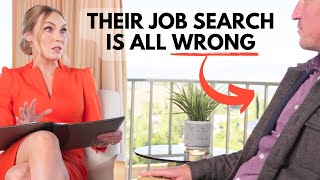
Transcript of a Madeline Mann coaching session (YouTube: Job Shopper Ep 1) where six job seekers are coached to become clearer and more compelling candidates. Madeline introduces the ‘four Cs’ (clarify, curate, concrete, connect), guides participants to pick specific target roles, and selects three candidates (Stephanie, Steve, Al) to advance to interviews with an executive recruiter.
Chapters
I've currently been out of work for approximately nine months.
I need help. I need coaching. I need someone to tell me how to nab the job.
I've been the groomsman or the best man, but never the groom.
It's soul crushing. It's a roller coaster of emotions.
I would stand to lose my house.
It has affected my confidence for sure.
This is Job Shopper, where we take job seekers struggling in their job search and transform them into irresistible candidates.
What do you think I should be focusing on right now?
What you have is autobiography syndrome. I'm Madeline Mann, a human resources leader and job search expert who's credited for helping hundreds of thousands of people land their dream job.
I think it's different when you lose your job.
You've been so afraid of picking that it has kept you frozen. Join me as I take six job seekers and transform each one of them into a job shopper.
My experience as a job seeker has been really frustrating.
It's really frustrating because you leave those interviews, those experiences, and you think, I've.
Got this feeling that you've crushed it. And then only to learn that you know, in fact, you did.
Not so often. It's just crickets, you know, I don't.
Know how I did.
I don't know what they thought.
It can be a very toxic environment.
I came to see Madeline because I was in pursuit of a dream job.
I woke up today and I said, I don't know what today is going to hold, but I think I'm going to learn a lot.
I walked into this mansion, essentially, and got to meet the other people that are involved.
We have a pleasant group of people, all great professionals, that are all wondering, why haven't I landed that job yet?
Hello, everyone.
Madeline walked out with so much excitement. It was really inspiring.
She's a force of nature. She's just full of energy and ideas.
I have invited each and every one of you here because you all have incredible skills, abilities, experience, and it's about time that your opportunities match your ambition.
I've followed Madeline since 2018, and I think that she just has a very approachable way of speaking to you about the job search process.
There's a big difference between being good at your job and being good at job interviewing. And so what we're going to focus on during our time together is how can we go from being a job seeker, where we're hoping that companies will give us the time of day, to being a job shopper where the companies are competing for you?
I'm here because I Actually used her skills in my last job hunt and was very successful.
You will have the opportunity to land a job at the end of this. If you're ready, you will be put in front of an executive recruiter who is at the top of his field. And if he chooses you, he will place you in one of his open roles. And if none of his open roles are your dream job, he will represent you until you find it.
Wow.
I am excited to become a job shopper rather than a job seeker.
What I would like next is to get to know each and every one of you. If you could introduce yourself and share, what would you like in your next career step? This was my first test. The most important and most foundational part of a successful job search is to be clear and specific about exactly what you're targeting. Rosina, we'll start with you.
I'm Rosina. I'm from San Diego and I've been a high school biology teacher. I'm in my sixth year of teaching and I would really like to use my skills to transition out of this formal education space.
Hi, my name is Eric. My name is Derek. I'm from Southern California. I've been in the automotive marketing and training industry. What I'd really like to do is to really understand my observational, analytical, creative mind that is always operating and really be able to put it in the right place.
No one is saying what they want. They're not being direct. It's not answering the question of what you want in your next career step. If you simply say I'm looking to transition out of education or I want to understand my analytical mind. These answers are stuck in the past. What's next?
I'm Steve Lake and I'm from Omaha, Nebraska. I work as an administrative services manager with a focus on facilities and operations. And my goal is to work at a progressively higher step to do more than I'm doing now. I'm capable of a lot more.
I'm Al Salerno. I'm from Hohokus, New Jersey. I've been in it over 25 years, and I also have a lot of other talents that I. People tell me that I'm really good at. So my question is to find out whether I should be in another industry. Being out of work and not being around technology and the challenges of technology tends to take its toll after a while.
Hi, my name is Stephanie. I'm from Apex, North Carolina. I've been in human resources for the past 14 years. My goal is to land an opportunity with a medium to large size tech organization. I've been on plenty of interviews and my goal is to finally land a role.
I'm Steph Sharkey Schultz. I'm from everywhere and I have 15 years of experience in the workforce. Between the industries of hospitality, finance and tech, I'm looking for something that will give me international mobility and allow me to be celebrated for the creative person I am. I came here to find what's reality. My expectations are great, but what's reality? And where do the pieces of my puzzle fit in?
Thank you for answering the question what do you see as your next career step? Unfortunately, none of those were the real answer. We danced around some different ideas from your past, but I want you to embrace what is that next step and be confident in it because an employer is never going to be confident in you if you aren't confident in yourself. Being precise about what you're targeting in the job search will make or break your results. What's the job title? What's the industry? How are you going to add value to a business? This needs to be dialed in in a job search so that it will move so much faster. Next up, we are going to dive into what these employers are looking for. We're going to walk through the four Cs of how to make sure you're making the best possible impression in these interviews.
You're here because the job search has been a struggle, it has been a slog, and it's time to turn that fortune around.
She's great at what she does. Madeline is. So I'm open to whatever she has to say.
There are four things that employers are looking for in the interview process. These are the four Cs. The first one is clarify what companies want to hear is exactly you knowing what you want next. A lot of us think that a job interview is where we try to say what the company wants to hear. But actually one of the things that the company wants to hear is you knowing what you want and them then selling you on the opportunity to say we can be that for you.
The way that she approaches her coaching, I like that she kind of speaks our language.
The second c curate when you are interviewing with a company, they don't want to hear your whole life story. You have so many experiences and skills. They actually want to know can you solve our problems. You are selling a service and they are determining whether or not they want to buy that service.
Question about humor. Is there any room for humor?
Humor can be wonderful in an interview, but it can also be dangerous. And I Would say, when it's dangerous is sarcasm. When you're thinking about jokes, what comes to mind?
Usually it's sarcasm.
I would definitely avoid sarcasm. It's just too risky. It can come off the wrong way. The third C is concrete. Be specific about the information you give the employer, such as if they ask you something like, what are your greatest strengths? Don't simply say, I'm collaborative and I'm a hard worker. No, give specific examples from your background. Help them to picture you in the role.
Madeline speaks with such passion, and I want to learn as much as I can from her.
The fourth C is connect. So often we are so focused on getting the right information out that we lose the human element. Let's remember that they are looking to hire a co worker and show up to that session as if you are an equal and someone who's going to work with that person.
I think when I've come into interviews, I see myself as in this inferior position, but it's really like, no, I'm an equal.
Let me show you how right I would come in. Like, I already have the job. Let's just figure out how I can make sure I get up to speed as quickly as possible. And that's compelling. Great session. Now I'm going to meet with each one of you one on one, and we're going to dive into your situation.
I feel like I've known Madeline for a long time, yet we haven't ever personally met.
We go way back.
We do.
You took my resume course. That's why I was so surprised when I read that you've applied to over a thousand jobs.
It's been very challenging. Like, after a while, you're just like, is it me? Is there something I'm doing wrong? Why aren't I getting callbacks?
Where did that toxic mentality start?
I think it just had to do with the duration of time. Some days I see myself better than others. I think our failures can sometimes get the best of us and doubt creeps in.
There's not even a thousand jobs out there that you'd actually want.
I think it's different when you're career shopping and you have a job, obviously, than when you lose your job. If I don't have the luxury of finding a job, I still need to pay my bills.
This panic fire drill of I need to land a job is the exact thing that's preventing you from landing a job. Al, what job do you really want?
I don't have an answer to that question. My dream job is to be employed. For a long period of time doing something that I love to do, you know, like I don't.
Well, it is important that you pick Elaine.
Right.
Because you've put out a thousand job applications to jobs you don't want and companies can pick up on that.
Madeline told me that I need to work on really deciding exactly where I want to go in my career.
When you piece it all together, what do you really want?
My strong point is connecting people with technology. I want to be an IT support manager for a company that understands the value of support.
These jobs that you're applying to, do they fulfill that criteria?
She made me discover that it's probably been self doubt and that's caused me to change my trajectory.
Al, let's do this. What job do you really want?
I want to be an IT support manager for a company that actually appreciates the products and the services that they offer. I have a lot of passion for what I do. I have passion for people. I have a lot of compassion for people.
Al, I got shelves. You're the IT leader that everyone wants to hire.
I think I definitely do feel more empowered. I definitely do feel that I needed to make a decision in what exactly that I wanted to do.
Talking to Al, I could feel the vulnerability. He's put up this protective shield of blasting out resumes and never committing to high quality employers. To see him finally claim it and start to build up that confidence, it gives me hope.
I came to see Madeline because I was in pursuit of a dream job.
Hey, Eric.
Over my whole course of work, I don't feel like I've been the ultimate captain in deciding what I want to do.
What job do you want?
That's where I think I'm unclear as to what job I'd want. I'd love to be in a position where I'm using my ideas, the way my mind works. It's very observational and I'm able to take a look at the picture and just make those final adjustments that people aren't seeing. I know. As a friend said, I'm good at taking a piece of cheese and putting holes in.
What job is that?
A critic? A consultant? Potentially.
Consultant is the most broad term you could ever say. I could consult on anything. I'm consulting right now.
Yeah.
Where does this fear of picking a direction come from?
I'm not sure where it comes from, but if I pick one direction, I'm leaving out all the other directions I could go.
But you're not going any direction.
Eric is afraid to commit to a path and he has been stuck not picking for over a decade. He's playing small and he's afraid to take a risk and do the hard work to figure out what's next. And sure, he might end up being wrong at first, but he will be one step closer to getting it right.
And I guess I'm afraid to commit to a path if that's not the ultimate path that I should have committed to. Most of the work I've been doing has always just come to me. I need to grab a hold of the boat. And not just.
This is what's called being on the lazy river and being rudderless. Being on the lazy river of your career means you are sitting in an inner tube letting the current of your career happen to you. You stumble into opportunities, you don't take full control.
What's keeping me from being the captain of my ship is not deciding what I want to do.
You've been so afraid of picking for so long that it has kept you frozen.
I agree with you on that one.
You know how you figure it out is you soft launch it. This is the lane I'm going into. Hospitality management, whatever it is. You talk to people in that profession, you start to really understand the industry. You immerse yourself and then if after 30 days or whatever and you say, no, I don't like this, you don't have to feel like you missed out on other things.
The hesitancy behind owning that is maybe the disbelief that I'm going to fit that role.
Do you feel ready to pick that lane and try it on for size?
I'm ready to attempt picking a lane.
Let's just say it. Okay? I want you to say, I'm going to be a property manager for a hotel chain. Say it out loud. See how it feels.
I want to be a property manager for hotel chain.
Did you believe yourself?
I believe more of myself. It was eye opening, but very beneficial as well.
It was tough to hear Eric repeatedly say that he spent his whole life rudderless and without direction. And there's a lack of courage there. The courage to try something, to put yourself out there, to pick a direction, to feel really uncomfortable and go for it and go all in and maybe it not end up being the right thing. That's okay. And he is unwilling to do that.
So I wanted to meet with Madeline because I wasn't getting job offers, I was getting interviews, but could never seal the deal.
It's so good to sit down with you. You are one of many job seekers I've talked to who are Leaving the teaching profession.
I always tell people, it's not the kids. It's never been the kids. I love the kids. Just all of the other junk that goes with teaching.
As I was looking at your resume, as I was looking at your LinkedIn profile, I couldn't tell what you wanted next.
I love science and I love education, so I know I want to combine those experiences. I've been looking at jobs at museums, aquariums, and those kinds of institutions to do educational programming.
You have been fairly successful. You've landed seven interviews and made it to the. The final rounds four times.
Yes.
Which is.
But I'm not getting the jobs.
Yes. Yes. So that's what we're going to address. But I will acknowledge that's pretty darn good.
I've interviewed so many times, it's just not getting the jobs, so that's been frustrating.
Have you been going for these Director of Education roles, and have you been able to land any interviews for those?
Yes. So I'm waiting to hear back this week. If I got one of those roles. I'm one of the final two candidates, and I should hear back any day now. If I got this particular position, I.
Can relate so much. The thing was that got a company to hire me. I came in with a strong vision. Here's how I would run your HR department. Here are the biggest trends. If you start to do that, me as the interviewer, I start to say, oh, like, let's discuss this.
When I've come into these interviews, I'm coming from a place that of inferiority, where I don't want to overstep or bulldoze anything. After talking with Madeline, she made it clear that it's okay to have vision.
Coming in with strong answers. Made them say, well, that's the person we need.
So I'm now just overthinking how all of my previous interviews went, because I'm like, okay, shoot. Did I not explain my vision? Did I not share concrete ideas?
You do have excellent skills and that you do present very well, so there is a very good chance that you do get that job. But Rory is the executive recruiter who is coming to interview. When you introduce yourself, how would you frame what job you want?
I want to be a director of education, and I know I'm a great fit because I have the skills to work with a diversity of people. And I feel like communication is the hallmark of a good education director.
Yeah. And I think that at the last piece there, you could tap into the vision a bit, saying, I've thought about this. I've thought about your museum, I've thought about your programming because they obviously think you have the skill sets. It's just the closing that needs to happen.
She noted that I do well in interviews. It's just these fine tuning pieces that I could improve on to actually get the jobs that I'm applying for.
I could tell there was a fury of anxiety. She has a pending potential job offer and her realizing she may have messed up that opportunity based on the feedback we were giving her.
Hi, Steph. Good to see you.
I'm looking for a stable job that I can hold for several years. I just want to know how to access those jobs because what I've done so far hasn't been enough.
Okay, so good to talk to you. So I was on your LinkedIn profile today and was counting the number of jobs you named you could do in your headline. Content writing, Human resources specialist, User experience designer, Quality Assurance specialist.
I have lately been applying to all these different job titles just to get a job. Any job.
You need to pick a path, devote yourself to that. Because right now what you have is autobiography syndrome. Autobiography syndrome is where you tend to want to tell your whole career story and what makes you dynamic when companies don't actually care. I can't have nine professions on your LinkedIn profile. I need to see one.
Not any one thing that I have done or would love to do has been able to pay all of my bills.
You were to land the job you want, what would that job title be?
Creative or Media Director. Because I am great with leadership. I care about people, I care about the well being of others, and I care about getting the job done. I want something that you know is going to be stable and long term. You know, because I've done a lot of gig work and I want to know how to land that dream role. Let's work on it. I'm ready.
Yeah. Okay. All right, let's claim it right now. So I want you to now reposition your answer to speak to Creative Media Director. What specifically are those skills that most people don't have?
Oh, the. The emotional intelligence and ability to kind of.
You're keeping it high level.
Am I? Okay, sorry. I guess being willing to learn and roll.
No, no, you're keeping it high level again.
So like 30,000ft.
Yes, yes, you. I'm so high. Steph says she wants to be a Creative Media Director, but it's clear that she doesn't know what that entails. Companies aren't looking for someone who's simply willing to learn and be empathetic, you need real marketable skills to actually build a career. The way you're talking, you could General.
Yeah, yeah.
You could do all these jobs. You need to sink into a role and be sleeping, breathe. It absolutely speaks the language and right now our language is too high level.
After talking to Madeline, I understand the importance and the benefit of honing in on a niche and doing your research on that niche.
Stephanie did something that a lot of job seekers do, that when they think they're describing their skills, they say things like, oh, I have emotional intelligence and I can communicate with people and I can organize a mess. And these are not skills that an employer is looking for. Really. If she wanted to be a creative director, we need to hear what marketing campaigns has she done? How has she worked with videographers, photographers, graphic designers? How has she, you know, ideated something from start to finish to really put a brand on the map? Those, those are the things that a company is looking for. Those tangible results that are specific to this opportunity, not these high level ideas like, I'm a leader.
I thought coming here would be just probably the best opportunity I could ever have to have someone who's incredibly gifted and give me honest feedback.
I've read a lot about your story. You've lived lots of places and you're a self described trailing spouse.
I was married and my wife was in oil and gas and working in oil and gas. You move around a lot that has.
Led to you having to end a lot of employment opportunities before you would have chosen to.
I don't regret that at all because at that time that was the right thing, thing for me to do. Now it's kind of impacted my search. My experience has been in a number of different industries and so I lack the specialization that I think some employers are looking for.
An employer really wants you to own your domain. Too many people think that staying open to opportunities is what prevents them from landing opportunities, but is actually the Achilles heel of what prevents them from landing their dream job.
Because I've done so many things, I tend to want to just vomit that out on a resume and just say, look at all the things I've done. Certainly I can do this job.
So let's put your career first. Now, right in this moment. What is that domain?
Oh, I feel like if there's one answer in life, it's it depends. Some of the biggest roles I've ever had. I wore so many hats and I did so many different things. So I'm looking for an employer that Values that.
The way Steve is currently presenting himself to employers is, here's everything I've done in my past. Make sense of it. When he will go job shopping so much faster if he says, I'm perfectly positioned for this exact type of role. And here is the evidence for that. What direction would you commit to in Omaha?
Tech is great. I would choose that first because I feel like that would be the best option for me. I've actually had recruiters reach out to me about FM positions for companies in Omaha in tech, but haven't gotten the interview.
So a manager of facilities at, let's say, LinkedIn, that'd be amazing. Can you claim that? Is that what you want? Can you state that is what you want?
Okay. Okay. My goal is to work in tech as a facilities administrative services manager at the. The senior or director level in Omaha or nearby.
After we say goodbye, I want you to practice this. I want you to go through your experience. Why am I the best fit? Really zero in on that.
What Madeline did was get me to focus on one thing, focus on one thing, and convince them that that's what I want.
Steve is an example of someone whose career came in second. And that means he has an eclectic background, but that is the biggest reason why he needs to pick a lane and he needs to be compelling. About now I've decided someone else has chosen for my. My entire career. Now I'm choosing. And really having that confidence in his direction is what is going to make companies say, yes, we choose.
I was very excited to meet Madeline because a lot of the times these organizations are hesitant to provide feedback to the candidate. You know, like, what did I do wrong? What could I have improved?
My heart goes out to you. This has been a tough job search process for you with coming this close to so many offers that just must be killing you.
Absolutely, yes. It's been a long journey. So I've had several interviews. I've interviewed at four of the five big FAANG companies, as they call them. My dream job is to work for one of the FAANG organizations, as they call it. So these are your Facebooks, your Amazons, Netflix or Google, or a similar organization in the tech space.
You had 12 roles you were interested in. You landed interviews at six of them, and you made it to the final round of four. What I call this is the silver medal curse.
Right?
Where you keep getting so close and then they hand someone else the gold. They say, oh, you get the silver medal, though. We really liked you. If you are going to be that gold medal, Candidate, they interview as if they already have the job.
A piece of advice that she gave me was, you know, show up to that interview knowing that you're going to get a role no matter what.
I would love to practice that with you. So the question is, let's say our company has an employee retention problem. How would you solve it?
The way that I would go about solving that is taking a look at HR data. I'm also having conversations with leaders of the organization.
This is solid. I would say this is a silver medal answer for sure. Okay. What would make it a goal is starting it off one of two ways, either asking a question or making assumptions. So what that looks like is, okay, you're. You're having an employee retention problem. So how long is this retention problem been happening? What's going on in the business? Or you might make assumptions. You might say, well, I'm going to assume that this is impacting the technology team, and that helps you to really come at the answer with a lot more perspective.
The fact that she was able to give me that on the spot feedback was really, really helpful.
I do see a professionalism about you.
I have heard that feedback before where Stephanie's great. She's just so professional. I think I come off way more professional when it's a job that I'm really interested in, that I am so passionate about. And yes, you're right. There is a wall. There's a guard up. When there's been roles that I apply to that it's just like, maybe my third choice. Those are usually the ones that I also get further into the process.
How do we say the stakes have never been lower? Like, you're here, whatever, you know, let's. Because everything is within you. Like, you have the great experience, everything. But we do want to break through that shell because people want to work with you.
I guess I'm putting these companies on a pedestal. So for that reason, I'm showing up very differently. And it's definitely coming across during the interviews.
Stephanie has it all. She is stacked with her resume, and that is what the silver medal curse looks like, is having everything but missing that belief in yourself. And I absolutely believe that Stephanie can get there, but she has to break through.
I'm not sure where I stand amongst the other competitors.
We're all here for the same reason, and I think we're all gonna leave with a lot more information than we came here with.
Now it's time to make some decisions. Only some of you can move on to meeting the executive recruiter.
If I can teach hundreds of kids how to do biology. Then I kind of feel like I have a great chance at getting to the next stage.
I want to ask you the question that is the most common interview question. Do you know what it is? Tell me about it.
Tell me about yourself.
Yeah, everyone asks it so frequently and I would like to hear from you. Tell me about yourself. Rosina.
I'm Rosina Garcia. I am a high school science teacher. Previously I have had positions in labs such as the NASA Jet Propulsion Laboratory and I would love to transfer my skills and expertise to an informal education position.
What job is Rosina going for? I wish her answer said that.
My name is Al Salerno. I'm an IT professional and I have a background in IT, about 25 years experience. I'm very customer focused.
If you aren't clear on exactly what is your next career step, a company will not be convinced either.
My name is Erik Jones and just in general I'm a good guy that has an ability to see things that most people can't. And so that's something that is pretty unique about myself that I think I can provide value for any organization.
Eric's pitch is I'm a good guy. I can do things.
I'm Steve Lake and I've been a standout professional in facilities and operations management for a number of years. I've done everything from making workplaces safer to making them more inviting and a place that employees want to be at. And I would like to do that in the tech industry.
Steve was clear. He stated some things from his past experiences. He's giving me hope.
I'm Steph Schultz and I am an excellent fit as creative director because leadership is not only about knowing what the situation, what the objective is in completing the communication need, but it's also about leadership is also about how you can serve and how you uplift your team.
Okay, Stephen, starting strong. But then where did this TED talk on leadership come from?
Hi, my name is Stephanie Tam. I've been in the employee experience field for the past 14 years. My goal in my career is to land a full time role at a medium to large sized tech organization.
Excellent. Okay, thank you for that. I am going to go deliberate and when I come back, some of you will be invited to tomorrow's interview.
I don't feel that anybody's actually my biggest competition.
I believe that I am valuable and I have a lot of value to bring.
I am experienced, I'm qualified, I'm a good person. I think I would be an Asset to anyone's.
Stephanie. In the tell me about yourself answer, she still had a similar approach as she did in the beginning of this process. And I am seeing progress, but I really want to see her level up from that silver medal to the gold.
Eric, Eric, Eric, Eric. I haven't seen progress. He's been stuck in this mentality of being so high level and self describing. I worry if I put him in front of an executive recruiter, he's gonna waste his time.
Steph, Steph. Steph has so much passion, so much energy, and she really came into to this process wanting to be coached, very open. She does have an issue though. She kept it high level. When we were doing the tell me about yourself and she talked about the role, she kept it at talking about leadership. Steve. Steve really surprised me through this process. When I asked him tell me about yourself, his answer got more specific versus spreading out and talking about all kinds of different things. Rosina. I see so much potential in her. I can see her as a director of education. I can see that brilliance in her though. She has a long way to go.
Al.
He is at a vulnerable mind state right now. I don't know if he's fully ready and fully confident to be in front of an executive recruiter at this point. Moment.
We're kind of kept in suspense. There's kind of a mystery, there's kind.
Of an excitement, kind of nervous and just sort of apprehensive or curious as to what's going to happen.
I really had no idea what to expect.
I only have three invitations in my hands. And I want to be clear, if you do not receive an invitation, it does not mean you haven't made amazing progress. It's you're just not ready for the interview tomorrow. Okay. The first person I would like to invite to tomorrow's interview is Stephanie.
It was great to hear Madeline comments. My name, it was validation that I've been doing the right things.
The next person who's invited to tomorrow's interview is Steve.
I was surprised because I was sitting with a bunch of talented people.
This final invitation goes to Al.
I was really surprised because part of my journey has just been a lot of discernment and I'm really just overwhelmed.
For those of you who weren't invited, it's been such a pleasure getting to know you and I know you're going to take everything that we've talked about and absolutely soar in your careers. So thank you so much for joining us on this journey. Thank you again, Steph.
Thanks for being your time.
You romped it. Eric. Excited to see what you do. Christina.
Madeline.
Oh, my gosh, yes. You're gonna be appreciated.
Yeah.
All right, well, the interview's tomorrow. Huge congratulations to you three. I do have an assignment for you. So your assignment tonight is to send an email to Rory Verrett. That is who you're going to be interviewing with tomorrow. In the email, I want you to introduce yourself. And over a short video, say what job you will be interviewing for tomorrow. All right, well, then I will see you tomorrow at the interview.
I can't wait for what tomorrow brings. And I just couldn't be more excited about this.
I'm going to really take the feedback that Madeline provided today. With the four Cs and walking in with confidence into the interview.
I'm going to do the best I can at proving that. That I am the right person for the job. Because this is something that I really want.
This is gonna be an interview that.
Might be a little bit different.
If you can interview with Rory, you can interview with anyone.
Rory found you too good to be true.
Why are you not at the director level?
You had to ask a lot of questions to unravel what was happening.
My theory with you is that when you don't like something, you take your marbles and you go home.
This journey for me has not been easy.
You are going to finally get feedback on your job interview.
That really fuels me to prepare as best as I can.
What stood out to you that you really liked?
He's technically expert.
This is a secret to acing an interview.
To be selected, it would be everything.
That was a moment. You could have won this whole thing.
What's your superpower?
I consider myself, Rory, a unicorn.
That's a high compliment to give yourself.
More from Clegg

The #1 Skill Gen Z Needs | Simon Sinek + Esther Perel | A Bit of Optimism Podcast







AI Won't Tell You the Full Truth | Arthur Brooks + Simon Sinek | A Bit of Optimism Podcast



How To Make the Best Decision | Arthur Brooks and Simon Sinek | A Bit of Optimism