You Don't Lack Abundance You Lack Awareness
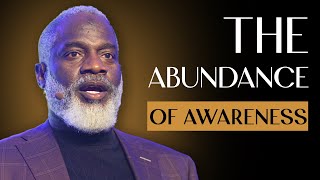
Myron Golden argues you don't need more resources, just awareness to see what's already there. He traces Genesis stories about Abraham and Sarah to show how God opens eyes to hidden wells, then shares how a coach raised prices from $1,200 to $20,000 and made $400k in a week by shifting perspective.
Chapters
You are about to discover that you have way more abundance than you thought you had. In fact, I talk to people and I watch them struggling. And I'm asking myself, like, why are you doing this? I know you think the struggle is real, but I promise you, the struggle is not real. It's imagined. And what I mean by that is you already have access to the abundance of the things that you are working towards and seeking. The thing you lack is not abundance. It is. And the thing you lack is not access to the abundance. The thing you lack is awareness of your access. And you're about to discover how to tap into a new level of awareness for an old level of access and an old level of abundance. Let's go. There's a story in the Bible about a man named Abram. Abram. His name means high father or exalted father. But the problem with Abram was that he could not have children. So imagine. And by the way, let me say this. Names in the United. In the west are just what we call people, right? But in the Bible, names were more like. We think of nicknames. Like, when I was a little kid, my nickname was Big Head to my brothers. My nickname is still Big Head, even though I grew into my head. Okay, I know. I'm keeping it real. I grew into it. I know y' all think that's funny, but my head was the same size when I was in first grade. My body was a lot smaller. Okay? So. So. But it's a. It's more of a description. So. So Abram's name being high father and he could not have children, it became a source of pain and a source of shame and a source of, like, discouragement and disappointment. And every time somebody called his name, it reminded him of his insufficiency. How would you like it. How would you like it if your name was, hey, rich dude and you're broke? Or, hey, skinny and you're fat? Or, hey, fatty, and you're skinny and you can't gain weight. Like, it would be like, hey, genius. And like, you can't read or write. Nobody has a desire to have a description or a nickname that reminds them of who they are not. And so that's who Abram was. And God came to Abram in Genesis, chapter 12. And he said, if you will leave your father's house. Well, if you will leave your country, your kinsmen, and your father's house, I will make you something you can't make yourself. I will give you something you can't get yourself. I will Bless you in ways you can't bless yourself. I will take the source of your shame and make it the source of your fame. And in you, all the families of the earth will be blessed. Can you. So that's what God told Abram. Abram said, you know what he said? He said, I'm out of here. I would have loved to been a fly on the wall. When he told Mrs. Abram Sarai, he goes to his wife, Sarai, and says, baby, we are leaving. We're leaving. Where we going? I don't know. God told me he was gonna let me know when we get there. Like, I don't know about your wife, but my wife has questions.
Right? Like. Like, why did he do that? I don't know. I don't know. I didn't ask him why he did that. Right. So where are we going? Like, I can only imagine the conversations that went on between Abram and Sarai. And they both had enough faith to leave the land of the familiar. Now, I believe that one of the reasons God told them to leave the land of the familiar is because if they didn't leave the land of the familiar, the people who knew them for what they weren't would not let them live down who they weren't so they could become who God intended for them to be. They had to get into a new environment where people didn't know what their weaknesses were, where people didn't know what their infertility. They didn't know about their fertility issues. They didn't know that he was the high father with no children. He had to move him out of the place where people knew him for what he was not. Into a place where people would know him for who he was.
And so God made the promise. But guess what year went by? Nothing happened. Ten years goes by, nothing happens. Another ten years go by, nothing happens. It gets to the point Sarai comes to Abram and says, hey, I know God made us a promise, but you know what? Why don't we just help him out a little bit? You know, like I'm too old to have a baby. You know, like I'm. Come on, Abraham, you know, I'm. You know, I'm 80. 80 year old women don't have babies or. I'm 75, 78. Whatever it was, the nursery's been painted for a long time. This ain't working.
Well, what do you want me to do, baby? Well, you know that pretty little handmaid of mine, Hagar, Why don't you just go in like you and her have A baby for us. And Abram says, you sure? Baby? Okay. And then.
We gotta understand these are real people with real emotions and real feelings and real flesh. Can I get a witness? Right. So they decide, this is what we're gonna do. So he goes in, he has an intimate relationship with his Handmaid. She gets pregnant, has a baby. This baby boy that Abram's been waiting for his whole life. But he wasn't the seed of the promise. He was the seed of the flesh.
So he was not who God was talking about. He was not the one God gave Abram a promise for when he left his country and he left his kindred. He left his father's house. This was not the promised seed. This was the seed of the flesh. So.
By the time Abram's 100, when Abram's 100, and Sarai, his name's changed to Abraham. Her name's changed to Sarah. When Abraham and Sarah were 190, he was 100, she was 90. She gives birth to a baby boy. The other boy is 10 years old. Maybe the time this happened, he was probably around 13, maybe some. Sarah's boy was three. And here's what it says. Sarah caught the son of the Handmaid mocking. It doesn't say who he was mocking. But whoever he was mocking, she didn't like it. Maybe he was mocking her. Maybe he was mocking his little brother. Whatever it was, she went to Abram and said.
He got to go. She got to go. I ain't gonna have them up in my house making fun of me. I ain't gonna have them up in my house making fun of my baby. They got to go. Well, Abram's got a relationship with the. With the older son, right? Who's not the promised seed. Because he's been teaching him how to pray. And he's been teaching him about God, and he's been. He's been teaching his son how to be a man. And all of a sudden, now you want me to kick him out of my house. That's where we pick up on this verse. Genesis, chapter 21, verse 14. So I brought you up to speed on the story. Now I'm going to read you the rest of the story. And so says in verse 14. And.
I'm sorry, verse 12. Verse 12, not verse 14, verse 12. And God said unto Abraham, let it not be grievous in thy sight because of the lad and because of thy bond woman. See, she was Sarah's bond woman. But after he had the baby with her, he became her bond Woman, that's what it says. Don't let it not be grievous because thy bond, woman, and all that Sarah has said unto thee, hearken unto her voice. And for in Isaac shall thy seed be called. Now this is really interesting. Why is God. Why. Why did God say hearken unto her voice? Like, don't be. Don't let it be grievous because of what your wife is saying to you. Hearken unto the voice of Sarah. Why is he saying that? Because he is allowing the built in judgment of doubt and sin to be the consequence that Abram has to pay for the sin that he committed.
He said you listened to your wife and got into this situation. Now you're gonna have to listen to her again. The same, in the words of my wife's grandmother, the same thing that'll make you laugh, will make you cry. Can I get a witness? So don't let it be grievous. You hearken unto her once, I'm gonna let you hearken unto her again. And by the way, he hearkened to her, his wife. One, because he doubted and because Sarah doubted. And second reason he hearkened unto her is cause he wanted to.
Keeping it real. Okay, y' all tracking. So.
It says.
Verse 13. And also the son of the bondwoman, will I make a nation. Because he is thy seed. So I'm gonna bless him anyway. Yeah, he's the seed of the flesh, but I'm gonna bless him anyway. This is so good. One of the things we have to understand is we have to be hyper intentional about the actions we take. Because. Because the actions I take will bring blessings on my descendants or curses on my descendants. God said to Abram, don't worry about the boy. I'm gonna bless him because he's yours. What else. What else does it tell us about Abram's descendants? Where else we find in the book of Hebrews, what does it say? It says. It says that Levi paid tithes to Melchizedek while he was yet in Abraham's loins, like before he was born. What is that saying? That we receive the benefits.
Of our godly ancestors. Our descendants will receive the benefits of our godliness as they live their lives. But also our descendants will suffer consequences because of our actions. Because what does it say? God will pass judgment on the evil to the third and fourth generation of them that hate him. We have to become hyper vigilant in our walk with God and on our walk before God because there are consequences in this, in this lifetime in which we live. There are buildings. Well, the devil did this and God did. Sometimes it's just. It's just the built in consequence of the sin itself. Sometimes it ain't God. You're problem ain't God didn't come from God. Sometimes it didn't come from the devil. Sometimes it just came as the consequence of you doing what you shouldn't have done or not doing what you should have done. Can I get a witness up in here? Okay. It says.
Verse 14. And Abram rose up early in the morning and took bread and a bottle of water and gave it unto Hagar, putting it on her shoulder, and the child and sent her away. And she departed. And they wandered in the wilderness of Beersheba. Wilderness over in the Middle east ain't the forest, y', all, it's the desert. You in the desert. You need more than a loaf of bread and a bottle of water. Can I get a witness? And it says verse 15. And the water was spent in the bottle. And she cast the child under one of the shrubs and she went and sat her down over against him, a good way off as it were a bow shot. For she said, let me not see the death of the child. And. And she sat over against him and lift up her voice and wept. Was he. My baby died.
You say, how you. How do you know she cried like that? Because that's how mamas cry when their babies die. That's how she was broke. She was tore up from the flow. Up, she broke. Then an angel comes to her and asks her the funniest question in the entire Bible.
It says in verse 17. And God heard the voice of the lad, which means while the mama was crying, the boy was praying. Wonder where he learned that. Probably from Abraham. She said, and God. And God heard the voice of the lad. And the angel of God called to Hagar out of heaven and said unto her, what aileth thee, Hagar? The question I got for the angel is, what kind of question is that? You a mama in the desert with a baby and no water and you crying, what else you going to be doing? He said, what's your problem? What you crying about? Hagar, Is that real? Watch this.
Fear not, for God hath heard the voice of the lad where he is. Wow.
You know what? You know what this is? What? All our parents are older than us. They know more than us, but they still need us praying for them.
Can I get a witness? Sometimes our parents are so caught up in the situation all they can do is cry. Like if you're a child and you're watching this. Pray for your mom, pray for your dad, pray for your grandparents, pray for your aunts, pray for your uncles. Pray for the people who God has put in your life to lead you. Because when sometimes you think they got an attitude because they got an attitude, sometimes they got an attitude because they're dealing with something you can't even begin to comprehend.
Okay, y' all tracking. And then it says. Then it says, arise, verse 18. Lift up the lad and hold him in thine hand, for I will make him a great nation. I want you to notice these next five words. And God opened her eyes.
What? And God opened her eyes. And? And she saw a well of water. Wait a minute. Time out. I want to make sure I didn't read this wrong. Did it say, and God digged a well of water? Is that what it said? No. Did it say, and God miraculously provided some water? No. Here's what it said. And God opened her eyes, and she saw a well of water. What does that tell us about the well of water? It was already there. She already had the abundance of water that she needed. She already had access to the abundance of the water that was needed. Because it says she saw a well of water that was there. She didn't see a well of water. It was somewhere else. It was there. The well of water was there while she was crying about not having any water. And what do we learn from that? We learn from that that sometimes we can't see the resource. We can't see the water in front of our eyes because of the water that's in our eyes.
Sometimes we just can't see past the tears.
To see the abundance that God has already given us. He's already given us the abundance. He's already given us the access. But what he hasn't done yet is open our eyes. That's why one of the most important prayers that we can pray for ourselves and for those we love is, dear God, open my eyes so I can see what's already there. I promise. Like, it's so funny. We have people who like business coaching clients who join my master on. And I can see clearly what's wrong with your business, right? They're generating a handful of leads, they're making some sales, they're making some money. Or maybe they're making a lot of sales. They just don't have a premium value offer. I say, okay, here's what you need to do. Raise your price. I know that sounds like an oversimplification, right? I think of one lady. One lady. She was selling her coaching program for twelve hundred dollars. She joined my mastermind. I said, raise your price. She did it. She raised her price to $20,000, started doing a challenge and had. The week of her challenge, she did over $400,000 in sales. She had never done $400,000 in sales in a year. Now she's done $400,000 of sales in a week. She could have did it before she met me. She didn't lack the abundance. She didn't lack the access. What did she lack? She lacked awareness of the access she already had. And there are so many people listening to my voice right now. There are people who are watching this video on you now, and you think the thing that's missing in your life is the abundance, or you think the thing that's missing in your life is the access to the abundance. But the real thing that's missing in your life is the awareness Your eyes have not yet been open to what's already there for you. I've said before, I'll say it again. People make the mistake of thinking that they lack resources. I submit to you that it's probably not resources that you lack. It's more likely that you lack the resourcefulness to tap into the resources that were already there. Ask God to open your eyes and reveal to you the resources that are already in your environment that you could use to turn your whole situation around. Here's what I know. Rachael Ray didn't learn how to cook when she went on Oprah. She already knew how to cook. She already had the abundance. She already had access. What she didn't have, she didn't have awareness that if I turn a camera on, it can make me a millionaire. So a lot of us are going through life living below our privilege. So there was. There was a guy in the Bible who. Who was. Who had evil intent. He was not a good person, but he asked one of the best questions in scripture. You know who I'm talking about? Amnon. Who is Amnon? Amnon. I'm sorry, not Amnon. Jonadab. Jonadab was Amnon's cousin. Who is Amnon? Amnon was David's son who raped his half sister, Hagar Tamar. And the question. The question that.
Jonadab asked Amnon was this. Why art thou being the king's son, lean from day to day. That's a great question. Because anybody who is following the principles of scripture and who is the seed of. Who is the. Who is the seed of Abraham by Faith in Christ Jesus. Anybody like that? Anybody like that?
The question I have for you is why are you being a child of the king lean from day to day? Here's the answer. Because I lack awareness of access. So pray for me that my eyes will be open. Because I'm going to tell you something. The thing that's missing in your life is not access. The thing that's missing in your life is awareness of the access you already have. That is the abundance awareness trap that most people fall into. The stuff I do right now, I could have been doing this when I was in my. A lot of it when I was in my 20s. I didn't lack access. I didn't even lack ability. I. I spoke at a conference with seven or 8,000 people when I was 19 and they went bananas. 19 for five and I only spoke for five minutes. I already knew how to talk. I already had the ability. I already had the abundance. I already had the access. Here's what I lack. I lack awareness of the access I already have. Just like you right now. Just like you watching me on the camera right now. Just like those of you in this room right now, you don't lack access. You don't lack abundance. You just lack awareness of the abundance you already have. Like, if you find yourself right now in the abundance awareness trap where somebody like me is telling you that you have access, somebody like me is telling you have abundance but you're lacking access, ask God to open your eyes so you can see what's already there. I hope this blesses you. If you want to watch another video that'll take your life to another level, watch the video on how to live like a millionaire on your way to becoming one. I think it'll bless your life. Thanks for watching.
More from Clegg

The #1 Skill Gen Z Needs | Simon Sinek + Esther Perel | A Bit of Optimism Podcast







AI Won't Tell You the Full Truth | Arthur Brooks + Simon Sinek | A Bit of Optimism Podcast



How To Make the Best Decision | Arthur Brooks and Simon Sinek | A Bit of Optimism