Why you REALLY have a FEAR of Public Speaking | Is EVERYTHING You Learned WRONG? | Glossophobia
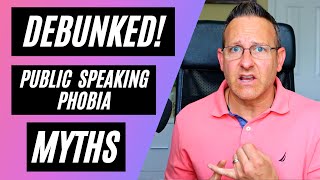
Robert Summa ("Bob") presents a YouTube episode from his Public Speaking Cure channel that catalogs and rejects many common remedies for glossophobia (fear of public speaking). He dismisses deep-breathing, thought suppression, generic meditation, yoga, hydration, diet, relaxation techniques, massages, warming hands, avoidance, relaxing music, supplements, acupuncture/chiropractic, mantras, and casual advice from friends as ineffective or counterproductive. He strongly challenges the "chemical imbalance" explanation for anxiety and criticizes overreliance on medications (SSRIs, benzodiazepines) while advising viewers not to stop prescribed drugs without medical supervision. He references a prior personal-transformation video and teases a next video that will present approaches that do work.
Chapters
Hey, Bob here. And welcome back to Public Speaking Cure, the only channel on YouTube that is dedicated to helping you get over your fears and phobias associated with public speaking. So I hope you're going to be excited for today's video. We're going to jump right into it right now. So what are all those myths? Okay. What are the myths out there when it comes to getting over it? So before we jump in, if you haven't seen my last video, which is my story, my transformation story on how I had my very first panic attack when it came to public speaking, I would go back and watch that first and then come back here and watch this. So it's going to be here or link below. Watch that story. It's my transformation and how I had my very first panic attack. And I think it's really important for you to get that as a good foundation and then come back here and join me. So we're going to go over a lot of myths and a lot of misinformation out there, or I should really call no information out there because we have a gap the size of the Grand Canyon when it comes to your transformation from having a fear or phobia public speaking all the way from panic attack, you know, moderate to panic attack and getting to a place where you are confident reaching that mic. Okay? So today we're going to go over some of the myths. We're going to bust some of those myths and talk a little bit about them. So I hope you're excited and we're going to jump into it right now.
So one of the things when it comes to the fear and phobias of public speaking is that as I said before, 99% of the information out there is just wrong. Presentation seminars, coaches, blogs, Google search, YouTube videos, even doctors and psychiatrists, yes, even psychiatrists, I've been to a few, all have it wrong. So I'm going to go over some of those myths today. And so I have some pulled up on my laptop here. And I'm just going to go over if some of these you've heard before, deep breathing exercises. Okay. If you are doing the deep breathing exercises, which is to help you bring down your heart rate, don't do this anymore.
This makes your public, your fear and phobias of public speaking worse. Why you're putting it on a pedestal. You're basically teaching your brain that I have a major problem here and I need to do these breathing exercises. And by the way, they don't work because I've done all these deep Breathing exercises and before presenting. And let me tell you something, it doesn't even touch it because you have a fear and phobia. You're actually having anxiety. And deep breathing is not going to help with anxiety. So we can push that one out. Let me go down the list. Thought suppression, fighting the thoughts. The more. Or distraction. The more you fight or distract yourself, the more you can't stop thinking about it. And I can give you some exercises in another one, in another episode I'm actually going to do. I think we do a great video on some exercises that we can do some brain teaching that will just show you that any kind of avoidance or suppression thoughts actually work against you and makes you think about it even more.
Avoid negative thinking. I don't even go with that. Meditation. Here's another one. Meditation.
So does meditation work? There is a specific kind of meditation that does work and I can save that for another video. But. But the traditional meditation, the whole like, you know, just put yourself in a nice place, think about the beach or you're with your family or with your loved ones or trying to. That's avoidance. So that's again, that goes to thought suppression. And what we can tell you right now is that thought suppression does not work. The more you try not to think about it, the more it's there. It's like trying to fall asleep.
Ever, like awake at nighttime and you're just trying to go to sleep. You're thinking, go to sleep, go to sleep, go to sleep. Well, the more you think about trying to fall asleep, the opposite happens. Right. You can't fall asleep now. You're awake. So that doesn't work. And that's just one little simple analogy. But we'll go more to the science behind that. Let's keep going down here. Yoga. Really? Yoga. So stretching exercises going to help you get over your phobia of public speaking? No, I think it's going to happen. Staying hydrated. Staying hydrated is one of them. Literally drinking water.
Yep. I am no longer afraid of public speaking. Let me get on that stage in front of a thousand people and speak right now. Because I just drank some water. Eating habits, healthy eating. I don't care if you had hot wings or a nice piece of salmon. That's not going to help you get on the stage in front of a thousand people and speak better. Okay. So let's just knock that out. Relaxation exercises. That goes back to the meditation. That goes back to the thought suppression. Relaxing. Okay, I'm relaxed now. I have to stand in front of a Thousand people. Yeah, that's not really going to help me out there. No. Massages? Really? Massages? Yeah. Now I'm really rating on that stage in front of a thousand people and speak or sing or give a toast. That's not going to help me out. Warming your hands. This one's out there a lot, believe it or not. Warming your hands. Okay.
I don't think it's going to help me. Okay, think about something else again. Thought suppression. A lot of these things go back to thought suppression and trying to put yourself into a different area. It's just not going to work. Avoidance. Well, yeah, that'll work. Avoidance. If you avoid the situation altogether. Yeah, you're not going to have an anxiety attack. But don't you want to enjoy your life? Don't you want a successful career? Don't you want to be able to give a toast? Don't you want to have fun? Maybe do karaoke with your friends?
What happens if there's a death in your family? You want to do a eulogy for your passed out loved one? You want to get up there and get to that podium in the church. What if you're part of a church and you want to go up to church and you want to actually say some words? That's one of your aspirations. Maybe you're a spiritual person. There's a lot of things in life that have to do with public speaking, even meeting new people. How about interviews? Right? That's in a way, it's a form of social speaking. And if you had the fear of public speaking, a lot of times it leaks over into interviews. Right. Hurts your chances there too. Relaxing music.
Yeah, relaxing music. I don't think relaxing music. And then all of a sudden you're throwing up a stage and how are you listening to relaxing music when you're at a corporate environment or something like that and you got to get up on stage, something that's gonna work. Here's a huge one. I see everywhere. Magnesium supplements. Now they're going to. Oh, you have a vitamin deficiency. Okay, that's not true. Herbal calming teas like chamomile before giving a public speak. No, I don't think that's going to work either. Acupuncture, right? Acupuncture massage. Okay, stick me a needle here, stick me needle there. And then the next day I got to go on stage in front of a thousand people. That's not going to help out chiropractors again. I don't understand how cracking your neck is going to make you feel better on the stage in front of a thousand people. Mantra exercises?
I don't think so, no. That goes back to meditation. There is a meditation that does work. It is a scientifical approach, it's a psychological approach that actually has to do with a certain part of your brain. It is not the typical meditation out there that just, you know, trying to be relaxed. I can go into that and I will go into that actually. But when it comes to regular meditation, it does not work. Talking to friends, talk, talking to people, that's not going to help either. You're again, you're putting it on a platform and I'm going to go now move to another big, big misconception, One of the biggest misconceptions out there and it is medicines, okay? Chemical imbalance of the brain. I'm reading off my laptop here, so I keep myself here. So this is the biggest misnomer out there. In the 70s and 80s when it came to any kind of anxiety or depression or fears and phobia, they taught the psychiatrist out there that you have what's called a chemical brain imbalance. A chemical imbalance of the brain, okay? Chemical imbalance of the brain ends up. That's not true. And when I go back to my story, I actually did try medications and I took different medications. I had some serious effects to a lot of these SSRIs. I had really serious effects and thank God I didn't get on those because of those serious effects, but I did again on things like Valiums and other kinds of anxiety, anti anxiety drugs, you know, out there. And let me tell you something, it never helped me with my fears and phobia of public speaking. If I had general anxiety, those are okay, but nothing will actually still get you to that microphone and be able to speak into a whole bunch of people on stage. So medications are not the answers. Matter of fact, and this is a fact, it's no longer a study. The entire thing of a chemical imbalance of the brain is no longer studied in universities. Right? Hasn't been studied in universities in over a decade or almost two decades now. Yet many doctors out there in psychiatrists are still prescribing medicine saying that you have a chemical imbalance of the brain. So if you ever walk into a psychologist or to a psychiatrist and. And they say chemical imbalance of the brain, I'm sorry, run out of that office, get away from that doctor. They're using materials from 30 years ago that has been proven wrong by all the Ivy League doctors and psychologists in the best universities. It is no Longer, even studied. They don't even study. They don't educate any of their students. If you go into any Ivy League school anymore, they don't even teach it. It's not allowed because it's been proven wrong yet. There are doctors out there that are prescribing SSRIs and all these medications for your fear and phobia public speaking, which just do not help. So if you're on medication now, don't stop taking it, okay? There's a lot of protocols to come off it. I'm not here. I'm not a doctor, okay? I am a mental health ambassador. I am certified in that, but I am not a doctor. I cannot tell you to come off medications, and nor would I ever ask you to do that because there is a protocol to come off these medications. Just stopping these things cold turkey is really dangerous. Extremely dangerous. So if you're on a medication you want to get off, go to your doctor. But I can tell you right now, chemical imbalance of the brain is no longer even taught in any universities anymore. So if you like what you're hearing so far, don't forget to hit the subscribe button. If you tap that bell, I'm going to be putting out new videos every Sunday or Monday. That's really going to help you get over your fears and, and learn everything about these fears and phobia with public speaking so that you can really overcome it and then get to that mic with confidence. And I always tell you that I do not teach exposure therapy. That is also wrong. So anybody who tells you to go out there and you just have to keep practice makes perfect, that is incorrect. Also, that is not the way that when it comes to public speaking, if you just have one bad experience at that microphone in front of people, because people tell you practice makes perfect, which means you got to get up your first time, and you have that pounding heart and you're sweating and that trembling voice, and you're. You're trying to drink the water and you're like, this is going to be a really, really, really, really bad experience. In that bad experience then leads to more anxiety for future speaking engagements, because now that's what's on your head is what happened last time. It's almost like getting a really bad shot. You know, you're not afraid of needles, but also one person's really hits you the wrong way and it pokes you the wrong way. And also now you have a little bit of a fear of needles. You're like, wow, that last time that person really hurt me. Well, if you have a bad experience that Mike, you're never going to want to do it again. You're going to avoid it at all costs and especially if you have a panic attack along with it. So in my next video, we're going to go over what does work, right? If all these things don't work, if meditation doesn't work and breathing exercise and taking magnesium and massages and acupuncture and medicines and all these things don't work, well, what does work, Bob? Are you gonna tell me that? Are you gonna lead me to the light? I am. So get ready for next week. We're gonna go into what does work when it comes to getting over your fears and phobias of public speaking. Okay? Look forward to seeing you next week again. Subscribe, hit the bell and I'll see you soon. Hope you enjoyed this.
More from Robert
The Dark Side of Deep Breathing: How This Common Technique Intensifies Your Public Speaking Phobia!
MUST WATCH! Fear of Public Speaking Explained 🎤 | Grab Your FREE Mini-Course Today! | Link Below!
What is the FEAR of Public Speaking (Glossophobia) | And Can We REALLY Overcome It?
Why You REALLY have a FEAR of PUBLIC SPEAKING | The ANXIOUS Brain (Part 2) | Glossophobia