Brad Feld + Startup Program Design #1
This content was created by Adam Berk. This content was uploaded by Adam Berk. This is a YouTube video titled "Brad Feld + Startup Program Design #1" featuring a conversation between Adam Berk and Brad Feld. The discussion, recorded on November 11, 2022, revolves around startup programs, entrepreneurial ecosystems, and experiences with Techstars, highlighting collaborative efforts in the startup community.
Chapters
We'll start with an icebreaker before we get into introduction. So I figured I would ask you your favorite non techstars programs in the world and I'll tell you a couple of my favorite techstars experiences. Do you want to go first or second?
I'll go first. That's a fun. That's a fun start. Well, I'll talk my own book because it's always easiest, so to speak. We're, we're investors in High Alpha, Pioneer Square Labs, psl and they're both studios, so a different model than an accelerator. We invested in PSL at the very beginning and helped think through what PSL was. We were essentially Greg Gottesman, who is the co founder, and I have worked together for a long time. And when Greg started thinking about psl, he had previously been doing that kind of work at a venture firm that he was part of called Madrona. And he had a thing that he created there called Madrona Labs. And a company that had come out of Madrona Labs that I'd invested in was Rover, which is a business now. It's public company, it's grown very substantially. And it had two things that were very interesting to me. One was Greg had created it at a Startup Weekend, and Startup Weekend Today is now part of techstars, but at the time it wasn't. It was a separate nonprofit and I was on the board of Up Global. A lot of people don't know the Startup Weekend history, but Startup Weekend, the very first one was actually done in Boulder, the first year that techstars was done. And it was by some of the same people that were sort of around all the activity that we're doing there. But I was really fascinated with what Greg did with Rover and then sort of how it went through this thing at Madrona Labs. And the idea for PSL was to build that at scale, right. And do a dozen or so companies a year that you create with entrepreneurs, but create a studio which has sort of all of the pieces that you need, all of the different people on the team except for the founders. And PSL today I think has 25 or 30 people and they generate about a dozen companies a year. High Alpha, which Scott Dorsey started and is in Indianapolis, so PSL is in Seattle. Scott and his co founders were all co founders of a company called Exact Target. And they raised very little money for that company. I think in the end they had a very difficult time raising money. Is great story about it. They ultimately went public and then got bought by Salesforce for two and a half billion dollars. And Salesforce has a very large presence now in Indianapolis. And Scott and his gang were all very indie focused. Like we love Indianapolis, we want Indianapolis to be a really long term, durable startup community. And they started High Alpha with the idea of basically same model. And Greg and Scott are friends. I think Scott invested in psl and I think Greg may be invested in some of the High Alpha funds. But the idea, and there's two points to this in a sec. But the idea for ps, for High Alpha was they were going to be a B2B studio. So they were going to focus on B2B companies and be the best in the world at creating new ideas around B2B, working with founders to then create the companies and spin them out. And they also do about a dozen companies a year. In both cases, they've raised venture funds now, so each of them has pretty sizable $100 million plus funds that are active. And each of them is also doing something that was an evolution of their businesses, which is around corporate innovation. PSL does it inside psl, so they actually have it as part of their model where they have a number of corporate partners that they do spin outs with. In the case of High Alpha, they spun out a company called High Alpha Innovations. It's a separate company that does the same model. So I use these both as an example, examples of something that's I think important from my frame of reference around all this activity. And I think you do a really good job in the, in startup program design, in the book of both talking about it, but also embracing it, which is this is not a zero sum game where there's a winner and there's a loser and everything is a win, lose kind of phenomena. So again, think through all the pieces. Founder OF techstars CO FOUNDER OF techstars Me in investing in a studio that generates startups. One of those companies went through a program that's now part of techstars. Me investing in another studio in a different part of the country. The founders of both of those studios investing in each other and learning from each other, me learning from them. Like all of those linkages I think are part of the phenomena that's been playing out over the last dozen years or so. Again, which I think you did a wonderful job in the book of talking to. That was really part of what I tried to do with the philosophy that I started with startup communities, which is this idea that in the future we want to democratize the creation of startups everywhere, all around the world. And it's not that there needs, there should be one organization that is the best at creating startups, or one venture capital that's the best venture capitalist at investing in things. But there's lots of different models and lots of different experiments and lots of different ways where the goal ultimately is to serve the founders in their effort to build scalable, significant businesses. Again, what's interesting to me is the number of different people around the broader entrepreneurial ecosystem that are working in collaborative and semi competitive ways of doing this, but doing it with the philosophy of we're still such a small part of the overall global economy, there's so much room for us to work together and learn from each other.
I was going to do a good job of going back to the script. How small a percentage are we of that? I always wanted to learn from experts. How?
I don't have any idea. But we're tiny. And you know, I think that let's just go back 12 years, right, to 2010. In 2010, the mantra was still, if you are serious about being a founder, you should move to Silicon Valley, right? Move to Silicon valley as only 12 years ago. And you know, today the mantra is very different like that. And even in, you know, I don't know, 2014, 15, I would hear people in the Bay Area actually say that. And I'd stopped arguing with them. I'm like, look, if you're saying that, then we probably don't have a conversation to be had because we're so philosophically different that I can't even know where to begin to engage. And I'm not really interested in convincing you that you're, you're wrong. I'll just let the world do that today. I mean, entrepreneurship is a global phenomena. It's been democratized. I love that. Now the sort of you have to move to Silicon Valley has become, you need to embrace Silicon Valley values or you need to embody Silicon Valley. And you know, my mantra has always been every geography is different. You should take advantage of your strengths. Every city has different strengths and weaknesses. And so instead of trying to emulate somebody else, focus on what's unique about your place and why people want to be in your place and what's special and different about your place and learn from lots of other places because there's lots of things in lots of other places that are very powerful. But abstract that learning, but then apply it to you. So, you know, is it of the global economy or startups, you know, 1%, are they, 2% are there, 5%, you know, is Google a startup anymore? Is Meta a startup anymore? Do they categorize? How do you categorize and calculate? I don't really care. It doesn't really matter. What's interesting to me is the idea that no matter where you are in the world, if you want to be an entrepreneur, there is a path to you being an entrepreneur. And again, the proliferation, the last 12 years of the number of different people around the world that are working in nonprofits or for profits or different types of programmatic activity to help people create programs, corporations, et cetera, to create programs to help people at the beginning of their entrepreneurial journey create businesses. It's awesome how much that's proliferated, both in magnitude and geography.
That's so cool. All right, this is going to be fun. You mapped out the first half of the conversation in the first half of your answer and the ecosystem stuff. And I was so tempted to sort of start digging into each question and you see me moving over.
My family.
Watch, you know, like the preview for the book. And I'm all over the place sometimes, so I'm going to stick to the script.
Well, give me. Give me at least one good tech stars experience you've had.
I have nothing else like on my side. Just. Oh, and I was going to fish for compliments at the end and I. It is very gracious of you to say it, so thanks for. All right, I have three ready to go. Same 10 years ago, Patriot boot Camp.
Go Taylor.
I. I brought my grandfather and grandmother. It was in New York City. 1. I know there's been a lot of venues. I brought them to the venue. I was trying to find pictures and my grandfather was a World War II veteran and all the folks there kind of talking with him, it was. It was pretty special. So that's why, you know, that was that question. I don't know if you. If you know Jade from She Matters. I got her.
Yeah, yeah, yeah.
In Seattle. And then just a plug back to the local ecosystem. And Monica and techstars powered by Morgan in Detroit. So those are my three programs. Plug over. We'll get to the.
More from Adam
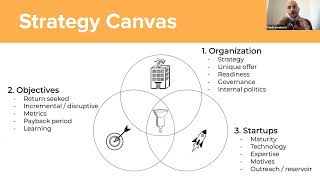
Paolo Lombardi & Adam Berk | How To Nail Your Startup Engagement Program 14 March, 2023
Brad Feld from Techstars answers the inevitable "funding" question from the audience.
Preview! Talking Startup Program Design w Bernhard from the World Food Programme Innovation Accel