What is an accelerator? With Brad Feld From Techstars
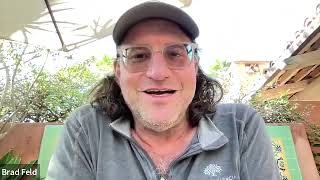
Brad Feld co-founded Techstars in 2006 as an experiment: pool investor capital, take 10 companies per cohort, run a 90-day program with 50 mentors. The model worked, and accelerators spread to Boston, New York, and Chicago by 2009, then into corporate partnerships with Nike and Microsoft around 2011.
Questions this video answers
2006
90 days
About 10 companies (≈25–30 founders total; 2–3 founders per company)
David Cohen, David Brown, Jared Polis, Brad Feld
About 50 mentors per program
Chapters
So you'd ask me another question, which is what's an accelerator? And I have a, I have a, a self referential answers. If you want to know what an accelerator is, you need to read Adam and Paula's book Startup Program Design. How's that? And make that a little Twitter thing and off it goes. But I thought I would say I think you did a really good job. And I sent a note to both Mael and David Collin at techstars in startup program design of not just dissecting different flavors and characteristics of startup programs, but then within each category, doing a good job of dissecting different approaches in each category and representing that an accelerator today represents a certain type of core activity, but can cover a pretty landscape of different functions, whether it's a geographically based accelerator or a corporate sponsored based accelerator, or an industry based accelerator, or a non profit based economic development program accelerator. And one of the things for me that's been so fun about, you know, the last, really 15 years of this, I mean we started Techstars in 2006. So you know, 15, 16 years, I guess now, since we're almost at the end of 2022, is when we started Techstars. This wasn't a construct. Right. YC had done a thing once or twice and they had made, there was a little noise about it and what they had done was a thing that had some characteristics, but it wasn't particularly well asserted what that thing was. But it was, it was a useful thing to sort of look at and say, oh, that's interesting.
Were the characteristics then? Was it cohort plus funding? Like what were the defining characters?
It wasn't even defined that way. It was kind of, I mean, let me, let me shift to how we talked about the first program we ran at techstars because I don't know that I can speak for the definition of it at the beginning anyway from my frame of reference because that would, that would insist, that would mean that I was there or that I was putting words in, in their mouths. And I don't want to do that. I don't feel it's my place. When we did the first program at techstars, kind of our frame of reference was, hey, there's this interesting thing where you fund multiple companies. David Cohen was very focused on funding multiple companies at the same time and being actively involved in them. And I want to just use the word actively involved because what David had been doing was he, he, after he'd sold his prior, his first company with David Brown, he'd Started two other companies, one that failed, one that had a modic success. But he'd also started making some angel investments. The angel investments that he was king. And he would write probably my guess is 25,000, $50,000 type checks. He did a couple of these. He joined an angel group. This is all in the sort of 2004, 5, 6 time frame, maybe 2003, 4, 5, 6. And he found it very unsatisfying. He found the group activities to be unsatisfying because they were mostly cocktail parties and they didn't really translate into much investment activity. And, and David by nature, you know, was not an extrovert and was not a guy that went out to cocktail parties. So it wasn't his nature to go hang out, just to hang out. So he was doing it with a purpose, but just not sort finding the juice he wanted from that. And then occasionally he made something and he just didn't feel like as a tiny angel investor that he was able to really influence the founders and get involved with the founders in a meaningful way. Yeah, they'd be responsive and he could meet with them and stuff like that. But it was very episodic and he had to be proactive. He just didn't view the founders as having muscle around how to engage. And sort of his view was, wouldn't it be interesting if we get a group of people together that were founders that had enough critical mass where they'd all be friends and they'd all interact with each other. And I, David, could spend 100% of my time for a period of time, three months working with them day in, day out, 18 hours a day, helping them at the very early stages of their business and yeah, give them some money so they have a little bit of money so that we have, you know, some there's, we feel like we need to put something at risk here and we get some equity in the company, but we look like co founders so we're essentially helping them co found their company. And the things we're doing as part of that is we're not spending full time with them, but we're spending immersive time with them over again this 90 day period. And then the piece that got added to that, which David had as the idea, but was really a key part of the beginning was hey, let's get other people that we know that are entrepreneurs in our community. And we focused on boulders, the geography, let's get other entrepreneurs that we know to be. And we labeled them mentors. That was not a label being used so we created this idea of the mentors would not tell the founders what to do, but would help the founders on their own exploration in this intense 90 day period.
Yep.
So that was the emergence of it. And we said, look, our worst case here, we put up all the money for the first program. So David, David Cohen, David Brown and then Jared Polis, the four and myself, the four of us put up the money. So we said, look, we'll risk the money if the money. If this is stupid. Okay, well we, you know, my comment was I've, I've wasted way more money on way stupider things, so what the hell. And our worst case is we'd meet a bunch of new founders and we figured it would be somewhere between 25 and 30 founders. Right. Two to three founders per company. We'd meet a bunch of new people who are entrepreneurs and we get a bunch of people from the local startup community, the people in Boulder who are entrepreneurs. We get some connectivity between them because nobody was interacting with you. You had these cliques of people. You know, these five people knew each other, or these people worked at this company, or this person worked at company A and this person worked at company B and they competed with each other and they were not friends, but they were both really capable entrepreneurs. And we just said, let's just get the network working together, let's see if we can get all. And we didn't call it a network at the time, but let's see if we can get all these people involved or working together. And that was the essential ingredients for what we then started calling pretty quickly, a mentor driven accelerator. And I use that as the example because that came out of 2007, 2008, and we started expanding geographically in 2009. We went to Boston and then New York and then Chicago and then a couple of other places, sort of replicating this small thing. 10 companies, not growing the number of companies, but continuing to constrain it because we really like this interactive effect between the 25, 30 founders, between the mentors who, who. Now for each program we were kind of getting about 50 mentors per program, a lot of locals, but also some people who were outside the geography that might have some other connectivity to people so that the geography wasn't isolated. And what started from then, from about 2011 and has continued to today is a whole bunch of, on different things, many that have worked, some that didn't work. Again, that I think you capture really well in the taxonomy. Right. I think we may have been the first corporate funded program I'M trying to remember which our first one was now.
Yeah, keep going, keep going.
I can't remember but it was 2011, I think we did a program with Nike and we did a program maybe with Microsoft. Those might have been the very first ones. But you know, kind of the idea was let's try to see. I'm sure Microsoft was one of the first ones because I had a close relationship with the team at Microsoft that ran Biz Spark and I think they decided to get involved through that. Let's see if we can do something around a company's ecosystem. And the Nike one was particularly sort of fun because I was on the board of Fitbit and Nike came out with Fuel Band which kind of sort of competed with it, but it didn't have much success. But they were trying to build an ecosystem around the Fuel band. So we, we funded, you know, we created an accelerated and fund funded a bunch of companies around that. But sort of again, experimenting. It wasn't like, oh, and we have the answer. It was let's try, let's try this and see if it works. And on and on and on and, and what you, what you list out in, in the book is a number of different flavors of the experiments, many of which as I read the book were good reminders of the, the, the history I went down. Startup Chile would be a good example. You know, when they started Startup Chile, I think David may have gone to the very first event. I know that I was involved in some conversations around it because I was involved in Startup America at the time and Startup Chile was trying to learn from Startup America. Like all of these things sort of, they don't have the same origin story. They all came from people in different places that had different motivations that then came at the problem of helping entrepreneurs in different ways. And the culture, I think across many of them again was back to this notion of a non zero sum game. It's like, look, you know, let's learn from each other and it's okay if you, here's a thing that I learned that worked and here's a thing that didn't work and if you can figure out how to do that, please teach me so I can go do that again somewhere else. And you know, the studio model evolved from that. The very early stage stuff around whether it was Startup Weekender, when Kaufman came out with 1 million cops, all of those activities were all part of the same landscape of a lot of people, both entrepreneurs and people around their local entrepreneurial ecosystem, saying the way we've been doing stuff for the last 30 years for early stage entrepreneurs has not really been globally democratized. It hasn't really been effective on a broad basis. It's been effective in very specific areas. Let's try a bunch of new things and, you know, here we are with a bunch of new things that we've learned from.
It's amazing.
All right.
I'm looking at hardly even making a dent, but it's a good way for me.
What.
More from Adam
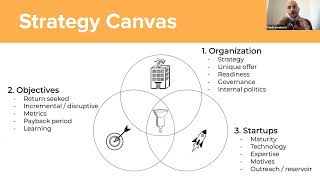
Paolo Lombardi & Adam Berk | How To Nail Your Startup Engagement Program 14 March, 2023
Brad Feld from Techstars answers the inevitable "funding" question from the audience.
Preview! Talking Startup Program Design w Bernhard from the World Food Programme Innovation Accel