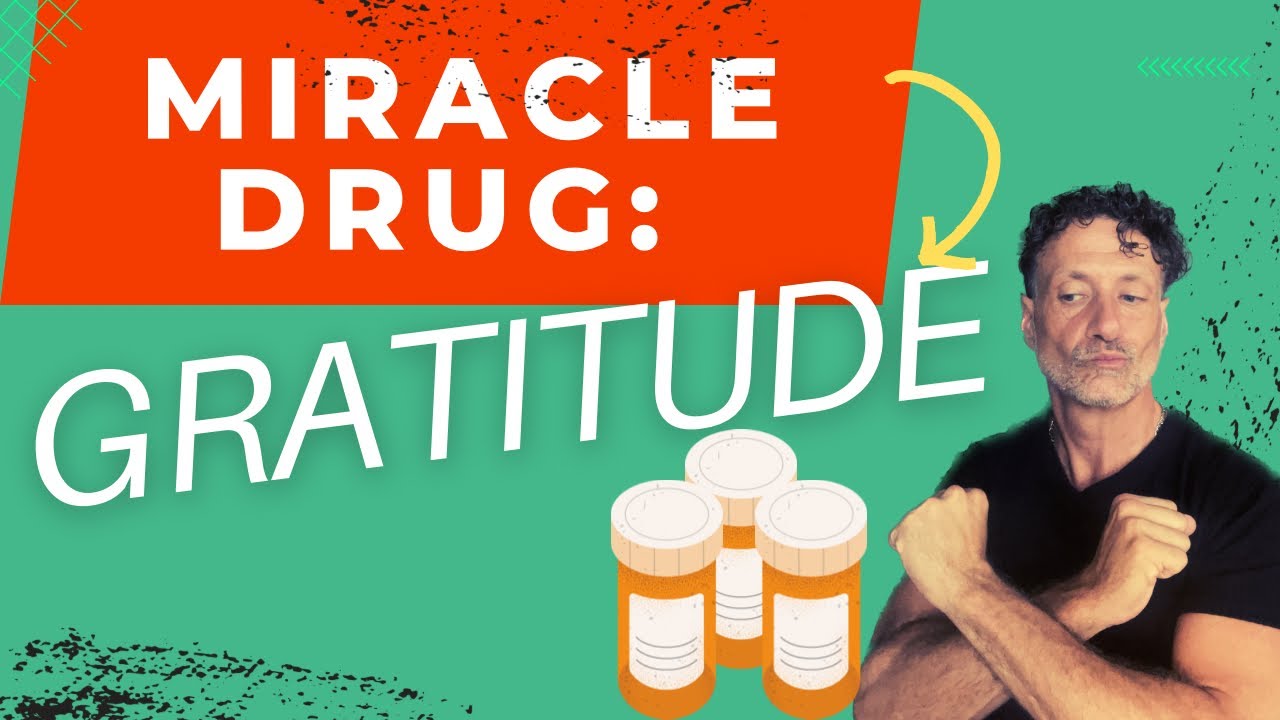
Dr. Dallas Bragg, a former meth addict turned holistic coach, argues gratitude works like an antidepressant by rewiring dopamine and serotonin pathways. He recommends three steps: build a daily gratitude practice, understand it takes time unlike pills, and track your mood with a color-coded system to spot patterns.
Chapters
Do you pop a pill to maintain your mood? And do you wish there was an alternative to chemically enhanced happiness? According to the research, gratitude is a natural antidepressant, and guess what? It has no negative side effects. In this video, I'm going to share my personal experience with gratitude. Hey there, my name is Dr. Dallas Bragg, and I am a holistic life coach helping you break free from unwanted repeated patterns in your life. I specialize in spiritual expansion, leadership development, And sobriety. But before we begin, I would greatly appreciate the support by clicking that subscribe button so you don't miss out on my future content. On this channel, I upload an educational video each week, a guided meditation each week, and when the guides have something to say, I upload a channeled message for the collective. While we're at it, here are all of my social media handles. So you can follow me everywhere I possibly am. So, as a meth addict, I became dependent on synthetic chemicals. In sobriety, when facing the prospect of prolonged use of antidepressants, I wondered, what is the difference between being dependent on a legal or an illegal drug? Do you want to take a pill every single day for the rest of your life, to find peace, happiness, and contentment. There was a time in my life when I had planned my own suicide, and I checked myself into a mental hospital. I agreed to take antidepressants, and they served their purpose, which I believe is for short-term relief or to bridge a gap. Then after that, I learned adaptive techniques. to recover from depression, which was a gratitude practice. And if, if you'd like to ditch the drugs, listen to the research. Gratitude has been scientifically proven to drastically improve your emotional health, increase gains in physical development, like at the gym, deepen your professional well-being, make you happier at work, more dedicated, more committed. And it leads to healing in relationships. Consistent gratitude naturally makes you happier. All of the research will be listed at the end of this video, but if you don't believe me, do your own research. So here's your gratitude strategy adapted from my own. Number 1, prepare to play the long game. A gratitude practice affects the neurotransmitters of the brain the same exact way as antidepressants. Same exact way. The difference is gratitude takes longer to alter the neuroplasticity of the brain, but it also is permanent. Pop a pill and voilà, you're happy, but it's temporary. Nothing worthwhile comes as a result of instant gratification. Gratitude requires long-term lifestyle changes and long-term commitment. And gratitude reaches into the core wounds Pills are a band-aid. How can you incorporate gratitude into your life and wean out the synthetic chemicals? You know, research shows that gratitude wires new neural connections in your brain, enhances the feel-good stuff like dopamine and serotonin, regulates stress. But all of this is over time. Number 2, create a gratitude practice. Begin by introducing one behavior into your daily life. I began with a very simple addition to my morning routine, and it's made a huge impact. I wake up, I drink my water, and then I bring myself to a time when I felt the most grateful. For me, it was when I was homeless, but I was newly sober, and a moment when I was walking out of the first day of my new job as a waiter at a taco place, tears rolling down my face, and I felt So hopeful. That emotion fills my body, it resets my perspective, and sets the tone for the rest of the day. So here's some other ideas. Start a gratitude journal and reread your entries at the end of the week and relive your gratitude. Tell yourself in the mirror, if you don't do mirror work, every morning and every night what you're grateful for. Select a gratitude accountability buddy. This is crucial to have someone to help lift you up. These are small but powerful beginnings. But keep in mind, emotion generated from the gratitude practice is what actually rewires the brain. Your nervous system doesn't hear your words. It doesn't speak language. It speaks emotion. Number 3, track your progress. Monitor your happiness level to develop a rating system so you can track it and pinpoint when it is you're headed down that bad road. At the end of the day, write a symbol representing your happiness level. For me, I use colors: red, orange, yellow, blue, and green in a rating style. Red, I should have stayed in bed today. Green, happy all day. It helps to write down a few sentences as well explaining the reasons behind the choice. This will be your trigger monitor and, and vice versa, what makes you happy. But if you had a bad day, Who or what was involved, and pay attention to your line of thinking because later you'll be able to detect early warning signs of being triggered because it all happens in a loop. The nervous system loves patterns, which makes it easier for you to predict oncoming mood dips. I literally saved myself from a depression loop through daily tracking and pattern detection. through journaling and rating each day. And you'll have tangible proof on paper that you're progressively getting better. There's no better incentive than that. You know, gratitude may not be a fix-all for every mental health issue, but many of you listening to this would love to come off medication and be high on life. Gratitude is the key. So disclaimer, The content provided in this video is for informational and educational purposes only. I'm not a medical doctor, and the information shared here should not be considered as official medical advice. Any medical or health-related topics discussed are based on my personal experiences and some research, but it's important to consult a qualified healthcare professional before making any decisions related Related to medical treatments or interventions. That being said, thank you for joining me today. I love you. See you soon.