4 Techniques to Successfully Manage Triggers
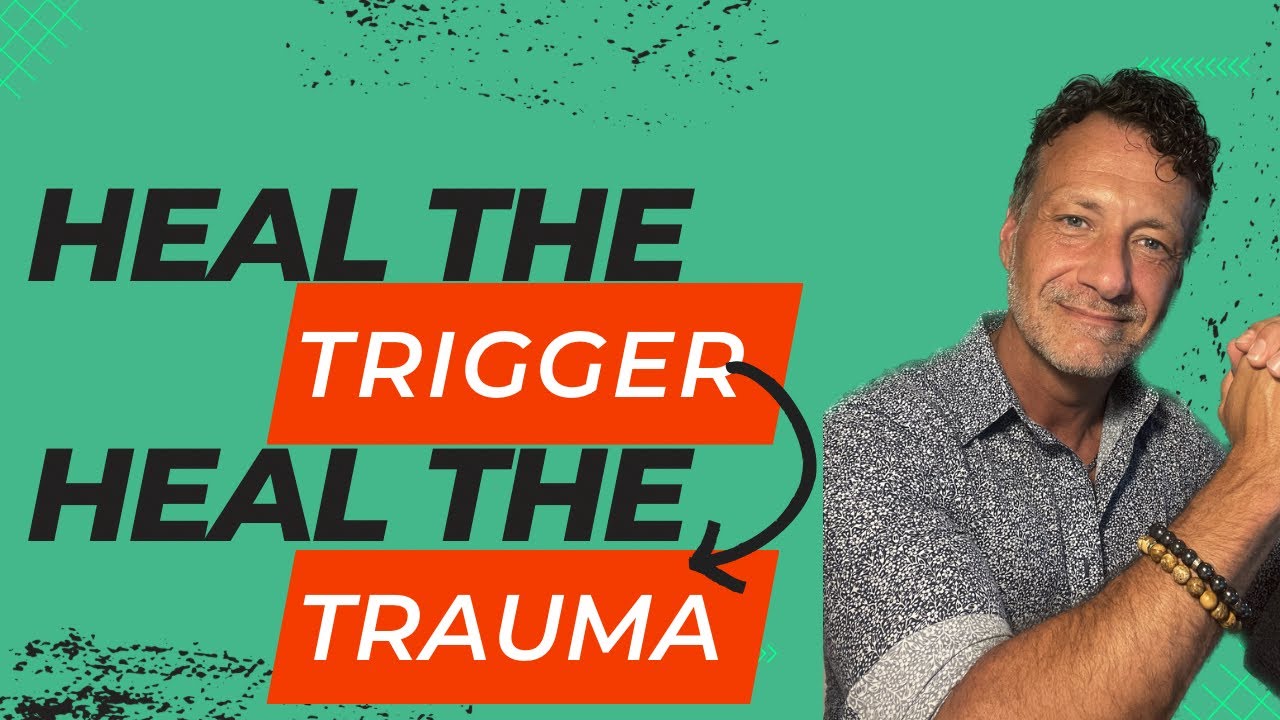
Dallas Bragg shares four techniques for managing emotional triggers rooted in trauma. Instead of suppressing anger, he suggests getting curious about it, letting it move through your body, asking what emotion is protecting you, and replacing the limiting belief underneath with a new one.
Chapters
Hello, and welcome to my first YouTube video. I hope that you will show me some grace for sound and video quality. That's why I keep leaning in to the camera, so I hope— making sure that you can hear me. If you like this video or already really like me, you can subscribe. Please do subscribe for more. And like, comment. I'd really like to hear feedback as well as I go. But what I wanna talk to you about today It's something that is important to me and something that I've overcome, and that is emotional regulation, especially when it comes to triggers. And not only understanding and regulating triggers, but really digging deep down and understanding what they are, where they came from, and how they can contribute to you living a happier life, living a life that's moving toward yourself. And when I say that, I mean all of us are born in this perfect light, this perfect image of God. And in this life, when we get to a point of where we look around and we want to change things and we understand that we're being driven by beliefs and programs in the back of our mind that we didn't install, we start taking our journey back to self, which was back to our perfect light, our perfect spark of God, who we were created to be. And I'm sorry that if God is a trigger for you, that is my name for the creator of the universe, the energy that creates worlds, that I believe is the author of everything that we see. And we are a spark of that. We have God in us. And so, but most of us don't utilize that and don't realize the power that we have inside. So anyway, what got me to this place is I want to tell you a quick story, and that is I started realizing early on that when I would work somewhere, that it was the same people all the time, just different faces, different names, but they had the same personalities. And I did observe this in a way that I was like, why are we all carbon copies of each other, and how does this work? And so I— and I just— it was just amusing to me for a little while until I I started down a spiritual journey. I started becoming aware that everything has purpose. Everything has meaning. There is a divine reason for every single thing that we see, hear, smell, taste, and touch, and beyond. And so in, in seeing that, that they were all the same people, I started to realize that it was the same trigger for me too. And so first of all, I want to say I'm going to go back and forth from trigger to emotional activation because I don't really like the word trigger. It's gun violence related for one thing, but the other thing is that it has a really negative connotation. You think of a trigger of a gun, you think of it being a bad thing that you're triggered. I'm trying to change the way that we think about and perceive and frame triggers because I believe they're gifts from God. They are nudges to say, okay, this is something that you could work on to clear out, to become more like yourself, more like God. And that's what they are. And so we, we perceive and we make meaning of anger as something negative, but really anger is there to help us. It's just a way that we respond based on the first time that we had that trauma. By the way, get a free 8-step quick guide for managing triggers. Link in the description. Which is a whole other thing we're going to talk about. But anyway, so I just started to notice that yes, they're the same people, but also it's the same archetype, the same type of person that was triggering me. And it was always a man, a male in authority. And so on and on and on this went for decades. And so I went through my life and finally started to realize that In the job that I had, that this guy that was over me was annoying the eff out of me for no reason. Like, I— he never did anything to me, but from day one, from get-go, I was against him. I would operate any way I could to undermine his authority. I would make him look bad the best that I could. I purposely didn't answer his phone calls. You know, it was really childish stuff like that, but I, I was triggered. I was triggered, and I didn't know. I had so much anger toward him and resentment. And so that's when I started to really question and become a student of myself and realize that what's it like to be on an emotional roller coaster every day that, that I'm not controlling, that, that something else and someone else is pulling the levers in some booth that's driving me up and driving me down without my consent. That's how I was living. And if that— does that feel and sound familiar to you, is what I'm trying to say. And if it does, then this might help you. So anyway, I then I started to use the 4 techniques that I'm going to talk about today in trying to dig down deep to figure out the answer as to why this guy was triggering me and why he showed up at every place I worked for 40 years. And what I could do about it. So with that being said, let's talk about triggers or emotional activations. As I said, we're going to call them emotional activations. So it could be a word, it could be a person. For the most, for the most part, I think it's probably people. It could be a story, it could be an image, it could be anything. It sometimes is just the energy in the room is a trigger for you. It activates an emotion. So if you think about something that activates what we think of as a positive emotion, that's still a trigger. It's triggering, it's activating an emotion for a reason. So anger, jealousy, hate, resentment, frustration, anxiety, all of these things that pop up as a result of something external to us is an emotional activation. What we have to remember is, and we're going to get to this is that what you think is activating you is not— never what's really activating you. What's in the present is actually a reflection of what happened in the past. Triggers can be people, images, words, situations, or thoughts that evoke intense emotional reactions. Unmanaged triggers cause disruptions in your well-being, impulsive responses that you may most of the time will regret later, and damaged relationships with others and self. So step 1, reframe the natural tendency to treat triggers as negative experiences. Replace frustration with curiosity. Instead of, oh no, I'm angry, say, what is this emotion trying to teach me? I know that's easier said than done, and it requires some work. Here's the thing, How badly do you want to be free from your trauma, from your emotions, from the programming that's running in the back of your system? How badly do you want to be free from that? Because that will dictate how much you want to work. It takes some work, and it's not always fun work. But the first thing is when you get triggered— and I'm going to keep saying triggered— but when you are emotionally activated, If you can pause and think to yourself, this is a learning opportunity for me in the moment. If you can diffuse what's happening before reacting, that's that's a first step. If you if you pause for just a minute or a second, but you continue to get frustrated and do the thing that you don't want to do, that's fine. You have then planted a seed. You have sent out a frequency. You've sent a message to God that. I'm ready to change. I'm aware. I am becoming a student of myself. I am putting a mirror up to myself. All it takes is one time. Then you're sending out a signal that I'm ready to do it. And so each time you get triggered, and if you're like me, you're— if it's somebody at work, you're probably going to be triggered every day, right? So each time you do it though, it gets easier. You set an intention, it gets easier every time. Then you begin to be able to, in the moment, pause, even if you have to walk outside or something like that. Begin to be curious. Ask yourself, what is this emotion trying to tell me? And if you can separate yourself from that situation to say, I know it's not him, or I know it's not that, it's gotta be something else. God, Universe, Higher Power, please show me in whatever way possible, whatever way you can, show me what this is about. And you may already know, you may have an inkling of it, but here, that's the first step. The first step is just change the way you think about what's happening. It takes some time. Express the emotion in your body. Resist the urge to constrict Let go and allow the emotion to take its course, being mindful of physical sensations. Suppressing adds pressure and the emotion will explode later. So this also takes some work, right? Is allowing the emotion to go through your body. Because the first thing we want to do is we know we don't want to stay in anger. We don't want to stay in resentment. We don't want to stay in frustration or anxiety. Whatever it is that we're feeling, we don't want to stay there. So it's kind of been, I don't know, taught to us maybe in the spiritual community and in other communities, or maybe in the way you were brought up, you weren't allowed to feel a certain way. And the first thing we want to do is constrict, try to get rid of as fast as possible, do something to make myself laugh, distract myself, whatever. Something that will make that feeling go away as quick as possible. And even if that's getting it out in some, in some angrily yell or scream or hitting something, those things of course are not what we want to do either, but that's a way that we are trying to purge the emotion. But when we try to suppress it, we are building pressure. We're like putting it in a pressure cooker. We try to compartmentalize. We try to put that back and, okay, he's not going to do that to me today. Not today, Satan, or whatever. You know, this is not going to happen to me today. I'm not going to be angry. I'm having a great day, blah blah blah. And so we suppress it, we compartmentalize it, and then it just grows for later. So the next time it comes around, it actually is larger, it's stronger, and we start— it starts to come out in different ways from different people, and you start to get activated. I'm having a hard time changing my own Vocabulary, but we it's we have we become activated by people, places, and things that we didn't even expect. That's what begins to happen when you try to suppress it. All right, number three: Build a relationship with the emotion. Ask, "When did I feel you the very first time?" And hold that memory in your mind's eye. Now ask, "What are you trying to protect me from?" And allow the answer to come forth. You have all the answers. You just have to ask. This is when it becomes more work, and this is when it could really sometimes double the trigger. You're activated by something, but then when you start to seek answers, you have to be ready for what those answers are, because most often it's going to uncover some painful moment in your life that maybe Maybe you don't want to think about. Maybe it hurts to think about. Maybe you're trying to avoid it. I don't know. But it can open up a wound for you if you're not careful. You have to be— get into the place where you're ready, ready to do that. So building a relationship with, with the emotion is seeing it as a gift, but also it helps to sometimes personify it. For me, the thing, the thing I realized is when I was triggered by this person, it was anger was the emotion, but it wasn't just any anger. It was a nuanced anger. It was an anger that tied to a certain situation, and that anger had a frequency. So what I did was I started to talk to this emotion in the moment. And go in and think, what does this emotion look like? What color is it? What shape is it? What gender is it? What's its personality like? I tried to personify this part of me, this angry part of me, so that I could start to understand it, and then I could ask it questions. So then it becomes separate. So then you're not saying, I'm angry. You're saying, there's a part of me that's angry here. I'm going to find out What this part is, and when you look at it at the context of it's not part, it's not you, it's part of you. Then you then you get into the mindset that this can be changed, this can be removed, this can be transmuted into something else because it's not me, it's a part of me. If that helps. So the question is, when did I feel you before? So ask it. When is the first time I felt you? Pause. Make sure you're in a quiet place. Make sure you can listen here. You're not interrupted. Go within. Get into a real quick meditative state. I'm not saying you have to for a long time. Om and all this kind of stuff is just quiet your mind for a minute. The first memory that pops up is going to be the right memory. The first thing that pops up is it. You have a direction now. God is giving you the answer. It may be unclear, it may be confusing, it may— maybe it doesn't make any sense to you, or maybe nothing at all comes up. Keep trying. The first memory that you get is going to point you in the direction. So then once you have that memory up in your mind, then you ask that emotion again, what are you trying to protect me from? 99.9% of the time, that emotion is there to protect you from feeling the same way you felt the first time. So it's that frequency of emotion. For me, it was anger, but it was anger that resulted from feeling totally devastated, totally rejected and abandoned, right? So That emotion is trying to come in and say, I don't want you to— I'm trying to protect you from feeling that way again. Last time you felt anger, that's what's imprinted into your brain, so that's what we're going to feel again. I hope that makes sense. And so when you figure out what it is you're trying to be protected from and you know exactly what the memory is, then you could go on to step 4. Flip the script. The answers to number 3 will enable you to devise a plan to help the emotion understand that you are safe. This requires self-awareness, meditation, and intention. So what do I mean by flip the script? Flip the script means in that memory and in that emotion, you adopted a belief, right? So for instance, to keep using my example, My belief that I adopted that day was that I was going to always be abandoned. I was always going to be ostracized, and I— this would come from men, right? I got the belief that I'm not good enough because there must be something wrong with me because people are just They don't like me. I don't fit in anywhere. I'm not enough. And so 99.9% of the time, all of us have some version of I am not enough, right? I am not skinny enough. I am not smart enough. I am not whatever enough. These are the limiting beliefs that we take on. If we can go back and zero in on the birth of these limiting beliefs, We can change the course of our entire life. For me, once I realized, wow, for 40 years I have been driven by a belief that's a distortion, that's not true. I am enough. People aren't going to abandon me. I when I started to realize that all my life. I pushed people away, it was a self-fulfilling prophecy. If they didn't abandon me, I abandoned them. I made them abandon me because— but I didn't know I was doing it. It's all subconscious. It's all in the somewhere programmed into your brain and into your energy systems, into your aura and into your spirit. This is the belief that's driving everything. So for me, I had 40 years of momentum going, believing the same thing, something that controlled every part of every aspect of my life. So you can't just change it in a day. Making the realization is great. Like, when I had the epiphany, when I understood exactly what was going on, I thought I was done. I was like, great, good, I have it figured out. No, you have to then daily start to weave this new belief, what I call overwriting. You have to overwrite the program with a new belief. In my case, I had to believe that not only am I enough, but I do fit in. People like me. I have something to contribute. People want to be around me. And so then, then once you start on this path, you start noticing how this belief is showing up in every aspect of your life, and you start to see how it's controlling everything. And you override it. It begins with mantras. It begins with journaling. It begins with meditation. It begins with a consciousness of and a presentness in your life, a mindfulness of saying, I see how this has created a lens for me and operating my entire life. Now I'm going to change the lens on how I view the world. So if you'd like to know the rest of the story, if you'd like to overwrite your beliefs, Please subscribe to this channel. DM me. I am a coach. I can help you through what I've gone through. I have been successful in this. I can help you. We could work together, and I would, I would love to do that. I have a newsletter that's coming out, a website, and all the stuff. If you're interested to, to, to do more with me, I would really appreciate it. That being said, Thank you very much for listening. Thank you.










