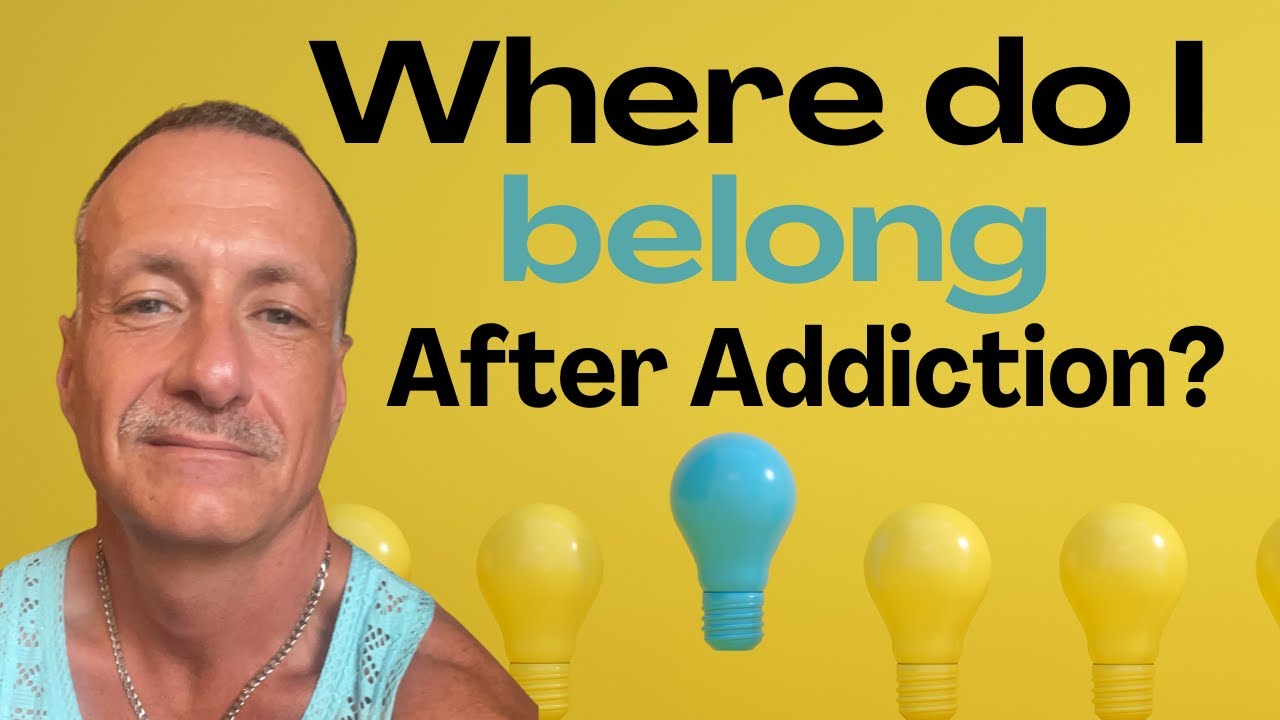
In this solo video, sobriety coach Dr. Dallas Bragg presents four practical frameworks to help people in addiction recovery—especially gay men recovering from crystal meth—cultivate a genuine sense of belonging. He begins by describing his own experience as the “blue balloon” in his family, introducing the concept of an exclusion (social isolation) schema that colors perception and creates self‑fulfilling isolation. Bragg explains how this schema leads to interpreting events negatively and how it can drive one toward harmful communities like the meth scene. He then outlines the four frameworks: (1) recognizing the shadow side of belonging and avoiding false belonging found in cult‑like or dysfunctional groups; (2) embracing authenticity by shedding persona fatigue and setting clear boundaries; (3) confronting shame rooted in rejected parts of the self, integrating those parts to reshape self‑concept; and (4) actively cultivating belonging by seeking similarities, validating others’ experiences, and mindfully choosing thoughts, words, and actions that connect rather than alienate. Throughout, he intersperses personal anecdotes, references to Wayne Dyer, and a reflective question for viewers. The video concludes with a call‑to‑action for his six‑month, two‑client‑per‑month one‑on‑one coaching program, Recovery Alchemy, and invites comments about personal belonging experiences.
Chapters
Hey, hey, Dr. Dallas Bragg here, sobriety coach. Today I'm going to walk you through 4 simple frameworks for finding belonging for those in addiction recovery. So first, let me ask if you remember that Sesame Street jingle, if you're old enough to remember, or maybe they still have it on there. I'm not sure. One of these things is not like the other. One of these things just doesn't belong. I don't know if you remember that or not. If you don't, Just imagine four items on the screen. One is completely different than the others. So, like four balloons. Three of them are red. One of them are blue. Right? So, using that example, I was the blue balloon in my family. I was the sinner, the outlier, the black sheep, the queer. I believed from an early age that I did not belong, and that belief became. What's known in the psychology field as an exclusion schema, or also known as a social isolation schema. You can look that up if you'd like, but basically, when one carries a schema, it filters the lens through which one views the world, their situations, and how they respond and react to outward stimuli. So if this sounds familiar to you, If my situation sounds familiar to you, I want you to know that I do help gay men recover from crystal meth addiction through my one-on-one coaching program called Recovery Alchemy. If you're interested in breaking free from the grips of Tina, click the link in the description to apply for my next slots. I open 2 slots for clients per month. So back to schema. What does that look like? This means that 2 people can have the same experience but interpret it very differently. So here's an example. Both you and your friend were not invited to Susie's party, right? You interpret it as, Susie doesn't like me and no one wants me around. But your friend interprets it as, oh, Susie must have limited room and had to make some hard choices. about who she invites. So if you notice, your narrative is written from a place of exclusion. Who knows which narrative is correct? Probably neither one. You're never going to know what's true, but it's how you interpret and respond and see the things that are happening in your life. So with this belief in mind, I found ways in my life to prove that I didn't belong. Through grade school, high school, and most of my adult life. So for instance, not getting asked to dance at prom, getting picked last for team sports, or not getting the promotion at work. These experiences happened because of my schema, my beliefs about myself. I expected not to belong, so my actions followed suit. So for instance, at the prom, I was standing in the corner, not making eye contact. Not even trying to play or learn a sport. Or being negative. I was a negative employee because I felt threatened by the boss. So I already thought the boss was going to leave me out and exclude me, so I made it true. So you see, what I thought was the cause of my isolation was only the effect of my beliefs. Beliefs are your thoughts. Wayne Dyer said, when you change the way you look at things, the things you look at change. And this is so, so true. Believing that I was excluded landed me eventually right into the living room of the guy who showed me how to smoke meth for the first time. I saw the gay community as an evil group of men who hated me. That was the narrative I held, and I found every way to prove that. I was convinced that the meth community was where I belonged because I seemed to be welcomed with open arms. But guess what? I was wrong. Surprise, surprise, right? So here are 4 simple frameworks for finding belonging for recovering addicts. So as humans, we need to belong. It is fundamental It's as fundamental as breathing. This is why the ultimate punishment in prison is solitary confinement. Isolation will destroy us because we are essentially social creatures. So you may have heard that phrase, the opposite of addiction is not sobriety, it's connection. To understand belonging is to live a true life of recovery, because true belonging isn't about fitting in or conforming. To anybody's expectations. It's about being so much a part of something that you can't not be a part of it. So let's explore this. Let's explore. So number 1, the shadow side of belonging. So beware of false belonging. And that's what we're going to often find in the meth community, right? So false belonging is often disguised as the real thing. So cults, dysfunctional families, Certain social groups, they can offer a sense of belonging, like your, your meth crowd, that comes with conditions and punishments for nonconformity. So for instance, in a dysfunctional family, children might become either the scapegoat— they were ostracized for not conforming— or the golden child, which is someone who erases their own identity to fit in with the family. Both situations create a false sense of belonging that can lead to struggles with authenticity and connection later in life. So I know that you feel you've bonded with your meth user buddies, and this is because while you're high on meth, 24 hours with somebody is the equivalent of spending 3 months together. That's just the way it is. You're bonding. You have this high level of dopamine. When we are in trauma bonds with others, it feels familiar and it feels comfortable. And you feel, especially when you're on meth, that you can do anything and be accepted. But honestly, if you don't have the drug, you're not accepted, right? It's easy to feel a sense of belonging. So the condition here is that you use the substance. Without meth, one of these things is not like the other, right? Number 2, authenticity. Is really the key to belonging and finding where your place where you could not belong. So to find true belonging, we must let our real selves be known first to ourselves and then to the world. So it's about giving up on trying to fit in and instead finding the people who accept us as we are. As meth addicts, we have juggled many personas. We have meth you, family you, friend you, partner you, work you, etc. This gets exhausting for you. It's called— It's called persona fatigue. One of the incentives of using meth is to get some relief from the energy it takes to keep up all these appearances. It's exhausting. But authenticity means defining who it is you are and then showing up as that person no matter where you are, no matter what crowd you're in, no matter what. Often this requires establishing very very clear boundaries for yourself and letting go of people who bought into an incorrect version of you, a persona of you that you were faking. Number 3, the role of self-concept and shame. So if you're struggling with belonging, it may be— probably is— it might be because you're operating from a place of shame. Shame is rooted when parts of yourself Are rejected by others. You're too loud. You're too much. You're clumsy. You're not skinny enough. These things about you that were rejected early in life, you actually hate them and separate yourselves from them, and you become ashamed of them. So referring to my, my introduction, parts of my true self were rejected by my family because I didn't fit the mold that the family created. So I became ashamed. I went into the closet and I began hating parts of myself. This led to decades of misery, right? It ultimately led me to creating that self-fulfilling prophecy that I don't belong anywhere. So to find where we belong, we must first find that within ourselves. We belong here. To feel a sense of connection within, We have to get to a place of loving and accepting all parts of ourselves. What is a part of you that was rejected, probably early on or even later on, by others? That's where your shame lies, and that, and that, and that's the barrier to belonging. We deal a ton with shame in my one-on-one coaching program. Again, if you're interested, Apply via the link in the description and we can get you started. I offer— I start 2 clients a month. So number 4 is cultivating belonging. Look for similarities instead of differences. So if we suffer from non-belonging, we tend to scan for differences, right? Try to actively look for ways you're similar to others instead. Connect through shared experiences. Pain can be very isolating, but recognizing that others experience Similar pain can create a sense of connection. So that's why some of these support groups like NA, AA, CMA—they can be so effective. Accept and validate others' experiences. Acceptance doesn't mean that you agree with everyone, but rather acknowledging others' experiences as valid. This creates an atmosphere of belonging. Be mindful of how your thoughts, your words, and actions either push people away. Or bring them closer. Every thought, every word and action creates a connection or a disconnection. Pay attention to the subtle energies at play in your interactions. Remember, you are an indivisible part of the universe. There is nothing in this universe that doesn't belong to you, that you're not connected to, and nothing that you don't belong to. If you can find the similarities in others, this connection exists whether you recognize it or not. You belong here. Embracing this truth can help you cultivate a deeper sense of belonging in all aspects of your life. Listen, you already belong because you belong in here. When you accept yourself, when you tell yourself you belong, when you love all those parts You belong without having to do anything. Okay, so I'm going to wrap this up with a reflection question. Think about a time when you felt a true sense of belonging. Has it happened? What made the experience different from the times when you felt like you didn't belong? When you answer that question, Think about the ways that you're making yourself not belong in your own body. And give yourself the same things that were given to you in times when you felt like you belonged. All right. Again, if you want to join my one-on-one coaching program, it's called Recovery Alchemy. I will spend 6 months with you one-on-one in an intense accountability program to get you to break free from crystal meth and live a life that you never dreamed of. 6 months from now, your life could look totally different. If you're interested, the link's in the description. Apply to get started. All right, that being said, thank you all. If you have more comments or you want to join in the discussion, you have other ways that you have found belonging, tell me in the comments. I'd like to hear it. Otherwise, I'll see you next time. Bye.