5 Ways to Take Control of Your Tina Recovery (Implement Today)
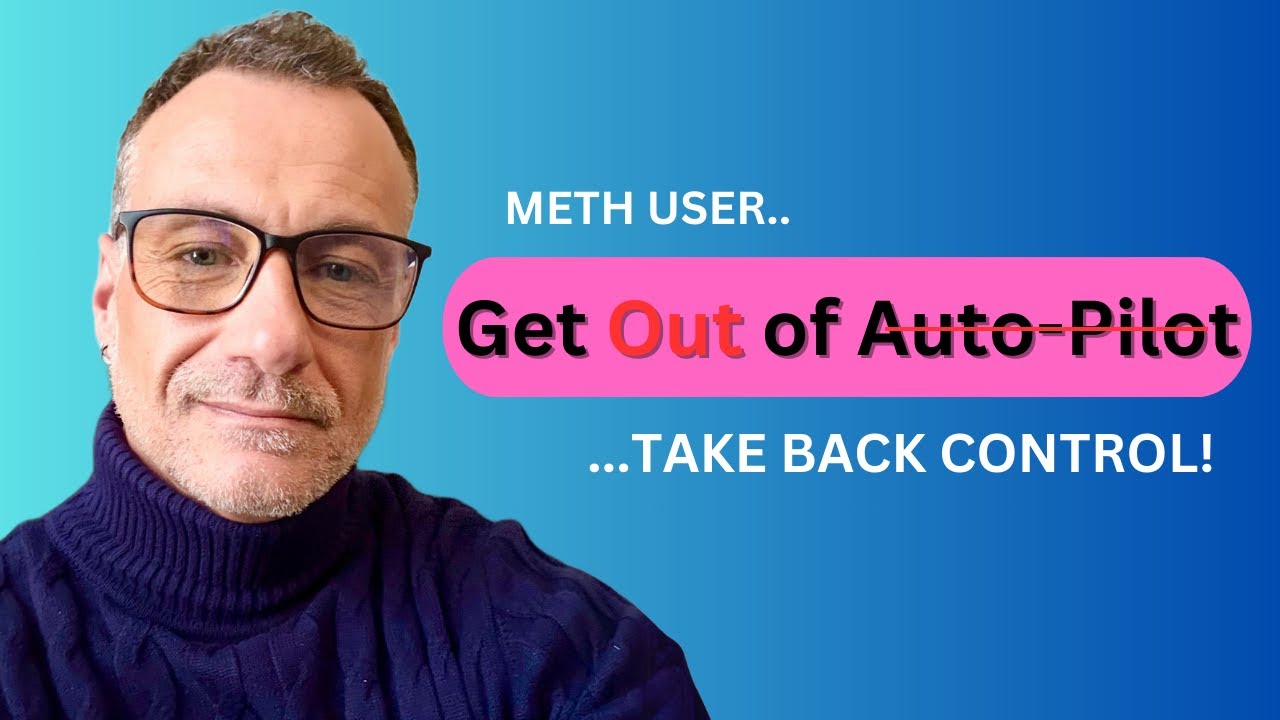
In this long‑form monologue, Dr. Dallas Bragg, a recovery coach for gay men, shares his personal turning point—an intense craving episode in the woods that led to a spiritual experience and the decision to never return to crystal meth. He frames recovery as a process of reclaiming one’s authentic self by breaking the subconscious “autopilot” that drives addictive behavior. Bragg outlines five pillars for achieving this: (1) Understanding your programming, where he likens the subconscious to a computer operating system that has been coded by life experiences and addiction cues; (2) Pattern interruption, encouraging deliberate disruption of habitual routes and routines to force the brain to create new neural pathways; (3) Rewriting your algorithm, using the metaphor of social‑media algorithms to illustrate how thoughts and behaviors can be re‑trained by curating a healthier “content diet,” unfollowing triggers, and reinforcing positive actions; (4) Managing ego and subconscious resistance, describing common ego‑driven pushbacks such as cravings, rationalizations, and encounters with old contacts, and recommending compassionate observation and meditation; and (5) Creating a new identity, urging the adoption of empowering “I am” statements, identification of toxic beliefs, and building a supportive environment. Throughout, Bragg intersperses practical examples, exercises, and calls to action, promoting his one‑on‑one coaching program (Recovery Alchemy), his podcast “The Aftermath,” and a vision‑building workshop. The video concludes with encouragement for viewers to comment, suggest topics, and engage with the community.
Chapters
Hey there, Dr. Dallas Bragg here, recovery coach for gay men who want to break free from the addictive patterns of crystal meth and live their best and highest life. Today we are talking about the 5 pillars of breaking out of autopilot so you can take control of your life. If you have experience with crystal meth, you know how it feels when you are in the car headed to the party, but you don't want to go. Your body is moving, but you feel like someone else is controlling it. If that relates, I want you to keep listening. On this channel, you're going to find lots of resources to help you break free from Tina and attain your best and highest self. Also, don't forget to look for my podcast. It's called The Aftermath here on the channel as well. I drop a long-form video like this one every Saturday, so please turn on the notification bell so you do not miss any of these videos. By the way, if you are interested in my one-on-one coaching program, it's called Recovery Alchemy. The link to apply is in the show notes. Through weekly one-on-one sessions with me, weekly group sessions, and daily accountability, your life could look much differently in 6 months from now. All right. So for those in early recovery, the pressure of resisting the pull of crystal meth can almost be too much to bear. On this particular day of my life, the crushing weight of my cravings caused a flight response. I ran out of the house and into the woods. The sun was shining through the branches and into my teary, teary eyes. I stood there holding my phone. I wanted to text my dealer, but I also didn't want to text my dealer. My body was shaking. It was summer. There was summer heat, but I was shaking like I was freezing. My heart was racing. But looking down at my phone and I was sobbing. I began deleting every dealer and user contact that I could think of. This took place a year into my abstinence from crystal meth, and it was in that moment that I decided in my heart of hearts that there was no turning back. A wave of relief when I decided that rose from my feet and it rippled up through my body, and I wasn't shaking anymore. I was calm. And as I stood there in the silence in the woods, I heard a voice. We've been waiting for you. I dropped my phone and I dropped to my knees. Somehow, somehow I knew that I was hearing the voice of my angels. All of my life growing up in church, I just wanted to know. I just wanted to feel a higher power, something that felt like love, unconditional love. And that day, my clear intentions pierced the veil so that I could hear the voice of my angels. The next I heard, now be like that tree. I looked to my right and I noticed a decaying tree that was laying on the ground. Staring at it for a few moments, I finally realized what the message was. Everything I thought I was, like that tree, Would be decomposed. What would be left is my true self, my soul self, who I was before addiction, who I was before the world told me who I was. That day began the journey of my ego death, observing my shadows, learning my beliefs about myself, overriding them, and processing my triggers, unraveling all of that shit. That blocked my internal light. This, that is recovery. Listen, you're not just fighting addictive patterns here. You're engaged in something far more profound in your life. You're in the process of reclaiming your authentic self from years of programming, breaking free from the autopilot that's been running your life. Every day you choose recovery. You're not just saying no to myth. You're saying yes to becoming the author of your own story. All right, so let's look at the 5 pillars for breaking free from autopilot. Number 1, understanding your programming. Listen, computers were designed to mimic our subconscious minds, and since we were born, So the subconscious has been fed code to build its programming. This data comes in the form of life experiences, impressions, and emotions that become our belief system or our operating system, right? This operating system is always running in the background, always learning and always adapting. And more often than not, we allow the program to dictate our decisions. And just like any computer program, our subconscious is wired to repeat predictable cycles and patterns. And that is where addiction is born. The subconscious noticed that meth provided intense pleasure, deep connections, and temporary escape from your emotional pain. Now it treats these experiences as survival necessities, just like food or just like sleep. It thinks you need it. Each time you used, it strengthened these neural pathways and created a complex web of triggers, responses, and behavioral loops. These loops might include the muscle memory of your using ritual, whatever that may be, turning to Grindr or sniffies when you feel bored or ugly or alone, the learned association between sex and crystal meth, the instinct to use when you're feeling emotionally Vulnerable, or emotionally overwhelmed. The automatic reach for the phone to contact your dealer when you're stressed, like I was doing that day. The key skill to be learned here is to observe when you are acting from the programming and immediately do the opposite. Your programming also includes deeper patterns, right? That existed even before you found crystal meth. Childhood messages about your worth, learned responses to emotional pain, internalized shame about your sexuality, beliefs about what you deserve in life, etc., etc. Recovery is unpeeling and unpacking all of that. Number 2, the power of pattern interruption. Every time you break a routine, take a different route home, or respond differently to an old trigger, you're throwing a wrench in your subconscious programming. You want to become unpredictable to your own programmed responses because this leads to the operating system pausing to wait for you to tell it what's next instead of the other way around. Imagine a big cursor blinking in your brain waiting. Pattern interruption works because it forces your brain out of autopilot. And when you've used crystal meth, your brain creates thousands of neural pathways Like well-worn trails throughout a forest. Trails that would normally take years to develop formed with the first puff. Each time you take these paths, they become deeper and more automatic. Pattern interruption is about bushwhacking new trails in your brain. And I use the term bushwhacking because it will require some deliberate labor from you. Examples of powerful pattern interruptions could be start as small as Getting out of bed on a different side. It may sound asinine, but it sets the tone for you to look for ways to interrupt patterns all day. Any moment you reach for your phone, put it down and turn it off. If you associate certain music with using, create completely new playlists with different genres. If you habitually check certain websites or apps when you're triggered, install blockers and replace the habit with meditation. If your nightly routine is TikTok scrolling, Put the phone in a different room and read a book. Remember, the subconscious loves efficiency and it loves routine. So by deliberately making things less efficient and routine, you force your brain to create new pathways. And that's the point here. By the way, I accept 2 new clients per month. If you want one-on-one accountability in building your new pathways, I accept 2 clients a month into my one-on-one coaching program called Recovery Alchemy. If you're interested in working with me, click the link in the video notes below. All right. Number 3, rewriting your algorithm. Just as social media algorithms learn from what you click on, your brain learns from what you feed it. Each thought, each action and choice is like clicking like on content. You'll get more of what you engage with. And just like an ad, Or a reel or a TikTok video, the longer you stay with the energy, the longer you watch it, the more you tell your algorithm, I like this, I want more of this. For example, dwelling on the shame of relapse. The longer you watch that ad, the more you're going to get shame-inducing ads in your life, right? And guess what? That ad shows up on other platforms. It's just like clicking on an Amazon product. And suddenly that same product shows up on your Facebook. You've spent time watching the relapse ad, so that shame shows up in all areas of your life. Your work, your family, and your social life. Your subconscious algorithm has been trained on the intense dopamine rush of crystal meth, the validation from sexual encounters while you're high, the temporary relief from emotional pain, the false sense of confidence and connection. Et cetera. To rewrite that algorithm, you might consider this. Number 1, recognize your current content diet, right? What thoughts, behaviors, and patterns are you reinforcing? What, what are you spending time on? Number 2, consciously unlike and unfollow triggering content, people, and situations, right? Things. Number 3, actively seek and engage with new sources of pleasure, new sources of connection and meaning. Number 4. Create new neural pathways through repetition of healthy behaviors. Meditation, taking a walk, journaling, whatever it is, playing basketball. I don't know where that came from. Whatever it is. Number 5, celebrate small wins to reinforce positive changes. That is very important. Think of yourself as the ultimate computer programmer. This puts you in control of your life. You're programming it, right? Each time you choose differently, you write new lines of code that will eventually override the old program. I hope I'm not running this analogy into the ground, but I think you get it. All right. Number 4, the ego's, the subconscious resistance. For an explanation of the ego, I want you to watch this video. It's right there. Click on that and then come back, or you can watch it later. When you start this work, Expect pushback from the ego or the subconscious. Your subconscious mind will fight to maintain its programming, not because it wants to harm you, but because it believes these patterns keep you safe. These patterns are there for survival and they bring you pleasure. The subconscious wants to avoid pain and bring pleasure. So understanding this resistance helps you move through it with compassion for yourself. You cannot change an algorithm. Instantly. It takes time to click and view new ads to create a momentum, to help it better understand, help it start to study. It wants to know what you want to experience. That said, you will still have moments that reflect the old programming that you might call and label a mistake. The more time you spend viewing and giving energy to these mistakes, the slower the algorithm shifts to where you want it to be. Important note here. This is important. You can pay attention to the thoughts, words, and behaviors that reflect old programming, your mistakes, if you view it from a place of curiosity instead of self-condemnation. This is where the computer algorithms and the subconscious programming differ. This is where they diverse. They, they, this is where they, yeah, this is where they digress. Sorry. Your subconscious reads the energy in which you view the ad. A computer algorithm, a social media algorithm can't read your energy, right? So if you are watching an ad from a place of victimhood and despair, your subconscious thinks you want more opportunities to be a victim in despair. Watching an ad, your mistake, from a place of being a compassionate observer gives you more opportunities to love yourself. So here's some common forms of ego resistance. Sudden intense cravings when making progress. When you sign on with a coach, when you make a declaration, when you start going to therapy, when you go to rehab, whatever it is, sudden intense cravings when you're making progress. Random encounters with old using buddies. You, you're going to run into them at the grocery store. You're going to run into them in places that you never thought. You're going to get a text from somebody that you thought you had deleted, blah, blah, blah. Amplified feelings of loneliness or amplified feelings of sexual desire that you just can't seem to handle. Convincing rationalizations for just one more time. It's going to be different this time. It's going to, it's going to be just like I've always wanted. I'm going to have the hot guy. We're going to have a, this group sex that I saw on Raw Fuck Club, and it's going to be this and that. It ain't. Life challenges that trigger old coping mechanisms, right? Minimizing the consequences of your past use. All these things. This is, this will be the subconscious fighting for its life. Romanticizing the good times while high. Listen, the ego will present these experiences as emergencies too, requiring immediate response. Like it doesn't want you to think about it. Remember, urgency is often a sign of ego manipulation. True growth rarely requires rushed decisions and reactions. This is where meditation plays a vital role in your reprogramming. Pausing before responding will be the key to your success here. Last one, number 5, creating your new identity. Recovery isn't just about stopping crystal meth use. If you listen to me at all, you've heard me say that it's about unbecoming Everything you think you are. Every moment is an opportunity to declare a new I am statement that aligns with your authentic self rather than your programming. Do you want to say I'm an addict? Because clicking on that ad will bring you more and more examples to confirm what you want to see. How do you want your feed to look in your life? Like a lifetime addict living in fear of the next relapse? If that's what you want your feed to look like, Then keep saying it. I'm a victim. I'm an addict. This is your once in a lifetime opportunity to design and declare how you will show up in the world. For help in designing a vision for yourself, also see my visioning workshop. Click the little banner there. Your new identity emerges from conscious choices that align with your values, but you have to know what the values are first, right? New experiences that prove your capability, relationships that reflect your authentic self, actions that build trust with yourself, and stories you tell about who you're becoming. Listen to your words very carefully. Sometimes the less, the better. Listen to how you narrate your story Listen to how you talk about yourself and your experiences. What are you labeling? How are you speaking about it? How are you feeding the algorithm? What are you creating for your life? I'm not saying to deny the past or deny things and, and be Pollyanna. We don't want to bypass the pain, but we also don't want to live there. Dragging your past into the present holds you back from your future. You get to decide what your struggles have taught you and how they've made you stronger. Listen again. You get to decide what your struggles have taught you, how to label them, and how they've made you strong. When you want to reconstruct your identity, identity reconstruction involves number 1, identifying toxic beliefs installed by trauma and addiction. Those beliefs, remember, are the thoughts you keep on thinking about yourself. Number 2, Challenging the I am statements that you are saying that keep you stuck. Number 3, creating new declarations based on who you choose to be that overwrites the old programming. Number 4, taking actions that reinforce your new identity. Putting the phone down or whatever it is, take an action. Number 5, surrounding yourself With people who see and support your growth, and do not keep reminding you of your past. Your new identity can begin right now, this moment, today, as you're watching this. An identity who does not use meth. I am someone who does not use meth. If you keep saying that, if you keep believing that. That is what the algorithm will bring back to you. Every time you consciously choose a new pattern, you're not just changing a habit. You're reclaiming your power from the subconscious mind. You are not on autopilot anymore. You're proving that you are not the programming and you have the ability to rewrite your story. Your journey in recovery is the ultimate opportunity. To break free from all programming that does not serve your highest good. Each day presents new chances to confuse the algorithm, to show your subconscious mind that you're in charge now. Recovery is not about abstinence from the substance. It is about reclamation of the true self and living your best and highest life. All right. I love you all. Take care. P.S., I am accepting applications for my Intense 101 Recovery Alchemy training pro— coaching program. If you're interested, click the link in the show notes. If you have questions, if you have comments, please comment below. Tell me how, what you thought of this video. If you have subject matter that you'd like for me to talk about, I'm all ears. Let's have a discussion. Have a good day.










