7 Essential Steps for Boundary Creation in Recovery
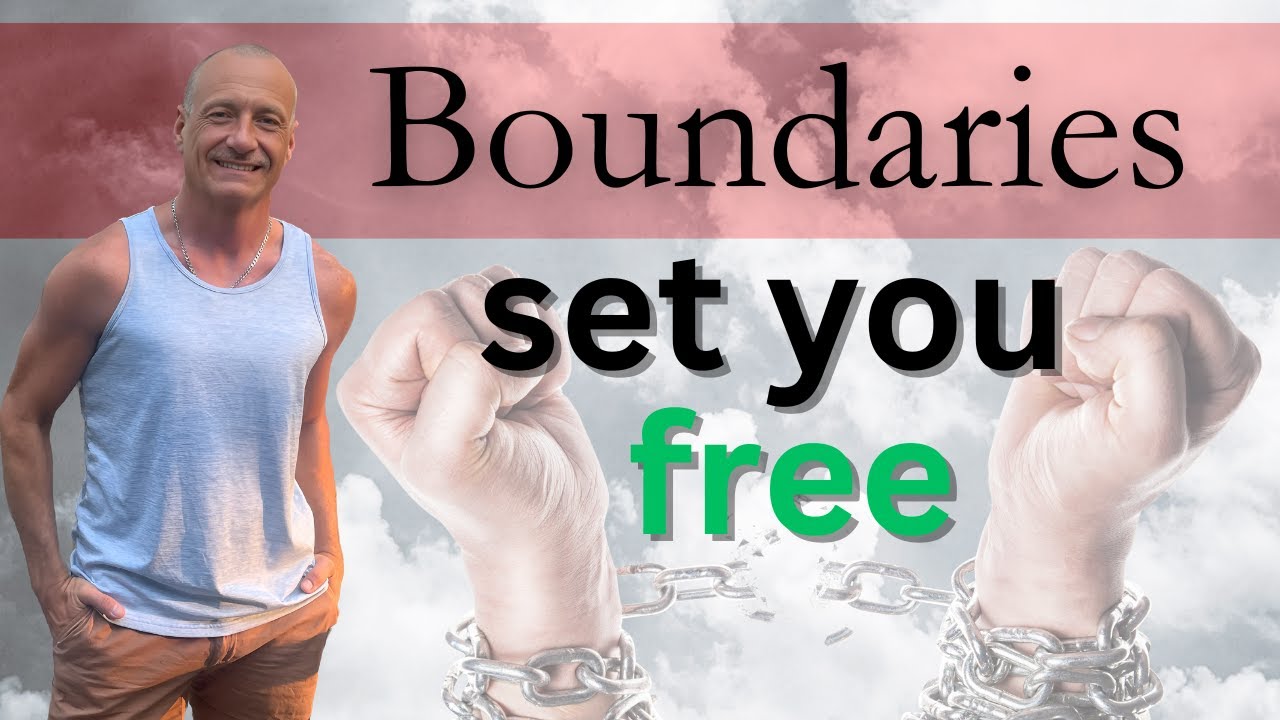
Dr. Dallas Bragg, a recovery coach for gay men, breaks down seven boundary domains essential for sobriety: body sovereignty, emotional autonomy, digital limits, sexual boundaries, recovery-space sharing, time management, and energy protection. He explains how meth erodes personal limits and offers practical exercises like body scans and energy journals to rebuild them.
Chapters
Hey there, Dr. Dallas Bragg here, recovery coach for gay men who want to break free from the addictive patterns of crystal meth and live their best and highest life. Today we are talking about boundaries and how they can set you free in your recovery. So if you have experience with crystal meth, you will know that boundaries are pretty much nonexistent in that scene. On this channel, you're going to find lots of resources to help you not only make, create boundaries and keep them, but break free from Tina altogether and attain Your best and highest self. Also, don't forget to look for my podcast. It's called The Aftermath, and it's found here on this channel as well. I drop a long-form video just like this one every Saturday, so please turn on the notification bell, subscribe to the channel so you don't miss any of my videos. By the way, if you're interested in my one-on-one coaching program, it's called Recovery Alchemy. It— the link to apply is in the show notes. Through weekly one-on-one sessions with me, weekly group sessions with other guys, and daily accountability from yours truly, your life could look much differently than it does now in only 6 months. All right. Today, the topic, we're diving deep into something that many of us have struggled with throughout our lives, long before Crystal even entered the picture, right? Boundaries. Not just what they are, but how they become the foundation of a life worth staying present for. I'm sure you know the question well. What you into? Dear Lord, how many times have I asked other guys, what you into, or received that fucking question, right, on a dating app? Invariably, after sending my portfolio of nudes and they were approved by my potential hookup, that would be the next question, right? What you into? And I've often wondered if my answer to that question even mattered when I was talking to someone else doing crystal meth, but While in active meth use, my answer was always, the question is, what am I not into? That was always my comeback there. This inference to my wildness would usually be met with a high level of satisfaction on the other end of that message from another Tina user, right? And it was truthful, actually. I was always down for anything, anytime, anywhere. I'd like to say that my willingness to explore came from a healthy place, um, but it did not. And I wanted to be accepted. I wanted to be accepted by as many men as possible. So I had to be into as much shit as possible, right? And the facade that I was open to most any extreme taboo made me very popular, at least on the onset in the conversation, right? But even in the gay meth scene, one must compete for levels of hotness and work to enter certain cliques in the scene. And this was quite easy for me because I had zero boundaries. In fact, I had no idea what boundaries even meant. Of course, this led to placing myself in several dangerous situations. I compromised whatever integrity that I had left, and I was losing my sense of, of my sense of identity. So fast forward to recovery, I was more than 3 years meth-free before I began to understand the freedom. Of boundaries. Here's the hidden truth about boundaries in our community. Let's start with what many of us know, but we rarely speak about, right? As gay men, we learned early that survival meant shape-shifting. We adapted to others' expectations and became chameleons in a world that wasn't safe For us to be ourselves. Then crystal meth came along, promising to erase that pain, the pain of the compromises, right? To make us feel powerful in a powerlessness world. Those early adaptations were actually survival skills. They kept you and I alive. They got you here. And now in recovery, You're ready for something a little authentic. And now in recovery, you're ready for something a little deeper. The art of authentic boundaries. So here's how to understand the deeper why. Boundaries aren't just about saying no, but it's about recognizing that you are worth protecting. Think about it. Every time you compromised your boundaries in active use, You were trying to meet a legitimate need. Connection, acceptance, escape from pain, feeling seen. Those needs weren't wrong. Your methods of meeting them just weren't serving you. They weren't healthy. Now, in recovery, boundaries become your way of honoring those same needs while staying true To your healing journey. So here's the connection to crystal, and this is beyond the surface of boundaries, right? So getting real about how crystal meth specifically impacted your boundaries: it made us feel invincible when we were actually at our most vulnerable. It created false intimacy that made genuine connection feel impossible. And boring. It blurred the lines between pleasure and self-destruction, and it convinced us that endless accept— accessibility was the same as genuine connection. It really feels genuine in the moment. By the way, I help gay men. If this is all ringing true for you, I help you break free from the addictive patterns associated with chemsex or Tina. And become your best and highest self. My one-on-one coaching, it's called Recovery Alchemy, is a 6-month intense program that can literally change your life. I accept 2 new clients a month. You can apply by clicking the link in the show notes. Okay, so let's talk about the 7 tenets of boundary work in recovery. Number 1. Body sovereignty. Your body is your first home. During active use, we often treat our bodies like a temporary house or a shithole, really. Now we're learning to treat them like sacred temples, like they are. Crystal meth taught us to override our body's natural signals— hunger, fatigue, pain, desire. It made us feel invincible. And while it simultaneously disconnected us from our physical wisdom, we are disconnected from our body. In recovery, reclaiming body sovereignty means learning to interpret and honor signals from your body again, to hear signals from your body again. And when your body says it's tired, you rest. When it's hungry, you eat. When it's oversaturated with stimuli, you create a quiet space. You listen to your body, and this isn't just about basic self-care. It starts on the basic level, but it's about rebuilding trust with your most intimate relationship, the relationship that you have with your physical being. So here's a practice for it. Start each day with a body scan. Turn your awareness to different parts of your body and notice where you're holding tension. This is your body's boundary wisdom speaking. Release the tension. That's just, that's a good place to start. All right. Number 2, emotional autonomy. So you have the right to your feelings without managing others' reactions to them. Listen to that. You have a right to your feelings without managing others' reactions to them. Hear me on that. Crystal often made us emotional Chameleons. And now we're learning to honor our authentic emotional landscape. We learned to push everything back and push everything down, probably before Crystal, because maybe our parents taught us it's not okay to show emotion. And if you're like me, my dad said, stop crying, or I'll give you something to cry about. Many of us learned early in life, right, to modulate our emotions to keep others comfortable, mainly parents, right? To tone down our joy, to hide our pain, to mask our anger. Crystal meth seemed to offer liberation from this, right? From this emotional container. But instead, it just created wider swings between numbness and overwhelming intensity. You've been there. You've rode that roller coaster, right? True emotional autonomy means recognizing that all of your feelings are valid, Messengers speaking to you, not inconveniences for anybody else, not inconveniences to be managed or to be picked apart or judged. It means understanding that you can feel sad without being responsible for cheering everyone else up or feel angry without having to justify your anger to anyone else ever. Here's a practice. When someone asks how you're feeling, Pause for 3 breaths before answering. Give yourself permission to feel and be vulnerable and honest before you respond. All right. Number 3, digital boundaries. This is the big one. Our phones can be the portals. They are the digital drug dealers, right? To both. They can be the portals to connection and they can be portals to triggering situations or relapse, right? Using episodes, creating clear digital boundaries isn't about isolation. You're isolating yourself, but it's intentional connection. Intention. In our community, digital spaces are often serving as lifelines when physical spaces aren't safe or accessible and we feel judged and we feel unsafe in the clubs or whatever. We turn to the digital landscape. Then during active use, these same platforms became hunting grounds, right? For the next high, the next fuck, the next hookup, the next escape, the next orgy. The challenge in recovery isn't about completely disconnecting. It's about transforming your relationship with the digital spaces. They're going to be there anyway. This means being honest about which apps, which messages, which contacts Act as triggers, it means recognizing that a 3 AM message of, hey sexy, is probably one of 500 that's been sent out by that same person. This isn't just a message coming to you. It's a potential gateway to using again that requires a clear boundary. So a practice would be set specific hours for checking dating apps if you choose to use them. Create a recovery-first policy for your phone after certain hours. 8 PM to 8 AM, you're not with it. That's an example of a boundary. Number 4, sexual boundaries. Perhaps one of the most challenging areas for many of us, right? Crystal meth often blurred or obliterated our sexual boundaries. Reclaiming them is sacred work, consistent work. In patient work, the intersection of crystal meth and sexuality in our community created particular challenges around sexual boundaries in a community that hardly has any anyway. The drug didn't just enhance our sexual experience, it often became inseparable from them. It's creating a tangled web of triggers where sexual desire and craving the substance became indistinguishable. They're fused together. So in recovery, setting sexual boundaries isn't about shame or being a buzzkill or repressing your sexual liberation. It's about reclaiming your sexuality as something sacred and separate from substance use. This means learning to recognize authentic desire, understanding your triggers, And giving yourself permission to explore intimacy at your own pace, in your own way, even if that means taking a period of sexual sobriety, right? Or reset your relationship with your body and your desires. It's a process. It's re— sexual reintegration is a journey all in itself. Here's a practice. Before any sexual encounter, check in with your body's wisdom. What does genuine desire feel like? Versus a compulsive seeking, a need for attention, a need for validation. I'm depressed. I need someone to make me feel better, right? All right. Number 5, recovery space boundaries. Your recovery journey is yours to share or not share. We get pressured to live out loud, right? You get to choose how much, when, and with whom you share your story with. In the age of social media and constant connection, there is all sorts of pressure to be completely open about your recovery journey, and there is value in it for certain individuals. To turn our pain into inspiration and our struggle into teachable moments, all of that is great. And while sharing can be, it's powerful, it can be healing, and it's crucial to remember that your recovery story Is your own sacred ground. Not everybody has earned the right to walk on it. This means being selective about which parts of your journey you share in meetings, on social media, with family, with friends. It means recognizing that privacy isn't secrecy. It's protection of your healing process. Some chapters of your story might just be for you. Or you and your sponsor, or you and your therapist, you and your coach, you and your closest support circle. While others might be ready to be shared more widely, other parts of your stories are ready to be shared more widely. That's fine. Don't be pressured that you have to share it all, especially if you've been in the crystal meth scene. So here's a practice. Create a script for when you don't want to share, right? I'm focusing on my own journey. Right now, but I appreciate you asking. Practice saying that. Number six: time boundaries. Time management in recovery isn't about productivity; it's about protection. Your time is a non-renewable resource. During active use, time became fluid, right? Tea time. He's on tea time. You know when you text the dealer and he says, "I'm on my way," it could be. 2 hours, 5, 6, 10, could be 3 days from now, right? There was a, I had a dealer showed up 4 days later after he said he was going away. It becomes meaningless. Days blended into nights, right? Weekends disappeared into binges. The concept of scheduling, it feels irrelevant. Now in recovery, learning to structure and protect your time is a crucial act of self-care, self-preservation. This isn't about becoming rigid. Or inflexible. It's about recognizing that every yes to something is a no to something else yourself. So when you say yes to a late-night gathering that might be triggering, you're saying no to your morning meditation or your meeting. When you overcommit to helping others in recovery, you might be saying no to your own rest and integration time. Time boundaries require us to be honest. About our energy levels, our triggers, and our need for restoration. So here's a practice. Before saying yes to any commitment, ask yourself, does this support my recovery or drain my resources? Number 7, energy boundaries. Learning to recognize and honor your energetic limits is very crucial. Crystal meth lied to us. About our energy reserves, right? Makes us the Energizer Bunny, if you know what that is. Always on the go, always thinking you can get it all done. Now we're learning our true rhythm, right? The true natural rhythm of a human. Crystal meth created an artificial sense of limitless energy, making us feel like we could push through any boundary, stay up for days, and maintain an intensity that was ultimately unsustainable. Crash, right? In recovery, we're learning that energy is a sacred Currency. It needs to be monitored, protected, and consciously distribute— distributed. This means learning to recognize energy vampires too, in all of their forms. The friend who always needs emotional support but never reciprocates. You know them. The social situations that leave you depleted rather than energized. The work commitments that push you beyond your health limits. Setting energy boundaries means becoming attuned to your natural rhythms and honoring them, even when others might not understand. It's not your job to help them understand. It means learning to say, I need to recharge, without guilt and recognizing that your energy reserves are as important to protect as your physical abstinence from meth. Here's a practice. Keep an energy journal for one week. Notice what fills your tank and notice what depletes it. All right, so let's go a little bit deeper into understanding the understanding of protection. Boundaries aren't walls. They're filters. They let in what serves your highest good and they filter out what doesn't. They're not rigid. They're responsive. They're not punitive. They're protective. Think of boundaries like the membrane of a cell. They're selective, they're intelligent, and they are essential for all life. Without them, we lose our sense of self. With them, we create the conditions for transformation. Your recovery, your revolution. Oh, sorry. Oh my God. Okay. Each boundary you set is an act of revolution against the chaos of Matthews. Each limit you honor is a vote for your future self. Each no is really a yes to something deeper inside you, your inherent worth, your right to exist on your own terms. Your journey of becoming. The same courage that got you into recovery is the courage that will help you maintain your boundaries. You've already proven you're capable of radical transformation. You've already proven that. This is just another expression of that power. Woo! That was a lot. I hope that you enjoyed it. I hope that you got a lot out of it. If you have any questions, comments, Put them below the video. I'd love to hear from you. I'd love to know what you think and your experience with boundaries too. All right, guys, I will see you next week. Love you all.










