EP 1:17 Overcoming Adolescent Addiction
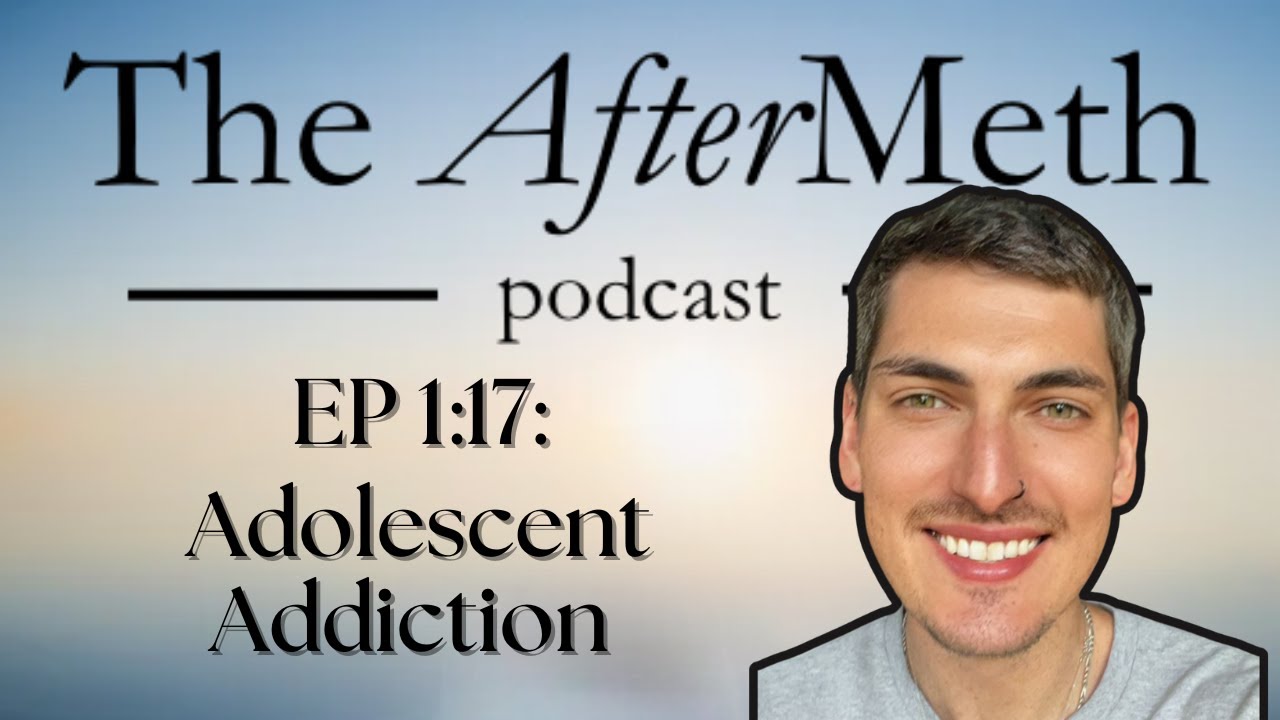
Josh Gray was 8 when he first tried heroin from his mother's stash, then injected 45-50 cc per session as a teenager. His best friend's request to be godfather to her child in 2010 gave him reason to get clean. Now sober 14 years, he's pursuing a master's in nursing with an addiction focus to help others the way counselor Sarah Evans helped him.
Chapters
Hey y'all, don't forget there's a commentary at the end of this episode, something we started last week. The subject matter is holding on to resentment and forgiveness.
So if you're interested in that, stick around.
If not, enjoy the episode.
So I would, yeah, I would cook it and I would shoot up and I was probably shooting up close to between, oh God, when I peaked out before 2010, I was close to about 45-50 cc's at a time.
Whoa.
Yeah.
Welcome to the After Meth Podcast.
This is your host, Dr. Dallas Bragg, a former crystal meth addict, now sobriety coach. Join me on my mission to increase awareness around the epidemic of crystal meth among the gay male population and create a repository of resources for current and past addicts as well as and especially for their loved ones.
This is The Aftermath. Trigger warning, this podcast will contain discussions pertaining to drug and alcohol misuse. If you feel triggered to use or relapse, please call SAMHSA's National Hotline at 1-800-662-HELP. Also, if you are new in your sobriety journey and you feel like you could be triggered, By discussions around drug, alcohol, and sex misuse, please do not listen to this podcast.
All right, now on with the show. All right, welcome to this episode of The Aftermath. Thank you, friends, for tuning in. You know, the podcast is has gotten such an amazing start, and this is as we tape this or tape this as we record this in. Uh, the end of May. Last week we had, um, about 500 downloads. That's amazing for a podcast that's only released 11 episodes. So I'm just so excited. I am so grateful to you for listening or for watching on YouTube. I just want to ask a favor to help other people who need this podcast. Please rate and review. If you go into Apple Podcasts, you can leave a review, you can rate. On Spotify, it looks like you can just rate. Give me a 5-star rating and get this podcast in front of more people. The feedback that we have received from this podcast is just surreal. There are men out there and women who are suffering with a crystal meth addiction. There are suffering with a cocaine addiction. They are suffering from heroin addiction, sex addiction, which isn't supposed to be a real thing. But there are people out there listening to this podcast every week who have healed from the guests. They have healed from the messaging. They are getting out of this podcast exactly What we set out to do when we created it. Please, I just want to ask before we dive in, do me a favor, rate, review, share the podcast on your social media, share the podcast in your 12-step meetings, share the podcast with your family, your friends. I would greatly appreciate it. Now let's introduce our guest. I'm so excited to talk today. This guy has a story, let me tell you. He is one of my TikTok buddies. You know, the TikTok channel just for whatever reason has taken off over the last couple of months. I am so excited about that because as an old dog, I have learned a new trick. It's called TikTok. But you know, through TikTok, I am— we are reaching people all over the world. By the way, Aftermeth.net is our website. You can go on there and submit your stories, your questions. If you're a family member of a crystal meth addict, you can submit there too. But Josh Gray is currently 14 years sober. He's sober from heroin. So, you know, we, we've talked internally about whether or not to have people With addictions other than crystal meth on the show, and I feel like it's necessary, especially if it's a gay man, and especially with a story like Josh's. So Josh struggled with heroin, and his journey of addiction began around 8 or age 8 or 9, and he was influenced by his mother's usage. So, you know, if you're out there and you are an addict because your parent was an addict, you're going to relate to this story. Despite several relapses, he was able to overcome his addiction in May 2010. Josh is presently pursuing a master's degree to become a family nurse practitioner. That's great. That's a lot. With a focus on addiction and recovery.
Love it.
We need it.
We need you, Josh. He joins the podcast to raise awareness around addiction and also And also to demonstrate really that overcoming addiction is possible.
So Josh, welcome to The Aftermath.
Hey Dallas, how are you?
You know what, I'm doing so good right now. Um, I am just coming off of a week, a month really, of vacation almost. I was at a gay and sober conference in Fort Lauderdale Then I got to celebrate my grandmother's birthday in West Virginia. And then I got to celebrate my daughter's graduation from college in Wilmington, North Carolina, from UNCW. So it has been a really fun month, a rewarding month, a month of reset, but also a month of growth.
Yeah.
So many new clients coming in, so many people telling, just really ready to quit and be healed from this. from their disease, and I'm just really happy to hear that.
How are you doing?
What is your check-in today?
Oh Lord, I've been busy also. I just got back from Paris. Yeah, I went to the— in Paris and I saw Taylor Swift because I'm a Swiftie. So, wow, yes, I was night 3. Um, so that was kind of my getaway, and then I'm leaving tomorrow morning. I'm actually going back home to see my godkids and my dad and all my family for about a week.
So where are you now and where is home?
So I'm originally from Huntsville, Alabama, but I've lived in Atlanta. I've lived in Rome, Georgia. I'm currently in Bowling Green, Kentucky. So like the South is like my primary place, basically.
So how was it in Paris? For a Southern boy?
Well, I've been— I mean, I've done a lot of traveling my whole life. I've been to probably well over 20-plus countries my whole life. So I've been traveling since I was 7, 8.
Yeah.
Um, so I've been fortunate to have that aspect come from my dad. Um, so going to Paris, I actually was back— I went there in 2000 and 10, I think it was, for my senior trip. Um, and so not much has changed. Not much changed. Yeah. Despite them getting ready for the Olympics.
Oh yeah.
Taylor Swift coming in. It was, um, it was crazy.
I'm sure. I'm sure. Well, I hope you enjoyed Taylor.
I did. I cried. So. Nice.
Nice. Well, Josh, your story, um, I want to jump into a part— just going to get right into it— the sexual molestation part of your story, because I personally was not sexually molested. However, many of our listeners have that in their history. So could you talk about your experience with having an addiction and being molested simultaneously? What, tell us what you can about that.
Yeah. So like you said, I started basically playing with the idea of addiction around 8 or 9 due to my mom. My mom's, I haven't talked to her now in probably 6 or 7 years. Um, and she has full custody of me when I was growing up. The whole— my whole life she had full custody of me. Um, so when I wasn't with her, I was with my dad. And my dad has 5 siblings. Um, my dad is the oldest out of those 5. So his youngest sister, I would go to her house and she had her At the time, she was married to a man and he had a son. And, um, I would be over there and basically he was a year older than me, I believe, 2 years older than me. Regardless, he was older than me. And it would start off in a way that would be like kind of like bullying. Like he would bully me to like want to go outside and play baseball with him or Throw the football, something like that. It become— it was very like authoritative in a way.
Mm-hmm.
And then the actual molestation part started getting more aggressive as we got older. So the older we got, the more, um, I would say more touchy-touchy it got, so to speak. Um, it would happen most of the time when we went to bed. Because it would be in the same bedroom. Because so my best friend, who's— which is her daughter, um, she'd be in her bedroom and then she would put the boys in their own bedroom. Um, so a lot of times he would like— how should I say— he would like pick at me in the bedroom and tell me to do certain things. So as far as, um, sucking his dick, basically. Oh my God. Um, there was never any actual full-blown intercourse, but he would pull his penis out and he would go into a sense of having sex with me without it actually penetrating.
Hmm.
Where he would actually ejaculate.
Oh, so how old were you when this was happening?
So the, the— it started off when I was about 8 or 9. And it lasted until I was 15 or so.
Wow, that long?
Yeah.
Like nightly?
Yeah. So he would be there on the weekends and I would be there. Yeah, because his, his dad and his mom, they had shared custody, so they would trade off weekends. And I would try to go over on weekends when he wasn't there to see my best friend. But I didn't know how their schedule was set up, so he would be over there when I was with my best friend.
Let's see.
Yeah.
Hmm. So 8 or 9 is when that started, right? And you said addiction for you started around the same age.
Yeah.
How did that start and were they connected?
So my addiction started when my mom, um, So when I wasn't with my dad, I spent probably 98% of my time with my mom because she had the quote unquote full custody card and she would use that against my dad whenever she could.
Hmm.
Um, so if she didn't get her way, she would throw it out there and say, well, I have full custody of him. He's coming with— he's coming to stay with me.
Hmm.
When I first started actually getting introduced into heroin was when my mom actually went to the store one day and left me at the house. And she said, I'll be back in a little bit, but don't mess with anything. Don't go through anything. Well, I'm 8, 9 years old. I'm gonna be curious and, you know, go through stuff. That's just what I did.
Right.
When I was younger. And so I knew my— I knew when I was younger that my mom smoked pot. Like, that was just something she did. Like, I knew it, so it wasn't a big deal to me. But I went to her bedroom one day where she kept her pot, and I saw this little, uh, aluminum foil, and it was wrapped up. And so I was curious what it was. So I unwrapped it and I saw, uh, black tar heroin right there. Didn't know what it was at the time. And so me being a kid, I stick my finger in it and I taste it. As soon as I tasted it, I— it was like, it was the most bitter taste I've ever tasted anything. It was so bitter.
Hmm.
And probably about 30 minutes later, I was starting to have side effects from it, and my mom had no clue what had happened whatsoever. And so she came back, and when she came back, I was actually— I remember I was laying on my bunk bed in my room, and I was just laying there like spaced out to the world, and I was just like this, just, just like incoherent completely. Like I was just not there. And so my mom being who she was or is, she just kind of like played it off like it was nonchalant. And I was just like, I look back now, Dallas, and I'm like, I could have absolutely OD'd right there.
Sure.
If she would have been like, oh, okay, whatever. Because there's no telling what she was using at that time. Yeah.
So what, so what do you remember thinking or feeling? How did it make you feel when you did that? And did that make you curious then, I guess, to keep looking for more of it?
Yeah. So when I, what I can recall is that it was very bitter. And for me, I liked sour things in general. So like sour candy, stuff like that, I'm all about that life. So me having that, the sourness from the heroin, it really didn't affect me much. But I was curious to know how much more of the sourness from that heroin I could take in.
Hmm.
And from getting to that point, That's where my full-blown addiction actually started, right there.
Okay.
Um, because about— I want to say about a year later, probably, yeah, probably a year later, um, actually I told my mom that I had sampled her heroin.
Okay.
And she's the one that told me, she's like, I don't approve of it at all, but if you do, as long as you do it in a safe place, I don't mind. Because she gave that passage through to start using with her.
Wow.
Okay.
And meanwhile, you're getting molested, right? Did you ever tell— did he threaten you to not tell anyone?
Yeah.
Yeah. His dad was very much, as I like to say, he was very much America.
Yeah.
So he's very much like alpha type guy, deep voice, you know, like 6'6 dude. And you're just like, yeah, no. Um, so my best friend knew and come find out he was also molesting her when I wasn't there.
Oh wow.
So it was my dad's— I don't claim her any longer because of her behavior, but my dad's sister Wendy, it was her stepson molesting her daughter and her nephew.
Gotcha, gotcha. So what— how does a 9-year-old deal with that Plus trying heroin, and then your mom giving you, basically giving you permission to use with her. Did you start using with her?
Uh, not initially, no.
Okay.
I still, I still went behind her and used it when she wasn't around, or I would take it with me to my dad's house and use it when he wasn't around.
Oh yeah. Okay.
So I was basically, I was starting to form a habit of stealing. Which in the long run, it didn't— I mean, it benefited me to get my high because I used that same method as I got older to get my fix also.
You stole it when you got older?
Oh yeah, I would steal heroin. I would steal things to get heroin, to buy heroin with. Um, I have, I have stole so many things before just to get that fix.
And I've never tried heroin. It was offered to me several times, but what does it do for you? I mean, I kind of know, but for you personally, what do you think was the attraction of it?
The zone out. Yeah, it take— it took away a lot of, uh, hurt and pain that I was feeling, and it put me in a place of, of— it kind of put me in like a bubble. a really dark, shielded bubble and took away a lot of pain that I felt growing up. So being molested and my mom's addiction, and I mean, around that time my grandfather, who, who helped raise me, passed away. So I had a lot of events leading up that caused my— that caused me to actually fall back into heroin as like a Safety place.
Mm-hmm. So what was it like growing up with your mom?
Hmm. It was— hmm. What was the question again?
Yeah. What was it like growing up with your mom?
It was, uh, it was tough. My mom physically abused me. Um, she, she was very— she would definitely manipulate a situation and get her point across, and it was her way or no way. Um, she was very confrontational. She would be— I remember seeing, God, I probably 15, 16 different guys that she was married to from ages 8 up until I quit talking to her. She's been married that much.
Wow.
Yeah. And most of her people she's been with are either people who cook meth, um, they sell meth, they abuse alcohol, cocaine. So she has a cycle that it's very detrimental to her, and she didn't think about that as far as her kids. It was very much self-centered— her, what she wanted, when she wanted it, how she wanted it.
Hmm.
So my mom's Very much an egotistical, narcissistic person.
Did you ever feel safe growing up?
Um, well, with my dad, I did. Yeah, my dad and my grandparents, um, which is her parents, were like a safety— was like a safety shield For me. Um, and so when I was with them, I was fine. But when I was with her, no. Um, I never knew what to expect. Um, I didn't know if she was gonna come home one night, not come home one night, who she was bringing home with her, who she wasn't bringing home with her. It was very much up and down.
Yeah.
Yeah.
Yeah. Do you have any good memories from her?
Hmm. The only, I guess I would say, good memory that I have from her is that she was going to take my sister and me and my brother to Disney World. When we was probably 10, 11. Um, well, we get down to Florida because her, um, adopted parents are my G-mom and Popsie, which is my grandparents' mom, but her actual mom lives in Florida. So we went down to see her actual mom and stay with her. Um, and apparently she didn't notify the school system or my grandparents and dad that she was taking us out of school, take us to Disney World. Um, so we went to Disney World. Um, and that is probably the most memorable time I had with her.
Hmm.
Um, but we got Back to her mom's house and the cops were waiting on us with my grandparents and my dad. And then all hell broke loose.
Wow.
Yeah.
Yeah. Yeah. Yeah.
Wow.
So fast forwarding then through your teenage years, you, you started to use heroin more and more. You were stealing, you were stealing it, you were using it. So what was it like in high school and beyond in terms of your addiction? How often were you using? Who were you using with?
So I would primarily use by myself.
Oh, okay.
I was a solo user. Um, and I actually was an IV user.
Okay.
So I would, yeah, I would cook it and I would shoot up. And I was probably shooting up close to between Oh God. When I peaked out before 2010, I was close to about 45, 50 cc's at a time.
Whoa.
Yeah. Yeah, I was a walking zombie.
Yeah. How did you function? Was that in high school?
Yeah. Yep. How did you function? You know how people have weekend playdates? Well, my weekend playdate was with heroin.
Wow.
Mm-hmm. I would leave, so I'd make up some excuse to, to leave my dad's house. I primarily lived with my dad through high school.
Okay.
Um, so I would leave on Fridays and my dad wouldn't see me until Monday night.
Hmm.
Yep. And I would go off and I would stay gone.
By yourself?
By myself.
Where would you go?
So we have a place in Huntsville called Monticello. It's a beautiful mountain. And I would go up there and I would just go on— I would go down a bike trail and I would just sit on the bike trail and I would just shoot up right there on the mountain.
Wow.
Mm-hmm. So if I was to die, yeah, so if I was to die, nobody would find me.
Yeah.
And that was the point.
Wow.
That sounds very hopeless.
Oh yeah. I was, I, I look back now at Dallas and I realized that I had a very hollow inside. It was empty. Um, it was a, a lot of just like dark, basically like blackout shades internally. Like you— like I had no pulse. I was just a walking time machine.
Hmm.
But by this time you weren't with the mom anymore. So was the damage just done by that point? Did you just not want to live or anything? What was it?
Yeah, so at that point, because at that time, so I think, was it 15? Yeah, 15. I would have been in 9th grade probably. Yeah, 9th grade. Uh, that's when the sexual molestation finally came to an end.
Okay.
Because his dad actually caught him in the act.
Wow.
Yes. Um, so that— having that kind of trauma for that long, on top of the substance abuse use that I had, on top of having people that I was very close with passed away, which is my great-grandmother and my grandfather, it was like my whole world was just crumbling before me.
Hmm.
And so The older I got, the more recluse I became. So when I was able to actually get away on Fridays until Mondays, that was my, that was my outlet, essentially. It was dark. It was, it wasn't scary to me at the time because that's all I knew.
Yeah. Yeah, and then you went to school on Monday.
I did. Wow. Yep, because I had it timed perfectly to know exactly when I could take my last hit and how much to hit and how long it lasted in my system. I had to demonstrate perfection.
Wow.
Wow.
At a teen—
at a teenager. As a teenager. Did you have friends? Did you do things during— were you involved in school at all?
Even to this day, I don't have friends. I have acquaintances because I don't trust people. Um, so I have a— I have a— I call it my inner circle, and it consists of about 5 people. And I tell people, if you can get in my inner circle, I have your back through everything.
Mm-hmm.
Um, like in high school, I did a lot of— I did a lot of fighting in high school. Uh, I've been in jail a lot of times for assault. Um, I, I, I look back now and I wasn't acting out. I was standing up for people because I was the type of person that Since I had such a hollow space internally, I felt misunderstood. Even though I present like a very athletic, you know, type guy who'd be friends with like, you know, the jocks and stuff like that. I was, I did have friends. I mean, I had acquaintances in that clique, but overall I hung out with the people who were misunderstood mostly. Because they resonated most with me.
Mm-hmm.
And when something would kind of come their way that wasn't— because like, I have a zero tolerance for bullying, period. Even to this day, I can't stand it.
Yeah.
And in high school, it would just take that one person to say something smart to one of them people, like call them a freak or call them some derogatory name, and I would flip to the point where I would get a hold of them and I would beat the living piss out of them.
Yeah. And you got arrested for it?
I've been— yeah, I've been arrested 11 times for assault.
Really? Yes. Wow.
So my dad would get a call from the sheriff's department and he'd be like, is it my son Josh? Yep, Mr. Gray, it is. Okay, I'll come get him.
But you were just defending.
Yes. I never instigated anything. Yeah.
Because no one ever had your back.
Right. Yeah. So I felt like, even like I said today, just today, I will stand up for anybody as long as I know they're a good person and they're not hurting anybody else. I don't care how big you are. I don't care what your title is. I don't care.
Yeah. Yeah.
Yeah.
What do you— if you could go back to your teenage self spending the weekends out in the woods shooting up heroin, what would you say to him?
Hmm. So I'm gonna preface this by saying I don't regret shooting up heroin because it has built me who I am today.
I understand that.
I had that opportunity to go back and talk to that, that 15-year-old, 16-year-old, 17-year-old And to sit down with him, I would definitely tell him that it's, it's going to be okay. Life is hard, but there's ways around it. And what we're doing right now, it's not okay because this will kill you.
Mm-hmm.
It takes that one push to stop your heart.
Mm-hmm.
And it's not worth it. Like, go, go run, go pick up tennis, go do something. I'm sure a lot— I go get a bike and go ride the bike. But don't shoot up and potentially stop your heart.
Yeah. Yeah. Okay, so let's fast forward to after high school. When, when did you begin to kind of wake up, or what, what, what was the catalyst for your sobriety?
So, um, my best friend, um, she— I graduated May of 2010, um, and how I made it there, I still don't know, but I made it. So here we are. But, uh, so she came to my graduation and my mom was there, my dad was there, my sister and brother were there, and my grandmother, which is her adopted mom, was there. Um, and my best friend, after I walked across the stage, you know, we threw up our, our hats and whatnot.
Hmm.
She come down to the, uh, football field and she said, hey, I gotta tell you something. And I was like, okay, like, what? So she's like, well, I found out that I'm pregnant.
Wow.
And she's like, I want you to be his godfather. And she said, I know, but I haven't said anything. But I know that you use. And I was like, she's like, I, I know you so well. I mean, we've been best friends for, it'll be 30 plus years coming up in August. Um, we grew up together as babies all the way through. So she's been there through everything with me. Um, and she said, but I will not let you in. His life, the baby's, the baby's life, if you do not get your life straight. And so something clicked right then, Dallas. And it was just, I, it was like the reality check that I needed was from my best friend.
Wow.
Not my dad, who's, who I love to death. Definitely not my mother, not my sister, not my brother, not my grandmother. It was my best friend who had to give me that reality check. And the fact that it was her giving me the title of godfather to her firstborn.
Hmm.
As someone who does not want kids whatsoever, I never thought I would be like, oh yeah, let me be your godfather to your kid. But Taking on that role has changed my life in such a positive way. And I'm so glad that she gave me that title on that day because without her, there's no telling where I would be. I could, I could be dead right now.
Yeah. So it was, it, to me, it sounds like you suddenly had a purpose, a reason for being.
Yeah. I felt like I was being included. Like I was needed.
Oh yeah, yeah, yeah, yeah. So I just want to pause on that, and if you're listening and you kind of maybe zoned out on that part, rewind it because there's something— there's a nugget in there for you in terms of the, the people that I'm talking to Who just, they're using because they're bored or they're using because it's a habit now. It's an escape and all these things and they don't know where to start. Start with finding a purpose, right? Start with finding a reason for being, a passion of some type, even if it's volunteering somewhere or something that gives your life a little bit of meaning. You know, in an instant, it sounds like, Josh, it changed your whole trajectory. But not only that, but, and the other side of this too is if you have a loved one who's in addiction, is think about that in terms of trying to intervene in a loving way and helping them feel appreciated, included. Accepted, loved, because more often than not, that's why people are using. They don't feel those things.
Yep. Right.
Yeah. So did you just stop cold turkey?
What happened after that?
No. So, uh, well, as you say, I stopped cold turkey in a way. Um, so after she gave me that ultimatum to either stop using or, um, take on that role, I obviously chose to take on that role. And I knew what it meant. It meant giving up a love for something that held me so close for so long, helped me through so much, and is now saying goodbye to it.
Mm-hmm.
Um, so what happened is that after graduation, uh, my dad and I went out to dinner, my sister And I told him, I was like, hey, I think I'm ready to actually be clean. And so he said, really? Because I mean, this is my 5th time being from relapsing to being clean.
So you, you shared your journey. Your dad knew that you were, you had been trying to stop.
Yeah. Yeah. So the way it worked, we kind of back up a little bit, is that like, Each summer I would go to a rehab and try to get clean.
Wow.
Yeah, it was kind of, instead of like going to the beach, I was going to a recovery center.
Like, oh boy.
Wow.
So that, that was through your high school years?
Yeah. Wow. That probably started in 9th grade. Yeah, 9th grade.
Wow.
Yep.
Wow.
So, and the rehabs, what did they— what were your experience like? Did it make any changes? Did you get right back to it when you got back? What was that like?
Because I got right back to it. I mean, I learned a lot of things. I learned the quote-unquote tools that you learn in recovery, but because I chose not to take on that role of recovery, I got right back into it when I got back into my environment because I chose to.
Yeah.
That's what something people who are struggling need to understand is that if you do not want to get help, it's not gonna benefit you to go to recovery. It's not. You're just wasting your money. You're gonna, you may learn lessons along the way, but when you get back in that environment where you're triggered, that recovery is just getting thrown away.
What do you think would've made a difference in your environment once you got back from recovery? What would've changed your trajectory maybe a little bit?
Oh, definitely. If I had a more— I would say a more stable environment to be around. So like people I was around, um, because I knew— because Huntsville is pretty big. I mean, so you— my dad lives, it's small, so everybody goes to Huntsville to do anything. And so if I could have been away from Huntsville, like actually moved away from it and started over somewhere completely different and was able to rebuild my life in a way that I saw fit and not have a quote unquote a quick scapegoat because I knew when I got back to the Huntsville area that I can make one phone call and I could get that fixed again just like that.
Yeah.
I knew exactly where to go. I knew exactly who to talk to. And if I would have a new environment to explore, to get that fixed is going to be so much harder.
Yeah.
Because you don't know where to go to get it.
Yeah. And it sounded like— it sounds like it was in secret anyway. Um, well, I mean, not too much if your dad's sending you to rehab, but it did sound like maybe you didn't have an accountability type support network either.
Oh no, absolutely not. Absolutely not. My dad, love him to death. Um, he will do anything for me. Um, but he basically turns a blind eye to things.
I see.
He doesn't want to, he doesn't want to, um, ruffle feathers. So he'll just turn a blind eye to it. Like it never happened.
Mm-hmm.
Yeah. And so like, for me, I needed that person who's going to like stay on my ass 24/7 going through school.
Yeah, yeah, yeah. And be more involved in your recovery maybe too.
Yeah, yeah. Yeah.
Okay. So you went to dinner, you had been to rehab 5 times, and you say to your dad, I'm ready.
Yep. Yep. So—
And what?
Afterwards, um, and I already had a place picked out, um, I actually went, uh, to a place in Birmingham.
Okay.
Alabama. It's Bradford Health Services.
What's it called?
Bradford.
Bradford. Okay.
Uh, I went there. They're in Birmingham. Actually, they're in Hoover. Uh, which is right outside Birmingham. But I went there and because I, I, I've done the whole go across the country for recovery. I've been to California, I've been to Texas, I've been to Florida. I mean, I've been all over the place for recovery.
Wow.
So, I mean, I want to stay local this time and see if something maybe changed. So I went to, uh, Birmingham, and I was there for— it was 30-day inpatient. And there was this amazing, amazing counselor. Um, if she still works there, I hope so, because she's an absolute gem. Her name was Sarah Evans.
Okay.
Uh, shout out to her if she's listening.
Gotcha.
She She gave me the, the, the grace that I needed. She stood with me and she worked with me day in and day out. There will be days I would go to her office and I would just break down crying, and she would be like this, this blanket of just love. Love that I didn't have growing up through life. She was that, that mother figure that I needed. She was, she was like a godsend to me. She gave me that nurturing that I needed, the support that I needed.
She—
if I could see her today, I would give her the biggest hug because she, she's the one who truly saved my life. Wow.
Wow. And she didn't— it wasn't what— if I'm reading this right, it wasn't anything she did specifically, but just be there in a loving way and just provide nurturing and loving support.
Yep, absolutely. She was definitely that mother figure that I didn't get at that time in my life. Great. Great.
So how long was that rehab?
That was a 30-day inpatient.
Okay.
And then afterwards I went to a 3-month sober living house and stayed there.
Okay. All right. All right. And so where, where did you get from there to going to get your master's degree to be a nurse practitioner?
So I've always had a thing for helping people. Like, I've always known that I wanted to help people. I've always been that person. Um, and so I went to— after I finished up my recovery, my sober living, all that, I actually was accepted into Auburn. a university, and I went there for a little bit, and I was actually majoring in dental. Um, but that unfortunately had events to it, such as my dad— my dad's health started to decline, um, because he was diagnosed with a thing, a disease called polycystic kidneys.
Hmm.
And so I immediately made a decision to finish up that semester, and I came back home. Um, to do with him. So then I enrolled in the local community college and I actually was going for dental hygienist. Um, so then I did that, found that I didn't like it. And then, um, I switched my major probably 4 or 5 times and I finally stumbled upon nursing.
Um, and sorry, all this time you're still sober, right?
Yes, this is after I've got out of sobriety. Yes.
Okay. So when you, you left the— when you found, when you found your Sarah Evans, your angel, and you graduated from that rehab, did you use again?
No.
Oh.
No, I did not. I made a promise to myself when I left, when I got my— when I graduated, uh, after my program, I made a promise to myself I would never touch it again.
Wow.
Wow.
And you've had it for 10 years.
Yeah, because I had rehabbed so much and I was like, it's the same cycle over and over and over. It's a never-ending cycle. And so I wanted to break that cycle and actually live my life in a more productive way than sitting around on a rock out in the woods with a needle sticking out of my arm. Wow.
Wow.
So you're, you're going into— you want to go into to specialize in addiction?
Yes.
What would be your approach then to help people? Um, what do you think your, your main message would be?
So one thing that I I truly believe, and it's something people who don't, who don't understand addiction, who just think, oh, you can snap out of it. Like it's a switch. It's not a switch. It's a disease. And we are suffering each and every day. We are suffering. It just takes one thing to knock us back into that use.
Yeah.
And so one thing that I learned while in recovery with Sarah, and she said it after all, after all of our meetings, she would say that Rome wasn't built in a day. Neither is recovery.
Mm-hmm.
And that's something that I have lived with since I have stepped foot out of that facility.
Mm-hmm.
Is that recovery's not built in a day. We're recovering each day. When we wake up, we're still recovering. We go to bed, we're still recovering. And I want to use that same mentality when I go in and I'm doing an assessment on somebody who's being intaked for, uh, meth or for opioids or whatever. That I want them to know that they are in a safe place. They were somebody who's been down the same journey as they are, and that they are in good hands, and they are in a place where they can talk about anything. Because I'm not here to judge you. I'm here to help you.
Yeah.
Yeah.
I want to be their Sarah Evans.
Well, you're still—you you still have people's back. You still have people's back who can't defend themselves, and who are being bullied by something, right? Absolutely. You're just not assaulting anyone. True, true, true. I love that. I love that. That's great. That's, that's amazing. That warms my heart. Um, and, and I guess my question too would be, what do you do on a daily basis for your recovery?
So I— go figure— I have learned to embrace nature in a more positive way. So, ah, I love that. Instead of using it in a, uh, In a negative way, quote unquote, I now embrace it in a positive way. So landscaping is a big thing of mine. I'm an avid golfer. I currently live on 20 acres in Kentucky. So I have geese and I have 5 dogs and 2 cats inside, 2 cats outside. So I stay pretty busy with my farm life. What?
an amazing picture.
If you can picture your teenage self in the woods shooting up, overriding all of that with yourself now in that same woods, but enjoying it and getting pleasure from it and peace and contentment from that same, that same rock.
Yeah. And what's crazy is when I actually go home, I make it a A staple. When I go home, I always go back to Monte Sano Mountain. And I always go back to the same exact spot where I used. And I always say one affirmation. You made it.
Wow, I have goosebumps.
It gives me that energy. Wow. Hey, you made it.
You certainly did make it. Josh, you've beat all the odds. I have to say, wow, what a story. I am moved. I'm moved and touched.
I appreciate that.
I really am. Um, okay, so when do you start school?
So I will start my master's program. Um, it will be January of 2025.
Okay, good. And what are, what are your vision? What do you see yourself doing?
I definitely would love to work in an inpatient facility.
Ah, okay.
I would love that. Yeah, I want to be right there. I want to be the primary provider, um, doing their intake, getting their assessments, watching them Transform from when they come in to the 30-day progress when they leave. I want to see that night and day because that to me is something that just moves me beyond words. To see somebody transform from a walking zombie to like a wholly, a totally different person is just— I love it. Yeah. It's just something to me.
Yeah. Yes. Love that. Whoo. Emotional.
Wow.
Sorry, I'm off track now with my questions. Is there anything that I left out today that you want to mention?
If anything from this podcast, something I can take from it, Who's struggling, who's down and out, who's thought about probably taking their life, or wakes up and just hates the world, you're not alone. I was the same exact way, Dallas, the same exact way. I didn't want to live. I didn't like people. And I thought that My time on this world was done, and I was doing everything possible to help speed that up. But for that one person out there, do not give up. It just takes one person to come in your life to flip that switch.
Yeah.
And I want you to find that person to help you make that switch.
Yeah. Good, great. And shout out again to Sarah Evans.
Yes, look at what you—
You know, it's funny, somebody like Sarah Evans, if, if, you know, if you want to make a difference, look at, look at the ripple effect one person can have. Like you said, your, your best friend, okay? Your best friend gave you a purpose. Now look at your life The people connected to you. Now you're going into the profession, all the people that you're going to affect, the ripple upon ripple upon ripple, and the legacy you leave with just showing love to someone. Right. What, what a statement. Yeah. What a statement. And you made it. That sounds like a good tattoo for you, I think.
Oh yeah, I'm actually, I'm actually gonna get my whole arm done. I go to Huntsville this weekend, so you'll see it on TikTok.
Yeah, yeah, I'll see you on TikTok. Ah, thank you so much, Josh. This was, this was exactly what I needed to hear today, to be honest with you. I really appreciate you. That's a lot to share. Um, I, I hope that That maybe someday that you could reconcile with some of these, with at least your mom, if that's something in your future. I don't know. But, you know, that's the other part of this story, I think, is finding peace and making amends doesn't necessarily mean you have to have a relationship with someone. Do you agree with that?
Absolutely. Yeah, absolutely. Yeah. You can, you can forgive somebody, but you can't forget what they've done to you. And that's something that I have tried to learn and build on, that just because I forgive you, forgive you, doesn't mean I have to forget what you've done.
That's right. Yeah. Yeah. Okay. All right. Well, thank you all. Thank you, Josh, again for coming on. Appreciate this. I think I know this story is going to touch so many people. The thing about podcasts that I love is they're evergreen. It's going to sit out there, right?
Right.
You're going to touch a lot of people through this story. I appreciate that. And I hope Sarah Evans from what'd you say, Bradshaw, Bradford?
Yeah.
Bradford is listening to this. If you're listening to this and you— I want to hear from you and I want you to comment to Josh. If you're on YouTube, comment, make some comments in the comment section. Spotify allows you to join in the conversation as well. I'd love to see what from this episode stood out to you. I'd love to see you send some comments to Josh and add your own. Add your own story. And if you're interested in sharing your story, reach out to me. All my stuff, it's not hard to find me. I'm everywhere. I'm on every social media outlet possible out there. So reach out to me and I'd love to include you. So Josh, thank you very much again.
Yes, thank you for having me.
And we will see you all next time.
All right, if you're watching, you can see I have these brand new glasses that make my eyes look about twice as big as they are. Um, long story, but I can't see without them. And I have notes again for your benefit. But, um, you know, we're going to talk about an extract from the episode, um, Holding On to Resentment Because it came to me when I was listening to Josh, and he has every right to harbor resentment toward his mother.
And based on the story he told on this podcast, I resent her a little bit.
But you know what? He doesn't. He's arrived at a point of letting go and the state of being resentful and arriving at acceptance. And so I want to highlight this. As a means of pointing out what I talk about on my blog a lot, which is self-actualized recovery. And if you want to know what I mean by that in detail, read some of my blog posts. The link will be in the show notes. What self-actualized recovery is basically is living an emotional sober life. Emotional sobriety is is not something that I think we talk about enough in the recovery community, or almost at all. This is a term that was coined by Bill W. himself. Emotional sobriety, this is my opinion, is what I felt like, I feel like, he wanted us to have after the 12 steps are completed. Now, yes, you may have to go through the 12 steps a couple of times, whatever. Emotional sobriety is the state of being in actual recovery beyond needing a meeting or calling a sponsor when you feel activated or triggered or a craving. This is an elevated state of being where you are living your fullest potential day by day by day, and it can be equated to being in Emotionally mature or emotionally intelligent. One of the best ways I think, or one of the best signs that we are in an emotional sober state, is when that we can let go of resentment. So let's talk about this for a minute. Resentment is not an emotion, right? It's a state of being. That is a conglomeration of emotions. So something happened to us. In our opinion, we were treated unfairly. So the emotions around that situation of being treated unfairly could be anger, an appalling nature of surprise, disgust, you know, fear of what might happen next. So what is causing you to hold on to resentment? Resentment. More often than not, this is the unwillingness to forgive. This unwillingness to forgive keeps you in this buffered resentful state. So you may— the natural tendency may be to withhold forgiveness from someone because that means if you did forgive them, that you are somehow endorsing their behavior. Or that forgiveness may give the subtle message that you are okay with being mistreated. And somehow resentment makes you the good person and makes the other the bad person. So if you've been with me long enough, you'll know what I feel. And I think that will help us in this situation is to understand that there's no place where I am And you begin. So resentment creates a separation between me and that person, when really we're all one. If we truly believe that we are all one and unified as the same, then there is no other person to be upset about, and, and there is no good person, there is no bad person. And then sometimes we get into this, you owe me, or you have to make this up to me. Somebody cheated on you or whatever, and that leverages you, right? This is a guarantee. This is a promise that you're going to get to be treated fairly by them no matter what, which becomes emotional bribery. So here are some ways on a highly emotionally mature person, um, and an emotionally sober way To release resentment. So let's talk about this. Here's the first way. Many times we're making this a big deal, right? What someone did, and we're holding on to the resentment. And what this is doing is deflecting what we are really feeling toward ourselves. Now, this is some deep introspection that is required here. So ask yourself, Does this circumstance somehow point towards something that I feel guilty about or that I haven't forgiven myself about or over? Right? Because you can't forgive someone. You can only forgive someone else as much as you can forgive yourself. What is, what could be the underlying message here that is making you feel guilty? What are you not facing? What are your blind spots? What are the shadow aspects of you in this situation? So if you're journaling about this, or if you're dissecting this and really trying to objectively see this situation differently, there's a first question for you. The next is to accept. Acceptance. So acceptance does not mean you're endorsing the behavior. Acceptance doesn't mean that you like what happened. But acceptance is a state of being also where you ask yourself, is it worth being in this state anymore? What is this doing to me physically, mentally, and spiritually? And if I did accept it for what it is, what would that mean? What would it mean? What does it mean if I were to accept this situation This happened. It is what it is. It's in this container. What would it mean if I just said, okay, I accept this as it is? Doesn't mean that I am happy about it. Doesn't mean that I like it, but I am accepting it. There's there's a a relief that comes into play. There's a diffusion, a deflation that comes by accepting. What it is, what it is, right? I have notes and I'm still stumbling. I hope you're hanging on to this. So the next step on the in this in my notes is resentment is when you're in resentment, what comes with it many times is and this is common with addicts rumination, right? So to get out of a ruminating state, you have to get into. An empowered state. Because rumination, you're letting your thoughts get out of control. You can't stop thinking about it. This gets you in a state of helplessness and disempowerment because you feel like you've been victimized, right? And you may have, but you feel like a victim. You feel like you're out of— this is out of your control and you're feeling all this rage. So to find empowerment, You take responsibility, right? This is where, again, this is a really counterintuitive but emotionally sober way to look at this. Did I subconsciously bring this about? Was it my beliefs about myself? Was it the perception I have on the world? Was it my past trauma, which we'll talk about next? What about this could I have subconsciously caused? And there's something about taking responsibility and taking some ownership, and maybe this part of this was me that empowers you immediately, empowers you immediately, takes any kind of blame off anyone, and you rise above the situation. Now, if we were to think about this in Josh's—I haven't been comparing it to Josh's date—it would be really hard for Josh to say, "How did I cause?" this, right? How did I cause my mom to introduce me to heroin at age 8 and physically abuse me? You know, I didn't say any of these questions were going to be easy. And in that— and when it's a child involved, most often that he can't— he wouldn't be able to take credit or responsibility or accountability for those things, obviously. But in a general sense, from what we're talking about, if we can look at it objectively from a higher point of view, there could be, and most often are, ways that we can hold ourselves responsible. So the next step is, and this is the most important for me, if you get anything out of this, this is the most important thing, is And this frames the whole process, to be real, to be honest with you, is you get ahold of the emotion that you're feeling in this resentment state or emotions. You feel that. And by the way, I have a quick guide for this. I have an 8-step quick guide for overcoming limiting beliefs that will help walk you through this. I'll put the link in the show notes as well. The whole process. So you get ahold of the emotion that you're feeling. And then you bring it up into your body. And then you close your eyes and you ask yourself, when else have I felt the same exact emotion in my life? Basically, you're asking yourself, yourself, when have I been treated unfairly and unjustly, just like this in my life? And you're going to come up with, I guarantee, You're going to something will come up, either one event, two events, a series of events that were just like this. They brought up the same emotion. You were treated unjustly early in your life that caused a belief about you and your life that I will be treated unjustly because I am not enough. I will be betrayed because I am not enough. This happened early on. And so what this means is, this is an indication that what you're holding on to here, what you're triggered by, is not the person in front of you. You're not reacting to the situation in the current state, in your current timeline. You're reacting to something that happened early on. Earlier in your life. The nervous system does not understand linear time. It does not classify by time. It classifies by emotion. So when you— this person in front of you, a partner or whatever, when they did something to treat you unfairly, you're feeling that same emotion you felt maybe when you're 5. The nervous system doesn't know the difference. The nervous system only— They— it thinks you're still 5. It sees that same emotion and it's saying, whoa, whoa, whoa, there's something here to take care of. There's something here to heal. There's something that needs your attention. Your nervous system, the universe, whatever you want to say, is always out for your good. It has your back. It's always pushing you towards self-actualization, reaching your full potential. To reach your full potential, you are— you will Process and heal and fix the limiting beliefs, overwrite the limiting beliefs that you have, the unprocessed emotions, the unprocessed trauma that has happened sometime before. So what that does is it— again, you're not letting this person off the hook, but you are seeing the situation from a higher level to say, oh, maybe there's something more to this. Maybe there's something I haven't processed from what mom did to me, or dad did to me, or kids at school, or whatever. There's something under there that needs your attention. And once you get in there, shine light on it, you take power away from it. Because right now it's a shadow part. This is something you've forgotten about. You're not aware of. You didn't know that, oh, this is why in every relationship I'm cheated on. It's because you have a belief you're going to be cheated on, right? You have a belief that you're going to be unfairly treated. That might be too woo-woo for some of you. I don't care. But try it. You know, before you say it's too woo-woo or out there, try it. You know, my favorite question, and you've heard me say this before, I know, but how could this have been the best thing that's ever happened to me? What am I supposed to learn from this? And how can I see this situation Those 3 questions, if you can implement them, you are going to blow this whole situation apart. You're going to diffuse the power it has over you. You're going to then be empowered to see the healing that's there in front of you. And you know what? You might actually thank that person. You might actually thank that person for being a catalyst the universe used to make you better. To improve your life, to, to, um, emotionally get you to a state where you're emotionally regulated. Everything is a highly individualized curriculum for all of us. They were meant to trigger you. You were meant to be triggered by them. And when you take it that way, and when you see it that way, you understand that Nothing in life is personal. You're seeing it in a certain way, in a certain light, and that emotion, that state of being, all those emotions are there to say, hey, hey, excuse me, this is something you haven't dealt with. This is something that will make you happier. This was something that will give you more peace and help you see the world through different lens. So hope that helps. I hope that helps. And how does this deal with— do with— what does this have to do with sobriety? Everything. Everything. This has everything to do with sobriety. So hope that helps, guys. I hope you enjoyed it, and I will see you next week. Bye.










