EP 1:2 Dallas's Story
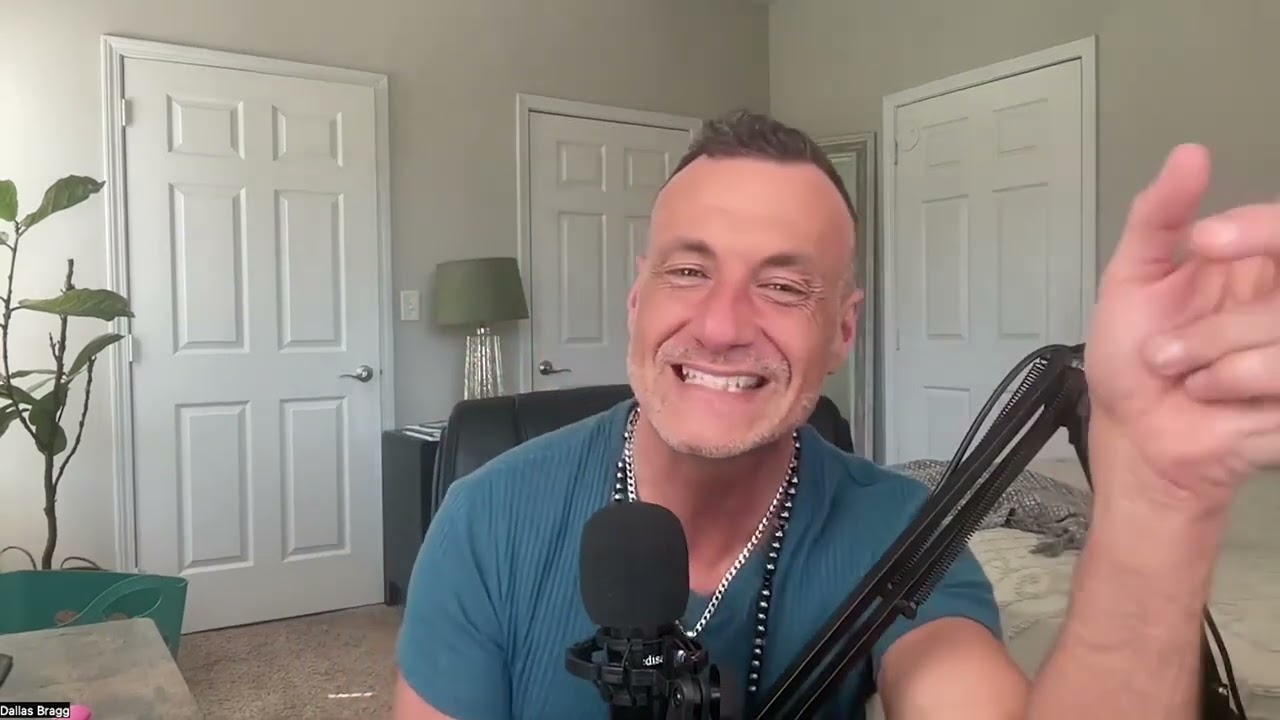
Dr. Dallas Bragg, a former crystal-meth addict turned sobriety coach, traces his path from childhood trauma and suppressed identity through addiction to recovery. A Grindr encounter introduced him to meth, which he saw as a miracle drug offering acceptance. His adult children's intervention led to drug-treatment court in Charlotte and eventual rebuilding through shadow-work and community support.
Chapters
Welcome to The Aftermath Podcast. This is your host, Dr. Dallas Bragg, a former crystal meth addict, now sobriety coach. Join me on my mission to increase awareness around the epidemic of crystal meth among the gay male population and create a repository of resources for current and past addicts, as well as their loved ones. This is The Aftermath. Trigger warning, this podcast not may, it will contain discussions pertaining to sex, Drugs and alcohol. If you feel triggered to use or relapse, please call SAMHSA's National Hotline at 1-800-662-HELP. Repeat, trigger warning. This podcast will contain discussions about drug use, alcohol use, and sex misuse. If you feel triggered to use or relapse, please call SAMHSA's National Hotline at 1-800-662-HELP. Hey, today you're going to hear my story. All the gory details. I want to share with you a tool that I used to help me construct my story. And what this does is able to backtrack. It helps you to look back to see where in the world did this addiction experience begin, not in a place of trying to blame people, places, or things. But to narrow down the cause so that you can work on the solution. I'm going to share it on the screen here. This is my road to addiction. Starts with early messages. Those became beliefs. Those became my reality, which I fixated on, and eventually my addiction. Next stop, recovery. If you want a blank version, of this form. I'm going to put the link in the show notes. Go ahead, click there, fill it out for yourself. If you need help, want my advice, reach out. Enjoy the episode. All right, welcome to episode 2 of the Aftermath Podcast. Today we're talking to me about me and my story. I wanted to do this episode to introduce myself a little bit more and to go in depth as to what brought me here. Um, I'm going to probably refer to this episode in other episodes, you know, in terms of referring back to what happened to me and why and how. Um, so I would listen to this. Um, if you listen to any of the first episodes, I would definitely listen to this one just to get an idea of my worldview, my perspective, and what happened to me to get here. So, but so here's how we're going to do the episodes typically is when I have a guest here, we're going to start in with a wellness check-in. I also am going to clear the space every time too. I, you know, this, the process of starting a podcast, just like any endeavor, Especially when I started my business. It's more about the limiting beliefs, the insecurities, the trauma, the energy around the thing and me that gets in the way. It's not the work. And it's all in how you talk about the work, right? So if I— someone asked me how it's going and I'll be like, oh, I'm so busy. This podcast is so much. It's taking up so much time. Um, I have this going on, I have that going on. You know, it's everything in your life revolves around the tone in which and the energy around you speak of it. So it's like, if you haven't heard this before, you know, words are spells. They're spelled with letters, right? So our words are spells. Our words cast into our life the reality of it. So the more I Bitch and complain about how much work a podcast is, then the universe says, "Oh, you must want it to be a lot of work," and it's going to get harder and harder and a lot more work, and it's going to get annoying, and I'm going to you know be frustrated with it. So I say all that to say that you know I've been working through some limiting beliefs this week, working through. Some negative opinions about me as well, which is hard. It's difficult to— for someone who, uh, has historically hung their hook on or, um, founded their— the amount of self-worth they have in themselves based on what other people think, it's hard for somebody like that to just They just don't like me. I'm getting there, though. My process has been, you know, well, what in what they're saying could be true? What, you know, what truth is in there? What is there for me to learn about myself? How can I stop, pause, and unpack this opinion of me and, and take it as something good? So that's what I've been doing, and I'm learning some things about myself. You know, we're going to talk about in the episode series shadow work a lot, and shadow work is discovering some unconscious blind spots that you have about yourself. Sometimes they're conscious; you know about them. Sometimes they're not. But I'm learning some things about me that are like, you know. I didn't know that I was like that. And it's funny because what you find out about yourself is typically what is triggered in someone else. You know, like if you're triggered by an arrogant person, then you're, you're probably arrogant in some way. And that's what I'm discovering. And so it's been enlightening. Anyway, there's my check-in. That's how I'm doing right now. I am I am enjoying each moment. I am setting up my day very in a structured way. I have all the the blocks of time for what I want to do, and I'm checking them off. And as I check them off, I'm just celebrating it. I got done from ten to eleven what I was supposed to do. I don't think about the engagement I have. I don't think about my business growing. I don't think about my finances. I don't think about my Healing in my relationships. I think from 10 to 11, I did what I was supposed to do, and I did it without interruption. So I have my phone turned off, which is the best thing in the world that I've ever done throughout the day, is turn the damn thing off. And there's— whenever I push that button and it goes off, there's this— Oh. There's just this lift, this pressure, and maybe the Maybe the, the electromagnetic field from the phone lets me off the hook too. I don't know. But it's, it's been nice, and I've been so much more productive. Okay, so anyway, there's my check-in. If we had a guest, we would get their check-in. But some— a little bit about me is I am a father of 2 adult children, which you'll hear about a lot today in the story, and you'll hear about anyway. I am a part-time college professor in business, so I do have a doctorate. So I will introduce myself as, you know, Dr. Dallas Bragg. I had second-guessed that. That's more of those limiting beliefs because being a coach and dealing with the kind of issues I'm dealing with in addiction, I don't want people to think that I'm pretending to be a psychiatrist, you know. Doc, as in an actual doctor, or, you know, an MD or anything like that. And I'm not, you know, I'm not even a PhD. But I do have a terminal doctorate degree. It's a Doctor of Executive Leadership. I worked really hard for this. I almost didn't get there because of drugs. And I paid a lot for it, still paying for it. So I'm going to go ahead and say, yes, I am Dr. Dallas Bragg. I am not a psychiatrist. I am not a psychologist. I'm not even a therapist or a counselor. So I'm just a sobriety coach at the moment. Just a sobriety coach. And that's— there's those words again. You know, when you put that word in, I'm just a sobriety coach, you're making yourself small. I'm talking to me, looking at my reflection. You're making yourself small again, Dallas. Yes, I know. I'm sorry. I am a sobriety coach and honestly, I'm a damn good one. So, and I can say that with pretty, with confidence. So instructor, father, I'm a sobriety coach. I also have all kinds of other little revenue streams that I do. I'm always a fan of having multiple streams of income just in case one comes after the other or something happens. And something did happen recently with one of my streams of income. It was— I worked for a restaurant. They had a fire and it shut down. And so, but I had some, some backup to do. I also live in Charlotte, North Carolina, or near Charlotte, North Carolina for now. Don't know how long that will last. But, you know, that's me. That's, that's what I'm all about. So my story, let's get into it. Hmm, where should I start? So I like to start at the very beginning and, and warn people that no, I'm not going to give you every detail of my life. However, if you're listening to this, and you are, have struggled with addiction, or you are now, you know someone, I believe, and Dr. Gabor Maté believes, which I think he is the leading uh, the, the leading voice right now in addiction. Um, look him up if you don't know him. G-A-B-O-R-M-A-T-E. Gabor Maté. He's of the belief that addiction is born in early childhood, right? And, uh, from 0 to 7, your brain is, you know, in a certain, uh, brainwave that is very elastic and very, uh, sticky. And there's, um, in that time period is this important, very important, um, time where a lot of the beliefs that you accept about yourself are born. And, um, you know, even there's other people too. Like if you look at the studies with the ACE, the, um, Oh gosh, now I forgot what ACE stands for. But it's, you know, it's these conditions. It's a list of 10 questions. And if you— this is why I would like to have a co-host, somebody who knows things. They could say, hey, what's this ACE mean? Adverse child experiences. Ha! Who needs a co-host? But yeah, so, you know, there's these 10 conditions of when you were a child that if you had them, you're most likely going to be this, you know, you're most likely going to go to jail, you're most likely going to be traumatized, you're most likely going to do all these other things. By the way, I scored a 10 on that. So, but it's a good precursor and assessment of a predictor. of how you grow up and what you do in your life. And so I think the same thing exists with addiction. So let me stop pontificating and give you the story. And also, I would say this is a common story. If you have battled meth addiction, especially if you're a gay man who has battled meth addiction, this story will sound very familiar, maybe eerily familiar. Because, you know, I thought in the beginning when I was getting sober, I was like, You know, that I was something special, that I had this, you know, this one-of-a-kind unique take on life. And then I found out, oh, everybody else did this too, that my age, you know, or even not my age, but especially men who waited later in life to come out. So my story begins in West Virginia. And so I used to have the little titles and chapters, and when I write my book, I probably will. But this, if I had a title to this chapter, it would be Country Roads Take Me Home to the Place I Don't Belong. West Virginia. And I only say that because I never felt like I belonged anywhere. I was born to teenagers. And, you know, they were, they were not ready for a child. They both had their own traumas too. But my mom was in a family of Pentecostal holiness people. And my father was in a family where you would, I guess, you know, you would label as hellraiser. But he, you know, he drank and, and he fought and, you know, he was the heathen while she was an angel, I guess. Not really. But, you know, if you're going to label those things. Anyway, I didn't fit In either, uh, in either one of those worlds. So, you know, early on, my dad ended up in jail, and then I think from there we went to— he went into the military. I didn't see him a lot, but when he would come home from— he would be gone on long trips at sea on the ships. When he would come home, there were comments made to me, and When you want to know the origin, the problems you have now, think back. What stands out in your mind event-wise, sentence-wise? What stands out? What stuck? Because in that time, 0 to 7, those things that imprinted strongly into your brain, I'm telling you, They authored your story. They created your reality for you. And we can go into, and we will in other episodes, what the ego is. Um, anyway, uh, there were comments made to me like, I don't really think you're my real son. You couldn't be, you know, because I wasn't the Hellraiser. Um, I was scared of my dad. He was an alcoholic. He was violent. He was loud. He was abusive, um, and emotionally more than physical, but he was still physically abusive, and especially to my mom. And so that scared me, and also it caused me to want his approval and want his attention. Um, at the same time, and especially when he would say things like that, it furthered that gap of, I'll never have his approval unless I'm like him. Um, then on the other side, you have, you know, my mom and the church. And, um, early on, I knew I was always fantasizing and thinking about the boys. Um, And so, you know, in the church, any talk of homosexuality was also coupled with, but also they're going to hell. They're, they are demon possessed. You know, I tried to extract the demons from me all my life. You know, I fast forward to me as a teenager, at 16 years old, being able to drive. I drove to a Christian bookstore and bought a book. on demons and demon possession and how to remove them. And I yawned one day and could swear that this demon left me. And I'm not, I'm not laughing at demons. I believe in demons. However, that, that was an illustration of the 2 sides of my life. Where do I fit in? I don't belong anywhere, right? Um, and, you know, there would be— there was a time when I remember coming out from under the dining room table, the, the, um, tablecloth hung over, and it was like, to me, it was the show curtain. And so I just bursted out, and I was performing all around the room. And I, you know, was in— I was on my tippy toes, you know, I guess I guess they were high heels in my mind. I don't know. But I was just performing. Dolly Parton comes to mind. So, you know, I don't know if I was pretending to be Dolly Parton. I didn't have pillows shoved in my shirt or anything like that. But my mom caught me and immediately just lit into me, you know, and, you know, I'm not supposed to act like that. I'm not a girl. Don't let your dad see you. And, you know, So that message told me that my authentic self, who I am on the inside, is not normal. Um, who I am is, is rejected, and I don't— and my dad hates me. And there were many examples along the way that backed up both of those beliefs in my life. But here's the thing. That I want you to get about beliefs. Once I received those early messages, that became— that's trauma with a probably a small t. I don't know if it's small t, big T, little t. I don't know what it was, but it bothered me, okay? And it, it imprinted onto my brain as a belief. I am not accepted. I am not normal. I am not enough, right? If you're an addict, or if you want to know something about addicts, we all have a version, a flavor of I am not enough. I am not blank enough, right? And so, given those beliefs, That's what shapes and colors the lenses and the worldview that you have for the— for the— not maybe the rest of your life until you are aware of it, but for me, the, the formative years of my life, young adulthood into adulthood, that's how I viewed the world. So when you view the world that way, You expect it to happen. You look for any sign of it being true. And God, source energy, the universe, whatever you want to call it, something in— something happens, okay, where if that's your belief, the universe brings every example it can to back that belief So if I feel that I'm going to be rejected anyway, I'm going to pick up on some nonverbal sign that somebody doesn't like me. I'm going to pick up on and be the wall— I'm going to be the wallflower at the dance and, and make it a self-fulfilling prophecy. I'm going to make sure I'm rejected. I'm going to exaggerate and escalate. Little comments here and there. I'm going to vie and vie and vie for people's attention and approval and validation because I need it, right? So yes, throughout my life in junior high, high school, elementary, young adult, I was rejected by groups, by people a lot. However, I made it happen Is what I'm trying to say. So if you look back at your memories with this knowledge, then it gives you a sense that your memories aren't true. Your memories were skewed through a filtered lens, and that lets everybody off the hook, and that lets you off the hook. It gets you to a place where you are above the trauma, above the drama, above the story. And you realize, oh, that's why that happened. It's nobody's fault. That's why that happened. The messages that I received early on were not my dad's fault, were not my mom's fault. They were no one's fault. They were just there. These were kids raising a kid, very sensitive boy. Um, So that was the beginning. And if I were to trace my addiction back, that's where it would start. Think about this. And, and I'm not trying to marginalize and simplify it too much. From 2 sentences said to me as a boy that I can't— that stuck with me till now. I'm 47. Years old. It stuck with me till now. 2 sentences grew, evolved into a meth addiction. How important is it that we are careful, mindful, and thoughtful about what we say and how we treat our children? So continued to not belong anywhere, but I kind of clung to my mom, you know, because I became so angry and resentful, and I hated my father so much that I decided I would never be like him. And to be the opposite of him was to be a church boy. So I delve in— dove into church. So You know, I, I would continue. I kept all the gay stuff to myself, but I continued to secretly try to be delivered from it. Okay, so I got married. A long story of why there's 2 marriages here. I got married right out of high school to my best friend. We needed to get out of the county and we needed to start our lives. We couldn't live together because it was so sinful. So we got married. It didn't last long. I got married again immediately and got— she got pregnant immediately, like the first week we were married. Everybody thinks, by the way, if you're listening to this and you know me and you think that I got her pregnant, that was the whole, the whole rumor, you know, because we didn't tell anybody we got married. We eloped. And then, then she got pregnant. Then we had to tell everybody. This is very irrelevant to this story. Good. So let me just go on. I got married and got— and had kids because it was my way. It was an insurance policy that I wouldn't have to experiment with the gay life. I was scared to death to be alone. Between marriages, I was by myself for like 3 months, and I had men coming on to me. I had a man try, like, corner me in the file room at a bank. I mean, I had all this stuff going on. I was scared to death of pursuing that path. So this was great. This— I was like, uh, relief. Because guess what? Now I can compartmentalize all of that. I can put my true self back because my true self is abnormal. My true self is going to get me rejected. My true self is just not what anyone wants to see. It needs to be hidden. So I could dive into my wife and my kids, and I could give them my life. My whole purpose, self-esteem, self-confidence, everything was tied into how well I could take care of them. And I did everything that I could. I mean, I did everything I could from physically, financially, emotionally, spiritually. I was everything that I could be because that was the only way I could find any kind of purpose. So that landed me, uh, eventually in a mental facility, and I was suicidal. So if you can think about this, and if, you know, if you've ever been closeted, you kind of probably know, especially if you have church background. But, you know, going up to the altar and praying and thinking, okay, I'm not gay anymore. And then a week later, you're watching gay porn. Because by that time, by early 20s, you know, we had internet. I, you know, I remember we had a, you know, with my first wife, we had internet. We had a Gateway 2000, gigantic computer, you know, and you could go on AOL with dial-up. We had the rooms and everything. And then I just remember. The first pornographic picture that came up, and I waited and I waited like 15 minutes for this thing to load. And I was like, ah, you know, it was— I mean, I was early 20s and never seen any. I'd never even seen another penis. Okay, this is irrelevant too, but anyway, um, I eventually, eventually was just so worn out and tired, exhausted from this cycle. I was eaten alive inside from the self-loathing and the self-hate of saying I'm not gay anymore and then being gay and then hating myself, thinking I'm going to hell, thinking what is wrong with me, agonizing. You know, I have journals from the '90s where I agonized and agonized and agonized about this. You know, I would say at the end of the day, I didn't look today at a man. You know, it was just this constant battle. And so I decided I was just going to end it. I'm just going to end it. Forget it. You know, this is too much. I don't want to live this way. I'm not being, you know, a good example for the kids, blah, blah, blah. And in that mental facility at the end, that's when I quote unquote came out to my wife. It was more along the lines of, you know, I have unwanted homosexual tendencies, which was the, was the, the term at the time. And if you read What Is Every Man's Battle, some of these books that the Christians release for you to pray the gay away, there's unwanted homosexual tendencies and that we were going to pray about it. We never spoke about it again, by the way. That's after I got out of the hospital, never spoke about it again until she found gay porn on the computer. Um, because of course I went back to it. Uh, anyway, um, eventually it just became too much. It became too much. And I had an epiphany one day in the— in— I was in the bathtub and I was like, you know what, how— what would it be like if I just said this is a part of me? It's always going to be a part of me. And there was just this relief, this alignment. It's like the battle inside subsided. And I just, I just felt it all the way through my body and out my feet. It was like, I can breathe. Like, I, like, I had been so wound up and so just like, Trapped in my own body for 36 years. I can breathe. Wow. Okay. All right. So what am I gonna do about this? So I ended up coming out, and I did not do it in the right way. I did not do it in a sensitive way. I did not do it in a compassionate, sympathetic way for my wife or my kids. I left like 2 weeks later, because the thing is, I've waited 36 years for this. Not just being gay. What I had waited for was to belong somewhere. Remember, I viewed everything in my life as someone who didn't belong anywhere. I didn't belong as a married man with 2 kids living this perfect all-American life with a house on the corner. I didn't belong there. I was forcing myself to be there. I never ever felt comfortable in my own skin, like I belonged anywhere. So finally I'm like, I'm going to belong. I am going to the community of my people, my tribe. Now take note of this, that I didn't know any gay people, and only thing I knew about gays were Will and Grace, um, the show. And of course that wasn't an accurate representation. of gays, the gay life or whatever, the community. I mean, maybe it— I mean, maybe it was in New York, I don't know. But the other part that I knew about gays were the television coverage of Gay Pride. So butterflies and glitter and rainbows and everybody hugging each other and celebrating, you know, this is, this is lovely, we love each other and we accept each other and we're all happy and we have rights and all stuff. Little did I know that that was so different than reality. But anyway, I came out, I got involved with the gay community. And now again, I tell the story— I used to tell the story that I went into the gay community and I got rejected. And, you know, and I did. But you have to remember that I still had the beliefs, still had the trauma. I still viewed them through this lens. So I made this Shit happened to me. I got involved with the bar club scene, which is not an accurate representation of the gay community. I got involved with people I met on Grindr. If you don't know what Grindr is by now, Grindr is a hookup app. Don't call it a dating app. It's a hookup app for gays to get on. And in real time, I can see, okay, there's a man 30 feet away from me. He likes what I like sexually. Let's go meet. Um, or come over, I'll come over there, or we do it in the bathroom, the park, whatever. Um, I was meeting guys like that, and that was my use. That was how I was getting validation. Anyway, I got rejected pretty quickly, and what I heard immediately was that, oh, you're a lot more feminine than you look in your pictures. So I'm thinking to myself, okay, I've spent 36 years hiding my effeminate nature. I've dressed in boxy, like, Sears clothes. I have, you know, just tried my best to not seem gay. I mean, it— you know, when I came out, everything was like— I would go— when I came out, after, I would go to the Food Lion and I'd be like, I can walk how I want, I can talk how I want, I can be how I want. Um, Until I met gays, then I felt more insecure because I was like, oh, I'm still too feminine for gay men. Okay. And, and then there were other, you know, there were other rejections. And then there was early on in a bar, this gentleman said to me, he had heard my story. I guess he saw me on, I don't know, Facebook or something. He goes, you know, could you not have just pretended for a few more years? Because now your kids are going to be know, you're going to have all these psychology— these therapy bills for your kids. They're gonna have to go to therapy for years for this. So being told that by another gay man in the club, I just— I left and went out to my car and I started bawling because I was like, I belong nowhere. I am nothing. I literally don't have a life on this earth. I don't know. I don't know Who wants me? I don't understand what's happening. This was supposed to be the answer. Have I made a huge, gigantic mistake? Ah, it was tough. Okay, and I'm mentioning all this for a reason, because addiction doesn't just happen. It doesn't just one day you just stumble upon some crystal meth, and maybe, maybe that happens in some ways, but there's got to be some This all pertains to why you keep doing it. So I, um, the first guy that came along that wanted to see me more than one time, that didn't ghost me or block me after I left his house, I clung. I was a clinger. I mean, I went right in and started dating. And, um, that lasted for over a year, I guess, something like that. Um, And it didn't— and it didn't go too well. I was not ready for a relationship. I was thinking this was the answer to my life's— this was the answer. This was where I belong. This is it. But I still had those beliefs. So anytime he didn't want to have sex, anytime he didn't want to do the things I want to do, anytime he didn't act the way I thought he should act, Rejection, rejection, rejection, rejection. He doesn't like me. I'm, I'm undesirable. I'm, I'm this, I'm that. I'm shit. I'm trash, you know. And it made his life a living hell, and mine too. Um, I still was viewing the world— I hadn't done the work yet. So, you know, I was triggered all the time, emotionally triggered constantly by texts or by emails or by people or by emotions or Um, uh, facial expressions, not getting invited somewhere, whatever, you know, constantly emotionally activated. And I was called, uh, sensitive. I was called insecure. I was called all these things by all these people, but they didn't understand the pain, the background, the context that I was still looking for Daddy, still looking for Daddy to love me. I needed to know that Daddy was okay with me the way I was. Because guess what? When some— when something gets imprinted on your brain, the nervous system, the universe, consciousness, the brain, whatever you want to say, it doesn't classify your life in linear time. It classifies your life in emotions. So when I'm triggered as a 36-year-old, My brain, my nervous system thinks I'm 6 again, and my dad just said something like, you don't belong to me. It's the same exact emotion, and I get triggered because I haven't went back and healed and changed that belief. Anytime, anytime you're triggered in traffic, at work, wherever. There's something below that. There's something in a belief. There's another instance. There's— there are other circumstances that haven't been dealt with and haven't been healed, I promise. So the relationship ended, and— take a drink. I was by myself. This was a sunny May day. And it was a Sunday, Sunday morning, you know, or mid-morning, something like that. And I'm reading a Stephen King book, and which is unlike me, but I was reading, you know, I was like, I'm just gonna, you know, do things for myself, spend time alone. Maybe I should read a book. And of course I couldn't. I had to pick up my phone and turn Grindr on, you know, and to see who was up, who was out and about. Maybe I can, you know, get a little action today. And there was a new square on the grid. And this new square says something about party boys to the front. If he's listening to this, I still talk to him, but party boys to front. So, you know, I, in my mind at the time, right after my relationship, I started to make gay friends. Uh, real— they were actual good people, most of them. But we went out a lot drinking. I mean, we were going some weekends Thursday, Friday, Saturday, and Sunday. I was, you know, partying in my mind. I was partying a lot. But this, you know, he asked me if I partied and I said, yes, it's Sunday mid-morning. I'm thinking truly and honestly, I thought cookout, pool party. I don't know, maybe we'll go to brunch. Um, I don't know, but he was attractive and he was new to the area, or, you know, or new to this area, and I went. Um, I remember asking him if he used condoms, and he was like, I guess, you know. Uh, the thing about the crystal meth community is You know, it's basically condoms are not allowed. Um, but anyway, I show up and it's kind of a rundown house with a lot of high grass, and I didn't see any party going on. Um, here's the thing, I went in because he was very attractive. Not only that though, here's the kicker for this experience for me. Now, I don't blame anyone. for me trying meth. No one. My decision. The way he was looking at me was the way I had always wanted to be looked at, to be desired. It was like I was the most beautiful man he had ever seen. And he kept saying things like, oh, you, you take care of yourself, and you look, you know, all this stuff. Compliments and just looking at me up and down. I was like, wow, no one's ever looked at me like this. Not even, you know, not my wives, not the men that I've been with so far, not my— certainly not my boyfriend that I had. I felt, wow, this is nice, you know. I've— and I didn't seem to— he didn't seem to care about my voice tone, that tonality, my effeminate nature, you know, because I've always Every time I meet a guy, I would always be really like embarrassed, or like, you know, after being told that several times in the beginning, I would always be really embarrassed and self-conscious about it. I'd try to talk, try to talk butcher straight. It never doesn't go over well. Anyway, he didn't care. There were TVs with porn. There was a sling hanging from the ceiling. I didn't know at the time that's the, you know, that's a crystal meth setup. Right? Not only— I mean, I know people use slings and they don't use drugs. I get that. Please don't@ me on that. But it is typical with crystal meth to do, you know, kinky fetish stuff. I— when he handed me the pipe and thought that I knew it because I told him I partied, um, I could have decided to leave. And— but the thing is, I was so desperate for attention acceptance, someone to want me. I just, I would have done anything he asked me to do. What do you got? You got crack? You got heroin? What is it? Happened to be crystal meth. It was in a pipe and some GHB in a shot glass. So we did both. He taught me how to do it and I did it. And it was on from there. If you know anything about crystal meth, it's a sex drug for some, you know, Mainly the gay community. I mean, it's used as a sex drug for— sex drug in the straight community too, just not to the extreme that we use it. So we were together for— I don't know if it was more than a— I don't know if it was a day or 2 days. I guess it was a day and a half from there. And so I missed work the next day. And which he told me, he was like, you know, that's a sign. You know, when I— when he figured out that I had done it before, you know, he's like, please don't continue this. He did try to tell me, please don't continue this. You've already missed work. That's a first sign that it's going to corrupt you. And I was like, nah, nah, I've got this. Don't worry about it. But I, for the first time in 36 years— well, 37 by then, I guess. Yeah, 30, 37, I guess I was 38. For the first time in my life— I was 39, sorry. Um, I felt welcomed. I felt accepted. I felt free, completely, 100% free. to be me. I could explore sexually. I could do whatever I wanted to do, say whatever I wanted to say, be naked, walk out on my patio. I was indestructible. I was just, you know, 10 feet tall. I was everything I wanted to be. I was comfortable in my own skin. I finally found my place. Finally found acceptance. I finally found it. So to me, it was a miracle drug. It was a miracle elixir. And to me, it was something that I planned to do once in a while, you know. And of course, it didn't work out that way. So once I figured out that crystal meth has its own community, and they're everywhere. Um, you can get on Grindr and find it anytime you want, 24/7. Somewhere there's a party, there's somebody doing it. Um, once I find out that there's a community, there's its own language, um, that it's hiding in plain sight, I dove in with 2 feet because I wanted to know everybody. I wanted to get into the community. I became a social butterfly. I started to meet them all. And doing it as much as I can. Now, I had the kids every other week, and they were teenagers. I had them every other week. So at the beginning, it was, I'm just going to do this on the off weeks. Then it became, yeah, I'll just smoke some by myself while they're here after they go to bed. Then it became— it bled into every single day, every single night. And I was smoking for a while. For the most part, at the beginning, I could handle it. And then, of course, it just got out of control and I started getting crazy at work. I was an executive at a law school. I was teaching in an MBA course. I was showing up to work bonkers. I was leaving early or not showing up at all. They knew something was wrong. I was losing a bunch of weight. And I, I loved The, the riskiness of it. I love the fact that at 5 AM I was out there doing a drug deal somewhere in a sketchy-ass Knights Inn, tripping over bodies and blood, whatever, to get my baggie. And then at 8 AM or 9 AM, I would show up at the executive meeting. But to me, I showed up at the executive meeting very friendly, upbeat. But what I was was crazy and out of my mind. And, you know, people would tell me this. So I lost my job. And the school was going to close anyway. But, you know, I— they were going to let me go. But I lost my job. That was the first step. And, and then I was arrested. I had a tendency, and if you are an older gay man who comes out late and in the drug scene, you might, you might resonate with this. I would take in all these wounded birdies, you know. Hey, Dallas here. Are you tired of stacking up the white chips? 12 steps hasn't worked for you? Been to treatment several times? Feeling pretty hopeless? If you're asking yourself, will I ever be able to get past relapse? Will I ever be able to string together a substantial amount of sober time? I'm here to tell you that oftentimes the answer to relapse is a slight shift in perception. Actually, any growth in life, spiritual, mental, emotional, it's one perception shift. After the other. I'm giving away my free 28-day Reframing Relapse online course to help you shift your perceptions about your addiction, your relapse, and yourself. This 28-day program has daily journal prompts, guided meditations, and 2 free 30-minute coaching sessions with yours truly. At the end of this 28 days, you will look at relapse through a different lens and change the course of your addiction cycle. I promise you that. I could give your money back, but I'm not charging you anything. If you're interested, the link will be in the show notes, and I look forward to seeing you there. Young men who Didn't have a job, didn't have a car. Um, you know, this particular one that I'm getting ready to mention, he was actually in his early 30s. So didn't have a job, didn't have a car, didn't have this, didn't have that, didn't have money. And I would take these guys in, give them a place to stay, thinking they would really love me. I fell in love with every single man I did drugs with, especially when we did GHB. But I fell in love with all of them because I thought this was it. I don't— I— it was like Groundhog Day. And so this particular guy had some mental issues. And what crystal meth does is if you're— you have a— if you're prone to schizophrenia or any kind of mental health issue, paranoia, it takes that and just exaggerates it just like it exaggerates everything else. He— I found out really quickly just how bad he was. You know, you couldn't say meth. You couldn't say it out loud. You had to whisper it. He was always looking out the windows. You know, just the boy, the guy was just— he was just messed up. I felt so bad for him. We never even had sex. He was there for 2 weeks. But he got it into his head that, that one, you know, for one, one day he got into his head that we had a girl trapped in our house because my daughter had a friend over. He thought that I had taken in like a, like a trafficking kind of situation. And so he called the police. That's when I probably should have said, you need to leave. But the next He left when I ran out of drugs completely. He left and went to the police, made a statement about me, and they busted in my house the next day. They— I didn't have anything. Like I said, I ran out, but there happened to be still a shard in my car. So that was my first arrest. I ended up getting arrested 2 more times. All felony drug possession charges. The first one, I was able to do this 48-something It's a forgiveness thing in North Carolina. Went on probation for a year. I got arrested like a year and a day after I got off of that. But, but anyway, the story goes that my life fell apart. I ended up starting to inject. I started to— that's when I— my brain really took a turn when I started to inject it. That's when it really affected me. It affected the way that I think, behaved. That's when I did get some paranoia. I then could not work because I could not function enough, and I had to have a lot of injections throughout the day. I started to hang out with 2 other guys who injected a lot, and we got into a lot of fraud stuff. And then I became addicted to shoplifting. It was the way to make money. And every day we'd start at zero and try to make enough money for drugs and maybe food. All this time thinking that I was going to somehow steal or trick or fraud enough money to pay my rent. So eventually I got evicted. When I was evicted, then The group didn't have anywhere else to go, so I got dropped. But I was also getting into some other really fraudulent stuff that, um, bad. Uh, it was bad. So I ended up homeless. And, um, you know, I was out by a tree at the airport. And, um, the only thing I had lifeline-wise was a phone. Uh, it was a phone that my mom had thought enough to pay for. And so I called her and, you know, like, I'm under this tree. I don't have anywhere to go. I have nothing. And she came and got me. She came and got me. So at the time, I had an APB out for my arrest because I didn't show up for my last court hearing. And I went back to West Virginia to get sober, which did not work because even in West Virginia, they have Grindr. Now, the guy might be 20 miles away. Instead of 3 feet away, he's there. And there is, of course, crystal meth in West Virginia. That's a news report for you. Sure. Bulletin. But anyway, I started using again and then started getting in touch with my buddies down here, and they were going to sell me a bunch, blah, blah, blah. So I had this guy take me to Charlotte. When I got to Charlotte, I used with my friends, and they had been getting the material, the supply from a cartel, I guess, in Mexico is what they said. But whatever it was, it was strong and potent and pure and different than what I had had in West Virginia. And it made me crazy, made me cuckoo, out of my mind. And Eventually, um, you know, I caused so much trouble with the group, they kicked me out. And I'm walking around Charlotte, and I left— I had— I still had my bag with my laptop, my clothes and stuff, but I left it somewhere to get out and find a charger for my phone. I couldn't find my stuff. I had a dead phone and nothing to my name, and I was confused about what city I was in, uh, where I was. And what was happening? So I saw a police officer, and I gave myself up. So, and of course, the APP was there, and I got arrested. That would be the fourth time. Fourth time I got arrested, started calling my usual, you know, my mom, my sister, blah blah blah. No one would answer my call because I'm like, they're like, we're done with you. Four times, we're done with you. We gave you a chance. In West Virginia, and you, you know, you blew it. Um, and so, uh, my— I called my daughter. I remembered her number, and she answered. She always answered. She always cared. My daughter, no matter— and, and there's so much I left out of this that'll probably be mentioned in other podcasts when we talk about kids and when I talk to my daughter on the podcast. But, you know, I had made her— I had done some really terrible things to them. to my daughter enough that she shouldn't have been speaking to me, but she was still very concerned about my welfare. And not to mention some things that happened while I was gone. And so they picked me up— they, as in my daughter and my son. So my daughter was 16, my son was 14. They picked me up from the jail and we went to a park and, you know, we talked. They told me the situation that was going on and they're like, You know, we need you. We need you. And I saw in their eyes that they needed me. And I had nothing left and had been through so much that I was like, okay, this is it. This is done. This is my rock bottom. This is done. I'm done with it. So they drove me to, um, uptown. I got arrested. I got arrested. I got a job at a restaurant right away. And started working my way back up. And when— and it wasn't just me, it was us. The 3 of us really worked together to rebuild, to rebuild our lives. And so from then on, I went into drug treatment court, drug treatment court here in Mecklenburg County in Charlotte, North Carolina. Very strenuous. You had to attend rehab. You had to go to court every other week. You had to go to get tested like 4 or 5 times a week in the beginning, you know, to make your way down. I had to drive, you know, ride a bus to the courthouse, pee in a cup, and then go. That was after rehab in the morning from 8 to 12, and then I had to go to work. So it was this really stressful, full, busy time, but it, it was my new addiction. You know, I was ready to rebuild and the dopamine I was getting from every milestone And from getting a place to stay and getting enough money. And then, and then eventually my mom gave me my car back and this and this and this. And then we got a house to rent. And so I was addicted to that, to be honest with you. And then after a year and a half, after drug court was done, my charges were excused and eventually expunged. Thank you, God. Um, and so, um, after that, I was back to life. And I remember standing in front of the sink, it was full of dishes. You know, my kids had left the sink full of dishes. And I was standing there looking at it. And I was like, this is not what I want. Like, for one thing, all, you know, everything was back to normal. Everything was balanced. And if you're an addict, you shouldn't— you must know, or maybe you know what I'm talking about. You have to have chaos. You have to have this thrill. You have to have— you're addicted to that lifestyle. And then when you get everything normal and back on track, there's something about that that triggers you. And I was triggered and I was like, oh my God. Well, now that I'm back, now that I have everything, I'm done with drug court, my charges are dismissed at that time, maybe I could just use some, you know. So I picked my phone up and go outside. And I walked into the woods and I was like staring at my phone. And I knew I had a choice to make. But so I picked my phone up and I just started deleting contacts. Blocking and deleting numbers and people on social media, my old dealers, the people that I used to use with, one by one, everyone I could think of. And as I did that, it was another time in my life where I felt a release, where when I decided to be myself, I felt a release from head down. This time it was a release from feet up. It was just this energy release. Oh. I'm making a new choice. I'm going in a new direction. This is something new. And audibly, almost audibly, maybe it was audibly, I don't know, it was very strong. This voice said to me, we've been waiting for you. And I looked up and I was like, oh, the first time I truly felt a connection to something higher, something divine. We've been waiting for you. And I was just standing there weeping, obviously, and I look over and I see this dead tree laying on the ground, decaying. And then I heard them say, be like this tree. And it hit me that I had to die To everything that I was. Everything about me must die and become something new. I had to do, as they say in the 12 steps, moral inventory, which I don't— yeah, we'll go there later. But I had to start doing shadow work and a personal inventory of my trauma and my triggers and what got me here, and an excavation Of everything that had happened before, and the connection started to make sense. Then I had a project, you know, and it wasn't a dopamine-filled addictive project. It was, I am getting a taste of what it's like to be myself because I had to find out who I was. I couldn't be myself all my life because I didn't know who I was. I have— I was on this journey now to a journey back to self. Who are you? Because guess what? Being gay is a tiny bit of who I am. And I had made it everything. And really, it's just a small little segment. Being— having an addiction to crystal meth. is actually a small part of who I am as well. It's in the past. It informs today. And now I'm using it to help others and doing this podcast, but it doesn't define me. It isn't who I am. So I went on a quest to figure out who is this and what's this connection and who are these people talking to me? And so that gave me new willpower. And then so now it's been almost 6 years since I— the kids picked me up that day. You know, it has not been easy. It— quitting the substance. And if you follow me at all, you know, you've heard me say this, quitting the substance is the easy part. The hard work Is digging in to all that hurt, all that trauma, all that pain, the road that got you to where you are, and defining who it is I am and loving that person. And what does it mean to love that person, right? Like earlier when I said I'm just a sobriety coach, that's not self-love. That's making me small. And that is part of my work, is I began to notice how I spoke about myself, how I thought about myself, and getting to a place of loving who I am, being okay with being alone. Figuring out and changing the beliefs. You know, that's a process. I want to look into the world and see that I'm accepted no matter what. I want to look into the world and know that whoever I am is good enough. I've come a long, long way since then. But it's never, as they say, it's not the destination. It's the journey, right? I've come a long way and I'm still working on it. The difference is, is that I'm aware of it and I know what the job is. I know how to proceed. And guess what? Addiction doesn't have to rule me and it doesn't have to be a part of my life every single day. And that's what I want you— that's where I want you to get to. Is that you take the learning from the experience and you move on and you build a life that's better than ever. You don't have to be reminded every single day that you're an addict. That is not how we are supposed to, to survive. It's not how we're supposed to live and operate in this world. So there's my story in a nutshell. There's a lot I left out that I think throughout the series Parts of it are going to come up based on the subject matter. But I, I hope that if you're out there and you have been with this addiction, or you have a loved one who is especially a gay man but has struggled with crystal meth, you will understand a little bit more as to why we start and why we can't stop. What is going on in our heads and how to whittle down to figure out what it was that got me here and how to change it. That's my hope through this podcast as well. So, whoo, that being said, that was a lot of talking. If you have any questions, any comments, if there's any part of my story that you'd like to know more about, or any part of the story that you would like to comment about. There will be opportunities to make comments wherever you're seeing this podcast. You can also email aftermathpod@gmail.com. I do want to say you can subscribe to my newsletter. It's at drdallasbragg.com, D-R-D-A-L-L-A-S-B-R-A-G-G.com. It's very easy to subscribe. It's a weekly newsletter. Please think about joining the Facebook community that coincides with this podcast. It's a Facebook page called The Aftermath. Just find it on Facebook and apply to join. There's some questions that you answer. This is an open and safe community of previous and current crystal meth addicts and their loved ones to receive help, encouragement, and resources along the way. I have surveys for that we're going to read on the podcast, and there are questions. You can submit a question, you could submit a story about your meth experience. If you're a loved one, you can submit something that you want help on, or a comment of some type that will be on the website. The website link will be in the show notes. If you'd like to call and leave a voicemail, you can do that. We'll If you have these questions and what you're sharing, we're going to read on the air, and me and the guest will be commenting about it. So the number is 704-559-9555. So 704-559-9555. Also, if you can, please like, share, rate the podcast. It helps the algorithm, as you know, get to the podcast in front of more people. If you'd like to be a guest, or you want to suggest a guest, please send an email to aftermathpod@gmail.com. I would really like to hear from you. If you're a current addict, that's fine. Let's talk. We can disguise your voice or whatever. A previous addict, you want to share your story or what you're doing now? I would love that too. Or a clinician, a therapist, whatever, you know, whoever. If you are a friend of a math addict, a loved one, a family member, a partner, whatever, I would love to hear from you. Just know that your story can help so many other people. Okay, that being said, have a great day, and I will see you next week, or whenever this— every 2 weeks, whatever we've decided to do with the podcast. I will see you next time.










