EP 1:21: Meditation in Recovery with Jason (and JOMO)
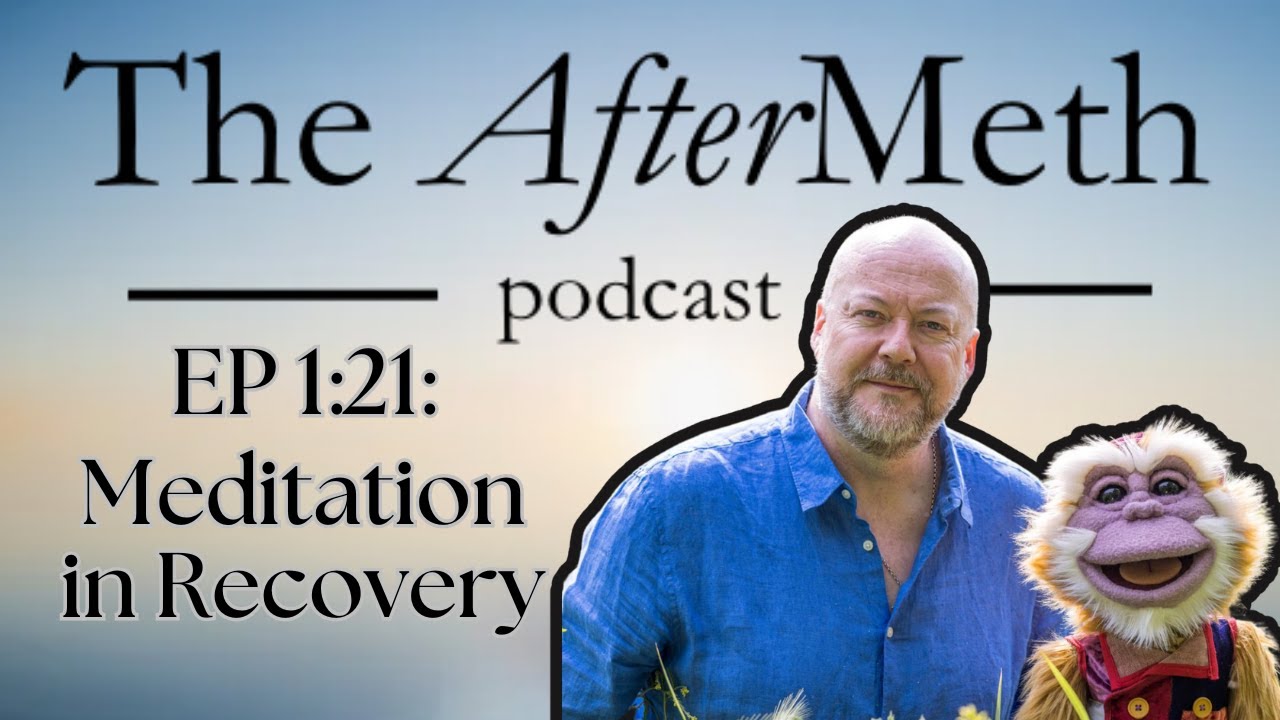
In this episode of the After Meth/Aftermath podcast, host Dr. Dallas Bragg interviews meditation teacher Jason Linney and a guest participant (Speaker B) about using meditation as a concrete tool for addiction recovery. The conversation covers the theoretical basis of the “Monkey Mind” metaphor, how a structured 30‑day mantra‑based practice can reduce cravings, anxiety, and ADHD‑related restlessness, and practical tips for beginners (e.g., starting with short sessions, using music, and building consistency). Jason explains his upcoming online meditation series, which will be released on his website within a week, featuring guided recordings, immersive soundscapes, and optional one‑on‑one coaching. Speaker B shares experiences running group pre‑meditation sessions with London Friends/Antidote, highlighting community‑based support for people in deep recovery. The hosts discuss promotional details, including a discount code to be placed in the show notes, and repeatedly encourage listeners to access the resources, review the show notes, and, if needed, contact the SAMHSA hotline. The episode ends with a reaffirmation that meditation is a practice—not a quick fix—and an invitation to return for future discussions.
Chapters
Anxiety is a lot of times produced by ruminations of the past or, or expectations of the future.
Agree?
Welcome to the After Meth Podcast. This is your host, Dr. Dallas Bragg, a former crystal meth addict, now sobriety coach. Join me on my mission to increase awareness around the epidemic of crystal meth among the gay male population and create a repository of resources for current and past addicts as well as and especially for their loved ones. This is The Aftermath. Trigger warning, this podcast will contain discussions pertaining to drug and alcohol misuse. If you feel triggered to use or relapse, please call SAMHSA's National Hotline at 1-800-662-HELP. Also, if you are new in your sobriety journey and you feel like you could be triggered, by discussions around drug, alcohol, and sex misuse, please do not listen to this podcast. All right, now on with the show. Hey y'all, stick around to the end of the episode and you're going to get a treat— a meditation led by Jason. It is a meditation for addicts who are dealing with cravings. Also, if you want to hire Jason to be your meditation teacher, you can get a discount. Use Dallas One as your discount code, and you will get 15% off his meditation course. All right, enjoy. Okay, welcome to this week's episode of The Aftermath. I am actually a little giddy today for our guest. I am so excited. I've been looking forward to this for a while. I found this gentleman and his companion on TikTok. And I was just so excited and pleased. And really, it brought out the kid in me. And to be honest, the kid in me, the inner child hadn't been able to come out for a while. And there was something about this, this account that just really enticed me. And then when we met, I thought this would be a perfect, perfect, perfect podcast. So without further ado, I'm going to let my guest Jason introduce himself.
Hello, thank you very much for having me on. Um, my name is Jason Linney. Um, I have been— well, I've been, I've been a meditator, um, for about last 8 and a half years or so. Um, but it changed my life so dramatically that I became a meditation teacher about 4 years ago. Uh, and over the Last many years, I've had, as we all have, many adventures, many highs and lows in in in in the world, and I've had some pretty big lows. Meditation was able to pick me up and restore me back to myself in in a pretty major way. I've had a a big good partying past, and and it almost consumed me, which is a very, very familiar story. And, and the, the thing that more than anything else helped me get myself back to me again, which sounds like a corny song, but is, was my meditation practice. But the thing that bothered me, I think, the most was the fact that it just seems so weird and alien when you first look at it. So I've always vowed to, when I started to do meditation, to try and make it more relatable. So that's what I do now. Um, I, I, uh, got made redundant back in February, and so I've now kind of gone full-time ahead trying to basically make meditation fun.
Mm-hmm.
Um, and, and, and enjoyable and slightly different from what you'd normally see.
Yeah, yeah. Well, mission accomplished.
Thank you.
Yeah, you know, so you have a TikTok channel, Monkey Mind Meditation.
Yeah.
For the listeners here, and really, I would say anyone who has faced addiction, when you're in treatment, and I preach it too, in all of my content is meditate, the value of meditation, meditation, meditation. And it seems overwhelming. It seems fun wouldn't be a word that you would associate typically with meditation. I think it's misunderstood. I think it feels overwhelming. And we have a hard time— I know my clients have a hard time associating the value of it. And 9 times out of 10, I will hear, I can't meditate. I can't keep my mind still. I can't control my thoughts. It's impossible. You know?
Mm-hmm.
And I know for me, just being able to pause my thoughts for 30 seconds has been the difference between me pursuing a craving or me pivoting to something else. So if that— if 30 seconds of stopping my thoughts and pausing is that powerful. How much more is it to learn to meditate?
Yeah, so there's a lot there. But, you know, my mind's too busy. My— it's the busiest mind in the world, which was the— when I first started to teach people to meditate, everybody came up to me, sometimes with an element of pride in their voice, I was like, I can't meditate because I have the busiest mind in the world. And I thought to myself, I thought that was really interesting because I mean, a lot of people kind of almost have that as part of their identity, which is a whole other thing. So I decided to call my little organization Monkey Mind Meditation. Now, monkey mind is, is a phrase that I nicked from the, from all the monks. The monks talk about your monkey mind, this kind of chattering, pinging around, all that kind of stuff. And the reason why I called it Monkey Mind, like I say, A, the monks, but B, because everyone's got it. Everyone has it. So I thought I'm gonna put the main problem up front and center and an acknowledgement that, yeah, Yeah, we've all got chattering monkey mind. And, and that's just that society that we're living in now, which we'll probably touch upon later on. And so I then have to ask people, well, I just need you to have a little bit of hope that you can do that and a willingness to be open-minded. And so since then, I've always identified myself now as the, the person who helps people who, who don't identify as meditators. Ah, you know, because ultimately it's like saying I'm too unfit to go to the gym.
All right.
You know, my teeth are too dirty to start brushing.
All right.
It's like, no, you've got it the other way around. All right. Because you have a very, very busy mind, you're an absolutely ideal candidate. For the practice of meditation, and I think a lot of it boils down to fundamentally the misconception as to what meditation does. And incidentally, you inadvertently said part of the myth. Ah, inasmuch as you said, "My get my mind to stop." Oh, oh right.
Yeah, yeah.
That's really interesting. No, no, no, no, no. But see, that's that's the systemic. belief. It's like, I have to get my mind to stop. And it's the pink elephant syndrome. If I said to you, okay, Dallas, I'd like you to think of a pink elephant, you'd be able to do it for a few minutes. And then you start thinking of something else.
Yeah.
And then you go, oh my God, I failed. I failed because I started thinking of something else. Well, of course you did because your mind thinks. But then if I turn around and said, no, no, no, no. Okay. Now I want you to do the opposite. Now I do not want you to think about a pink elephant. You'll have failed in two seconds. So whatever you're trying to get your brain to to to to do, it will do the opposite because you're thinking about not doing the opposite.
I see.
It's a bit of a head messing with your head a bit.
A bit. Yeah. Yeah.
So, so it boils down to the fact that meditation is more about awareness of your thoughts.
Okay.
Um, it's awareness of your thoughts. It's a non-judgment of what comes up. Um, and it's kind of— there's a, there's a great meditation, uh, phrase that said basically, you are the sky and the weather are your thoughts. So there's you underneath it all or above it all. But then you've got, you know, if you're having a bad day, then it's bad weather, all those bad clouds underneath you. But ultimately, you can watch the bad weather from above. Still gonna happen. But you're one step removed from that. Does that make sense?
Yeah. Yeah. It's a, you know, this is what I'm hearing. It's a detachment, right, from the thought. You become the observer of—
yes. Yeah.
But you're not saying I have to clear my head, I have to stop.
Yeah.
Right. Okay. Right. And it's like, I can't not think. Well, of course you can't not think. You can't not think. And people think that that's what they have to do. And the second that they start thinking, they then assume that they've got it wrong. And then they say that they can't do meditation. I was like, no, no, no, no, fundamentally, then meditation the practice of meditation hasn't been explained in the correct way or gotten over in the correct way. And I don't think it helps whenever you Google the phrase meditation.
Hmm.
Um, I was gonna, I was gonna do it on my iPad, but obviously you've got listeners as well. If you were to Google the word meditation and then look at the images, all you'll see, 99.5% is somebody sitting bolt upright, cross-legged with their fingers up like that in the, what's called the mudra. Most of them are sitting overlooking a valley or a sunset, bedecked in Lululemon.
All right. All right.
Yes.
They're all beautiful.
That's great.
And it's, and it's like how I don't identify with that in Any way, shape, or form.
Yeah.
I was sitting on my sofa a minute ago before I came on here, and I was meditating, and I sit with my legs crossed a bit.
Okay.
And, and I have my, just my, I just have my hands sitting there like that. But because I was quite deep, I was, I know I was sitting there like that.
His head's down.
Yeah. A little bit of dribble like come down. I know you wake up and it's like, oh, okay, fine.
You know, that, that I don't think that image would come up if you Googled meditation.
It really wouldn't. Really? No, no. I mean, the, the, the, the only kind of guideline would be when you do a good meditation practice is basically have your back supported, head and shoulders free like that. So, so that because if you lay back or you lay back on your head, you'll just fall asleep.
Okay.
And sleep's nice, but it's not meditation.
Okay, so what is meditation?
Right, meditation is a big question. But meditation is awareness. And it's, it could be awareness of the current now. It could be awareness of a flame, it could be awareness of a mantra that we're talking about. But, but the snag that we have here is there's many different types of meditation. So, so the question, what is meditation? It's like the question, what is sport?
Hmm.
Oh, I see.
Well, sports, an activity, something that we move our body around in. That's about as, that's about as easy as you can get with sport, right? Well, you know, it's an activity for your body. Well, meditation is an activity for your mind. But it does depend on what type of meditation.
Okay.
And so again, people might, for instance, people get put off and I'll say, well, what, why have you been put off? Oh, I did meditation at the end of a yoga class. I said, well, how did that work? And they said, well, I just sat back and she told me to, or he told me to concentrate on a, on a ball of white light infusing my soul. Yeah.
Yeah.
That sounds like one of mine. That's what I do.
There's nothing, there's nothing wrong with all the white light infusions. I don't— I want to say I'm not, I'm not gonna, I'm not gonna meditation shame here. There is nothing wrong with all of those, but, but people assume that that's what it is, and then I don't like that. Or they'll be chanting, you know, like the, like the, uh The Buddhist chant, Nam-myoho-renge-kyo. They go, Nam-myoho-renge-kyo.
That's what I say.
That's actually, that's your one.
That's my, I chant that every morning. Brilliant. Yeah, yeah, yeah.
Brilliant. And again, that's what works for you.
Yeah, right.
Might not work for other people.
Right.
Yeah. You've got mindfulness meditations, you've got walking meditations, you've got eating meditations. You know, meditation is basically, there's a brilliant philosopher called Alan Watts.
Yes.
And he has the most beautiful voice of any human being alive, I think. And his— my favorite quote of his is, meditation is a kind of grooving with the eternal now. And that's what it is. Because if you're sitting in that, in the now, in the present, in the, you know, that infinite sliver of, of, of this moment, then you can— let's start again. I'll start from a different way. Anxiety is a lot of times produced by ruminations of the past or, or expectations of the future.
Agree? Yes.
Yes.
Um, and a lot of times when we think about the past, you know, we replay old things and then we replay the, the the emotion that goes with that. So it could be guilt, shame, anger, whatever it might be. And that inherently gives us a stress response. And I'm sure you know this. I'm sure you know this, you know, rumination about thinking about the future, massive anxiety. And that's just your imagination, right? So, you know, and our mind obviously can't distinguish between any of those. But if you're sitting in the absolute now, if you're sitting in present moment, where nothing actually inherently bad is happening to you at that present moment, then it is impossible to be anxious about the future or the past. You can't hold that paradigm together at the same time.
Okay.
Does that make sense?
Yes. Yeah. Yeah. Yes. And back to— I probably used the wrong words, but when you're faced with a craving, you know, you're tempted, you're having thoughts of, I want to, I want to party. Somebody just texted me, right? It's not stopping your thoughts. It's being in this moment.
Yes.
And that could, that could inhibit you from moving forward or thinking about how fun it was or whatever it is, you know? Yes. Yeah.
Absolutely. And it's kind of, you know, people will obviously say breathe into it, you know, breathe into that moment. But it's just, it's leaning into that emotion and instead of running away from it, be curious about it, which is initially challenging. All right. There's no doubt about it.
Yeah.
It can be challenging. But the thing about that is that, like, so meditation was, is brilliant for that. But I would, I would advocate to anybody, I, I know a lot of people who use it and they come onto the lives that we do on TikTok and they'll go, I've had a terrible day. I really need this.
Uh-huh.
And it's like, brilliant. That is fantastic. And I love that. However, If you have a long-term meditation practice, you probably wouldn't need this as much.
Oh, ah, I love that, right?
Yeah, it's, it's, it's, it's like, it's like people use it like in case of emergency, break glass. Ah, and, and, and like dehydration, you know, if you suddenly find out you think you need water, you're already too dehydrated.
All right.
So prevention in this case is, is better than cure. And that goes to the style of meditation that I teach, which is, which is considerably different from a lot of them. It's, it's sitting there in, in other worlds, it's called transcendental meditation.
Okay.
In other worlds, it's called Vedic meditation.
Yes.
And what I teach then is, is, is, is comes from that same tree, but it's been de-wooed wooed.
Okay, good.
And it's, and it's sitting there and it's reciting a, a mantra, a nice sounding word slowly in your mind. And there's this groovy little mental technique that I teach people that allows your mind to just step away from its thoughts.
Hmm.
But they still happen.
Mm-hmm.
They do still happen, but you become detached from them. They become slippery.
Hmm. Slippery.
Slippery. Yes. Whereas whenever we do get cravings and we get triggered and, and all that stuff, and, you know, I've been there.
Yeah.
That's hyperfixation on that, isn't it? And suddenly it's just pounding in your head. It's like, yeah, yeah, you do that. If you do that, do that. Yeah, this is gonna be great. It's gonna be great. Yeah. You know, and, or, okay, I'm just too tired. I'm just gonna give in because this is just, rattling in my head. Whereas taking a step back and doing that style of meditation allows you to have those thoughts. But as soon as you notice you have those thoughts, you gently swing back to the mantra and you do this wonderful little dance in your head between your thoughts and the mantra.
Okay.
And, and then eventually, quite often what could happen is that you kind of forget to think. But you forget the mantra. And suddenly, you just are. And that's pretty cool.
Yeah, I would say so.
That's pretty cool.
Wow.
The snag to that is as soon as you try and find it and get it, you're not gonna get it.
Yeah.
When you make it a doing thing, when you make it an expectation, preference, then all of a sudden you're striving to do something. And this is a non-doing. This is training your brain into non-doing, not doing nothing, a non-doing. There's a very, very subtle but very powerful distinction with that.
Yeah. Yeah. I was just thinking about if I've ever reached that point before. But it's kind of the same thing, like you said, of don't think, you know, when you, when you're saying, trying not to do something, it's not going to happen when you're trying to get to that, quote unquote, nirvana state, whatever it is.
Yeah.
Yeah, you're not going to get there. And, you know, What I love about this too is that just like you were saying, for the, the preventative nature, the proactive benefit of this is that for me, if I have a bad day, I don't have to call my sponsor. I don't have to run to a meeting. I, I have the remedy here.
Yes.
I am in control. of my life.
Yeah.
Depending on, you know, through, through this, through my own, through my own body.
Absolutely. Absolutely. And it's kind of, it's kind of amazing, really. Because, you know, for twice a day for 20 minutes each time, you get to have a little holiday in your head. Now, they're not always going to be pleasant, by the way. Because if you're allowing thoughts to come up, Then they're not always going to be pleasant. But we accept anything that comes up in our meditation. And it is the power of that acceptance that's a major player in the whole meditative practice.
I love that.
Yeah.
But the, but the real magic starts to happen when it's consistent. Because by, by having that, your mind, taking your mind out of that fight or flight, all the time consistently. That means you get, your mind actually gets stronger because it's, it's like a, it's like a software upgrade every single time you, you meditate. And, and, and in our minds, you know, there, there's scattered stuff all over the place and there's a lot of shit going on. And, but also there's a lot of stress coming in all the time.
Yeah.
So we're, so our minds are busy just fighting that just to stay afloat. Whereas if we can reduce that with a meditative practice, then the mind goes, ah, right, okay, I've got a little bit of time to start clearing up around here and start putting together all the files where they should be, you know.
Ah, yeah.
And so little by little, the body's and the mind's natural intelligence starts to just sort itself out. Best analogy I can give you is I've got a scar here. When I was 16 years old, I fell down, broke, blood everywhere, and they stitched it up. And I knew, and they told me that I had to keep that clean. If you kept it clean, it would heal. Same as your mind. If you can step out of your mind's way, there is a natural intelligence within it that knows what to do to put Everything back in place.
Wow!
So you become more and more you. You start to return. Your senses come online. Your connection with people comes online. And and this is what gets me excited because everybody talks about the calm, and I I love the calm. The calm is brilliant, brilliant. We all know this. But you know, you'll see I've deliberately worn this t-shirt today with my little logo, and it's— and I spent a lot of time with our graphic designer explaining to him my concept, and he came up with these scrumptious looking colors. And that's because that's the word I use. So you look delicious because I love the fact that once you remove that anxiety and that stress and all you start coming online again, everything just seems a little bit brighter.
Wow.
And your connections to humans become a little bit stronger. And you become present in your day-to-day life as a, as a beautiful side effect, not as the, not as the aim, but as the side effect.
Yeah.
And I love that. I love that. I mean, I stopped drinking and partying about 6 and a half years ago now. 6 and a half years. Yeah. Um, and, and I feel now like I felt when I was a young kid and not, not as in like a child, but, you know, before everything came in and fucked everything up.
Yeah.
Um, and, and that's, that's how I feel now. I feel very centered with myself, very, you know, and I'm very— I'm still aware of the challenges that I have in my head, you know. I'm not saying that it, it will all go away because it's like a garden, it needs tending.
Mm-hmm.
And I've, and I've often said, it's— for those of you who like Harry Potter, it's like a, it's like a Patronus charm. I don't know if that means anything to you.
I don't know anything about Harry Potter.
All right. But so these are horrible ghoulies called Dementors that represent depression in Harry Potter. And in order to get rid of them, you have to make this spell where you have to think of a really happy thought and it makes a force field around you. And it's called a Patronus charm.
I see. I see.
And so I just view it as like a mental force field. Every time I meditate, that force field gets stronger. And when I don't, it starts to crumble. And all the shit from life, the universe, from our maladaptive behaviors, from all of the, the rewiring that may have gone on in our heads, it all starts to come back again. So it's, it's not like, oh yeah, I've meditated, I've hit nirvana. Brilliant.
Yeah.
You know, the people who meditate with me, and then they just, and they get phenomenal results. They love it. And they're like, oh, I didn't expect this to happen. And then a few months later, they went, do you know what? I thought I was okay. So I stopped meditating. Oh, really? What happened? They went, yeah, it all came back pretty quick, didn't it? Well, you don't go to a gym and get ripped and then just start eating pizzas again. So there we go.
Yeah, yeah. So much there. Thank you. You know what occurs to me while you're talking is that, you know, from my point of view and in my discussions every day, I have people reaching out to me every day, all day. You know, how do I quit crystal meth? How do I quit? And they're searching for answers. They've gone to treatment and they've, you know, the 12-step meetings or whatever, they're trying to fix it with their own thinking. And what, what I hear you saying is they're in their own way by thinking, trying to fix it with thinking. And if they could separate themselves from the thinking.
Yes.
It's an organic process that again brings you back to you, your soul self, who you were. when you came into this world before all of the shit.
Right?
That's exactly it. That's beautifully put. It's, it's understanding that thinking is a verb. It's a, it's a doing action. I've, I've got my little notebook here. I'm not even going to show you what's in it because my handwriting is so atrocious. It is terrible. I've been renowned for having bad handwriting. I don't identify as a bad handwriter. All right, I'm just somebody who has bad handwriting.
Ah, I love that. I love that.
Yeah, you know, so the— but the problem is because people identify with their thoughts and then, then they, then they turn that into who they are. Yeah, they like personify that. Yeah, you know, I'm a bad person, I'm having these terrible thoughts, I'm, I'm a shit human being. Oh, I've got regrets from a relapse. all of that stuff. All right. Those are just thoughts. They are not you. They're just something that you're doing. And because of all the worrying and all the stuff that's been going on, they are— they're not useful thoughts.
Yeah.
But, but, but, you know, I'm a shit person because I relapse is as real a thought as I fancy some Reese's Pieces. They're still just thoughts. And, and so, yeah, the meditation allows us to really, really separate that and to understand and to look down and say, okay, well, that's my little— a friend of mine used to call it poisonous parrot. That's my poisonous parrot talking.
Mm-hmm.
That doesn't— that's, that's— is that the reality? I don't think that's the reality.
No.
Yeah, yeah.
No, that's not the reality, you know. And I still get them, and I've been meditating for 8 years, you know. The world is so complicated now, and there's so much hyperstimulation and information overload and all that kind of stuff that we are— our minds are battling every single day.
Yeah.
And, and so it's very difficult to discern what thoughts are useful and what ones aren't.
Yeah. Yeah.
And so meditation allows you to be more cognizant of what is objectively true and not subjectively true. And it feels really nice.
Yeah. Yeah.
It's just a, it's, it's a beautiful little bit of self-care and it's the ultimate portable tool. You know, it's portable technology. Sit down anywhere. And, you know, I've sat there in the middle of Atlanta Airport at 10 o'clock on a Saturday night, and I've meditated. And if you can do that, you can do that anywhere.
Yeah, yeah, yeah. Uh, yeah, the, the identification of the thoughts, it's, it, it's so rampant in with an addict, especially the ones that have, have to say, I'm an addict every day they go to a meeting. You know, and they begin to identify with that. I like for— I like for people to say, I'm experiencing addiction. You know, in, in terms of it's— yes, it's here, but it's not me.
Yes. Yes. Yeah, definitely. I've always been slightly challenged with when people turn around and say, I have an addictive personality.
Right.
You know, yeah, I, I, I was like, well, you might be prone to addictive behaviors, but again, there was, there's almost a sense of ownership and pride there sometimes.
It is. There is.
And it's like, okay, unbeknownst to them, and it's no one's fault, but like, because you're identifying to that, that's going to be really hard to extract.
Yeah, yeah, right.
Because, because anything different will give you that cognitive dissonance that we find very uncomfortable as humans, isn't it?
That's right.
Right. So the other one that I see is, so there's, there is a deep correlation. This is based on research that addicts are also identified and diagnosed with ADHD. Um, and I, I've, I resonate with Dr. Gabor Maté's philosophy is that as a child, we were faced with some, you know, events or trauma events, or we didn't get what we needed right away. We couldn't process an emotion. So we immediately distracted ourselves to not deal with what we couldn't deal with. And we developed a behavior of ADHD.
So right.
So but when I decide I have ADHD, that means I can't meditate. Because I'm all, you know, you know, and I'm all over the place in, in this country. So what would you suggest in terms of if, if I say to you, I have ADHD, how can I meditate? What would be some suggestions?
Well, I, I get that a lot, asked a lot on the lives. Um, and it's quite difficult because obviously ADHD, like all these things, it's on a spectrum. And so it's, it's, you know, somebody might have like extreme ADHD and I'm not medically qualified to advise on that. That's, you know, I honestly, the thing that I would always say is go and talk to your medical professional and say, I want to undertake a, you know, like a meditation thing. Do you think this is good for me? Because I get a lot of people who are on the autistic spectrum as well ask me that. It's like, I can't, in all honesty, diagnose you because I know nothing about you. And I'm not, and I'm not, I shouldn't be diagnosing. So that's really, really interesting. One of the things that people I know that, you know, ADHD, there's a lot of racing thoughts and a lot of times and that kind of thing. And they'll say, and they'll say what many people do already is, how, how, how do I stop my racing thoughts?
Right?
You don't, you don't have as many as you like. Have as many as you like. But just note that whenever you do have them, that you suddenly as soon as you've done, as soon as you have, you realize you're having those racing thoughts, you're back in the now, you're back in the present and you've detached. And all you need to do, well, certainly with my meditation is, oh, my style of meditation, not my personal meditation, is, is to just gently go back to the, to the mantra that I give you and have that wafting around in your head. And then you'll have another thought and that's okay. And if you have to have 500 thoughts in 15 minutes, have 500 thoughts. That's okay. And then people say, well, I'm fidgety. What do I do? I was like, move, scratch. Yeah, I did. My little character did a poem I wrote called It's Okay to Fart in Meditation. You know, and, and, you know, it's okay to fart in meditation. It's okay to something, burp and scratch, or have thoughts of your ex or a purple T-Rex. Do what you want. You know, anything that happens in the meditation is supposed to happen.
We—
and don't go into it for a meditative experience.
Alright.
Don't go in there thinking, Yay, nirvana, right?
Yeah.
Why am I not calm now? All right, you made it a doing thing.
Yeah.
Um, so the actual practice of meditation is actually phenomenally straightforward.
Okay.
But the problem is the same as the problem that many people that, you know, struggle with addiction is that they let their thoughts get in the way. And they, then they let that overcomplicate things. And, and they, and they, and to understand that the technique itself is only a small part of the whole meditation experience.
Hmm.
And once people get the hang of that, they're like, oh, right. Oh my God, that's so much easier than I thought, they would all say.
Yeah.
And I was like, yes, I know. I've been saying that for the last 2 weeks. Yeah, yeah.
But you know, I'm involved with the spiritual community. And as with any other community, I guess there's, there tends to be an infiltration of hierarchy. You know, the spiritual righteousness. Oh yeah, you know that you're only so spiritual until you meditate this way, you know, or you go, you, you're, you're going to see me out in the field, just like what you're saying. I'm out in the field. I've got the sunset behind me.
Yeah, conspicuously meditating.
Right. I can't even cross my legs for that long, to be honest. My knees don't. My knees don't take it.
They just can't take it.
Yeah. Yeah. And so I think that that's another pressure that we face is that if I don't do it this way, I'm not spiritual as them. I'm never going to be. So why try? Why start?
It's such an interesting thing, isn't it? Because I, I put something up on my TikTok a while back. It was a bit of a rant. It's the only rant I've ever put up. I thought I'd try that to see what happens with the algorithm. It's like, let's stir up some controversy. But I'm not a controversial person, so I didn't really like it. But I got genuinely quite irked by somebody who was on there. And he said, this is exactly, this does my head in. He said, okay guys, meditation. Pro tip. So that's how he started. Professional tip. Pro tip. Pro tip. In order to have a good meditation, I was like, well, you've lost me straight away there because there's no such thing as a good or bad meditation. So immediately, immediately, I am my hackles are arisen. I was like, okay, brace myself for this. Yeah. And he said, in order to have a good meditation, you have to activate all four elements.
Oh.
And so he suggests— so he suggested for— have a feather for wind, or talk using your breath.
Oh, wow.
Okay. All right, good. Uh, candle, obviously, for fire. Great. Or have a fire around you. Great. Um, you need to have— what was the other one? Water. Yeah. So either have a glass of water or a cup of tea. So at the same time as you're talking Uh, you're drinking tea, twirling a feather, you're drinking tea, and this is where good meditation— um, and then also to have your feet on the, on the earth.
All right.
Or be naked in a wood like I am, he said. And I was like, well, that's a, that's a lot of conditions for a good meditation.
Yeah, yeah.
That's a lot of conditions. And I was like, okay, in order to have a good meditation for me, You need to say, I'm going to meditate. Good, right? There's a good meditation straight away.
Yeah.
Yeah. You need to sit down.
Intention of it.
You need to sit, you need to sit down. You need to have a little, you can have a timer on your watch, clock, whatever. And you meditate. No music, no incense, no conditions, no conditions. Of course, it's nice to ritualize it, you know, like on a Sunday morning, I get up and I'll make a cozy little nest in my bed and I sit up against the headboard and I meditate. And that's delicious and lovely. But yeah, I'll still, I'll sit on a train and do it. And that's okay.
Yeah. Yeah.
So yes, there is a, you're right. There's, that's a lot of stuff that I am Is I'm having a quiet war against.
Yeah.
And again, if you like all that stuff, then, then, then fill your boots. But that's not what I'm doing.
Right, right.
That's not what, that's not what I'm doing. Um, my spirituality, quote unquote, comes from my beautiful connection with my friends, from the laughs that I get from my nephews and nieces because I'm totally present with them. From the beautiful bunch of flowers that a friend of mine gave me the other day. And I sat and stared at them for about 10 minutes just going, oh God, I love those colors.
All right.
To me, that's about as spiritual as it can get. Just this phenomenal joy of being alive and connected.
Yeah, yeah, yeah.
And I don't need anything other than that than me, myself, and I.
Mm-hmm.
So yeah, yeah, definitely. There is, there's a lot, there's a lot of gurus out there. Gurus.
Yeah, gurus. Well, and it's especially with somebody who's coming out of addiction, you know, it's, it's gotta be simple. It's gotta be doable. And it's gotta be something that you can almost get something, a value, instant value from. somehow, you know. Um, and I, and I think that with this practice, you may not get a snap value, but you know what, you also can't get sober in a snap either, you know. It's all a journey and it's a process.
No, no, no, you're right. The, the, the strange thing about that, however, is that when, whenever people do learn the technique that I teach people, Their first meditation is by and large pretty cosmic.
Okay.
All right.
And they're like, oh my God, oh, what happened there? Because that was— that's what happened to me.
Okay.
And then the next thing I will say to them is the next one won't be like that.
No, no.
Every meditation is going to be different. And just remember that the biggest phrase that I was taught by my meditation teacher is you don't do meditation to have a good meditation. You do meditation to have a good life.
Yeah, yeah.
You know, so I've done two. Well, I've done one meditation today, and it was just lovely, and I was just like, and I was just out cold. Now I'm going to do drooling. Yes. Now that could the next one I do, I could just be stock upright, or the next one I could do could be really full with thoughts and a bit panicky even. And it's like, and then I have to go, okay, it's one of those. All right, let it go.
Okay.
You know, and as soon as I let it go, then I go, yeah, yeah. Because I don't put a, I don't put a condition on what I consider to be good or bad. I mean, you don't put conditions on a good or bad brushing of your teeth.
Right.
Right.
Right. Yeah.
You brush your teeth and sometimes it feels nice and you're like, you do go away consciously going, hmm, that was nice. Or sometimes you brush your teeth and you're like, oh, there's a bit of blood in there. Oh, watch out for that. Watch out for that. Um, but 9 times outta 10, you brush your teeth and you can't even remember doing it.
Yeah.
But you know that when you don't do it, you're like, That's— you feel out of sorts for the day. If you don't do it for long enough, you'll have a medical, you know, a dental emergency.
Yeah, right.
Same thing. It's the same thing. So yeah, if you have a nice meditation, delicious. Yeah, extra bonus points. If you don't, that's fine.
Yeah, yeah, yeah.
And that beautiful, you know, um, uh, being okay with unmet expectations actually starts to seep through into your life. You know, you, we don't sweat the small stuff. It's like, okay, so friends canceled. Well, I can get really offended by that and get really, really upset and frustrated and, and, or just go, okay, All right, that's fine. I'm sure you have your reasons. Um, and treating the situation with compassion.
Yeah, yeah, yeah. And staying at a lower baseline, like you said, of the flight or fight stress level, staying at a lower baseline is going to keep you— you're going to be more— less likely to fall prey to a temptation or a craving or relapse because you're already here. Something comes along, you might come up here, but you'll go back down. Yes. Based on what you're saying, using the meditation.
Yeah, that's that is exactly again bang on the nail. Um, I some you know I said to you beforehand there was a a wasp got in and started buzzing.
Yeah.
And I was and I was starting to get a little bit het up because I was gonna come on here now and. I was like, that fucking thing is gonna buzz for the whole thing. It's gonna drive me crazy.
Yeah.
And then I said to you, okay, radical, you know, radical acceptance. I said radical acceptance, which is my little mantra to myself. Gone.
It's gone.
Love it.
And I can't even remember what time it stopped buzzing.
I love that. I love that.
You know, so yes, that's exactly, that's exactly it. You'll still get the flares, you'll still get the thing. but you're able to go, ah, okay, we're okay, we're all right. And you can, um, you can respond as opposed to react.
Yes.
And, and, and for, for relapses, you know, for triggering, all that kind of stuff, you know, um, especially if you, you know, if you're in the pre-contemplation zone, yeah, where your mind is already going Premeditative. Yeah, yeah, yeah, yeah, yeah, yeah, absolutely. And yeah, yeah, it's like, oh, maybe something good could happen here. Oh, um, you know, and then your logical brain is starting to then work out what's going on and how to do this. Yeah, you're like, hold on a second.
Yeah, yeah, yeah. And I want to say, um, what sets your, your meditations apart, your channel apart for me And that is that as addicts, especially the ones that I help, gay men, they are detached from their inner child. That inner little boy is in there somewhere.
Yeah.
But he's been locked away by whatever, what he didn't get or what happened to him or both.
Yeah.
Yeah.
And that many of the men I work with are scared to death to unlock that, open that door, you know, because the only time that little boy's been able to play is when you've got on Tina and Tina and crystal meth. Tina took away all your shame, all your guilt, all your layers, all your inhibitions, and all of a sudden your little boy gets to come out and play. You get to be what you think of as yourself.
Mm-hmm. Right.
What I love about your, your, your, your, your character, which I don't know if you want to talk about, when you go into the TikTok channel, you'll see this monkey and his name is Jomo, right? But I literally start jumping in my seat. I'm like starting to cry right now.
Oh, that's lovely. No, that's brilliant.
Sorry.
No, that's just—
It's just, there's something about, you know, like, it just, it raises your vibration so high, and it's so fun. And you just don't mix your inner child with meditation unless you're doing a guided meditation. That's hard. Yeah.
You know?
Yeah. But you don't like— for like, my little boy got to come out.
Yeah.
And play with this monkey. But also, I love it. But also meditate, you know, and, and learn more about it. And, and like you're saying, like, through the practice of meditation, we, we're clearing away all that other static. And you're like you said, you're allowing them— what you're saying is you're allowed— the mind begins to clean up Yeah. And when it cleans up all the clutter, then your, your inner child, your little boy, does get to come out.
Yeah. Yes.
More often.
Yes. Uh, again, 100%. I love, I love your reaction, by the way. I think it's so glorious because I, I get people write every single day saying thank you so much for what you do. And the amount of comments I have saying, oh my God, inner child repaired, inner child repaired. And you're the first person I've seen You know, like a consumer and your actual reaction to it, to him. Yeah, I mean, I invented Jomo. I should have got him ready, actually. Maybe I'll get ready. I'll get ready in a second. I invented Jomo initially.
It was—
I've always loved, for some reason, dabbled with puppetry and stuff like that. And I've always thought it was a very powerful thing to actually have them on online and to treat them almost like, like they're properly real. And I did it with my nephew years and years ago and it was like, it was like some, you know, it, it was instantly addictive for him. Um, and I thought, okay, there's something here. And so because I called it Monkey Mind, I thought, well, clearly the person who's gotta lead it is a monkey. So I, so I, so I, so I, I called the monkey Jomo, J-O-M-O, which stands for the joy of missing out. Hmm.
I love it.
And I love the fact I wanted him in a— I want him in a little natty waistcoat. You guys call it a vest and a little hat. And, you know, and I've always had a lot of lovely compliments about my voice. So I thought, okay, well, I'll just give him my voice. Normally I would have silly voices, you know, and I've got a very— I have a very camp American dragon. I have a very posh uh, uh, stately home.
Yeah, yeah.
But I thought, no, he just gets my voice. He gets— yeah, yeah. So I started to do it initially with kids in mind, but because I started to do it on TikTok, more and more adults kind of were drawn to it and, and just loved sitting there. Because you're right, it's a childhood— people have said to me, it's like a childhood friend holding my hand saying, it's gonna be okay. And I'm here for you. And I can't solve your problems. But we can sit together. That's making me cry now.
Yeah.
And, and that has been joyous, absolutely joyous to behold. And people come in regularly. And now what's happened is that the community has grown and grown and grown, and the beautiful moderators—they—they understand, and they're there to help people and hold people and—and—and—and what they say hold space for them. And they're also there to—to shoot down any any people who come on who are just awful and nasty. Of course, there's going to be few. They're very, very, very quick at that. We're very experts. Yeah, we call it pew pewing.
Pew pew.
And, and that, and, but now the community will go, mods, pew pew. And it's like, that person's gone. But, but now the community hold people. So when people will come on and say, I've been bullied, or, you know, I'm whatever it might be, and, and everyone will rally around and say, I'm so sorry to hear that. Stick with us, you know, stick with Jomo. And, and it's, and it's phenomenal. It's, it's, it's phenomenal. I wish the TikTok algorithm would be slightly more generous. Yeah. With, with the amount of people that pass, puts our way. But of course, a lot of the times TikTok just wants money. Right. And so, and I'm not one for asking for gifts. Yeah, people give gifts and all that kind of malarkey. But, you know, it's beautiful whenever he starts a meditation that people Suddenly the chat goes really quiet. Yeah. Which is, which is terrible for engagement. Right. Yeah. But absolutely bang on for what I want to do.
Yeah. Right, exactly. That's interesting. That's an interesting dichotomy.
Very much so.
More people to see it, but they have to be quiet to do the meditation.
Very, very much so. But do you want, do you wanna see him?
Yes, please.
He's, he's looking a bit scruffy because I haven't, Normally I do his hair. He's, he was, he was, I took the design to some pretty serious puppet makers, you know, who have been, you know, they've done things like The Dark Crystal and stuff like that.
Oh, wow.
So, so he's as professional as you're ever going to get.
Well, I would say so. He's very realistic. And by the way, if you're listening and you want to see Joe Moe, you could go to the TikTok channel, link will be in the show notes, but also this video will be on YouTube.
So So, hi, Jomo. Hello. How are you? His voice is slightly different from mine. It's just slightly more mellow like that. And then he's got, and he's got, he was specially made so that I could close his eyes and do the meditation and stuff like that.
I love that.
So, and he's got, and he's got this little hat here. And this is the funniest thing, right? Because in order to try and drive engagement, we encourage people to like stuff, right? And so what happens now is whenever it hits a certain amount, people got very excited when they found out he had a hat. They got tremendously— they said, oh, you haven't seen his little hat, you haven't seen his little hat, wait till he gets his little hat out. And so now whenever we hit 40,000, you get to see the 40,000, not people, but likes. Right. Like, yeah, you get, you get the Hat of Joy, which is why it's now got a little heart on it. He shows you his Hat of Joy and he sings a little song. And then at 80,000, you get a different song. Wow. And then when we hit 100,000, you get You Are My Sunshine and The Bare Necessities.
That's totally worth it. Yeah.
People, they love it. It's like, and they're tremendously disappointed if they, if they, if they hit that, that don't hit that target, you know.
I love that.
So, so there's, so there's, so there's grand plans for him, you know. I mean, you can already get your own like custom-made, uh, Jomo meditations, and he's got his own meditations. And I'm, I'm hopefully going to start doing like morning meditations for both here and the States.
Okay.
That, that families and schools and kids and all sorts of stuff can log into outside of the TikTok realm. Yes. So there's, so there's plans for the brand.
Yes. Good. Good. You've got something. Thank you. I'm not the expert, but you've got something.
Well, you are because you're, you know, I have made a grown man cry.
Yeah. Well, if you knew me, that's— yeah, I cry.
I cry a lot. I'm a crier myself, to be fair. So yeah, so that's not much of a challenge for me. Um, but, but, but, but that's really, really important because that's what, like you say, that's what's allowing people to do. And, and many people tell me halfway through it, they'll say, I'm in floods of tears.
Yeah.
You know, and we do meditations about meeting your, you know, future you.
Yeah.
We do meditations about hugging past you. And just hold, you know, and yeah, yeah, yeah, absolutely. And I take people on all sorts of weird and wonderful rides. And I said last night we did, where was it last night? Oh yeah, we did a, we did a Japanese feudal garden meditation.
I love that.
But I try, but I try and do different types. So there's mindfulness meditation, there's a loving kindness meditation, and then there's a visualization and a sleep story. So And it's just glorious. Just love it.
Yeah. I, I checked all of your offerings out and, you know, please do when you go to Monkey Mind Meditations TikTok page, look at his Stan Store. There's, yeah, so many offerings there. You could take the meditation class and, you know, yeah. And so, so much, so many offerings that you have there.
There is.
And I'm just, I'm just currently recording Um, a series of meditations for people that struggle with addiction and recovery.
Oh, wow. Okay, perfect.
So, so there's actually a full session. There's about 6 meditations dealing with kind of every aspect of recovery. Um, wow. And yeah, well, I, I just, I have not seen it anywhere. Um, and so I thought, well, you know, I, I know firsthand what to write about. And, uh, so let's do that. So do, so do watch out for that. Yeah, that would be, um, yes, please.
And please, yeah, let me know too. Um, I do a lot of guided meditations with my visualizations and stuff like that with my, my clients, but nothing like what you're saying. I mean, what you're, you're talking about is completely different. I want people to know that who's listening, just because you listen to some guided meditations or even mine, that is very separate From what Jason is talking about here. Would you offer any kind of just quick— not a pro tip like Mr. Elements, Mr. Airbender, but, but any quick tips for somebody who wants to get started? I mean, I don't know, you don't want to— I don't want to give away your techniques, obviously, because—
Yeah.
That's what— if you, if you're interested in Jason's techniques, enroll in his class. But any quick tips?
Yeah, yeah, I would say I start small. Okay. The trick is to try and build a consistent habit with all these things. Yeah. And so, you know, don't rush into it, do it one time and go, I haven't hit nirvana, this is rubbish. All right. It is called a practice for a reason. And to understand that if you can start and do two minutes a day, that's brilliant. If you can keep it as a consistent habit, and then and then up it, or you know find the right meditation that suits you as well. That's that's that's really really important. You know I love visualization meditations, but. they're just nice to do the same as it's nice to watch, you know, a Netflix series. Do they actually nourish my soul long term? Probably not. But they're just a very nice thing to do. So I think understand that as well. And just be comfortable.
Yeah.
Just get comfy. All right. Just get comfy, be consistent. And whatever happens in the meditation is supposed to happen.
Yeah, yeah. And turn the phone off, right?
Search your damn phone off once you finish watching Jomo. Then right, that's what that's what I have to say to it. People say to me, how do I get to sleep well? I say, switch this off after I finished. Yeah, yeah. So yeah, yeah. That's what that that would be my advice. Oh, where are you? You vanished.
Well, you know, thank you so much for this.
Absolute pleasure.
I'm just, I'm just in love with what you're doing. And I want to support it in any way. Where, where can we find you? To ask.
So yeah, so you'll find me on all the socials as Monkey Mind Meditation. Okay. And then my website's a bit janky, to be honest. I don't really like the website, but go to the socials, find me there. And then you can follow the link to where I'm kind of really at on my standstill. Yeah. So Monkey Mind Meditation, it, it, it, you, you will find it. Definitely, you'll find it. And it's very obvious because it doesn't look like any other meditation web area.
Yeah. Right. Exactly. Exactly. No, you're right. You're exactly right. I love these scrumptious colors. Is, is there anything that I didn't ask today that you wish I would have asked or I didn't go over, didn't touch on?
No, I think we've been pretty Pretty, like, I mean, this is stuff that we discussed before, you and I, you know, and we had very great discussions about stuff. And I think, I think that's everything there, you know. Again, anything more, you're probably gilding a lily, you know, that's overthinking. Just let's just make this activity kind of fun and effective.
Yeah.
And enjoy the community of people. There's so many people out there who just want to get better together, right? And, and, and the, and the strength is in the community. I mean, that's what the Dharma is all about, Buddhism and stuff like that, you know.
Yeah.
The strength is in the community. And, and, and Jomo often says, you know, we're all here across the world holding hands together in the dark. And which is a just, I just love, even though, you know, he's sitting there in the light, but metaphorically, we're all holding hands. So come along to the lives, say hello. And, you know, and if you want to say hello to me, then just message me. That'd be great.
Yeah, yeah. Great. Good. Thank you. Thank you so much. Thank you. Thank you. Thank you. All right, guys. We'll see you next week. If you liked this episode, Please help me by rating and reviewing the podcast wherever you can, because the more you do that, the more we get— we show up in front of people who need to see the podcast. By the way, I picked a great name, but a not so great name. Aftermath is very creative. However, it's not good with SEO because SEO doesn't understand the word aftermath. It thinks it's aftermath. And so when people type in aftermath, it autocorrects aftermath anyway. That's something I'm dealing with now. But the best way to help that with the CEO optimization is to rate and review the podcast everywhere and share it, like it, send it to your friends, get it going out there and get more people looking at it. So with that, we will see you all next week. Okay guys, welcome to the after-party of our podcast with Monkey Mind Meditation, my friend Jason. And he is going to lead us in a meditation he's working on for a series that you're doing for addicts, correct?
That's right. Yeah, yeah. Just taking all kind of aspects of the road to recovery. Um, and so there'll be meditations for every kind of step of the way and things like that. The one I've got— the one I've got here is when we have— we suddenly got a bit of a craving where suddenly we kind of get hit. Um, and so it will be all about being kind of mindful of that and, and sitting with it. So, you know, there's a certain element of bravery involved here.
Yeah.
To, um, to sit with it.
Yeah, okay, well, I'm ready.
Okey-doke, so close your eyes and listen to my voice. And we always start our meditations by taking 3 big deep breaths in. So big deep breath 1, hold, let go. And again, in, hold, let go. One final time, in, hold, let go. And just let your breath fall back into a nice regular pattern.
Excuse me.
And we'll do a brief body scan to see if there's any parts that might be currently holding on to tension or stress. So starting from the top of our head, gently work our way down through the body, and wherever you notice any tension or tightness or knottedness. In the next few breaths, just start to let it melt and drift away. And we're going to start by acknowledging Any cravings that you might be experiencing, and we're going to acknowledge them without judgment. And we're just going to acknowledge that this is just a sensation, and it's just a wave passing through you. And like all waves, they come and they go. So just sit with that for a moment or two, remembering that this craving does not define you. It is temporary, it is fleeting, and it'll pass just like the clouds in the sky. So at this point, just notice any thoughts or emotions that might accompany this feeling. Now, they may be intense, but they do not have control over you. Bringing your awareness back to your breath. Feeling the rise and fall of your chest and the steady rhythm that grounds you in this moment. The understanding that cravings are your brain's way of seeking relief. It's a pattern. It's learned over time, but you have the power to create new patterns. And each breath you take is a reminder of your strength and your resilience. Inhaling that calm and exhaling that tension. Become aware of the sensations in your body. Where do you feel the craving most intensely? Just be brave and observe it without reacting, and know that by observing your cravings, you're weakening their grip. You're taking back control, step by step. Cravings may come with stories and justifications. So we recognize these stories for what they are. It's attempts to rationalize giving in. But the beauty of this is you do not have to believe them. Each moment you resist the craving, you're building up new pathways in your brain, and these pathways, they lead to freedom and they lead to peace of mind. So being brave and sitting with that discomfort, but also feel the empowerment of choosing not to act on that craving. This is your strength manifesting. Reminding yourself of your reasons for wanting to overcome this challenge. These reasons are your anchor. They are guiding stars. Cravings like. Waves in the ocean. Some are big, some are small, but they all eventually subside. Hold on, let that wave pass. And each time you resist, You're one step closer to breaking free. Trust the process. Trust your resilience. And if that craving feels overwhelming, bring your attention back to your deep, steady, calm Breath. Sitting through these feelings and breathing through them is a great thing. It teaches you that you can endure and that you can overcome. Knowing that you're not alone in this struggle. Many have walked this path and emerged stronger, and you too will find strength. And every moment where you can breathe through this is a victory. So celebrate these small victories because they're building blocks for lasting change. Remain patient with yourself. Change takes time. And every effort you make is a step forward towards your goal. And as the meditation draws to a close, just acknowledge the effort that you have made. You're doing the most important work of all. So finally, take one nice big deep breath in, hold, and let go. Just start to wriggle your fingers and your toes, your wrists and your ankles. Stretch it out a wee bit. When you're ready, open your eyes.
I almost fell asleep.
You almost fell asleep?
Yeah. Well, if you thought— go on.
I dozed for a minute.
If you fall asleep in meditation, it probably means you need to sleep.
Yeah, yeah, yeah, yeah. That is that is a true statement. That was yeah. There's something about your voice that just makes it. It's the key. It's really the key to these meditations, I think.
Yes, I have to draw a fine line sometimes.
The the sleep stories that I put on TikTok are proving insanely popular for helping people to sleep. Can't see that.
So yeah, so Jomo's telling his little stories and they're all just all snoozing away.
But anyway, I hope you kind of enjoyed that meditation.
That's great. That's great. That's awesome. And would you suggest then if I'm having cravings periodically, even doing the meditation when I'm not having a craving as a proactive Right. Exercise would be right, correct?
Absolutely. Yes. Yeah.
It's, you know, like prevention is better than cure, really. You know, a lot, a lot of people have a tendency to use meditation as a kind of in-case-of-emergency break glass kind of affair. Whereas if you have a consistent and regular meditation practice, that really does quash the spikes in, you know, in anxiety and stress and cravings and stuff like that.
Yeah.
Now, you know, honestly, it's, you know, when you're in recovery, it probably won't stop the cravings from coming because there's obviously a natural— the body's gonna want it. All right. But, but that strength to sit and breathe and just get through that 10, 15 minutes that, that spike gives us. That's, that's crucial. Yeah, really?
Yeah. Yeah.
And so yeah, I would say, you know, have a regular meditation practice. But then you could actually have something like this as your— whoa, I'm starting to feel it now. Right? Okay.
Yeah, yeah, yeah. And like you said, it's a practice. So I would assume that the more you do it, then when the craving comes on, you just automatically organically go into meditation mode, right?
Yes. Yeah, yeah, absolutely, absolutely.
Um, and, and, and, and like, like the meditation said, you know, it does— it strengthens it. No, you're not going to hit nirvana first time, you know. It's the key is practice, as you said. Um, yeah, but knowing that you have that tool at your disposal is really, really good. Yeah, really, really good. So yeah.
I love that. I love that. I love that. And so if we were interested in buying or getting these meditations, when will they be available?
Hopefully in the next kind of week or so. They're going to be on my website. Okay. So I'll put those all on there. And there'll be a little bit of chitchat and stuff like that. When I, when I do them also, I'll be putting on some very nice music and stuff like that. So it can really kind of— people can immerse themselves in it. If people obviously want to learn to meditate, then they can do that with me as well. That's still on there as well, where we would have kind of one-to-ones and chitchat.
Yeah.
And then I build them up over 30 days.
So they have kind of a regular, like, so that's their framework kind of meditation that that, that does the trick.
And it, it's great.
I've been doing some work with, um, with London Friends, you know. Oh yeah, Antidote. Yeah, yeah, yeah, yeah. Um, great, great bunch of guys and gals. Um, I, um, I did some like some pre-meditations for them a few years ago, and we're going to start that up again, um, which is, which is, which is really, really nice, you know, to be able to kind of help people who are, who are really, really struggling. So Yeah, that's—
yeah, I love that. I love this. Good. Thank you. Thank you for sharing this. And again, if you're listening, go to, um, Jason's Monkey Mind Meditation information will be in the show notes. Please go to the website if you want to learn with— you learn meditation with him.
Please.
He is all— he has a special running, I guess, or is it about to end? I get Just about to. Sorry. No, it's okay. Yeah.
So jump on there. I'll tell you what, I'll give you, I'll give you, I'll give you a code and we can have it.
Let's do that. Oh, nice. Yeah. Give me a code. We'll put the code in the show notes and use the code. You get a discount.
Yay. Yeah, exactly. Exactly.
Exactly. I love that. Thank you. Thank you for that.
Oh, absolute pleasure. Absolute pleasure.
All right, guys, we'll see you all next week. Okay. Bye.










