EP 1:30 Rewiring the Addict Brain with Alex
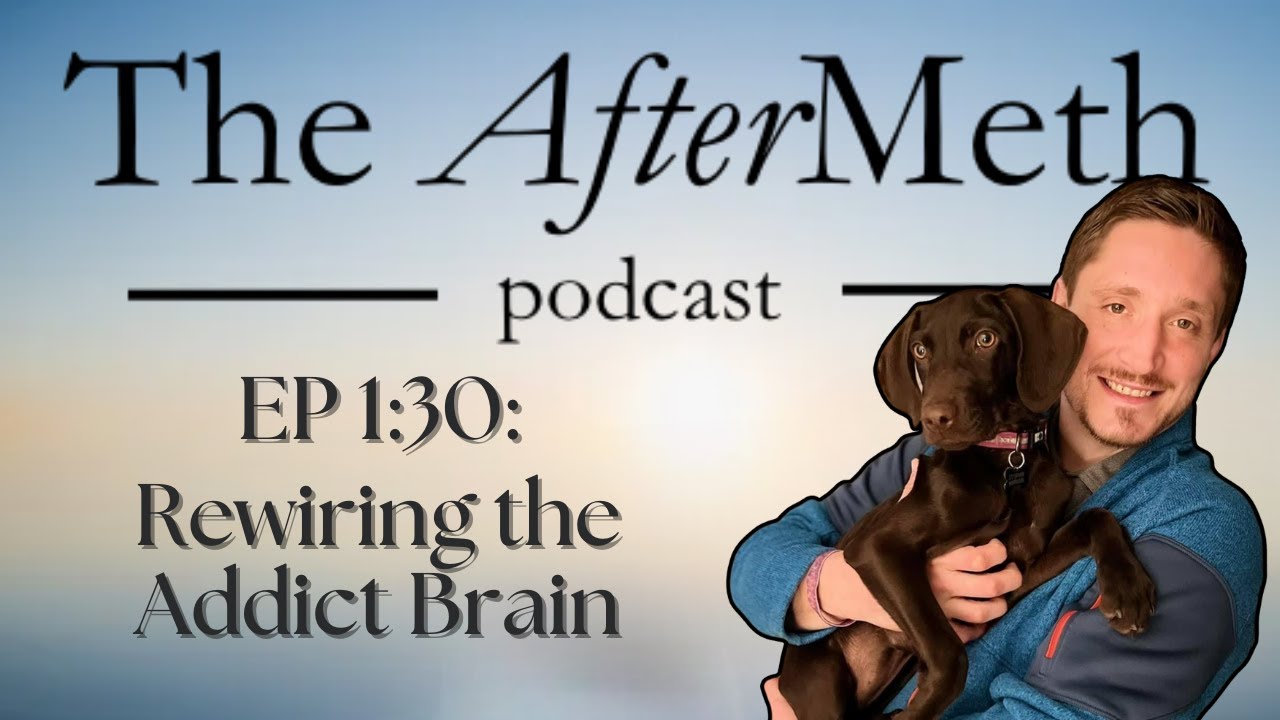
Alex Garner, sober three years after addiction to meth, alcohol, cocaine, and heroin, shares the coaching framework that broke his relapse cycle. Jay Shetty's Think Like a Monk sparked his turnaround in rehab. His method starts with self-awareness, then a three-week habit-building phase using neuroplasticity, followed by a five-step morning routine designed to rewire the subconscious.
Chapters
Motivation isn't a feeling, it's an action, right? Isn't that true?
Yeah.
Yeah.
Yeah. And when you— the more that you do it, the more that you have of it, right? Like, it's a—
Welcome to the After Meth Podcast. This is your host, Dr. Dallas Bragg, a former crystal meth addict, now sobriety coach. Join me on my mission to increase awareness around the epidemic of crystal meth among the gay male population and create a repository of resources for current and past addicts As well as, and especially for, their loved ones. This is The Aftermath. Trigger warning, this podcast will contain discussions pertaining to drug and alcohol misuse. If you feel triggered to use or relapse, please call SAMHSA's National Hotline at 1-800-662-HELP. Also, if you are new in your sobriety journey and you feel like you could be triggered, By discussions around drug, alcohol, and sex misuse, please do not listen to this podcast. All right, now on with the show. Okay, welcome back to After Meth Podcast. I was going to say Meth After. I guess that would work too. Welcome back. This podcast is getting some great reviews and feedback from people all over the world. Just this week, I heard from someone in Australia who has started listening to the podcast, and on a day when he was planning to use, instead he listened to the podcast. So if you want to hear more about that, rate and review the podcast because it will get it in front of more people. That's how the algorithm works. I picked a very great name for this podcast, and in a way, the very worst name for the podcast because Aftermath is not a. word that the search engine optimization picks up. So we are figuring out ways to work around that. And if you can like, share, rate, and review, the algorithms will begin to see that and pick it up and give it to the people that need to see it and benefit from listening to it. So I would appreciate if you'd help me out there.
All right.
Let's get started with my new buddy Alex, who is one of the most— already, I've only known you, what, a week? One of the most generous, giving, caring, collaborative people that I have met in a very long time. And I just want to say that I appreciate knowing you already. And could you introduce yourself to our listeners?
Absolutely. First of all, um, thanks for having me, Dallas. I, I'm excited to be here. Um, But I was really excited to meet you, not only because my story includes using methamphetamines, and I didn't know that there was a podcast out there like that, but also just because I feel the same. Like, you were generous and kind, and I always welcome people like that into my life. So it isn't easy for me to Open up. I'm learning how to do that, but but it's always nice when I do that people are kind in return. So I appreciate that. So yeah, my name is Alex. I'm a I'm a sober life coach. My story is is probably a lot like a lot of people that are listening, but there are some unique things that I decided to do after getting sober that. I feel like need to be heard by more people, and that's what I want to share today. But, um, but for my, my, um, myself here, I, I live in Los Angeles. Uh, I've been sober for 3 years, um, coming up in about 20 days.
Hey.
Um, so yeah, it's, it's going well. Um, and that's off of methamphetamine. Um, my story includes alcohol addiction, uh, cocaine, Methamphetamines, heroin. But the last thing and the thing that really took me out was meth.
Hmm.
So yeah, I live in LA and it's been an interesting ride. I got sober in Illinois. That's where I'm from. I'm from Central Illinois where there's nothing to do but drugs. And my people in the Midwest will understand me. And it was, it was the norm to, to drink when I was younger, right? And it was the norm to smoke pot. I smoked pot before I ever drank, which a lot of people think is weird, but it's not weird to me from where I'm from. I played soccer, so like the whole soccer team was lighting up before practice.
Interesting.
But, but yeah, so my alcohol took me out first. I am a member of the LGBT community, so I am gay, but that wasn't my reasoning for using. A lot of times it's tied into that.
Mm-hmm.
But my coming out story was— is very— it was very easy. I was very supported. So I don't think that that altered that too much, but it did make me feel a little different. For sure, when I was younger, liking, liking men instead of women. So, but yeah, so I went into college, I experimented with other drugs. And, and it was really interesting to me because I had to be— can you, can you swear on here?
Yeah, of course. You say fuck?
I should have asked that before. But yeah, I had to be fucked up. All the time, and I started to notice that I'm a very aware of myself type of person, even when I was using and drinking. But I had to be fucked up all the time, and so then cocaine came in the picture when I moved out to LA for the first time. And and yeah, it was it was a very. I started using it every day. I used it with my part— my first partner, um, started using it every day behind his back. So I knew that that was a problem.
Hmm.
Um, it doesn't matter how much I did, but I was doing a lot for me. Um, and, and it really, uh, started hallucinating and all that. And then that was the first time I went into rehab. So, um, the second time I went in for alcohol, third time I went in for heroin, and the fourth time I went in for methamphetamines.
House.
And then the 5th time I went in for methamphetamines. So I had been in rehab 5 times and my story is one of a lot of repetition. I would get, I would do really well in rehab, but then the second I would get out, everything I'd learned just went to the wayside. So I found that I was, I knew how to get sober, but I couldn't stay sober. And that was my issue. with the tools that I was given. So, um, so yeah, that's, that's a little bit about myself without going too much into my story, which I'll include a little bit later as we talk about the tools and techniques, because that's, that's what helped me get sober— stay sober, sorry. Um, which, which we'll talk about in a minute. But yeah, that's a little, that's a little bit about me.
Wow, that's a lot about you. That's quite the story. You've tried—
Too much?
No, no, not too much. You tried it all. I mean, yeah, the whole gamut. That's amazing that you are sitting here as a sober coach today. That's a story. I love that. I love that. Um, something that I want to ask you about first that caught my ear is that you, you were talking about your first partner and using cocaine, and you were using it behind his back. Was that something that's a— was that a common theme? Is that what attracted you to the meth scene as well, is the sneakiness part of it?
That's a good question. Um, subconsciously, yes, but not consciously. I didn't actively think, I'm going to do this because it's sneaky, right? Um, but, but subconsciously, I think that that was probably what was attractive about it. Um, but, uh, but yeah, I, I, I would agree with that. Um, but the, the, the time when I was with my, my first partner, were doing cocaine together. And then I liked it so much that— and I knew it was a problem the way that I wanted to do it all the time. So I started doing it behind his back. So that right there tells me that, you know, like, there's a problem, because if I'm doing it behind your back, then I actually know that I'm doing too much.
Yeah.
Otherwise, I wouldn't be doing it behind your back if I didn't think it was too much.
Yeah.
So yeah, there's something about that subconsciously that I think Is attractive to me.
Yeah, it's interesting. I bring that up because I see that a lot, and it's, um, something that helps men kind of connect to their why, right? Um, for instance, there's a lot of— drop my pen— there's a lot of men that are using behind their partner's back, um, crystal meth.
Mm-hmm.
And so you would think that when the partner is away or something like that, that it would give them free rein to use. But it actually isn't fun anymore because they're not sneaking. They're not, you know, they're not— it's not as scandalous.
Right.
It's not as risky.
Right.
And so I think it's important to kind of pinpoint that for someone to say, okay, this is what's attracting me here. And why do I feel like I need to sneak and, you know, behind the scenes and have a different personality and persona? To use.
So I think, like, I think part of that is true for me, but I would use so much that even if they were gone, like, I would have taken advantage of that.
Yeah, yeah, yeah.
You know what I mean? Like, it was, it was over the, it was over the bar.
Um, yeah, okay.
I was already too deep into that at that point. Yeah, I totally understand what you're saying at the beginning, for sure.
Yeah, yeah, yeah, yeah. Okay, so your 5th time in rehab Was the one that took?
Yeah, exactly. But this is why. So this is, I've done a lot of thinking about this because I'm a sober coach and I wanna know what got me sober and stay sober.
Yeah.
So I've done a lot of thinking about this. So I went in for the 5th time for meth and my sister, which I don't know why she was still talking to me at this point.
I get that.
That's legit. But she gifted me a book. And it was called Think Like a Monk by Jay Shetty. And this book I read in rehab. This was the first book that— and I'm proud to say this, maybe I shouldn't be, but this is the first book I've ever read completely cover to cover in my life.
I love it.
Okay. Like ever. And I read it and it blew me away. And the reason why is because it gave me practical tools to utilize to stay sober. Now, the book has nothing about— is nothing about staying sober. Nothing. Like, it's about him experiencing and being a monk for 3 years and him adopting a monk mindset rather than a monkey mindset, which I want to talk about in a moment. That's one of the biggest tools that helped me, or that distinguishing between the two. So, but I read the book and it gave me tools and techniques to stay sober. And for the first time in my life, I was like, okay, this guy's onto something because it's helping me grow. It's working in my life and it's not a rehab tool. It's a different tool than what I've been to rehab listening to for 5 times and it's helping me. So it's helping. It's like something— this guy's onto something. That's all I knew.
Yeah.
So, um, I, I found out that he was a life coach and I was like, what the hell is that? And then I found out that he had his own life coaching school and I was like, that's where I'm going. Because I, I was sold at this point. Um, I knew that his tools and techniques worked, so whatever I was going to learn from him, I, I was going to learn fullest. Um, so I went into that program at 6 months sober. I went into the life coaching program. And it overhauled my life. Like, so this will probably sound like an ad for the school, and I work for the school, so, but I promise it's not. It was just this powerful for me. But I went in at 6 months sober, so I knew that my life was unmanageable. I knew that my life, like my way was the wrong way because look at where it had gotten me. One thing I forgot to mention is at the end of my using, I was in psychosis in Chicago, downtown Chicago, homeless for a year and a half. So, it got really, really bad this time.
Wow.
Just wandering the streets for a year and a half. And I went into rehab, read the book, changed my life, went into this program. And this program taught me a framework of how to coach people. So, it's called the ABC framework. And I don't want to get too deep into it now, but It, it, it's, it's a very, it's a blueprint for how to help other people. But the way that you learn it in the school is you take yourself through it first. So you grow and transform from it because you're doing the tools and techniques that you're going to give your future clients as a coach. So it completely, so the topic of gratitude, stress, focus, energy management, money management, self-love, self-worth, self-doubt, all of these topics I was learning Correct tools and techniques to boost. So in all these different areas of my life, I was leveling up basically when I was six months sober. So it was just a lot all at once, and and the program changed my life. So that that's what stuck, and that's that's what made number five different.
Wow, that's amazing. Yeah, because you were probably hearing the same techniques.
Same stuff.
5th time, right?
Even, even at different rehabs, it's the same stuff. Same concepts.
Yeah.
Same concepts. Yeah. Yeah.
Well, I mean, the natural question would be, can you share what made the difference for you?
Yeah. So it was, it was this framework. So now what, what I've done with my coaching is I've taken that framework And I've taken my own experiences and I've meshed the two. Um, and that's— those, those are the tools and techniques that help people get sober. Now, um, I typically like handle people that are struggling with alcohol, but I, but I open— I'm open to whatever, right? Um, Mm-hmm. Um, and but these, these work for everything. So, um, I guess it doesn't really matter. I shouldn't have said that, but Um, but yeah, the, the basic part is, uh, or the basic function of it is we, we take a look at, at where you're at. Because, um, like, do you, let me ask you this. Do you, do you remember when like you had to put in, uh, do you remember MapQuest? Like before Google Maps and all that? And on MapQuest, you had to put in the location of where you're at in order to know where you're going.
Yeah.
Like you had to type in the address.
Yeah.
So, it's the same thing. Like, you have to know where you're at right now in order to know where you want to go. So, that's what I do first. And there's— so, we deep dive into that. There's tools and techniques from Jay's framework and meshed in with mine, with my framework and experiences that take us deep on deep dive to figure out where they're at at that moment. And then, what I talk about doing after that Is I do three. I do three weeks in my program. I do three weeks on habits. Habits are really, really important in my opinion when getting sober and staying sober. There's there's three things that can happen with a habit, or you can you can do three things with a habit. You can delete it, so you can get rid of it if it's unhealthy. You can edit it. So let's say that like you do something. You smoke a cigarette at eight thirty every morning. But instead, you want to brush your teeth. You can edit that habit, right? You can edit it to where it's already stuck at 8:30, but now you're switching the habit to brushing your teeth. And then there's scientific ways to do this, right? Like, this is what I learned in the framework. And then the third one is you create a new habit that sticks. So, there's something called neuroplasticity that I studied. And neuroplasticity is how the brain functions. and how to create new habits according to how the brain functions. So, it's not a theory. It's not, hey, try this and maybe it will work. It will work, right? It's because it's how the brain functions. Your brain is not any more special than mine, even though we think we are and we have special brains on meth. They operate and function in the same way.
Mm-hmm.
So, we take a look at neuroplasticity and we take a look at when is there a good time To create a new habit and how to do that according to how the brain functions. And that's what I teach. So, I do 3 weeks on habits. That's really, really important. So, deleting old ones, editing old ones into new ones, and then new ones. So, that would be the second most important part. And then, the third one is this, the third section or the pillar that I would call is maintenance, right?
Yeah.
Like, how do we keep what we have? Right? And a lot of people, you keep it by giving it away. And, and look, I'm a product of AA. So I went through AA. It helped me get sober, but it didn't help me stay sober. It was the same thing with rehab. The 12 steps I worked through, I worked through them twice. And I still go to a meeting once a week at an LGBT meeting because I support them and I want to be there for the next person. But it's not To me, this is to me; it's not the only way to get sober and to stay sober. I needed additional help. I needed things like meditation and breathwork. I needed things like like affirmations. I needed subconscious rewrite. Like like you know meth is a mindfuck of a drug, and it really messes up your conscious and subconscious. So it needs a lot of subconscious work to turn that negativity into positivity. I needed that. The program wasn't giving me.
that at all.
Yeah. So, I sought out additional help.
Yeah.
That's another thing that I do is it's called Mind Sweeper. I came up with this idea and we sweep out the mind, right? We just get rid of all the negativity and we replace it with positivity. I do that through a 5-step morning routine, which I actually want to give you a copy of. And I want to give it away to anybody that's interested on this podcast. So I'll link, we'll link it in the thing.
Yeah.
This 5-step morning routine changed my life like 100%. It's really beneficial for the subconscious work. You're going to replace the negative with the positive. You're going to get out all the negative. Now, a lot of people say, well, why do you want to approach the negative at all? But you have to get it out in order to make place for something positive. Um, an example of that would be if you're, um, when you're sleeping. I don't know if you ever, like, before I used, my mind would race all night and, um, I would get up in the middle of the night, I would write stuff down, and then I'd go back to sleep. That's the same thing. Like, you have to get it out of your head and then you don't think about it anymore.
Yeah.
Right? So it's the same process here. Get out the negative of your— get the negative out of your head so you don't think about it anymore. And then replace it with positive. And that's what I do with the 5-step morning routine. So that's really powerful. That's not made by me. I got that from another course. Um, but it's very powerful for me and people in sobriety and my clients. So I just wanted to give that to anybody that's interested.
Yeah. Thank you for that. Could you go over the 5 steps kind of briefly to give us an idea of what it is?
Yeah. So, the first step is emo dump, emotional dump. So, get out everything negative, your biggest fears, anything that you feel negative towards at all, get it out. And that's for the purpose of what we just talked about, to get it out to replace it with positive. The next step is simple. It's a gratitude or brag book list. So, if you struggle with self-love and self-confidence, do the brag book. The brag book is something that you brag on yourself. So, 3 things that you brag on yourself, 3 things that you are grateful for. But when you talk about gratitude, not just anything, these 3 things have to be something that nobody else has, that only you have, that the universe has given you. So, you have to think about that. That will cause you to think. But that is replacing the negative space with something positive. The next thing is called a life plan. So, the 3rd step is a life plan. You do have to do a little work before you do this. So on the second page of the 5-step morning routine, but there's— it's basically affirmations. There's a— it's a prompted— it's already written out for you. You just have to substitute your— the answers of the questions in there. So it starts like, I am so happy and grateful that I am blank helping blank. So you answer the questions ahead of time and you just substitute it in. So for me, I work at a coach. I'm so happy and grateful that I'm earning blank helping people get sober. That's what I do, right? So now that's just like my example. And then you're going to fill that out. So that's the life plan. The whole point of that is to start rewriting the subconscious.
Yeah.
The 4th step is affirmations and visualization. You're just going to take the very first line of that long affirmation that you just said 3 times out loud and say it 10 times out loud. And then ten times internally. What this is going to do is this is going to start to build your focus muscle, because when you say something out loud, it's easier to comprehend and understand. But when you say it internally, you're going to trip up. You'll see what I'm talking about if you do this. You're going to not remember it. So you're going to work on your focus muscle here. So it does more things than just rewrite the subconscious. And then you're going to visualize your day. And then the fifth step is. Is do one thing different than you've done the other previous days. So you just continue to build and, and grow. But yeah, that, that's, I did that. It's about 15 to 20 minutes every morning. I've done that every morning for about a year now, and it's been really, really powerful for me.
Mm-hmm.
So try it. Um, I, I recommend to try it, do like 7 minutes or 7 days, I mean, um, at least, but try it for 30, try for a month if you can do that. It'll change your life.
Wow.
Wow.
It's— I'm glad you put a timeframe on that, 15 to 20 minutes, because it sounded like a lot.
Right, right.
I could just hear my listeners be like, nah. But yeah, a 15-minute investment, guys, you know, to do what sometimes it takes 6 months for some clients to get is to change that wiring inside, you know. Yeah.
This is the work that you have to be willing to do, guys. Like, this is it. Like, it's, it's a simple— it's simple concepts, but it's very, very difficult to do, to, to create a new habit around doing it. So if you lack motivation, like, that's a big deal, right? Like, well, I just don't want to do it. Um, then you, you know, you have to find your why. You have to find, okay, do I really want to get sober? Do I not? Um, why do you want to get sober? Um, how, you know, how is this going to affect you if you don't reach this goal? If you, if you don't get sober, um, why is this important to you? So yeah, you have to create motivation, um, in order to do things like this. But it's— but once you do it, trust me, it works. Yeah, science. This is backed by science. It's not just some theory.
That's right. That's right. Yeah, that's important too. This is neuroscience, what we're talking about here. I'm glad that you mentioned motivation because I hear that a lot of, well, I just don't have my motivation today. I don't know where it went. But I try to explain it. Maybe, you know, maybe you can elaborate on this, but motivation isn't a feeling. It's an action. Right? Isn't that true?
Yeah.
Yeah. Yeah.
And when you, the more that you do it, the more that you have of it.
Right?
Like it's a habit. Motivation is almost a habit.
Yeah. Yeah. Yeah. Yeah, that's great. Awesome. Well, let me ask you a question, um, something that stuck out to me in what you were saying. Your first step, like you said, the MapQuest thing, is finding out where am I, right? If I am— so here, the most of the people that listen to this, they're functioning but they can't stop relapsing, okay, on crystal meth.
Mm-hmm.
And this has been going on for a while. Um, they're in this place of like, you know, they're just going through the motions of life. You know, a lot of them are at this point where they're just using because it's now just an animalistic habit. It's not even a, I'm horny, I want to go out and use meth. It's, I just use meth because that's what I do. Um, how do you— if you're in that place, what are some What are— what would be some initial steps that I could take to really figure out where am I at? Where do I start? Because I don't know who I am anymore. Right. Yeah.
Well, I think you're like listening to this podcast is going to help you do that. Like, and if you're doing stuff like this, then you're, you, you're at least interested in knowing where you're at. Um, so seek out, um, seek out outside information, right? Seek out additional help. That's, that's probably the biggest thing. Now, that can be through a life coach, and it's not to self-market here, but seriously, like, that's what we do. We help you figure that out, right? So, but yeah, some steps. So, like, there's several self-help books out there to help you kind of figure that out. But I do it through reflection. So, reflection is a big tool for me where at the end of my day, every single day, I stop. I take a look at, okay, what did I do today? Like, where did I overreact? What do I need to do that is like, do I need to change a habit here? Did I commit anything that needs a new habit towards or attributed towards it? So, reflection is a big tool for me. And that is raising your awareness, right? Because you are becoming aware of what you are doing throughout your day. Because if you're just going nonstop and you're just acting out here, doing this, doing that, then reflection is for you. That helps you become aware. But here's the thing. It's scary. It's scary when you start realizing what you're actually doing if you don't want to change, right? So, if like, if you're stuck in that habit, a lot of times people don't want to look where they're at because of what they're doing. Exactly.
That's right.
So, that's the problem. It's not so much that maybe they lack the motivation to do it, they just don't want to do it because they don't want to see where they're at, right? So, when you come to that realization and in that understanding that, look, I need to take a serious look at where I'm at, then those are the people that typically reach out to a life coach. Those are the people that typically look for the help. But in terms of how to get there, That's a different question, right? Like, that's, that's the million-dollar question is what happens and how do you get to where you want to take a look at yourself rather than, than that, you know?
Yeah, that's great. That's a, that's a super point because I want people listening to really ask themselves these questions because why are you not telling your partner? Why have you not told your family? Why have you not cut off the dealers? You— what— there are things that are obvious first steps to getting sober that you're not doing. Really question your motivation, because a lot of times it's you're not doing it because you're not ready to quit, right?
You know, but own that. Be honest with yourself.
That's another thing, right? Yeah, yeah, yeah, yeah. Yeah, it's true, you know. So, okay, so what next, or what's next in Jay Shetty's concepts that you would feel like would help us?
Yeah, so I'm gonna pull up some of my own stuff here that I think would help. So now there's something that Well, I— what— let me ask you this. So do you think it would help you to focus on, on getting to that point of awareness, um, of where you want to take a look at yourself? Do you think that that would be beneficial, or, or more about like how to stay sober? Because I sound like— what, what are your— what do your listeners struggle with the most?
Yeah, yeah. Well, I have both, but I think the getting to the self-awareness place is, I think that's, that's definitely needed. Um, there's a lot of denial going on. Yeah. Yeah. There's a lot of denial in, I really want to quit, but I don't want to do the things that I need to do to quit. Yeah. You know? Yeah.
Let's talk about that then.
Yeah.
Let's talk about that.
Okay.
Um, okay. So What I do, I'll share what I do in week 1. So, we'll just see. So, week 1 for me is all about acceptance and awareness. Now, there's 2 things that have to happen with this. In order to become aware of where we're at or where we're going, we have to know where we're at, right?
Mm-hmm.
So, that's the awareness piece. Then, the acceptance piece, this blew my mind. Actually, I'll share this with you. The definition of acceptance, Dallas, what do you think? What do you think it is? And I don't mean to put you on the spot. I was way off. I was way off.
Okay. Yeah.
The definition of acceptance, what do you think it is?
Well, I think initially if I were to not think it through, I would say acceptance would be to be okay with the way things are, I guess.
Or, okay.
Yeah. Well, yeah.
Uh, which is very, very like, that's, that's what I thought. Right? Yeah, it's true. But I— and that is, that is one definition of acceptance. But if you think about acceptance in a different way, like if you were to— like when you accept something as a gift, right?
Mm-hmm.
It's the same thing here. So the action of acceptance is actually— the definition is the action of consenting to receive something offered.
Hmm.
So when we accept something, we're actually consenting to receive a gift.
Consenting to receive something.
Something offered. So when we accept something in our lives, we're, we're, we're receiving a gift. We're consenting to receive a gift, which is peace, which is like whatever it is for you.
I see.
So that like blew my mind, right? Like, um, because I thought it was all about, well, acceptance is like a negative thing, right? Like, we, we have to accept it, but it's not. It's, it's actually the action of consenting to receive something offered. I, I just thought that was awesome. So I always do that first with my clients. Um, yeah, it's like that changes everything. It changes the perspective. Like, that's a big thing. That's another thing is you have to be able to change your perspective and you have to be open-minded enough to do something or see something in a different way than what you're seeing. And methamphetamine, it makes us see only one way, right? Like, so you have to stop using long enough to start seeing other ways that are possible that could be right as well, right? Does that make sense?
Yeah, it does make sense. And I'm correlating this too to the lot of shame that we have at the beginning in terms of unworthiness. Right? For instance, I— many of the clients that come to me, they can't accept a compliment about themselves, you know, because they're— they don't consent to receive the gift of this compliment because they don't feel worthy. They don't feel worthy of it.
Right.
And the same thing, same thing with the peace. I feel like some of us get so far into addiction and shame of being an addict that we don't feel worthy of peace. We don't feel worthy of sobriety.
True, true. So how do you get to that place?
Yeah, yeah, yeah, yeah.
So how I get— how do you get to that place is habits. Yeah, no, it's like it's habits. It's building new habits that make you feel good about yourself, right? So like I suffered with like unworthiness. I mean, like it was— we have all done terrible things. Yeah, we're all—
we're all—
we've all been bad people. We're not—
We've all been messed up.
Yeah, we've all been— yeah, exactly.
Messed up.
That's hilarious. So with that being said, there is a level of forgiveness that has to happen, but that comes over time. And forgiveness happens when you start doing things better, when you start doing better things for yourself, for other people. Then you're— then it starts to almost like— it's like a bank account where you're so negative in the bank account because you're unworthy and you've done all these bad things. I hate to say it like this, but it almost is like that where every time you do something good, money gets added, right? And then you start to get above balance and then you start to build above it. That's karma. That's what karma is, right? Like, at least my definition of it. So, the more good things that we do, the better that we're going to feel about ourselves. So, that's where you have to change actions and that's where habits come in.
Okay. Okay. Yeah, that's great. That's a good answer. I approve. Yeah.
Yeah.
And starting these habits and feeling good about yourself, I want to also iterate is that you have to do start smart, start small, very small goals. Yeah. Yeah.
You're not gonna feel good about it right away.
Yeah.
Don't do one thing and be like waiting, like Yeah, right. Um, yeah, it's not gonna happen.
Yeah, you really can't base a lot on your feelings at first, you know. For— I mean, for one thing, your hormones are all fucked up from the drugs, right? But the other thing is, is that, you know, feelings, emotions are up and down, but what's constant is the goal, right? But like you're saying, is a habit, is a tangible— something tangible you can latch on to each day.
Right.
Yeah. Yeah.
Right. Yeah, exactly. Because emotions are, are all over the place. The other thing that I had to do, I just had to stay sober long enough.
Yeah.
Like, give yourself a chance here. Don't give it like 3 days and be like, I don't feel better. You know, like, that's not gonna happen.
Yeah.
These— this is years and years of usage.
Usage. Yeah.
That— and especially with meth, like, I think it's I shouldn't— I hated this fact, but it's like 18 months for your brain to get back to normal.
Yeah. Yeah.
And I remember like 6 months sober, that actually helped me a lot because it gave me like, okay, this is why I'm feeling the way that I'm feeling. Because, you know, it's not— it's not 18 months. It actually hurt me after 18 months because I was like, why do I still feel this way? Right? But so that helps. Maybe that'll help. But it takes 18 months for the brain to get back to normal after methamphetamine. Now, I'm not saying one use, but who uses it once? So, right.
Well, yeah, and the latest study is 12 to 24, so it could be up to 2 years for some.
That doesn't surprise me. Yeah, I sometimes— I mean, I still have tics. Like, you'll see if this is on video, you'll see that I still have tics. That's, that's from the methamphetamine.
Yeah, yeah, yeah, yeah, yeah. Interesting. Yeah. Okay. All right, so we are getting— we're— so we're talking about How we get to where we are, which is self-awareness, worthiness, habits. So, what would be next on the agenda here for you that you would mention for us?
Yeah. So, I'll kind of take you through my program, right? So, it's acceptance and awareness. We talk and then we do the deep dive to figure out where they're at, which is beliefs. You get to construct your own beliefs. Don't tell, don't do, don't let other people tell you what to believe. Believe what you want.
Right.
But just believe in something.
Yeah.
Believe in yourself, but believe in, believe in something bigger than you. That's, that, that's a kind of a prerequisite here. Um, not a God. I'm not telling you it has to be God, but it can be just something, something that is bigger than you. Um, and that's, that's not like, that's not the most important thing, but it is important. Right? Um, it is important. Um, another thing that I wanted actually to share, or I'll share this later, but, uh, then I, then I talk about release. So, um, part of awareness is figuring out where you're at and figuring out tools and techniques to use when you need to release stress, when you need to release whatever it is that you're feeling, that emotion, that emotion at that moment that is too much.
Mm-hmm.
So, that's what I do next. And then, um, It's all about like discovering, then I do the habits for 3 weeks. And then I talk about communication with ourselves and others. So, at this point, they've been doing the 5-step morning routine for 8 weeks, every day for 8 weeks.
Okay.
So, that's like what? Like 40— oh, I'm terrible at math. Why did I say this? 7 times 8. 64 minus 8, whatever that is, 56.
56.
So 56 days, which is a pretty good amount of days.
Yeah.
So they're going to start understanding where the communication is at with themselves, and that's affirmations. Um, those are the affirmations that you're doing. How is that going? Like, are you, are you starting to see a shift from your negative thoughts to your positive thoughts? Um, now this is an interesting fact. A human being has 60,000 to 80,000 thoughts a day. And 80% of them are negative.
Yeah.
And then another fact is 80% of them are repetitive. So most of the thoughts that we have in our head are negative and repetitive. Like that, that's a normal person without going through withdrawal from meth.
Yeah.
Yeah. Right. So, so we're already going on an uphill battle. That's a normal person. That's a normal person that doesn't have any issues that we have, right? So, you're already working an uphill battle. So, you need tools and techniques to help you. And that's what that 5-step morning routine will do.
Okay.
Week 9 is all about self-love. Now that you have found yourself, you've dug deep and you figure out what are your tools that you want to use, how can you love yourself better? That's really important. And then, I talk about maintenance and then how to give it back to people. So, that's the next step after habits would be the communication and then self-love. Self-love is really important, but not right— it's not like immediate. Like, you know, it's an important part of the process, but it's later in the process, if that makes sense.
Yes.
And then, I do maintenance, like how to keep this up. So, we gather up all the tools. Like, look at it this way, you have a toolbox. Some people call it their spiritual toolbox, but you could just call it your toolbox. And you have literal tools and techniques in there that whenever you're feeling something, you can take it out, take it out and use it, and then you put it back. That's what we're constructing here. That's the point of it.
Yeah. Right.
Is to learn tools and techniques that work for you in order for you to have them when you need them. And that's because, look, I don't want repeat offenders. I don't want repeat customers.
Yeah. Right.
I want you to come through this program at 3 months long and be done. Yeah, and never see you again.
That's right.
That's right. Like that's and then you you go off in your life. So it's all about teaching them how to do it themselves and not rely on somebody else. Right? Because I am an accountability partner, but only while you're here. Like after that, you're on your own. You know what I mean?
Yeah.
And it's not like to be mean; it's to teach you how to do it for yourself.
Right?
Because that's what it takes. Right.
And I like that you said that you meant the caveat of the tools that work for you.
Mm-hmm.
Because I want you, if you're listening, to understand that not every tool works for you. And just because it worked for someone else doesn't mean it's going to work for you. So give yourself a break and understand that— I say this so much, but everything is temporary. So if you use a tool and it doesn't work, that's only a temporary situation. You don't have to be a black and white and extreme thinker to say, okay, nothing works for me because this didn't work for me.
Right.
That's a, that's a common feeling that we get. Because listen, think about everything that we're talking about here. You are dismantling your entire identity, basically. And you're trying to deal with physical repercussions of withdrawal, of not having it. You're, you're going through a shit ton trying to get sober here. So just give yourself a little break. Have some patience. Try a tool. If it doesn't work, you have, like, like Alex is saying, you have a toolbox. Reach in, grab a different tool. See what resonates with you. See what works. Not everything will. Isn't that right?
Yeah. Yeah. It's so there's, well, there's a lot of tools out there that are not backed by science.
Right.
So those are the tools that probably aren't going to work. Most of the tools that Dallas and I have, like we've studied these, we've, we've learned them from certification schools or wherever. And we, and we're, they're backed by neuroscience. So, um, they're going, they're like, they're going to work because that's how the brain functions. Now, not every tool is going to. Right. But the tools, at least the tools that like I have in my program, I know they're going to work. So even when they don't feel like they are, like the 5-step morning routine, keep doing it.
I see.
Like that's going to create, like you're going to have, but, but if somebody just gives you tools and it works, that's awesome. Use that for yourself. But if it doesn't work, then it's not for you. And it's probably not backed by certain science, or maybe it didn't work that time and it will work next time. Like that's the other thing is just like be open-minded. Like, that's, that's really an important part. Um, but yes, I totally understand what you're saying because like, early on, like in rehab, right? Like, you, you, like, half of those things weren't working for me. Like, they weren't working, but they work for other people, right? So like, that, that, like, that's, that's a great example of that.
Um, yeah.
And, and it helped me, like, it helped me get sober. So it did work, but it didn't, it didn't stay. It didn't help me stay sober. So maybe it works for you at one point, but it doesn't at another. So it's all about like evolution and change too. Like it's, but as Dallas said, there's enough on your plate. Like just, yeah, just, um, there's enough on your plate. This is the, this is the hardest thing that you'll ever do, but it's also the best thing that you'll ever do for yourself.
Yeah. Yeah. Very good. Very good. Um, yeah. So this sounds This sounds, uh, like usable tools. It also sounds like this 5-step routine seems to be the core of this whole program. Is that right?
Um, yeah, I would say that. Like, it's, it's the thing that I introduced at the very beginning, and we, and we check in on it, uh, and then it's also the same thing that I have them do every day for the rest of their life.
Yeah.
Um, if they, if they're willing to, right? It's about willingness. So, um, I would say that, yeah, that's, that's the one tool that changed my life the most that I would, that, that's why I want to give it, like, just give it to you guys. 'Cause that's like, that's huge for me. That was huge for me.
Yeah.
But the other tools and techniques, yeah, like I'm, I'm, I'm, and you know, Dallas, I'm more than happy to share 'em, but they're just, um, yeah, just, it matters like what it's for, right? Like there's not just one tool that works for everything or everybody, so. Yeah, it depends on where you're at.
Yeah, yeah, yeah. Okay. Anything that I missed that you want to mention about your information there?
Yeah, there is one thing. This is another tool that, that helps. And it's not really a tool. It's just a realization or like an example. So in order to become something, like, let's say that you want to become somebody else, or you want to, you want to become something. You have to do 3 things. Okay, it's a 3-step process in order to become something. You have to think it, you have to feel it, and then you have to act it, and then you'll become it. Okay, so thinking it is why I do the affirmations, right? You start thinking about it and you're, and you're saying it all the time. Um, then you, you start to feel it because you're saying it all the time and you put passion into it. Like when I do my affirmations, It's not like, I am good vibes. I am good vibes. I am good vibes. Like, I feel them, right? Like, I am good vibes. I am good vibes. I am good vibes. Like, I feel it.
And you are good vibes, Alex.
Yeah, I try to be. That's my affirmation. I do that every day. Like, it's very simple. I am good vibes, right? And then, the third step is the most important. Third step is act it. In order to become something, you have to act it. Um, this is where sometimes people say fake it till you make it. That is true here. That does apply here. Um, because you start acting that way. You act how you want to become. So you're asking, how do people get sober? How do they stay sober? They, they, they're doing the tools and techniques. They're acting them out. That's the most important part. And then you become it. So think it, feel it, act it, become it. That would be the other thing I would share.
Think, feel, act, become. Yeah, yeah, good. That's great. So, um, yeah, so your life in sobriety now, um, what are— well, you have the 5-step routine. What other ways do you maintain?
Um, reflection, meditation, and breathwork. Those are my main 3. So reflection is what I do every single night. Uh, go 5-step morning every morning, 5 reflection on the day at night. And I'm just going over what happened, right? Like, do I— if you're in AA, they'll talk about this, the nightly routine. Like, do I owe anybody an apology? Do I, you know, so it's kind of like that. But, but I do it more of a broad basis, right? Like, like, how was, you know, how was my day? Do— did I have any arguments? If so, what really happened? Was it me? Was I out of bounds?
Mm-hmm.
Do I owe— do I owe an apology? So that does fit in there. And then, meditation has changed my life. And I also do meditations in my program as well. So, you have weekly meditations. But what I'm starting to do is I'm starting to meet people that just want to do meditation and they have a goal. I sit and I meet with them on that goal and then I construct a meditation course for them and I write the meditations myself. So, if you just want to get into meditation, that works too. That way, you have intention behind your meditations. You're not just meditating doing whatever. You have intention behind it on getting to a goal. So, that's really important. And then, breathwork for me. Breathwork changed— another one that changed my life, right?
Yeah.
I know all these are huge tools. Breathwork is awesome for people that want to get naturally high. I'll just be straight honest with you.
Yeah.
You get straight up high from it. But, it's a great high and it's natural and you feel hugged by the Earth. I know it's out there and weird, but you feel a lot of love when breathwork. So, that's really cool. And, I'm learning how to change my breath every day. During this conversation, I've tried to take a couple breaths, deep breaths. So, that's been powerful too. But, those are my main tools right now.
I love it.
But I'm always open-minded to whatever. That's the most important part is open-mindedness, I think.
Yeah, yeah, yeah. Great, great. Okay. Ah, this is a lot in a short period of time. That's great. So helpful, so practical. Um, and I, I'm really glad to, to offer this to the listeners. So, um, how can the listeners find you if they want to take advantage of your program?
Yeah, so my website's my first name, middle initial, last name. So it's alexsgarner.com. You can contact me through there or just alex.garner@alexsgarner.com email. I am on Facebook, but it's a private group, but I'm more than happy to let you guys in. It's Facebook. It's just called Sober, just Sober by itself. But I'll— we'll link that group in there in the, in the The notes from the, from the session. If we can do that, Dallas, that would be awesome.
Yes. Yep.
Yep.
Yep.
So yeah, that will— we'll link that, but it's facebook.com/groups/Sober1, the number 1. Oh, okay. Really simple. That's my main thing right now is Facebook, because I do, I do a lot of content on there. So just, you just have to join, answer a couple questions, and then I'll let you in. So it's really simple. And then I'll also link my phone number. Like, look guys, like I'm here to help. Even if you're not interested in a program, like I'm here to help. So just let me know how I can help. And same thing with you, Dallas. Just let me know how I can help.
Okay. Yeah. Well, you've already helped me and continue to do so. Great. All right. Well, I'll put all the— send that information to me and then I will put it all in the show notes. Don't forget, you can check this out if you don't— if you like the visual part, all the episodes are on video as well on YouTube. And YouTube is actually where you can comment, start a thread, tell us what stood out to you, what resonated with you, maybe what you didn't agree with, what you want questions expand on. You can address the questions to Alex and I'll get them to him. So whatever you want to do, Interact with us on YouTube. That's another way to support the show. If you don't want to rate and review, subscribe to the channel and all those kinds of things. That's another way to support. And you don't even have to support financially. It's still an energetic support. And I would appreciate that. But of course, you can also join our community. The Aftermath community has a Facebook page too, just starting out. I had started out with a page and it was a closed group and it didn't go too well. So we're going to change the way we're doing it. Um, and hopefully it'll be an area for you to also kind of join in the discussion. You know, I have the study guide and I have the commentary so that you can get all that, all that you can out of, uh, the episodes. Also, I'll ask Alex to, when we put the study guide, I'll link somehow or upload the file for the 5-step routine.
Yeah, it's a link. It's like a shareable document.
Okay, we're gonna put that on the study guide too, so you'll have an access—
you'll have access to that.
Sweet. Yeah, sounds good. All right, thank you guys. We will see you all next week. Thank you.










