EP 1:35 Breaking the Chemsex Cycle with Daniel
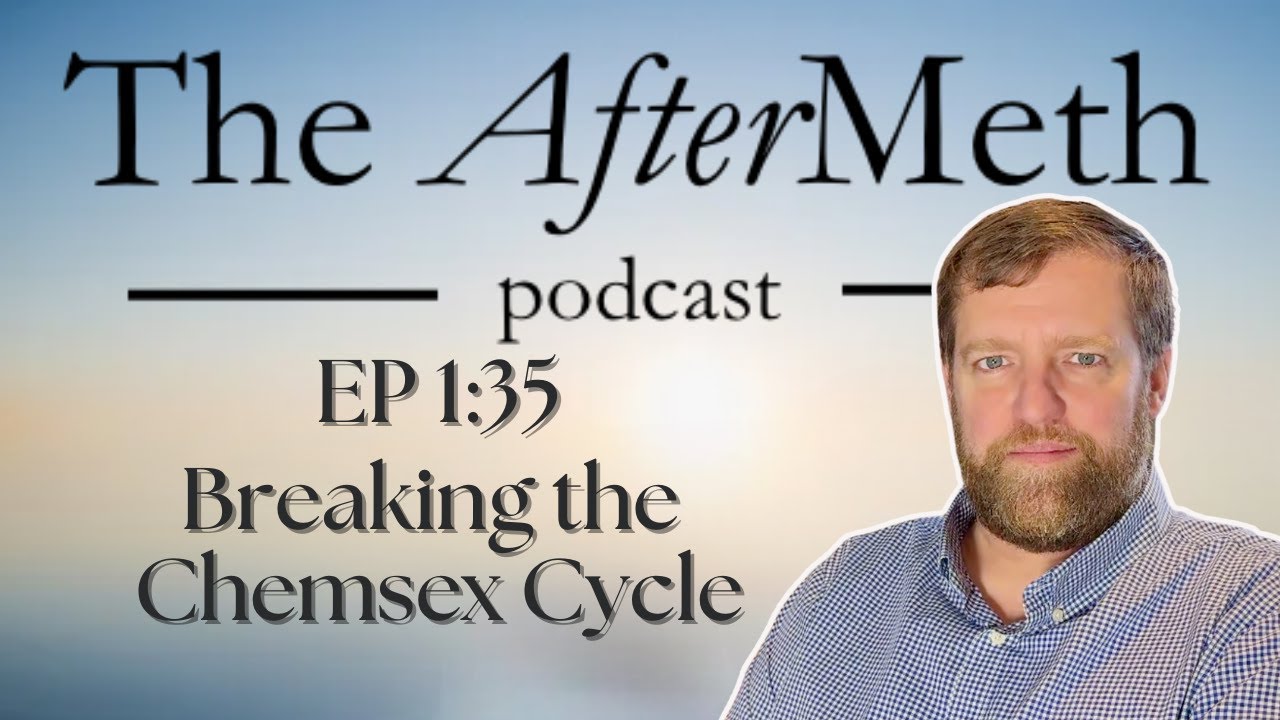
In this episode of The Aftermath Podcast, host Dr. Dallas Bragg, a former crystal‑meth addict and sobriety coach, interviews Daniel Gilson, an organizational/social psychologist and supervisor for the Controlling Chemsex service. The conversation opens with Dallas sharing a personal insight from his journaling about how Instagram images triggered feelings of isolation that led him to download Grindr and use meth. Dallas then introduces Daniel, whose background spans investment banking, corporate strategy, and psychodynamic psychotherapy training. Daniel explains the Controlling Chemsex approach, which blends CBT‑based key‑working with coaching techniques. He outlines a step‑by‑step process: building trust, setting realistic short‑term goals, conducting a decisional‑balance exercise, exploring cravings and triggers, addressing self‑esteem, reconnecting with sober sex and community, and reframing relapse as a learning point rather than failure. The hosts discuss the neurobiology of addiction, the role of false beliefs (e.g., “life without drugs is gray”), the impact of social media comparison, and the importance of journaling to uncover deeper motivations beyond “horny” triggers. They contrast harm‑reduction (spacing out use, realistic goal setting) with abstinence‑only models, noting that relapse can be used constructively. Daniel also describes his broader coaching work (executive coaching, organizational culture change, psychosexual therapy) and the value of supervision for Dallas, highlighting how supervision creates a reflective space to examine personal reactions and client dynamics. Throughout, Dallas repeatedly urges listeners to rate, review, share the podcast, join the Aftermath community on Facebook, and consider Controlling Chemsex services. The episode ends with resources and a call to action for listeners to engage with the community and seek help.
Chapters
Because I always thought downloading Grindr and being horny was what caused me to use. But during my journaling, I discovered through something I was writing that when I downloaded Grindr that day, it was because I had seen some images on Instagram that made me feel bad about myself and made me feel isolated and left out in my community. Welcome to the Aftermath Podcast. This is your host, Dr. Dallas Bragg, a former crystal meth addict, now sobriety coach. Join me on my mission to increase awareness around the epidemic of crystal meth among the gay male population and create a repository of resources for current and past addicts, as well as and especially for their loved ones. This is The Aftermeth. Trigger warning: this podcast will contain discussions pertaining to drug and alcohol misuse. If you feel triggered to use or relapse, please call SAMHSA's National Hotline at 1-800-662-HELP. Also, if you are new in your sobriety journey and you feel like you could be triggered by discussions around drug, alcohol, and sex misuse, please do not listen to this podcast. All right, now on with the show. Okay, welcome back to the Aftermath Podcast. I'm your host, Dr. Dallas Bragg, in case you didn't know that. I hope you're enjoying the Aftermath Podcast. I think that you are. Based on our numbers, we are trending upward, which I love that. Love it, love it, love it. And we are getting new listeners on a daily basis because you're messaging me. So happy to hear that. I would really like this podcast to get into, uh, the right hands and in on the right eyes. So in order to do that, I need your help. I want you to please rate and review the podcast. I prefer a 5-star, but you rate it however you feel led to do that. But rate it anyway and review it. You can review it on Apple Podcasts. I think you can, you can only rate on Spotify. If you follow on YouTube, subscribe to the channel. And also, I really would love if you all would begin sharing the podcast on your social media. And if you do, tag me. Uh, maybe we'll start some kind of giveaway or something along that lines. Um, but you know, that will also help your audience see the podcast. And you know, as I've said, you're probably tired of hearing me say it, but The Aftermath is the best and worst title for the podcast that we could have come up with because it's very clever, but it's not a word. And so because it's not an actual word, uh, the Google SEO is having trouble picking it up. I have added a subtitle to the podcast to help with that. But why I'm saying all that is to say we need your help to get the podcast out and distributed to more people. Right now it's mostly in the United States. I'd say the last statistic I looked at was 30%, um, in the UK. And so we want to really, uh, we want to really boost that up. And so in that same vein, I have Daniel here today who lives in the UK. Uh, Daniel is my supervisor in, uh, the Controlling Chemsex organization that I've mentioned on here before. And if you listen to the podcast, you may have listened to— because it's actually the top listened to podcast episode, uh, even over my story— and that's Ignacio. Ignacio is the Uh, the founder of Controlling Chemsex. And if you look on it, I think it's episode— it's in the first 5 or 6 episodes, but Ignacio talks about, uh, controlling chemsex and what it does and how he and why he created it. And so in Controlling Chemsex, if you missed that, um, they are out there on the front lines, um, and they are helping men, um, who have sex with men recover from chemsex by providing 8 to 10 free keyworking sessions. And before that, there's even an email program. I am a volunteer in that organization and very happy to be— to do that. And so Daniel is my supervisor. We meet monthly. He always helps me shift perspective, see clients from a new light, and see myself through new light. Sometimes we get into a whole therapy session for me, which I love, which I adore that. But he's very bright, very bright, very bright. And I'm happy to have you on the podcast. I really am excited to introduce my listeners to you and what you offer. And so without further ado, if you can introduce yourself, Daniel.
Thank you very much for that introduction. It's an absolute delight to have you in the service, you bring a different energy and perspective that really, I think, adds to the work we do in a way that's very moving and incredibly helpful. So, we're glad to have you.
Thank you. Thank you.
So, my name is Daniel Gilson and I'm an Australian. I've been living in London for the last 24 years. My background's a little different from most people, I guess, in the helping sectors. I started my career in investment banking, working in corporate finance and mergers and acquisitions at investment banks like UBS and Deutsche Bank. And I left there and had a career break in, I guess, the mid-noughties, a year or so before the financial crash, and then came back and worked at Tesco, which is, um, our biggest retailer. So a bit like your Walmart, I guess, um, doing their in-house strategy and mergers and acquisitions work before going to InterContinental, which is the hotel company that owns Holiday Inn and Grand Plaza, amongst others, where I was the global head of M&A. And I left there about 10 years ago, in fact, 10 and a half years ago, and spent a bit more time on a career break, sort of in the wilderness, trying to work out what I was here for, what the purpose of my life was supposed to be. And I ended up retraining as an organizational and social psychologist at the London School of Economics. And I finished that course and thought— and my interest was, why do we do what we do? Why do we treat each other the way that we do? Why don't bosses make better bosses? Why aren't people better at leading their people? Because I'd had quite a few experiences of dysfunctional organizational life. And I knew that probably my own dysfunction was at least in part responsible for my experiences, but also something was wrong in the organizations that I was working in, as all organizations struggle with their issues. So it's not unique to the ones that I've mentioned. So after that course, I sort of felt that we hadn't gone deep enough. And at that point, I was already in psychotherapy myself. I had been for a couple of years. And I enrolled in a psychodynamic psychotherapy training at the Tavistock Centre, which is, I guess, the spiritual home of Sigmund Freud in the UK. It was set up by some of his followers, some of his, I think, probably some of his analysands, the people that he analysed in the 1950s. He came to the UK just at the, I think, the beginning of the war. He came and died quite quickly soon after from cancer, but his final home was here in London. And I've been, that's a long and intensive training, which is at its end finally. And I came into the controlling chemsex work near the beginning. And it was one of my oldest and best friends, Donnie, who you'll know from our handover sessions, our group supervision sessions, who brought me in. He'd been involved in helping in this world for several years already. And I was thinking to myself, well, hang on, I'm the one that's doing the training and yet I'm not getting this valuable experience of helping people one-on-one. And there was a really clear pull from— my training programs to get as much one-on-one experience as possible. And so I, I joined, and I've had my own experience, you know, being, being gay and of a certain age, you have your own experiences of chemsex. I've, I've tried all of these drugs, and at times I've probably had more of a problem than others. Um, I don't think I ever developed the most serious problem, in part because I was already in therapy when I started sampling them. Um, and I had a big social network. And you'll have heard me say, I think that, you know, they don't— they say there's a YouTube video along these lines that says the opposite of sobriety— of addiction is not sobriety, it's social connection. And what I was finding was it was my, you know, Saturday morning and Sunday morning plans with friends and continually disappointing them, and, and not that not being okay to me, that kind of pulled— I think helped to pull me out. So I began working as a volunteer key worker, just like you are, in sometime in 2020, I think. So a few months after the organization was formed, I think I might have been the 4th key worker. And, uh, it was about, uh, 12 or 18 months ago that I was asked to step into the role of supervisor. I think by then I'd sort of substantially finished the psychotherapy training and You know, as a quite, you know, as a quite well-trained person, um, and also having built up the experience in, in, in as a key worker myself, it seemed to make sense for me to step into that role. And that's the role I'm in today.
Wow. I didn't know any of that.
Ah, there you go.
It's so good. So good to hear that and understand you a little better. Thank you for that. Thank you for your work you're doing. Wow. Well, let me ask you, um, about your coaching methods and your approach. How do, how is it that you're able to, from my point of view, you're able to zoom way out, you know?
Yeah.
And what does that take? And how could we do that in our own lives?
Gosh, that's a big question. I mean, I think that, you know, there's, if, you know, I sort of, I work as a, as a, as an organizational psychologist. I work as an executive coach. I work as a kind of a personal coach. You might call that a life coach or a wellbeing coach. And I work as a psychotherapist. And the way I describe the difference between psychotherapy and coaching is that psychotherapy tends to be backward-looking and inward-looking, whereas coaching is, you know, what's my role in what I'm experiencing of the world and in my life? So how am I invoking others to treat me in a certain way and in a way that tends to be, you know, a replication of our earliest experiences? We cause the world to do to us worst things that have ever been done to us until we can break out of the habits through making them conscious in psychotherapy and then making a different decision about how we want to be. Coaching is, you know, it's forward-looking and outward-looking, although I bring the introspective sort of element to the work I do with my clients. And it's about, you know, what's going on, what can you do about that, what's happening in your relationships, a little bit of what's your role in that, helping to sort of flip perspective, shift understanding. I had a successful coaching session, an executive coaching session, not an addiction or a recovery coaching session the other day with somebody who was having a terrible time with a colleague who he was determined that he was going to destroy. I'm going to get this person out of my way because what they're doing is not acceptable and he's betrayed my trust. And I helped him to understand that actually, that both of them, they're both good people. They have similar values. They're heading in the same direction. They just have a bunch of different assumptions about the right way to get there. And so the behaviors he was experiencing, they weren't necessarily an attack on him. They were this person's best efforts to, you know, get to the right result. And could he reframe his understanding as not a personal attack, but a misunderstanding or a difference in understanding? And I think he found that quite revolutionary. So what's my coaching approach? I mean, in, in, in the work that we do in Controlling Chemsex, as you know, we have a, we have a process that we take our clients through, which is based in CBT principles. Um, well, will I run you through what that sort of is, those sort of 6 or 8 steps? Sure, please do. Absolutely. Okay, so the first, the first session is always about the relationship. So it's, it's building trust and a sense of safety. Uh, it's getting to know what the client is going through. It's setting goals and for the process. So it's not the goals forever, it's the goals for the process. So we want our clients to to take on a goal from the, the process with us that is stretching. So it's a little bit hard to achieve. It's, you know, it's, um, you're gonna have to work to get there, but also achievable. Because it's important that our clients, as they go through the process with us, have a sense of succeeding at something, have a sense of taking back a little bit of control. So often they'll come to us and say, I never want to use those drugs ever again. And I'll tell them, that's a very that's a great goal, but it's too big and too scary for this 8 to 10 to 12 week period. So why don't we pick something that's a bit more, you know, realistically attainable? So if you use every week, maybe we'll agree that you'll perhaps use every month. If it's every day, maybe it's every other day. If it's a certain volume, maybe it's less.
Hmm.
It's not an abstinence-based approach, as you know. Um, we, we sort of give people space to have a, you know, an experience of a different way of living before we tell 'em that these drugs aren't helping. We then do a process that you'll know as the decisional balance, which is helping make conscious those unconscious beliefs about drug use. So we take them through a process of, you know, what are the benefits of using these drugs? What are the disadvantages of using? What are the disadvantages of not using? And there are some, it could be argued. What are the advantages of not using? And the reason it's important to do that is because what wires together fires together, as you'll know, the closest, the faster, the effect between administration and the high, the stronger the pull will be to do the drug again. However, because the tail end of the very long comedown and the depression and the anxiety and the sense of whatever despair that can occur at the back end, they're all a direct consequence of having decided to use the drugs. However, they're not wired into the brain as being associated with using the drugs. So we make those conscious. So what do you think you're going to get? What did you really get? We then talk about cravings and we talk a little bit about the neuroscience of cravings and help them understand that you don't have a craving because you're a terrible person with no willpower. It's a completely predictable neurological response. We talk about triggers. We talk about self-esteem because being trapped in this circle is incredibly corrosive for your sense of self and your self-esteem. We talk about reconnecting with self, with, with, with joys and pleasures that existed perhaps before chems made them seem less interesting because the brightness of the chems, I guess I'm using a British word, aren't I, when I say chems, but I hope the audience understand. You should, by the way. The brightness of the drug sort of, it puts a shadow on everything else. And I have a, I have a clear memory actually of being invited to the movies by a friend on a Friday night thinking, why would I do that when I could take drugs. And actually, that's something that I had previously and now had took great pleasure in, did it just last night. We then talk about reconnecting with others, so with community and with, with friends and family. And then, and then something on sober sex. And all the while, we're ready to have a conversation about relapse should that happen and how, you know, relapse, relapse, which is a vital part of recovery, how that can, how that can be used to, you know, reinforce and strengthen your process of recovery rather than being a cause for Despair and giving up. I don't— I think, I think I haven't asked the question. That was a side— that was a sidebar. What was the question originally? Or should we move on from there?
Oh no, I, I think we're good.
I think we're rolling along. All right, excellent. Good.
You're happy? I'm happy. I am. I'm very happy. Um, you know, I just want to underscore, if you're listening, you know, if you don't have access, if you can't get into Controlling Chemsex right away, if you don't have access to coaching, to therapy, Listen to what the concepts that Daniel is saying here. First of all is create a realistic goal. You know, it's so easy to say in the— when you're on that comedown, which I call you're in your T motions, right? Your teen emotions. When you're in your T motions, it's easy to say, I'm never doing this again, you know, and I never want to do it again. But you have to be realistic and you have to give yourself permission. But we have had abstinence pummeled into us by a recovery industry for the past whatever years, 30, 40, 50 years, that you think abstinence is the only way. And it's easy to think that because an addict is a very black and white polarized thinker. It's either this or that, but it's somewhere in the middle that's going to get— it's actually going to move the needle for you. So creating a plan of controlling it, which is again controlling chemsex, and I, I'm really hoping these The UK gets it. I mean, what I'm seeing is the people in the UK get it. I'm just hoping that that philosophy can move more over here into the States. The other things that he's saying is taking consequences and applying it to what you're doing. You have to— your subconscious has to equate pain over pleasure in order for you to make a decision to not give in to the craving. And so just like Daniel's saying is, you know, take into account chemsex is not just fucking, it's everything else that comes along with it. It's fucking with people you would never fuck with. It's missing a week of work. It's losing your job. It's destroying your relationships. It's the whole package. So I would just— I want to underscore and tell you to rewind and listen to what the steps that Daniel said, and that can give you a really good starting point of taking, being empowered and taking the first step on your own.
There's something that's helpful to recap. There's something that's quite corrosive in this. You know, there's a method for everybody. And, you know, I'd say nothing against the abstinence-based methods because they're so helpful to so many people. And for so many people, they provide a sense of community and meaning on an ongoing basis. But an issue is that if you, if If relapse is so thoroughly stigmatized, we're good enough at doing that ourselves, we don't need others to tell us that it's a terrible thing to have happen, then it means that we're far more likely to sort of admit defeat and call it a failure and give up trying. And it's the very, very negative, you know, we use drugs to change our emotional state. And if I have a relapse and feel like I'm an absolutely worthless person and hate myself for it and will never escape this terrible tragedy, what am I going to do? I'm going to want to change my emotional state by using drugs again. So, you know, the mindset that you approach, with which you approach relapse determines how you can use it. So this was something that happened. What can I learn from it? How can I use it? Or I really am a worthless person. I may as well keep doing this because life has no meaning otherwise.
Yeah.
Yeah.
Thank you for that. And that was actually my next question for you was how to reframe relapse. Right?
Right. Right. So, I mean, look, it's very, it's very easy to do this stuff in a, in a, in a hypothetical notional basis here on on the— in our conversation sober, and we absolutely acknowledge that it's hard to do it on your own. And, you know, I think that— I think it really— it's really important to, to, you know, getting help for— getting help for these problems is, is so— is such an important aspect, you know, rather than reading a book and thinking, well, I can do that, I don't need anyone's help. Which is a sort of a form of isolation and withdrawal and thinking that, you know, I, I've got to have all of the— I have all the answers, or I've got to have all the answers, or why don't I have all the answers— to reach out to another who can help you, walk beside you, who's not, who's not, you know, in, in, in captured by your own sort of spiral of thinking. Somebody who's got a clearer perspective is vital, uh, which is not to say, you know, which is not to say that you can't do this thinking by yourself. But if you've never reached out for help, try it, 'cause it's a completely different experience. What we do is we ask people to think about what was going on for them at the moment that they made the decision to use the drugs again for the first time after a break or with the intention not to. Often, we will see that the decision was made at a point quite a long way before the point that the client first identifies as being the decision point. So it will not be the moment that you are offered drugs on Grindr or in the room with somebody. It'll be— it won't— and it may not be the moment that you logged on to Grindr, and it may not be the moment that you re-downloaded Grindr having previously deleted it. It may have been something that happened several days previously in a relationship where something went badly, and all of a sudden the itch starts to appear. So we get people to really focus on so that they can perhaps bypass that moment or intercept the very first, you know, instinct or inkling that goes— that's causing things to spiral that leads to the use. And then we— which is a really important diagnostic so that if it happens again next time, you have a chance of noticing it earlier because once you're on the roller coaster, it can be almost impossible to get off it.
Hmm.
And then the other thing we do is we ask them to sort of think about what they thought they were going to get. when they used the drugs. So going back to the point that they were, they'd made the decision, you know, there's a lot of, there's excitement, there's the butterflies in the stomach, you know, there's the belief that you're gonna have the best time and this is definitely the right guy and it's gonna be an amazing session versus when you're with us perhaps a week later in our key working session, what actually happened? Oh, I ended up at the police station, which has happened, or I ended up in hospital, which has happened. Or I ended up wandering the streets without my phone, or I missed, you know, more mild, at the more mild end, I missed brunch, or I missed a day of work. I feel terrible about myself. I think I'm a failure. It's never, it's never, this is a problem I'm never gonna solve. And we ask them to sort of make a mental movie for themselves about what they think they're gonna get versus what they did actually get so that next time the decision point arises, they can replay that mental movie of, you think you're gonna have a great time. Really, you're gonna be spending 12 hours on Grindr, having had a few minutes of not very successful sex perhaps. I'm exaggerating for dramatic effect. I know that there can be some fun times, but it's all about the balance, as you pointed out earlier, between the positives and the negatives. And then people have more information so that the next time around, a trigger is less likely to lead to a craving, is less likely to lead to using. So the relapse becomes less likely to happen. So in that way, a relapse, which is a catastrophe, becomes a relapse, which is just a point on a journey.
Hmm.
And, and my goal is that people, when they come to us, develop an experience of control. Not with— not that we cure them, we can't cure them, but there's an experience of control. And, you know, as I've said in other places, that there's a, there's a false belief that you are, um, you use drugs because you're an addict. The reality is you're an addict because you use drugs. If you never took the drugs, you'd never need the drugs, you'd never have a craving for the drugs. The less you use the drugs, the less you need the drugs because we use the drugs to alleviate the feelings and the cravings that arise from previous drug use. So our goal is to create more and more space in which people can rediscover a life that is bright, that's connected, that feels meaningful and is worth living. So there's less need to turn to the drugs to change your emotional state because you don't need to eradicate difficult emotions.
You are so articulate.
Thank you.
I probably sound like a dumb American on this, uh, podcast, but thank you. So I wanna, I wanna go back to something that you said to make sure if you're listening you get this, and that is the Uh, Daniel used roller coaster, I used dominoes, it's the same thing. So one thing that I discovered, and I discovered this through journaling, was I always thought downloading Grindr and being horny was what caused me to use. But during my journaling, I discovered through something I was writing that when I downloaded Grindr that day, it was because I had seen some images on Instagram that made me feel bad about myself and made me feel isolated and left out in my community. That was the domino that led to me getting on Grindr to get, uh, validation and, and social— and, you know, some kind of social connection, some— somebody telling me that I'm pretty, you know. And that led— that led to me using, right? And, and so I think it's really important if you're really trying to to peel back layers here is that— because many times when guys contact me and they ask me, you know, we talk to me about their addiction, I say, what's your trigger? And they'll say, when I'm horny. Well, I, I beg to differ on that, you know, and, and I beg to differ that it's sex a lot of times. And just like Daniel's saying, is there's— peel it back a few layers and you'll really see kind of what is the driving force. What are you numbing out here? And what are you responding to? What's the maladaptive coping that you, you are incorporating with the drug? So that's a really important point I wanted to underscore.
Yeah, we don't, we don't always understand our motivations. And, and I think the benefit of working with somebody else is that they can, they can help you untangle what feels like a very tangled bundle of motivations. Yeah.
What would you say, because I agree, like, What you're going to get is different than what you get a lot of times with this. I don't think you were exaggerating because, you know, it gets to the point where crystal meth is all about the anticipation, right? It makes you think you're going to have a porn scene come to life, right? And the problem is, in the beginning, it does happen that way.
Exactly.
Yeah, right. And then we chase it, you know, but then it ends up being 3 guys with their hands on their dicks looking at Grindr all night long, hoping and praying that somebody else will come along with a hard dick, right?
Right.
I mean, that's— that becomes the reality of it. But what would you say to someone who wants to quit, but as of right now they're having a great time? Um, and I asked this out of a real, real, you know, a real situation. There's a guy that I'm— that has been reaching out to me He's having a great time. He's in love with a dealer. He actually just got a promotion at work, and so he's asking me like he wants to quit, but he was like, "But it's it's so fun right now." I don't I he doesn't connect with all these horror stories he's hearing from me and on the podcast. What would you say to him?
I you know I it's interesting. I do wonder how. You know, most of the stuff that's written about addiction is written by people that had desperately serious problems, seems to be, you know, just from my sampling of— that's a very small, unrepresentative sample, I'm sure, of the world. And they describe horror stories of addiction. And I think it's easy, it can be easy for somebody who hasn't been through anything that horrible to think, well, that's not me, that's not how— It's, it is for me. And the implication is the belief that that's never how, that's not how it's ever going to be for me. But the reality, you know, that there's a, the neurobiological mechanism, which, you know, you can read about it, it's well documented. There's no, there's no mystery here. Uh, there's a great book called Never Enough that is, is really worth having a look at that describes this so well, is that Your brain goes through a process of adapting to the drugs. The drugs change the, the, the, the, your brain chemistry in a way that gives you the high. And your brain immediately launches a process of returning to homeostasis by releasing chemicals that cause the opposite effect of whatever the drug's doing to you. So if it's an upper, your body will release depressants. If it's a downer, your body will release stimulants.
Hmm.
And what that, what that means is you take the drug, you get really high because it's, everything's completely out of balance. Your body works very hard to bring you back down to homeostasis because it sees the drug as a poison. And that's why you need to put more drug in. So you take more drug and your body releases more of the, the opposite thing. And what you end up is in a state where you've got, you know, you're hyper, hyperstimulated, but also there's massive depressive amounts of depressive chemicals in your body as well. which is the terrible comedown that you experience. And what happens is through time, because brains are amazing things, they start to prepare for the onslaught before it even happens. And so if you usually use on a Friday night, before you've taken, if it's a stimulant, before you've taken the drug, your brain knows it's coming, so it will release the depressive stimulants. And that's the feeling that you get where you kind of know that something's not right with you. that you have to alleviate with the drugs. So you can, that this idea of chasing the dragon, the biological reality is you always need more to get the same effect because your brain adapts. The amount you take, it adapts, and then you put in more and it adapts more. You always need more and you'll never get the high and you'll always end up worse off after you've taken the thing that you took because as that leaves your system, the half-life and it leaves your system, You've got the damage, you know, that's happened to you physiologically over that time. You didn't eat, you didn't sleep, you probably didn't drink enough water, and your body's released massive amounts of the opposing chemicals. So you'll be in that wired state or depressed state, whatever the opposite is. And you're taking the drug just to feel normal again. And, you know, if you look at anyone that's, you know, chronically addicted, they'll always tell you, I don't even get high anymore. You'll know alcoholics that don't get drunk. They're still experiencing all of the physiological drunkenness, but they don't feel any benefit from the alcohol. You'll know chronic GHB users that have to take it to function.
Yeah.
With GHB, there's also a significant risk of sudden withdrawal, physiologically speaking. And that is that process at work. So, you know, I've said in other places, it's a false promise. We use drugs because we want to change our state of mind. We want to change our emotional state. I feel one way. I want to take a drug and feel a different way. But because of that biological, neurobiological process, you can never— you can— you, you'll always be chasing the dragon. You'll never capture it again.
Yeah.
So, I mean, I don't know what, what that can serve as anything, if it can serve as anything other than warning. I'd like to think it's possible that people don't have to get into a pit of despair before they realize this isn't for them and that there's no benefit, um, You know, they say there's no such thing as spontaneous recovery. I mean, I personally did use these drugs and not, I mean, was I chronically addicted? I put it down to being in psychotherapy and having a lot of social obligations. And so I was, whilst I wasn't seeing somebody for drug counseling or drug coaching, I was working on the stuff that drives the emotional states that you try to alleviate through the drug use. And so maybe that's what helped me. So it's a difficult question to answer. I'm not sure I've given a convincing answer other than, you know, have you noticed? Maybe you said what you can say to him is, have you noticed that it takes slightly more drugs each time? Have you noticed it's slightly less fun each time? Maybe that's enough for them to begin to think about what's going on for them. Yeah.
Yeah. I love that question. Have you noticed? What are you noticing here?
Right. It's a good one.
And it's, it's just interesting that you bring up this on Fridays, right? Um, and what I'm seeing as a— and I'm sure you have too— as a trend is that Thursday night seems to be Tina. Tina starts to come out, right?
Right.
Because— and it's— you, you don't— yeah, it reminds me of something that— it's a song that I— that, uh, that we used to listen to when I was, uh, deep into the praise and worship At the Christian church. And it was like, if you, you don't learn from your mistakes, but the devil always does, right? And so what that means to me is that you, you may not be learning from your mistakes, but your subconscious and your, and your addiction in your brain is. And it's, and it's never on break.
That's so true. Yeah, yeah, so true.
And it's never on break, right? And so you, and we forget, we have amnesia from one Friday to the next. It's amazing. That's why it's amazing.
Yeah, it's amazing how hard we— it's amazing how hard we have to work to make ourselves addicted. You know, if you honestly, if you think about the first cup of coffee you had, and it was— it's disgusting the first time you drink coffee. If you think about the first sip of alcohol you had, your parents let you have, you're like, beer, this is disgusting. Why would you do it? Think about the first cigarette. Yeah, you know, we work really hard to overcome Because that's the physiological response to a poison.
Yeah.
But there's some social conditioning. And we noticed that, you know, we noticed that we were feeling a bit vulnerable or depressed. And, you know, those are big words, but we noticed we didn't feel quite what we wanted to. And all of a sudden we felt a bit different. And that wires in, we think, oh, there's something here. And we end up chasing that feeling. And we work very hard to addict ourselves to these poisons.
Yeah, yeah, yes, yes. Um, and so what— this is another reason I think it's important too. And again, I go back to journaling because we do forget. I mean, I forget what I journaled yesterday. That's why I go back every morning and I review what I wrote yesterday. Um, but even in a week's time, it's Thursday and we're like, you're thinking, you know, yeah, but I, I'm feeling like you said, I'm feeling off right now. Like, I'm feeling a little uncomfortable. And that's your— it's your brain preparing, right?
Exactly.
Putting those chemicals in, it's preparing because you're about to blow it up, right, on the weekend.
Right. It's working hard to keep you alive. Exactly.
Yes.
Yeah.
And that's another point that I think, you know, is that these addiction processes are— it's all trying to protect you and keep you alive, and it thinks it's putting you into a state that you want, right? And, and so a lot of times it helps for me to not— to help people to not demonize it, you know, and to think, what do you want? You know, what, what, what is it that you're trying to help me do? Um, and so when you rephrase it that way instead of, you're trying to destroy me, brain, you start to work with it. You're like, you're, you're working with it together to figure out, you know, how do we get to the same result? Like you're saying, like, how do I, how do I get a, um, a high level of dopamine? Or how can I remedy what I'm feeling without drugs? And that's really, you know, that's the key right there, right?
Well, so I'll give you the really simple answer, and, and it isn't going to help much, but you're using, you're using the drugs to change your emotional state. Your emotional state is driven by some difficulties that you have in your life. I'm not, I haven't, I can't, I don't, I can't, I've got this pile of bills, I can't pay my bills, I'm worried about stress at work, I'm feeling, you know, body consciousness, I'm feeling lonely. You take the drugs and it anesthetizes the feelings, it takes you out of the feelings, you go off on your fantasy or you're anesthetized depending on the drug. You come out the other side and you're coming down, so you've got all of the negativity of the drug to have to deal with. the aftereffects, the comedown, your problems are still there. You haven't done anything to move forward to fix them. And whilst this is an annoying answer, but what if you were to take steps to resolve the problems so that you didn't have the negative? You still have to deal with the process of the brain physiology and that That's a question of time. As I said earlier, the less you use drugs, the less you need to use drugs. And so building in space means that, you know, this Friday night feels quite tough. The next Friday night feels— it might— so there's 2 effects. One effect is I feel deprived. That makes the next Friday night feel tougher. Physiologically, it isn't as tough because there's more distance. So your brain has already begun the process of healing. Psychologically, the message is I've gone without for 2 weeks and so I want more.
Yeah.
So the false, the false belief is that this, this is, this drug is a good thing that's going to give me great experiences rather than not using this drug is a good thing that'll give me great experiences. So we, we, you, you, your physical physiological recovery begins immediately the drugs leave your system. But if you feel that you're being deprived, Then you know that's this you're fighting against cravings. If you understand that a crave, you know, and this is I'm not saying this is easy, but if you understand that a craving is just a you know a physiological biological response to having used addictive drugs and that it's something that you can get through, then you know you reframe it in the moment. And by the way, if I just get through this next time, it won't feel so tough, and next time it won't feel so tough. Then that's sort of the me that's the breakout mechanism, and and the way that. the way that I see, and I know this is not science, but the way I see that you get people into that state is you just create ever greater spaces between using the drugs. And never, you know, there's this argument that the only way is abstinence. And I think ultimately that may be true for some people and some drugs. But you really, you wanna, you don't want, I don't wanna tell anyone you have to be abstinent on day one. Because they don't yet have, they don't, they may not have the life that means that the space that the drugs leave behind is full and meaningful and joyous. So let's take you on a slightly slower journey where you can reconnect with self, reconnect with self-esteem, reconnect with sober sex, reconnect with people in your life and your hobbies and interests and meaning. And then the drugs just won't, you won't need them as much. They won't feel as useful. And what happens then is that, you know, that cost-benefit equation you talked about up front, well, the costs seem much higher, but also the benefits are lower because actually I already have quite a nice life. I'm pretty happy. I'm connected. I'm with my partner. We go and see that movie and we have a satisfying experience of our evening or whatever it is.
Yeah. Yeah. Thank you. And that's, I want to, I keep going back and repeating what you're saying, but I always want people to get it. Um, is that the, the goal can be the spaces between use are longer. And then you mentioned relapse being a point on the journey, you know, instead of, oh, I had a year, or no, or I had 3 months, but, but I used and now I don't have any time. You know, you still have 3 months of sober time.
You still have 3 months. Yeah.
You still have it. It didn't disappear. You, you You worked, you worked fucking hard for 3 months of sober time. So the relapse is a point on your journey out.
Mm-hmm.
And, and that's, that's such a, a powerful, impactful way of looking at it. And, and I think so many men could be— can, can get to their, their, their vision of being sober so much faster and in a way that makes them happy. Because, and fulfilled, and like you said, connected. Because here's the thing too, is what I, in my experience, you might be a year without the substance, but you haven't done the work. You're still unhappy. You're still disconnected. That doesn't, you know, so because you've been, you've been shamed into it. You've been, you, you have a fear of it instead of really embracing the journey and yourself and doing the work to connect.
And you might still have the false belief that the drugs are great and they're not. And look, it's not to say that relapse isn't totally without risk. It's really, there's a lot of what I'm telling you. There's a guy here called Allen Carr who created, and if you're a smoker, I cannot recommend highly enough Allen Carr's Easy Way to Stop Smoking. And he turned the neuroscience about your brain releasing the opposite chemicals and therefore You know, you have to keep taking more of the drug. He turned that into a program, which is almost hypnotherapeutic. You know, when you read the book, it repeats the same messages a lot. The messages are, you know, I'm better off not smoking. If I have a cigarette, then if I smoke now, it'll be I'll smoke forever. And I'm empowered and don't need it because it's a false promise. And what happens when you have a craving is that tape player kicks in and your tape player kicks in in your brain and you think, I don't smoke. I don't. need to smoke. And it creates a— it turns a feeling of deprivation into a feeling of joy. It's an astonishing program for smokers if they want to stop smoking. And it's all of that. But what he does say is that, is that you must, once you've, once you've stopped, it's really important that you never sort of use the nicotine again because you'll awaken the addiction monster in your brain and then you'll get stuck again. And so relapse, relapse is important. You know, relapse is inevitable in a recovery, but at some point, if your goal is to stop altogether, and I think You know, for most people at some point in their lives, they're going to make that decision. It doesn't have to be today. At some point, you don't want to re-expose yourself to these drugs because it is, you do run the risk of retriggering the cycle. So if you do relapse, it's really important that you then, that you don't, if you're in that negative mindset of, well, I've relapsed now, it's all over, which arguably the abstinence programs drive, then if you keep using, then you'll get yourself back into that process of of building the physiological dependency, the neurological dependency. So a relapse is inevitable. What you do with it really matters. You know, because if relapse, I had a client who, you know, would describe themselves as relapsing every weekend. And at that point, it's not relapse, it's use.
Yeah. Yeah. So yeah, yeah, yeah. That's good. That's good. So you mentioned Awakening the Addiction Monster, you know, with the nicotine. With meth, as you know, um, meth is infused with sex. I mean, that's in the chem— it's chemsex, right?
Well, in, in, in our community, that's true.
In our community, yeah. I had, um, Mary Beth O'Connor on. She's a straight woman. She went from junkie to judge. She was She shot up meth as a teenager, you know, right? Um, and she became a judge. She would shoot meth up and do crosswords and smoke. And I thought, something you would never see a gay man do. I couldn't even put a text together, much less finish a crossword. Um, so yeah, in our community, it's— meth is, is infused with sex. And so what I just—
Can I interrupt and say, yes, please, what that's— what that screams to me is It's not about the sex, it's about the meth. It's not about the crossword, it's about the meth. Now, sober sex is a whole nother issue that we can talk about.
Yeah.
But there's, there is a, you know, obviously if you, if you could become habituated to chemsex, as we call it here, or PNP as you call it there, they are very tightly intertwined. But the meth's the problem, not the sex.
Yes. Yeah. Yes. Yeah.
The crosswords aren't the problem for that lady.
All right. Right.
Sorry, go on.
Yeah, no, no, that's perfect. Uh, that's perfect. And that's, that's where I was going in terms of sober sex. So, because as you know, that the number one challenge that, that we hear is, you know, when you take the meth away, you take the sex away because they are what fires together wires together, you know, just as you said. And so when, when the sex, the libido starts to come back, you know, there's, there's that, um, when we masturbate or we watch porn, that's effectively picking another cigarette up. Sometimes you're awakening the addiction monster because you have associated meth with sex. So what, what are your— what is your approach? to help men with that?
This is a, this is a, this is the tough, one of the toughest bits of it, I think, actually, because there is such a close intertwining. I think that, you know, as I've said so many times, the more space, the better. Lowering, you know, your expect, you know, if you can, if you can hold an expectation or, you know, an understanding that sex is not going to be, it may, because the sex on drugs is so incredibly overwhelmingly, albeit artificially bright, because you feel a false sense of connection and you feel a total absence of judgment. And we're all, you know, feeling very— we have very conflicted feelings about gay sex as gay men. You know, I think that is probably true across the generations, although it's very different in different generations. If you can kind of accept that, you know, it's not going to be perfect straight away, That it's going to take a while to rediscover yourself, that actually you might have some bad sex, but it's survivable. So you lower, you lower the, you lower the, is it lowering the bar? It's sort of, it's lower. It's making the challenge less tough for yourself. It's like maybe, you know, you can have bad sex and think to yourself, I'm only ever going to have bad sex again. And the reality is you're probably going to have some great sex, but you do need some distance from the sex because it isn't, you know, it just isn't exciting enough. It's a phrase I'm sure you've heard.
Yeah.
Um, I actually think that— I, I think masturbation can be helpful because it— if you are in a, in a situation where you have a craving and you masturbate and you achieve an orgasm, it, it just, it, it just, it blanks it out. It may not last for long and it may not work for everybody, but if, you know, if you come home after a night of drinking, for example, and that's the moment it's most dangerous for you because you're going to pull your phone out, your inhibitions are lowered, your judgment's impaired, you pull your phone out and you get on and You kind of think, well, if somebody pops up, I might do something, but if they don't, I might go to bed. Go to bed and have a wank because the chances are you'll fall asleep quite contentedly and you'll wake up tomorrow and think, thank God I didn't do that last night because I'd still be at it now.
Exactly.
So it can be, it can be a useful pressure relief valve. I wouldn't say the same for, um, I think that chemsex or PNP-oriented porn isn't helpful. You know, everybody uses porn, it's everywhere, and let's not have a conversation about that. I'm not equipped to anyway. But I get, I get, I get the feeling that I, I, my sense is, and it's a sense, but, you know, from experience and experience with clients is that, is that if you, you know, that highly fetishized chemsex porn, I think you're, I think you're sort of reinforcing the neural pathways that lead you into the behaviors. So I might sort of say that if, if that's, if that's able to be avoided, that would be for the best. Uh, and then it's about patience and it's about, um, forgiveness, you know, not letting, letting, letting yourself be, not letting it be, letting it be some bad sex being okay, some, you know, where you don't perform as you'd hoped, or you feel uncertain, or you feel insecure, letting that be okay. Because these are the things that you're trying to take away with the drugs. And so if you accept them, you don't need to annihilate them. Again, very easily said, uh, harder to do.
Yeah.
We offer psychosexual therapy that I think people find once they've achieved a level of sort of sobriety or abstinence, we offer that. It doesn't make sense to do it when you're already, when you're in thrall to the drugs, but some psychosexual therapy to reconnect with your body, to reconnect with physical sensations in place of psychological stimulation. You know, when you watch porn, how much are you actually experiencing? What is the, what's the, what's the process there? The arousal comes from the image, not from your own experience of your body. So our psychosexual therapists take people through a process of reconnecting with physical sensations, slowing down. It's not all about the orgasm, but it's a slower process. It's, you know, you're undoing— you're healing from damage that's been done usually over years. It's going to take some time.
Yeah, yeah, yeah. And guys, there's a recurring theme here when we talk about this subject. And that's patience, time, consistency, and managing your expectations, right?
Yeah. And I'll add another one. Another really important one is just don't be so hard on yourself.
Yeah.
Let yourself give yourself a break.
Yeah. Yeah. Yeah. Yeah.
Let go of the judgment and just let it, you know, it is what it is. I am where I am. It is what it is. It's not where I want to be. If I keep doing, as our leader Ignacio says all the time, if I keep doing what I'm doing, I'm going to keep getting what what I'm getting.
Yeah, yeah.
Had it, had to try, failed. That's all right, I'll try something different, you know. Because the truth is, it's the last thing you try that is the thing that works for you.
Um, I like that, I like that. Um, and I would say too, backing way up, it begins with stop saying I'm never going to have— I'm never going to enjoy sex again, you know, that It's a strong belief. Yeah. And if you believe that, then no, you're not.
Yeah.
You know? Yeah.
It's a false belief. You know, I, the smoke, the smoking example is such a good one. And I suspect many of your listeners may have smoked and stopped, you know, because it's something that we did a lot of, particularly people our age that we don't do so much of anymore, especially in the US and Australia where I'm from. You know, when you are a smoker, If you can take yourself back to that time, you had a belief that life without cigarettes wasn't going to be worth living, that there'd be no fun, there'd be no laughs, there'd be no pleasure, there'd be no chats on the, on the step outside the office, there'd be no drinks, you know, drink and a smoke outside the bar. What's the point of having a drink without a cigarette? What's the point of being in a social place without a cigarette? These, we have these beliefs, but they're false. And the belief is that Without cigarettes, my life will be bleak. And the reality is once you've gotten past the addiction, because the cigarettes, they take all of the joy for themselves. So when you're out there having that catch-up with your friend and smoking a cigarette, you think it's the cigarette that's fun. What's actually happening is you're relieving your withdrawal symptoms while you're in the company of that other person. And you think you're having a good time because of the cigarette, but actually it's not. It's the relief of withdrawal symptoms plus the social contact that you're getting. When you no longer have to relieve your withdrawal symptoms, you can just get the pleasure from the social contact. But it's a very strong false belief that life without drugs is a bland, black and white life, a gray life with no joy, no pleasure, no connection, no love. It's a very strong false belief, but it is a false belief.
I love that very much, very much. Yeah, if you can think about like, I want to refer back to earlier conversation in terms of what made me relapse. And if I looked at Instagram and I felt jealous or isolated, I started to feel bad about myself, right? The, the, my, my remedy for that ultimately became using, right? Um, and so the same thing is you're associating, associating that. So if you can ask yourself, how can I feel better about myself? How can I achieve the same results? It's not, you know, it's not the— it wasn't the 48-hour supposed orgy you had, right? It was the fact that I felt pretty, I felt wanted, you know.
Absolutely.
Yeah, these guys wanted me even though I, I was just another hole or dick, you know. It— to me, it felt like I want— I was wanted, you know. And so How can I achieve that result? And if I can, it's actually going to feel more organic. It's going to feel actually a lot better than what you ever got using crystal meth, right?
And a good way to sort of put yourself in touch with, you know, that reality is to ask yourself, where, what do I want from my life? So if I project forward, say a year, Or 3, what do I want my life to look like? How do I want to be living? What kind of relationships do I want to be in? And actually, for your, for your, for your client that you talked about earlier, who's having a great time right now, these might be good questions to ask of him. Is what, what do you want your life to look like in 3 years' time? And, and how is that, how is the, the, these drugs that you're using in this way compatible with those goals? And if they're not, we might have to make a change. But there's something about social media, which is, I'm gonna tell you something that might sound a little bit like voodoo, but I think it's a useful thing to think about. The person that you're seeing on Instagram is showing you their absolute best self or even a false best self.
Yeah.
It's not how they live their life. When they put those images on Instagram, and they get the likes, it makes them feel better about themselves. It's a reinforcement of their self-esteem and ego, but it's at your expense.
Yeah.
They feel good and you feel bad. They've taken your happiness for themselves to reinforce their own feelings of insecurity. You've been involved in a dynamic, a transference of their feelings of unworth or unattractiveness or unpopularity They feel great because they got 10, you know, 1,000 likes. You feel shitty because you can't possibly, you know, compete with that level of attractiveness or glamorousness or whatever it is. But it's not real. It's a transference of emotions. They're not your emotions. They're the other person's emotions. But then you're medicating those difficult emotions that weren't yours to begin with. Wow.
That's great.
It's an interesting approach. And it's And it's true.
Yeah. You're giving away your, not only your happiness, your power.
Absolutely.
You're giving away, you're giving yourself away to a pixelated image.
Absolutely.
Yeah.
So less of that, you know, less of that is good. You know, I don't want to, I don't want to rail against social media, but the less you consume of it, the better you'll feel about yourself because the less compare, the less unrealistic comparisons you'll be making.
That's right, that's right. And that's why, again, when you are without the— okay, let's say you take away Grindr and you take away crystal meth for 30 days. If you spend that 30 days scrolling on Instagram, you're not connecting to yourself, you're, you're not moving, you're, you're just— it's a placeholder, you know, it keeps you in a buffering state, and that's why you keep going back to it.
Yeah, or put.
Yeah, yeah, yeah, yeah, yeah, yeah.
That's why real life is better. Real life is better. Real life is hard. You know, it's hard to emerge from these retreats.
That's right. That's right. Yeah, yeah, yeah. Exactly. Exactly right.
So don't be too hard on yourself. Take small steps. Take small steps and let it be enough.
Yeah. Yeah. You're, you're, you're on your way out. It's a point on your journey.
Because you're here. Because you are here.
Yeah.
Because you're listening to this, you're on your way out.
Yeah. Yeah. I like that. I love it. I love it. Okay. Um, what else? What have I missed here, Daniel, that you think I, I could have brought up? Or what's left unsaid?
Maybe, maybe. I mean, we've said a lot actually. There have been people probably running for the hills in desperate boredom by now, but I wonder I wonder, what do you, um, maybe you could, why don't you talk, why don't you talk a little bit about your experience in supervision? What is it? How does it help? What is it? What do you, what do you, what do you see me doing and what are you using it for? And how does it, how does it help your own work with our clients and your own clients? Is that too big of a question?
No, no, no, no, no, no. Yeah. So, you know, when I first started with Controlling Chemsex, I will admit that I had imposter syndrome. Um, I have imposter syndrome a lot because, you know, I, I don't— I'm not a psychotherapist. Um, I have a doctorate that, you know, I even debated putting my doctorate out there because it's a professional degree, right?
It's—
and so I get a lot of haters, by the way. So don't@ me, um, saying that I pose as a doctor. I am not. I don't, I don't give medical advice. I'm not posing. I'm not saying I'm a psychotherapist. Anyway, I had to really move a lot of that to the side because, um, you know, I knew you were a psychotherapist and all the, all the, the work that you do to me was here. And here I am, just a meth addict, former meth addict coming in and saying, I know what I'm talking about. Um, and so I was very nervous at first. Um, and, and admittedly kind of defensive.
Yeah.
Uh, I had my feelings kind of hurt in that I thought you were telling me I was doing it wrong.
Right, right, right.
Um, and that's— that was my experience at first. And I, I would get— I would get off the first supervision. I remembered I was going to quit.
Oh, I'm sorry to hear. I remember you got— you got— you got a lot of— you got a lot of attention in those early sessions. I remember very clearly. And I, and I hadn't— I hadn't been aware that you were doing it so But I, you know, because we do— it is a— I'm sorry that you had those feelings. No, but I'm glad you stayed.
Yeah, thank you. No, that was all my shit. I mean, you know, that's all me. It, you know, nothing— I know nothing's a per— nothing is personal in life. It was, it was something to help me kind of look in the mirror to say, you know, you're doing it, you're doing fine, you're, you're good, learn from this. So, so when I got that out of the way, um, I was able to approach these sessions in In a different mindset. So what I get out of this, like I said in the beginning, is you are— you have this knack of zooming way out and, and looking at the broader picture of this person. And, and it's, um, anticipating their, their thoughts, their actions. You— I think you're able to play the tape forward a lot, but also you, you can take their actions and their words. and peel them back a lot of layers to really analyze why is it they said that. You know, for instance, one, one guy was, um, sharing a lot of details about his sexual experiences, right? And to me, I, I was like, he's just sharing details. But then you had me look at it a little deeper to say, why would he feel the need to be that descriptive? You know, and you were right on point. You were right on point. And we were able to, that client and I, dive into that. Um, and so for me, you, you helped me because I, I get into the, the nitty-gritty details of things. I get a little bit of a tunnel vision and I don't spend sometimes the time to really analyze it and, and think bigger picture. And so you always bring me back to that. With your questions, a lot of powerful questions, and it makes me think differently. And so when I, after we have our sessions, I return back, and I feel like that I'm much better prepared with better questions for that person too. And there hasn't been a time yet that you've been off base in guiding.
Good luck. That's lucky.
Yeah. Yeah.
No, but I guess.
Yeah.
Go on. I think so. What's interesting about that, I think, is that what I'm doing with you is I'm— it's the creation of a space to sort of think together about what you've experienced. And actually, what the hope is, I guess, is that you take that back into your coaching work with us and with your own clients, and you create a space, a thinking space with your clients to think about your walk. You know, it's not fixing anyone. It's walking alongside them. It's to understand their subjective experience, to think about why they're seeing things the way they are and to help bring that clarity of vision back to them. What I'm experiencing with you is this. I wonder if it means that you're going through that. And, and, you know, we use, you use your emotional, you'll have, you'll have seen what I do is I use my own emotional state to think about the emotional state of the other. And, and supervision is great because actually I'm one step removed. So I'm not in the room. I don't, I'm not, I'm not caught up in the very intense dynamics that you are when you're delivering a session. Instead, I can just think about what, you know, I take up. It's as if when you bring it to supervision, it's as if I was sitting in the room watching but not involved.
Ah, yeah.
And that's the real power of supervision is to, why is, why is the client saying that? And why are you saying that? What's the client putting into you that's causing you to think or feel that thing? What's the dynamic being exchanged? A bit like that dynamic being exchanged through Instagram that I talked about.
Yeah.
Because what you're experiencing in the room will be what they're experiencing, your clients are experiencing in their lives. And if you can make that conscious, then they have a different, they have the opportunity to sort of make a different decision about what they do with it.
Interesting. Yeah. Yeah. Yes. Yeah, you got me thinking now. But yeah, that's powerful. That's a powerful way of You know, the, the client-key worker or coach, you know, relationship, especially in this field, is, is so emotional, right? And, and, um, tuning into that, it— I think another part that you've helped me get to is a more— is a better connection with myself.
Right.
So that I can better analyze, why am I saying that? Why am I reacting this way? What's in me? Yeah, just, it's like the imposter syndrome thing. I had to ask myself, why are you offended right now? You know, um, and it's all because of my own, you know, my own, uh, self, self-worth and needing validation.
But it's a huge testament to, you know, where you've got to that you can feel those overwhelming feelings and reframe them. So rather than, I don't belong here, screw them, I'm leaving. What you're thinking is, I feel like I don't belong there. I wonder what's happening for me that's making me feel that. So you're taking responsibility for your own emotional state, which is actually, you know, the recovery journey.
Yeah.
I'm feeling, I'm feeling crappy right now. Why might I be feeling that? Oh, it's because I had that fight with my mother yesterday. Well, I don't need to take drugs to fix that. I just need to bring her up and apologize. Yeah, it's a very oversimplified example, but it is— it's, it's all part of the— it's one of the pieces.
Yeah, yeah, yeah. I call it, um, kind of being the, being the compassionate observer. You, you really have to observe yourself, step out of, of it, of yourself, and observe it all, right?
Yeah, that's my dog. Sorry, there must be a squirrel in the garden. Yeah, he'll keep us safe, don't worry. Yeah, exactly. It is that. And to be to some extent a mirror as well. I think people find in us, you know, we try to hold up a compassionate mirror. So when they tell us things that don't sort of seem like it's the complete picture, we, you know, what I didn't say earlier is that, you know, as a former crystal meth addict, as you just describe yourself, you know, what, what that means is that when our client meets you or your client meets you, they, they have— they're experiencing somebody that has had the problem they've had and who has, has, has found another way of living after it, after the aftermath. And they, and they see somebody— they're bringing to us probably the worst problem they've ever had and a problem they can't solve. On their own. And they have an experience of somebody that isn't overwhelmed by that, that isn't terrified by that, that actually can look and stand with them and say, in all honesty, there really is life after death. And they'll have never had that feeling before because if they've shared it with anyone at all, and they probably haven't, they probably haven't shared it with anyone because they think it's such a shameful secret. But if they have shared it, they may have experienced a reaction of terror or fear or anger or overwhelm. And they come to you or us and they tell us about these terrible things that they, this terrible stuck place they're in. And we say, yeah, well, let's get to work. Yeah.
Yeah. Thank you. Would you like to talk about your own coaching program?
Uh, yeah. So I, I, um, absolutely. Uh, so I, I, as I say, I do, I'm available as an executive coach. So I get hired by, uh, corporations or individuals to help leaders with, you know, with motivation, relationships, purpose and meaning. Sort of, I help them to turn— if you've got a group of direct reports that don't seem to like each other or trust each other or function together, if you find you're constantly having to sort out bickering between them or make them, you know, be the intermediary, I help leaders turn groups of direct reports into leadership teams where there's alignment and collaboration and trust. and a shared responsibility for leading whatever it is, the organization or the company or the function or the team. A lot of the work that I'm doing in that area, I work with a business partner, Carolyn, in a business we call Carolyn Lee, sorry, Gilson and Lee. That's my last name and her last name, Lee, L-E-E. And we do sort of organizational culture change and behavior change. I do one-on-one sort of life coaching. which will touch on work and wellbeing and relationships. It's not quite therapy, but it almost is. I use the psychodynamic training that I have. And then I do, obviously, based on my experience with controlling chemsex, I work as an addiction and recovery coach. And I probably don't need to say any more about that because I've talked about it for the last hour. So, you know, you've heard the philosophy. So, you can get in touch with me directly. It's similar to the work you're doing. It's very similar to the work you're doing because we obviously have so much contact that the approach will be similar. I don't want to compete with you and your business, but if you're full up—
I am. I actually am full. I actually am full. But you know what? The thing is, I love to have coaches here to offer other solutions for people because it's just like finding the right therapist. You know, you have to find the right coach with the right approach. And if, if you've been listening to this and you are really resonating with what Daniel has to say, please reach out. His contact information is going to be in the show notes. Um, I, I— there's enough addiction to go around for all of us.
And, you know, if there's— I'm, you know, I can— I've helped people from across the spectrum, but if there was a sort of a— if there was somebody for, you know, that, that for whom it might have felt particularly appropriate to reach out to me, it might be You know, my background is professional services. So legal, financial services, banking and investment banking, finance. Because I think I understand how those worlds work. I understand the pressure to perform and conform. And, and that's, you know, if there is a sort of a specialization that doesn't— I don't think it, you know, I see patients from across the spectrum. Absolutely. There's no particular— and the method, the method works. It doesn't really matter who you are. The method works if you're ready.
Yeah, yeah. And you know, that's the thing about crystal meth addiction in the gay— in the gay world, or men who have sex with men, is that there are tons of men, high performers.
Very much.
You mentioned finance. Several men have come to me from the finance world. So you, you're high up enough where you don't really have to be there every day, you know, right? If you extend your weekend, it's okay, everything's running. Right.
Yeah, absolutely. Particularly after COVID with flexible working.
That's right.
You can really hide on Zoom. You really can hide on Zoom. Yeah, I know that because I've done it.
Yeah, I mean, I think that you, you know, if you will connect with that level of person more than I would. And so, you know, we all care, we all come to the table with different approaches, different backgrounds. And so I feel like, hey, shop around because it— if you've tried 12 steps, if you've tried therapy, if you've tried treatment and you're still, you know, you're still stuck in this chemsex cycle, find the best coach that works for you with the best program. And Daniel is— if you've, you've heard him, he— everything he said in this, in this podcast speaks for himself. He knows what the hell he's talking about.
I appreciate you saying thank you.
All right, well guys, we're going to wrap this up. You know what I'm going to say. If you want to join the conversation, you can join the Facebook group. It's, uh, Aftermath Community on Facebook. We do have a website. Um, it's getting ready to change a little bit, but it's aftermath.net. You can submit questions on there, your testimonials, your stories. Sometimes, you know, you want to be anonymous and you just want to get things off your chest, so there's a category. It's called, I don't know, something like Hot Meth Express or something like that. To add a little levity, but you can just spill the beans and, um, you know, share some things that, that you just need to release from. Um, there's a space for that as well. So I hope that you will join us. Again, rate, review, share. Thank you very much, and we'll see you next week.
Thank you.










