EP 1:36 Healing the Heartbreak of Chemsex Addiction with Mell
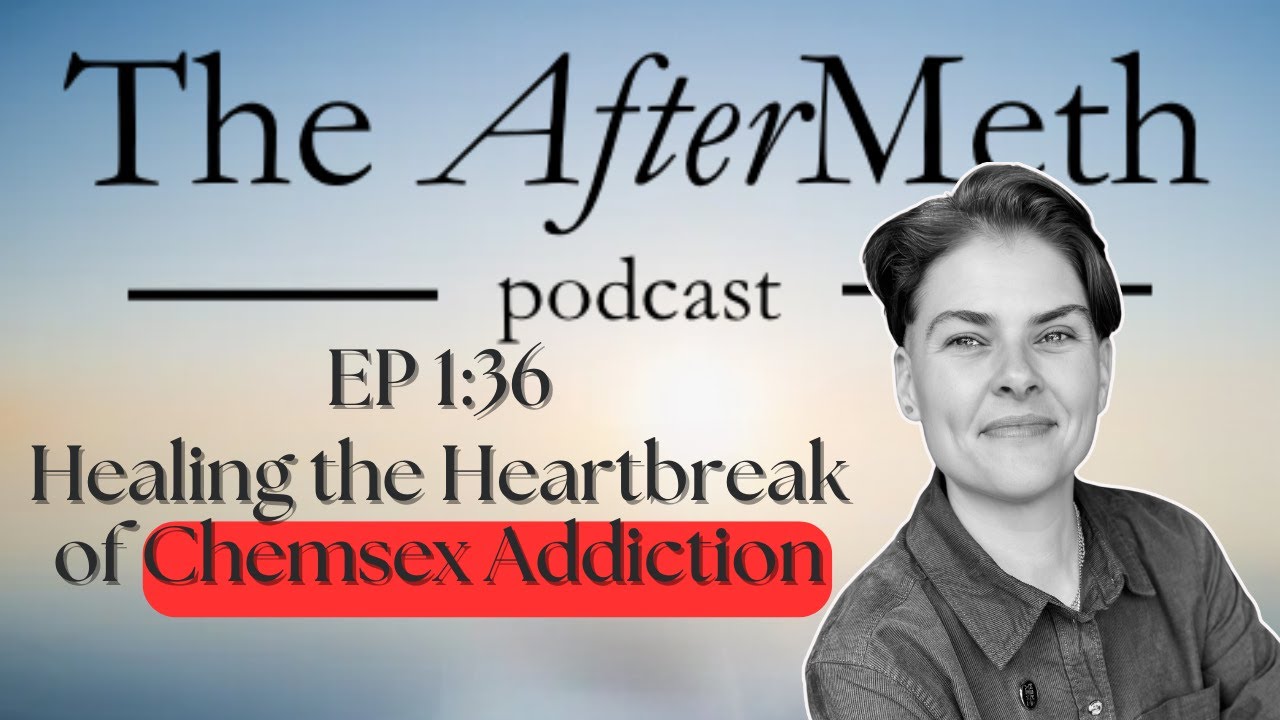
In this episode of the After Meth Podcast, host Dr. Dallas Bragg, a former crystal‑meth addict and sobriety coach, interviews Melissa McCracken (Mel), executive director of No Matter What Recovery Center in Los Angeles. The conversation explores the hidden, "invisible" injury of heartbreak that underlies chemsex and other forms of addiction, especially among gay men. They discuss how digital platforms like TikTok provide anonymity and a conduit for education and community, while also noting the risk of a "digital drug" that fuels relapse. The hosts differentiate acute trauma‑focused residential treatment from outpatient and intensive‑outpatient programs, emphasizing a biosocial, holistic assessment that includes physiological cravings, psychological belief systems, emotional hurt, and moral injury. Group therapy and community‑centered healing are highlighted as powerful tools for processing heartbreak and building empathy. They advocate for a digital detox, treating the phone and apps as a behavioral addiction akin to meth. Relapse counseling is framed around motivational interviewing, asking clients not "what will you do differently?" but "how will you be different in the world?" The dialogue delves into deeper themes of identity, belonging, people‑pleasing, and internalized homophobia, linking early childhood micro‑traumas to later addictive patterns. Boundaries for both clients and helpers are discussed, with an emphasis on self‑care, healthy selfishness, and avoiding over‑extension. Throughout, they use metaphors—mud on a windshield, Plato’s cave, a light bulb wrapped in string—to illustrate how trauma obscures self‑knowledge and how recovery is a gradual process of clearing that view. The episode ends with mutual appreciation, a call for listeners to revisit the content, and an invitation to reach out for further support.
Chapters
origin of, of heartbreak. And we can see a broken arm, we know what to do with a broken arm. Oh, we go, all right, you cry for help, you break your arm, you go to the hospital, they wrap it up, they tell you 6 weeks. All right, great. This is a physical, tangible injury. But I think so many people in this world, especially those who struggle with addiction and trauma and mental health issues, you can't see it. Which makes it even more pervasive.
Welcome to the After Meth Podcast. This is your host, Dr. Dallas Bragg, a former crystal meth addict, now sobriety coach. Join me on my mission to increase awareness around the epidemic of crystal meth among the gay male population and create a repository of resources for current and past addicts, as well as and especially for their loved ones. This is The Aftermath. Trigger warning, this podcast will contain discussions pertaining to drug and alcohol misuse. If you feel triggered to use or relapse, please call SAMHSA's National Hotline at 1-800-662-HELP. Also, if you are new in your sobriety journey and you feel like you could be triggered by discussions around drug Alcohol and sex misuse, please do not listen to this podcast. All right, now on with the show. Okay, welcome back to the Aftermath Podcast. Today I am interviewing a new buddy of mine from all the way across the country, Melissa McCracken, which I love saying your name, Melissa McCracken. I don't know why.
It's quite a handle.
It just rolls off the tongue. But I met Melissa where I meet most other people. TikTok. You know, TikTok. Who knew TikTok is bringing the world together?
Yeah, it sure is. And a much-needed togetherness too.
Right. That's right. You know, someone reached out to me the other day and he's like, I have a friend who is, you know, he needs a lot of help. I want to protect his privacy. And so he wouldn't give me, you know, he said, I can't give you his name. And I was like, okay. You have a friend who needs help. And I said, so maybe you could just suggest my TikTok page. And he went off the handle on me. TikTok. You know, I guess he, you know, a lot of people think TikTok is just dancing, doing dances and food preparation and, you know, life hacks or whatever. And it is a lot of that, right? But there's such a, there's such a side to it that's informational. And I think that's really what it was supposed to That's what it's supposed to be used for. I mean, that's what they— when it originated in China is what a lot of them use it for, educational purposes, right? But I didn't know— he ended up just blocking me.
Oh my goodness. Okay.
Yeah.
Well, such a wealth of knowledge available on TikTok and so much education and these different providers and different platforms are really connecting people in a way that we've never seen before.
Yeah.
And especially in the work that I do and so many others do, including yourself, it's, you know, people aren't always willing to come out of the closet, so to speak, to talk about an addiction.
Right.
Or to talk about substance use or to talk about mental health issues. So I think actually platforms like TikTok kind of provide some anonymity while also providing resource. So I find them to be very important.
Yeah, yeah. And there's something about that algorithm that I get comments, DMs a lot saying, I don't know how the hell you got into my For You page because I don't follow anything about addiction, but I'm a crystal meth addict, so I don't know how, how you got here. TikTok knows. It's probably listening to you. It was there when you—
I mean, we do very similar work, so I know how you got on my page. But yeah, there is some sense of knowing, even if, you know, you've done a search in the past or something, it might point you in the right direction of getting helpful resources.
That's right. I mean, if you Googled up PNP something or other, then it probably bleeds over to— there's a bot somewhere taking that information over to take—
Like, oh, you need help, honey. Like, we're going to put you over here. Let me introduce you to Dallas. Yeah, exactly.
Well, Melissa, would you introduce yourself to us, please, since we've been chatting away here?
Yeah. Yes. My name is Melissa McCracken. I go by Mel. And I am the executive director at No Matter What Recovery Center in Los Angeles, California. And we are a treatment program, right? So we offer a myriad of treatment episodes, but one of those being sexualized drug use and chemsex. But we also address mental health issues, other substance use disorder issues, and really just provide a full range of treatment resources for individuals that might need help.
And how long have you been helping chemsex addicts recover?
The chemsexuals, as I call them. Chemsexuals.
I love that.
Yeah. I have been helping them for almost 10 years, and I have worked in an acute trauma-focused treatment center for the last 8 and a half of those 10. Wow.
Acute trauma treatment center. So what is the difference? What makes it an acute trauma treatment center?
Well, I think the acuity that's needed, right? Like the clinical services that are needed would put someone maybe in like a residential treatment center versus like an outpatient program where someone is going in 2 or 3 times a week and they're just going in for a couple of groups. Acute treatment really It's residential, right? Residential and intensive outpatient. So there's a longevity of stay, and there's a consistency of services that may last all day versus, you know, an hour or 2 a day.
Yeah, it's interesting. It's hard to know, I'm sure, where we are on the spectrum of use, right? Because, like, people, People come to me and they— some of them get upset when they say I can't help them. You know, I tell them I can't help them. But if you have been using, you know, if, if you are at that point where you've lost it all, right, you've lost everything, you cannot stop using, you are not ready to be coached by, by me. You, you need a higher level of, of care and an acute trauma treatment. center. Um, the issue a lot of times is the availability of them. Is that right?
Right. Yes. And, and specific— specificities— that's one of those words that ties my tongue up. Um, but the specifics of treatment and what you're looking to get out of treatment are so important. And, you know, even with treating someone or helping someone or coaching someone, um, safety and stabilization is necessary, especially in the beginning phases.
Yeah.
And, um, even, even looking at like the continuum of care, like if you're unable to quit using and you're using, you know, once a day, twice a day, or even, you know, every other day, a treatment is a viable option for you because, you know, even if you have a therapist or a sober coach, you still need the structure and containment and, uh, you know, therapeutic space to help you kind of get to some of the underlying issues, which is why I think trauma is such a big piece of this that keep contributing maybe to relapse cycles or your inability to put something down.
Yeah, yeah, yeah. I always say quitting meth is sometimes the easy part because then you're faced wide open with the trauma you've been numbing, right?
Yeah. Detox alone is going to address the physical symptom, right? You know, the withdrawal phase and all of that. But it doesn't address like the psychological, the social and behavioral problems that often are associated with addiction or even, you know, continue to contribute to lapses.
Right.
So it's really necessary for us to kind of holistically look at all of the pieces that might make a person want to use again.
Could you talk about that holistic view? What are the pieces you look at in that case?
So I mean, there's so many different components. But like, as a clinician, when I am with a client, like, you know, I'm really looking at a biosocial assessment, right? Like, what are some of their physiological barriers, right? Like, how are their cravings showing up in their body, right? Are they Do they have impulse control? Are they able to ground themselves? Are they able to create a sense of resource and safety when a craving hits the body, right? And then psychologically, how is their mind thinking? What are they believing about themselves that may actually undermine the recovery that they're seeking, right? So belief systems are something that are more in the mind and less in the emotional body. I think sometimes our— I'm going to call them adaptive belief systems— actually protect us from some of the emotional pain. And working with the emotional body as well, I think there's so much unaddressed— I'm going to call it heartbreak, right? Heartbreak and hurt that I think needs to be processed not only in a therapeutic container or therapeutic environment, but I find a lot of the power in treatment to actually be in the groups. Right? Because that's where we're developing empathy and skills around what it means to actually be intimate with another person. That's where you're able to kind of let go of secrets and find like-minded people who are like, oh, right, me too. And that whole me too is, I think, one of the most powerful aspects about working with a group in treatment, along with individual therapy, of course. But I am a— community-centered leader, I suppose, where I know that as a clinician, someone's going to have access to me 1 hour or 2 hours a week. So I don't want the dependency to be on me specifically.
Yeah.
Yes, I'm here to help. And yes, let's talk about adaptive coping skills and all the things. But really, that leaning people more towards the community aspect of like group therapy as some profound state shifts, especially when processing through, you know, whether it's trauma or shame or letting go of stigma. Um, the, the groups with peers are so important, and that's a part of the treatment process too.
So you've talked about biosocial, you talked about emotional, you've talked about behavioral.
Yeah, I think where we left off, right? Um, really looking at like some of the behaviors that just aren't aligned with me, right? And those behaviors oftentimes look like dishonesty or acting out of integrity or, you know, going outside of my values, whether it's to people please, manipulate, get what I want, whatever it is. Like, there are a lot of behaviors, um, that really need to be addressed. And they can be addressed in treatment, specifically around chemsex. And, you know, abstinence is— a period of abstinence is always the recommendation. So when you kind of are able to put your phone on the shelf, you put the apps on the shelf, right? And that is— yeah, right. That isn't readily available in your hands. It's like having a drug in your hands.
Yes.
Every single day.
That's right.
If you're still on the apps, you're still talking to old using people. And that is really difficult for a person to recover from methamphetamine abuse, having this digital drug dealer in their hands every day.
Mm-hmm.
And so those are some of the behavioral stops and interventions that I think fare better off in treatment. I highly recommend a digital detox for everyone who's a chemsexual out there, because it's not just about compulsive sex or even substance use. You have this underlying process addiction of a digital device in your hand.
Yes.
Every single time. So, you know, the interventions are more around behaviors, but the processing is really around, you know, some of the psychological injury, some of the emotional injury, and some of the moral injury, which is something that I'm really leaning towards. It's like the things that hurt us the most are the things that we've done, actually.
Yeah.
Other people have hurt us, and I think that type of healing healing from, you know, heartbreak that, you know, another person may have imposed or hurt or even trauma. We have a roadmap for that type of healing. But when it comes to kind of the moral injury of where I have done things, I have said things, I've not shown up, you know, for my grandma's 80th birthday, like those type of things require therapeutic help.
Mm-hmm.
to kind of navigate and get through. Yeah.
Yeah. Wow. I don't know where to start besides I want to say that if you're thinking about treatment or if you want— you have a friend or family member who you think needs treatment, go back and listen to what Melissa was just saying in terms of what to look for and to look at here. And it sounds like you used, you used the word heartbreak several times.
Yeah.
And, um, I— that really resonates with me. I'm getting chill bumps right now, and I'll probably— I'm having an emotional day anyway because I've been displaced from my home by the hurricane, so I'm, I'm just kind of blah blah blah. But the heartbreak that I see and that I felt as my— as a chemsexual Too. You know, when your heart is broken, there, there's no, there's no chemical, there's no pill, there's nothing that will, that will fix that. But when it is broken, to me, you, you keep acting out the way it was broken.
Yes.
Is that right? Yeah.
There's reenactment that happens all the time, and it's almost trying to, like, create a different ending to the story of heartbreak.
Yeah.
So if I get, you know, back into this, maybe I can create a softer landing, or, you know, try and like heal or resolve the heartbreak that I originally felt. And you're just reenacting trauma. You're just repeating a vicious cycle of abuse, right, in order to try and, you know, put some salve on a heartbreak. And I mean, I'm a person in long-term recovery. And I don't know. I think we know how to identify a lot of other things. But when I speak to the heartbreak that comes from being a person in addiction, the internalized sense of like, oh, I'm disappointing friends or family. I am disappointing myself. I can't keep a job. Is there something wrong with me? There's all these ideas that stem from this origin of heartbreak. And we can see a broken arm. We know what to do with a broken arm. Oh, we go, all right, you cry for help, you break your arm, you go to the hospital, they wrap it up, they tell you 6 weeks. All right, great. This is a physical, tangible injury. But I think so many people in this world Especially those who struggle with addiction and trauma and mental health issues, you can't see it, which makes it even more pervasive because we want to be able to see an injury. But this is one of those injuries that can't be seen. It can be talked about. A story can be told. Um, but I think in a recovery space, in a community space, it's actually held. With supportive hands and with other people who carry the same injury. Yeah.
Well, and you know, these heartbreaks, they're so subtle in our lives. You know, I think that you could be 5 years old, and you needed mommy. But mommy said she's too busy for you. Or whatever, right? You know, and that's a heartbreak. I'm a bother. Yeah. You know, why are you always crying? Why did I have kids? Or something like that. You know, that 30-second snippet can be your heartbreak, and then you start believing that I'm a bother. You know, I'm a burden.
Right? And then we're walking around, oh, just 8-year-olds living from that lens.
Yeah.
Of all these tiny heartbreaks, these little micro earthquakes. And, uh, you know, yes, there's big trauma, right? Big, big T trauma. That's what I call them.
Yeah.
Like, uh, you know, violence, assaults, those are all very big T event-generated trauma. Like, there was a big event, and then there's, you know, these are the symptoms of being a traumatized person after a big event. But symptoms look much different For someone who has had a complexity around little traumas, right around those little moments, because we are formed and shaped as humans in these little moments. And then we, we have belief systems as a result of neglect or a lack of emotional support or whatever that is. But like, we, we begin to form these ideas about who we are. And who people in the world are as well.
That's right.
And if I'm always told that, oh, you know, not now, I'm too busy, not now, I'm too busy, guess what? As an adult, like, I still have this idea from being a 6-year-old and being told that there wasn't space for me, that I'm a bother, that I'm a burden. And so that person is probably going to have a lot of difficulty when it comes to asking for help. Because they have this idea that there's not help available because when they have asked, they have been rejected or just left alone. So it's all of these little T's that really start to formulate big belief systems about who we think we are and what's available to us. Yeah.
Yeah. It's so good. It's so good because I have so many chemsexuals. I'm gonna start saying chemsexuals now. Chemsexuals say, I use because I'm horny. That's not it. Like, it's not the sex, you know? Yeah, you feel like you're a bother. And guess what? You're going to get into relationships with people who make you feel like a bother.
That's right.
You know, and you're going to view the whole world that way, and you're going to interpret every aspect of your life, whether it's work, And friendships, every family, as I'm a bother.
Yeah, yeah.
And that the way out of that, the only thing you know to do, and this is all subconscious, much, many times, right, is you found a miracle substance that makes you feel like a part of something and you're not a bother anymore because you can do and say and be anything you want. It's like a free little ticket, but of course it comes with a price.
Oh yeah, very high price. And, you know, in having the privilege of probably working with, you know, thousands, uh, mostly men but many genders, you know, in the last 10 years, the one thing that I have deduced from all of this, and also being a person in recovery, is that people are just looking for a sense of belonging, a sense of inclusivity, where it doesn't matter what I look like, it doesn't matter what my status is, it doesn't matter, you know, how thick or thin or tall or short or all of that goes away for a second. And I'm actually in a space of feeling included.
Yeah.
So I know a lot of us, especially queer folks, very queer, have this idea that I don't belong or that I'm always excluded or that I'm bothering someone or something. Just because I have a very basic need to find a place where there is open-ended acceptance. A lot of folks are willing to sacrifice their sobriety, their lives, and their connections in sobriety for just a moment or just a sense of what it's like to belong, even if that's for a second.
Yeah.
And there's, you know, we, we start to sacrifice our integrity as humans for just a sense of belonging or connection, uh, where maybe symptoms of trauma don't exist for a moment. Maybe my shame is gone for a moment. Maybe stigma around who I am as a sexual being is gone for a moment.
Yeah.
Uh, the, the flooding of externalized oppression, or even some of the lateral violence within the community towards one another.
Right?
We're, we're a bit unhealed when it comes to that. And I wish we would talk to each other, uh, a little bit softer in the way that we speak. Um, when you're using meth, it eradicates that emotional consciousness, right?
Mm-hmm.
So whether it's trauma, whether it's mental health, whether it's shame-based belief systems, or, you know, the senses of fear, all of these things, um, sex is the last on the list. Like, people have this idea that, oh, I'm just horny. Oh, I just want to go use because, you know, I want to get off, or whatever that is. And I would really invite, you know, anyone who's listening to really do a reappraisal of that idea.
Yeah.
And what it means, because, you know, I would say 9 out of 10 times, it's usually you're just looking for a place to belong or to feel included and to not have to carry the burden of unresolved trauma into your relationships.
Yeah. Yeah. Yes. Yes. Thank you. And you are the expert. So I'm so glad and happy and grateful that you just said that.
I would say I'm a really good listener. I hear you say that. And I say, thank you very much. And I say that, you know, along with my own experience, school doesn't teach you much about this, Dallas. But being a good listener does.
Yeah. Yeah. So yeah. Yeah. Thank you. So let me ask you about relapse. This drug, from what I can tell, and we have a common friend, Dr. Fawcett. I saw him commenting on your page on Facebook. But some of the figures that I saw from him that he presented once was about the, the fact that getting sober from crystal meth, statistically, you relapse more than you will with other substances.
Okay.
And so how do you counsel people who are just relapsed, like chemsexuals? Like, how— what are some, some pointers you have that we can maybe get away from the crushing shame of it and maybe leverage the experience. Do you, do you work with people in that way?
Oh yeah. I mean, for chemsex, it's one of the highest relapse rates in the country. Yeah. Okay. Right. And there, there are a ton of reasons that go behind that. And I really think that it is the fusion of meth and sex. Right? Because just like, you know, sex is like food, like, for most of us, unless you're in the asexual camp. Yay, my asexuals. But, um, you know, we need that. We need to feel desire. We need to feel attraction. And around relapse, I see people just enter that process too soon of going right back into sex. Right?
Mm-hmm.
Um, so, you know, I, I ask people this question, and, and I think there's one question I find a little overused, right? Which is the, what are you gonna do differently this time? Like, okay, yeah, I'm sure there are behavioral changes that maybe you weren't willing to make, and now another relapse has brought you here, and you can do that. But I want to know more, like, how are you going to be different in the world? What were you aligned with that was in truth and authenticity?
Hmm.
Subjective to you and your experience. We all have a different set of morals and values and all these things. But the minute someone steps out of their alignment with those is when I see them relapse. And I'll see them relapse again and again because they're being— they become dishonest or they're acting out of integrity or, you know, they are living in the shame of secrecy. Like all of these things that might not actually be aligned with the truth of who they are.
Hmm.
And recovery is a process of recovering. And I really think we are recovering, like, the truth of who we are in our very essence in this journey. So what do I say to them? How are you going to be different in the world? Not what are you going to do different, because we can do all the things till the cows come home. But how do you want to orient yourself towards a life that's living in recovery? What are your hopes? And these are all casualties of addiction. You lose sight of your hopes, your dreams, visions, your ideas, your wants, and, you know, eventually just who you are. So it's like bringing back in those things and really using like some motivational interviewing I find to be very important in helping people orient their life towards truth. The truth of who they are.
Right? Yeah. Yeah. Recovery is really, like you say, it's a journey back to self. Right? It really is the self of who you were before all the trauma.
That's right. Before all the slings and arrows of life kind of hit you. Right? And we all have— I call it mud on the windshield. Right? Which is there are, you know, we come into this life, whole view looking through an open windshield. And then, like you were saying, boom, we're like 5 6 years old, and we reach out for help and someone doesn't have time for us. So there's a little bit of mud on the windshield, right?
Yeah.
And then there's all these other, you know, slings and arrows that create a barrier between us and thinking and seeing clearly. Like sobriety itself just translates in its rarest form to clarity. That's what it is. So it's like, how can we wipe some of that mud off the windshield So we have a clear view and a clear picture of who we are in the world and who we want to be. Like, I'm all about, like, not, you know, what do you want right now? I'm asking bigger questions to my clients. Why are you on the planet? What are your gifts? What are your talents? Like, what are you here for? Right? I mean, my mission statement is to live my life to the best of my ability through the lens of love. That doesn't mean that I'm all woo-woo and like, you know, soft and fuzzy all the time. Sometimes love is a hard no.
Yeah.
And a big yes. So really getting folks who struggle with relapse time and time again in touch with a life orientation that reflects and resembles who they are as a sober person, they're heading towards something different. They're not doing something different. They've taken a 2-degree shift towards something different.
Yes. Yes. Oh, what question?
Yeah.
Well, what if I said to you, well, I don't know who I am? How do I live in integrity with who I am when I don't know who I am? Mm-hmm.
I love this question.
This is— this is—
let's find out is my response to that. Let's find out what brings you joy, what ignites your playfulness. Like, this is a big opportunity, right? So much possibility. And by the way, as a clinician, the clients that come to me and say, I don't know, oh, thank God, because I get so many that just know so much. And I'm just like, hold on.
That's a mission here.
The price of admission in this, you got to give up everything you think you know.
Ah.
So if you, if you're coming in and you're saying, I don't know, great. Yeah, you, you're already 25% in.
Yeah, right.
And let's find out. Let's do, let's do an exploration. Like, let's see what types of food you like. Maybe you're tasting, uh, you know, a partner has changed. Like, There's such opportunity on the horizon from a place of, I don't know who I am.
Yeah.
And I also think that there's a— I go in with the assumption that everyone kind of has a core sense of their own being, right? And this is a big assumption I make, and I will continue to make this assumption, but there are certain behaviors that don't resonate with that, right? And whether that's using substances to avoid, to cope, to numb out, um, in the reflection we find the direction. And so if I can pin it all the way back down to just 2 things that I value about myself, like, what do I stand for?
Okay.
Well, I stand for human rights. Good place to start.
Yeah. Why?
Why is that important to you? Finding meaning. You know, I think about Man's Search for Meaning, a book that was written by Viktor Frankl, who was a psychologist who was actually imprisoned in Nazi Germany and went to a concentration camp. He was stripped of everything. All of it. And I'm not just talking about tangible things. I'm talking about his humanity. And so he started documenting his journey. And at the end of the day, he was released. And he said that the most important thing that we can do is to make meaning out of our suffering.
Hmm.
And we have all suffered. That's the human condition. If you're on this planet. Yeah. And where do you make meaning? How do you spin that into gold? Yeah, that is— that's the lamplighter. That's the way. So I like finding out what's meaningful to people, finding out, you know, why they value certain things. I think that will begin to kind of unlock who a person is.
Yeah.
Or reveal that to themselves after addiction.
Yeah, yeah. Yes.
Yes.
Wow. And that's, that's so important to— it's this perspective shift, like all of this, to me, spiritual growth, emotional growth, mental growth, growth out of recovery is one perspective shift after another. And if you can shift that perspective of this suffering, was for a reason, right? This suffering was, uh, was a crucible for me to get to a higher place, you know. And so what, what can I now dig out of this, you know, instead of so focused on— I know there's, I know there's a lot of shame and a lot of trauma about what you did, you know. And, and I, you know, for me as a father, I burned down the lives of 2 innocent children who never asked for it. I drug them down with me.
Yeah.
And to— I could still be focused on that. I could still be in that circle of shame. But I see now we went through that actually together to get to where we are now at the highest level of relationship, I think, a parent and children could be right at this moment. Because we, we went through it, you know, I just, it's so important, like you're saying, to spin, spin gold out of, out of this. And because if, if you can shift that way, to ask, how can this have been the best thing that's happened to me? What can be the best part of it? And I'm willing to see it differently. That can really—
yeah, right? Yeah, yeah, absolutely. And it, you know, what do I want to give my attention to? Because I think one of the most valuable things that we possess as humans is where I put my attention. That is, that is what separates me from any other species on the planet. I have voluntary direction, meaning I can put my attention over here to my grandma's bed box that's in my kitchen, or over here to these tulips on my— you know, I have the ability to shift my attention.
Mhm.
And I can either replay and recirculate the same thing over and over and over again about like the destruction of my addiction or the devastation. And yes, there's a period of time for processing all that that I think is really important, but you also have access to choice when you're a sober person. So that means I get to choose where I want my energy to flow.
Yeah.
Right? And these kind of— I think these work hand in hand, which is I need to process through some of the pain or whether harm has been done to me or I've created harm and caused harm as a result of being a person in active addiction. Yes. But there comes a point where you're able to kind of go in there and grab the little nuggets. that might lend to a gift or a talent that is yet unrevealed to you if you would just take your attention away for one second from the pain of it.
Yeah.
And look out, how can this be useful to others? How can this be useful to me? What is it I need to know about myself to put in an intervention from me walking out the door next time. I think that there's just so much available in that willingness. You had the right word to shift my perspective.
Yeah.
Just for a second.
Yeah.
Instead of staring at the same old shadows on the wall.
Yeah. Yeah.
You know the allegory of the cave, right? Where they have— they have— it's a So it's Plato's Allegory of the Cave, and it's pretty much about coming back into the light again. And, you know, all these people, they think they're chained inside of this cave, and they're watching these shadows dance on the wall, and they're all mesmerized by the shadows, right? And they, they were told that they are chained to the cave and they can never leave the cave. And the The cave leader is, is the one who can name all the shadows on the wall. Oh, this is that time where, you know, I was forgotten at school, or this is that person who bullied me through high school, was really mean, like, and can spot all the shadows on the wall. And then there's one person who realizes you can get up and you can walk out of the cave, right?
Mm-hmm.
And they go and they're like, oh my God, I'm not chained. Okay, so they make a decision to stop watching the shadows dance on the wall because they never change and to walk out of the cave. And they walk out of the cave and they're immediately blinded. And this is much like recovery because their eyes have not seen the sunlight.
Right.
In years.
Yeah.
So once their eyes adjust, something new comes into focus. Something different arrives in their eyesight and they see a different world. And so they run back into the cave and they're trying to tell everyone, we are not chained, y'all. I don't know who sold us this lie, but y'all gotta go just right up the hill. Yeah, I promise you. Yeah, everything is just right on the other side of getting out of here.
Yeah.
And a lot of folks will choose to stay in the cave.
Yeah.
And many of them in the allegory and not be let out into a place of light because they are so used to the certainty of the shadows dancing on the wall and what they mean that they are unwilling to even look down at their feet, see they're not chained, and unwilling to walk out.
Yeah.
Recovery will blind you at first. Oh yeah, it will blind you at first.
Yeah, yeah.
The sunlight of the spirit might burn your skin if you ain't got your sunscreen on. But Really, it provides a lot of comfort for many people, and I acknowledge that, myself being included.
Yeah.
It's, you know, know the horrors and the terrors that have, you know, plagued others, plagued myself, you know, in life. It's easier to know that than to walk out of the cave.
Right. That's right. Yeah. Yeah. Yeah. Thank you for that. There was a newsletter that I put out asking, are you addicted to being addicted? You know, are you comfortable with the chaos?
That's right.
Are you attached to a role that gets you attention? Like always being on that, I'm going to relapse, I'm going to relapse, I'm triggered, I'm triggered, you know, because it gives you the attention and the validation and the note, you know, the notoriety, the noticeableness that you need, right?
Right.
There's a lot of questions there. And, um, you just— and you can't— how do you move forward if you don't know where you're going? Also, in terms, like you said, imagining, envisioning who I'm going to show up as, as a sober person. It gives your subconscious a flash of, oh, this is, this is better. Yeah, better. This is, this could be a better life.
Mm-hmm.
And so what you're— what it— that just came up for me in terms of what you were saying about this cave, in that we get so just comfortable with it. And sometimes we get sober for a while and life becomes quote unquote boring. And we miss that. We miss watching the shadows. We miss the chaos. We miss the— all the stuff we had, right?
Mm-hmm.
The other part of that too is that a lot of guys, when they start getting sober and they see a better life, they think of all the friends that— the friendships they made, the user friends, and they want to go back and, and help them.
Yeah, that's— yeah, I get that a lot. Oh, I'm just contacting this guy who's using in the name of service.
I know. Come on.
No, you're not.
I want him. But, you know, they—
you—
the relationships that you form as 2 chemsexuals together seem so strong. They do. You go into— you cut right through, hey, how you doing? to let's get naked and talk about the most vulnerable parts of my life, which is I like to, you know, lick armpits and I like this and this. You know, you go right into that. I know for me, the icebreaker used to be, let's— we're going to shower together first. That's the icebreaker here. Yeah. But so you do form a, a bond, whether it be a real bond or a fake bond.
Okay.
But I'm telling— well, I want to bring this up in terms of I know you care about them and I know you want them to be happy too. But when you go back in that cave, you risk being mesmerized by those shadows again and miss that life, and you won't come back out.
That's right. Yeah, you're lucky if you make it out, especially with, uh, drugs these days and the differences.
That's right.
And I, I always, you know, make this suggestion: if there's someone that you're concerned about and you didn't listen We do create bonds, whether they're counterfeit, whether they're real. I mean, there's still a bond there. There's still an emotional bond, and there's still like a mental memory of the bond. Um, if that's really what you're up to, give them your sponsor's number.
Yeah.
Give them somebody else's number in the recovery community who maybe has a little bit more time than you and who You know, if you're fresh out of the cave, it's going to be really inviting to go right back in as soon as, like, you get a little bit of a sunburn or your eyes start to hurt.
Yes.
But pass that along. If you're truly there for service and care of another human being, and I got 30 days and I know someone in my home group has 5 years, then I'm gonna go with the person who has 5 years. And I don't— I can take that off me, and I don't have to be the person with 30 days that not only risks my sobriety but might put another person in harm's way as well.
Yeah.
So yeah, I think there are ways to work with that and to honor and validate that, like, yeah, these are really intense bonds that feel very real. They may not be true, but they feel real.
Yes.
And I want to, like, definitely, like, acknowledge, like, that realness in that. And also, I can know that I'm not the person.
That's right. And that's, that's that self-love no, right?
That's right. Yep.
That is that boundary that I need to do a whole podcast on boundaries.
Yeah. And I mean, I always frame boundaries as just, they're not for you, they're for me, and they're my limitations, right? And I Part of loving ourselves is to learn our own limitations and what I am capable of doing and what I'm not capable of doing and not pushing myself in any extreme in any direction and keeping my sense of integrity looks like acknowledging boundaries and limitations, right? Especially when it comes to involving other people.
Yeah.
Like, listen, I get, I get that lion heart of a person in their first 6 months who's just like, I wanna help everybody at that point. Yes. Put a mirror up because it's your time now.
That's right.
There will be time for all of this and pass that on. But right now, this is time for you.
Yep.
You're the person who needs your help the most in the beginning stages.
That's right. That's right. Healthy selfishness is required here.
Yeah. I agree.
Yeah. Yeah. Because some of these people pleasing tendencies of, I don't want to make them mad. Like, in the beginning, I have some clients who don't want to, and I say, block your users if it makes you feel better. Do it. It's a temporary block. Temporary block if that makes you feel better, right? They're afraid of them being mad at them, you know? And I'm like, your life is at stake here.
Right.
Whether or not they're mad at you is inconsequential. Like, you— it's okay if they're mad. Like, right, right. It's okay.
And it's not, it's not mine to manage if they're mad. And, and like, even, even with this, I, I think about like, you know, a lot of the work that ACA does, Adult Children of Alcoholics, and there's a lot of people pleasing that comes up from children who are from dysfunctional families or families rooted in alcoholism or addiction. And, and one of those things is, is not wanting to make someone mad, or people pleasing, sacrificing my identity, you know, uh, to care more for someone else. And it's really rooted a lot of times in childhood trauma.
Yes.
Because we were reliant on our caregivers, right? So if my caregiver, you know, likes the sheets folded in a certain way and I get in trouble every time they're not, Guess what I'm going to do? I'm going to keep this on schedule. I'm going to fold the sheets exactly like you want them. I'm going to continue to sacrifice my own integrity and my own identity and my own authenticity because I'm reliant and dependent on you as a caregiver. And it becomes a survival state. It becomes a fight or flight response, that people pleasing.
Yeah.
It's such a small word to describe what it's like to grow up in a situation where you are reliant on a caregiver that requires so much from you all the time.
Yep.
And there's no space or room for actually who you are because you're so busy on just trying to not get disconnected. Because your survival is threatened.
Yeah.
So it's like if someone were mad at you, maybe you got beat, maybe there was, you know, assault, bullying, anything like that. So you would be willing to do anything that you can to not make people mad at you to protect your safety.
Yeah.
So we have a real softness around that.
Yeah.
Right. And it's also like, this is how trauma unfolds.
Yeah.
The trauma is not something about what happened then. It's about still living in it now.
That's right.
And what's happening right now. And if I am heavily engaged in people-pleasing processes that forsake who I am, then I'm gonna bank on, say, 98% of the time it's rooted in trauma and the threat of survival.
Yeah. Yeah.
Yeah.
And that's where that— a lot of us queer people know this firsthand because being queer was what it was, folding the sheet wrong. Right?
Right. Yeah. Who I am personally is the wrong—
Who I actually am at my core is wrong. Right? So we have to split into 2.
Yeah.
And we start hating that part of ourselves that's queer. Yeah. And that is so—
It becomes a whole separate identity.
That's right, right. And that internalized homophobia is so huge in the chemsex world too.
Yeah, yeah, it sure is. And, you know, I always ask this question because this can kind of root it out, so to speak, is when did you first discover your differentness? How old were you? When you first consciously knew that you were different. Because from that point on, oftentimes people spend a lifetime trying to disguise their differentness.
That's right.
And so all of the protective systems that come around that, whether it's people pleasing, whether it's addiction, whether, you know, it's overcompensation or, you know, overachieving, All of these are coping skills and protector parts that originally stem from the first time someone may have noticed that they're a little bit different.
Yeah.
So you start to disguise yourself, and all of these disguises— going back to the mud on the windshield— this is the mud on the windshield. It's how I've disguised my differentness.
Yeah, yeah, yeah. The mud on the windshield is this is equivalent to what I say, which is, you know, you, you, you're this perfect light when you come into the world, right? Like the Buddhists call it an obscuration.
Mm-hmm.
And I call it like, I, I kind of act like I say you have this light, like a light bulb. Those comments and those, that conditioning that we go through is like stringing a lot, having a string wrapped around the light bulb. It's every time it's obscuring your light just a little more. Same thing with the mud on the windshield, right?
Right. Yeah.
And it's all those things start wrapping around, and all of a sudden, who you are is hidden. Because who even, you know, who you think your identity is, is really an illusion a lot of times, because you've allowed your identity to be written by the outside world.
That's right. Yeah. Other people. And we sacrifice that and have to in so many places and spaces just for basics of human survival.
Yes.
And I mean, eventually I'm thinking about stringing a light bulb. Eventually that's going to get hot and it's going to burn up or it's going to explode. So, you know, it gets tighter and tighter and tighter.
Yeah.
Until when someone comes in and says, I don't know who I am.
Yeah.
Because I've spent a lifetime living for other people. Yes.
Yeah.
And being forced to live for other people.
Yes. For survival. Right. That's what you said. Yeah. Yeah. And so that's the work. That's the work. And let me tell you, it's 6 years for me now. And I'm just now in a relationship. And I feel like I'm brand new in recovery because it's bringing up all the new stuff. You know, this guy, he's half my age, okay? You would never guess because I'm the one that's like— because he was saying to me, I can't see you this weekend. You know, he, he has boundaries. He's healthy. He knows, you know, he's prioritizing.
Right.
But to be a stab, you know, in the heart, because like you said, the nervous system does not understand linear time. It understands emotion. So the emotion of hearing him say, I don't have time for you. Sorry.
But hold on, let me ask you this question.
Okay.
Did he say, I don't have time for you?
He didn't. That's what I heard.
Goes right in.
That's what I heard.
Yeah.
And it took me right back to a situation from my earlier, you know, in my childhood, uh, you know what I mean? And so rejection and all that stuff. And I, I, you know, I had to go. I have these woods where I go and I talk to the trees and they help me. You know, and so I'm out there screaming and crying and holding on to this tree while people are running by, because I'm just saying, I'm saying, I'm willing to see this differently. I'm willing to see this differently. And it came to me, you know, the whole thing came to me about what was really happening.
Hmm.
And, and what I'm saying all this is the work isn't all— isn't ever done either.
Yeah.
No, but it's so beautiful on the other end, you know, the, the stuff this kid has brought— and I say kid, but it has brought up for me— has made so much more space.
Yeah.
For more just good, rich love for myself and my— more space for my clients, more space for the world.
Mm-hmm.
Um, and so, and I think the difference is, like you were saying earlier, is going back to heal that while moving forward is everything we do is infused with the consciousness we do it in. And so when you go back to heal, if you, if you approach it with curiosity instead of condemnation, it's a, it takes on a whole different, a whole different flavor, don't you think?
Yeah, absolutely. Instead of overly personalizing something or berating myself or belittling myself, you know, even in this example, I mean, you want to find out who you are, get into a relationship. That's what I always tell you.
Oh my God, man.
Like, highly— it's like, spend time with yourself and get to know you before we bring another person in. But like, really, you will find out what needs your attention.
Mm-hmm.
You will find the places and spaces that need your healing.
Mm-hmm.
Right? And you have to have the capacity to be able to even withstand your own curiosity about that and not give in to, like, these old ideas too quickly. And I think this is kind of why we— I, I say overall we, because it's like in the rooms and treatment, like, yeah, don't get into a relationship in your first year. Grow your capacity to be curious, like we're saying. And then after that, like, you can approach these situations with curiosity.
Yeah.
As opposed to, like you said, condemnation, right? Like, I'm condemning this person, I'm condemning myself. Or because you got to work on kind of healing those faulty core belief systems, healing trauma.
Yeah.
That may actually interrupt your ability to interpret sensory data.
Yeah.
Which is, you know, him saying, hey, I have a lot of stuff to do, would love to see you, but I'm not going to be able to. And Dallas receives it and is like, I don't like you. You know, like, I get it. Listen, I have— I don't got to go into my personal experience with that, but I have misinterpreted many things. Like, someone tells me, take the trash out, and I'm like, oh, you think I'm a slob? Oh, yeah, exactly. And then I'm ready to fight.
But there's no point.
It's literally like you just asked me for a need to be met.
Yes.
So, I mean, giving space and time for those things, you know, doing some work on yourself, letting it settle, and then, you know, healthy relationships that are satisfactory and fulfilling and kind and gentle, those are on the other side of that.
That's right.
If I, if I'm coming from the defensiveness of unresolved trauma, It's going to be a little bit more difficult.
Yeah.
And for those that are in a relationship, I mean, you get to know your partner or partners again too in a much different way. And I think, you know, family counseling and guidance around that, because a person is so raw when they are coming out of active addiction that everything is going to sting and everything is going to hurt and everything is going to be sharp. And sometimes a period of distance is a recommendation.
Yeah.
Because we need time to heal in the same way that broken arm needs 6 weeks.
Yeah.
And you may need longer depending on how it's healing. Yeah.
Right. Yeah. Yeah. Yeah. Yeah. Yeah. I never, I never really got the whole wait a year thing. I say you might want to wait longer depending. But yeah, it just opens up a relationship, just opens up So much more, you know. And thank God, I thank God that I first took care of a lot, but two, that I found someone who— the patience, the spaciousness, the acceptance this man has, you know. And I can tell him, I, you know, I, I'll say, you're talking to my 4-year-old right now, but because you won't see me this weekend, I am so hurt, you know.
Yeah.
Like, yeah, I was having a tantrum. I was having a tantrum and he just sits back. Okay, okay, whatever. And then I come back and say, okay, the trees took a bear. The trees helped me. I'm fine. Um, but you know, having somebody who has the patience for that too is— that, that takes a while to find.
I think it does. And that's a slow walk into that, right? And having, you know, you may be a curious person and inviting someone else into a space Curiosity can be incredibly intimate. Yeah, right. And it's like, yeah, I'm trying to understand me more, I'm trying to understand you more, and then there's the we more, right? Like, how can we understand each other? Yeah, differently.
Yeah.
Even like having awareness to say, oh, you were talking to my 3-year-old, like, that's a lot of insight and awareness. It takes a lot to get there.
Yeah, yeah.
Feels like I'm in my adult body when I'm saying that, you know?
Like, yeah.
Yes.
Yes. And one thing I say in my content a lot too, and to my clients, is you think that the boss that triggers you as a 45-year-old is about him.
Mm-hmm.
It's not. It's never about him. It's about something else before. It's the same emotion, probably as a, you know, between 0 and 7. But probably as a 6-year-old, there's something about that that's connected.
Yeah. And that's reminding you.
Right. And that's such a big clue to recovery. Who in your life is your biggest trigger? What in your life is your biggest emotional trigger?
You know, that's your greatest teacher right there.
Yes, exactly. That is the one.
That is the sage. That is the mentor. Like, let that be like Listen, never miss a good triggers opportunity. Yeah. Hey, we don't want to waste that because, you know, Sally who comes in my workplace and, you know, speaks to me in a tone that reminds me of my mom. Oh man, she triggered me.
Yeah.
Let me, let me investigate this, right? This is the invitation, right? Just in the same way Pain is the invitation. Every trigger is an invitation to a higher way of being.
That's right. Yeah, yeah, yeah. Wow. I think this has been my favorite podcast so far.
I have so enjoyed talking to you, Dallas. I'm so glad. Listen, y'all, I, I never reach out to people on TikTok. And then I came across Dallas's posts and it really resonated with me in a deep way. So here we are. This is one action of someone reaching out to another who is in the same field and finds meaning in the same thing. So I'm really glad we got to do this.
Me too. This has been amazing. And I feel like this is going to help a lot, a lot of people, even more than it's already helped. Already, so I appreciate likewise. I appreciate you, and I really hope we can do this again.
Yeah, please. Let's too.
Yeah.
All right. Reach out if anything. I'm here for it.
I will. And if there's any contact information that you want us to put in the show notes, if you want, if there are people who you know, if they reach out to you, please give me that. Otherwise, guys, I hope that you will listen to this episode. More than once. Take notes. There will be a study— there will be a study guide always with my podcast that will be available as well. So in that being said, I will see you all next week.
Thank you.










