EP 1:39: From Padded Room to Recovery Professional: Russell's Story
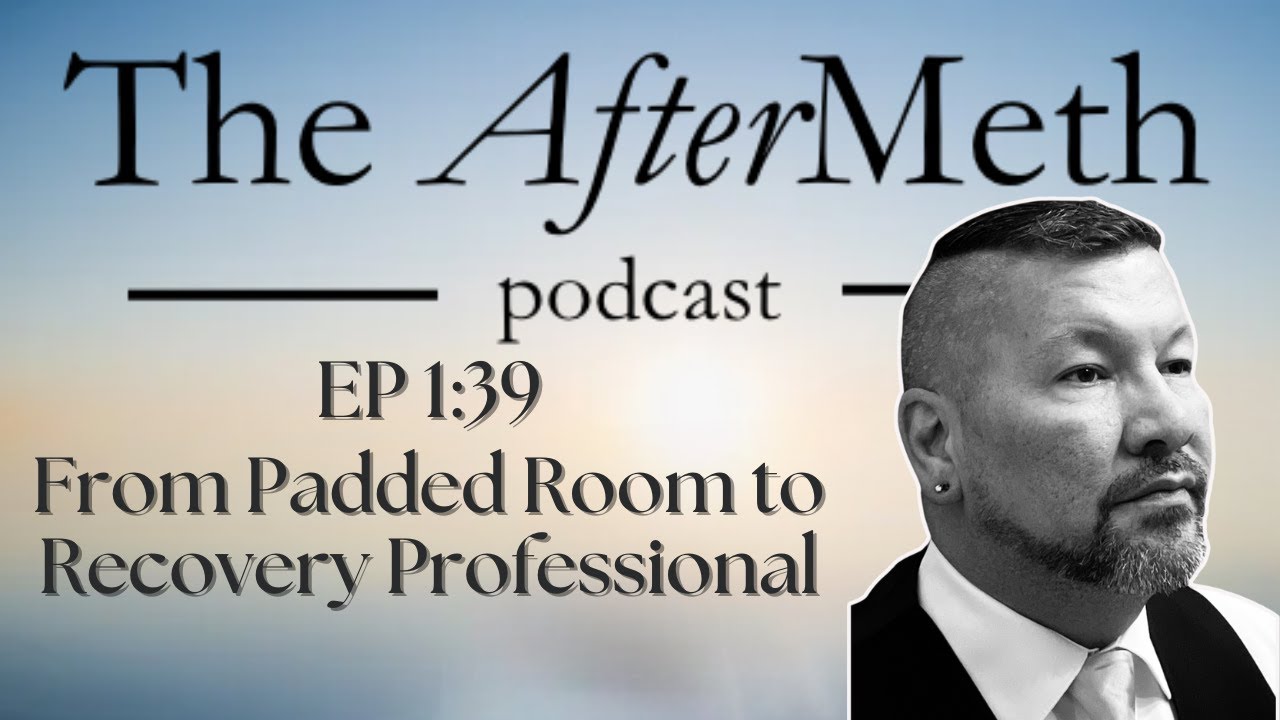
Russell Campillo, a 46-year-old former crystal-meth user and certified peer specialist, shares his path from a mental-health crisis in a padded room to long-term sobriety. Crystal meth has a 92% relapse rate, with only 5% staying sober after three years without treatment. Russell emphasizes that recovery requires honest self-assessment, personalized support networks, and harm-reduction tools like fentanyl test strips.
Chapters
Hey, y'all. Today's podcast features a recovery story that I think you'll enjoy of Russell, who hit a rock bottom but built a beautiful recovery life, even published his story online through a peer-reviewed research site. A part of what he says that I'd like to extract from this episode is that he differentiates between the word user and addict and has made me reflect pretty deeply about the words and semantics we use. In the recovery industry, there are lots of words tossed around, like clean instead of sober, or slip-up instead of relapse, etc., etc. And many people have commented to me on social media how that I make too big of a deal about the words we use. For instance, I personally don't feel comfortable with saying, I've been clean for X amount of days. Okay, what were you before? Dirty? Just because you developed a maladaptive coping mechanism and used methamphetamine does not mean you were a dirty or flawed person. That coping mechanism could have been overeating, bottling up your emotions, self-harm, etc. A plethora of things. The people who chose those types of coping mechanisms aren't referred to as clean or dirty. And it puts me in mind of referring to someone who does not have HIV as clean. And, well, that's a whole other soapbox you can hear about in my episode with Mark S. King. The word addict carries a pretty negative stigma these days, and I have DMs on a daily basis from guys asking if I think that they are an addict. And I tell them, there is not a certain amount of drugs you use that classifies you as an addict. And the fact that you are dwelling on a label means that you are going down the shame spiral anyway, and someone has been shaming you along the way, which is not productive for recovery. Some people use drugs and some people don't.
That's how I look at it.
I have guys who party with meth once a month and they think they fall in some elevated category compared to someone who uses once a week. You are both putting methamphetamine into your body. You are both using drugs, period. My message has been and continues to be one of removing the guilt and the shame that we are pummeled with from so many recovery programs out there. And that often begins with the words we choose. So let's remove addict from your vocabulary and begin to see yourself as someone who uses meth and begin to see yourself as someone who doesn't use meth. It's that simple. Who are you and how do you show up as someone who does not use crystal meth? That way you aren't labeling yourself as a dirty addict hoping that one day you'll be worthy of being clean and sober. So many labels, so many definitions that are just in the way of your progress. All right, enjoy the discussion.
This notion that Russell's talking about, about creating art, I hear it over and over. Create— creating art but never actually finishing it or destroying it. That's so common that I hear in— with this drug in the creative process. So I think that's something to look for if you suspect you have a loved one who's using it. Welcome to the Aftermath Podcast. This is your host, Dr. Dallas Bragg, a former crystal meth addict, now sobriety coach. Join me on my mission to increase awareness around the epidemic of crystal meth among the gay male population and create a repository of resources for current and past addicts, as well as and especially for their loved ones. This is The Aftermeth. Trigger warning, this podcast will contain discussions pertaining to drug and alcohol misuse. If you feel triggered to use or relapse, please call SAMHSA's National Hotline at 1-800-662-HELP. Also, if you are new in your sobriety journey, and you feel like you could be triggered by discussions around drug, alcohol, and sex misuse, please do not listen to this podcast. All right, now on with the show. All right, welcome back to the Aftermath Podcast. I'm your host, Dr. Dallas Bragg. As you know already, if you're enjoying this podcast, and many of you are because our numbers continue to rise. Please like and share, rate and review the podcast. I would love to see you share the podcast on your social media. I share it every week. So just go to my social media and reshare. But I'd love to see you do that. And if you tag me in that posting, and maybe we'll have a little surprise for you. I don't know what yet, but something. But I'd love to see—
get—
I'd love to see the podcast get in front of more people who need to and would benefit from hearing it or watching it, especially loved ones of meth addicts. So as a part of me going out and finding interesting guests that could help you as a meth addict, former meth addict, family member, I am trying to get some professionals, some researchers, some There's going to be a urologist on soon. There's going to be a nurse, another doctor. And today we have someone who has been a published researcher who actually has a history with crystal meth, with crystal meth misuse. I am going out and finding people to— possible people to join the podcast. I found Russell's article online, which we'll talk about in just a minute. But before we get started, Russell, could you introduce yourself to us, please?
Sure. My name is Russell Campillo. I'm a 46-year-old cis man, gay man, out, you know, whatever, that is a certified peer specialist, certified through the state of Missouri, community health worker, also certified through the state of Missouri, and have another a couple other letters behind my name just because of the work that I've done in order to learn more stuff. I'm a former meth user. I like to say that I'm a person in long-term recovery from amphetamines and stimulants and was very fortunate, you know, to, perspectively speaking, have a really short time in that realm.
Yeah.
But still, it affected my life in 1,000 different ways that it affects every— lots of people every single day. And I'm just— I can recognize now at 46 that I'm pretty fortunate as to where I was compared to where I am now. And I currently work as a tattoo artist. I've worked in HIV services as a person living— also living with HIV and— Um, mental health disorder and just kind of going through all of those things and, uh, coming back to a normal life, you know. I'm trying to just keep it together and do the best that I can with what I got.
Thank you. Thanks for sharing that. Yeah, you have a lot in your toolbox. So your article is published on professional websites. You could actually find Russell's article also on National Institute of Health website. I'm going to put the link In the show notes, but I found it was very concise but powerful in the way that you brought the information up here. And I think it's going to help you as someone well, even if you're not struggling with meth addiction, if you're trying to understand it, Russell presents the statistics here about it's 92% of crystal meth users will relapse at least once in their recovery efforts, right? And the success of crystal meth users to continue sobriety. after 3 years without rehab or treatment is only 5%. These are— this is crucial information in understanding that this— the recovery from this drug is a bit different. And it helps you set the expectation, I think, that, look, relapse is bound to happen. But I think what's important, and you've heard me— all have heard me say this, is how we respond to it. Um, but let's talk about relapse in a minute, Russell. I wanted to ask you one thing that, that, um, stood out to me is that you said in the beginning of your use that you were able to read a book for the very first time and you were creating stories and art pieces. Can you talk about that? How did that come about? Was that light use or how was that?
So essentially, like, some of us are like kind of Dive headfirst into everything. And so I, I have family members that I'm, I'm wildly experienced on the, what I could say on the Al-Anon side, which is people who are learning how to process and deal with others' addictions. So I have a sister or I have, you know, a parent or something, you know, aunt and uncle or I mean, it depends on the individual, but we all have a relative of some sort that has some sort of addiction that, you know, and if you don't, it's very fortunate that you don't have to go through that process. But I started out really slow. And I would say that I had an experience with a person that was like a hookup experience. I'm not a hookup person. But what I realized was that I was really struggling connecting Like, uh, making stronger bonds with people. And over a period of time, I'm like, I, you know, everybody was using substances. I, and I knew that, um, working in the bar scene and, uh, having been in several different bars in, in Kansas City, I knew who was who and what was where at the time. And, um, you know, I, I knew that I could ask people. And I could talk about it. But what I didn't know is that I had my own experience already, which was a really negative experience. And so I started actually, I would say, I don't want to say research, but researching like what this looks like. If I were to do this, what's going to happen to me? And so I had a gentleman that was like, come over, there's no expectation. I had questions what PNP was because I still didn't know. And so we just basically— I had the discussion with him. I was like, what is PNP? He's like, party and play. And this is kind of what it means to me. And he said, but what I'm going to do is please come over. There is no obligation again for you to use substances. I am willing to share with you the experience that I have had. And some of the experiences that I know of or I am familiar with. Plus, I'll show you and I'll tell you about the drug itself. And so we sat down and we had a conversation. He explained what PMP was, took off his shirt, had a huge scar from open heart surgery and was on oxygen and was just a really genuine person. And that We talked about the drug itself and what happens to his body. And this is what it feels like. And I connected with him really, really well. And only a couple of times just to, you know, we had really great conversations and we haven't really talked since, but he's still surviving. He's still out living life and doing the best that he can with what he's got. And The experience is that I have a 30-year producer and somebody that I know that has been sober now. And so I watched that person really go through hell. I mean, arrests and, you know, abuse and violence and all of these other things and children and like— Potential loss of their kids or getting kids back. And it was just, I was just like, okay, well, I'm going to do it anyway. So I did all of these negative things despite the fact that I saw those and I have like interpersonal experience with others. I want to say like on a sideways level, I guess. But like, I still made that decision to go forward. And so what I figured out is that at 46, I still have undiagnosed what I would consider ADHD of some sort. I don't want to say it's a deficit because there are some things that I'm like, boom, boom, boom, boom, boom, I got it. It's all good. And but I still struggle as a reader. And so like school, I really was challenged in school reading and Comprehension. And probably about our era, we had the 9th grade proficiency tests, right? And so we had to go through in 9th grade and pass these tests before we graduated high school in order to graduate high school. And so I was unable to pass math and I was unable to pass comprehension until I was a senior. And I retook those tests consistently. And so it was really, really difficult, but eventually I did. And my parents that were raising me found another school that I could go to and apply everything that they were teaching me. That is why I graduated high school. And I'm so thankful for that because it was mechanical. It was— I was working on things with my hands. But they were teaching me the math that made sense and teaching me the reading and the logic behind like how to get through these things in order to fix something. You know, so we had like a construction class, we had a— I was in diesel mechanics. And then as when I started using, it was the first time I picked up a book and I actually read through the whole thing. And it's a fantasy book, like Lion, the Witch, and the Wardrobe, but it was this big version. And I liked the movies a lot. And so I read through the entire book for the first time. And I never read another book since. Because at that point, I started writing what I would call gay smut. I wrote some gay smut. And just have a couple of little writings that I really enjoyed. They're They're very good. They're also living a life in and out of the BDSM and kink communities, like that tracks, you know, so, and additionally, additionally to that, I started really kicking into my photography. I was traveling a little bit more, I was working. I had a really great job that I enjoyed. And the trigger for all of this to happen was there was an accident at one of the jobs and I was fine to start with. And then I started doing this other stuff as well. And then there was just a huge— big thing about it because the company that I worked for 100% supported me. I was, you know, honest with them about what was going on. And it kind of worked itself out to be that the people created a frivolous lawsuit. But I went after that and started using, and I started using heavy.
Hmm.
And so I was concentrating on art, but I was then wrapped up in art so much that I wasn't making anything. And then I started destroying things as I was producing them.
Mm-hmm.
And it's kind of like, you know, I got a copier machine I pick up off the side of the road because, you know, free stuff, whatever. And then I take it home and I start taking it apart. And the art became more of a, I'm just working on stuff and not making any progress ever. And so in order to start connecting with people, I started using and started learning what to do and how to connect with people, both physically, emotionally, and sexually. And then it stopped and went the opposite direction where I was just using and I wasn't really connecting with people. And I also stopped having sex. So it's— yeah, that's the short version. Yeah, it's pretty in-depth at some points.
Yeah, yeah, yeah, for sure. Thank you. Thank you for sharing that. I want to go back to something that, that I've heard a lot, and that is some, some guys say, if somebody just would have told me the consequences, at least I would have thought twice before I put that pipe in my mouth or needle in my arm.
Whatever.
Some people, and you mentioned this, you knew kind of what this drug was about, but you did it anyway. Do you think that, that when we get to that point, is it because that we think we're going to be different, that we're the outlier, that we won't be like them if we use it? Do you think that has something to do with it?
I think what it has to do with is that we as a gay culture strive to be part of the crowd. We want to make friends. I remember when I was a little kid asking somebody if, if they would be friends with me, who was like in an area that I grew up, who was a hood, you know. And so they were always in trouble and they were— had already been to juvie or, you know, whatever. But the The concept of feeling connected is we are human and that is what we do. We're animals.
Yeah.
And animals want to be connected with other animals. And it's— I mean, you can watch, you know, Nat Geo or National Geographic or read it in a book or whatever. And the concept of being connected with people is not just as easy and simple as it sounds. Because, you know, in the gay, you know, gay scene, especially leather and BDSM, and there's a lot of different judgments where, oh, you're not leather enough, you're not gay enough, you're too gay.
Yeah.
Maybe your hair is pink today, but it's, you know, brown tomorrow, and tomorrow you look normal. And today you don't. So I'm not attracted to you that way. But I would say just that knowing ahead of time what I was doing did not change my mind. It made me more comfortable with the concept of connecting with people in whatever way it was.
Okay, I see.
Yeah.
The thought, the weighing of this will connect me just kind of drowned out any kind of negative consequences because that's such a desperate need, right?
Yeah.
Wow. Interesting. Interesting. And I want to note for family members who might be family members and loved ones who might be listening to this, this notion that Russell's talking about, about creating art I hear it over and over, create— creating art but never actually finishing it or destroying it. That's so common that I hear in, in with this drug in, in the creative process. So I think that's something to look for if you suspect you have a loved one who's using it, is this always working on a project and always just about finished. You know, I mean, I can relate to that too, but never getting there. And so that's something to look for that I don't think people really connect, uh, if you're not— if you haven't been in and used meth, that you may not be connecting as a sign and symptom of your loved one being using.
Yeah.
Um, I wanted to ask you, so you first were connecting with people and then you said you weren't having sex and weren't connecting with people On the drug, were you just isolating yourself after that?
Yeah. So essentially there was like, there's a sexual connection and this is kind of what kicks it off for what I would say in my experience and communicating with other folks that have used is that the sexual connection is what kicks it off. And so we're using, we're having sex, It's over, we go home. And then it becomes we're using, we're having sex, we're using a little bit more, um, you know, masturbating together, whatever that looks like, um, and then we're going home. And then we're using and we're consistently masturbating forever and ever and ever.
Yeah.
And trying to hook up with people. And that's the same process in like the artistic processes where Trying to connect and nobody ever shows up.
Yep.
Or we don't ever show up, or they don't ever show up. And, uh, it's just like this repetitive process. And then you get into— um, I would say that I hear people that have— do mushrooms or take acid will get stuck in a time loop. People who use amphetamines get stuck in a time loop and they don't realize By the time it's, it's been 17 hours, it feels like it's only been like, you know, a couple of hours that you just got there.
Mm-hmm.
Um, and we— it's the whole concept of what addiction actually is, is that the addiction and the, the substance becomes Part of that. And so initially, like, so I would classify myself as demisexual, just meaning that I need to get to know you a little bit more and have an emotional connection with you. And then I can find you sexually attractive. That doesn't mean I don't necessarily find you sexually attractive. But it means that I need to have some sort of connection with you for my body to physically connect with you. In a sexual way. And so the process of adding substances allows me to avoid that. Yeah. So it's saying, I don't, I don't really need to know you. I just want to have sex with you.
Yeah.
And so over a period of time, it was, I was using and having sex, or attempting to. And then it became that I was just using with the person and I was hanging out. And it also kind of extended as the road got longer that I was the person that was supporting the people that we get our drugs from and making sure that they had a safe place to stay or something to eat or a ride or, you know, what have you. And so we basically get into a realm of like, here's the fun part, here's the fun part, and it's starting to get a little rocky, and then it just stays rocky.
Yeah.
There's a fortunate few of us, I think, that can use substances and stop and function on a regular basis. But it is not for the majority of us who— it doesn't work that way.
Yeah, yeah, yeah. So what, what was the key factor that made you get sober and get out of that, that cycle?
So the beginning of the end for me, as I call it, is the— I was in the process, and I will not mention names or what was happening, but We were on our way somewhere and to connect with some other people and we wound up on a highway and I started freaking out and the rental was in my name. Everything was in my name.
Because you took care of everybody, right?
Yeah. Yeah. So, and, and we can talk a little more in depth, not online about that. But the, the process was, I was like, man, I'm so tired. I'm so tired. I hadn't eaten. I hadn't slept in, I think, 6 or 7 days. And naturally, our body, when we are sleep deprived, will hallucinate. Our body will start shutting down. We won't be okay. And our mental health starts to show up where we didn't have mental health before.
Yeah.
And substances can create mental health and mental health can create substance use. So they aren't always synonymous with each other, but they run into each other a lot.
Never heard that. Yeah.
And so essentially I wound up, we had to stop and I made a call to my mom and was like, hey, here's what's going on. And she goes, I don't understand what you're saying to me. And so when I was talking to her, I was like, "I need an ambulance." She heard. So I walk into this place, and there's four police officers sitting inside the building, and I have the phone like this. I have my hand on my leg. I walk in, like grab the door. I'm feeling set up at this point. So it was bad. It was bad, bad. So what I did was, is we had a conversation that she could get my attention. She goes, okay, you need to let me talk to somebody who was there. And I handed the phone to the police officer.
Oh.
And she goes, this is my son. We talked about it last year, actually, for the first time. She goes, this is my son who is— who has called me. I know it is my son, but it is not my son. I do not know what is wrong with him.
Hmm.
And she was very— she's been an Al-Anon— Al-Anoner for— God, we moved here in 1998, so she's been going to Al-Anon since like 1998, 1997. And she was oblivious.
Really?
And had no idea.
Wow.
And so I was what she would call— she's like, you were always my good kid. I was never going to worry about you. And she said, like, I had your sister under wraps. I knew where she was. I knew what was going on. This and that and the other thing. We talked all the time. But you, I did not expect it. And so essentially she talked to the officer and said, my son needs an ambulance. That is the one thing that I have heard, because the officer couldn't understand me either.
Yeah.
And so they called an ambulance. She goes— I got the phone back and she goes, let me talk to the person working at the place that you're at. And I'm like, okay. And then the phone— she goes, the person that is outside needs to give you the keys for that vehicle, and you need to tell him that he needs to call a cab and leave.
Hmm.
And so she knew at that point potentially the severity of what was happening.
Yeah.
And so that is what happened, and we parted ways at that point. And there was, there's other discussions that happened later, and You know, things kind of washed themselves out, which I was very grateful for. But the essence of that is that we don't really know what we're getting into. And I wind up going into a mental health institute that night in this— in the city that I was in. And so it was just wild that, you know, they came They came and got me and I was like safe for the next 2 weeks at home, you know, with my family. But while I was in there, I was in a padded room. And there's a couple of little funny parts that I giggle about now because I, you know, why would you? So you're in a padded room and I'm literally like hallucinating and hearing things and seeing things and all of these things because I haven't slept. And then I've got the substance in my body as well.
Yeah.
And so in the back of this room, there are 4 switches on the wall. Why would you put instructions on how to exit the room and think people just aren't going to read them? So I hit the switch and the door opened and I walked out of the room.
Huh.
They forgot the straitjacket, I guess.
Apparently so. They had not given me any shots to go to sleep yet.
Wow.
But that would come. And so, I started walking toward the door. Nate Burley, the black guy, picks me up and he's like, don't come out of this room again. Shuts the door. I'm like, okay, fine. There's 3 more switches and I have to go through the whole process to get out. And so, I do. And, by the last time, I was hauling ass to the double Automatic doors. And he snatches me up and I'm like, I lay my head on his shoulder. And I mean, he's twice my size. I'm only 5'6. Like, he's twice my size and like 400 pounds. And I lay my head on his shoulder and I went, so you know what? He goes, what? I said, you awfully cuddly. He starts— I can feel him start—
Oh, just giggling.
Rock you. And giggling.
Oh, giggling.
Yeah, he— so he starts shaking like this and he goes, little dude, please, please don't come out of there again. He said, because I don't, I don't want to have to wrap you up.
Yeah.
And I said, I won't, I'm done. He said, okay. He put me in the room and, uh, they wound up having to give me 2 shots and I don't know what it is, but it They made me pass out, which normally they give like a half a shot to somebody and it works. And I was— I had figured out later about the size of 4 pencil erasers is what I had eaten to feel better at the point that I was just— was really so tired.
Oh, okay.
Yeah.
Wow.
So I would say it was probably about half the length of my pinky and about this big around. And when you ingest that much and you're already in a bad way, things don't stay well for long.
Yeah.
And so the beginning of the end was a mental health hospital, which also subsequently got shut down later on down the road. But I just— that was the start. And that was 2014. I came back home. I was sober for 184 days right from the, right from the get. And I moved in by myself to a place. My partner and I had split up after 2 and a half years and was feeling good, had a good job. I was working for a trash company, driving a CDL. Got on a— got into running that and was doing really well. And then I hooked up with somebody, found out that they were using. And that was, that was a relapse.
Yeah.
For me. And so hookups and hookup apps and dating apps become a huge trigger and play a huge role in this. And it's not— and in my opinion, The app that starts with a G.
We can say grinding. We can say grinding.
Grinding, and you are grinding your teeth. What does that sound like?
That's right. Right.
Yeah. It's made for this.
So yeah.
Oh yeah.
Oh, don't get me started on that.
Okay.
We don't have to get me started on that.
But like, that is, that is how the first relapse happened. That's how the second and the third relapse happened. And then I had a little bit of sober time and I went and I stayed in a safe place and, you know, what I thought was a safe place. And I still believe that it is. And prospectively speaking, like, we just have to know where we're going to be safe and where we feel safe is where we are safe.
Yeah.
And so we get into that process and I have another relapse. snorting Adderall. And I was, I was like, this is exactly the same effect.
Yeah.
And it feels horrible. And I was starting to have consistent hallucinations. And I also teach through Missouri Institute of Mental Health a stimulant overamping education class. It's about 2 hours long. And one of the things we talk about is that No matter, no matter the amount of stimulants you use after you've stopped, you know, if you have hallucinations and mental health, it seems to us that once— let me back up. It seems to me once a hallucination starts and you stop using, no matter how little or how much you use in the next time, Mm-hmm. Maybe you relapse or maybe you go back to using. It seems that those hallucinations and the mental health disorders immediately kick in again.
Yes.
And they don't stop. And so I never had hallucinations previous to substance use. And as soon as they started, they stayed started. I've been off probably close— April will be 8 years that I haven't had Meth and other stimulants. And I still, in a normal mindset, have hallucinations, and I will start feeling paranoia. And I know that that's my personal experience. And some folks are just fortunate that they never have any of those symptoms.
Yeah.
Yeah.
Yep.
Yep. Yeah, I think that's so This is important for you to know if you are in an end of trying to stop. What we don't understand is many times with this drug, just like Russell's saying, is that you pick up where you left off and maybe it's 6 months down the road. It doesn't matter. It seems like this drug just pauses the effects if you build up to this point where you're paranoid and you're in psychosis or schizophrenia or whatever, you think you take 6 months off, you're kind of starting over, or it's not going to be as bad. It picks up where you left off. I mean, this, this is just— I don't, I don't know that there's studies out there on this. Um, I'd like to find them if there are. I've been looking for them just to try to prove to people that this is like a, you know, a scientific research-based statement that I'm making, but this is anecdotal from, from my own use. But also, I, I talk to, to people all day long, every day, all day about this. This is something that happens. So this is why, yeah, it's just, you, it's, it, you have to be careful. The other thing that stands out to me, Russell, is that you're saying after 8 years there are still some symptoms that linger. I think what I see When when men are trying to to quit is that they think they have a time frame in their head. Okay, I've been sober three months. I've been sober six months. I shouldn't feel anything anymore. My cravings shouldn't be there anymore. I I should be free and clear of all the symptoms. It does not work that way either. Listen, I've been six years without crystal meth. I still get cravings. I still have using dreams. I still at the gym. my veins will bring on this, a vision of a needle, and then my body reacts.
Mm-hmm.
The differences are, is that you are in a better place to process the symptoms, process the cravings, and understand and accept that they're there. But what we find is after 3 or 6 months, you think you should be in a certain place. So you have that craving and it, you just say, oh, I'm a failure. And you just go back to use, or, oh, this is, I, I'm hopeless. This is never gonna work. You know, it's this defeatist kind of mentality that we get that really makes the difference. It's the perspective that you see these things in and accepting that, look, you put meth in your body, there are consequences. But the difference is the tools in your toolbox to process them. Would you agree with that?
Yeah, I think that the more tools that you have and the more, you know, and I don't I want to veer away, like sharply turn left away from conspiracy theories. Um, but the not Googling things is a huge important tool. And I, and I, and I say that very strongly. You can Google things and get valuable information that is, that is accurate. But there are so many Miseducated and misunderstanding people that create biases related to people. Like, there's a difference between an addict and a drug user, period. Just because you use drugs doesn't mean that you're addicted to them.
Yeah.
Just because you're addicted to drugs doesn't mean you use them. So it kind of varies in many different ways. But like those tools, my tools were not rehab. And I'm really, really lucky. And I tried multiple times to quit on— I would say in my experience, it takes about 5 times for somebody to attempt recovery for it to sink in and for it to start actively working. And I would say that's about my experience, like 4 or 5 times.
Yeah.
Yeah. But I use therapy. I use speaking to other people. For the first time in a long time, I moved— like, I live in— bought my house. And for the first time in a long time, I was living by myself. And so my partner, we were dating across the state and basically said, did you let any— because I stated that I was feeling weird about it. And they're like, did you tell anybody that's close to you? I'm like, I'm telling you. They're like, no, no, no, no. I mean, like, that lives over there. And I'm like, oh, that's a brilliant notion.
Mm-hmm.
So I called somebody and said, hey, you and I had a conversation before that, you know, you knew about my substance use. I said, but I'm living by myself right now and I don't know what's going to happen. And so I have a little bit of fear that's facing that. It's understanding and being able to talk about your fear. with somebody else who would be and make themselves available when you need support. Maybe they're not experiencing substances, maybe they are. And sometimes some of our closest reactors are people who may not be in recovery.
Yeah.
But they want to support us in our recovery because they also want that. I don't know how many conversations I had Because while I was using with people, like, listen, maybe we should go to a meeting and we, you know, do the other action and talk about an NA book, or we talk about all this other stuff. And then it started sinking in for some of them, but not everybody. So not everybody's ever on the same page, nor do we have the same brain capacity to use the same tools in the same way. So I think the more tools that you have in your toolbox, as you were saying, is like, yeah, is priority, is key.
Yeah.
You don't have to learn them all at once. You're not going to learn them all at once and you're not going to learn all of them.
Yeah.
Because your recovery might be based in a 12-step program versus my recovery where absolutely not, because every time I went to a 12-step meeting, I would get high afterward.
Yeah.
So I really don't, you know, I don't want to experience that. So I need to figure out what works for me.
That's right.
So, and I think if you're trying to support others, you need to acknowledge that your recovery is not going to be the one for them and just say it outright. My recovery may not be for you.
Yep.
But I'm also, I'm also an advocate for 12-step meetings because they work for a lot of people.
That's right.
A lot of people, I'm advocate for church. If it works for you, go use it.
Yep.
If abstinence and you staying in your house and reading and going to work and working on the car and working on the yard and hanging out with the dog, staying single, being by yourself, no phone service, you know, whatever that is.
That's right.
Use that. If that works for you, use it, but connect at the same time as best you can. Yeah.
Yeah, yeah. Thank you for all that. That's exactly what the message that I want to get out, get out here, you know. Um, you just keep trying. There's that, you know, we throw around the cliché in the 12 steps of it works if you work it. And I always say it works if you work it, if it works for you. And, you know, is that you have to keep trying. Just like with a therapist, you know, a lot of people try once and it doesn't work. Well, therapy doesn't work for me.
Yeah.
No, you have to keep trying. You have to shop around. That's why there's so many therapists out there, right? Um, there's so many sober coaches, there's so many different programs, um, recovery programs, or not, like, like you've done. Um, you just keep trying until something works. And even if something half works, you keep it, like you're saying, in your toolbox. One thing I want to say too that was interesting about sharing. And especially even if people aren't, they don't have a history of addiction, these people want so badly to help you. And so what I ask, I ask men is, do you have a support network? And they'll say, well, yeah, I have this friend and that friend. They know about my drug use. Okay, they know about your drug use, but do they know about the nuances of crystal meth use in with a man who has sex with men. It is different. It's unique. You need to almost write a, a job description and give it to them as a— it's— you have to educate them on what their role is, what exactly to look for. If you don't hear back from me in 12 hours, there's something wrong, right?
Mm-hmm.
And, and so on and so forth. You have to really tell them what you need. They need to have your, your location shared. They need to be looking at you at this hour and that hour, 2 AM, You know, you have to really be specific if you're serious about creating a support network that can hold you accountable. You agree with that?
Yeah, I do. And I have, I have 3 people, one who has passed away, unfortunately, that have my, my location. And if I date somebody, that is something that I don't, I don't require it. I don't always even ask for it. But like, My partner is trans, and so, and specifically transmasculine person. And so what becomes dangerous is if they're new to where I live, and they lived in many other states, but this is not a safe space for them. The laws aren't safe in Missouri for them. And so would they go somewhere. They haven't made any friends. They really have no connections. I'm like, you don't have to share your location with me, but if you feel comfortable with doing that, go right ahead. I'm going to share my location with you because it keeps me accountable. Because if you want to look and see where I'm at, you can look and see where I'm at. That's not to track you. It's not to do any of those things. It is to know that you're safe. Because if you, you know, you say you're going to go somewhere over here, I'm contacting you and you're not responding to me. And I don't, you know, maybe I'm not used to how you process through visits or whatever, because my partner will put their phone down and visit with folks and not pay any attention to their phone. They're very intentional.
It's nice.
And I'm like, but in 2 hours, If you haven't connected back with me, and we kind of have that sort of agreement, like we'll check in once in a while. I'm gonna look and see where you're at. If you're at the same place, okay, fine. If you're somewhere else, I'm gonna call you and be like, "Hey, what's going on?" Or yeah, did you guys move? Or you know, because the phone can get stolen. You know, whatever, whatever, whatever. Sure. But I think that getting that connection together is really important. You don't have to share. your location, but I would recommend sharing a location with at least 2 people.
Yeah.
Um, and, and, and that's it.
Yeah.
You know, and say, hey, I'm sharing this with you for this reason, because I know you love me, I know you care about me, and I'm still out here doing what I'm doing. And if you can't find me, well, you have a way to do it. So, you know, whatever. Yes, it's a long story. Yeah, but yeah, I agree with that.
Yeah. So in your recovery, you've become an HIV peer educator, you've become a community health worker and a certified peer specialist. I know you're, you're doing tattoos now.
Yeah, right.
Um, so obviously you recovered and you were giving back What would you say was probably some of the top qualities of people who overcame meth addiction in working with people? What would you say they need to have?
Honesty. Honesty is the number one thing. And I can say this because what I recognize with the clients that I worked with is that they, if I talk to them, Openly about my substance use. Let me back up just a tad, because if we are in a— if you work as a therapist, if you work as a doctor, if you work as a nurse, something like that, the general consensus is don't share your personal stuff with patients.
Yeah.
Don't share your personal life with your clients. That can be So it could not be further from the truth, because what's going to happen is if you share an experience with a client, that client's going to be like, what did you do? Because right now they're like, what am I going to do? What am I going to do? What am I going to do? And so if I share my personal substance experience with somebody that I know, I'm doing it intentionally to say, listen, It is possible. Let me share this with you and let you see where I'm at. And I think that, like, you don't always have to share, like, gory details of what's going on. You can share the gist and people are smart enough to pick it up. You don't have to dumb everything down.
Yeah, right.
And I think that that just, you know, yeah.
Yeah. Okay.
Honesty. Honesty. Um, and, and honesty has so many different layers in addiction, right? Being honest about where you are. You know, I, I was, um, in rehab. I would never— I, I went to, to rehab. Well, it was IOP. Um, I was court-ordered to go, but they weren't going to let me out because they knew I was not being completely honest about where I was Yep. I, I had this mentality that I was better than everyone there. Um, it was a state-funded institution. I was an, you know, I was an executive before I became a meth addict. So I don't know, there was something about admitting that I had a problem that took a long time for me to do. But anyway, at the, at the end, uh, I didn't know, but they had already decided they weren't gonna let me out. Let me go. And I sat down and I said, you know what, I'm really scared about not being here. I think I don't know that I have it in me to say no. And when I don't have the safety net of peeing in a cup 3 times a week, I don't know that I can, can keep from using. And that statement, as counterintuitive as it seemed in my head, that statement was what let me out. Because he said, you're finally being honest about where you are with your addiction.
Yeah.
And you've let down your walls. And so there's something in that too that set me free in getting it out in the open, shining a light on it. You know, it wasn't a secret for me anymore. And what a statement that I thought for sure was going to keep me in rehab actually set me free from it. Um, and so honesty has many different layers in this. Um, and it just— I'm glad that you said that because that is, to me, probably the number one quality that we have to have.
And I think that that's one to go along with that is our secrets keep us sick. So if we don't talk about, you know, maybe my leg hurts or my side hurts or my back hurts, somebody's going to want to go on a hike and I'm going to be like, But I'm gonna go ahead and go on the hike anyway because I want to be with my friend or whatever. But if I tell them that, why don't we go find a flat place to go walk instead? You know? And it's just that little, little teeny tiny thing that seems so complicated sometimes that, you know, if we get our secrets out, we'll know we're going to stop being sick.
Yeah. Yeah. Yeah, yeah, yeah. And I think that goes into boundaries too, right? Um, you can't have boundaries if you're not honest about what you want and what you don't want and where you are and where you're not at. So yeah, good point. Um, I know that you have to, to skedaddle soon, so I just want to wrap this up by asking you, um, Russell, what have I not asked that you wish I had of? Or what's something that you would love to to get into this discussion that we haven't?
I think if I were to think really hard about that, I think the discussion of what he says On what is the cartoon? They poisoned the waterhole. So poison in the drug supply.
Oh, oh, yeah.
So there is poisoning in the drug supply. And we know the thing that's not really being talked about is that there's a certain sentiment that drug dealers don't care. And there's a certain sentiment that they don't, they don't give a shit if you're gonna die.
Yeah.
That might be leaning toward the truth.
Hey.
But the simple fact is that they are still human. And the guilt that I know that people have felt that have been in those situations is pretty high.
Yeah.
You know, what does that look like? But what is happening is that there is a poison in the waters, in the drug supply. We know it is fentanyl. We've been so worried about the overdose crisis for opiates and heroin and opioids and fentanyl and all of this stuff. And I think that fentanyl test strips are what need to be used. I think that they need to be legalized across the country. Because what that's going to do is that's going to keep people safe. It's going to cost the government a lot less money.
Yeah.
And I think when we do harm reduction and allow people to safely use substances in monitored environments, there is a company in New York City called OnPoint NYC, and they are 2 of the country's first safe use sites for folks that use substances.
Hmm.
And Sam Rivera is, I would say, a leading, a leading man in experience, personal experience, and safe experience. And their organization has saved Countless lives. Um, I want to say it's over 1,000, but that number might not be right. But it is supplying oxygen to folks that might have respiratory depression. It is helping them survive even potentially without Narcan.
Wow.
And so it's also just being able to understand, like, our friends are dying from Stimulant use. And it's not just an opioid crisis, it is a stimulant crisis as well. And I think that we need to start paying attention to the stimulant crisis too.
Yeah.
A little bit more.
Yes, agreed.
And being friendly about it. If somebody's using drugs, I know it's hard to watch sometimes, but If they're okay, let them be okay.
Yeah.
If they're not okay, help them.
Yep.
Yep.
That's right. That's right. That's a good—
thank you for saying that.
And that's a good segue into something that I've been meaning to fit into the podcast, is that I do have, uh, people from around the world asking me, saying, how can I do this safely? You know, and, um, and I'll help them with, you know, like, like some people are worried— there's some guys that are worried about their teeth. You know, and they think if they booty bump it, it protects their teeth, and they are wrong about that. It's not the smoking of it, it's the dehydration of your gums that—
Okay.
That ruins your teeth. And so I helped them with— with me, I had a jug of water by me all the time, and it was a jug because I had— it was something I couldn't miss. Because, you know, when you're in the meth state, you lose stuff constantly and you forget, you know. But this jug of water was there. Biotin spray. You know, there's, there's a list of things that I— a list of ideas that I'll give people that if you're going to use, let's do it in the safest, most, you know, the harm reduction way possible. And so if that's you, contact me and we can talk about that. I am more than happy to, to lend a hand when it comes to, look, I'm going to use anyway, but how can I do it in the safest way possible?
Yeah.
Yeah, yeah. Well, Russell, this was, um, this was good. This was a very good, um, conversation. And, um, I just applaud you for what you've done, and I applaud you for making it so public out there, but also giving us an alternative to show us that there are many, many routes to sobriety.
Yeah.
And you don't have to have rehab, you don't have to have 12 steps. All of these things are good. But, you know, I think for recovery, it's all about empowerment, self-empowerment in deciding what works best for me. I'm going to cherry-pick what works. And I'm going to create my own program. And to me, that makes the best route to sobriety.
I think one of the biggest things is connection. And, you know, my, my version of starting was trying to connect with people and having stronger bonds, which I was I felt like I was failing miserably at. And later on down the road, I figured out that I was not really. I just didn't see it. But it is still connection, connecting, connecting, connecting, connecting with other people, whether they're using or not using, and being open and honest about, you know, where you're at in your life.
Mm-hmm.
And just, you know, being there and being present as best you can. And allowing other people to be present with you, I think, is a huge key.
Yeah, yeah, yeah.
Love it.
Thank you. Thank you, Russell, so very much. And I wish you all the happiness, you and your partner. I'd love to have— I would really love to have a discussion around trans issues with addictions. If you know of anybody that could help me out with that, I would love to.
My partner is also in recovery.
So, yes. Yeah, let's do that because that's a, that's a, another segment of population that contact me and I'm, I feel, you know, I don't feel educated enough to help them with.
So, sure.
Okay guys, thank you. Um, if you could please, like I said, rate, review the podcast. If you want to join in the discussion, you can go to YouTube and add comments, or you can add comments on Spotify, um, or you can just email us. The website is aftermath.net. Which will be changing soon, but I'll let you know. Or join the Facebook community if you want to join in the discussion. It's a Facebook page called The Aftermath Podcast. All right, we'll see you next week.










