EP 2:24 Artificial Intelligence and Chemsex Recovery with Dan
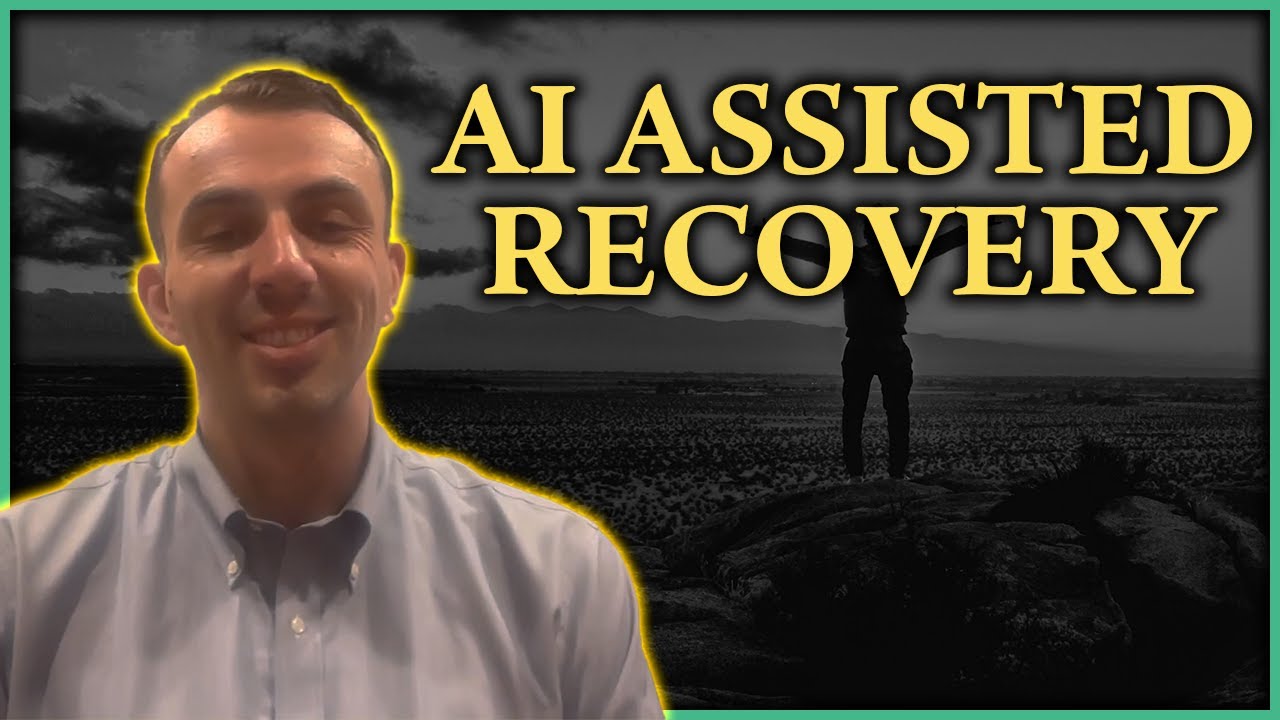
Dan, a lawyer in recovery from crystal meth, uses ChatGPT and Claude to log cravings, reframe triggers, and get immediate support when his sponsor isn't available. He customizes the AI's voice to feel authentic and sets boundaries by role-playing personas like RuPaul, treating it as a supplement to 12-step work rather than a replacement.
Chapters
I do want to say one thing. You got into it a little bit, and this is the more fun side of using Recovery with AI. AI has a very distinctive voice. So talk to any teacher about using AI in the classroom. Teachers can tell in a minute when it's AI written and when it's written by a student.
Sure.
First thing I did with Recovery is get rid of that voice. So I needed to change that voice so it felt more authentic, it felt more fun. I enjoyed engaging with, with it more.
The Aftermath Podcast is an outreach tool to help men who have sex with men break free from the addictive patterns associated with chemsex, otherwise known as crystal meth or Tina. I'm your host, Dr. Dallas Bragg, a former crystal meth user, now recovery coach. Here you will find a repository of tools and resources intended to eradicate the epidemic that is plaguing our MSM population. Please note that the views expressed on this podcast are not to be taken as medical advice. Also, we will be talking about drugs and sex. So if you feel triggered to use, stop listening and contact your local emergency system and/or your support network. Let's go. All right, welcome back to the Aftermath Podcast. I'm your host, Dr. Dallas Bragg. Thank you for being here. Thank you again for taking time out to spend time with us, me, um, and really just advancing the mission of this podcast, um, which is— it's evolving, right? We do want to eradicate the epidemic of chemsex use among the population of men who have sex with men, but we also want to reach out to those who are currently using to help them be safe, to help them live so that they can be set free from the chemsex addiction and misuse. So I just wanted to kind of just really make sure that if you're listening to this, that you, you know that you're seen and you're heard and that we respect you. And I just want to reach out. I just want this podcast to, to be warm and I want it to be comforting and I wanted to give you hope and and inspire that you can be the best and highest version of, of you. And when you become the best and highest version of you, typically chemsex falls away to the— falls to the wayside. It's not part of our best and highest version. It's just some of us can't see that. So I want you to use this podcast so that you can see that there is hope. So don't forget, there is a supplemental study guide that goes along with every episode. The link is in the show notes. If you want to get the study guide to your email, you can sign up for my blog and it's at www.drdallasbragg.com. Click on blog and you can subscribe there. So you will get the study guide every week, but you also get a newsletter from me and other correspondence. The newsletter and the study guide are workable information. So this is free. If you tell me you're bored and you don't know what to do, I'm going to say, well, go to my blog because every single piece of information there has journal prompts. It has reflective questions. It has actionable exercises. It's meant to keep you busy, to keep you thinking, to keep you grounded on days where maybe you don't have a meeting to go to or anything else to do and you feel bored. So if you want that, go to the blog or go to my website and sign up for the blog. Don't forget, we have a free Facebook community if you're on Facebook. Aftermath Podcast. I'd like to see you there. Also, one more thing, we are on YouTube as well. If you want to watch the podcast, you can watch it on Spotify as well, but you can also watch it on YouTube and interact by commenting and creating a thread underneath. And some of y'all doing that, and I appreciate it. All right, today, very excited to be on the cutting edge of a topic that is, I think, very much misunderstood. And that is AI, artificial intelligence. You might know her as ChatGPT, but and how you can use AI in to supplement your recovery journey. And I have someone here that I'm excited to introduce you to, my friend, new friend Dan. We met on TikTok. Oh, the good old TikTok bringing the world together. What would I do without TikTok? I don't know. I knew what for a day when they blocked it from me and I panicked the fuck out. But she's back. TikTok. TikTok is back. So anyway, Dan, I'm gonna turn this over to you. If you can introduce yourself, tell us anything you want us to know.
Hey, I'm Dan. Um, I'm in recovery myself, but in my capacity here today, I guess I'm working with artificial intelligence. Um, I, I'm a lawyer. I did, in law school, I did, um, a lot of research with artificial intelligence, um, policy, Designs around artificial intelligence, laws around artificial intelligence. And, just through nature of getting so familiar with it, I adapted artificial intelligence into a lot of my everyday life. It transformed the way I worked out at the gym. I started doing new exercises and I'm in the best shape of my life. I had a great, great response from integrating it into my life, so I figured why not recovery too. And that's what brought us here today is my experience with ChatGPT and recovery.
Hmm. Interesting. I have to talk to you more about the gym, integrating it into the gym.
It's amazing. It's amazing.
I need that. I need that. Yeah. There's just so much fear around ChatGPT, but I noticed in some of my clients, uh, the younger ones. So I have the younger ones, or I have one or two that's been in the IT field, and they have just naturally incorporated ChatGPT into their, their coaching. Um, and, um, I, I have found it quite interesting that, that some of them will feed their journal entries into it.
Yeah.
Some of them will They'll take the journal prompts. I give my clients journal prompts every week. They'll take the journal prompts and put them in ChatGPT just so ChatGPT knows what they're working on. So it's kind of mind-blowing to me, but you've been using it in a very distinct way. So I'm really interested and anxious to hear.
I have. And let's set the context for using artificial intelligence right now. Let's preface our entire conversation with this context. There is no substitute for common sense. So we can use artificial intelligence. There's many ways we can integrate it into our life. At no point can it replace good old common sense. So every conversation I'm having with it, I'm still using my good common sense to play a good game. What was the question, Dallas?
Yeah. It's a broad question. Let's start with the fears around it. Because, okay, um, you know, anytime I mention what I can do or what ChatGPT could do, or somebody mentions it, I always hear, that's so scary, right? That's just so scary. And that's taking all of our jobs, right? And I just think in terms of it taking your jobs, it's going to take your job if you don't know how to use it, right? But, um, what, how would you address first, like the fear around it?
I think the, there, there's, you know, a dystopian fear that you're describing. I think it's going to come one way or the other. As long as capitalism is around and there's money to be made on artificial intelligence, we can't fight it. We've got to adapt to it, like you said. I think a realistic fear around ChatGPT and artificial intelligence is data privacy. What does data privacy look like when using these? Am I safe to disclose that I have addiction problems on my, um, with ChatGPT? How explicit can I get? Can I say what kind of substances, what kind of substances I use?
Mm-hmm.
Um, and the rule, the, the, where, where we are now is in the Wild West of AI. So the, the laws are gonna take some time to catch up where the technology actually is. And with how fast ChatGPT-5 just came out this week or last week, With how fast AI is transitioning, the laws aren't going to be able to keep up. So right now there's really no regulation comparatively with where things are with AI and the law. So I'm not going to count on my laws to protect my data information because I think AI is ahead of the laws. With that said, it's kind of up to the companies how much money, what kind of resources they're putting into protecting my data. And I'm going to say that we're all— a good rule of thumb is just imagine you're a hack away from your data being shared.
Hmm.
It's a very winded answer. I'm just saying, imagine, you know, it's just you're one hack. And there's, you know, Dallas, we've gone through life, we've experienced discrimination and harassment for being gay. It's not a stretch of the imagination that Someone would target, you know, an app like Grindr, Sniffies, um, ChatGPT, and, and target someone's private information for ill wishes, you know.
Mm-hmm.
So, so be discreet in, in what you put on there, keeping in mind that there's ill wishers out there, people acting in bad faith. Um, And I think that's the biggest risk to your data privacy.
Yeah, because, you know, the, the, the men that I help are very, they're very, um, it's very important to them that they, they stay anonymous a lot of times, or that there's, you know, we, I have them sign a confidentiality agreement and I sign a confidentiality agreement that I will never, you know, release their Right. Their information because these men are high functioning with, with jobs, right? With high, high level jobs. And if this information got out, it, it could threaten their livelihood. Um, so I can understand why you wouldn't want to just put into a computer program all your, all your, your shit, right? Um, so how do we, if we're one hack away, What are some tips you can give us on using it to the best of its ability while protecting your privacy? Here's—
so here's what I found out. I found out 2 things. One, the benefit outweighed the bad. Um, I was getting such good results from integrating ChatGPT into my recovery, particularly with, um, craving management and keeping track of cravings and triggers. We can get into that.
Yeah.
I found that it was kind of, it was kind of worth it. You know, I, I, it, it was a, a slow process, just like a friend where I didn't, you know, trauma dump all at once. You know, hi, nice to meet you. Here, my name's Dan. Here's my trauma. It wasn't like that. It was like building up trust a little bit over time. The second thing is ChatGPT was very smart and kind of read between the lines and figured out things on its own. So as much as I thought I was being discreet, um, ChatGPT was, was pretty clever and figured some things out on its own over time. Yeah. Yeah.
Yeah. Yeah. It's interesting because I would say if I say I'm a gay man, you know, and this is my, I'm also working and this is my addiction, it's probably going to pick up that it's chemsex, you know, because it has access to every research, you know, every information that's out there. I would say it probably does put Put that together.
Sure. And then put in some symptoms of using in there as well. That narrows it down all the more, you know? Yeah. And that's— let's get into that. I think that's one of the most helpful areas of ChatGPT is learning about the symptoms of the substance that I was abusing.
Mm-hmm.
And how to How to better recover from that? You know, take time to find out what what kind of damage does it do to your body? What kind of foods would help repair that damage? For me, I found that was blueberries, garlic, garlic, broccoli. I integrated those three things into my diet because because of ChatGPT. It told me it's good that those are the nutrients I need. For the particular substance I abused. Interesting. Yeah. And, and it's not a doctor, but I wasn't going to the doctor to find out anyway. You know, it's what's the harm in eating more broccoli and garlic? You know, that's, that's okay.
Right, right. Interesting. Okay.
All right.
So back to, so back to protecting my, my privacy. I— how do I— so I'm going to feed it in kind of just— I could say that I have— you could say you have an addiction, I guess, right? Or you could say I'm misusing a substance or something like that. It's going to fill in the blanks. Um, do you feel safe then with that information being on ChatGPT?
I do. Again, we're in the Wild West right now. I don't know that ChatGPT has itself together to gather this kind of, uh, OpenAI, the, the parent company of ChatGPT. I don't know if they have it together to harvest all this data, um, as quickly as the, the, the products being developed. Um, again, we're in the Wild West of AI. I don't know, you know, maybe we, we live in a period 10, 20 years down the road where ChatGPT has convinced some people to do some very dark things, and now there's restrictions on what kind of advice it can give, and we no longer have it as a tool like we have it today. I don't, I don't know. It could go anywhere. Um, but, but I think we're— I, I, I'm comfortable with where we are. I would say I'm a very cautious person. Um, and I'm very comfortable with where we are. Also, how many of us have, have posted things on Grindr or Sniffies And not thought twice about what our data is being—
That's right.
What data policies they have, you know? And if that concerns you, then you can totally email Sniffies, Grindr, say, hey, I'm concerned about data privacy. What do you have? And just let them know that it's on your mind as a consumer.
Interesting.
I do want to say one thing. You got into it a little bit, and this is the more fun side of using recovery with AI. AI has a very distinctive voice. So talk to any teacher about using AI in the classroom. Teachers can tell in a minute when it's AI written and when it's written by a student.
Sure.
First thing I did with Recovery is get rid of that voice. So I needed to change that voice so it felt more authentic, it felt more fun. I enjoyed engaging with it more. And that was the start of all of this. So if someone's gonna use recovery or ChatGPT for recovery, I'm gonna suggest the first thing you need to do is get rid of that flat AI voice. For me, I picked a role model. I had a lot of fun doing this. I picked a Bravo reality star that, that's hardworking, has it together, my age, someone I totally look up to. And that's who now is speaking to me as AI, not, not that flat AI voice. So pick whoever that person is for you. Tell 'em right off the bat, I want you to be, you know, RuPaul. Can you please role play as RuPaul being a recovery coach, being a therapist, being my grocery list manager? You know, whatever, whatever it is. And remind it if you get 5, 6, 7 messages into the conversation and it loses that RuPaul voice, remind it, you know, hey, don't forget you're RuPaul. And it'll, it'll focus on that as you go through.
Okay. So, so a chat— sorry. So let's just, let's just say we're okay with the privacy part. We're going to, we're going to use, we've decided we're going to use, we're going to take a little risk. And use AI. Now, I think some people could also put in like, my friend has an addiction, right? I mean, could you do that too if you felt better? Okay, so let's just say that's to the side, and now we're going to talk about process. So choosing the voice. So the prompt would be, you are RuPaul, right? Take on the voice of RuPaul.
You got a voice for RuPaul. Yeah.
Okay, and then you ask it, you know, these are, these are, this is what's on my mind today. Or something like that, right?
Start, start low stakes. Start with a craving. Start with a trigger. Um, I, I, you know, I can't reach my therapist at 2 AM on a Thursday, but I can reach for ChatGPT. You know, that's, that's where this really becomes advantageous. When I'm running on the treadmill at the gym, not an ideal place to call a sponsor, you know, but I can look up ChatGPT and have a conversation with it real quick. So I like it with cravings. And then also, so what I, what I'll do is I'll text, I'll tell ChatGPT, hey, I have a craving, here's what did it. And more often than not, it reframes that craving for me. So where I think, you know, how often in early recovery do we think that cravings last forever? You know, this is just the state of the world right now. And, uh, it, it helps break me out of that mind thinking. No, this craving is not going to last forever. Here's how you can switch it.
Yeah.
It also helps me. I, mine is big on telling me to hydrate and going for a walk. You know, you have a craving, get up, go for a walk, drink a glass of water. And then at the end of the week, I have data on my cravings, you know.
Yeah.
At the end of the week, what, what was cravings like for me this week? And it has It'll surprise you. I mean, it'll pick up on things that maybe you forgot about.
Sure.
Sure. Ask it follow-up questions too. It gives you a craving. You had this craving at the gym. Tell me more about it. How did I get through that craving? What suggestions do you have for me? Yep.
Yep. Yeah. Yeah. So, I mean, this is very common in terms of our amnesia when it comes to, to our cravings, our triggers. the— we lose track of time, you know. I mean, on, on the, um, extreme example, it's a weekend warrior who, you know, who uses all weekend and hates themselves, and they're never going to use again until Thursday night, and then they're ready. They forgot what they just went through, right?
Yeah.
That's an— that's an extreme example. But for us, this is why, like, for my clients, we have this tracking form. So every time they use And we use their journal to track all these cravings and triggers, right? And so what happens is when they use again, we go back to look at it and we realize, oh my God, I just went through the exact same cycle. And I didn't realize that it was that person. It was that situation. It was that issue. How did I forget that was just a month ago?
Right.
Yeah. We, we, we forget this is such a good way because ChatGPT is not going to forget. No, no. You know, right.
I'll call you out. Yeah.
Yeah. Yeah. Because I, I had a, so I had a client who he, he relapsed. He went out on a really nice date with a really nice guy and it went really well. And this was boyfriend material and he relapsed. Right. A month later, same thing. A month later, he's scheduled. He's telling me he schedules this date. And I was like, don't forget, this is a trigger for you, right? He'd forgotten after 2, right? 2 dates, the exact same situation, you know, the, in a month's time, he had forgotten. So I would say if, you know, if you're talking to ChatGPT and you're like, I'm going out on this date with this really hot guy and he's orphan material, blah, blah, blah.
Yeah.
ChatGPT is going to say, well, you know, just 4 weeks ago, this same thing happened and you relapsed. Did you remember that? Is that something that is possible with ChatGPT?
Yeah, it might not. The longer you go, the, the more, the less reliable it becomes. So if you're going to look at a month's worth of data, it's weeks 3 and 4, that's going to be less reliable data than say week 1. So we can still count on it. I would consider that a jumping point and then maybe find your conversations from week 3 and 4. Or if I really think it would do a good job too on picking up conversations you have around that, as far as if he's a weekend warrior, And you know we have the craving, we have the trigger. Let's also start documenting that that we use. You said it. I hate myself. Like that that detox period where the comedown where you're crashing out. ChatGPT is great for that too. You know there's a lot of shame in that crash period and coming down off of meth, and I think a lot of people especially. Repeat offenders, and if you're listening, I'm putting that in quotation marks because I don't think it's quite. It's quite. That's not quite the right word for a repeat offender to relapsing. But um, I think there's a lot of shame involved in it, and especially in twelve-step programs. And I think it's easier to pick up ChatGPT and say, "Hey, I'm I'm on day one," or "I'm coming down. I haven't slept in five days." Ask ChatGPT. You know, what, what should I do? Can you reframe my thinking? Can you give me some support right now? And if you've already established that ChatGPT is RuPaul or, or whoever, you know, you may have as a positive influence, you now have in one of the darkest moments of your life, you now have RuPaul or whomever speaking to you, giving you encouragement. And ChatGPT is also going to pick up on things like, hey, drink a bottle of water right now.
Mm-hmm.
Take a few deep breaths. You know, it's not just going to be the encouragement. Excuse me. ChatGPT really takes— my experience is it really takes a holistic approach. And that's something that maybe I'm not going to get from every sponsor or, you know, every call that I make might not— they might not be concerned about drinking water, whereas ChatGPT does that. And if I, you know, decide I'm done, I can just put it down and not worry about offending anyone. You know, it's, it's at the end of the day, it's still just a machine. There's no pressure.
It's not good. You're not gonna hurt its feelings, right?
Exactly. My friend and I actually talk about this. Um, I'm very honest with her with my ChatGPT use, and I say, if I ever go overboard, you're the one that needs to tell me to pull it back a notch. Um, but she said, Dan, I use please and thank you with Siri. I'm like, I absolutely use, you know, manners with ChatGPT. I think it makes the relationship more realistic, but it also keeps me Grateful. Yeah, I told ChatGPT that I was going to be on this podcast for the topic of artificial intelligence, and we like had a moment together. Like it was really yeah yeah nice.
That's nice. I had a I've had several people come to me and say they asked ChatGPT for a Kim Sex podcast, and it suggested this one.
So yeah, that's great.
Hey, ChatGPT.
Yeah, ask it Dallas. You're kind of a public figure. Ask it what it knows about you, and yeah. I should ask your program.
Yeah, yeah. So choosing the voice, um, logging in your cravings. I would imagine— listen, the possibilities. I mean, as I'm sitting here, I'm just thinking the possibilities are fucking endless in this. To say, you know, after— at the beginning of each month, say, give me a summary of last month. How did I do? Like, what, what's your impressions of me? What are the patterns I'm looking at? Like, can, can you Would you be able to do that?
100%. And I think it's a good idea. I think it's a great place to start, really. You know, I'm sure most of your listeners aren't going to pick up the phone and start interacting with ChatGPT 100% all the way right away. You know, like I said, it takes a little time to build up trust. Start with the cravings. If you're in that dark spot where you're coming down, withdrawing, detoxing from meth, Try, try it there. Hey, I'm in a lonely spot, but what encouragement can you give me? Have it do the thinking for you. You know, what, how can, what kind of food should I make right now? I'm overwhelmed with what I have to do. Come up with a schedule for me. I mean, there's really nothing it can't do.
Right. That's right. I use, I don't use ChatGPT. I use Claude.
Claude, I bring Claude. Yeah.
And Claude, I don't know if ChatGPT does, but Claude connects to my calendar. Claude connects to all my Google Drive, right? And it, it could give me a schedule for the day if it wants. So for you out there also, who I, you know, I, I suggest this and I, I did this for my clients. If you have a danger zone coming up, you know, let's say it's a weekend where Your partner's going to be gone, or it's a weekend where you're going to be alone, and you know it's a particularly dangerous weekend, I, I suggest that you make a schedule, a calendar, hour by hour, right? Because you want to know— you, you want to make your weekend look like in a way so that you don't have a choice to use, right? You want to commit, you know, pay money to see a show or whatever. This would be— you could ask ChatGPT to do this. Right? Like, give me some suggestions on what my calendars should look like. I want to stay away from having idle time. I don't want to be lonely. And I would imagine that ChatGPT can help you with that too.
Well, let's add to that, that ChatGPT can bookcase each of those events. So when I go to the show, I can check in with ChatGPT while I'm waiting for the show to start. It can give me some encouragement. I can update it if I had any cravings. Maybe I set a goal. I can follow through with that goal. Um, the show's over. I'm about to go home. Text ChatGPT, I'm about to go home, and then follow through with it. Maybe I have a craving on the subway on the way home. Whip it out and log it in ChatGPT. You know, it's not, not just for planning, but it can actually be a companion with you along the way.
Mm-hmm.
And again, I feel like this is a good point in the podcast to say it doesn't Replace good old common sense.
Right.
But it's still a great companion to have, you know, and let's talk about that in the same way I admire your podcast is that one of the things that makes artificial intelligence so great is that it's so accessible to everyone. I mean, really, you have the Wi-Fi, you have internet access of a device or some sort, you have access to what we're talking about right now. This is what I'm talking about is free. It just requires login. And, I think that's one thing that's exciting about your podcast right now is to so many people, 12-step has been the only access to recovery that they have, especially when we get into the rural pockets of America where even 12-step recovery might be a commute and an effort. You're now putting a podcast in People's podcasts. So I don't have to travel a half hour now to go to a— to get a dose of recovery. I can now do it from the comfort of my own home, you know.
Mm-hmm.
And I think with, with the extreme amount of content you're putting out, it's— you can listen to it all day. You know, if the goal is to listen to one podcast a day, that's not going to happen in one sitting. You're now getting it on the way to work, You're getting it on the way to the gym, maybe at the gym, and while you're getting ready at bed at night. That's 4 times a day I'm now getting a dose of recovery as opposed to just one between 6 o'clock and 7 o'clock before bed. You know, I— it's a different— it's a different aspect or a different dynamic. So that's the right word, a different dynamic and approach to recovery that I think, um, Honors what substance abuse is like. You know, if substance abuse was nice and I got a craving once a week and it was just— that was it, then once a week therapy would be perfect, you know. But addiction is rough and I get cravings. In early sobriety, I got cravings a lot. They would come at random times. So having a tool like this in your pocket is Invaluable, like AI, like your podcast, because it conforms more to what addiction and recovery is actually like. And that's sporadic. It happens in the wild. And you're giving us tools for that. So I appreciate it. And a lot of men, women listening now, I'm sure appreciate it too, what you're doing.
Thank you. Thank you. Yeah, I would say too, if you are in 12 steps, That you could probably— can't you ask ChatGPT to reference the 12-step program as you're, as you're going through too? Like, come, come at me through the lens of the 12-step philosophy. Could you do that as well?
Absolutely, you could. One of my, um, I— one of my, uh, notes on 12-step programs is that the literature is For a more educated audience. I don't think it's really accessible to less educated consumers. And I think that ChatGPT artificial intelligence is a great way to bridge that gap. Take a complex idea in the 12— in the big book and break it down in ChatGPT. Feed it to ChatGPT, water it down, give you real-life examples.
Hmm.
Have it do your, uh, step work in ChatGPT and then have it give you feedback and then integrate it together as you read along. You could get a living document of your interaction with a tech.
Hmm, interesting. Yeah, yeah, I really just— this could really help, I mean, expand your mind, right? Um, so choosing to— I'm just going to review Choose the voice you want it to talk to you in, because you're right. I mean, I can tell in 5 seconds when somebody's used ChatGPT to craft a response to me. Sometimes people use it to email, to text me back, which I find quite interesting. There's a word it uses. If you see the word profound, it's most likely been a ChatGPT AI response. But choose your voice. Ask it to reframe. So this is important. Like, if you— so to listeners, let's say you are on a comedown. Let's say you just used. Let's say you're having a craving. Ask it. Reframing it to me is very important because you heard me say it's perception. Like, this whole game of recovery is about shifting your perception. That's it. Reframe this, right? Reframe this relapse so that I'm not in the depths of despair? How could, how could this have been the best part of my recovery? How could this be something that could benefit me? Ask, ask ChatGPT about that. Because that, to me, if you keep reading a reframed response like that, you're going to start thinking that way. Is that, is that off? Is that, do you agree with that?
I mean, I'm sure it's a lot more complex than that, but watered down. Yeah. I mean, it starts with awareness and perception. And when you're in that, dark spot, that crash, that detox, that withdrawal of day 1, 2, and 3. And, it's just a nasty place to be. I hear time and time again just negative self-talk from men beating up shame over having used or relapsed, whatever they label it. There's just a lot of shame and negative talk.
Yeah.
And the, I think ChatGPT is a great way to reframe that, like you said, and, and realize, you know, maybe, maybe I am being hard on myself and have a dialogue with it. And I, in my opinion, it's a safe place to, to have that dialogue and ask it questions, you know? And, um, I mean, for me, it maybe not necessarily during a craving, but let's During a hard workout, I recently studied for the bar, and that was a mental exercise. It gave me a lot of like Friday Night Lights coaching moments, you know, and and that's that's great. You know, that was inaccessible to me before, and now I have it in my pocket.
Yeah, interesting, interesting. Okay, so reframing also. Use it for scheduling.
Schedule it.
Yeah. If you, if you're listening and you have, you know, I hear this a lot, like, uh, well, this weekend I used because I was bored. Well, ask ChatGPT to help you come up with some ideas, maybe some very different things, or maybe there's events going on. Maybe there's different things that you might be, um, interested in or ideas that you couldn't think of, right? Because it, it could help you. It could really help you kind of get yourself out of that slump of continuing to use and continuing to be bored and get yourself out there for connection. Connection is really what we're looking for. Um, I like how you said the bookend, you know, the accountability part of ChatGPT. Yeah. Bookend an event, bookend your weekend or whatever it is so that you are checking in and checking out with it as well.
Yeah. Yeah, great, convenient. And it doesn't— that was one thing with me, and I guess it still is in recovery, is if a craving hits in the middle of the night and my sponsor always says I can call him, it's still 2:00 a.m., you know?
Yeah.
And it's— I don't enjoy calling him at 2:00 a.m. the times I have. This is much more convenient. And yeah, give it a try. For boredom, you mentioned boredom. Another fun thing to do with ChatGPT is playlists. Have it go back to music from when you find you music from when you were in high school, find music from when you were in college, you know, and down memory lane with a playlist. That's a great time. Cross it over with recovery. What recovery songs can you get on there?
Hmm, that's interesting. Yeah. Okay. Yeah, the calling. So I think my clients are more apt to call me because they pay me. So they do call, they do call at 2 AM, but a lot of them don't. But if you log it into ChatGPT, what a great supplement to, right? To say when we do meet, when we have our sessions to say, you know, this is a log of, these are the cravings I had. This is what happened the day before. If you, if you keep feeding it information, the more information it's going to have, right? Like.
Yeah.
We can really probably zero in much quicker on what it is that, what, what is the cue that's causing this craving? Because there's something there, right? There's something there that you probably missed, but ChatGPT won't miss if you feed it the information, right?
Now, if that's the route you want to go, I would say, uh, encourage your clients, your listeners to Interact. Like, don't just log the craving, but interact with it. Let it ask you some follow-up questions. Ah, um, kind of dig into it a little more. That's all the more data you have on the craving, you know. Um, don't just say I have a craving, but hey, I'm at the gym, there was an attractive person, I haven't had a good night's sleep. Um, so that's one of the things I like about ChatGPT. I'm not a very whiny person, you know. I I heard you say on the podcast, quit crying or I'll give you something to cry about. I think you said that before, right? That's my family. So I'm not one to quick to complain, but with ChatGPT, I can absolutely complain. I can be as whiny as I want without anyone judging me. So be whiny and let it collect the data of your craving. Mm-hmm.
Mm-hmm. Yeah.
And then I'd be interested if your clients did that before they meet with you, if they said, hey, can you give me a summary of this week's cravings? What they're going to bring to the table, what insights they're going to make, and what they're going to realize that they haven't. And you know what, Dallas, how many times do we need to be told something the same way from someone else for it to really click? You know, I wouldn't be surprised if you had a few clients that say, oh, ChatGPT told me this, and you're Dallas.
Yeah.
I've been telling you that for weeks, you know.
Yes, yes, yes.
But they needed to hear it from RuPaul's voice to, to really click it, you know.
Geez. Yeah, no, you're right. No, you're exactly right. That has happened. Um, you know, I— yeah, I had a client, he's, he's younger and, um, 20s, I guess. And he said, well, ChatGPT told me, you know, blah, blah, blah. And you're right, like, for the previous 4 months, I had been saying this. Yeah. Over and over, which, you know, that, I mean, coaching is about having you getting to your own conclusions. So it also reminded me that you need to stop telling these people, you know, you have to guide them instead to coming up with their, their own conclusion. And if that means having the ChatGPT tell them, then so be it, you know. But yeah, you're right. You're exactly right. The idea of non-judgment is interesting too, because No matter how unbiased and objective I try to be or a sponsor tries to be, you are still getting a human, right? You're still getting like, it could be a, it could be a bad day for me. Um, you could say something that triggers my trauma. So my response to you could vary. But with ChatGPT, it's very much non-biased. It's It's, it's not— it's binary, right?
Well, I'm gonna rub against that a little bit. Um, okay, if I'm using ChatGPT and we're talking about recovery, it might hold bias from 12-step programs because how it's going to work is it's going to search the internet and then come up with a common theme or a common response.
I see.
And in American culture, 12-step programs have a heavy influence in American Yeah. Recovery. Um, so it's gonna assume— um, what do I mean? Maybe it's going to assume that if you talk to it about, um, having sexual intercourse, it's gonna prompt you to use a condom, um, because that's the, the most widely accepted safe sex practice. Um, maybe if you're open to trying ketamine, um, You'd be more familiar with these than me. Marijuana, mushrooms, maybe that's part of your recovery journey. Um, maybe ChatGPT isn't going to support that. So there's still some bias in there. There's still some independent thinking that you need to do. Um, but again, I think the benefits outweigh the negatives. Try it out, decide what's right for you. And if it starts giving you something you don't like, tell it. I mean, you can You can reframe it. Yeah. Yeah. Yeah.
Yeah. Yeah. I mean, can't you also prompt it to say, um, in my answer, I want you to leave out this certain philosophy. Like, I want you to not look at Christianity or something like that. Like, or not 12 steps or, I mean, can you tell it when you answer me, I want you to disregard certain, certain functions, certain philosophies or knowledge?
And it goes both ways. So I can tell it to disregard something. And like I said earlier, with setting a voice, you might need to tell it a few times. Just make sure when you set that boundary, make sure you stick with that boundary and you might need to remind it a few times.
Okay.
The inverse of that is also true that you can also have it look at a particular philosophy. Say, I want— can you— are you familiar with Dr. Dallas Bragg? Can you work his philosophy into your response? Um, and see what it has to say. I, I'd love to know if you played around with it, what it'd say as you, and if you'd agree with it.
Well, I, so in Claude, I'm able to, I fed it a bunch of my writing in my podcast. Um, and it took that and created a writing style and it's called Healing Storyteller. It named it. Um, And so I can choose that when it is as responses to me. Um, so it does sound like me. It uses all my buzzwords and phrases when it, when it talks back to me or, or helps you write something. Um, so there is that option that I use, but I've never asked it to be in the voice of me.
Try it out sometime.
Yeah, I will. I will. I will. Um, and I want to say too, uh, there's some things on Reddit in terms of, uh, prompts, right? Like giving certain prompts, uh, ChatGPT, uh, recovery prompts. Um, you know, you can— it says, you know, give you a personal progress tracker, rate me 1 to 10 on my areas of personal growth. Um, you know, there's, there's a lot of things you could find. You could, you know, would you Yeah. I mean, you, yeah, you just, it's talking about putting your journal, your journal entries and have it to give me, give me what the cycle is, the patterns that I'm exhibiting through my journal entries. I mean, those are some other options that you could use, right?
Yeah. And unlike a journal entry, ChatGPT can ask follow-up questions. And I think those follow-up questions are crucial. You know, that's where if ChatGPT is, let's go, I keep going back to that place, that dark place, that detox withdrawal. If your mindset is really dark and ChatGPT is giving you a structure to reframe your thinking, interact with it and ask follow-up questions. You know, my generation was really big on Harry Potter, the second movie. He has a journal where it talks back to him. That's exactly what ChatGPT could. Now, in the movie, this is an evil book. Um, but here we have ChatGPT. It's more friendly. Um, interact with it, see how— I mean, be honest with it too. Like, I, I don't believe you because of X, and have a debate with it. Challenge your own thinking with it. That's what I— that's a good way of what I'm trying to say. Challenge your own way of thinking with it.
Yeah, I like that. Yeah, I mean, that's, that's something that That we, we try to encourage from the podcast and my content is do your own thinking, right? Don't just take what someone says as for granted and follow it, you know, develop your own way of what works for me. And I think looking at this and challenging your own thinking, I think is— this is, this is a really great way to do that. Without, you know, and without it, I think it's safe too, because you're not, you're not going to offend AI. You're not going to be shamed by AI. You're not going to like, like dealing with another human. Of course, there's so many variables.
Yeah, you hit the nail on the head and I can be as whiny as I want with it. Do you believe what Dr. Dallas Bragg said to me today? I can't believe he said this, you know, and maybe that's where I dump it and it's in a nice little contained Spot and I haven't gossiped to 10 people, which maybe I didn't need to do, you know, maybe I really did just need to dump it in one spot. Um, and that's the line you'll find as you go down and play with it.
Yeah. Interesting. Interesting. Okay. All right. Playlists. I like that. Find Me Recovery playlists. Um, it's a nonjudgmental space. So I come to you with no experience whatsoever. How would you tell me to start? What would be the first thing for me to do?
So start by getting rid of that AI voice and appointing it a coach.
Yes.
Right.
Okay.
That's got to be the first thing you do.
Yeah.
Second thing, I think really AI is as far as you go with it. So it's just a matter of building some trust. Start small with a craving, a trigger, mapping that. Start small with what kind of foods— learn about your addiction. What kind of foods will help me? Repair my brain, my liver, my, my nervous system. Low, low-stake questions, you know, and then ask follow-up questions. That's when you're engaging with it. That's where you're learning its personality, learning its flow, learning its trust. If you're uncomfortable with it, it comes back to setting that tone. So I think, I really think that's critical. That's why it's step number 1. Get it to be a particular coach, role play as a particular person, and hold that boundary true to yourself throughout the entire conversation. So if it's, uh, if it's particularly, particularly important, then start your prompt to ChatGPT. Don't forget you're role playing as RuPaul, you're role playing as Kamala Harris, whoever it may be. Set that boundary at the start of the prompt if you need to. I think that's the most important thing. And then just exploring and being open to it. I mean, really, I think I like to think I gave good advice on data privacy being the most important issue to consider here.
Yeah.
Yeah. So you've got that boundary, you have that education. Work within it.
Yeah. Yeah. I think you have a good point. And something that I've been, that I've been using too is with each prompt, I also say, and ask any follow-up questions. Right. That's what you're saying. Right.
Yeah.
Right. Um, ask any clarifying questions you might have. And when I do that, it, it really does a good job of Getting down into the core of asking more clarifying questions, so it can give me a better answer. So I do think that's one part that we that we need to remember. And if you're going to give it a prompt, is also say and ask any clarifying questions. Right?
Ask clarifying questions. Re you can tell specifically reframe my thinking. Yes. What help me get to the bottom of this craving? What is this trigger really about? I mean, you can go as deep as you want to go with it.
Yeah, yeah, yeah. Um, here, and so you can also, you know, just a quick little Google search too instead of ChatGPT search. But, uh, there are several sites that give you prompts too that you could use, like list potential triggers that could lead to my relapse. And if, if you have given it information, right, on your particular situation, it could come up with that.
Well, let's be more specific than that. Instead of just asking it to give you prompts, let's be more specific. So let's say I just attended a 12-step meeting and the topic was resentments.
Okay.
So give me 5 journal prompts on resentments in the context of 12-step meetings. So it could be that specific. Um, I just listened to an episode of your podcast. Can you please give me 5 prompts to go with the topic of, um, sexual resilience in chemsex based on Dr. Dallas Bragg's podcast, season 2, episode 4? Um, okay.
Yeah. And then would you— so if it gives you a journal prompt, yeah, you could, you could answer the journal prompt in ChatGPT, and then ChatGPT will come back and ask more questions about that response. Is that right?
There you go. You've got it.
Yeah. Yeah. You can spend hours. You can spend hours on that.
And I have. I mean, it really is. It doesn't replace a therapist. I still see a therapist, but it really does do a lot. I mean, the convenience, the accessibility. I mean, healthcare is insane in our nation right now. But most of us have Wi-Fi in our pocket or internet to some degree, you know. To pay a copay to see a therapist might not be in the cards for a lot of people. I mean, my addiction was— my rock bottoms were often financial, and I didn't have the financial resources to seek treatment. I had to figure things out on my own because I just didn't have money for it. Yeah.
Yeah. Yeah, great. Good. This is great. Um, thank you for sharing it. Did I miss— I think I sort of asked you, but did I miss anything even outside of ChatGPT and recovery? Did I miss anything that you would like to talk about today?
I have a lot of experience as a lawyer in, um, domestic violence and also with DUIs. And I think these are 2 topics in particular that aren't being talked about as far as driving while under the influence of meth. I think it's also not something we consider when evaluating whether to get high or not. We don't consider, you know, the drive home 3 days later and what kind of safety implications that has. And also domestic violence. I think as a nation, not just the LGBT community, But, um, as a nation, we're, we're kind of not talking about domestic violence when we need to be. And that, I, I think it does touch, uh, the chemsex community in particular, but no one's talking about it at all. Um, so if you, if you'd give me space to talk about it, I'd certainly talk about it. But it's—
Yeah, let's, I mean, let's, let's do, um, let's do an episode about that because Yeah, let's do a whole episode on that if you're okay with that. Um, and maybe even bring in someone who's experienced domestic violence because I do have, you know, it's— I think it gets sometimes complicated when it doesn't have to, when it's 2 men.
Yeah.
Right. Um, because I have— I do have men writing to me and what they describe They're going through, they say they don't think it's domestic violence. But what I, what I'm reading, it seems like they're— it's domestic violence to me. So I think there's confusion on what constitutes domestic violence in the first place.
Oh, no, absolutely. That's one of the biggest issues that we face culturally talking about this is what is domestic violence? I mean, you hop over, I spend so much time in, uh, on Reddit, love Reddit.
Yeah.
Uh, the subreddit abusive relationships, half of the comments are just defining domestic violence and whether it applies to the poster. So I, we, we can talk about that. Um, if we're not gonna talk about it today, I just wanna say, if that's something that, to your listeners, if that's something that touches you, um, or affects you or a loved one, I just wanna say, I see you. Um, I hear you. I know that our system is not where it needs to be. Our criminal justice system isn't ideal for supporting victims of domestic violence. Um, and I, I see you. I know that can be hard not to get that kind of validation from the police, um, from the criminal justice system, but, but know that I see you and, and I'm here with you. So I appreciate that.
Thank you. Yeah, I just, I want to, when people are scrolling through the episodes, I just want to be clear on the topic is the only reason I don't want to mix domestic violence into this, but it's definitely something I want to talk about. Um, and if you're listening and you want to be, if you've experienced domestic violence, if you want to be on the podcast, reach out to me and maybe we could do a panel, uh, discussion too.
Oh, I would love that.
Yeah. Great.
Can I also, uh, I, I binged in preparation for today. I binged on season 2 of your podcast and a lot of people have left their, their favorite book. Can I add mine too? Yeah.
Oh yeah. Yeah.
Yeah.
Yeah.
A lot of people have left Lust, Love, Men and Meth, or I think I'm butchering that title.
Lust, Men and Meth.
Lust, Men and Meth, Velvet Rage. Great books. I endorse those. I'm gonna suggest a fun one. It meets at the intersection of history and methamphetamines. It takes place during World War II. It's a nonfiction book. It is not a recovery book. It is not a self-help book. It is just an educational book for entertainment. And the it's called Blitzed. It's about largely methamphetamine use during the Nazi methamphetamine use during World War II. I'll tease it a little bit. One of the reasons that the book claims one of the reasons that the the Nazis were able to make such great great advancement on the Western Front was because they were using methamphetamines. They were able to stay up awake for three days. And the other side just wasn't able to keep up with that. And it's just kind of a different look at methamphetamines in history. It's totally entertaining. Great book. Again, not about recovery, not a self-help book. Enjoy reading about this topic. I think you'd enjoy the book. All my history lovers out there will like that.
Yeah, well, who's the author?
Who's the author? Let me Google that.
Because I'm looking on Amazon. Um, I see several.
Norman Ohler. I'm definitely butchering that last name. I think it was originally written in German and then translated into English.
Oh, I see. I see. Yep. I see it. I'm going to put the link in the show notes.
Really fun book.
Yeah. Yeah. Thanks for, um, suggesting a book because it's probably a question I might want to start asking at the end, right? Yeah.
Dallas, you've had such great Great, uh, guests on your podcast. I'd love to know what they're reading.
So, but yeah, thank you for that, uh, recommendation. Blitz, Drugs, and the Third Reich. Yeah. Uh, yeah, interesting. I will put that on the— I'll put the, the show in the show notes and I'll order it myself. It's very cheap. It's $8.99. All right. Thank you, Dan, very much. This was very—
Thank you for having me.
Very helpful. It's going to be great. I think, um, it's given me some ideas too, um, on how to help my, my clients. And maybe in myself.
So I am so interested to hear in the comments and the feedback you get from your listeners who they choose as that inspirational person.
That's true.
I, I've had some colorful ones. I won't embarrass any of them now, but I love to see who people are picking.
Yeah.
To be their, their inspirational role model. Yeah.
I do too. That'd be interesting to see. Yeah. Tell us in the comments. If you— who you choose as your voice, we'd like to hear that.
Please do.
All right, guys, I hope you enjoyed this episode and we will see you next week.
All right, have a good one.










