EP 2:49 Building Your Chemsex Free Community with Beau
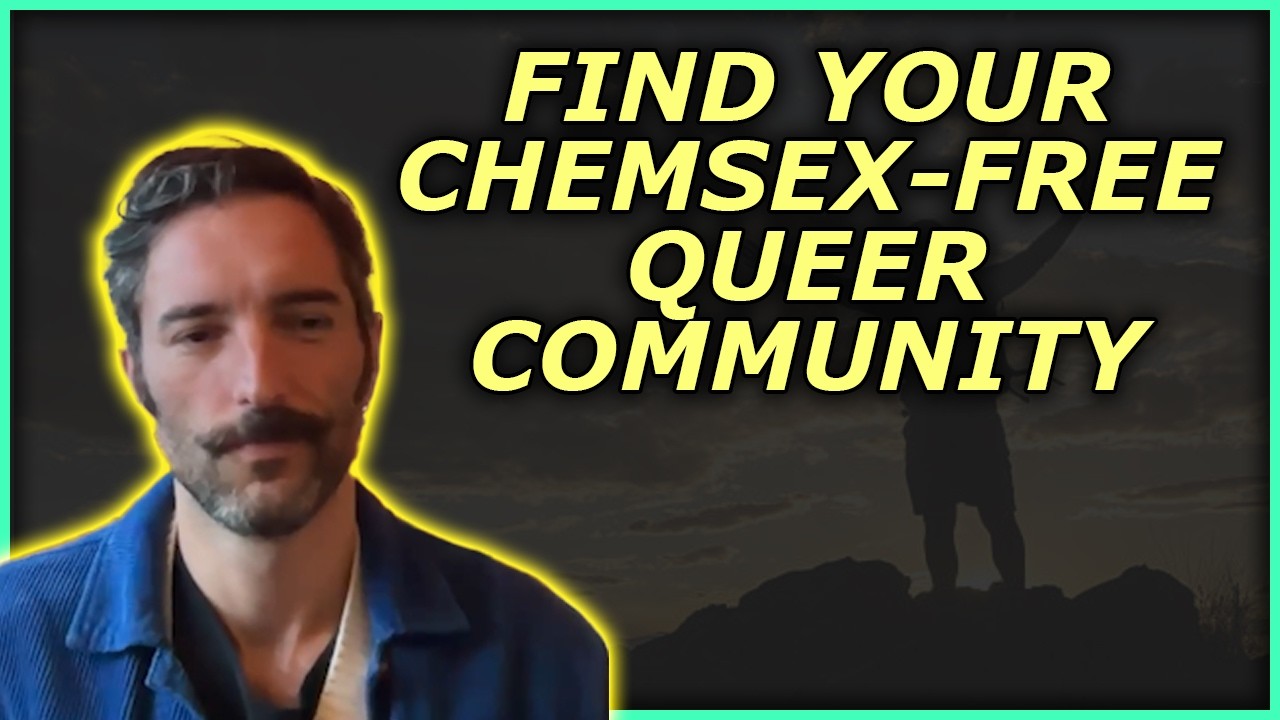
In this episode of the Aftermath Podcast, Dr. Dallas Bragg, a former crystal‑meth user and recovery coach, interviews Beau, a queer man who created the Gather app. The conversation explores the deep‑rooted community that forms around chemsex, the emotional walls and internalized homophobia that keep many gay men stuck in surface‑level, substance‑driven connections, and the painful process of dismantling those walls. Beau recounts his own path—from party scenes and a commune to realizing he needed genuine, vulnerable relationships—and how that inspired him to build Gather, a location‑based platform that matches queer people by vibe and intention rather than sex. They discuss why mainstream hookup apps like Grindr reinforce a sexual‑only paradigm, how media and cultural narratives shape gay social norms, and practical ways to foster non‑sexual intimacy such as cuddle puddles, ecstatic dance, consent‑focused communication, and low‑effort spontaneous meet‑ups. Both hosts share concrete strategies for people in early chemsex recovery: small social goals, self‑compassion, and using Gather to create diverse, intention‑driven gatherings (e.g., hikes, art classes, carpentry, leaf‑collecting). The episode ends with a call to action for the community to adopt and promote the app, emphasizing collective ownership, critical mass, and the broader goal of rebuilding queer community beyond the chemsex and hookup culture.
Chapters
Um, we got so deeply connected. So I was inspired by that to create the Gather app, which is designed to be a tool to help us to build community. Um, it's an app where you can find people near you, um, who match your vibe and makes it really easy to meet up. Um, very similar to Grindr, but instead of having the intention of, I want to have sex, the intention is I want to connect.
The Aftermath Podcast is an outreach tool to help men who have sex with men break free from the addictive patterns associated with Chemsex, otherwise known as crystal meth or Tina. I'm your host, Dr. Dallas Bragg, a former crystal meth user, now recovery coach. Here you will find a repository of tools and resources intended to eradicate the epidemic that is plaguing our MSM population. Please note that the views expressed on this podcast are not to be taken as medical advice. Also, we will be talking about drugs and sex, so if you feel triggered to use, Stop listening and contact your local emergency system and/or your support network. Let's go. Welcome back to the Aftermath Podcast. I'm your host, Dallas Bragg. Thank you for joining us today. One of the big questions that you ask me is, how can I build community post-chemsex? And also, how can I replace community post-chemsex? Whether we like it or not, There is a community that you build in the chemsex world, um, deep connections that you build in the chemsex world, some of it real, some of it not. Um, there's a culture, there's a whole chemsex culture, and it's a whole sub-community. Um, and so how do you leave that and almost start over? Some of you guys are starting from scratch because your whole ecosystem is built around your chemsex buddies and your dealers in that life. And so today I have a new friend of mine named Beau who's going to talk about this, and we're going to get into community, how to build it, connection, and talk about an app that he's starting that I'm really excited about that I'm hoping that we can jumpstart here in the US as well. So Beau, can you tell us a little bit about yourself?
So, um, I am a gay man Queer man. And for the longest time, I have kind of spiraled around meeting people through bars or hookup apps or having rituals where I would connect with other gay men on some sort of substance. And I just, over time, I realized that I wasn't getting, um, like deep connection. It felt kind of surface level. It was the kind of friends who, you know, we would say hi at a party. Um, it wasn't someone who I could ask for help. So I've been craving a different way of meeting queer people, um, outside of those 2 spaces. And, um, just couldn't find one. Then I spent a few years living on a commune.
Oh, nice.
It was this really different way of living. It was, um, instead of being in a city and, you know, occasionally seeing my friends a few times a week when we're going out, I was just living on land with 12 other queer people and I bumped into them multiple times a day and, um, we got so deeply connected. And so I was inspired by that to create the Gather app, which is designed to be a tool to help us to build community. It's an app where you can find people near you who match your vibe and makes it really easy to meet up. Very similar to Grindr, but instead of having the intention of, I want to have sex, the intention is I want to connect. Hmm. And Yeah, it's sort of, it's like tied to my deepest trauma around like not feeling enough as a gay man and falling into addiction and party culture and really craving community, but struggling to find it for a long time.
Mm-hmm.
And yeah, so I'm hoping that we can share it with all of you as you go through this big life transition. It'll help you to build a new community, one that gets your needs met.
What was your experience like then when you were trying to find connection in, you're talking about the party and drug community, what was your, what was your experience like with that?
So the first time that I found a bunch of gay guys, gay community, I was 22. I went to Fire Island. Before that, I didn't have any gay friends. And I was, I was so excited. There was all of these cute gay boys and everyone was high and everyone was fucking.
Yeah.
And, um, I was like, these are my people. I feel like I belong suddenly. Um, and I, so I fell into that culture. Um, just like, and it became this, this quite repetitive routine over like the course of a decade. It's like every weekend we'd go out. To the club, get high on something, get wasted. But, and it was so fun and I'm so grateful to it, but it like the thousandth time that I was standing on the dance floor bouncing up and down in some shitty club, I started to, it started to feel empty. I was like, these people, you know, I asked people, oh, do you want to go on a hike? Oh, no one's interested in going on a hike. Everyone's too hungover. Like, do you want, do you want to go on, like, play some games, go to, go to the beach? Like, it was just, it felt very one-dimensional. Hmm. And I started to notice in myself that I was like really unable to open myself up to other people. I had so many walls up. I feel like when you, when I grew up gay, I, you know, there was all this homophobia coming at me from the world. And so I put on so much armor. And that armor was to protect me from the hate, but it also stopped me from feeling things and it stopped me from connecting with other people. And so I started to notice that numbness was getting in the way of me connecting with people. And so the work over the past few years has been like recognizing that I have all these walls up, letting them down, which is freaking hard. And as I was letting them down, I was like, okay, now I really crave people who can actually like connect, people who like want to be vulnerable, people who want to lean in. When I'm talking to someone, I want them to like look at me instead of look over my shoulder for the next hottest guy. I just wasn't finding that. Like, I was finding so much objectification and more like substance use. And I, I don't want to judge any of that. I don't want to shame any of that. Like, we have too much shame in our community. Like, I have done so much of that. Like, these things in my life, like, I'm not saying they're bad. I'm not shaming them. I'm just saying that I recognized that I needed additional things. So yeah, as I was letting all of that armor down, I was like looking for those people and it was just hard to find them. And I'm like, why is it so hard to find new people and connect with them? I do not want to go to a bar. Like, I'm in East London right now trying to make friends and I just don't want to go to the local bar. I want to, I'm going to go to a reading a book club in a few weeks.
Yeah, yeah.
And but, but like, it's always felt really hard to find those things, those people who are ready to connect. And that's my vision for Gather. I want it to be this place where we can, um, find each other.
Yeah, yeah, yeah, yeah. I mean, I, I hear this so often anywhere around the world, right, is that It's hard to make friends in the gay community, and it's just easier to fall into what you're saying is, let's all go somewhere, get drunk or get high and have sex. And that seems to be simple and easier and the way, only way to connect.
Why do you think it is that that is our default?
Yeah, well, that was the question I was gonna ask you.
But yeah.
So for me, I believe that there's so much pressure for what we see. We're so influenced by media. And just, you know, if you just look at this new show, Heated Rivalry, this hockey You know, whatever. I haven't, I haven't watched it. What I have done is manage the damage that it's doing to couples. The, the, the, all the clients I have that have partners either have been triggered by it to say, this is not what, you know, that's what I want and you'll never be that. Or the partner has said that, you know. You're tuning into a scripted fantasy, a story. You might as well say, why aren't you Prince Charming from Disney? You know, it's like, it's the same thing. It's written for you, right? And so I'm amazed by how we are so deeply influenced by what we see on social media and the TV and the movies. And so To me, I know when I first came out, all I had to go by was Will and Grace. You know, that was back in the day. It was the '90s. That's all I knew about gay people. And then what I saw on other shows or Glee, you know, or whatever. And I conformed to that naturally. I remember the first— it was the first week I came out. I went to the mall and I went to Express and I bought what I've called a gay shirt and I got a Starbucks and I was just prancing down the mall. I was like, oh, I'm gay now, you know. It's like, that has nothing to do with being gay, you know. And I just feel like— and then you're— we're just influenced, I think, to be a certain way and fit a certain category. And that's what— And then of course there's the influence of pornography, you know, and I think that we, we create this narrative of what it means to be gay and that we have every right to be that way. And then we, that's how we connect because we're all under this, to me, all under this brainwashing of I have to be this way. And like, it's interesting for you to say like, Let's go for a hike. Let's have a book club. When's the last time on anything you've seen on TV or movies or anything where 2 gays, gay men go on a hike or they have game night or they read a book together? You don't see that. You know, I didn't, I don't, I've never seen Heated Rivalry, but I don't think they do that. You know, it's just, I, to me, I feel like, and this is just from my limited view, I was programmed to be a certain way, and then I was expected to be that way when I finally interjected myself into the community, which was the gay bars, because it's the only thing I knew. There was a pressure to, to dress a certain way, to be sassy, you know, and, um, to talk about everybody and ridicule, you know, there was this pressure and, and that wasn't who I was, but that's who I became. Hmm.
And I experienced the exact same thing and I started to not feel good about how I was showing up. Like there was a point where I was really, really bitchy and I felt not good about it. I felt not good about the things I was saying, but it was just the way we were all talking to each other at the time. So had you, like, what was the point where you started to like recognize that you were like playing these parts and actually start to figure out like, what are you gonna let go of and what are you gonna welcome in to be the real—
Well, when I found crystal meth, I felt like I had finally found what it meant to be gay. You know, hypersexuality, um, orgies. Um, I forgot about internalized homophobia. Everybody was just naturally naked. It's everything I saw on the porns, on the pornography. And, um, and then there was a lot of camaraderie. There was real deep, there was quick connection. You know, you walk into somebody's house, you just take your clothes off. You haven't even met them yet. Um, and the substance created that, that connection faster than anything. And so coming out of that and in recovery, that's when I finally started to Really analyze who are you? You know, because for me, I was closeted all my life. I was always playing a character. And then when I became, when I came out, I was playing a character. And then when I got into meth, you know, of course that became my identity. And so coming out of that in recovery, you have to, you are starting from scratch. You have to figure out What are my values? What do I stand for? Who am I? How do I show up? I just knew that I didn't want to talk about— I didn't want to read other people anymore. You know, like, I didn't— you watch— for me, I don't have a TV, but I see clips of Drag Race. I've watched Drag Race before. And there's just like this need to read everybody and— You know, and compete. And even before meth, I got involved with Stonewall. It's a sports league, gay sports league here in the US. And it was like a Survivor game show. Like, there were guys coming up to me who ignored me before and suddenly were nice to me. And I was like, oh, maybe there's something— I'm having new— I was thinking I have a new vibration, like I'm attracting different people, right? All along, they were just getting to me because I knew somebody they wanted on their fucking team, right? This is what I finally figured out. And so all I knew was what I didn't want to be. And what I didn't want to be was all the stuff I had seen after I came out and then into meth. And so That's when I decided to make— I mean, I, my first instinct was to make straight friends. It was, I've said this on the podcast so many times, but a group of hippie middle-aged women is who my recovery team was, right? We drank ayahuasca, we did mushrooms, and we went out and we hugged the trees and we did, you know, all the stuff. And I loved them. I loved them when— I still do. But it was the first time where I felt like, oh, like, there's no pressure to be something. They were just asking me deeper questions. What do you want out of life? What do you think about this? What is your healing path? You know, questions I'd never got in the communities I was in, in the queer community. So in my recovery is when I decided— when I started to realize, like, I need to I know what I don't want to be, and I don't know how I'm going to find anyone to connect with, but this is who I am, and I'm not going to change that, right? And you talk about walls, you know, having armor, and there's so many walls, right? You can see it. I saw it in the Stonewall Sports. I see it when you're on the apps. When I'm on Grindr, I see it everywhere. strict walls of don't ask me any personal questions about myself, but come suck my dick, right? And it's like, that's okay, but don't, don't try to get lovey-dovey with me or whatever. Um, and so for me, I've just decided who I am and, um, sometimes it gets lonely. And I think that's why I'm so attracted to your idea of this Gather app. Is this grid on Grindr cannot be a true reflection of the gay community. And so I've got involved with nonprofits, queer nonprofits. I've got involved with the Chamber of Commerce here. So it's business leaders who are gay. You don't see them on Grindr. You know, they're too busy for one thing, but it's a different, it's a different type of environment. It's a different type of connection and a different type of It's like, let's talk about life without the fact that you're gay being in the middle of it, right? The driving force of it. That's part of who you are, but let's not just focus on that only, right? And so that's, for me, how my process has been.
So you mentioned, like, come over and suck my dick, but like, I don't wanna connect with you.
Right.
Um, all those walls on Grindr. And then you mentioned meth was like a, uh, a mechanism for you to like go into a space and very quickly connect with people, get fast connection. That's very aligned with my experience. I had all these walls up. I went into a space full of gay men. I was super like, um, Social anxiety, didn't know how to connect. And drugs were just like my fast, quick way of being playful, of making out with someone, of dancing. Like the drugs just melted away all the walls and I could be silly and I could make friends. So for the longest time I was like, I would shame myself and be like, oh, you're a drug addict. Be angry at myself. And I, I've started to shift that perspective lately and go like, no, like, no wonder, like the whole world was homophobic, you know, to the point where Nixon ignored the AIDS epidemic and just, we were all dying. You grew up in that world, you put up all this armor and then you were desperate to get your needs met. You were desperate to connect. And like the only way that you could melt that was with drugs. And so I've started to have a little bit more compassion for little 20-year-old me who did those things. And at the root of it, I'm now realizing that like, I didn't just want to get high. Like I wanted to connect with people.
Yeah.
I was trying to get my needs met. I didn't know how, so I had this shortcut, but now I'm older. I'm like, okay, now I do know how to connect with people. I know there's other ways that I can get my needs met. I don't need to blow out my system. Like I can go and take a hot bath or I can like meditate. I don't always do those things. Like sometimes I'm still a demon, but I see that just across so many people that I've spent time with. Yeah, I don't know, just having, I think having more compassion for ourselves is something that I want to put out there.
Yeah.
Yeah.
Yeah.
Yeah. Freaking hard.
It is. It is. It's, it's, I think having compassion for yourself is one of the keys to recovery. And it's so uncomfortable because it's not something we're used to from our family, from our parents, from society, you know, is that we, we don't know how to show compassion to ourselves because it's not been modeled to us either.
Right.
I'm curious to know about your process of letting your walls down. So if I'm listening to this and I resonate with what you're saying and there's a lot of walls up, what are, what is, what are, what was your process like?
Okay, so let's take some examples. So I used to, like, I used to be kind of robotic. Like I was so shut down that I like didn't really have emotions. I would sit there, I'd work all the time. People would try and talk to me, I would ignore them. Um, I would go to a party and I would sit and I would just not say anything, or I'd get blind drunk. Like, I was very, um, I was kind of boring.
Mm-hmm.
And, um, so, so that was like, I didn't, I, I had shut down all of my silliness. I'd shut down all of my expressiveness. Like, I didn't want to be effusive or effeminate. Um, I didn't want to make a fool of myself. And so the process for me was first noticing that I had walls up, like noticing that I was, I started to actually live with women on the commune I was living on and they were so playful and they were so expressive and they would jump around and they would be silly and they would be tight and they would bite you. And I was like, oh, I'm just sitting here like a zombie. Just notice like, oh, okay, there's something there. I was noticing this about that. And once you notice it, then you can start to shift it. And the shifting it is not complicated, but it just takes time. It was like me just gradually pushing my edges. Like I went to this hippie play party. Like I love that you and I have both been supported by Yeah. I was at this hippie play party. Hippie play party is like an orgy for straight or bisexual people. And it's not like a dark room where everyone's super high and just like grasping at each other fucking. It's like, it's light, and it's in the day, and people are playing with toys, and people are dressing up. And there's like a zone where you can rest, and there's aftercare.
Oh, wow.
And I went to those parties in Iron Shelf, and I was so triggered. And I was like, I hate that I'm not allowed to be high. I went to those a few times and then I started to be like, okay, I'll like, I'll crawl on the ground. Oh, I'll like wear a dress. And it just, I know over the past 3 years that has gradually chipped away at my armor. And now when I have like, I host a gathering, I'll, I'll roll around on the floor. I'll invite people to cuddle on the couch. Um, it's, yeah, it just, it became easier.
Yeah. Yeah. It puts me in the mind of, I did a podcast with Pleasure Medicine. He's Gary Albert. He's in London as well.
Yeah, I was just at his dance a couple of days ago.
Yeah, yeah. And I think if we could, more of us could get into expressing ourselves, moving our body like that, you know, to pleasure medicine, to ecstatic dance, ecstatic movement, putting yourself in what you're saying. It sounds like you put yourself in a It was really outside of your boundaries, right? Outside of your comfort zone, as they say. I really think that there's a lot to that, to opening up and dropping your boundaries. I know for me, it took a lot for me to do anything like that in terms of, you know, singing at the ayahuasca retreats or moving around or being seen. There's something for me about being watched or being seen. In being vulnerable that is hurt. It's frozen. It freezes me up, like you're saying. There's got to be a trigger there about being seen and being embarrassed. I think, I think if you're listening, what is the scariest thing for you? You know, what scares you the most? And I would move toward that. I have a client who was telling me he wants to, when he's on his run, when he's running down the street, he, and the music is in his ear, he wants to dance, but he's embarrassed. The car's going, but he's afraid of people watching him, you know, and the car's going by. And, you know, it's like, when did we get so restricted?
Yeah. It's like we, we're all under this collective delusion. And this isn't just a gay experience. I think this is like, society, right? It tells you like you can't dance on the street. I literally just went to the park and I danced in the middle of the park and I would've never done that in the past. Oh my God, I'm so like cringe, so embarrassing. I think if like a few other tips, like for me, the people around me really influenced my ability to shift these things. So like when I was, you know, living in San Francisco, going to the gay clubs, like none of this really changed, but When I moved, when I sort of found different friend groups, people with different interests, it showed me different ways of being and it sort of, it was much easier to change the habits. So it's, there's one of the reasons I made Gather. It's like a tool for us to be able to much more easily find different types of activities that we might want to do. Like I, I'm going to go, there's a run club that I'm doing on Saturdays. I host like cuddle puddles. There's the ecstatic dance that Gary hosts. And I'm finding that like being, doing those other activities, you meet different types of people. And yeah, that's going to really help to shift things.
I think a question that usually comes up too when I'm mentioning things like this, Um, is how do I— we're so programmed to be sexual. How do I go to a cuddle puddle or how do I go to anything with other gay men and not feel that sexual tension and that pressure? And what if I, what if I am interested in someone, right? Like, I think there's, there's so much, especially coming out of a chemsex, coming out of chemsex. The first thing on your mind often is, who can I fuck? Or do they want to fuck me? Or how do I put that to the side, especially in a, like, like a cuddle atmosphere? I know that you host some cuddle puddles. And I've known some, I know a lot of people who go to them. I've actually never been to one. But what would you say to somebody who's listening? How, how can you prepare yourself before you attend?
So I used to always like, everything was in my head was like, oh, are we gonna fuck? Are we gonna fuck?
Right?
And I noticed that it started to get in the way. Like, I only really talked to people who I was attracted to. And when I was connecting with people, I was so focused on fucking instead of seeing them. And so I hosted a cuddle puddle the other day, gathering But this guy's Daniel's house. And in the description, I was like, I really wanna invite everyone to explore getting your touch needs met, explore physical intimacy without the expectation of sex or being sexual. Um, and like, to support that, let's all like be really communicative and use consent as a tool. Um, so like, oh, may I hug you? Yes. Okay. Um, and I, and I was there and there, there was this one guy who just kept like, kept coming up to me and he kept being like, ooh, and he was like rubbing me and it was, I could tell it was like sexy, sexy. And he really wanted to be sexual. Uh, um, so how can you prepare yourself? Um, I don't know. I think it's just about like making a choice.
Mm-hmm.
Finding a space where there's, where you're on the same page about those expectations, like not being afraid to communicate it. Like when I'm sitting with someone and I'm like cuddling with them now, I just say like, oh, you know, I really enjoy non-sexual physical intimacy.
Yeah.
Because a lot of time people will assume that if you're being cuddly with them, you wanna be sexual. And that's another reason why we put up our walls, right? Like you don't wanna cuddle with people cuz you don't wanna lead them on. So we're all so—
Right.
Nervous with each other.
Right.
Like I remember the first time I ever went to gay bars, I walked into GAY in London and there were all these older gay guys standing around the corner just like waiting. And I, well, yeah, we have these norms around like either you're completely separate or you're fucking, like there's nothing in between. And we need to, we need connection. We need so much more of that.
Yes. Yeah.
Yeah.
You know, it's like, it's easier, that consent issue, it's easier if you're in a bathhouse or an orgy, because There's protocol as far as like, if somebody comes up and puts their hand on you and you just turn away, right? It seems like that's easier to take because you're, I guess it's just not as vulnerable as trying to cuddle with somebody. For some reason, that feels more like rejection than it does sexually at the bathhouse or the orgy or the steam room or whatever we go to. You know, there's a whole, there's a whole site of protocol for those kinds of things. And again, I think it goes back to There's something about the vulnerability of touch and cuddling that is scary to us and feels more personal too, for some reason.
And I didn't think it's actually necessarily harder. I think we just have, we have norms, different norms. The norms are like, now that I've learned norms around like communicating, oh, I'd like some cuddling. Oh, no, sorry. I don't need touch right now. Like it's no longer awkward.
Okay.
I think we just have to like collectively learn these things and adopt them. Like our, our whole community has just, you know, we've been influenced by grinder culture and gay being illegal. Right. Right. So we just gotta shake a lot of those behaviors and like we're already doing it. It's already, the shift is happening. I like love the work you're doing 'cause it's just like we're all working together to Yeah. Make things feel a bit better.
Yeah. Yeah. I just would like, I would like us to get away from, 'cause I hear this all the time, so often, if I don't have Grindr, I won't be able to meet anyone. Right? Um, all my friends, you know, a lot of people's friends are from a hookup. You know, they hooked up with them on Grindr and then they became friends. Um, and honestly, when I first came out, that's how I made friends. You know, we would fuck and then we might again or two, but then usually then we just became, we became friends after that. Um, but there's gotta, there's, there, I just think we need to open our mind up and, and, and realize there are other ways. And so I'm glad that you're offering an alternative too. Um, for me, I'm glad. What do you say?
I just wanna, wanna understand that a bit more. So like, So there's, so there's this reliance on Grindr for meeting people.
Yes.
And so like, from what you've observed, like, why is there no other way? Are there any other ways that we're meeting people? It's available. There's nothing else that works.
Yeah, there's lots of ways. When clients tell me that, for instance, most recently there was a client actually in London who said, you know, I encouraged him, like, if you're newly, you're trying to not use crystal, being on Grindr is really a bad idea, especially in early recovery. But he said, but there's no other, no other way to meet anyone here in London. And so I, I just gently went, we went to Google together and I was like, let's start looking for other ways. There's dog walking clubs, like you said, a running club. There's hiking clubs. There's a Gay and Sober Holt Network. There's, um, there's queer nonprofits that you can volunteer for and meet other, you know, there's, there are so many other options, but what it requires is for you to get out of your house and personally go there and blindly meet people instead of, instead of being behind the keyboard of a phone. Yeah.
Which can be uncomfortable. So I've been running up against this discomfort myself because I'm in London. I'm trying to meet new people. I'm using the Gather app. I'm also trying other things. And there is like this effort that like, it's so easy to just like message someone on an app and have them show up rather than like going to a place with a group of people. The sort of the energy it requires to like interact with strangers is work. And so if I'm just looking for a dopamine hit, like that just isn't appealing. I've been trying to fight with this, like the monster in me sometimes is just like looking for a dopamine hit.
Mm-hmm.
And so when connection takes work, I'm like, Sometimes it's hard to like force myself. So what is your like, what is your tip for me of like, if you don't have the willpower to do the hard thing, like what do you do?
Yeah. Yeah. Well, for me, it's the same thing as you're talking about when you were at the hippie party or the orgy, you know, whatever, however you phrased it. You immersed yourself in it. It was very uncomfortable at first and you were triggered, obviously. Um, and it was hard, but you went back, you know, why did you go back?
Yeah, it's cuz it was, it was incred— like, I don't know, opened my eyes. I wanted to be as, as like embodied and playful and joyful as those people. I did have fun once I pushed through some of my discomfort.
Yeah.
Like staying, I like ended up connecting with some nice people. Yeah. I suppose like that initial discomfort is if you push through that and you do it, then often it's not uncomfortable. Like I went to Gary's Pleasure Medicine Ecstatic Dance on Saturday and like initially I was like, oh God, I can't be bothered to leave my house.
But then I was there and I was like, what?
Yeah.
Right. Yeah.
That's like, stop thinking and just like let your body do something.
That's right. It's the same thing I see with sober sex after chemsex is there's so much anxiety built up, built up, and you talk yourself out of it. And then when you have sober sex for the first time, often it's scary, it's clunky, it's no fun, right? And, and sometimes a lot of trauma comes up. But we have to keep at it. You know, you have to try again. You have to, to believe that there's something to this, right? Like, I know I can have sober sex and enjoy it. But the thing is, is that we, we experience something one time and then we base all of our experience on that. So, you know, I would go, I would, what my process has been, I would go to a Chamber of Commerce networking thing or Some other event. And I would just say my, to myself, this first one, I just, uh, my goal is to walk in, smile at a few people, walk through and leave. You know, that's all I expected of myself.
Oh, that's really good.
And just get, just getting comfortable with being around people and walking into a room where I knew no one, right? And then the next time I would say, my goal is to give my business card and shake some, one person's hand. And then that time I would, I met somebody and then they started introducing me. I mean, I met the right person because they just took me under their wing and started introducing me. So it's just, it's just a matter of, like you're saying, pushing through and, and understanding that this is, there's got to be another way. And whatever feels the most scariest is probably what you need to do. There's something about that. There's something that, there's something about, because there's a part of you that's holding you back from something that you feel like, that you believe will happen, like embarrassment or judgment. There's a part of you holding you back saying, remember, you were judged before, you were embarrassed before, you were, these things happened to you before. And so when we walk in a room like that, that's what's holding us back. And so we just have to, we have to, we have to understand that we're safe. We have to make ourselves feel safe. Um, that was my process anyway.
That's really great. Just little steps. I, this is another, um, uh, reason that I made Gather. So like going to a big event can be quite intense. Uh, maybe not what you want in the moment, but I made Gather so you can just like post, like, I'm gonna go for a walk in the park right now. Hey, Mom, wanna— And so you can just really like respond to your body's needs in the moment and do what you wanna do. And then other people who also wanna do that thing can join you. Like, oh, I'm gonna, you know, go like eat some chips on the corner. I'm gonna go, you know, on the Ferris wheel. Like, I, what I'm finding is Like traditional events, um, some, to be honest, can be kind of boring and it's like quite triggering to be in a room full of people. And so I was like, what is an easier way for us to be able to, um, uh, meet each other? Um, choose how we want to meet, put the intention out there. Like Grindr, the intention is just like, it's, there's one ritual. It's like, we're gonna, do you wanna fuck? And that's the intention. gather, it's like, have any intention you could possibly think of. Like, go make a fairy house in the park. I love that. Out of moss and like twigs and, you know, some other like weird witch, like, oh yeah, I'm gonna come do that with you.
Yeah. Yeah.
And then you meet someone who has a similar interest to you and you can, it's sort of easier to like find your people.
Yeah. I love that. Yeah.
'Cause I think it's, this is hard. And so any way we can make it easier for us to build our communities feels important.
Yeah.
And I'm just thinking that like a big trigger for me to use is to, when I'm not getting my needs met, like if I am starved of connection, if I've been alone for days, if I haven't been playful, if I haven't been moving, then my body's like, oh yeah, I want to like get high. And so for me, like designing a life where I'm getting my needs met proactively, and one of those needs is like having community and connection, um, has been like a really important strategy for me to avoid, um, just using drugs all the time.
Yeah. Yeah. I love that idea of, you know, I'm pretty spontaneous anyway, and my schedule's so full that sometimes a client will cancel and I'm like, oh, I have an hour, I want to go walk through the park or whatever. I would love to be able to send out the bat signal, right? And say, hey, I'm going to the park. Who wants to join? And let's skip around and, I don't know, do something, collect leaves or something. That would be such a nice—
I love to collect leaves.
Yeah. It's just such a nice distraction from the heaviness of work. Right. For me, it would help to go, let's, you know, let's go look at rocks or, I don't know, stare at the squirrels or how many dogs can we pet at the park as we go? Let's go on a dog petting because there's so many dogs around here, dog petting extravaganza expedition. So yeah.
Because there's so many things that could get in the way from that, right? Like if you want to meet your friends, you have to text them, are you available? Oh yeah, I'm available next Thursday. Okay. Like I'll travel 40 minutes to meet you. Let's go to a bar. We'll have a drink for a few hours. Like, that is so much friction and effort to just like get your connection need met. So like, it's kind of unacceptable to me. Yeah.
Yeah.
Ping, I'm going to play with leaves in the park right now. Once one or two people join you right now, like, neighbors, you become friends, like take away all of that effort. It's, for me, that's a big reason why we have a lot of isolation and loneliness in the world because our society has put all of this friction in the way. People are working really long hours and then in the evening you're tired and maybe you have like 2 times a week where you have space to be able to socialize. And so you really like want to make those, make the most of them. And so you go out and you drink and then you're exhausted and you're hungover and it's like, The system to me just seems very broken.
Yeah. Yes.
And my vision with Gather is like, let's fill in the gaps. Let's like add, use technology, which has been traditionally pretty toxic to actually nourish us and give us what we need. And like all of the things that modern society has broken about how we connect with each other, can we like fill in the gaps with a tool? That solves some of those problems. And it's, it's very new. Like, we've just been launched for a couple of months and it's, we're not a big tech company. We don't have big marketing budgets. Like, this is a queer small business. No, we're not Grindr where we like have, you know, big investors who are like, we want you to make as much money as possible. So now charge $200 a month and like put this app up. Like, this is a community app.
Yeah.
So the only way it's gonna grow and be useful for our community is if the community steps up and uses it and shares it and creates gatherings, models the culture. And so I, this is like a call to action. If people feel aligned with this vision, I guess we need to work together, otherwise it's not going to work.
That's right. Yeah. We're being so disconnected now, you know, especially in the US and around the world as a community, we're being scattered, I feel like.
Yeah. But in the US, it's awful.
Scary.
In the US, it's scary, like how much divisiveness there is and like lack of compassion and anger.
Yeah.
Like we're so divided.
But you see that on Grindr too. You know, when I, I go on there, I go on there probably, I think monthly just for an investigative journey. I want to see what's— because it's a pretty kind of a good snapshot of how we're treating people, treating each other. Um, and I've just noticed over the last year it becoming more and more biting, you know, just ruthless in the reactions and the comments and the way people are You know, are treating. And like, I don't know, it's, I just, I notice it. I can't prove it with research, but it's my anecdotal observations is I just see it becoming more divisive. And we're feeling, I think, on a micro way, what's happening in a macro way. So if anything can bring us together more, if this app is one thing that'll do that, let's try it. We have to stick together. We have to stand up for each other. We have to learn how to connect. Um, or we're gonna, we're gonna lose more. We're gonna just keep losing because we're, we're perpetuating what we're supposed to stand against.
Often we're stronger when we are together, right?
Yeah.
Like the, the, the establishment wants us to feel divided because then we're weaker. Um, so let's come together and support each other.
Yeah. Yes. Yeah, we all have the power.
I feel like we've all been— like, there's so many amazing gay queer people who have learned how to do cool things in the world and created resources and in positions of power. So just like, come on, babies, stand together. Yeah, let's, um, like, put out what we want to see in the world.
That's right, that's right. Well, I appreciate you and You living that in what you're doing a lot. I appreciate you and whatever we can do to, whatever we can do to spread the word about the Gather app, we're going to. And we had a separate discussion that focused more on specifics on the app. I'm going to put that on the tail end of this, splice it together so that people can learn more about specifically about the app. But I really enjoyed talking to you.
Thank you.
today in connecting with you. I'll be in London on, in first week of March 7th through the 11th. Maybe we can connect in person.
Yeah, I would love that.
Yeah, great.
So much for what you're doing. I really appreciate it. Thank you.
Thank you. And you too.
You too.
All right, guys. Hope you enjoyed this conversation. Go out and connect, but get this Gather app. Download it. Let's start using it in your own community. I'm gonna see what I can do here. You know, who knows? Charlotte might be your next hotspot. All right, guys, we'll see you next week. Stick around for more info about the Gather app.
So Gather is really simple. It's just, you can look on a map, you can see different gatherings that people are hosting in your neighborhood. The goal is to make it easier for you to find people who you vibe with in your neighborhood. And then regularly meet up so you can deepen your connections with them. I want it to be an operating system for us to kind of build community. It's not just like an events app. It's not a hookup app. I actually explicitly have communicated that we don't want to be a hookup app because there's a lot of those out there. And expectations around hooking up can sometimes, for me, get in the way of connection. So we recently had a lot of people try and create more intimate gatherings, and I had to sort of really clearly communicate that like, this isn't Grindr. Like, you can go to Grindr if you want to use those, but the types of things that people are arranging on Gather are like, do life drawing class or a dance or cuddle puddle.
Nice. Okay. How do you monitor that though? I would imagine that, I mean, how do you, how do you, I guess, yeah, how do you keep that from happening in terms of instead of a, instead of a, a dance gathering or a cuddle puddle, it's a, it's an orgy or something like that?
So we're, we've been using like keyword detection. So if people create gatherings with certain keywords, will prompt them to make it as an invite-only gathering. So you could, we don't wanna block people from having more intimate gatherings. We just wanna keep Gather really inclusive. So when you land on the app, um, a lot of people, when they see more sexual things, they could feel excluded. We wanna keep the public layer of Gather pretty inclusive. Don't wanna shame the sex-positive part of our community. I think that's a beautiful part of queer culture. So you can still create them as invite only. You can send them out to your network, kind of like private WhatsApp group chats. Okay.
Yeah. So yeah, talk about how this does work. So if I— for the listeners, we're all— we're in early chemsex recovery, right? Or we're wanting to be. If I wanted to safely just meet some other gay people. And is this exclusively for cis men? Or I mean, not cis men, but men, people who identify as men?
No, it's for any queer people, any gender. I, for a long time, was just around a lot of gay men. And, and that was really beautiful. And it was like, oh, all these people are like me. But over time, I was really craving a bit more diversity. And there's a lot of magic in the queer community. So having a space for all of us, Felt right.
Yeah. Yeah. Okay.
Okay.
So a mixed, a mixed bag. So I will go on, I would go on Gather. I can start my gathering or I can join a gathering, right? Can any—
And then people nearby can see that intention and they can join it. It's essentially a group chat they join and you sort of co-create the experience. Um, 'cause oftentimes like hosting can be really daunting and it seems like it's going to be a ton of energy. And I don't want it, it doesn't have to be that, you know, like I hosted a cuddle gathering the other day and I didn't have a space to host it. So I posted, you know, I'm looking for some touch. Someone else said that they could offer their apartment. Someone else said they'd bring snacks. Someone else set up all of the cushions. And that's a beautiful part of community. And so yes, you should be able to use Gather to much more quickly Find people.
I'm thinking this for me is sometimes spur of the moment, I want to go to this, like a festival down the road, but I don't want to go by myself. So I could just post a, post a thing saying, hey, I'm going to this whatever festival. Would anybody like to join me? And it would just start a group chat, right? That's something that, that we could do and you could just meet new people and it's under the guise of we're going to this festival. We're not meeting at my house.
Right.
We're not meeting at a cruising forest. It's very, it looks to me, it's very obvious about what the objective is here.
Yeah. I have found so much of my life that if I wanted to get connection, it's like, oh, I have to go to a bar. It didn't feel like there were many options. And so this is designed to like open up all the options and let people be really creative about how they want to connect. Like, for me, a lot of my drug use has been because I, I didn't know, I, you know, from homophobia, being gay and young, I shut down a lot of my emotions. I didn't know how to be vulnerable. I didn't know how to play. Um, and so for me, drugs were the sort of shortcut to get those needs met. You know, if I did drugs, suddenly I was like, really playful and sexy and people would like me.
Right.
There are so many other ways for us to get those needs met. I want to invite people who use Gather to really throw everything out the window in terms of what are the ways we normally meet up. It doesn't have to be sitting at a bar and socializing. What if you just want to arrange a gathering where we sit on the couch and don't talk? Or like where we go and do carpentry. Like, if it feels like work to connect with people, like, that's probably your body telling you like, oh, this isn't a way that I like to connect. And so I try to listen to those signals and be like, okay, what is a way that I do want to connect? And just like, and then use Gather to find people who also want to connect in that way. It's available everywhere in the world, but it's Uh, it takes time to build awareness of these things. And like in London, for example, been here trying to raise awareness because when you post a gathering, if, if no one sees it, then you sort of never come back and then someone else comes and they don't see any gatherings. And so you have this chicken and egg thing.
Mm-hmm.
So we need a critical mass of people in places. And so if you use Gather in your area and there's no one there, make sure that the app can help you deepen your connections as well. That's why I moved to East London. yesterday. I'm running an experiment where I'm going to try and build like a crew of 20 people over the next 3 weeks who I see regularly. Take control of it. People will thank you. People love that clarity.
Yeah.
And it's in the spirit of community, like feel co-ownership of it. Like make it whatever you need it to be. Like send messages to me. We're constantly improving the app. Um, I don't want it to feel like I'm Facebook providing a service to you and gonna like farm all your attention. Like, this has not been— I did not start this company to make loads of money. I started it to build loads of queer communities.
Mm-hmm.
We're just like a bunch of traumatized Lost Boys trying to figure it out and like retraumatizing each other in the club. Like, oh, you're not hot. I'm not gonna look at you. And I think that cycle is like unnecessary. And I also see, you know, we've all overachieved and created so much wealth and power, um, so many queer people that I know. So like, how cool for us to be able to come together and work together to, um, not only heal ourselves, but also like build something beautiful and maybe gift it back to the straight world. Teach them how to, you know, there's a different way.
Yeah.
of living. You don't have to do the heteronormative single-family individualistic life where all those people are also super lonely and disconnected.
That's right.
Sorry, that was my diatribe. We've had us till there.
No. Yeah, keep going. That's great. No, I like it. I like it because, yeah, I mean, talk about, uh, quote unquote work, right? Um, trying to get out there into a Trying to get out there is, for, for me personally, has been, has been hard. Um, it has been work because I don't use the apps and I want to try to meet. And so it's like, again, where do I go? Coffee shops? You know, I'm not going to go to the bar because I don't want to, you know, like you said, like it's all, it's revolving around alcohol and it's some, it's some of the same. Means to an end. And if, you know, I start drinking, it never goes well anyway for anybody involved. Um, and so, yeah, uh, then I, then I do download Grindr. That's the first thing I do if I am drinking at a bar. It's weird. I, I have to have it blocked because I will— it's something snaps in my head and I'm back on it. So odd. But anyway, Um, you know, where do you go? Where do you go and how do you do it? So this is— I really love this. I honestly do. Like, I had to have you on here because I just love the concept of it and I want to try it. I want to get to it. So there's a, there's a site here called meetup.com, which, um, I guess is sort of similar, but it's not geared toward queer people. Um, I went once to a hiking group. And, um, there was me and maybe one or two other queer people. The rest were, you know, were straight, um, which was fine for the most part, but I couldn't get into the conversations. Um, and then they had to have beer, you know, they wanted to go to a brewery after to socialize. Uh, and I just felt more out of place. So I feel like, you know, a gay hiking group would be Something I would love to host a gathering of. Could you do that? Just host a gathering of, hey, I'm going to go hiking at this place on Saturday. Who wants to join?
Love it. Yeah. Meetup is, I mean, we have a lot of functionality of Meetup, but it's like, it's very infrequent meetups. They're very corporate. It's very hard to host. You have to like register and it takes a long time. And as you said, it's like majority straight people. I don't want to always be around gay people, but I just, I want people who can like relate to me and I want to feel like I can be my big gay self without being judged or like at the worst beaten up. And so yeah, this is, this is a space for the queers.
Right, right. It reminds me of, um, um, there, what is it? Is it Oh God, now I'm gonna— so that's the equivalent of Airbnb, but it's only, it's only gays. It's only, uh, I call it Gay B&B, but it's not. What is it?
Yeah, Mr. B&B.
Mr. B&B. Yeah, yeah, yeah, yeah. Mr. B&B reminds me of that. It's an alternative, uh, to the, to the mainstream. And I use Mr. B&B anywhere I go, um, just, just so I can support it. Um, so that's great.
Yeah, I used to work at Airbnb.
Okay. So what—
I used to work at Airbnb and I was part of that. So a lot of like the, the, like trying to make it really easy to use was inspired by Airbnb. Um, a side note.
Yeah, I like it. Okay. What else have, what have we, what have I missed? Like if we're, if we want to, if I'm in the States or somewhere that this isn't yet, What can I do to help? How can I help spread the word? How can I help support you? Um, do you have a fundraising option? What, what is, what do you suggest we do here?
Um, I've downloaded the app, um, like there's a link in the description. Give it a try, create a gathering, share it with your friends, post it online on social media. Um, and if we all raise awareness of it, then it'll become useful for everyone. Um, yeah, that's the biggest impact I think everyone can have.
Uh, all right guys, thank you for listening. If you want to get involved in the conversation, you can comment on Spotify, you can comment on YouTube, you can watch us on Spotify, or you can watch us on YouTube. Most of you listen to us on Apple Podcasts, but please do download the app. Even if you live out in the middle of nowhere, download the app and tell a friend about it. Help us help, help. Let's really support something that is running counterintuitive to, to what we're seeing in the mainstream culture. And, and you all know how I feel about Grindr and anything that's alternative to Grindr is gonna be something great for us in our recovery. So thank you guys. We'll see you next week.
Mm. Appreciate you, Dallas.










