EP 2:8: Contingency Management with Tyrone
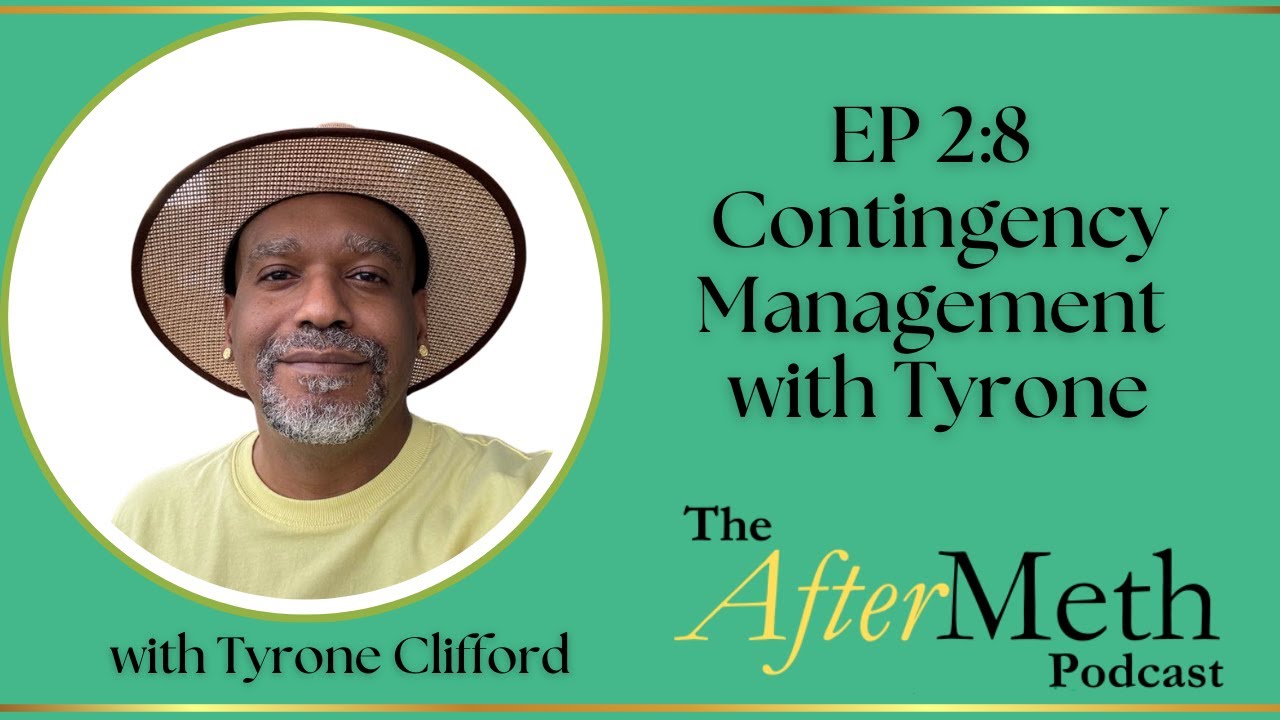
Tyrone Clifford runs PROP, a San Francisco program that pays people for clean drug tests. Participants choose their own goal: abstinence, cutting back, or managed use. He started as a client himself and now manages the program, which pairs cash incentives with counseling and peer support.
Chapters
Hey y'all, I'm excited to present to you what's become now an unintentional series on harm reduction. Although you'll hear me get schooled in this episode on this term because my very astute guest Tyrone lets me know that it is all harm reduction from active use to abstinence. So I'm really excited to feature all of the various programs that are out there to support meth users wherever they are on their journey. Look, abstinence is not the only option. And for many, when faced with this insurmountable task, they go back to using because what's the point? The goal is just too overwhelming. And when they have to keep setting their day back to zero instead of anchoring into the wins of how many days they were abstinent, they just feel like a zero. Not to mention the research out there showing the high relapse rates of methamphetamine. So you'll hear today about contingency management as a tool for those interested in reducing or quitting their use. And I'll tell you that the concept is still controversial in most parts of the U.S. But I'm proud to be just one voice to show all alternatives out there and to send a message to those who are still in active use that I see you, I love you, I want to help bring dignity and respect to you wherever You are in your journey with this substance. That said, I think it's worth qualifying that chemsex is any chemical used to enhance sex. I don't want to spread the message that methamphetamine is the only drug associated with the term chemsex. But I only have lived experience with methamphetamine and GHB, so I don't talk about the other chemicals. I do mention them in some of the podcasts, but that's when I'm talking to an expert or someone who has experience with them. I help a specific niche of men who have sex with men who are wanting to reduce or stop using meth. That is my heart, and that is who I serve. I do apologize if some of you out there hear my messaging and believe that only meth is chemsex. That is not the truth. With that being said, enjoy this episode.
You know, so when people tell me that, I was like, no, it's not that you're not doing it, you're actually practicing the highest form of harm reduction. Give yourself a pat on the back for doing that instead of Telling yourself you can't do something, that you can't do the thing that you are already succeeding at.
The Aftermath Podcast is an outreach tool to help men who have sex with men break free from the addictive patterns associated with chemsex, otherwise known as crystal meth or Tina. I'm your host, Dr. Dallas Bragg, a former crystal meth user, now recovery coach. Here you will find a repository of tools and resources intended to eradicate the epidemic that is plaguing our MSM population. Please note that the views expressed on this podcast are not to be taken as medical advice. Also, we will be talking about drugs and sex, so if you feel triggered to use, stop listening and contact your local emergency system and/or your support network. Let's go. All right, welcome back to the Aftermath Podcast. We are glad you're here. I am so grateful, honored, blessed, uh, to be a part of your healing, your recovery. You guys are really responding in a powerful way to this podcast, and I want to just say that thank you. Thank you for reaching out. Thank you for the feedback. That really is my currency. As I've mentioned before, the podcast doesn't make any money. The podcast costs money. So if you want to sponsor the podcast, I would love that. But if you can't do that, send us a text, send us an email, a DM, something. That is my currency. I read these, these wonderful, wonderful DMs that say, your podcast helps me feel seen and heard. It gives me hope. It helps me not use. It helps me with cravings. I've learned a lot. And so also from family members— family members are texting us and emailing— emailing— DMing us a lot, um, and learning a lot, um, about this, this, um, this, I— this nuanced, um, experience. I'm trying to watch my language, so by the way, um, I, I'm not saying this addiction, I'm not saying this addict, I'm not saying this disease. It's this phenomenon. We'll say that the nuance of the phenomenon of men who have sex with men using crystal meth or chemsex. So that being said, uh, today we are talking more about harm reduction. Um, we have— we had Dr. Fawcett on, Dr. David Fawcett, and we talked about chemsex harm reduction techniques. And now we're going to talk about something that's even more prevalent And, and what I read in the studies and in the research, something that is probably one of the most successful ways men are coming off of chemsex addiction. And so I'm, I'm really excited to dive in today. And my guest today is Tyrone Clifford, and he is the manager of contingency management at Stonewall PROP. And PROP stands for Positive Reinforcement Opportunities Project. It's part of the San Francisco AIDS Foundation. Uh, Tyrone is a former meth user of about 20 years. He's been engaged in crystal meth for 13 years this coming February in many forms. And he started off as a participant in PROP— wow— a volunteer, health educator, program coordinator, and currently the program manager of PROP Classic. PROP is our contingency management program supporting men who have sex with men, trans and gender non-conforming individuals seeking support as they explore making changes around stimulant use. I really— your, your story is amazing, how you have— you were a participant and now you're running it. So welcome, welcome, welcome, welcome to the show, Tyrone.
Thank you very much. Thanks for having me.
Yes, yes, thank you. Well, congratulations on overcoming meth.
Thank you very much.
First of all, um, we can go into your story if you want in a little bit later, but I wanted to Dive right in into what is the Stonewall Project in the— yeah, what is the Stonewall Project?
So the Stonewall Project is part of the San Francisco AIDS Foundation. And what we do at the Stonewall Project, we are a substance use treatment program, working with folks on any substances, no matter what their goals are. And we also are a mental health treatment program as well. So, you know, substance use and mental health issues kind of run hand in hand in a lot of cases. So we address them both.
Yeah.
My program, PROP, is our contingency management program. And excuse me, my voice will quit on me here and there, but I'm still here. It's a contingency management program. And what we do is we incentivize people who are looking to make changes around their stimulant use. We test for cocaine, we test for methamphetamine, and we test for crack. For every non-reactive test or clean test, as people like to hear quite a bit, people earn a small cash incentive that they can redeem for a gift card of their choice throughout the program. Sometimes people will take it out piecemeal here and there as they need throughout the 12 weeks, or sometimes, well, for the most part, they like to wait until the very end of the program and take it all out at once. And the maximum someone can earn from completing the program is $330.
Okay.
Our incentives start out very small, $2 for the first test, and they go up incrementally by quarters, so $2, $2.25, $2.50, and so on. For every 3 nonreactives in a row that we get, the client earns an extra $8.50 bonus. And so it starts out very small, and it looks like a very tiny little amount of money in the very beginning. But towards the end of the program, you really start to see the dollar amounts add up. And that's, you know, part of the incentive. People like to see those numbers add up. And especially when they start adding up faster and faster, they really like that. So it's, you know, it's a great sense of motivation for folks. Even the participants who'll say, oh, they don't really need the money, but they still, the incentive of seeing that balance grow. Is a big draw.
Hmm.
Yeah.
Okay, thank you. And so if I come— you said you'll help them with whatever their goals are. So the, the users, which I like non-reactive instead of clean. I like that a lot because I hate the word. I can't stand the word clean. It's my own personal trigger, but I don't like it.
Same here. Yes.
So anyway, if I come to you, I'm using, I want to stop. So, or do I want to slow down? Like, do I set my own goal? And what are some examples of goals that I would, that I would have to come to you with?
Yes, like I said, we're here to support folks with whatever their goals are. And so the participant really sets their goal. They could, you know, some people are looking to abstain from everything. That's great. We're here to help you with that. Great for you. Some people want to only maybe abstain from Methamphetamines, but they don't want to stop drinking or smoking marijuana because they feel at that time that those substances are not triggering them to use meth. Some people don't want to necessarily quit, but they do want to be able to do what they like to do and make it to work on Monday morning with their wallet and their keys and still have housing and a job. We support folks with that goal as well.
Hmm.
And because, you know, we're harm reduction focused, abstinence is not our total focus. It's only what— it's always based on what the client wants for themselves.
Mm-hmm.
As far as our treatment program goes, clients can pick their track, either abstinence, targeted abstinence, or managed use. And the best part about it, though, is they're not locked into that. If you come in and say, I want to abstain, then you So, let's say, I want to come in and I want to manage my use. Great. But along the line, as you make— as you progress towards that goal, you may notice that when you do have alcohol or when you do smoke marijuana, you can feel yourself being triggered more and more to actually go back to using the substance that you're trying to avoid. And that's totally great. You can always up your level of care. You know, if you decide, like, maybe I don't want to be abstinent, I can drink a glass of wine with my family or with friends casually and not have that trigger me to go back to meth. That's totally cool too. Like, it's your journey. Who am I to tell you what you should be doing on your journey?
I'm about to jump out of my skin. This is so great. This is— I, I just— yeah, I don't even know where to start. Um, I, I want to say, so what you're saying, Tyrone, is that people can— if you want to stop using meth, it is possible that you could still drink some alcohol in certain situations. You could smoke a J, right? Yeah.
Yes.
Yeah, this is possible, guys. We have to— what, what Tyrone is talking about is empowered recovery. You get to choose. And what I love about this is once you're in it, it's trial and error. You get to experience it and make adjustments based on your own realization, your own decisions, your own experience.
Yes.
You don't just have someone tell you, this is what you do. Without question, am I right?
Exactly.
Yeah. Okay. Where we going? You say something?
No.
Sorry, I thought I was interrupting. I thought I was interrupting.
Yeah. Okay. Have some more water here.
Yeah, good. Okay. So when you came to the program, what was your goal? What was your experience in it?
So when I enrolled in the program as a participant, my goal was to abstain from meth.
Okay.
At that time, alcohol, I'd have it very rarely. Marijuana, I'd smoke, you know, if it was presented to me, like if my partner's smoking, I'll have a couple post office joints and then go on about my business. So abstaining from meth was my primary goal. And I had no doubts about that. I knew exactly what I wanted to do. So in my case, you know, reaching my goal of abstinence from meth was pretty easy for me, you know, because I didn't face a lot of triggers that other people have to face. You know, I didn't have to navigate the dating world and getting my sexual needs met because, you know, that's really— that's here right in my house for me. I don't have to navigate that. I don't have to go on the apps. and look for someone and try to navigate someone through someone who's not using.
Mm-hmm.
It was all— that was easy for me. I did not have the worries of finding a job because, you know, I was living with my husband in our home. So that was not a trigger for me. Yeah, so for me it was pretty easy, but, you know, I started the program. I was kind of nervous, you know, because I had been able to— in the past, I had been able to achieve 90 days or more, but not by choice. It was generally my dealer was probably in jail.
Oh, darn.
So not being the type of person to just walk down the street and buy it from somebody on the street corner, you know, I would much rather sit here and dry out for a little bit and wait for my dealer to get out of jail again. So that's how it worked for me. But, you know, my progress through the program, I think, was untypically easily— easy for me because, you know, I was driven for that. I knew it. After 20 years of doing meth, I knew I was ready to quit. I knew all of the things that my mind would tell me that I hear other people say, like, I could never have good sex again, things will never be fun again. You know, I knew better than that because, you know, I knew that— How to have good sex before meth. I knew how to have fun before meth. Meth interrupted that line, that, that thinking for me. And so when I quit, you know, it was all about getting back to what I knew I could do before. And so for me, like I say, the process was pretty easy. But for some folks, it's not.
Mm-hmm.
Maybe folks come in who, you know, are working with immigration, who are trying to find housing, trying to find work. trying to get adequately connected to healthcare and food. And so for them, the triggers are a lot different. Their experience is a lot different, you know. And I think their experiences are more indicative as to how it really works than my experience.
Yeah.
You know, um, and I commend, you know, my clients, participants who come through who are doing it on their own. They don't have the support of a husband living in the house with their husband. They have Either navigating an inpatient 90-day program or they're in a step-down program somewhere, or they're just, you know, trying to hold on to their apartment or to their SRO room, you know, while still trying to find a way to have an income, you know, to feed themselves adequately, to get engaged with, connected with their healthcare, you know, and support with the substance and how to navigate the triggers of the substance.
So do you also provide that type of education, trigger management, cravings management?
Yes, we do. More so in our counseling program because we have structured groups that work on those life skills for people. In my program, it's a very loosely structured group. It's supposed to be the anti-group. It's a place you can come in and engage with their fellow participants and have it not be a structured conversation. It's more like a socialization component because someone who's been in their house for years and having very minimal contact with someone, you know, just simply being in a room full of other people is a big trigger. And our space hopefully provides a space for them to be able to come in and connect with people without any pressure of, you know, having to listen to something that they feel like they're not getting anything out of at that moment. Yeah, you know, they're getting what they need. They're having conversations that they need to have in that moment. And so that space, which is also empowering, sounds like, right?
Yeah.
Yes.
Yeah.
Um, and, and so, like, you know, of course, with our program also, it's like, yes, we have our CM program, but we work closely with the counseling program, referring back and The client may be in the counseling program and decide that maybe they want to try our CM program. We work to help make sure that client actually gets into the CM program as fast as we can get them in, or vice versa. Sometimes we'll have people who start the CM program and maybe make the decision that maybe this isn't quite what I need. I really need more of a regular structured support system. And we work to get them enrolled into our counseling program, connected with our structured groups that meet weekly. You know, it's all about what the client wants. So you can come into our group and stay for a couple of weeks and decide, you know, I think I need something a little higher level of care. Fantastic for me. Let me help you get that. And vice versa.
Okay, so contingency management, CM. I'm going to come in and I'm going to be taking urinary UAs, I guess.
Yes. Yes. So we, so we monitor, we test folks With the UA test, it's very simple. You pee in the cup. I have my little dipstick test, my little litmus test. I run the test and I have the results as fast as you can wash your hands. And from that point, we then go to a counseling room with the client, and that's when they have a little one-on-one time with the counselor. We discuss the results. If the results are reactive, we can talk about like, What's not working? What support do you think you may need a little more of? And how can we get you that support? Or if the test is non-reactive, hey, that's fantastic. What's working for you? How can we help you get some more of that into your plan? And sometimes they don't want to talk about the results. They just want to talk about the stress they're going through with an ex-partner or, you know, issues that bring up issues that they can't discuss in other groups, other modality programs like the CMA or AA, whatever, because they come to us so they can say things that they don't feel that they don't feel comfortable with saying in those other spaces, you know, and I understand that, you know.
Yeah, me too. Me too.
Yeah. And we are a harm reduction program. And so often I will hear someone says, I can't do harm reduction, I have to do abstinence. There is no separation between harm reduction and abstinence. Abstinence, abstinence is harm reduction. What better way to reduce the harm than to abstain completely?
Yes.
You know, so when people tell me that, I say, no, it's not that you're not doing it, you're actually practicing the highest form of harm reduction. Give yourself a pat on the back for doing that instead of telling yourself you can't do something, that you can't do the thing that you are already succeeding at.
Yeah, yes. And like we said, like I said in the podcast with Dr. Fawcett, if you look at recovery as a, as a continuum, right, you have use on this side, maybe abstinence on this side. Harm reduction is in the middle. It's all together a part of—
Look, harm reduction isn't in the middle. Harm reduction is the umbrella.
Gotcha.
Under the umbrella will follow abstinence at the highest level, you know, our targeted abstinence being the middle level, and our use management being sort of the lowest level of harm reduction. Gotcha.
Yeah, gotcha. But it's not— I guess I said that wrong. It's not abstinence versus harm reduction.
Exactly. Yeah, right. Yeah, it's harm reduction, and you're practicing abstinence.
Yes. Yes, down to use management.
Yeah. Yes.
Interesting. Okay. I love this shifting of perspective. Because, you know, I mean, abstinence is what we're— is drilled into us as the only way, right?
Yes.
Could you tell me, if I am using— how would I know? How would I know if I'm a good candidate to practice some sort of— which level to go on? Like, how would I know if abstinence might be best for me? Is it more of a trial and error thing? Or when is it more so severe that it— that you maybe need a higher level of treatment?
So how do you determine what level of care you need? It's— I think it's simply— it's based on you saying, what level of care do you want to try first? What do you want? You know, I'm not sure what I want. Well, you're welcome to try them all.
Ah, okay.
You know, you're welcome to start out saying, I just want to do what I like to do and make it to work on Monday morning with all my belongings. You know, you're welcome to say, I just want to only stop that one thing but do the other stuff. And you're welcome to say, I want to quit it all. And you're also welcome to change your mind. You know, like, excuse me, um, yes, I've been abstinent for a while, but, you know, I go out with my family to dinner, I go hang out with friends, you know, drinking has never really been an issue for me.
Yeah.
Why do I have to quit drinking in order to quit doing meth?
Yep.
You know, I'm not here to tell you why you have to do that. That's up for you to decide. And if you decide that you would like to maybe bring alcohol back into your, into your life and part of your day-to-day, whatever, that's totally great. But be mindful of how you're doing it, how you're drinking. Are you drinking, you know, responsibly and not drinking till you're drunk? What's the purpose? Is the purpose of drinking is to enjoy this moment with these people? Or is it to block out a bad mood that I'm in, to help me forget, to help me forget, you know, my anger for this thing that I'm upset with that I didn't get? You know, if that's the purpose, you know, that's not why I'm going to drink. I'm going to have my glass of wine with my dinner because I know together they make for a great meal.
Mm.
We will have a glass of wine on a Friday evening because I'm going to enjoy my glass of wine and watch Star Trek. You know, that's how I drink. And I, you know, I encourage people to look at it that way. Like, what is the purpose behind this glass of alcohol?
Yeah.
What are you trying to do with it?
Yeah.
And if it's anything other than to enjoy the moment as it is, then maybe that's not the best time to have that drink.
Yeah. Yeah, I love it. I love it. Um, for you listening, think about that in terms of stopping to really tune in. This is a good practice in reconnecting with yourself and your, and your mind and your soul in terms of why am I doing this, right? I, I use the example of posting a selfie, you know. It's like if I'm posting a selfie because I'm proud of my body progress, that's different than posting a selfie to get attention and validation. It's still the same thing, but it's— you, you kind of tune in to say, why am I doing this? It's kind of— it's, it's, it's the same kind of practice, right, with this? It seems like—
Yeah, totally.
You're putting a lot of power in the hands of these These clients.
I love it. I'm not putting it in their hands. I'm just helping them see that the power is already in their hands. It's already theirs.
Yeah, yeah. Yes, thank you.
I'm not here to empower you. I'm here to show you that you already have the power.
Yes, thank you.
And what we do is maybe help you, guide you along the way to recognizing the power that you have and helping you maybe sort through some ideas that you may have. You know, but I'm not here to do it for you. You know, and I think that can keep a lot of people away from any form of treatment whatsoever. It kept me away from treatment for 20 years because, you know, my only other experience prior to my using Suboxone, um, my grandmother operated a program on the East Coast And if you were in her program, your only other option was to either finish that program or finish your time in jail.
Oh.
And so the treatment that those folks got is a lot different than the treatment you get when you walk in on your own and say, I need some help. And so that was the only frame of reference that I had. And I knew that was not going to work. I knew having someone dictate every moment of my day Or being in a support group where you're being the sort of like the breakdown group where you sit in the middle of the circle and everyone tells you how bad you are, you know.
Yes.
That was not going to work for me. No, absolutely not.
Exactly.
Yeah. So I knew I needed something different. And over that 20 years of my use, you know, I was being treated here in San Francisco at General Hospital in Ward 86. And my provider at the time, We had to make a deal. She would not harass me about my substance use as long as I took my medications and kept my appointments. And that worked great for a long while. And this one particular day, I'm there, she's just typing away, writing her notes, and she stops and turns to me and she goes, well, if you were going to die in the next couple of months, I would say have at it, enjoy yourself. But you're way too healthy for this. And maybe you should think about doing something. She didn't tell me I needed to do something. She suggested that I consider doing something.
Mm-hmm.
And that sat with me. You know, she's not telling me what I need to do. She's just saying that, give it some thought, give it an idea. And, you know, I had already been trying to quit on my own. I came to realize I had been trying to practice harm reduction skills, not knowing that these were quote unquote harm reduction skills, you know, limiting how much I buy, limiting how much I use, you know, attempting to do this, but not, not so much success on my doing it by myself. But once I found some external support to help me understand that, yes, those are the right things to be trying to do, those are good things to try. Maybe it didn't work for you in that moment because you didn't have the extra support that you needed, but it doesn't mean that those things will not work for you.
Yeah.
So yeah, she made a referral to— well, first she referred me to a psychologist. I sat in his office with him and it was like having this man just talk at me. You should do this, you need to do that, and you need to be doing this. You need to go to this treatment program and that treatment program. It's like, I can't just leave my home for 90 days.
Hmm.
You know, I have responsibilities at my house. You know, my partner had just had a major surgery on his back. He couldn't to have any of the household chores that needs to be done. I cannot leave my home for 30— 90 days and leave my husband there by himself. That's not going to work for me. Um, after about 10 minutes of him just chattering away, I just stood up, thank you for your time, and walked out. Went back to her office, which is right down the hall, and told her, he's not listening to me.
Hmm.
He's just telling me what he thinks I should— what I should be doing, and he's not listening to me as to what I can do.
Yeah.
She didn't bat an eye. She referred me to a social worker there in the same— on the same ward. I sat with her and she told me about this new program called PROP, Continuity Management. You know, she didn't go into a whole lot of detail as to what it was about, but she suggested I give them a call. And so I did. I had to wait a little bit to get into the program, but when I walked into the door the first time, I felt, I was going to say at home or at ease. I was very comfortable in the space.
Hmm.
You know, I didn't— there was just no angst, no trepidation about it at all for me, mostly because of the environment. It was a very warm, welcoming environment, you know. I started the program and long story short, here I am today as the program manager.
Yeah, that's a— that is a long story short.
I need to also add into— CM programs aren't necessarily what's going to be the thing that helps you reach that goal. It's support for you while you are also utilizing other tools to help you reach that goal. And one of the tools we like to use is having folks engage in the individual counseling program, having folks attend the more structured groups. Because that's where the really hard work is done, as opposed to like our little sort of like social group we're testing.
Yeah, yeah, yeah, yeah. It sounds like you, you were in a place where you were— again, I keep using the word empowered, um, but also respected, and people met you where you were, and there was no shame. It sounds like very shame-free.
It was very shame-free. And as a program— as a program manager, or as the health educator when I worked as a health educator, I wanted to make sure that everyone who saw my face knew that they were walking into a shame-free zone. And there was no shame with me. You can't shock me, can't offend me, you know, you can't gross me out with talking about your sexual practices, you know. I can't say that I've seen it and done it all, but I've seen and heard a whole lot. So yes.
Yeah, yeah. So for you listening, I would zoom out when you're listening to this and think about what's working, because contingency management works. I mean, that's— the research shows all across the board. I mean, I've read it I just saw a report that was a part of a Biden administration report on the state of meth, you know, and part of it was the results of contingency management and peer support and how it's really one of the best ways that men who have sex with men are coming out of stimulant use disorder. Um, is, is, is—
Yeah, yeah, and we do have a peer support specialist that works closely with our program, although he works for the Well, all the counseling programs, but he works very closely with our CM program as well, helping folks navigate systems. Yes. You know, our health educators and myself, we know of these systems, but we don't engage with them directly ourselves on a day-to-day basis. So that's why we have a peer support specialist who is actively engaging with the folks on the other end of the phone at these— at the other agencies and who, you know, know what This happening. They know what's happening now, as opposed to the information I may have had from my last time as— my last time working as an actual counselor.
And there's something very special in terms of this particular drug in, in being— in being with someone who's been there, like you said. Yet you're not embarrassed to talk about the things you've done. There's an immediate relatability. You know, and that, that relatability and that feeling of belonging is like 80% of the, the work in terms of, you know, um, and recovering from this. So what— so zooming out from this, if you don't have access to contingency management program like PROP, think about— and think about what he's saying in terms of where do you feel— and where do you— what space do you feel empowered in? What space do you feel immediate belonging in, where people are seeing you, where there's no shame, there's no fear, that you're given the option to say, why don't you try this instead of do this? So if you're trying to think of a, you know, an environment or a space that's best for you in your recovery, let's take what's working here and apply it to what you can get if you don't have access to contingency management.
Right.
Yeah.
And I think telling folks what they should be doing puts the onus in your hands. You know, you're putting their recovery in your hands by telling them what they need to do. Because if they go out and do what you said to do and it doesn't work for them—
Mm-hmm.
Well, you told me to go do this and it didn't work.
Mm-hmm.
No, I can make suggestions to you as to what's available, what I have tried, and what I think might work the best for you. Go check it out. They go check it out and they either come back with a yay or nay. And if it's yay, fantastic. If it's nay, what else can we work? What else can we— have we got for you? You know, I, you know, I have a long list of 12-step meetings that I send to— send the people to regularly when they say, I want a 12-step program, I need that 12-step community. Here's my list, check them out. You know, it's like we're not anti-12-step, we're pro-choice.
Yeah, yeah, pro-choice. I like it. Yeah, yeah, yeah. And the thing too, yeah, I mean, what I see a lot of times is do this, and when the person does it and it doesn't work, well, they're the problem. Yeah, right.
It works if you do it right, right? It works because you didn't do it right.
Yes, right, right, right.
But you're not ready, right? Which I can't stand that one either.
Tell me either.
Ready?
Right, right. Exactly. Um, exactly right. Yeah, yeah, yeah, yeah. I love it. So let me ask you, there are— I can hear already the comments that are going to come in in terms of Why are we paying people to not use? So what, what would you say to someone who asks, like, why are you paying somebody to not use? Um, yeah.
So, you know, it's not like we're saying, come on in the door, you get a $20, you get a $20, you get a $20, you get a $20. No, it's not like that. They have— they actually Earn the two dollars that they make the first time. They earn the two twenty-five they make the second time. How do they earn it? They earn it by honoring the agreement that they've made to not participate in stimulus while they're in the program. Um, so we're not just paying them not to use. You know, they are earning those incentives for not using. Um, that's, that's what I like to look at it. This is not a free-for-all that everyone walks through the door gets money. You have to actually participate in the program and you have to— you earn those incentives. So when people like, well, thank you so much for, for the gift card, like, you earned that. Don't thank me. Pat yourself on the back because you did that. I didn't do it. I didn't take a single test for you. I didn't have to abstain from meth for you.
Mm-hmm.
Not once the entire 90 days you've been in this program. No. It's all of it has been you.
And it's, it's positive reinforcement too.
Yes. Right. Yeah. Just imagine, like, you've— you're unemployed, you have no unemployment coming in, you have no other source of income, and just, you know, earning that little $330, you know, that's a big source of empowerment for folks. I can do this. I can do something. I can accomplish something, you know. And I had someone ask me yesterday, like, how do you measure success?
Hmm.
Okay, that's a good question. How do I measure success? I don't measure success by how much money you've earned in the program. No, it doesn't matter if you've earned the entire $330 or if you earn nothing or if you earn $15. That is, that is not a measure of success for us. What is a measure for success for me is that you've engaged in the program, you know, at the best level that you can.
Mm-hmm.
Because we do have folks who will come and not test for the entire 36 days, but they're there every single group day. They are actively participating in the conversations. They are, you know, engaging with the counselors. So that's a success to me because someone who has used for 15, 20 years, not engaging with people, isolating themselves, has accomplished, succeeded in getting themselves out of their house. Maybe they haven't stopped using, but they're engaging in services. They're learning things. They're learning what resources are out there available to them. They're making connections within the group space with other participants in the program. So now they have a little bit of a social circle who's working on the same goals that they are. That's why I measure success. Fantastic. I love going out to buy $330 gift cards for people. I get to— I buy more of those than lesser cards. And it, you know, it warms my heart to be able to say, hey, you earned this. It's yours. Enjoy.
Yeah, yeah. I love that too. Um, and for you listening, this is something that, that, that I've said before that I think is, is necessary here, is that changing, modifying how you measure success, you know, because if success and fail is only use or not use, then you're missing so much of the journey, right?
Yes.
And, and you're just setting yourself up for constant disappointment. And instead of being realistic about when I do use whatever it may be, what maybe it is less this time, maybe it's only a few days, maybe it's only a baggie, maybe I smoke instead of slam, whatever.
Yes.
There's, there's something there to, to— there's a win, right?
Yes.
And if you can't access contingency management, think about how positive reinforcement is working here. And so positive reinforcement— reinforce the positives of what happened in your use. And I know that's going to give you— that you're going to— you can anchor into that and, and continue on your recovery path with more self-worth, um, and more strength and a positive outlook on yourself. So I, I just— I, I, I'm just— I'm trying to, to, to take all the principles you're talking about and, and give it to somebody who doesn't have access to, to your program. Um, because I just think it's, it's, it's what we need. We need to hear more of what you're doing, and we need to see more of what you're doing.
Yeah. And when I first started this work, it was only available through our agency to, um, men who have sex with men or trans-identified individuals. Um, and so it was like, I thought, like, why isn't this available to everybody? Like, you know, this should be available to anyone who wants the service. And we worked hard to be able to um, get to a point where we can get funding to actually start another group that we call Prop for All. And it's just— they serve exactly what it says: all. Male, female, cis male, cis female, trans male, trans— it does not matter. If you walk into the room looking for support, we're there to support you. And it has quickly became one of our most popular programs. You know, they have a much bigger roster of folks who are in that group than I have in mind. And, you know, I don't see like that we're not competing again, like I said, and that's fantastic. But like, I worked hard, I nagged a lot of people about that, and now it's actually happening.
Yeah, yeah, yeah. Good. I love— great. Good. Thank you. Thank you. I'm wondering about, can people, can Can people come back through? Can they repeat the program?
How—
what's the rules on that?
Yes, they can come back through the program. You know, as a rule of thumb, we like to wait a year because we do have a little bit of a waiting list. And sometimes I think the longest it's gotten up to was like 3 and a half months of a wait. So we do ask people to wait a year, but also on a case-by-case basis, if I know someone who's come through us, um, and they're looking for, um, support as they navigate the court system. Like, the judge wants regular testing results. We can extend their time, not necessarily paying them the incentive, but still providing the UA test for them.
Okay.
Um, on occasion, we can take someone, you know, immediately re-enroll them and continue the incentive for them. But it's like, not everyone gets to do that because Take it on a case-by-case basis. Um, and I can't say that I recognize that anyone has tried to ever take advantage of that.
Mm-hmm.
Because I know people are like, well, they're just taking advantage of it, they keep coming back and coming back. No, you know, they could— they make the request and it's up to us to decide if the need meets— if the need is high enough for them to re-enroll right away or if they can wait. And we also, you know, even before they've completed the program, we're working with them on recognizing other avenues of support after they've completed the program, once they're done with PROP. Like, so what other lines, what other things have you got lined up for yourself to carry on? Because, you know, this 3 days a week, this takes up quite a bit of your time coming here, being in the group, testing, going back off to wherever you need to. It takes some time. So once you're done with us, now you've got this big chunk of time in your day. That's no longer occupied. So let's start planning some, you know, things for you to occupy yourself with or the support that you need to help fill in that space. I see. Yeah.
Yeah. Okay. And so they test 3 times a week?
3 days a week. Monday, Wednesday, Friday. Like I said, yeah, Monday, Wednesday, Friday. We're looking for stimulants only. Cocaine, crack, and meth. The tests that we use do pick up other substances, but we're not concerned with those. What I like to do though is show the participant all the results just in case there's something in there that they were not expecting to be there, or maybe there's something there that should have been there that's not showing up. Like, I know I bought fentanyl and I did fentanyl. Why isn't there an opiate showing up in my test? You know, time to make some decisions here. Is that the person you want to keep going to to buy your stuff from?
Yeah.
Or, you know, I'm only buying meth Why is fentanyl— why is the opiate results coming back reactive on my test? Something to think about, what's in what you're doing, you know.
Wow, that's— I love that because that's such a good harm reduction technique too. And we talk about fentanyl strips, you know, to— as a harm reduction technique, but if it's showing up and you didn't know, yeah, you're going to start asking some questions, right?
Yeah, you know, not everyone has access to the fentanyl strips to test their stuff. the drugs before they do them. Not everyone does. So, you know, it's—
Right.
So that stopgap, you can't do that, but I'm going to show you what's in your system here, you know, and then you can make the decision on how to proceed with that, you know. Find another dealer, you know, or just stop doing it altogether because now you know what you're getting is laced with fentanyl. And, you know, it's all about, like I said, showing them that they have the power. To make the change or to make the choice as to what they want to do next, how they want to proceed.
Yeah, yeah. I, I want to underscore what— and double-click on whatever— what you said earlier about the power is already in them. You know, that's— yes, yeah, for you listening, that is so important to know that you don't need to get your power from anyone. I say putting the power in your hands, but You're right, the, the power's there. You just have to exercise it and realize it, right?
Yeah. Yeah.
You mentioned earlier when you have the, the post-interview after the UA, and when you're hearing about what's working for these, for these people, for the, for your, your clients there, is there, is there some like trending Like high-level kind of repeated things that you hear about what is working for them to keep getting non-reactive tests?
Yeah, mostly it's being able to come into our group and have that support system.
Okay.
Sometimes it's, you know, I've got this support system, which is great, and I also have my broader community in my CMA meetings that I go to.
Okay.
Fantastic. And so, like I said, whatever's working, that's great. You know, I can't say, oh, I'm not going to tell someone that's not going to work for you. Here it is, go check it out. You know, um, just being able to be in a space with other people is what's working. You know, um, being able to be in a program and possibly have a reactive UA and not feel the threat of being penalized.
Yeah.
You know, we're going to take away the money you've earned. No, we don't do that. When you earn it, it's yours to keep. Or you're out of the program. No, your 12 weeks is your 12 weeks, you know. And that keeps them motivated to keep coming back because they know they're not going to face judgment.
Yeah, you mean you don't make them start over when they get a reactive UA?
Well, you know, um, originally it was— it started out as a research study, and part of the criteria, part of the protocol with that research study was to— if you did have a reactive test, your earnings did go back to $2. And I, you know, over time I decided that was just not the message we were trying to Relay. You know, we're not here to penalize you. Yes, you had a reactive test. You just don't earn the incentive for that day. But when you come back and you start giving me non-reactive UAs, you picked up right where you left off. It still does affect the total balance at the end of how much you earn, but it takes away that, oh, I got to start over again feeling.
Yeah, yeah, yeah. That doesn't work. There's not a thing.
Because, you know, one guy was like, I can't get past, you know, 275. What's— you know, I'm failing at this. No, you're not failing. You keep coming. You know, you're still engaging in the services. Um, you may not be doing well with this, but you actively go to your CMA meetings daily. You actively come into your other either structured groups here or some of our non-structured groups, they're just drop-in groups, you're engaging and that's the success.
Yeah, yeah, yes. It's re— yeah, it's shifting your perspective again, right?
Yes.
And what I hear in terms of what's working, there's a common theme there, which is connection.
Connection. Yes. Right.
It reminds me of that famous phrase, you know, the opposite of addiction is not sobriety, it's connection.
Connection. Yeah.
So another note for you listeners is connection. Finding a space where you're connected, it's going to make all the difference, right? Yeah.
It made a big difference for me just having a space to be connected. And to hear other folks' journeys and recognize that, no, I'm, you know, I'm not doing this alone. I'm not the only one having to go through this. There are other people who are having to go through it. Some people are having under much worse circumstances than I've got. And there's some people I've got, you know, my circumstances are worse than what they have.
Hmm.
So this doesn't make me better or lesser than anyone else. It just shows that we're all working on the same thing and we all have our different trials and tribulations around it. Yeah. Yeah.
Yes. Thank you for saying that. Do you keep track of the people who come through the programs? Do they communicate with you or do you?
Yeah. So we do have an alumni program for folks who have finished the program and still want to stay engaged and connected. And so we do that once a week on Wednesdays where folks who've completed the program can come in and sit, you know, have a check-in, get support around a specific issue if they need it, or just come in and have some pizza and something to drink and grab some snacks and just chill out for an hour of the day. Yeah. So we do have that to keep people engaged that way. And that came out of when I finished the program myself, it was like, now what am I going to do? What am I going to do now? I've got all this time. What am I going to do? Um, and in the beginning, it was easy to just have the graduates just come on into the space with the active participants. But that grew so much, we had to start to separate that and have a separate, you know, group for the alumni, which is very well attended. You know, some days it's like, well, wow, there's a lot of folks. And I haven't seen you in 4 years. Good to see you again. How you doing? You know, they know where we are, you know, and they know how to get in touch with us if they, if they need us.
Yeah, great, good.
Yeah.
What's your, what's your favorite part of your job here?
Oh, my favorite part of the job is when I see someone starting to come out of their meth shell.
Hmm.
They're not isolating, you know, they're not sitting in the back of the room with their face buried in their phone doing their best not to make eye contact or have a conversation with anyone. Now they're actively engaging in conversations. They're, um, bringing discussion topics to the table that's of an issue that they may be going through. You know, that's my favorite part. You know, Someone will come in and ask for a referral to a particular service, and before me or any of my health educators can respond, 4 or 5 other participants have gone on their phones, given them direct contact information of exactly who to talk to, exactly what time you should be there. You know, they're supporting each other, and I mean, that, that's my favorite part.
Yeah. Yes, I love it. Coming out of the meth shell. Love that. Well, Tyrone, what do you think I haven't asked that's important to talk about here today? I, I feel like it's such a deep subject, and maybe I didn't go deep enough, but—
Yeah, this is so much more. We could do this for another 2 or 3 hours and still not reach— get to all of it. But yeah, I think, you know, Just having folks understand the power is already yours to make a change. Some of us can do it on our own, drop it cold turkey, never walk back to it. But some of us, like myself, can use a little extra guidance, a little extra help. Maybe someone to sit and listen to me rant and rave about why do I have to quit, even though I haven't used in 6 months. Why do I have to quit?
Yeah. You know?
It's, you know, finding your support system, um, a support system that you feel you can trust. Because without trust, you can offer all the services you want to and you will not make any progress.
Yeah, yeah, yes.
And don't be afraid to say, this is not working for me. No, this isn't working. What else you got?
Yeah.
What else can I go try?
And it doesn't mean that you are the failure. It doesn't mean you're not trying hard enough. Like you said, it doesn't mean you're not ready.
Right.
It doesn't mean any of those things.
Yeah, it does not mean any of those things. It just means you may need a little extra support to guide you along the way.
Yeah.
Yep.
Well, this is Such— so promising for me to read, to learn about, to know about. I've been taking a deep dive on some other podcasts and reading, and I see this growing. I see this catching on, and it's successful.
Yes.
Measurably successful, right?
Yes. This, you know, since 13 years ago when I started working into this program, the number of agencies in the city that are now offering CM programs has grown exponentially. It's fantastic. I just love it.
Yeah.
Yeah, we're all competing for the same money, but that's not the point. The point is, is it's out there. It's available to people who may not find themselves coming to, you know, the San Francisco AIDS Foundation. Maybe they want to go someplace else. You know, the word AIDS can be very stigmatizing. It can keep people away from services that would do them great benefit because of that one word, you know. Well, if you can go to a different program that maybe doesn't have that wording in their title, in their name, if that's what works for you, if that's what makes you more comfortable, have at it. Be my guest.
Yeah, yeah, yeah, yeah. I love that. Thank you. Well, thank you, thank you for doing the work you're doing and I just really, I love your story. I love that. I bet the people just, the people really probably relate and respect you knowing that you've been through the program, moved your way up and took over. That's amazing.
You know, I don't always share my story with participants when they enter the program, but if I think or feel that, you know, just hearing a little bit about what of my story might you know, maybe give you some insight as to what you might want to try or what you may want to do or what goal you might want to try to reach, then I'll share. And because it's not about me in the space, it's about them.
Yeah, that's right.
But I was also one of those clients who felt like I needed to have a counselor that had some experience in this, who had actually done it, not just gone to school and read about it and learned about it. Yeah. Um, you know, because a lot of times I'd have a therapist or counselor like, How much am I going to have to educate this person on my experience before I can actually start talking about doing the work that I need to do? You know, if you don't know what a hot rail is, if you don't know what the booty bump is, you know, that's like— so in order for you to understand what's going, going on with me, you need to understand all of this stuff.
Yeah.
You know, at least have a, you know, a good frame of reference about it, you know.
Yeah, yeah, yeah.
I need a counselor that can hear me talk about— you can sit with me and talk about sex. And not turn red and clam up or try to deflect to something different. You know, I need a counselor who can talk to me about managing my cravings and my urges instead of getting bashful and clamming up or deflecting to something different when I start talking about these very important issues to me. Mm-hmm.
Yeah, yep, that's exactly right. And yeah, you have to be able to be comfortable. And there's so much when you're coming out of this active use, there's so much you have to— you want to get out, you have to get out. Yeah, yeah, yeah.
And also just remember too that counselor works for you. You're not there working for the counselor, they're there to work for you. And if that counselor is not the right one for you, you have the power to request to work with someone else. That may or may not happen, or it may take a long time to happen, but you still have the power to make that request.
Yeah, I love that too. They're working for you.
Yeah, exactly. It is, is, it's working for me, you know.
Yeah, yeah. Yeah.
Wow.
Well, thank you for this. I think it's going to really help. I'm going to help a lot of people. Um, it's going to alleviate a lot of shame and help people get unstuck, you know. And maybe they take a different approach, you know. Maybe harm reduction is for you. Yeah. Well, it's our— it's all harm reduction.
That's all harm reduction. Whatever you do is harm reduction.
I have to— I have to get that into my head. It's not a separate topic. Thank you for helping me understand that.
Sure, my pleasure. I've enjoyed this conversation immensely. It's been great.
Good, good. Me too. I have too. Thank you. Thank you. Thank you. Um, for those of you listening, please, you may want to rewind and listen to this again, um, so you can get the concepts here. Take these concepts and apply them to your, to your own recovery. Um, if you want to connect with us, we do have a free Facebook page, The Aftermath Podcast. We have the the website aftermath.net. Um, and you, if you want to get engaged in conversation, you can post a comment on our YouTube channel, you can post a comment on our Spotify channel, or you could just email me or DM me, whatever you want to do. I'm everywhere on every platform. So thanks for listening, and we'll see you all next week.










