EP 3:15 Shadow Work for Chemsex Recovery with Jamie
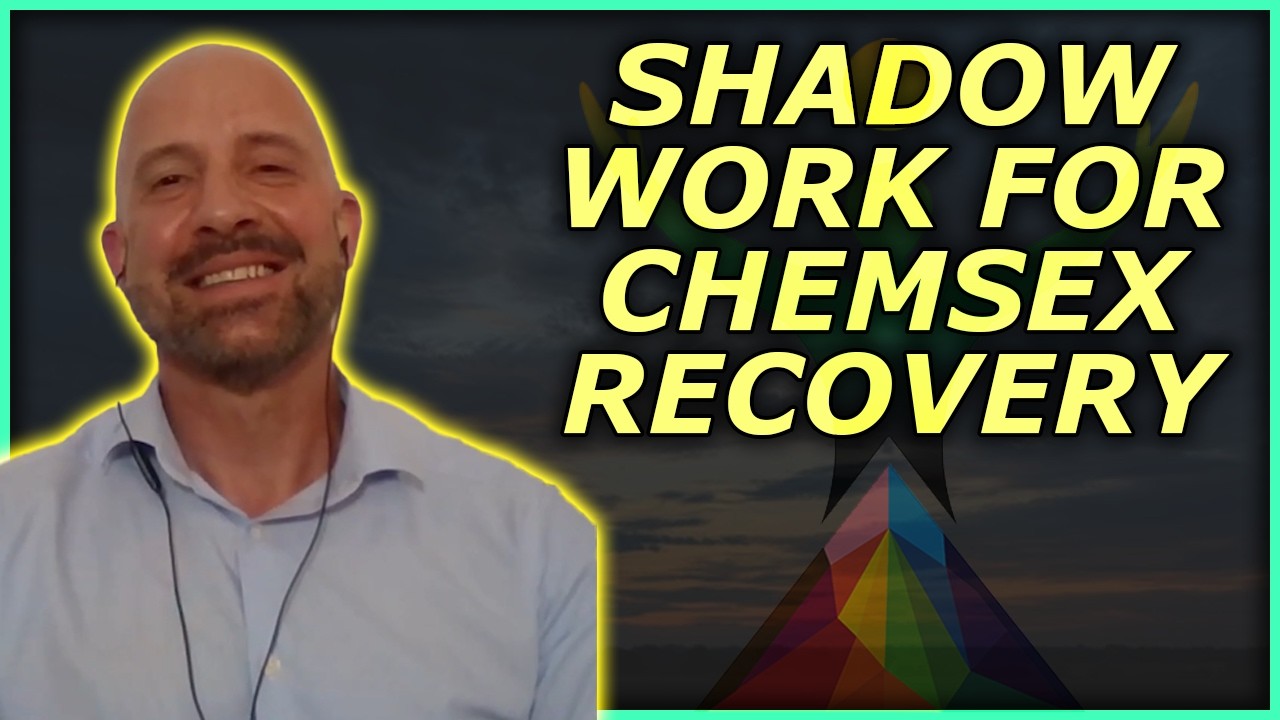
Jamie Willis, a therapist specializing in chemsex addiction, explains Jung's shadow work: the disowned traits like neediness or rage that chemsex forces into the open. Without safe containment, this causes flooding and retraumatization. Willis uses tools like the 2-chair technique and Byron Katie's turnaround to help clients integrate these parts rather than fight them.
Chapters
big aha moment in my own therapy when I realized actually I didn't actually think of myself as a man because I was gay. And I didn't realize I'd been walking around with this. That was in my shadow. Okay. So it was playing out in all sorts of like weird and wonderful ways.
Yeah.
You know, just, just notions like that, the emasculation that we sometimes feel. Yeah. Um, and again, I'm, I'm massively generalizing.
Chemsex, sexualized drug use among men who have sex with men, typically involving methamphetamine, mephedrone, GHB, among others. Chemsex misuse is a worldwide epidemic that needs attention, dialogue, and hope for those lost in it, which is the purpose of the Aftermath Podcast. Please note the views expressed by the host and guests on this podcast are not to be taken as medical advice, and the content around sex and drug use can be triggering. Welcome back to the Aftermath Podcast. I am excited today because we're going to talk about a topic that I've been trying to get on the podcast for a while now. Couldn't find the right people, person. And I have found the right person now in my travels around the country. And we connected on LinkedIn. We've gotten to know each other. He's a delightful, delightful man named Jamie Willis. I'm going to introduce you, Jamie, and then I'll let you talk. But we're talking about— oh, I didn't say we're talking about shadow work, by the way. If you're listening, if you are interested in shadow work, Always were intrigued by it. Keep listening to the whole podcast because you're going to have a treat today because Jamie Willis is a therapist. He's a clinical specialist in chemsex addiction and LGBTQ mental health. He has 22 years of experience across service development and frontline practice. From 2009, Jamie found himself working with chemsex-related issues as they began to emerge with increasingly increasing regularity. By 2014, he was manager of Antidote. If you're from London, you— I'm sure you've heard of Antidote. Um, it's a pan-London LGBTQ+ drug and alcohol support service very much at the epicenter of the chemsex crisis. He developed services and group work programs aimed specifically at supporting clients struggling with problematic chemsex use and related harm. Then in 2015, he was published in the British Medical Journal calling for chemsex to be made a public health issue And subsequently bringing chemsex-related harm to much wider professional attention. Previous roles include addictions lead at a therapeutic community in northern Thailand and developing alcohol support services for young LGBTQ+ people in South London. Jamie also worked as an A&E substance misuse counselor at a busy North London hospital. Qualified as a Gestalt therapist in 2007, Jamie has developed an integrative practice where, in addition to Stabilization and harm reduction approaches. He also draws on influences from Jungian shadow work, attachment theory, internal family systems, and trauma-informed approaches. We could probably do 3 or more, more podcasts, Jamie, on other topics like that. Uh, Jamie believes effective therapy in his space requires not just technical knowledge, but a deep understanding of the shame, trauma, and community dynamics at play. He provides a highly professional, energetic, and affirming therapeutic space for clients and is committed to supporting fellow professionals through collegial discussion and service design. In recent years, Jamie has been based in Southeast Asia, continuing to work online with clients on chemsex recovery, addiction, and LGBTQ+ mental health issues. He also has provided consultancy and training internationally, including for services in Uganda and Malaysia. He is now based back in London where he continues his private Practice. We are having all the big names on season 3 on the podcast, and you are one of the biggest. Wow, what a resume. Welcome, Jamie.
Thank you so much, Dallas. It's great to be here, and I'm so glad we were able to finally link up and make this happen. So, yeah, thank you so much.
It's amazing to me how humble you are and just how— what a presence you give. You know, because I, I read your bio before the podcast and I was like, what the fuck? I was like, he's done all this stuff that you would never guess the way that you are relatable and just so welcoming to me. You've just been so welcoming to me. I just love talking with you, uh, even through, even through LinkedIn messages. I just, I just think you're a great person.
That's amazing. Thank you, Dallas. I mean, I, um, I, I forget, I don't quite know how to respond to that actually, but thank you. Thank you so much.
Are you blushing? Are you blushing?
I am blushing. It's the heat.
It's the heat. Yeah, it's the heat. It's actually hot in London, right?
It is. It is actually. It's gone from, um, it's gone from kind of winter to high summer and then it's been about 20, 24 hours. We've gone from 14 degrees to 27 degrees. Anybody who's ever been to London knows that we don't have AC here either. So it is genuinely hot here today. Yeah.
Yeah. Yeah. I was just learning that.
Yeah.
Um, I'm going to try to adjust this light. Here we go. As I was saying before the podcast, you got to light me right. You got to light me just right, or I'll look 80 years old. That's it.
You'll be distracted for the rest of the conversation otherwise.
Exactly.
I will.
I will.
I will.
So before we get started talking about Jungian shadow work, which I am fascinated by, um, my program Recovery Alchemy is kind of based on the Jungian discussion on alchemy. And, um, so I'm, I'm really digging that subject, but do you have lived addiction experience of your own that you would feel comfortable sharing with us?
Sure. It's something I don't share that often actually. And I mean, for no particular reason, it just doesn't feel right. But no, I mean, my, um, my substance use misuse, uh, went back a long way. I mean, I'm 54 now, um, but I started using when I was, uh, 11 years old.
Hmm.
So, um, there's a lot of addiction prevalent in the family. So, you know, it was already there and I was already familiar with it. So, but I started using and using heavily from, from that age, uh, through my kind of teens, all through my 20s. I was using very, very kind of heavily and getting in a lot of trouble and leading quite a miserable existence, I have to say.
Mm-hmm.
Um, I mean, I, I have to say it preceded the, the, the chemsex phenomenon, actually. By the time the chemsex phenomenon really started to evolve, I was— had pretty much matured out of my own using. Um, because I didn't follow a formal recovery program. I didn't go kind of 12-step or anything. I had a bit of a kind of aha moment as I hit 30. Um, and just kind of looking at the rest of my life and thinking, I'm going to end up in jail or probably dead. unless I do something pretty radical now. And that's what I did through a variety of different means, therapy being one of them. You know, I have a spiritual practice as well, which has really sustained me down through the years. So just things like that and some amazing people. I mean, you know, Dallas, in this business, business of recovery, it's the people around you that really matter. So I'm very, very grateful for and indebted to a lot of people around me. But yeah, it was for about 20 years, it was very, very serious, quite chaotic using. So, you know, it's a lot of lived experience. And like a lot of people who've been involved in this kind of using, you know, you watch a lot of people around you fall by the wayside as well. So that 20 years, I don't believe in regrets. I think it's sort of made me into the person that I am today. But at the same time, you know, I'm pretty glad to be out of it, you know.
Yeah. Yeah.
Yeah.
And for anybody listening, I hear people kind of wailing about and upset about the number of years they've used. You know, like I've been doing this for 10 years, right? And Listen, that's really a drop in the bucket because people like Jamie, you have a 20-year history with addiction and now look what you've done. You've turned that all around and you've made meaning out of it. Such important meaning because you're doing big work. I love that you're working in Uganda and Malaysia as well because I get a lot of DMs from them and no services. whatsoever.
Yeah.
You know?
Yeah. It's, um, I think it's, it's, it's times like that, that it really does make everything worthwhile. And I mean, you were very kind in what you said earlier about me being humble or whatever, but you know, you know, Dallas, I think when you work with those guys in those, particularly in those countries, in those contexts, you know, you get, you really get a powerful sense of what dedication means. Right. So, you know, I mean, you've got to work with people that working in incredibly hostile, conditions, you know, but nonetheless, super, super committed. And I think, you know, I was asked to, um, so let me backtrack. So I was asked to do some consultancy for a service in Uganda. I'm not going to name services, that's because it's still quite sensitive in those countries, you know.
Sure.
Um, but, you know, I was approached to do some consultancy around kind of LGBTQ+ kind of stuff. Wasn't sure what kind of reception I was going to get actually with the Ugandan team. You know, because you only ever hear negative things. And look, I've been around for long enough to know it doesn't represent a whole country or a whole people, but nonetheless, you know, there was a little bit of trepidation. It's like, how is this going to land? And, you know, those guys were amazing. You know, they were so committed. I mean, just even doing training with me could have gotten them into serious trouble, you know, but they were just so committed to providing that support and that help anyway. And, you know, I think when you, when you encounter people like that along the way, Yeah, you know, it's just that there's no place for ego in any of that kind of stuff. And so in Malaysia, you know, I spent quite a lot of time in Kuala Lumpur, um, people doing chemsex work there. Again, very difficult for them to do so, uh, for various different reasons. It's not the most LGBTQ-friendly environment, but nonetheless, they're in there and they're doing the work as well. You know, it's, it's incredible what people do. It really, really is.
Mm-hmm.
So I think I'm always grateful to be a kind of a part of that that world, that field, if you like, you know. So, and as you said, you know, it's, this is what we do. We make meaning, you know, if we've been through these situations, these environments, these difficulties, these trials and tribulations, if you will, you know, then a big part of recovery is meaning making. I think we'll be talking about this today actually in terms of shadow work, right? You know, when we talk about—
Yeah.
kind of a classic therapeutic pathway, you know, particularly say in trauma or something, you know, we talk about kind of stabilization, processing, and meaning-making and integration, you know, so I think that's a really good kind of framework for recovery basically, isn't it? Yeah, yeah, yeah, it is. Yeah, it is.
Yeah. So you are undoubtedly an expert in chemsex. I mean, let's go ahead and say that and establish that. And I love your your writing. If you want to find Jamie's writing and his work, the best place I think is LinkedIn, unless you think there's a better— is there a website or repository?
Yeah, that's definitely the best place. Yeah.
Yeah, Jamie Willis, we'll put his link, we'll put your link. Can we put your LinkedIn link in the show notes? But he writes lots of articles. It looks like he's on YouTube. I haven't even looked at that yet. But the articles are just fascinating. And very informative. And so with that said, we could tackle all sorts of chemsex issues, but what we haven't talked about on this podcast yet is shadow work. And shadow work is one of those buzzwords, you know, that I think has been passed around a lot. You know, there was this on TikTok, there was this shadow work journal that just blew up. You know, like this girl made millions off of this shadow work journal. Um, people are making millions off TikTok on anything, but, um, I don't— I think it's passed around a lot and I do my version of shadow work in my program. You know, I don't dabble too deep into it because it's a coaching program and I'm not a specialist. Um, but I think it is misunderstood and it's just one of those things where What I find is that when you mention shadow work, most people equate it to their bad side, like their negative side. And you, I'm going to let you correct me here if I'm wrong, but I say it's a blind spot. It doesn't have to be bad. It's just something about yourself you don't see or don't really, you're not aware of. It's like in your peripheral is more to me is a better explanation. than saying the shadow of me is this, this bad part of me, like this negative side of me, right? So can you tell us like 101, what is, what is shadow work?
So I think, look, I'm really glad we're clarifying this today. You know, as you said, Dallas, there are a lot of misconceptions and I think just the name, right? Shadow sounds a little bit, a little bit spooky, a little bit woo-woo, doesn't it? It's like, ooh, shadows. Yeah. Okay.
Yeah.
Yeah. Look, it might be worth just maybe getting a little bit of history. I don't want to get too kind of in the weeds as far as history and theory.
Take us in the weeds. Take us in the weeds.
Okay. We're weed-friendly here, are we? Yes, we are.
We're weed-friendly. California sober.
I love that so much. So look, I think that the shadow or the concept of the shadow was formulated by a psychiatrist called Carl Jung. And you don't have to know huge amounts about him, but he has been hugely influential. So even if you don't know the guy, you'll be familiar with some of his work. So he was born late 19th century, very prominent in the early 20th century. He was a contemporary of Freud, et cetera, et cetera. But if people have heard the terms, things like introvert and extrovert, those are terms that were coined by him. Also, if anyone's ever done one of those Myers-Briggs personality tests, that's all based on Jungian personality types. So even if you don't know him, you will have encountered his work and his influence somewhere. It's very much kind of absorbed into the mainstream. But I think when we're talking shadow work, I'm really glad you said what you said there, Dallas, about one of the misconceptions is that it's kind of evil or bad or whatever, because it's absolutely not the case. I mean, put really simply, the shadow is where, is kind of the repository where we push all the stuff that we don't want to deal with.
Yeah.
So the things that we don't like about ourselves maybe, but the things that have been invalidated by the people around us. So it may be things like, classic ones that come up a lot are things like neediness, things like kind of rage, power, masculinity and femininity, even all these kinds of things. So what happens is that as we grow up, we have these notions, these attributes, these traits, if you like, but because they are frowned upon or stopped or prohibited, forbidden perhaps, then we push them to one side. We put them down. So it's a little bit like having the attic or the basement in your home. It's where we put all the stuff that we don't want, that we're not going to use or don't want to use. The issue with the shadow is that it doesn't just go away. You know, it might be, as you said, I mean, you used the term blind spot. It might be out of sight and out of mind, but it hasn't gone away. Okay. So what it sort of does, it kind of sort of sits there and leads almost like a semi-autonomous life of its own.
Okay.
Yeah. Because it holds a lot of energy. You know, and it takes a lot of energy to keep these things in the shadow as well. So, I mean, to give a classic one, if we're talking, you know, uh, for say the gay man femininity, you know, it's been forbidden, it's been frowned on, it's been all those kinds of things. So you might push it away and try and sort of, you know, act more masculine or whatever. So your femininity gets pushed into the shadow, but there it becomes somewhat distorted. And so when it's there, then it can start to take on maybe some toxic traits or whatever, or come out in different ways because although, although we've put it there, it still has the energy and kind of comes forth at times when we don't expect it, which very much fits in with what you were saying about the blind spot. So we might find ourselves, you know, kind of self-sabotaging. We might find ourselves being kind of mean or bullying, you know, when we actually don't mean to be. It might be out of our awareness. You know, that happens quite a lot. If we think about in, um, A chemsex context, you know, actually what one of the manifestations there can be, things like sort of needing intimacy, you know, being vulnerable, those things, particularly for a man. I'm massively generalizing here, but particularly for a man, those things can get pushed into the shadow because it's not allowed. You know, men aren't vulnerable. Intimacy is wrong to need. to need intimacy, to need sex even. It's wrong. So it's all bad. It gets banished. Okay. So what happens there is because the repression holds a lot of energy. Okay. So it's all there sort of fermenting in the background. Now, the price that we pay for doing that is a sense of not really feeling fulfilled in life, you know, because it takes a lot of like the life force, if you want to put it in that context, away. So we feel that our lives can be a little bit kind of grayed out in a sense. You know, we're not, we're not able to ask for what we need. And so classic ones are, you know, we might want to be wanted, but because that's not acceptable, we'll settle for being desired, you know, which doesn't quite hit the same spot. And so it will manifest in different ways like that. Now, in a, in a, in what happens is where it becomes so repressed, it's Kind of builds up a head of steam. Okay. So if we are in a chemsex context, what then happens? All that stuff comes out within a chemsex context because it's almost like, you know, the, um, the guards have gone away.
Yeah.
You know, so then it all comes forth, you know, and what then happens is we end up having a confrontation with some of our shadow elements. But we're not prepared to do it. We're not psychologically, emotionally, spiritually, if you like, prepared to be able to have that confrontation. There's a lot of power there. So we end up becoming flooded by it. So rather than these kind of elements being our possession, they kind of flood us. They kind of move in and take over. So when we're doing shadow work, what we're actually doing is really trying to formulate a relationship with these aspects, you know, because they're essentially, they're disowned aspects, you know, put simply. Does that make sense?
Love it. Love all of it. Let me, can I take a minute and review what you said?
Absolutely.
Yeah. Um, and I, and I, um, I'm also reflecting on how similar this is to, uh, uh, internal family systems. Right? Isn't it similar in terms of— Yeah. Yeah. These exiled parts of ourselves, right? So with, with those listening, one, like you said, a common part that we reject is our, our gay part or our feminine part. You know, the part of us that's identified by the outside, by somebody else, invalidated by others, as you said, as gay. So for me, I like to make everything about me on the podcast, but for, for me being caught acting like I was on a stage performing on my tiptoes as I, like I was in high heels, right? By a parent and ridiculed for that.
Right.
At that moment, that was, that part of me was invalidated. By my parent. And so you're saying when those parts, maybe, maybe you're told you're too loud, like you said, you're too needy, you're, you're too much, you're too something, you're too fat, right? Um, or neglected. And so the unspoken message is you're not important enough, right? Something like that. So we take that part of ourselves and we shove it into an I like a basement instead of an attic for some reason. But we shove it, we shove it in the basement and that's where it gets repressed. And I love that you said the word fermenting because that's that. I love that word. I use that word too. Um, is it ferments in there? Right. But, and that also takes a lot of energy to, we shoved it to the side. And so when we shove it in there, I love that you said it gets distorted. It takes on a life of its own. It gets, it takes on these, these traits. So it's a real part of us with its own personality, right? You just tell me if I'm not, if I'm off track here.
You're well on track there, Dallas, actually. And I'm really glad you brought in the IFS, the Internal Family Systems thing, because it's very, very closely linked with that exiled parts Absolutely. But the energy it takes to keep those parts exiled as well. So in IFS, Internal Family Systems, we'll talk about protector parts, we'll talk about managers and firefighters keeping those wounds from being activated, right? So it's exactly the same thing. And I think it's worth mentioning, I mean, we're talking about shadow work in the Jungian context, but there's lots of different languages and lots of different frameworks. It's not new and Carl Jung never claimed that it was. I mean, one of the things that I really love about him is that he draws on so many different influences. So he draws on kind of spirituality and kind of archaeology and anthropology. I mean, all of these kinds of things, you know, so, so what he actually did was took his learning from there as well as his own learning. I mean, he's a very accomplished psychotherapist and psychiatrist, um, and really kind of formulated this into the concept of the shadow, right? Yeah.
Yeah. Yeah. Yeah. And so when we engage in chemsex, It's like the basement door is swung open.
Yeah.
And all the parts come running out. Right. We talked about this in another episode with a psychotherapist about shoving your parts, you know, like kids shoving them in the closet. Right. And then when you get, you know, when you do chemsex, they all, they all come out, but you're, you use the word flooded. Um, and we're confronted. by the parts that we've been repressing this whole time. And that confront— that it is confronting, but it— and it's something we're not ready for either at all. Right. And so in shadow work, the goal from what you said is to get to know this part and assess what it needs and to kind of negotiate and create a relationship. With, with these parts that we have rejected in ourselves. Is that right?
That's, that's 100% right. And because I think if you look at any kind of cultural background, you know, they will have kind of rituals and containers and things like ways of meeting the shadow because we all have shadow parts. You know, I mentioned things like power, violence, aggression. You know, we all have the capacity to, to to manifest those things. So if you look at sort of other cultures, other frameworks, a big part of that, whether it's kind of spiritual recovery, even actually, a lot of that is about building a relationship with the shadow. Now, I mean, you can kind of use maybe an example there, which is it's a difference between building a relationship with it and getting to know it. taming it, if you like. There's a lovely metaphor I can use in just a moment, but, um, but kind of taming it, but, but, but also ensuring that you are strong enough to withstand that confront— that confrontation. And that's what a lot of the work is around, again, whether it's spiritual recovery, whatever it is. Okay. Because if you're not, then what happens is the shadow consumes you. You know, if you try and confront the shadow, uh, before you're either strong enough or it's not within a framework, it's not within a ritualized kind of way or whatever, that's what we mean by flooding. Okay. Now I think, you know, I've said this to people many times. One way of maybe thinking about that is like nuclear energy, often likening it to nuclear energy in that the shadow can be an amazing resource. You know, we don't have to fear it. We really don't have to fear it. It can be a fantastic resource, but it has to be respected. So if you think about nuclear energy, okay, so treated in the right way, You know, with the right container, the right protocols, the right, you know, lots of sort of safety stuff and everything like that. You harness that and it's, it's an incredibly powerful source of energy. You know, if you just went in there and just goes, right, we're going to do nuclear energy and the container's weak and the protocols aren't observed, whatever. What happens? Bless you. What happens?
It's fine.
You end up with Chernobyl, right? you end up with meltdown. And that's what happens when we try to do that. So kind of bringing it into the kind of Chemsex context, and I guess I'm referring more to problematic Chemsex. We know it sits on a continuum here, but you know.
Yes. Yeah. Yeah.
What happens is that we confront those shadow elements within the Chemsex context, which isn't ritualized usually, is a very poor container if there is any container there at all. And we're exposed to all of our kind of more shadowy elements. Now, because they have been in the shadow, they've been in the basement, as you put it, they can be distorted. If we develop a relationship, what we do is that we kind of undistort that, if that's even a word. Okay? We transform that. We transform it into something and it becomes in the service of us. Okay? We're in relationship. We integrate it. Okay?
Yeah.
So what happens if we do it in something like a chemsex context? We meet all these shadowy elements in their distorted forms. And then that can consume us and in some cases even destroy us. Yeah. Does that make sense?
Yeah.
Yeah.
Yeah. We could also say that we alchemize that part, couldn't we?
We do. Loving that. Loving that link in there.
Recovery alchemy.
But it is. I mean, look, I mean, you laugh and everything, but that's exactly what we're talking talking about. There are lots of ways of doing it. I mean, I often draw on the example of the BDSM, kink, and fetish community, actually, as a framework, you know, because they do deal with arguably shadowy elements. You know, if you go into a BDSM scene, if it's done properly, you know, and then you'll go into that, you'll talk about what your desires are or aren't, as the case may be, you know. So you'll be talking about things like, power and control and wanting to experience pain or inflict pain. And, you know, it's all negotiated, you know. Now, if you think about it in that context, there's the ritual, there's a negotiation, there's the ritual.
Okay.
There are safe words. Everything is contained. Again, if it's done properly. All right. So you're able to explore all of these elements in a way which is ritualized. Okay, there's negotiation, there's respect, there's consent, there's, as I said, the safe words, all of this kind of stuff. And really, really importantly, there's the aftercare. Yeah.
Right. Yeah.
So, you know, you finish the scene, whatever, and then aftercare, whatever you've negotiated, whatever you need around that might be, you know, somebody holding you, just people giving you water, the kind of the gentle grounding, you know, so there's a coming back from So if you think about confrontation with shadow, there's the negotiation, there's the building of the relationship, there's the ritualization, and there's the coming back from it. So there's actually a lot of learning and a lot of kind of technology, if you like, that could be taken from the kind of BDSM kink fetish scene as an example. So I think, you know, sometimes when I was sort of talking about that with people, it makes a little bit more sense, you know, because actually a lot of clients that I have seen down through the years, you know, end up traumatized. I mean, let's just call it what it is, right? Because, you know, they go into a chemsex scene, they explore extreme BDSM sometimes scenes, you know?
Right.
And they might have gone from like, you know, vanilla right to extreme practices. Okay. Under the influences of Various different substances, no safe words, no regard, and there's no, um, no real ritual usually, maybe some, some in there, you know, but it's the coming back as well, you know, because if you think about, if you've been through, um, a BDSM scene, okay, the aftercare ritual and all that kind of stuff and you're with other people and it's, it's very much held, you know, metaphorically and, you know, uh, physically.
Yes.
At the end of a Chemsex scene, if there hasn't been all the ritual negotiation and all that kind of stuff, it's just at the end, it's just you on your own, twitchy, paranoid.
Yeah.
Ashamed for what you've, of what you've, of what you've just done in many cases.
Yep.
You know, so that's, that's what we're talking about. You've confronted your shadowy elements or shadow side if you want, and you weren't ready for it. It's consumed you and now you're just feeling, well, I mean, basically, basically, you know, shadow work, shadow work without containers. is retraumatization. And that's essentially what it is.
Retraumatization.
Yeah. So, so this is why it's so important because when clients come in, in a sense, what we're doing is reverse engineering a little bit. Yeah. Because they've already exposed themselves to the shadow. Ah, all right. So what we can do with that is, and why it's so important to do the shadow work is That actually, it's like, okay, look, because it's not, it doesn't have to be all bad. Okay. It's like, look, you've been exposed to stuff. You did it in a way which was unboundaried and uncontained and it's kind of consumed you, nearly destroyed you. But there is some stuff in there that you can take from it. It has allowed you to explore some elements of yourself. Okay. Now we are reverse engineering in that we now might have to do some trauma work or something around that. And then we talk about, okay, how do you now integrate this experience? You know, but this is, this is why it is so incredibly important.
Thank you. So thinking about what you said was for someone who's not ready, or if they don't have, if it's okay, number one, respect the shadow. So I want the listeners to hear this. Is that no matter what that shadow is, respecting it and having compassion for it is basically respecting and having compassion for yourself because it's an aspect of you.
Right?
And what I see often is we're so used to rejecting ourselves as gay men and hating ourselves is that we hate those parts. Um, and I, in my program, we talk about the part that wants to use. You know, there, there is an aspect of me that wants to use meth. But so, so often we reject it, we hate it, we ridicule it, we isolate it, we put it down, right? We, we, we say it's the, it's the demon on my back. You know, we fight it. We're only saying that about ourselves. And I feel like it doesn't get you anywhere, but we want to be so negative about addiction, right? That it's bad, bad, bad. It's crystal meth, but this is a part of you. It's an aspect of you. So I love that you said to respect that shadow first.
Yeah.
And you said that if you're not, if you don't approach this shadow work, with ritual and container and protocol and aftercare. And if you're, if you aren't equipped with all that, it could destroy you. Could you talk a little more about that?
I absolutely can. I mean, because when we're talking about ritual and containment, and maybe I can give some examples of what that might look like, you know, we've just been talking about the BDSM kink fetish scene, because I think it's such a concrete example of Quite sophisticated shadow work actually, and done well. Okay. But if you think about what a container is, okay, so a container might be the therapy hour. Okay. It's doing therapy. People explore shadows through art a lot of the time. Art is a wonderful, wonderful medium. And a lot of clients that I've worked with will do that. They will express themselves through art, whether that's poetry or drawing or whatever it is. So There are ways that we do this, which is about getting to know those parts, as you quite rightly said, that we might be feeling shame around. So you're 100% spot on there, to be honest with you, Dallas, when you talk about the meth-using part. So actually, we look at what its function, what does it allow you to What does it allow you to do or what does it allow you to stop feeling? And there's a question sometimes it's like that I give to clients, which is if, how would you express yourself sexually if you were completely unashamed?
Hmm.
You know, so actually getting to know that and look, for some people, they might continue to explore kink or fetish or whatever. Some people, it's like, look, I've already done that in chemsex and okay, I've tick that box, as it were. I don't want to do that. Okay. But what we, what is really, really important is the building of the relationship with the client. First of all, they have to kind of, they have to trust you as a therapist. But actually what we do is that we look at elements in their life where they've already got containers. Everybody will, you know, examples of that. Okay. Things that are contained. So when we start exploring this with people, they recognize actually that the chemsex situation is very, very uncontained sometimes. And so what we then start doing, I mean, chemsex, we're talking about sex mostly. Okay. So it's like, well, look, what is it giving you? You know, so quite often it's not even about the sex.
Exactly right.
Yes, the drugs are driving that and everything like that, but I'll give you, So wandering out about a little bit here, but I know when I was running the group work program, something really, really stood out for me. And we all noticed there's me and a couple of colleagues doing these, uh, these programs, Chemsex structured day program. And over that, over the weeks when we did that, the amount of people who said, actually what they're really looking for is a relationship. They're looking for intimacy.
Yeah. Mm-hmm.
But it's, but it's coming out in, in, in the chemsex context. So it's like, right, okay. So when I said earlier about kind of reverse engineering, it's like, okay, well, what, what, what might that look like? Intimacy, relationships, you know, but also looking at what's been put in the shadow in the first place. So when we talk about anger, people might be angry even at the community and themselves for kind of, you know, body fascism or people being mean. Or just not feeling accepted within the community. So that might be in the shadow as well. So we have to explore all of these kinds of elements. You know, it's really important when we, when we put the program together, we were very, very mindful of that process. I mean, the first weekend, we didn't go straight in with like the really heavy stuff on the first weekend. It ran over 4 weekends, by the way. Um, first weekend, things like maybe kind of more behavioral stuff, you know, classic addiction therapy stuff. And then over the weeks, as they built the container, which was the group, you know, they felt far more able to start exploring some of these more difficult elements, you know. So actually being able to ask for what they want in a group, you know, for some people that's absolutely massive. You know, for some people they're like, well, that's easy. But for a lot of people, actually, it's not. You know, but also people just talking about some of the things that they've been doing within the chemsex field. So they'd be talking about things like, you know, blood play and all that kind of stuff, you know. So yeah, really, really like talking about some of this. And look, I know, I know it sounds almost cliché, but it's true nonetheless, which is shame dies on exposure, right? So people are kind of getting to know these. And once, once things have been exposed, once, you know, the shadow, we're not looking to kill the shadow. All right, we're not looking to get rid of it. You know, what we're actually doing is kind of inviting it in and getting to know it a little bit more, you know, and you'll know from the internal family systems work, that's, that's what we do. What's your role? You know, what are you doing here? Oh, okay. So you're that part which has been protecting against rejection, you know, or, um, or against, you know, anger or neediness or you know, um, effeminacy or even masculinity sometimes, you know, some, some people feel very emasculated, you know, simply by sheer dint of being a gay man. That, I mean, that was part of my own journey, actually. That was a big aha moment in my own therapy when I realized actually I didn't actually think of myself as a man because I was gay. And I didn't realize I'd been walking around with this. That was in my shadow. Okay. So it was playing out in all sorts of like weird and wonderful ways.
Yeah.
You know, just, just notions like that, the emasculation that we sometimes feel. Yeah. Um, and again, I'm, I'm massively generalizing here, but it comes up a lot, you know, so this all gets put in the shadow as well sometimes. And so part of that is about bringing that back out into the light and using it as a resource. Okay. Well, what does that mean? What does it mean to be a man and gay? Right. So, um, so it's incredibly important that we do this in a way which is respectful, which is, as I said, ritualized, that there is meaning-making afterwards. I mean, I can give lots and lots of examples. If you look at indigenous cultures, okay, so a young man, a boy becoming a man, rather, and he will be required to go off into the wilderness where he'll encounter fear, hunger, loneliness, all of that kind of stuff. But then when he comes back to the village, he's welcomed with open arms and it enables him to make meaning. He goes from being a boy to a man. It's held by the community. So going off into the wilderness, if you like, is him meeting the shadow elements. And so there are so many examples of this. And so it's not so different for us sometimes. And I think particularly, dare I say, for LGBTQ+ people, what we don't often have are like rites of passage. You know, a lot of us, myself included, you know, we kind of burst onto the scene and it's just like, yeah, everything. And now, you know, there isn't, there isn't necessarily necessarily a kind of, um, um, a graduated program for us to become healthy LGBTQ+ people, you know. So more and more so now, there are lots of programs and things happening, thankfully. But that happens quite a lot, you know. We're just left to sort of fend for ourselves a little bit, you know. And that comes out a lot as well, you know. People talk about coming out on the scene, you know, feeling quite lonely and afraid actually, but not feeling that they were able to express that. You know, so does that make sense? I feel like I'm kind of going off on a bit of a tangent here, but yeah.
No. Well, I'm picking up what you're laying down. I don't know about anybody else, but, but yes, it makes sense to me. And, you know, I think the meaning making is important. And we had a, I had a client on one of the podcasts here and the name of it is The Gifts of Chemsex, like the gifts you get from it.
Yeah.
And as gay men going through the chemsex experience, oftentimes is that, is that rite of passage? It's, it's something that gets your attention to, to force you to, like you're saying, to look at your shadow parts. And then the recovery is not quitting the substance. It's the integration of these parts and beginning to be whole again or whole for the first time. in your life, right? And you were before, I feel like we're walking around fragmented and meth may have blown that up, but recovery is bringing it all back here together, you know? And that's so in a container, therapy, maybe art, support groups.
Absolutely.
Right? Yeah.
I mean, it's anything like that. I mean, because again, this is what I was saying at the beginning about kind of shadow and shadow work sounding a little bit kind of esoteric or whatever. We do it all the time. You know, we do it all the time. Recovery groups. I mean, you know, I mean, you probably know in 12-step groups, if you think about some of the steps, there's the making amends, right? That's confronting shadow stuff. You know, it's confronting your past and the things that you've done perhaps to hurt other people. There's the moral inventory, which is really hard work for a lot of people.
Yeah.
But it's really looking, but again, it's a way of really confronting, coming to terms with, and meaning-making of a lot of these shadow elements. And again, I mean, it goes back hundreds of years, hundreds and hundreds of years, rites of passage. The Zen Buddhist tradition, they talk about the ox herding pictures.
Yeah.
It's a very long drawn-out kind of metaphor, but basically series of pictures, 10 pictures, very beautiful if anyone's interested, But it's about the 12th century, I think, in Japan. But, um, you know, they talk about, okay, you go off into the forest, different pictures. You can't find the ox, the ox in this metaphor being the wild, untamed kind of mind, all that energy that that holds. Um, then you find the ox, you see the tracks and then you find the ox and then you build the relationship with the ox and then you put a rope on it and then you tame it and then you climb on its back and then you come back. Importantly, actually, to what we were saying.
Yeah.
is you then come back on the back of the ox. There's a wonderful picture of somebody playing a flute on the back of an ox. But importantly, you come back. And then the last picture, the ox has disappeared and the man is entering the marketplace. So in this metaphor, the ox has been integrated and so you've forgotten about it. And so right there, you've got a really classic, in pictorial form, a confrontation with shadow.
Yeah.
Which is, you know, because there's enormous, enormous power and energy in, in an ox, right? When we do that through chemsex, essentially what we do is that we find an ox, any ox, we leap on its back, shout yeehaw, try and do a rodeo, and then wonder why we've been trampled into the dust and we're being dragged through the mud, right? So yeah, that's the difference between doing it in, in, in, in a ritualized, contained way and doing it in a way which is very, very uncontained, which is can happen. I'm really stressing can happen through chemsex. Yeah.
Yeah. Yeah.
Yeah.
Yeah. You know, you, you talked about the meth using, we're talking about the meth using part and what the meth using part, it did serve you for a reason.
Yeah. Yeah. Yeah.
It was giving you something. Like you said, how would you express yourself sexually without shame? Well, you got a taste of that. You know, I call it like when you do chemsex, it's like Adam and Eve taking a bite of the forbidden fruit. All of a sudden they see good and evil, right? It's like we instantly cross over into, and so many men say this, this is what I've been looking for my entire life. I said it, right? It was like this, this weight of the world is lifted. Right. And all this shame and all this rejection and all the stuff that we were living with is instantly gone. We feel like, right? We think. And so there are states of consciousness that I think we get in chemsex that gives us, to me, an incentive of, wow, if I can feel that way, chemically induced, Imagine what it would be like if I actually worked for it and found it naturally and it lasted, is sustainable. You know, I don't get slammed back in reality. Like you said, there's no aftercare in chemsex. You're just kicked, your ass is kicked out the door pretty much. You're not held or transitioned out of, you just slam back into, then you're in despair and you're spiraling and No, I missed work and, you know, my mom's trying to get hold of me and, you know, all this stuff. Like all of a sudden there's, there is no, there is no aftercare with it. Um, just like you said. Um, but one thing I want to point out, and if you're listening, I want you to really, really, really listen to this, is that Jamie says inviting it in, inviting your shadow in. And I'll give you an example of, for me, is rejection, exclusion is always a schema of mine. And I say schema because I read this, I don't know if you read this book, Emotional Alchemy.
I haven't read that one. I know the schema thing. Yeah.
Yeah.
Yeah.
So anyway, I learned the word schema, but anyway, basically, you know, that I have this filter, this belief that I'm always excluded. Right. And there's this part of me that thinks that for whatever reason. And I could track it back and all this kind of stuff. The most I have searched and searched and read and tried to find these methods and this, you know, like even shamanic practices of like soul fragmentation, you know, like soul retrieval, like something helped me, you know, get rid of it. But the best and most effective thing I did was just invite this feeling of rejection in.
Yeah, yeah, yeah, yeah, yeah.
Sit with it and just be with it.
Yeah.
That's it.
Yeah.
And just say, you know what? I feel, I, I, I feel rejection right now in my body. It's not the first time. And guess what? It's not gonna be the last time. I'll probably feel like this on and off for the rest of my life. But every time I invite it in, it gets softer. And it's around, it's not around as long either. Like I, I've tamed the ox.
Well, yeah.
Right. Where I'm taming this ox that was like trampling me before because this rejection, this exclusion would take me down out of, out of everything out of, I mean, as a 40, late 40s year-old man, you know, I would just, my whole day would be derailed, but inviting it in, so simple, but so powerful, but so hard too.
Well, it's counterintuitive, isn't it? I mean, and I just want to acknowledge what a wonderful example that was actually. I mean, because, you know, rejection comes up so much. It really, really does, you know, in the work that I do, Particularly around chemsex. It's a word that crops up time and time and time again. And I really love what you were saying there, actually. And if we're going to stay with our ox metaphor here, because what you didn't do there is kill the ox or try and kill the ox. What you have been doing for a long time is fighting with the ox. Yeah. If anyone's ever tried to fight an ox, I don't recommend it. It's not a good idea, right? So, and as you said, I mean, you're only ever going to come off second best in that particular fight. But I think in all seriousness, I mean, and thank you for sharing your own kind of personal experience there, because I think what you're talking about is fighting the ox. We throw all of these techniques and these tools and these resources, and as therapists, we do it as well. And it's like, let's get rid of this. Let's do something with it. Let's change it. Let's— all of this kind of stuff, which is the fighting with it. Either kind of the annihilation Or the fighting with. Okay. So, and what you're talking about there is a complete pivot. You know, if we're talking shadow work here, that's precisely what we're talking about. You know, if we might do that through therapy or through one of the other means that we were just talking about, but the end result is the same. We, you know, when you actually stop fighting and you just invite it in to say, okay, you know, look, come in, sit down.
Surrender. I surrender.
That's it. It looks like we're stuck with each other for the rest of Yeah. We might as well be friends, right? So, but like in all seriousness, I mean, you know, you were talking about internal family systems earlier. We keep referencing it. I'm really, really interested in that particular technique at the moment, still finding out more about it. But I just, I love the premise there, which is precisely what you were just saying, which is you invite it in, projection. Okay, come in. What is it you want me to know? You know, how old do you think I am? Actually, because these parts usually start, you know, when we're much younger and come into being, as it were. You know, so you're updating the part to say, you know, I don't want to get rid of you. I don't want to fight you. You're very welcome. Please don't overwhelm me. You know, the important mantra there, you're very welcome. Please don't overwhelm me, but I do want to get to know you. You know, what happens from that in most cases, I would say, is that a story will come out. around that, you know, that rejection part feels that it's protecting you and it feels that it has to protect you, you know, so, you know, actually, so by saying, so saying to something that's trying to protect you, I don't want you and I'm going to fight you is completely, yeah, it doesn't make any sense. Right.
Right.
So we might not like it, but as you said, when you actually develop that relationship with it, it starts to transform and it's quite a beautiful moment actually when that happens. You know, as you said, you just, you notice it starts to soften just a little bit. There's a little bit of flexibility. We might invite it to take another role, whatever it is. But it's certainly, it's certainly kind of counterintuitive, I think, for a lot of people to lean into those parts of ourselves that we don't like. We are hardwired to move away from pain, whether it's physical pain or emotional pain.
Mm-hmm.
You put your hand in the flame, you pull it out, don't you? I mean, this is what we do. We do it emotionally as well. There's nothing, even that, there's nothing wrong with that. We're just doing what comes naturally. So in therapy or in a confrontation with shadow, you know, like we're just talking indigenous cultures, if you're doing it that way, whatever it is, or if you're a Zen practitioner sat there for 12 hours on a cushion in the day, you know, actually what we're doing is that we're moving towards it. You know, when you're inviting rejection in, you're leaning into it and you're moving towards it, which will feel counterintuitive, but nonetheless, this is exactly what we need to be doing. You know, because what happens, you know, I go back to what I was saying earlier as well, which is these parts are an amazing resource. They carry so much for us, whether it's, you know, the gifts of chemsex you were talking about. Yep. I would align with that. But also, you know, if we don't, if we split those parts off, if we exile them, As you quite rightly said, they are parts of us. We lose something. We lose some essence, vitality or whatever. I heard a wonderful phrase. I can't remember who used it actually. It was quite a long time ago. Someone talked about the graying out of parts of our personality. Another way of describing this process. We gray it out. And I just thought that's a really great descriptive way.
Yeah.
of explaining what goes on, you know, whether we're talking about exiling or splitting off or repressing or whatever, the graying out process, because then we gray out a part of ourselves. And if we gray out a part of ourselves, then we're losing some of that kind of vitality and vibrancy that we might need to live, you know, a satisfying whole life, right?
Yes. Right. Yes. Also in this, Is this is self-love, right? So like when you push things away, you're rejecting them. But what do you do with something you love? You pull it close, invite it in. And, you know, I see this, oh, self-love, I'm taking a bubble bath or I'm getting my nails done. Or, you know, I was like, that's so not self-love. Like, let's do some self-care.
Self-care.
But self-love, like, let's get deep into this. You know, what are you, what do you not like about yourself and pull it in and what, and, and just leaning into that, those uncomfortable emotions. Like on a Friday night when you're all by yourself and you're having FOMO and you've, and you're lonely and you're, you know, you're, you're shaking because Because you just, the first thing you want to do is react. What can I do to get rid of this as fast as I can? And a lot of times it's get on the grinder and go have chemsex, right? Or if it's not, it's something else. If you're in recovery, you might be deflecting by saying, well, I got to get out to friends. I got to do this. I got to watch. I got to do this. I got to get out, put myself out there. Like you're running from this part. That is asking to be held.
Exactly. I mean, you quite rightly said earlier, actually, you know, you're running away from yourself. If anyone's ever tried to run away from their shadow physically, by the way, you'll see how impossible that is.
Right. Right.
But yeah, I mean, you are absolutely right in terms of what you're saying about self-love. And that is also learning to love those parts of you which might not be quite so attractive for whatever reason. And look, you know, some of those parts might always be problematic. We don't necessarily, I mean, even if we do shadow work, we don't suddenly kind of get all these parts and all of a sudden it's one great big loving. Some of these parts might always be difficult. They might always be practical, but they might be holding something for you as well. You know, I keep coming back to energy. But what are they holding for you? Some of them don't need your approval, actually, to be honest with you. But nonetheless, they are there anyway. And I think we all have to face just some of the difficult things in ourselves. We're not angels all of the time. We're not, unless you're a saint or something like that. Most of us do have these elements. And as you quite rightly said, learning to love those elements of yourself as well is really the best route towards kind of transformation. You know, so again, we're not trying to kill the ox, you know, we're not trying to break the ox. Actually, we have a rope. We're just trying to tame it a little bit so it's not so out of control, you know. And of course, in the chemsex arena, sometimes, quite often, things do get very, very out of control. And I think, yeah, this is a message that I really want to get across to people and, you know, particularly my clients, which is, you know, don't you don't need to be destroyed by this thing. You don't need to be afraid of it. That's what we were saying earlier, the respect, the self-love that you were talking about. And love, as we always say, love is a verb, right? It's a doing word. It's what you do to form a relationship with these parts as well. Also, we've been talking about ritual and working with this. It takes discipline. It takes a level of discipline. And something my clients are always quite surprised to hear actually about discipline, some of them have got quite a Uh, difficult relationship with discipline for various different reasons, but discipline, discipline, healthy discipline is, is, is a form of, of, of love as well. You know, and that's what people forget sometimes. We tend to think of discipline as, you know, the big stick and, oh, I've got to do this. And yeah, it can feel difficult sometimes, but it's just as much an act of self-love as anything else. Mm-hmm.
Mm-hmm. It sounds like, it sounds like boundaries too.
Boundaries. Absolutely right. Yeah. Boundaries, container. Absolutely. You know, that's essentially what it is, right? You know, this is why, I mean, in therapy, we have confidentiality. That's why it's at the same time every week, you know, or try to be, you know, it's the same amount of time every week. We have a bit of a structure. We'll kind of open it up, but we make sure that there is time towards the end of the session to, um, kind of debrief a little bit, do any work that we need to do about kind of coming back. And that goes back to that coming back thing as well. Boundaries, very much so. Boundaries, discipline, containment. Because again, I mean, what we're talking about is the channeling of energy, channeling of parts sometimes, you know, and that's, that's, that's so important. Yeah. Yeah.
Yeah. I think it's, I think it's so healthy to say right now I'm channeling this part of me. I'm aware that that part of me is now talking, is now responding, you know, and knowing that I'm going to back away from the situation.
Right. Yeah. Yeah.
Yeah. Because that part of me is not going to respond to this in the way that's true to me. Like, I know I can, I'm always, not always, I can be well aware of when certain elements have stepped and taken over. And I'm out of character, not out of character, out of alignment with what I truly want, I guess. You know, I'm not, we're not integrated at the moment, right? He's in, he stepped up here. Yeah. So just to review, negotiation, relationship, ritual, container, aftercare. And a good example of that is looking at the BDSM and kink community. They do it really well. They do it really well.
Yeah. Yeah. If it's done properly, they do it really, really well. Yeah.
If it's done properly, which is something else is that if you're listening and you're, you're in this state of beginning to sexually reintegrate, often you guys will think that you cannot be involved in the BDSM kink community. And sometimes you can get triggered in the beginning. You, you can do all of that sober. In fact, You know, without meth. In fact, we— I suggest it based— and this confirms is that consent, trust, negotiation, safety, I mean, all boundaries, all of those good stuff, that is what BDSM and kink is all about. So you can have sex without meth and be— you're actually, you're more apt to be under all of that and experience all of that without meth. So you can have sober sex and it doesn't have to be missionary vanilla 5-minute fucking. Okay. Like it doesn't have to be that. And I know that from experience. So, okay. I think we're, we're taking up a lot of your time, but I just want to say one, Not one last thing, but I also want to go back to something you said about making amends in terms of shadow work. And one thing for you listeners, and I'm going to say this and I want you to tell me what you think of it, Jamie, or how it resonates with you. One thing I do in my program is I have next level amends, which is you look at a disagreement you have or someone you complain about. And I bring in Byron Katie's work. If you're familiar with, with, with her in terms of you say, okay, he is arrogant, right? This person I had a fight with is arrogant. I know every time when somebody says he is arrogant, their shadow is, is them being, is they're arrogant. So I just want to say like one quick way to identify shadow is you, you Pay attention to what you say other people are. And, and my guess is that's a reflection of your shadow right there. They are, they're triggering you and it's a gift for you to know what to, to what to pay attention to. And so Byron Katie will give you the turnaround. Like if you say, um, he is, let's say his name is Marcus. Marcus is arrogant. Well, then you turn that around to say Marcus is not arrogant. Is that true? But then you say, I am arrogant. And all of a sudden you're looking at all the ways you're arrogant. And you're like, oh, Marcus is showing, Marcus is only triggering this part of me because it's something that I need to look at in me.
Yeah, yeah, yeah, yeah. It's, Dallas, I mean, a wonderful example because it's classic shadow work. I mean, you're talking about projective identification, right?
Yeah. Yes.
We're projecting those parts that we don't want to own, which is classic 100% textbook shadow work, you know, which is, as you said, to use your example, arrogance, you know, we project that onto, onto somebody else, you know, with, with the aim of then attacking because it's something that we don't like in, in, in ourself. We might not be completely arrogant, we may contain arrogance. I work with it in a slightly different way. I trained in Gestalt therapy, so we use the 2-chair technique. So what I will then do sometimes is ask somebody to dialogue with that. It's like, okay, so speak from yourself first of all, and then I want you to speak, go to the other chair and then speak from the perspective of the other person. So be the arrogant person or the person that you think is arrogant, and then they have to speak from that perspective. And you can almost hear pennies dropping all over the place. It's like, yeah, yeah, yeah, yeah, yeah. But again, a wonderful way, dialoguing. I mean, it's a similar thing to, you know, we're talking about parts and dialoguing with those parts that you split off that you're projecting onto other people, you know, is classic shadow work as well. So yeah, I really like that. Great example. Yeah. Thank you.
Well, I'm using myself because it was the first time I learned. I was working at a restaurant and I was bitching about a manager. You know, he's so arrogant, right? And then somebody introduced me to, or I watched or something, Byron Katie. And, and I did this turnaround and I said, I am arrogant. And I was like, this is bullshit. You know? And then I was like, oh my God, I am arrogant. I started thinking about all the ways that I was being an arrogant asshole at this restaurant. And I was like, that's why he's bothering me. This is— and so when I started working on my own, something happened between us and we became friends. Like, I just saw him under this whole different light and I was like, wow, this is shadow work. Like, I put light on something about myself that I didn't know was controlling me.
You know?
And so, yeah, it was, That was a big light bulb moment for me.
Yeah.
Um, is there anything that we have left out today? Anything that I have forgotten? I would've loved to taken a deeper dive into certain things, but is there anything you wish we would've talked about or mentioned?
I think we've covered most things. And I mean, what I've really appreciated about today, uh, Dallas, is in my mind is the way my mind works. It's like, okay, we'll do this and then we'll do that and then we'll do that and then we'll do that. And then, you know, One of my parts getting involved there, you know. So, um, but I, I really appreciate just the kind of more conversational style that, that, that we've used today. So I will probably go away from this and think, oh, I should have said that, oh, we should have covered that. But I think that the main messages, I think, um, are, are, are there, which is, you know, just to reiterate exactly what we've both said, which is don't be afraid of the shadow, you know. And if you have been engaged in chemsex, And it's kind of consumed you, destroyed you, or whatever. It's really not the end of the world. What you've actually got is a starting point. Yes, it takes work, but you've actually got a starting point there to kind of really, really face some of those elements within yourself. You know, and some people in life never ever do that work at all. You know, so the fact that you have done that, don't hate yourself. You're not broken. You know, there isn't something wrong with you. It's just, you know, your shadow's just been out there running amok, basically. Okay, so it's time to, if you feel ready to, you know, or when you're ready to, there's, there's some work that can be done around that. But there can be a lot of really, really useful information in there to really, really not forget that we're not in the business of pathologizing people or pathologizing identities. And that's not what this is about.
That's right. I want you all to really hear that because hearing it from somebody else might really make it stick. But oftentimes, I know it's counterintuitive, we are privileged to have had a chemsex experience, to have a starting point, to be enlightened about ourselves. Like, like you said, some people never, some people are walking through life totally lost and asleep. Go to work, watch Netflix, go to sleep, go to work, not, you know, and never become aware of themselves. We have the distinct opportunity. Our life has been turned upside down. We've, we've, we've, the basement has been, been opened where most people's are kept locked. This is a special opportunity. So get out of this despair and agony about yourself and self-loathing and hating everything about it and say, this is, I'm a chosen per— I am a chosen one. I have been chosen to be enlightened. Take, shift the perspective of this experience and make a new meaning out of it. If you take anything away from this podcast, from this episode, that is the number one message I want people to hear. That's what I said, Box.
Click on the sub box. Great reframing.
Jamie, I just love you. I just would sit down and talk with you for hours and hours and hours. And I am so glad you're here.
I would love the opportunity to do that, Dallas. I really would. And likewise, I'm kind of sitting here going, no, hang on a minute, maybe it's a conversation for another time because there are just so many directions that we can go. And I was really, I really kind of want to keep it on point today because we said shadow work, but I'm like, oh, we could talk about this and oh, we can talk about that. No, thank you so much. I really appreciate it.
Well, I'd love to have you back. And I want to ask too, did I interrupt you today? Because for those listening before the podcast, before we started, Jamie said sometimes Americans like to interrupt.
That sounds—
I said, did I interrupt today? Did I allow you to speak? I just want to make sure.
I just want to say to all your American listeners there, that was Very much taken out of context, Dallas. I will get you back for that one, I promise you.
So now I feel like I want to quickly justify myself.
A part of mine is kicking in already. I'm like, I really want to justify it. So no.
Yes. Well, I made sure I did not, although I try not to on here. You know, I really do. And like I said, but I I was hanging on every word you said anyway, so I didn't want to interrupt.
No, I think it's just indicative of the conversation. It's a very stimulating conversation. There's so much I really enjoyed what you shared about yourself and your work as well. And I meant what I said. I mean, I could have gone in 1,000 different directions, but that's absolutely fine. I think we covered the basics and most of it. And if not, we'll have to do Shadows Through the Crystal Lens sequel, right?
Yeah. Well, we want to know when your book's coming out.
Well, that's a good question, actually. Maybe I should, maybe I should make a start on that, right?
Yeah, I think you should. I think you should. Um, okay. Thank you, Jamie, for being here. Appreciate you. Appreciate you so much. And for you listening, this may be one you're going to have to rewind and listen to again. And, um, you can do, you can do 2x speed when I'm talking if you want, but just listen to, to Jamie when he's talking because Because it's very important stuff. So, all right, thank you very much, and we'll see you guys next week.
Thank you.










