EP 3:39 Late-Bloomers and Chemsex with Darrell
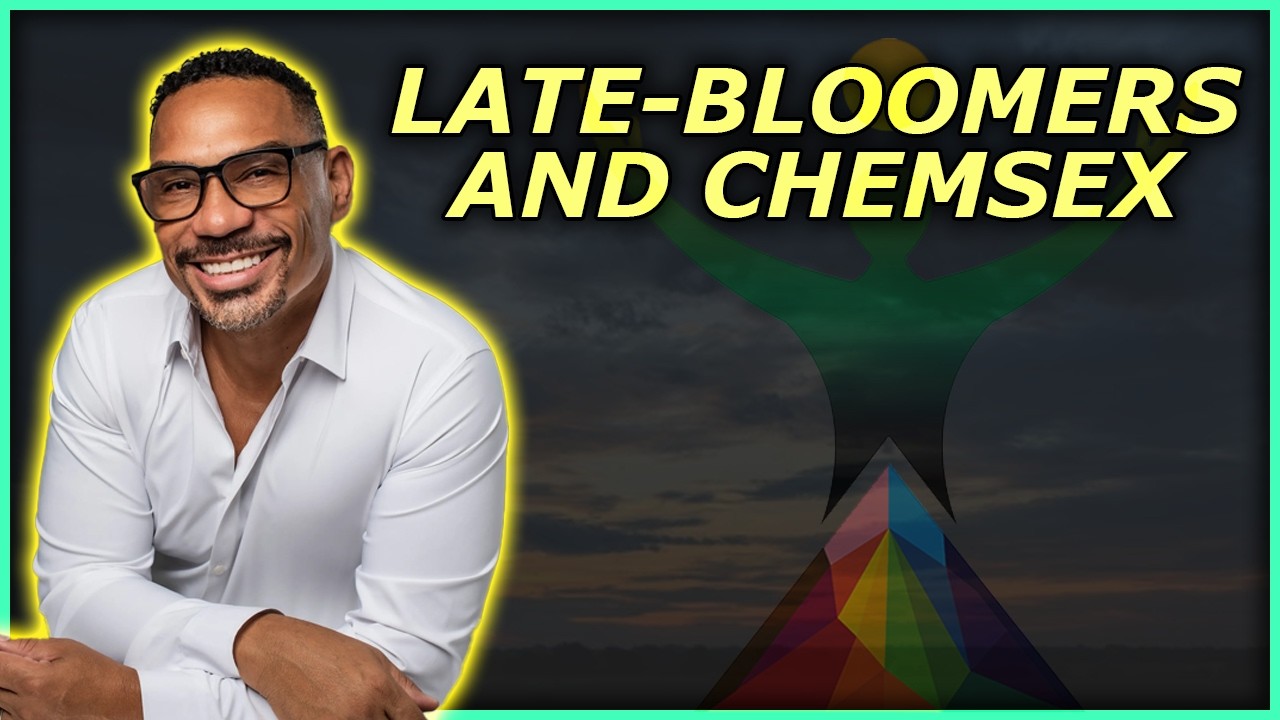
In this episode of The Aftermath Podcast, host Dallas Bragg interviews Darryl Martin, an Afro‑Hispanic gay therapist, musician, and founder of Artists Reimagining Therapy. The conversation explores the unique challenges faced by "late‑blooming" gay men—those who come out later in life—and how these intersect with chemsex, especially crystal‑methamphetamine use. They discuss the psychological drivers (shame, the need to "make up for lost time," identity validation), the neuro‑biological role of dopamine and anticipatory reward, and the phenomenon of euphoric recall that makes meth especially insidious. The hosts contrast meth’s secrecy and high relapse rate with other substances, outline harm‑reduction strategies (safeguards, phone blocks, peer support, community building), and critique abstinence‑only models. They also address the growing prevalence of meth among men of color, the exploitation dynamics between older white "daddies" and younger Black/Brown men, and the cultural expectations within gay sub‑communities (daddy, bear, etc.). Throughout, they emphasize that disclosure, connection, and pragmatic planning are essential for recovery, and they hint at future episodes focusing on men of color’s experiences.
Chapters
Okay, what is the first step I should take if I'm struggling with crystal meth or chemsex? And I say, tell somebody. Just like you're saying.
That's right.
Find someone to share it with. You know, if you don't want to walk into a 12-step room, tell somebody. And oftentimes it's the person you're most scared to tell, like mom or best friend. Chemsex, sexualized drug use among men who have sex with men, typically involving methamphetamine, mephedrone, GHB, among others. Chemsex misuse is a worldwide epidemic that needs attention, dialogue, and hope for those lost in it, which is the purpose of The Aftermath Podcast. Please note the views expressed by the host and guests on this podcast are not to be taken as medical advice, and the content around sex and drug use can be triggering. All right, welcome back to The Aftermath Podcast. Really excited today to introduce you to a new friend of mine, Darryl Martin. I'm going to introduce him here. Today we're talking about the effects of late bloomers in terms of those of us more seasoned gentlemen who came out later in life. And of course, we're going to get into how that affects chemsex. And I can personally identify with this because that's my story. That's what I did. But Darryl is in New York City, and we're going to— I'm going to introduce him now. He is an LCSW and a transformational psychotherapist and musician whose work bridges emotional healing, creativity, and cultural insight. A proud Afro-Hispanic gay man. Yay! We need more Afro-Hispanic gay men on this show. He brings a deep commitment to serving individuals of all identities, orientations, and backgrounds, particularly those with complex life histories. With graduate training, training, training from New York University and an undergraduate degree in entrepreneurial diversity studies and intersectionality. Wow. From the City University of New York, Darryl specializes in identity shifts, emotional breakthroughs, and life redesign in both private practice and through his program, Artists Reimagining Therapy and Systems Arts. which he co-founded with fellow Broadway artists turned clinical therapists. He provides accessible, system-focused mental health care to New York City's artist community. His clinical work spans assessments, substance dependency counseling, individual and couples therapy, polycule therapy, organizational psychology training, and group facilitation. Before his career as a psychotherapist, Darryl spent 3 decades immersed in the music and arts world. A graduate of a performing arts high school, he became part of New York's legendary ball scene. through members of the House of Xtravaganza, appearing in the groundbreaking documentary Paris Is Burning. His artistry extended to performing, writing, and producing for cultural icons including RuPaul, Pink, and Sheryl Lee Ralph. During the COVID-19 pandemic, he launched a national program uniting therapists and artists to confront inequalities in mental health, further cementing his role as a leader at the intersection of creativity and healing. In 2024, Darryl received Crain's Magazine's 2024 Notable Leaders in Mental Healthcare Award. Darryl is finishing his memoir, Scarred, Fierce, and Unbreakable: My Lessons in Pain, Pride, and Healing in NYC. Darryl continues to integrate his background in music, entrepreneurship, and psychoanalytic training to guide high-performing individuals, creatives, and culture shapers beyond achievement into true alignment with an emphasis on emotional wealth, legacy building, and personal sovereignty. He lives in New York with his husband, and together they have raised 5 wonderful children. Wow!
It's a mouthful, isn't it?
Woo!
That's what happens when you stay on the planet for a while.
I tell ya. Well, you know what? A lot of people stay on the planet that long, but they don't accomplish those kinds of things either. Yeah, this is— I've said this season, season 3, is the season of big names. And really, I count, I count you as that, a big name here. I'm really glad to have you and your expertise.
Thank you. Thank you so much.
Yeah. Yeah.
I'm excited. Listen, I'm excited to have this conversation with you. I don't think that this conversation is really in the zeitgeist just yet, although there has been a turn. certainly since I've been a young gay man, the term daddies and bears and all of that has become part of the norm.
It has.
So we got these labels, but we're not talking about it. What is it like to be a daddy, an aging gay man at this time in the country, in the cities? Wherever people may be. So yes, I'm very excited to just kind of have this conversation, maybe do some exploration with you. As you and I both identified earlier a couple of weeks ago, that there is some scholarship on this, but not a whole lot. So I really think that you and I and many other clinicians are really on the cutting edge, the sort of, uh, breakthrough of, uh, introducing this, um, as it relates to drugs and, uh, sex and all the many other, uh, things that aging gay men navigate. Um, so yeah, I'm excited about it.
Yeah, good, great. I am too. I am too, because one, one of the first When I was, um, before recovery and then right after, one of the things, one of the directions I was going to go in instead of this one was to write a handbook for older men who come out late in life. Because I wish so much I had had a guide, you know. I did have a therapist who helped me through the transition. But it was different. It was, it was, there was so much to try to work through and process first, you know, that I couldn't get traction, you know, because I had gone all my life without a therapist, you know. And so I came out at 36.
Wow.
2013, I was 36. And, you know, I'd never been to therapy. I had gone to therapy one time and he was the only person that I had come out. He was the first person that I came out to and I ended up in the mental facility that night for 3 days or however many hours, 72 hours, whatever it is that you have, you know, you check yourself in. Um, because he, you know, and when I got there, the nurse was like, so, and this is how she said it. So what's up with the gender confusion? You know, so I don't know where that came from, but whatever this therapist, whatever this therapist I had gone to got was all wrong. And he's a Christian. He was a Christian therapist. So, um, but I, you know, I was just thrust into this community. This, I don't know if it's a community anymore. I, I, I would just say, want to say a population. It was a population of gay men that I was thrust into in a world so separate from what I had been used to. And I just, I got eaten up by it. You know, there was so much that I hadn't handled yet, that I hadn't processed yet. And there was one thing going through my mind, and that was, I have to make up for lost time. I have to make up for lost time. Yep.
Yeah.
And that's the—
yeah. I, I love that you're saying that because that is, um, one of the sort of mental, uh, attitudes of some of the aging gay men who— that I work with who have come out late is making up for this lost time. And I, I wanna say, enter drugs, right? Yeah.
Yeah.
Because sort of those feelings of inadequacy, having to make up for lost time, drugs has a way of sort of quelling those inhibitions and those insecurities. And so it just makes psychological sense sometimes because I found that other people, don't quite have the judgment around their use as much as my clients who are aging gay men and, you know, got into, you know, using drugs sort of later stage in life. And, you know, one of the things is that, oh, I know better. Like, I'm an older gay man, or I'm an older man. I know I should know better. You know, how did I let myself get here? And I always say no one is born and says, okay, I'm going to be a drug addict when I grow up. You know what I mean?
Right.
So just orienting them around, of course, drugs was an accessible— I don't want to say easy, But certainly an accessible way of navigating those feelings in real time while you're in it. Because it's very different when you're young and you decide, oh, I'm going to go out, I'm going to party, I'm going to do blah, blah, blah. You think you have all this time in the world. I can always recover later, or yeah, it's going to take me a few days or something like that. But Gay men in general, um, uh, aging gay men in general, I think they really feel this sort of sense of loss, uh, meaning that they've wasted time and they really wanna catch up in a way. And I think that's what the drugs and, and the alcohol included does. It, it kind of quells the mind a little bit, eases the mind a little bit so that you can say like, Okay, I'm good, we're good, until the parties increase, the drugs increase, the sexual experiences begin to expand. And then there's this sort of perpetuating cycle because although they're in it and they're doing it, they still are very aware that they are older And so I think that also plays into the isolation around meth use and cocaine, drugs in general, is that I've said this before and I say this many, many times, drugs, crystal meth, again, gives us the illusion of power. And one of the things is, it's shame. I was thinking about this podcast coming when I was coming to work today. And I was thinking about shame and addiction. And I've always posited that shame and addiction lives in secrecy. It needs secrecy in order to bloom. But as soon as you start to spread the light, as soon as you start to talk about it with another gay man or a therapist or someone like yourself or myself. That, uh, from the very moment, uh, they begin to start talking about it, the healing begins. A lot of people think they have to be in therapy for years and, you know, before the healing happens.
Right.
But I'm of the school that healing can begin the moment you step into the room, the moment you start to tell another person. So it could be with us, like you and I, professionals, or it could be in meetings, in a 12-step meeting or a recovery group. But once they start to talk about it, all of a sudden the addiction doesn't quite have the hold and the shame isn't as deep, uh, as it was before they said something. So that's sort of the miracle that you bring to the world, that I bring to the world, um, and many 12-step programs is kind of pulling that person, um, what do you, you talk about the decompensation sort of bottom period, you know?
Mm-hmm.
And just by a client walking into the room or getting online with you, and just talking, talking about who they are, how they're feeling, all of it. Like, you can see the shifts. And I'm not gonna say that, you know, we both know that it's not, uh, magic. You know, they don't instantly become, but certainly the journey begins. Yeah.
Yeah. I love that. I love that. And one thing that I've, I've said a lot is crystal meth, you know, and, and you could say this for addiction, But for chemsex, it's like black mold, just like you're saying, it grows in the dark, right? But once you start putting light on it, you know, it smothers it. It can't, it can't grow. And like you're saying, for addiction, it releases the hold because it's not in secret. I would, I think, I mean, this is the world according to Dallas, but in terms of secrecy, crystal meth has got to be. the one that's kept in secret the most, you know?
Yeah.
I mean, opioids get all the attention. You know, marijuana, you can say marijuana, I smoke marijuana. I have a drinking problem. Even heroin is kind of, you're not even really, I don't know. I don't, maybe it's because my world is smaller, but I don't even hear a lot about heroin anymore. But meth is just something that you want to keep in secret because it's so stigmatized.
Yeah.
Um, and so I, I've always asked in podcasts and otherwise if, okay, what is the first step I should take if I'm struggling with crystal meth or chemsex? And I say, tell somebody, just like you're saying, find someone to share it with. You know, if you don't want to walk into a 12-step room, tell somebody. And oftentimes it's the person you're most scared to tell. Like mom or best friend, right? Or partner. But guess what? They, most of the time, they already know. They already have their suspicions anyway, but getting it out of here and through, through your mouth and sharing with somebody, like you said, what a, what a burden that lifts. Yeah. You know, and then you can start the healing process.
Yeah. The other thing is that crystal meth is an insidious drug, meaning that I have found that sometimes people are able to hide it for long periods of time because many people who have used or before they got addicted to it really could function on it. They could go to work, they could get up in the morning, do what they need to do. Whereas the other drugs are like cocaine, in order to keep the high, you need to keep reintroducing the drug and keep snorting. Heroin, you're going to nod out at work. Alcohol, you're going to smell and nod out. But crystal meth is what makes it particularly insidious. is that, um, I mean, doctors prescribe Adderall and all sorts of methamphetamines, um, for people who are challenged with ADHD. And so, you know, a lot of the times before they get to my office, they've, they've been going for a very long time. And in some ways, crystal meth has served them.
Yes.
Like I've had clients say, oh, I'm able to get my work done. I'm able to, concentrate. So, so yeah, so I'll stop there with, but I wanted to put a plug in for, like you said, crystal meth is a little different from the other things because of the insidious nature of the drug. Yeah.
Yeah. Yes.
Yeah.
And you know, the drug is no respecter of persons, crystal meth. You have the homeless man, using it. You also have the CEO of a major company using it.
That's right.
And so the thing, these men come to me, they're highly successful in their life. I mean, running their business, their family, their friends, their, I don't know, they, they have all this going, but they can't seem to stop using. And I tell them, they're like, why am I good at everything else but crystal meth? I said, you're good at crystal meth. You're, you're functioning while using crystal meth. That's, that's skill, right? Like you said, it is insidious in terms of you can maneuver it so that you only use enough to function and you're using it as Adderall, right?
Right.
Um, which is what a lot of heterosexual women that contact me are using it for. Keep their weight down, keep the house clean, keep the kids going where they need to go, feel better about themselves, have the energy it takes to be a woman in today's world. And it's not used for sex, but it's used for that. You know, it's like, I mean, it used to be bottled in the '50s, like Mommy's Little Helper and amphetamines, right? The problem is that crystal meth has now changed into this super meth. Um, where it's highly psychosis-provoking and paranoia-provoking, and it's highly, it's more addictive and it's more pure. And so we can't fuck around with it as much as we could. And that's what I'm seeing, these CEOs coming to me, these doctors, these psychiatrists, they're like, I don't know what's going on, but I can't, like, I can't go, I can't stop going for days now. And it's beginning to be more out of control because the substance is different too. Um, you know what I mean? Um, yeah. So it's a pro— yeah, go ahead.
You, you got— I was just gonna say, uh, in addition to, uh, what we didn't have before was this sort of cross-pollination of drugs. Crystal meth and Viagra, crystal meth and Cialis. Uh, with cocaine, you know, years ago, if you did too much, You know, you get limp dick. You yeah, you can't function. Yeah, but because of all of these other pharmaceutical drugs that you can get, you know, from your doctor, and especially with aging gay men, it's very easy. You know, it used to be a lot harder to get, you know, erectile dysfunction drugs, but now you can click on a website when you know. and have it delivered to your door.
Sure.
So that toll that drugs used to take, for cocaine, for instance, a lot of older gay men aren't seeing that. So if they start to get erectile dysfunction, they take a pill. So that can keep them going. And now they're virile. You know, you and I were talking about virility and the illusion of virility, you know, on crystal meth.
Mm-hmm. Yeah. Yeah. Which, you know, I think crystal meth is the perfect storm for a gay man, but especially an older gay man who has been closeted his whole life. You know, like, for me, I had to pretend— I had pretended My whole life I was someone different and now here's my chance to be free. Right. But what, but what I ran into, which again, I think the other men that I talked to are the same a lot of times, is what I ran into was the population did not accept me. Like I, I had this idea that this is where I belonged and when I didn't belong, I spiraled out of emotionally saying, where the hell do I belong then? I belong nowhere. And like you said earlier, enter drugs, enter crystal meth, because I'm older. I have a house. I have money. This is where I belong. Everyone's flocking to me now.
Right.
They can't get enough of me.
Right. Yeah.
And I have access to Viagra and Cialis and Trimix. You know, let me just inject everybody's dick and we'll be hard for 2 or 3 hours. And it just feels like I finally got what I wanted. This is the life I've been wanting.
Right. And that's true. I mean, again, when we walk towards something, we're walking away from something else. So that illusion of validation that we're getting. And I really call it an illusion of validation because, like you said, some aging gay men experience being exploited by younger gay men for the resources that they can provide. And like you said, I have money, I have a house. And it's It's funny because the same sort of questions that older gay men enter, who come out late, are questions that young gay men have as well. Meaning they come into the world even as young gay men, who am I? How do I fit?
Yeah.
I don't necessarily fit the Chelsea boy, masculine, Tom of Finland, imagery that we see. So if I'm effeminate, if I am a person of color, now I'm dealing with that as well. So the questions are very similar, young and old.
Interesting.
Young and old. But it's the— enter the drugs that we seem to find instant answers. I call it add water and stir solutions. As soon as they take the hit, they're like, okay.
Yep.
I want to ask you a question about— I often work with clients and when they tell me about their experience with sex particularly, on crystal meth, they talk about this phenomenon of being really horny and certainly seeking out the sex and wanting the sex. But even when they get it, they're so removed emotionally from it. So they'll be having sex thinking about the next conquest.
Yeah.
Like, when is this person going to leave? And maybe you can speak more from a personal experience of what that's like and what goes on.
I think that that comes from— I believe that we have a bit of a misunderstanding about the effect of dopamine. Like, we call it a reward molecule, but it's really the anticipation of a reward.
Right.
Right. Right.
Right.
And, and so that we, 1,200 times the, the amount of dopamine gets released when you take crystal meth. And I believe that all of it, all of it is this anticipation of what I'm going to get. Yes. This is why we have men sitting around for hours on their phone looking for the next guy. when they are surrounded by men.
Right.
It's, I need, it's anticip— I need more. I, we're gonna have an orgy. We're gonna have this. We're gonna have that. And even when you're, yeah, even when you're having sex, I, when I, when I was having sex, I could not stay off my phone. If I was topping, if I was bottoming, whatever it was, I, I had this in my face.
Wow.
On Grindr trying to find someone else. What if I miss The next hottest guy, right? And, and then, and, and then it even goes into the porn. The anticipation of the porn is that you'll see guys for hours trying to find the right porn to put on or adjusting the settings of the, of the picture and the color. And then, then you've got Zoom, right? These Zoom rooms where you're all using together. There's this more and like, who else is in the room? Who else is in the room? So I believe it's, we have to understand this dopamine. What it does is that we're never going to get there. You know, it's like, it's why you, you feel like you're going to come for hours. You're right on the edge. I tweaked out on, I tweaked out on that so many times. I would beat my dick to death. death because I was just right there. I was, it would just give me a minute. Just give me one more second. An hour goes by, you know, this, this, I'm going to get this reward. I'm going to get this reward. I'm going to get this reward. And so, and then you take more and more. And so I think that that's the disconnection is we just, there's no presence because there's an anticipation. There's a desire for something else.
Wow. Wow. That's so beautifully put and so helpful. So it's sort of what you're describing is this sort of anticipatory stage that methamphetamine keeps you in.
Yeah.
So, and by staying in the anticipatory stage, you keep the dopamine going.
Yeah.
Both chemically and naturally. But it really isn't about the actual fix itself.
Yeah.
And that's interesting because that is a huge difference from other drugs. Whereas heroin, you hit it, you hit the sweet spot and you're nodding and all that stuff. So you've arrived at the place. Um, but with crystal meth, you never quite arrive, and it's this sort of cyclical experience of, uh, anticipation.
Yeah.
That— I mean, that's, that's beautiful, uh, beautiful, Dallas. Um, and I think it'll help other, uh, people who work, uh, with, you know, people who are struggling with this challenge to understand the end, because that, that is, um, One of probably the most common thing I hear as a therapist is that like, I'm on— I was on my phone for 5 hours before that 2-minute experience where the guy came over and left, and then I'm back on my phone, you know.
Yeah, that's right.
Yeah.
Yeah. And it's not 100%. You know, I mean, you're— I can hear the guys now writing in saying, Now wait a minute, you know, when I use it, we fuck and, you know, that kind of thing. I, it, there are a small majority of men who seem to be able to take a certain amount, just enough to get really horny and, and, and still get hard too.
Right.
They're the unicorn. They're the unicorn. They're the popular boys at the party. You know, they have the line because they, they have, they can get hard because You know, sometimes even with Viagra, Cialis, you're, you can't get hard still. Now, Trimix is different. But the thing about Trimix is how many times have I seen guys rush to the emergency room because they're injecting their dick while high, putting in too much and their dick explodes almost, you know?
Yeah.
Um, and so, yes, I mean, that's for the most part, that's it. And that is why also euphoric recall is so powerful. When it comes to chemsex is that it releases that dopamine, that anticipation gets so high. I'm going to— this is the time I'm going to have an orgy. I'm going to get gangbanged. I'm going to do this. I'm going to do that. You know, all this stuff's going to happen. You know, it's, it's this, this whole— you're— you start thinking about it and your body starts releasing all that dopamine, all that adrenaline. And you're swept away by it. You're, you know, you're just swept away and then you're, you just switch off into autopilot. This gets cut off because, you know, arousal in and of itself shuts down the prefrontal cortex. So this is a drug that's tied to arousal. So you mix the two together, you're not thinking. You're just not thinking. You're not in control.
Right. Which brings us to the sort of the relapse nature. of crystal meth, meaning that understanding the anticipatory stage. So even before people pick up, like we always say, you picked up long before you picked up.
Oh yeah, yeah.
Right?
Yeah.
You slipped long before you slipped. And so thinking about it and helping people understand that this is sort of what's going on in my body right now, this anticipatory stage because you can get that anticipatory dopamine before you even pick up the drug.
Yeah.
Which then in turn, you know, brings you to the drug.
That's right. Yeah. And that's where that euphoric recall comes into play. And with crystal meth, everything has been etched and printed. Each memory, each time you used, You really, it's hard to forget. And I could tell you it's been 8 years for me in August and I still will. And it's that twilight time when I'm lying down for a nap, I nap every day, or I'm lying down for sleep.
Right.
Memory will flood in. Vibrant. Such a vibrant, clear memory of using, you know, some scenario with somebody. Is you just, it's not like blackout drunk or like you said, nodding off with heroin or, you know, people who smoke marijuana all the time, they can't remember the conversation they just had 5 minutes ago, you know, but with this, it's so etched into the brain too that euphoric recall has more power because you're right in it. It's like putting on a real, one of those, what, virtual reality. Yeah. Masks, because you're, you're right back in it and you're in it to— and, and like you said, the, the body, it's just a full body takeover. I call it, you're being possessed. You know, you're possessed at that point. Um, and that's why, that's why it's important to have your phone blocked, to not have access to user buddies. You know, this is why you put these safeguards in your life is because it gives you a pause. And a lot of times enough pause to wake up.
Right.
To say, oh, whoa, whoa, you know, let me get outta this trance and really think about what the next day or two is gonna be like if I go use.
That's right. That's right. That's right. The ability to think it through, as we always say, you know, what's the next? And again, that's the insidious nature is that A lot of the times people can function on it. So the next day or 2 from alcohol, you know, blackouts could be in the bed, you know, whereas crystal meth, you know, you get 2 hours of sleep, you wake up, you do a little more, just a little to get you going.
Yeah.
And then it's off to the races all over again. Yeah.
Mm-hmm.
Yeah.
That's right. That's right. Yeah. This, this idea, by the way, this anticipatory idea of it as an older man. So we hear a lot, we see a lot of studies about older men exploiting younger men. And by the way, there's a huge rise in older white men exploiting young Black and brown men. So, 'cause I, you know, I got a lot of, I used to get a lot of comments on, uh, still do sometimes, social media that meth is a white man's drug.
Hmm.
And, and, and it might have been before. I can't speak to that, but I know based on the research, it's, it's rising rapidly with brown and Black men, but younger brown and Black men. Yeah.
Right.
And it's cheap. It lasts a long time. They get to go into daddy's big house, right? And they're wanted. Like you're saying, like, who am I? If you're facing— here's the thing about chemsex. I think it is a mirror reflection of what we're seeing in our population. We can't blame anybody but ourselves. Because as an older white man, I'm rejected by the population. As a young brown man, I'm rejected by the population. Where else do I go if I'm not taught the skills to accept myself? Like you said, enter drugs, right? Right.
Yeah. Wow, that's beautiful. And I guess I'd also, you know, want to touch on— this is very new. I don't know if you're seeing clients or this is coming into your practice, but there's this new sort of thing where drugs are mixed. So just in the past month or two, I've been hearing terms like 2C.
2C.
Yeah. And I had no idea about 2C 2 months ago. And so Just thinking about how people are, like I said, cross-pollinating drugs. It's so funny, the way drugs happens is that we take drugs to take us somewhere and then we get there and we want to come down because we're too up there. So now we're doing something to bring us back down and we're always seeking that sort of state of homeostasis that we had before everything was introduced.
Yeah.
And homeostasis doesn't mean that we're not sad or angry or having feelings. It just means that we are balanced in a way where something externally like a drug isn't taking us up or down. And so there's this this cycle of trying to get back to the place where we started. Yeah.
Yeah, I can see that.
So I'm thinking of the— yeah, go ahead.
No, you go ahead. You're thinking of what?
So I was thinking that when you were talking earlier is that this sort of anticipatory experience. So once you're in that experience, you're off to the races. It's starting to build up. And that might be the intervention point, meaning noticing when the dopamine starts to flood.
Yeah.
Right?
Yeah.
And our heart starts to race before we pick up the phone, before we I'd like to, if you can, or if you're willing to, talk more about the pragmatic side of managing sobriety, we could say. I don't mean sobriety as in abstinence, but sort of, you talked about getting rid of all the contacts.
Mm-hmm.
Erasing Grindr and all of that off of your phone. Um, uh, what are some other ways, um, yeah, that you find?
Yeah, so, and I, I want to add a caveat to that, is oftentimes men will get a new phone number, get a new phone, block Grindr, block the contacts too soon. Because here's the thing, methamphetamine has been proven to have the highest, the highest relapse rate of any drug. And then if you look at the chemsex relapse rate, it goes even higher. Again, it's a drug that's fused with sex, desire, libido, and we're men with a lot of sex desire and libido. But not only that, is that like for me and for that young brown man, Chemsex becomes a world where we finally feel accepted. It's a culture with ritual, with its own language, its own app, Zoom channels. It's where we get to step out of this world we're living in today into this subculture where we love, we have fun, we get to be that bad boy. We get to be free of internalized homophobia. We get to be You know, the sexual fantasy, this, this unstoppable sexual machine, even if it's all in our head for a minute, we get to be that and we get to escape emotional pressure. Um, we get minority stress, you know, all, all of that. We get to escape that for a moment. And so when you're giving up chemsex, when you're in chemsex recovery, you're not just giving a drug up. You're, you're saying goodbye to this whole identity that to you, you had been looking for all of your life.
That's right.
And, and that's what I, that's what I couldn't let go of. Like, how dare you? I've been closeted all my life. I tried gay, the gay scene. I, I have, and I've arrived here. Yes, I'm injecting meth. But this is the first time I felt relief, you know? And so how, so now I have to give this up for, for what? Because I can't go back to that life, you know? And so, and that is what happened to me is when I finally was in recovery for a year and a half, I'm standing at the kitchen sink looking at dirty dishes and I'm like, I can't do this again. This, this, I can't have this boring life because I had not discovered who I really was. You know, I hadn't taken that time to do that. So I, the relapse rate is really high for many reasons. Number one is you're, you have to grieve and, and switch a whole identity.
That's right.
And number, and number 2, it's everywhere, especially if you're in New York City. Just walk down the street. You know, you can tell, you can tell, I could tell when I was there, the men who are glued to their phone and they're tweaking out and they're looking at you like, I know what they're doing and where they're going, you know? And so it's, and it's, you talked about accessibility. It's basically an Instacart drug. You know, you can get on, get on Grindr and be using with somebody in 30 minutes or less. So it's not that easy to stop. And so I think, and this is research-based too, you can, if you all, if you're listening and you don't believe me, go do the research. Harm reduction in the form of tapering off, managed use, that those techniques are more impactful and successful for long-term chemsex recovery than any other way, especially abstinence-based programs.
Right.
I think you, you want to get in the 12 steps, do it, but you can't expect to walk in a room and then never use again. It's just not going to happen. Not with chemsex.
That's right.
And so it, it, it, for, for my guys, once I tell them, oftentimes there's men that come to me who've been using for 20 years. And all I have to tell them is, if you use, it's fine, no problem. We're not starting days over here. We're not ranking anything. We're learning and we're moving on. Oftentimes they'll never use again. They just stop, you know, because that pressure, that stress and that strain and that, you know, all of that, that's pounding on them for, I can't use, I can't use, I can't use, you know, all of that is just swept away with one comment of, it's fine if you use. Oftentimes you have to use to learn how not to use. Hmm.
Say more. Yeah.
You, you have to go through a relapse oftentimes and learn from it so that you know how not to use the next time. It is part of the journey.
That's right.
Um, it, it just is. I mean, and, but the thing is, is that when it's treated as failure, pass or fail, we don't get what we learn from it. And you're going to keep going back to it until you learn from it. Because there's something in there. Right. There's something in there that's telling you, you, there's somehow that you need to show up differently. You know, there's, there's some modifications to make in your life. So pragmatically, you know, what is it? Um, it could be anything. It could be on the weekends, I'm gonna go stay with mom. Um, you know, when I go out to an event, I'm gonna make sure that I have a buddy to go home with. And I'm not, you know, because a lot of guys, they, they have a group of friends that are sober and they all go out and they'll go out into the bars and stuff. And at 2:00 AM they go home, but he doesn't. He goes off by himself and goes to use, you know, engage in chemsex. So you have a friend. Committed to stay home with you or you stay home with them or whatever. There are ways to, you have to pretty much give up your privacy for a while, but there are pragmatic ways to make it so that you do not have a choice to use because you cannot rely on willpower, motivation, or self-control because those are finite resources that run out late at night. And late at night is when you want to use chemsex and when you have the temptations to use. So you're out of those things.
That's right.
So what, what do you do? You build enough safeguards so you don't have a choice. Because if you have a choice, you're going to use. Yeah. You know, and so it takes a lot of planning. That's why a lot of men don't want to do it, but it takes a lot of proactive planning to look at your calendar. And you can, you know, when your danger zones are going to be, you know, when you're most likely going to use. And when you know that, you put in the safeguards so that, and the fences and the boundaries so that you can't.
Right. And when I have clients who, who talk about the struggles and how they can't, and, or even they'll, they'll sometimes get really angry with me. by saying, you know, this is just too much. This is, you know, having to bookend every time I leave the house, having to, you know, I always say, just remember what you did to get the high. So do you think this is work? Staying on your cell phone for 5 hours, jerking your dick for, you know, 6 hours till it's raw.
Yeah. Mm-hmm.
That's a lot of work. And I often say that it takes work to be actively in addiction. It's a lot of work. You're managing, you're trying to make up for the money that you lost. Sometimes you put yourself in unsafe situations. And so in comparison to like, oh, maybe I'll stay at mom's this weekend, or Maybe I'll take a buddy with me to that event, or maybe I won't go to that event. Like, some things I tell clients, like, there are just some things you just can't do right now.
Right.
Right now. Not saying that you'll never be able to go to another white party, but if you can just say right now, yeah, do I need to go to the white party? Do I need— you know, what are, what are the sort of chances that's going to pull me back into it. Um, before we go, I also, I want to touch on the, um, the detangling of the sex, um, from— because often with older gay men, like you said, they feel more virile. And so as humans, we want to have sex, you know what I mean? We are sexual beings by nature. It's the way we are made. So, um, because people associate sex with meth, they think like once meth stops, sex stops.
Yeah.
And so learning how to have sex without that sort of— without the drug, that's been an amazing journey. A lot of my clients find that I'm too candid. Because sometimes I go, I skip, I say, okay, let's put the drugs aside for a minute. Let's talk about sex.
Yeah.
Like, what are you into? What do you like? What do you, you know?
Yeah.
Um, and when they start to sort of do that exploration of what they really like, not what's expected of them. So just because you are a man of color and you got a big uncut dick does not mean you have to be a top.
That's right. Yeah. You know, that's right. Right.
Yeah. But, but, but a lot of people, when they come into a relationship to others, automatically stereotype. them into that. And so they'll do it because that gets them the acceptance, right?
Yep.
That's right. And so I, there's a sort of phase of detangling life from the drug. So detangling work from the drug, because some people, it's like they know they're going into a stressful meeting. They know they have a long day. You know, they're like, oh, this will definitely get me, or even a hard conversation. I get that all the time. Like, oh, I knew I was gonna have a hard conversation or something, and this regulates me in order to have that conversation.
Mm-hmm.
So, so kind of, uh, um, orienting them in, yes, you are gonna have sex. Yeah, you need to have sex, right? You know, you need to work. Um, and how can we do that? How can we do that without, uh, needing or thinking that we need this other thing?
Yes. Yeah, yeah.
Can impotence be okay?
Right?
Or, you know what I mean? Like, maybe you won't get hard, but does that mean that you're not enjoying yourself? Right? Does that mean, you know, yeah.
Yeah. Yeah. I, I just think it's more standards that we're getting from the population. You know, again, you went back to daddy. You know, at the, in the very beginning, I, I, I was like so uncomfortable with being called daddy because I'd only been called daddy by my children. You know, and I just thought, I thought of my kids every time somebody said daddy, but now it's just like, I'm on Hinge, I'm on Hinge, the dating app. And that's the first thing that they're— that's, that's the hello is hi, daddy. You know, no matter how old they are, you know, it's like, I have to be daddy. Like you're saying, I have to be daddy if I want to have sex, pretty much.
Right.
Whether, whether I'm top, whether I'm a bottom, you know, younger guys, they don't— a lot of them don't care. They'll top a dad. They love to top a daddy, or they like to be topped by daddy. You know, but I'm daddy either way.
Right.
And, um, but it's just, it just feels so oftentimes it just feels so forced and expected here. It's so funny to me that we have a population of men who are trying to go against and break sociocultural norms, but then they want to Comply to gay sociocultural norms. I have to dress like this. I have to read you. I have to act like this. I have to be, you know, I have to be a twink. I have to be a daddy. Like, we're doing the same thing. And it's driving us into creating our own culture where we don't have that. Yes, there's daddy in the chemsex world. But for the most part, it's Everybody's in it, you know, everybody's doing their own thing, having, you know, and I just, it, it's just, it, it, it can be frustrating for me as dating as an older, you know, I'm, I'm, I'll be 50 in a couple of months, um, trying to date. And it's like, okay, let me guess. I bet you want me to choke you, spit on you, slap you around. Uh, uh, uh, let me just, Let me just tell you already what you're gonna ask for, because every other man, every other man is asking me to do that, 'cause I, they need me to be Dom Top Daddy.
Right, right. And it, it, it really is, you just, when you think of daddy, you think of caretaker, protector, you know? Um, and so a lot of, uh, these sort of labels, like you said, I, I've been called Poppy before I was a Poppy, like I was 17. So, hey Poppy, Poppy, Poppy. And I learned, like you said, I learned how to come into that role. I learned that, okay, if I am a Poppy, then they will like me, then they will accept me, then— and underneath all of it is connection.
Yeah.
Underneath it all is all humans want connection. We don't do well alone. Our species is designed to be in connection to each other. It's how we protect ourselves. It's how we survive. Meth as a vehicle to connection is, I have found, sort of the underpinning of it all.
Yeah.
And just like I say, we have to detangle sex from meth is We have to find connection outside of meth.
Yeah.
You know? Yes.
Yes.
So I often find that people who have the willingness to come into relationship with others—
Yes. Yes.
Have the higher percentage of being successful away from— you know, I don't want to— again, I don't want to say abstinence, but In recovering.
Yeah.
Like finding community, so important. Even if it's a community of ex-meth users or community of aging gay men, some kind of community that's going to give you a sense of belongingness, a sense of— when we think of Maslow's triangle, that sort of sense of belonging, Is, is right in the middle there, root, you know, after you hit safety, you know, belonging is right there. So.
Yeah, yeah, yeah, I agree, I agree. We had him, God, I forgot his name, but anyway, it was a gentleman from the UK who has been running chemsex groups, and he said like, they found over time that most of the guys just wanted to date, they just wanted a connection. Right. That's what it is. But you said something very important that I want the listeners to hear, willingness. So to me, if you want to talk about sexual, you know, getting back on the horse sexually, you want to talk about reintegrating and re— and untangling and diffusing and connecting and, and being happy in recovery, it all starts with the willingness to believe that it's possible. Because if you come in and you say, I'm never gonna have Tina sex again, I'm always gonna have vanilla sex again, I'm never gonna be able to do this, then yes, that's what you'll get. That is what you'll get, what you're looking for.
That's right.
But open your mind up to the possibility and understand that meth was all about instant gratification. Everything, instant gratification. So if you wanna be somebody who doesn't use meth, then you're going to have to get used to delayed gratification in every sense of the word. And that means taking time to build a connection, taking time to get to know your body again, taking time to connect your head and your dick again. Like, it takes time. And I understand, I understand. I had a friend who took a year of abstinence on his journey after he broke up with his partner, and he's He's reaping the benefits of it now. And I told him, I was like, yeah, but you're in your 30s. I said, if I took a year of abstinence off, it's like 10 years, you know? Because in my mind, I'm still, I, I'm still running on that borrowed time. There's still some of that in me of I have time to make up. Like, I'm almost 50. I can't take a year of abstinence.
Mm-hmm.
That's, you know, that's a big chunk of what's left, but that's not true. But it's not true, right?
Exactly.
But it is that voice running in the back of my mind saying that.
Yeah. And undoing that voice, I always tell, uh, my clients, uh, in every sense of the word, I say, you are not going to think your way out of this.
Yeah.
Because if it took the intelligence and all that, all, all of my clients, 100% of them are bright and intelligent people. And so, uh, thinking that this— that they're going to be able to think their way, like, if I just, you know, read the right book, you know, if I do boom, boom, boom, then—
Yep.
Uh, you have to act your way out of this situation. So yes, it doesn't feel good, but act like it does, you know? Like, so normally, you know, uh, having sex, you know, on meth, probably would be instantly more gratifying. But, uh, it doesn't mean you don't have sex. You know, you don't do the meth and have the sex. Just keep acting your way into this. This is not, um, this is not going to be— you get— you're not going to like pray the gay away, just like you're not going to pray the meth away.
That's right. Yeah, yeah, that's right. Exactly right.
Yeah.
Well, well, Darryl, we, we got a little off topic today, but what do you think we missed in terms of, in this discussion? What do you, what do you wish we would've mentioned or talked about that we might not have touched on?
Um, I, I don't know. I'm, I'm pretty satisfied in the sense of, of, you know, we only have but so much time and, and we are, uh, touching on very overarching subjects and experiences. So I'm very satisfied. I think if we ever come back together, I would love to focus in on the men of color aspect and the experiences of being a gay man of color and navigating crystal meth.
Yes. Yes.
Because like you said, statistics are showing that more and more men of color are starting to be introduced to this drug, unawares of the pitfalls that can lie before them.
Yes.
So yeah, I think that's the only topic that I would expand on.
Well, let's do that for sure, because that's a subject we haven't touched on. It's a subject that I don't know. I don't have lived experience, with, but, you know, I, I, I see the studies. Um, I have had several men of color lined up to come on the podcast and they've canceled on the, at the last minute.
Yeah.
Um, and so I don't, you know, that's an interesting phenomenon, I think too, is that there's a little, there's some fear there, I think, about coming and making it public. Um, And I'm sure there's a lot of cultural stuff involved in there that I don't know about.
Right, right. And I'd love to be sort of a stepping stone or a vehicle into that exploration with you because it does have some unique aspects to it. You and I talked about this in our pre-interview a couple weeks ago about You know, Black men and doctors and medical, all of those things.
Yeah, that's right. Yeah.
It'll be interesting.
Yeah, definitely. Definitely. And so now that's a teaser for the, for the listeners to tune in when you see Darryl on here again. Exactly.
All right.
All right, guys. I hope you enjoyed this conversation. Darryl, thank you so much for being here. I really appreciate it.
I did very much. And thank you for the work that you do and for being out there. And also the vulnerability that you bring to the work is very, very amazing and quite unique, especially because we're taught in school the use of self only at certain times. You do the use of self from beginning to the end. And I think that's what makes it special. I think that's what makes it special. So thank you.
Thank you so much. I appreciate that. Appreciate that. All right, guys, if you want to join in the conversation, you could comment on Spotify or YouTube. I appreciate that. If you want to DM Darrell directly, we'll put his contact information in the show notes. And you could DM me anytime. I'm on social media everywhere at all times. You can't probably— 3 times a day I'm posting stuff, so can't get enough. All right. Thanks, Darryl. And everybody, we'll see y'all next week.
Thank you. Thank you. Ciao.










