EP 3:9 Feeling is Healing: A Trans Woman’s Perspective with Amanita
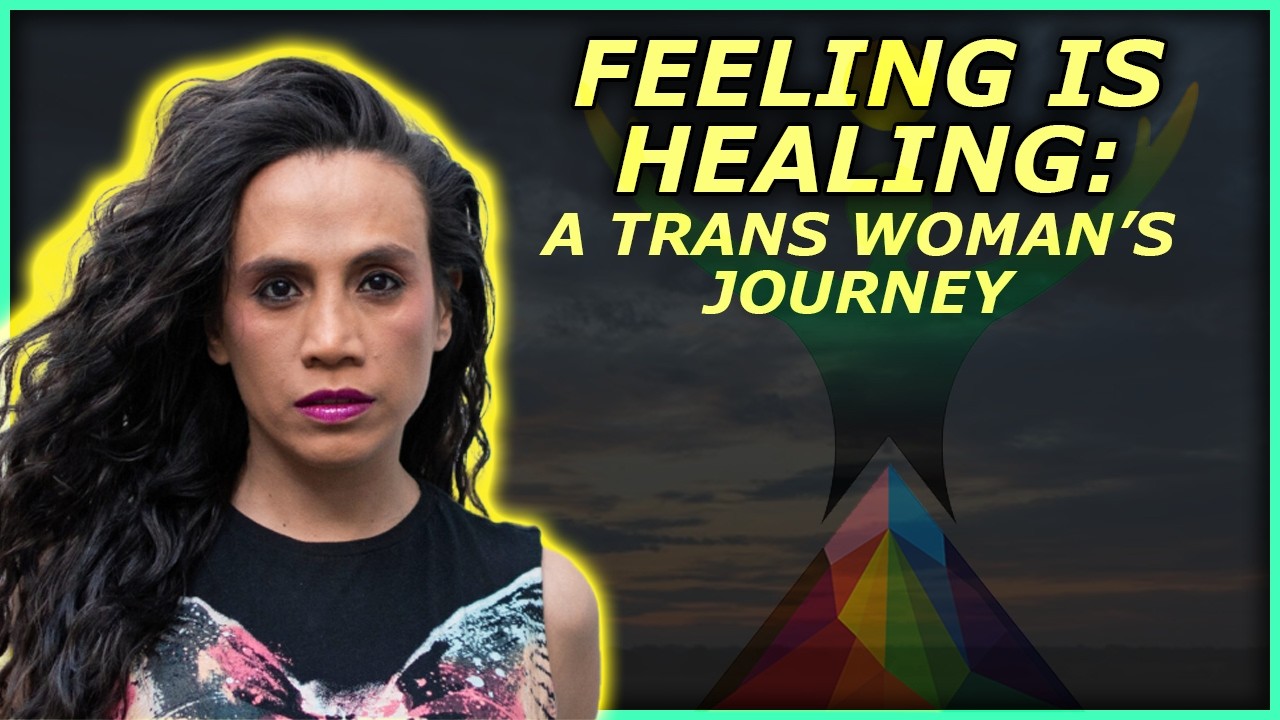
Amanita Calderón Cifuentes, a Colombian trans woman and HIV researcher, discusses chemsex in trans and sex-worker communities. She argues that abstinence-based recovery misses the point: lasting change requires addressing the trauma and minority stress driving drug use. Harm reduction, community support, and affirming trans identities matter more than shame.
Chapters
We represent, we are a mirror to a wound that most of society refuses to accept. A wound caused by the self-betrayal that people do in order to keep aligned under those rules and to follow those rules out of fear. And the thing is, when I'm walking down the street and someone sees me, the first feeling that is triggered is—
The Aftermath Podcast is an outreach tool to help men who have sex with men break free from the addictive patterns associated with chemsex, otherwise known as crystal meth or Tina. I'm your host, Dr. Dallas Bragg, a former crystal meth user, now recovery coach. Here you will find a repository of tools and resources intended to eradicate the epidemic that is plaguing our MSM population. Please note that the views expressed on this podcast are not to be taken as medical advice. Also, We will be talking about drugs and sex. So if you feel triggered to use, stop listening and contact your local emergency system and/or your support network. Let's go. Hey, y'all, today I just want to put a double trigger warning on this episode because my guest today, trans woman Emanita, is a person who uses drugs. Now, she doesn't use methamphetamine right now, but she does use drugs. And I would challenge you to listen with an open mind and glean from what she's saying very clear clues about your own drug use, why you use, and just sit in her space of non-judgment and feel the stigma lift and be free from shame. If you listen to this with a closed mind or if you're easily triggered by listening to someone who uses drugs, don't listen to it. But I do challenge you to hear what she has to say because it's powerful and cutting edge and I believe the missing link to what the recovery industry in this country is missing. So hope you enjoy. I know I did. Welcome back to the After Meth Podcast. Really, really happy that you're here. Thank you and welcome to season 3. As we get deep into season 3, we are approaching topics that I've always been interested in covering and haven't had the right connections to cover. This season, we're talking about meth-induced psychosis. We're talking about healing for sex offenders. And last year, we really focused on harm reduction. So today, I'm very—
Excited.
Very excited to present our first trans person on the podcast. I get a lot of you who listen who DM me confidentially and say, like, there's so many different issues that we face as trans people. Minority stress is not even a strong enough word for what we face and what we're dealing with. And then there's a collection of trans sex workers who reach out to me. And I'm glad, I really, I'm really happy.
Thank you.
that you feel safe to reach out to me. I'm glad that the message that comes through from me is one of a safe space, that where I want to go is to be more informed and—
Oh.
And more— yeah, I want to be— I want to have the kind of at least basic knowledge to try to help. And so we are welcome. We are happy to welcome Amanita. Is that right? I didn't ask you before.
No. Yes. Amanita Calderon Cifuentes. Yeah, like the mushroom. Amanita muscaria. That's where my name comes from. Thank you so much for having me here, Dallas.
Yes, yes. Thank you. We met at the International Chemsex Conference in Antwerp. We had a really fun dinner. And there was no one— I can say there was no one else like Amanita at the conference. Very bright, bright star. Literally.
Literally no one else. Well, yeah, no, no, no, it was, it was a great conference. It was a conference very much, it was led by the Institute of Tropical Medicine. So of course it had, let's just say this, this medical connotation that I think it probably was one of the reasons why the concept of recovery was so centered. Let's just say my speech was not so focused on recovery. It was mostly focused on addressing drug use in a, in a, in an alternative way, because that's the way that I do it. But yeah, it was a really nice experience. It was a really nice conference, to be honest. And it was really nice to meet you. And the dinner was delicious.
Yeah, it was. And beautiful. What a What a setting to have dinner in.
Yeah.
Yeah.
Also like surrounded by so many cool people. Yeah.
Yes, for sure.
For sure. Um, okay.
So I'm just going to hand this over to you. If you could tell us about you and what you'd like to share about your story, and then we'll get the conversation going.
Okay. Well, um, let me start by introducing myself. My name is Amanita Cadenza Fuentes. I I'm a Colombian trans woman, turned 37 years old last week, the 13th of March. Well, you know, the 13th of March. And I am a Colombian. That's a big part of my identity. I live in Berlin, though. I studied microbiology for about 10 years. I have a PhD in molecular biomedicine.
Hmm.
And I, I currently work for an organization, an NGO called Trans Europe and Central Asia, where I serve as HIV research and advocacy officer. My main focus is to do community-led and participatory-based research on the sexual and reproductive health and rights and also the infectious diseases of transgender people throughout Europe and Central Asia. Also globally. Since the beginning, since January last year, I started serving also representing TGU in the Program Coordinating Board of the United Nations Joint Program on HIV/AIDS, UNAIDS, which I still do. And other than that, I work very closely with both pharmaceutical companies as a consultant, and I also work very closely with the European Parliament and the European Commission also as a consultant providing very detailed information on the biomedical needs that trans people have in Europe on matters of sexual health. Since last year, of course, I started expanding the scope of my research and work a lot more with other key populations, which are populations that are in high risk of acquiring HIV. That includes MSM, men that have sex with men, sex workers, people in prison settings, and people who use drugs. Of course, these are social demographic characteristics that often intersect, and I intersect in many of them. I lived as a man who had sex with men for 28 years. I transitioned to be a transfeminine person. I have done sex work in the past. Well, sometimes also nowadays.
Okay.
Don't deny myself the possibility for an additional income. But more than anything, I have been a who use drugs since I am 26. So it's been about 11 years.
Okay.
Of, of drug use, 11 years of great experiences, but also 11 years of terrifying experiences, including psychotic episodes that were not meth-induced. My psychotic episodes were induced by other strong uppers. And I guess the reason why I was very excited to To get your invitation and to be here is because, um, I have, um, let's just say I have, um, put a lot of effort on trying to understand myself as much as I could and also the recreational drugs that I was engaging with as much as possible, um, to figure out a way for, um, for having, um, trying to, to figure out a way to engage with those drugs in a way that would, um, allow me to tap into the pleasure and the intimacy and the experiences and the, um, different really wonderful benefits that can come with different types of drug use, but taking care of myself and taking care of the people that I was with and trying to reduce to the maximum the harm that I was, um, exposing my body or someone else's to. And, um, and I think Today, I guess that's gonna be a little bit the conversation we will be having, right? Like, um, yeah, like, uh, how, how can we, uh, how can we talk about recovery from a, maybe a little bit of a different perspective that doesn't necessarily require sobriety?
Mm-hmm.
Um, not saying that sobriety, it's not a, it's not an option. Of course, sobriety and, um, abstinence are, um, a form, like the ultimate form of harm reduction. But there's also other ways.
Yeah. Yes. Yes. Thank you. So if you are listening and you listened last week or last week, last season, we had several harm reduction professionals on who explained that it's all harm reduction. It's all one spectrum, right? You have abstinence on one end, active use on the other. You just, you just named a population called people who use drugs. And I don't think that we in general, or especially in the States, recognize that as a demographic.
And yes, we are. We are a really widespread demographic because unfortunately for the ego of a lot of people, being a people who use drugs also includes people who Um, knowingly or unknowingly are addicted to benzodiazepines like Xanax, for example, or like, or also to painkillers like OxyContin, which was a big, big, big issue in the United States a couple of years ago, especially. Um, there is a lot of ways to be, um, to be a person who uses drugs because drugs can be addictive, even if they are legal. That's something that people don't necessarily know. And, and it's, it's, of course, going to be linked to a lot of different things, both your own mental health, but also the different policies that are— laws and policies that are applied in the country where you're living. And, and I think these conversations are really important to have, because quite often people just don't even consider themselves someone who uses drugs. But they are.
Hmm.
Coffee is a drug. Yeah. Nicotine is a drug. Alcohol is a drug. So if you'd like your wine with your dinner, well, you're a person who uses drugs.
Yeah. I'm a person who uses a lot of drugs. Caffeine.
Yeah, same here.
Yeah, right. Caffeine. I mean, the, the -ine on the end of that, right? Caffeine, nicotine. Yeah. Okay. So yeah, so those, those of you listening, Some people use drugs anyway. And sometimes there's a different approach. Like, there's a different approach I take in the program sometimes for when I know that somebody is not going to be able to just stop cold turkey, which is, for some reason, this is a strange term in other countries. Stop cold turkey, which just means stop, just become abstinent today and never go back. That expectation is sometimes often unrealistic. And so that's why a lot of you are, are under that, that premise, I have to stop today, and then you binge 2 months later, and then you spiral.
Yeah. So, okay, let me just start by telling you maybe a little bit about my consumption, right? Because the thing is that The way that we consume, and I'm telling you this not because of specific research that I have done, because my research is mostly on HIV and its intersections with gender identity, although of course I have done some research on drug use, which we can talk about later. But right now I want to talk to you from my own personal experience.
Okay.
And the experience of the people around me that also engage in drug use, like that also use drugs, right? What I have noticed is that people use drugs for many different reasons and that different people have different, um, let's just say reactions to the same drug because what the outcome of drug use is going to be will depend on at least 3 concepts. And you might have talked about this before, but that's the drug, the set, and the setting.
Mm-hmm.
Right?
Okay.
This is the reason why every time that I make the choice to use a drug, Today, the first thing that I try to figure out is, what is this drug that I'm taking? How am I supposed to take it? And mostly, why am I taking it? The why am I taking it will, of course, have a lot to do with the effect that the drug has and, and how it makes me feel. But say, for example, if we're talking about using ketamine, ketamine is both a painkiller and dissociative, right? So if you are a person who is Trying to run away from emotional or physical pain, there is a higher chance that you might find ketamine psychologically more tempting, right? And that you might want to redose more or use more. Well, if what you're looking for, it's something that keeps you up, that gives you energy, that turns you on, that keeps you horny, then you probably will find uppers like methadone, crystal meth, or even monkey dust a lot more attractive. And, um, that's of course within you, that's your set. But also there are drugs that are biologically addictive and there are drugs that are not biologically addictive, but they're psychologically addictive. An example of a biologically addictive drug is heroin, but it's also alcohol or GHB. And what, when a drug is biologically addictive, when you consume it, Your body eventually, maybe faster, yeah, faster sometimes depending on the drug, like with heroin, but, or slower with other drugs like alcohol. But eventually your body will start thinking that you need that drug in order to be fine. And when you stop taking that drug, your body will collapse because your body will think that you are dying. And so, um, that's the reason why a lot of people cannot go As you call it, cold turkey with some drugs, specifically when they're biologically addictive. But when it also with, with psychologically addictive drugs, um, that really, again, depends on the person. But if you ask me, if you tell me to stop a drug today and you just, you, you cannot use it ever again, I will tell you factually that will never happen. Because the more a person like me, the more you try to, like, to prohibit something.
Yeah.
Or try to control something for me, I am, yeah, I will, um, I will most likely use just to piss you off.
Yeah.
That's not, maybe not so much anymore at this, at my age, but I, um, the way that I have managed, for example, to reduce my use of methamphetamines was never by going cold turkey or just being like, I'm never gonna use it again. In fact, the way that I actually reduced my drug use was first by accepting that I was a drug user.
Okay.
A person who used drugs, sorry.
Okay.
Second, by addressing the underlying feelings that led to dependence and to problematic use of methamphetamines. And also by knowing that maybe tomorrow I would use. Because I am an addict and I am an addict, um, of different drugs like crystal meth or, uh, monkey dust. Those two are, let's just say, my, um, my, you know, my drugs. I'm gonna use these little quotation marks in here because I do believe that some people have a predilection for some, for some specific drugs, as I mentioned before. So, um, For me to reduce my use on, on, on meth was just simply like, I will not, um, even pretend, but like put, put myself a goal of like, I will never use. But I, uh, the way that I approached it was just simply like, today in this very moment, this is not gonna be the day that I'm gonna, that I'm gonna use Tina.
Mm-hmm.
Today, it's just not gonna be today. And it's not gonna be today for different reasons, but there is actually a reason. It's not gonna be today because I have to, Or tomorrow. It's not going to be today because I am meeting my friends in, uh, at 9 in the morning tomorrow. And if I start using now, I know that I will not stop easily. Um, to be honest with you, the, um, the hardest part of, of, uh, of, of my, um, of me reducing my, uh, my, my drug use. was not— was just basically finding the reasons to not do it. And I guess, I guess that that's kind of the situation of a lot of people, and especially when it comes to trans populations, especially when it comes to trans women, and especially when it comes to trans sex workers. We have a lot of reasons to use, a lot of reasons to use, starting by the fact that Yeah. Um, and I do apologize to maybe your heterosexual audience, but dealing with male cisgender heterosexual male clients, God, it's virtually impossible to do it sober. It's just not. Yeah.
Can you talk, can you talk about that? Can you talk about that? Because that's the, if you note, I don't want to interrupt. I'm sorry to interrupt you, but if you looked at the, like the Pornhub statistics, The, the trans porn is just doubling, quadrupling in popularity.
Yeah.
Um, on the straight side.
Yeah.
Right. And so could, could you talk about that?
Let's just start by trying to understand why transphobia systematically happened, because that's the link. There's a very strong link for that, right?
Yeah.
Let's just, let, let, like, let's start with a question. What do you think transphobia is a thing? Like, why do you think people hate transgender people so much? Why do you think people are so, so disgusted or so, like, why, why do they find us so, uh, what do you think? Hmm.
Well, my first thought that comes up is that I want to control. There's something about controlling what other people do. And if you step out of line, It, it, we, we've been programmed. I know for me, I'm, I'm speaking from my experience growing up in a church, evangelical church, anything out of the ordinary or what was prescribed was crazy or wrong or of the devil. And so I even, I even noticed this. This was so funny. I was at the gym and I was like, why am I so fucking triggered by this man who won't wipe his equipment off after he's done. You know, like, why is this? I could not, like, I, I wanted to go up to him and just scream. It was bothering me so much. And then I realized, like, I, it's, it's because it's not the rule. Like, he's breaking the rules. And whose rule? Right? I can wipe my own equipment off. So anyway, that's— Yeah. To me, that's why I, from my point of view and my perspective, that's why.
Well, it does. It's actually, it's actually like, again, hypothesis, but I, after 37 years of experiencing directly or indirectly transphobia and cisnormativity, what I come to the conclusion is that it's actually quite a similar reason. It's not just necessarily control. It's the fact that the society where we live, which is basically ruled by 3 big pillars: capitalism, white supremacy, and patriarchy, right? And they are hand in hand, they work hand in hand, right? This is a set This, they have created this immense set of rules that put a very small elite of people in a position of power and then, um, exploit everybody else. So what best way to have, uh, cheap labor than making sure that a lot of people is uninformed and that a lot of people are very much dependent on the belief of this set of rules. So that's the beginning of the gender norms, put the men in, in the mine while the women are taking care of the children in the house. So anything that is not reproductive, anything that wasn't reproductive became demonized by Abrahamic religions. And I am talking about the 3 of them. I'm talking about Islam, I'm talking about Christianity in all of its forms, and I'm talking about Mm-hmm. Judaism. So these gender norms were created to keep us all in prisons and we all buy them. We all follow them because the alternative is terrifying.
Mm-hmm.
Because the second that you step out of that cage, that implies violence, discrimination, harassment, loneliness. especially young women. Transgender people choose to step out of those cages. Queer people too, but trans people carry that flag. We put on the shirt because you can hide the gay, but you cannot hide the tranny. I mean, at least not at the beginning.
That's true.
And I'm gonna use the word tranny a lot or faggot a lot because I have been a faggot and I have been a tranny, but also because I want to appropriate language that people use in a pejorative way against me, right? My point is, we represent, we are a mirror to a wound that most of society refuses to accept. A wound caused by the self-betrayal that people do in order to keep aligned under those rules and to follow those rules out of fear. And the thing is, when I'm walking down the street and someone sees me, The first feeling that is triggered is jealousy. It's sadness. It's anger. But it's all like this anger behind the anger is, why is this person breaking the rules that I am following at the cost of my own happiness and my own freedom? Why is this person breaking those rules and get to be free and happy and healthy and not lonely and—
Yeah.
While I am here being a protector and a provider or a caretaker and a mother and a wife. Why does this person get to not do that and be free and happy? Fuck that. So I'm sorry, am I allowed to curse here? Yes. Yeah.
You can say, you can say fuck, fuck all you want. Yeah. Yeah.
Okay. Fantastic. So, and then of course it's also the reminder That when they see me, no matter how much they hate me, no matter how much I remind them of their wound, they still wanna fuck me because I'm a cutie and I'm a hottie.
Yeah.
And guys, um, well, that's what they see. And, and this terrifies them because immediately because of the lack of information and because the lack of understanding of what transness is and what, you know, gender is, a social construct that honestly has no meaning, but we give them all the meaning in the world. And it's a social construct because it changes according to time and space. Masculinity is not the same today as it was in France in the 16th century.
Yeah.
In France in the 16th century, masculinity was men wearing dresses, makeup, wigs and high heels. Today, that is a drag queen. And so the thing is that when a straight man is attracted to a trans woman, the first thought is, am I gay? And what a horrible thing, what a horrible punishment for a man is the idea to be perceived as a gay man.
Mm-hmm.
And yeah, it's so, so, so, so, so pathetic. It's so sad. But like, Pathetic is not the right word. It's just sad. And I really do feel— I look, I look at them. And quite often this happens, that when I engage with a client, the sex might last 10 minutes, and the rest of the hour can either be a very, very, very depressing conversation, or just a rant about the world. Most of the time, sex workers ended up doing the job of a therapist.
Wow.
And I mean, like, I, at least that's been a lot of my experiences and the experiences of a lot of the girls that I have met. And of course, because a guy who has an attraction for a trans woman, that's not weird, but they don't talk about it. They don't have— they don't, they don't, they don't talk about it with anyone. So they have all of these experiences internalized, and then they come, and then they meet you. And then they realize that you're a human being who can speak and who has a mind of their own and who has a life of their own. And then there's a conversation and boom, then suddenly maybe there's even a friend. Maybe this person in front of you that you hate so much, but you desire so much also can understand parts of you that no one else can.
Wow.
And they will address it without judgment. But the thing is, and this is quite often the reason why drugs get involved in the whole thing, it's incredibly difficult for someone who has been taught for their entire lives that this is something wrong, it's very difficult to engage with this type of sexual experiences without something that helps them to loosen up, to get rid of the inhibitions, to shut down that, that part in your prefrontal cortex that, that says, that's, that's the wrong way. And so that's when drugs come.
Mm-hmm.
Here's one of the main reasons why crystal meth and strong uppers, like, okay, so let's just quickly talk about the biochemistry of crystal meth and monkey dust. So I, I wanna, like, let's start with the category of amphetamines. So amphetamines are stimulants. When you consume them, you stimulate your central nervous system. In the case of crystal meth, it's a methamphetamine. In the case Of monkey dust is apitovalerone, which belongs into the category of synthetic cathinones, which also belongs into the category of amphetamines. So both are amphetamines. It's just that these are amphetamines that induce a drastic, drastic amount of dopamine.
Mm-hmm.
Um, noradrenaline, cortisol. In the case of monkey dust, especially really high amounts of them, really high amounts of cortisol. And then it also inhibits its reuptake. The, the, the, basically your brain is flooded with these molecules for so long. And that's the reason why you experience so much pleasure, pleasure. But then also at the same time, when you are, when you have such high amounts of cortisol, your prefrontal cortex shuts down, which takes away the inhibitions. But for the longer your brain remains in that state.
Mm-hmm.
which is the longer that you are consuming or the amounts that you're consuming, and the less you sleep, the less you hydrate, the less you regulate your temperature, the less, um, you eat, your body will sooner or later enter into a state of emergency.
Yeah.
And this state of emergency will basically say fight, flight, freeze. phone. And because you're exhausted, and because your body is not like the part of your brain that is in charge of logical thinking is not captivating all the inputs as good as they can, because you have been on a rant for over, let's say, I've met people who have been on chills for— chills, by the way, are the way that in Berlin where I live, we talk about chemsex sessions.
Mm-hmm.
A chill, like you go to chill, and it's in fact just the Norgine with a lot of Tina and GHB and And the thing is that I've seen people on chills for 5 days, right? And like, the issue about that is that that's when your brain will not be able to capture all the information that is happening around. And what your brain is going to do is that it's going to fill up those blanks with the things you know. And if you're a person like my community who has been exposed to so much violence, but also your community, the community of men that have sex with men that has been exposed to so much violence, I mean, the easiest, like what your brain is going to do is to fill it up with those terrifying memories and those terrifying feelings. And it's quite easy to go into a psychotic episode when you are in that state. And the issue of going into that psychotic episode is that you really no longer can tell what's real from what's not real. And you are convinced of these paranoid thoughts that are so scary, that are mostly linked to internal unresolved feelings such as shame, such as guilt, such as sadness and loneliness and anger. And yeah, and it gets too much. And that's what eventually can cause suicide alerts. And I'm sorry if I did not mention a trigger warning here about suicide, but maybe you can include it. But the point is, the point is that this is the reason why many of us ended up hurting ourselves while doing something like this. So that's the reason why if you're going to engage in this type of experiences, which is, you know, they're very sensitive and they're dangerous because let's face it, they're dangerous.
Yeah.
But then you need to, you need to prepare and you need to take care of yourself. And most importantly, you need to take care Also, no, most importantly, you need to take care of yourself, but you also need to take care of your sexual partners. And, and so another layer comes into this, this conversation, which is, um, how much are we willing to approach things without judgment, approach situations without judgment? Because Mm-hmm. Unfortunately, judgment is the, it's the first rule in our moral compass because that's how society taught us to be. We judge others and we judge others especially on the things that trigger us, that trigger us because we have not resolved them. So, um, I have been in situations where, um, there's a lot of things happening and maybe a lot of those things are not necessarily, they don't fall like, especially like what I'm, during a, during a CAMSEC session, I've been exposed to things that disrupt my principles and my values, right? And these, like the reaction to, to, to this is like, it's, it's very difficult to navigate situations like that one. And the thing is, like, for example, for me, something, um, quite triggering is, uh, for example, sexual violence, right?
Mm-hmm.
I'm gonna be very open about my lived experiences from the past. I, so trigger warning about, uh, sexual violence, but I have been sexually abused many times precisely because of the fact that I'm a trans woman. And I also, um, have been sexually abused when I was a child several times. And all of that has had a huge impact on the way that I relate with sex. So whenever I am in a sexual setting, and I see or I, or I sense things that are related to the topic, I can choose to go about it and freak out. But what my brain actually decided to do was to transform those terrifying feelings into something pleasant. And now it's a kink. Now I have a daddy kink, a very serious daddy kink. And I have also a very serious BDSM kink, and I really enjoy roleplay, roleplay. And of course, that's a way of coping. It's a coping mechanism. But the truth is, I carry so much shame about that.
Hmm.
I am incredibly— telling you this right now, right here, and sharing it so publicly in a podcast is Probably one of like, I'm, I'm facing one of my biggest fears by having this conversation. It's terrifying. But it's also the only way that I will ever be able to address those feelings. And it's also the only way that I will be able to ever understand that, first of all, I'm, I'm not doing anything wrong by having a kink because I'm not hurting anyone.
Mm-hmm.
First of all, but also, what happened to me was out of my control. And then the next step after starting, at least accepting that I carry shame and that I carry guilt for the things that happened to me and in the past, the next step is, do I choose not, like, like, how do I deal with this pain? How do I deal with this shame? And how do I deal with also the anger? Because I can hate on the people who did this to me. And I did for a really long time.
Mm-hmm.
But then, but then I remember that, I remember that they are just as much a product of this system as I am. And that the people who abuse me and the people who hurt me, they were hurting also themselves and they were hurt themselves. And it's not about finding excuses to people, but it's about understanding or approaching their actions with curiosity. Because when I do that, Mm-hmm. I get to be angry at the system and I get to be angry at, um, at what is actually the source of the problem. And then I can target that problem and then I can try to change the system. So in the future, men have the possibility to address their feelings and to address their pain and their shame and their fear and their anger. And then maybe we will have less sexual violence and maybe trans people will not be exposed to so much discrimination and so much loneliness and so much harassment. So whenever I am in a sexual setting using chemsex, I need to be very aware that there is, that all of this is inside me and that all of these conversations are inside me and that all of these feelings might also be in someone else, in the person in front of me. And that means that the way that the drug is going to affect me and the way that the drug is going to affect them will depend on those feelings. And those conversations, internal conversations. So one of the reasons why I believe that I have managed to navigate the situation so well, it's because with my sexual partners, they don't even notice that I'm like triggering, like, like tricking them into talking. But yeah, I ended up talking a lot of, a lot with men. And those conversations. quite often leads to a lot of vulnerability, vulnerability that becomes, um, let's just say at least like, it's just like a one short moment of release, one short moment of, of, of healing. And, um, and I have to be honest, like, um, crystal meth played a really big role on having those conversations and allowing that intimacy to happen. But it also means that after that experience, when the effect of the drug is gone and the inhibitions are back, the shame will be back and the shame will be transformed into disgust and the disgust will be transformed into anger and they will hate themselves. And so was I hating myself. And so then I realized that if I wanted to actually address my problematic drug use, The only way was to deal with that shame and to talk about it and to confront it and to, um, to give it space so it could transform on its own. But the only way that I could do that was addressing the feeling, sitting with the feeling, talking about it. And, uh, um, let's just say it, it has. It did change my life. Because the thing is that in a moment where, um, my life depended, um, economically speaking, I, I mean, depended on sex work and my clients would basically almost demand chemsex during sex work. Um, crystal meth became an alternative and crystal meth allowed me to have an income But it also allowed me to have an, um, intimacy that I was craving so much and, and, you know, allow me to have fun and find validation. And it did, it did save my life. It also caused me a lot of pain and it, it also put me in terribly dangerous situations. And if it wouldn't be for the fact that I had so much knowledge that I have so much knowledge and that I have Apply those, that knowledge, that scientific knowledge, and that I have applied also years of therapy that I am still on. And I, and if it wouldn't be for the fact that I am surrounded by an amazing network of people that support me and that take care of me when I am not in my best, just the same way that I support them when they are not in their best. If it wouldn't be for all of those things, I'm pretty, I wouldn't be here and I would not be able to address the background issue. But the second that I, that I did, the second that I started doing that, it took me many years to, to finally be able to even have a conversation about that shame and about that pain. But the more I did, the less, um, the less Tina I was using. And, Mm. and it was never, it was never about stopping using Tina. It was never, or drugs at all, because that's not what I wanted. That's not what I want. What I want is to be able to use a drug, not to fix a problem. I don't want to solve my problems using drugs because that just changes the problem. I want to be able to use drugs to enhance intimacy, to find different forms of intimacy, to find, to get access to knowledge that you cannot find sober. Knowledge like knowing the darkest part of myself, because let's face it, When you have been, when you are having a coming down from crystal meth, you cannot find meaning on anything and you're incredibly dysregulated because you're tired, dehydrated, and because your brain cannot, there's no reuptake of dopamine and your dopamine receptors are all covered and all exhausted. So you just cannot find meaning on anything. You are basically biochemically depressed and then mixed that, mix that with the shame of the actions that you did, the result is just a horrible coming down that lasts for a really, really long time and a really uncomfortable mix of negative feelings. And well, it's just not cute, right? That's maybe, that's not fun. That's not what you want.
Right.
So, Let's just say that, um, that only, that, that could only change the moment that I, uh, I started addressing, um, all of those underlying, um, uncomfortable feelings. And I mean, I'm not going to say that I am, uh, that I'm no longer an addict because I will always be an addict of crystal meth, but I haven't used it in a year and I haven't craved it in a while.
Mm-hmm.
Um, it is true that I, I do use other, um, strong uppers, uh, like monkey dust or methadone. Mm-hmm. Um, but I'm not engaging into a problematic drug use as I used to. And with that, I mean that, for example, I can stop using for months and the day that I use, I know that I will use a, a specific amount and I stick to that amount.
Yep.
I stick to a time. I'm not going to, I'm not going to use more than 12 hours, 6 hours. I'm going to make sure that I have access to electrolytes. I have access to acetylcysteine to decrease the cravings and to, um, acetylcysteine increases, um, it helps you release phlegm, which is, let's just say it like in your lungs. There will be a lot of residues from some of the smoking, especially when you don't smoke mochi dust in the proper way. There's chances for the particles from the dust to go into your lungs. So it's important to get rid of that. Um, make sure that I have access to, um, something that will help me sleep.
Mm-hmm.
Make sure that I eat and, um, make sure that I have the time to sleep and to rest and to recover and But, um, yeah, but, but most importantly, just, um, have the, the, um, have the discipline to stop in the moment when you're using. And I think that's the hardest part of it all.
Yes.
To know when you have to stop, even if you don't want to, even if every single part of your body tells you, I wanna, I, I wanna continue using. Well, um, yeah, knowing and having the capacity to know how to stop, that takes, that's, uh, something that takes years. Um, and I'm gonna tell you something. I do believe that harm reduction can be applied to any drug. I don't think harm reduction can be applied to every person in every configuration.
Yeah.
Not everyone has the capacity to do what I do when it comes to my drug use.
Right.
So I'm not engage— I'm not encouraging anyone to That's right. To do what I do because that might not work for them.
Yeah.
But I do encourage people to, to be more curious about, um, yes, about their, um, about their consumption. Because if what they're going to do is to choose to use, they might as well, uh, try to understand the, the dynamics behind it. I'm just grabbing my charger, by the way.
Okay.
Okay.
Well, I want to say, if you're listening or to the listeners, I'm probably, you know, I may get some comments about this episode, but I want you to really let go of this black or white thinking about what recovery is. And if you listen to me, In any length of time, you're going to know how I feel about that. I, I feel like what Amanita has said today, I, I, I really encourage you to rewind and listen as many times as you can to extract some really important concepts for you, especially if you are Having a, if you are in problematic drug use. So this is what she says. She made the distinction of problematic. If you're listening to this, most likely it is problematic for you. And so problematic means it's interrupting your life, right? It's a negative influence on your being. And, but we also are under, as she described, this capitalism, white supremacy, patriarchy type structure, which to me describes a lot of the agreed upon recovery industry in this country and around the world. And when you are told Bad, bad, bad if you use, you're going to keep wanting to use. Like, so that's just like, that's why men attracted to, you know, they, they have transphobia, but they want to sleep with a trans person. It's almost kind of the same concept is as much as you are told, if you relapse, you're bad, you're going to want to keep doing that. So why not? As, as Amanita said, Like, I'm accepting that this is it. This is, you know, this is where I am. I'm going to be curious about underlying reasons, and I'm going to know that I might use again. And if I do, it's okay. I might use again. In fact, I want to use again. Just say that out loud because we get these looks and we get cast— we get this ridiculed. By other people who stand on their moral high horse and say, well, I only have one white chip. I only, I didn't never relapsed or whatever. And their experience is not yours for the very reason of all the underlying contextual reasons you're using the set, the drug, the set, and the setting. Why are you using it? Because if you're using it because you hate yourself so much, that's the only time you feel good about yourself, then it's going to be problematic. But we have to explore that and give a chance to do it.
And honestly, babes, like the thing is, if what you really want to do is to, um, to, to recover, if what you really want to do is to be sober, then you, the first step is to accept that you're having a problem, one, but also to have compassion for you. Because the thing is that the only form of love that is unconditional is the one that you have for yourself. You cannot expect other people to love you unconditionally. Like, if you hurt me, eventually, if you continue hurting me, eventually I might stop loving you, but you, you're stuck with yourself for the rest of your life. So judging you and telling you I'm a bad person for being a drug user, I'm a horrible person for, for, for smoking tin or for slamming tin or for, yeah, well, I mean, that's, um, that's not really going to help you a lot.
Yeah.
So having compassion for yourself and trying to approach these with curiosity and not with judgment, it's the only alternative. And will, and if you, if you can figure it, like if you can figure out and understand and get to know yourself well enough, and if you see it and like to, to understand what are those feelings like, where are those feelings coming from, but also most importantly, not just rationalizing your feelings, But sitting with your friends, which is the most difficult part of it all.
Yes.
The most difficult, because like, it's not about sitting and crying and breaking and facing the shame. It's about screaming and it's about being hugged and held by your friends and by your family and by those people that you should surround yourself with, which is also another act of love, surrounding yourself with people who love you. for who you are and who won't judge you because of who you are.
Yeah.
And so, um, again, like I would, I am telling you, I would not be here, my love, if it wouldn't be, and I would not have, um, reduced my problematic drug use if it wouldn't be for the fact that I had an endless people of like that had my back, but it wouldn't be, but also I wouldn't be here if I wouldn't have done this work that I am telling you that like, the breaking your heart and then just accepting that you are in pain and that you carry shame. And that this might be linked to your sexuality, that this might be internalized homophobia, that this might be the way that your religion is telling you to feel, that maybe this is the way that the choices that you're making in your life are maybe prioritizing being successful and productive instead of being happy and healthy. Because that's what capitalism tells us, right? You have only value if you're productive. And so many addicts think, oh, well, I still got to work, I still produce money, I still, you know, like, I pay rent. Well, yeah, baby, but you're suicidal. And you're also way too skinny because you're not eating. And you're also most likely positive for many diseases that you don't go and get tested for, or infections that you haven't been tested for, right? Because you're not taking care of yourself. And not taking care of yourself is It's just the most obvious form of expressing lack of self-love. And that lack of self-love quite often comes from the fact that we were never taught to love many parts of ourselves. We were taught to hate them.
Mm-hmm.
We were taught to hate that we're gay or trans or queer or whatever, or Black or brown, or Indigenous or a migrant. There's so many internalized forms of hate that it's just, it's so exhausting. And we're also taught to be ashamed of pleasure.
Yes.
Heterosexual men that like most, you have no idea the amount of clients that I have that they don't just want to be with a trans woman, they want to be topped by a trans woman. And I get it, being a bottom is so much fun. But we're so, we're so brainwashed into finding pleasure a problem. Yeah, like, it's like, why is it so difficult for human beings to just embrace fun instead of shame? Exactly.
Yeah. Well, I am— well, you brought up so much emotion in me today. I was not expecting this. I just think it's—
No worries.
I think it's your viewpoint and your approach to me is just gonna set a lot of people free that's listening to this. And because I just, you know, I just see there were just so many men that I work with are just in these prisons, these prison cells, and they're just living there. And then this cycle of hating themselves and using and hating themselves instead of like you're saying, like, Just love yourself and sit. Don't try to feel better. Feel it better is what I always say. You know, don't try to just immediately make yourself feel better.
Oh yeah.
Feel it better. And you're just offering this wide range of just compassionate, just set it, just liberation from all the fucking voices and the rules that we're under. You know, I just get, I get so much flack about Um, the 12, you know, saying some bad things about the 12 steps. But this is why, as I see men coming to me, they're just so heavy with shame, you know, and they're like, what if I'm in that, in the big book when it talks about this collection of men who never get it? You know, they're doomed forever. Like, what if that's me?
I see. This is, I mean, I am, I don't even want to, I don't want to discredit or disregard, um, these different mechanisms that exist because I don't know them well enough to be able to tell you like, this is, but what I, what I will always tell you is if the solution that they're presenting to your problem is hurting you, it's not a solution.
Yeah.
It's just another way to, to make things worse. Um, acceptance, accepting the, your reality, having compassion for your reality and, and surrounding yourself with, with nurturing love. Um, it's genuinely the only way to start healing.
Yeah.
And that's, that's the reason why my goal was never to stop using. My goal was to, my goal was to connect with my pain and with my shame. Um, but it was very, it's, it's, it's, uh, it's a different difficult task because like, you know, people ask me like, how do I define self-love? A lot of people, like if you ask this question, people have no idea how to define self-love. Yeah. Yeah. I, to me, self-love It's, um, it's, uh, it's actions. You don't— it's waking up in the morning and writing in front of the mirror, I love you, and then telling yourself like, you are beautiful. You are— that's, that's not— I mean, I, I do believe in the power of affirmations, don't get me wrong, but yeah, that's not self-love. Self-love is recognizing a need and solving that need, recognizing a feeling and staying in that feeling. Self-love Ah. Is choosing to transition. Self-love is choosing to come out of the closet and defend your partner in front of your homophobic father. Self-love is, um, going to that birthday party from your community and, and be in your community. Self-love is community care and self-care. So, um, yeah, like, I mean, when you make, when you start making choices that prioritize your happiness and your wellbeing, that is self-love. Um, and that, like, the thing is that the thing is that the pain and the shame, um, they're very uncomfortable, right?
Mm-hmm.
And so how do you like to be in that feeling? It's like, you, you don't know what to do. What do you do? What do you do? Like, you don't know. You cry, baby, you cry. Biologically speaking, crying, what you're doing right now, Dallas, what you're doing right now, the production of serotonin that you do, that you have when you cry, it's meant to increase tolerance to pain. And so when you talk about things and you cry, your pain has finally the possibility to transform.
I love that.
Because feelings change, just like everything. Everything changes. the one thing that we have certain in this world, and it's that everything changes. And feelings will change, but you need to give them the possibility to change. You have to bring them from your limbic system to the frontal cortex. And that's the only way for you to do that is to talk about it and then to cry and scream and hug.
Yeah. I love it. I love it. Yeah. Yeah. But we, we have a tendency because of the instant gratification kind of mentality, we have a tendency of any little bit of pain, we have to get rid of it right now, you know, um, instead of feeling it. Whereas we're not taught that either. You know, where do you learn that? In school or church? Yeah.
I actually learned that from my community, from Colombia. And like, honestly, like, this is, this is the reason why I told you at the beginning that being Colombian is a big part of my community, a big part of my identity, because the thing is that Colombians have been through, we went through a very, we are in a, like, we've been through a civil war for so long.
Mm-hmm.
And, um, for many, many, many years, we, we were so heavily affected in so many different aspects, including the kind of economical aspects, but also like security and safety. We realized that the only way forward was interdependence. Was to, because the thing is that you, there were moments where people can just like literally not afford anything because we were, because the, the economical crisis that Colombians went through in the, in the '90s hit everybody, everybody. Mm-hmm.
Mm-hmm.
And, or, or there were moments like, oh my God, in Bogotá they would shut down the electricity because, um, uh, the guerrillas or the paramilitaries were putting bombs on the electric, uh, towers. And so we had to rationalize energy and they would shut down, uh, the, it would, they would shut down the electricity from different neighborhoods. And so people would start, like in their, in their, in their own buildings, people started gathering and just hanging out because it was so scary to be alone in your own apartment without no electricity, no computer, no TV, no nothing. So the people would gather in their, in, in their buildings, and then you would meet your neighbors and then you would become friends with your neighbors. And then the day after, someone would come and knock on your door and be like, hey, do you have some rice? Because I don't have much food. And I, and you would be, yes, yes, I have rice. And then the week after, you would be like, do you have some milk? And this created an understanding that we're all in this together if we choose to. The myth of independence is sold to you by capitalism, and it's a privilege that is usually linked to race and to gender. and to sexuality. Because the more boxes you tick, the most— the more dehumanized you become, and the most marginalized you become, and the less capacity to be independent you have. If you don't have access to a job because you're not hired because you're Black, or because you're trans, or because you're a migrant, or because whatever, then it's impossible to be independent. Independence is a privilege that white cis people have. But The reality is that no one, we need each other. And so being a Colombian taught me that through community care and self-care, we can, we can solve everything. And from the indigenous communities of Colombia, from the Muisca community in Colombia, I have also learned that we are all part of the same. We are, we are, imagine you take up, you are in a, in a river, in a big lake. Right? And then you take a big rock and then you throw the rock. Every drop that comes up, yeah, one drop is you, another drop is me. We are drops in our individuality with our own experiences, but we're all part of the same lake.
Yeah.
And so I will treat you the way that I want you to treat me because on the way that I want to treat myself, and that is with love and, and, and And that is, and love understood as, as this force of benevolence that just wants the best, the wellbeing and the happiness of the subject of your love, right? If I love you, I want you to be okay. And so I approach you with curiosity, not judgment, even, even like regardless of anything. Now I understand that love cannot be unconditional to others, but you have to be You have to be at least, you have to give yourself at least to yourself unconditional love. You're stuck with yourself for the rest of your life. And the thing is, it's kind of worth it. It's worth it because the second that you release yourself, or at least that you accept that you have that wound and you give space for that wound to heal, life becomes so much lighter, so much lighter.
Yeah, right. Yes. Yes. So many people, I've talked about this many times on here. So many people will say, I'm fighting the demon. Right? Talking about the part of them that wants to use. And when you approach it as a demon, you're turning against yourself. You're not loving that part of yourself that's crying out for help, that needs you, that needs your attention and your love. And so I don't think you ever integrate or ever really— you might stop using meth, but you're not whole until you allow that part in and accept that part of you. And like you said, be curious. What is it you're looking for? What is it you need? How can I supply this to you?
What is it that you need?
Yeah. Yeah. Yeah.
Yeah. Yeah. And I can tell you for sure that quite often, and we can close with this, quite often what you're looking for is connection more than anything else because we're so disconnected in this world. Connection to others, but also to yourself.
Yeah. Well, I am, Wow. Here we go. Sorry. I'm so glad that we connected.
I wanna give you a hug, but I don't know, we're on different continents.
I feel like, I feel like when you speak, what I envision, what I see is your arms reaching out and hugging the earth. I mean, I, that's just what it feels like. It feels like a big warm hug. So I appreciate that. And I appreciate you and all the work you're doing. And, um, I would love to talk again about specifically to the trans community, um, and like to know more about that. But I think today, today was perfect and, um, exactly, exactly what we needed. So, um, I appreciate you.
I really hope that it was not too triggering and too— because I understand that like I come from a very different approach than the approach of like Drugs bad, abstinence necessary, sober is the only option. But it's just that it's just not my choice. It's also not the choice of many. So, and again, my job is not to tell you what to do. My job is to make sure that you have all the information and all the alternatives and that programs are available for you. So you're safe. The only thing that I want is for people to not die.
You're right. Right, exactly.
Regardless the choice that they make.
Right, exactly, exactly.
Our communities are dying. So yeah, let's tackle that with a little bit more compassion and love.
Right. So something isn't working. People are still dying. So something's not working. Right. So thank you.
And the work instructs. We lost it, baby.
Yeah. Yeah, we did.
I mean, those are the words of the United Nations.
Yeah. Yeah, yeah, yeah, yeah. Thank you very much. Appreciate you. I love you. I hope you have a wonderful day. And for you all listening, thank you for listening. Thank you for being here. There will be a supplemental study guide that comes out with the podcast, and I will add trigger warnings to the beginning, you know, for everyone. But I do recommend that you listen with curiosity and an open mind and find a middle path here. You might be over in abstinent camp, but try to come over and find a middle path because you're better off for it, in my opinion. Um, all right. Thank you guys. And we'll see you next week.
I don't— and because if abstinence— oh, sorry.
Oh, go ahead. Go ahead. No, go ahead. Yeah. Okay.
I was just going to say that if abstinence is your path, then I'm super, super encouraging you to definitely address the root cause because the only way that you will genuinely be able to stop using is if you don't have a need for it. So.
That's right. That's right. Thank you.
Good luck to everyone. And I'm sending a big, big, big hug and a big, big kiss to everyone, especially to my trans people. Yeah, but also to my queers, to all my faggots.
Thank you.










