How Perfectionism Fuels Meth Use
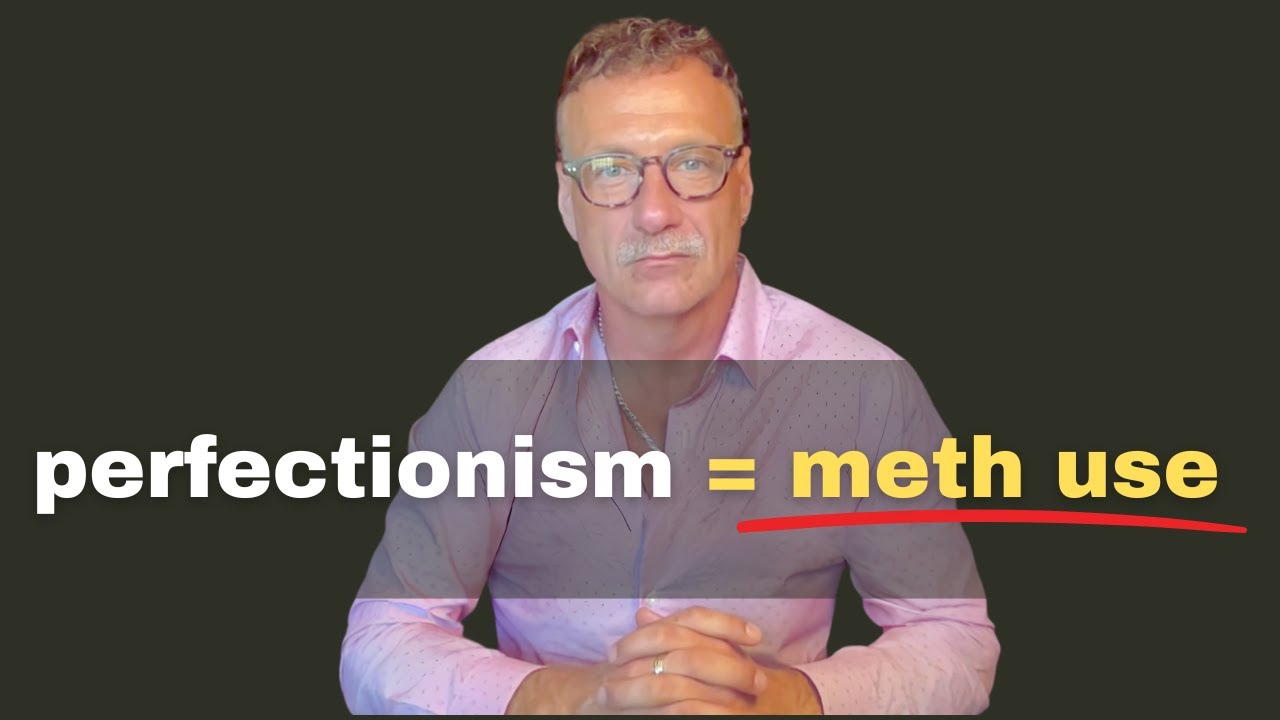
In this extended solo video, Dr. Dallas Bragg, a recovery coach for gay men who use crystal meth, explains how perfectionism—rooted in early attachment disruptions, developmental trauma, minority stress, and childhood emotional neglect—drives meth use and relapse. He outlines how perfectionism develops as a survival strategy to earn love, safety, and acceptance, and how it perpetuates trauma‑repetition cycles that make meth an attractive escape. Bragg then introduces a light‑parts‑work framework, guiding viewers through compassionate self‑inquiry, visualization, and grounding practices to engage the “perfectionist part” without demonizing it. He identifies six core unmet needs that perfectionism tries to satisfy (safety, belonging, validation, control, emotional regulation, self‑definition) and offers concrete, non‑substance‑based alternatives for each. Throughout, he emphasizes that recovery requires integrating these inner parts, building supportive community, and recognizing inherent worth beyond performance. The video also promotes his podcast, coaching program, and newsletter.
Chapters
Hey there, Dr. Dallas Bragg here, recovery coach for men who have sex with men who want to break free from the addictive patterns of crystal meth and, most importantly, live their best and highest life. Today we're talking about perfectionism and how that can contribute to meth use, either continued meth use or if you want to peel back the layers of how it started. If you've ever identified or have been labeled a perfectionist, you will want to pay attention to this video. On this channel, you're going to find lots of resources to help you break free from Tina and attain your best and highest self. Also, Also, don't forget to look for my podcast. It's called The After Myth Podcast. It's here on this channel as well. Make sure the autocorrect doesn't change it to After Math. I drop a long-form video, and by the way, this one's pretty long, every Saturday, and the podcast comes out every Thursday. So please turn on the notification bell and subscribe to this channel so you don't miss anything. And if you're interested in my one-on-one coaching program called Recovery Alchemy, the link to apply is in the show notes. Through one-on-one sessions, weekly group sessions, and daily accountability, your life could look much differently in 6 months than it does from now. So you want to stop using meth, you want to stop fighting urges, you want to stop repeating patterns, then you must dig deep into the core of your suffering. Very deep. And by digging deep, I mean beginning with experiences between 0 and 7. There you're going to find what drives 95% of your thoughts and your current actions. There you will find your beliefs that you hold about yourself and that you struggle with today. There you will find the clues that lead to why you keep going back to old Tina. Trace it back, accept it, and then make changes. That's it. Sounds very easy, but it ain't. But it ain't impossible either. So you might ask, but Dallas, how? And a first step is to zoom out. Look over all of your life experiences and identify a theme. And once you have a common theme in place, you can then pinpoint the perspective you use to interpret the world. And at the risk of being too reductionist, I've noticed 2 main themes across all of the men I've helped who are stuck in the meth relapse cycle: the victim and the perfectionist. And I've written about the victim recently in my newsletter. If you want to read it, it's on my blog. At www.drdallasbragg.com, go to blog and subscribe. Today I'm addressing the perfectionist, which is a very complex personality trait that formed very early and shaped our sense of safety and worth in the world. Perfectionism often takes root long before we even had language to describe what was happening. Developmental trauma differs from what we might typically consider trauma. It's like big T, little t, right? In that it can occur through subtle but very persistent patterns of invalidation and conditional acceptance. And who knows conditional acceptance better than a little gay boy in a big world of heteros? So let's talk about attachment disruptions. Our first relationships shape how we view ourselves. And our worthiness of love. When early caregivers are inconsistently responsive, that means when care, love, and attention were unpredictable, we may have learned that we needed to earn care through performance and achievement, right? Like, look what I can do. When there was conditional approving, that's when praise or acceptance came only after accomplishments or good behavior, right? We internalized that our value was tied to external measures. I'm such a good boy. Critical and demanding was another way that we may have grown up. That's when mistakes were met with harsh criticism, shame, withdrawal of, of love. We learned that imperfection equals rejection. Mistakes make me bad. For many of us, these patterns created a fundamental belief That our authentic self was somehow unlovable and that safety was contingent on becoming someone else, someone better. This constant striving to be perfect creates exhaustion and anxiety. The only break we find is getting high. So a reflection for you could be, could you recall early memories where you felt you had to be perfect to receive love or care? And what emotions arise when you connect with these memories? So let's talk about minority stress and formative trauma. So for us as gay men, additional layers of trauma often compounded the early attachment experiences we just talked about. There was pre-verbal sensing of difference. Many of us sensed our differentness before we had words for our sexuality. We absorbed others' discomfort with our gender expression or natural traits. There were microaggressions and rejection. Subtle facial expressions, comments, or exclusions signaled that we were somehow wrong or less than. There's anticipatory fear. That's when we developed hypervigilance, constantly scanning for threats to our safety and our belonging. Identity concealment. That's when many of us learned to hide parts of ourselves, creating a hyper-controlled, acceptable persona. So this created what psychologists call a minority stress environment, where our nervous systems remained in a state of high alert, Reinforcing perfectionism as a survival strategy. This is why you are hypervigilant, always looking for threats in the behavior of others, always finding ways to prove you are less than. So a reflection here would be, before you ever identified as gay, do you remember receiving messages about parts of yourself that needed to be hidden or changed? And how might these have shaped your perfectionist tendencies? So let's talk about childhood emotional neglect. In my experience, Those of us whose caretakers withheld emotion and affection are actually more damaged than those who were physically abused. This is called childhood emotional neglect, the absence of appropriate emotional mirroring and validation. So when our authentic emotional experiences look like when we were ignored or minimized— stop crying, it's not that bad, right? Or when they were discouraged— big boys don't get scared. When they were punished— go to your room until you can act right, right? Or used to shame, which is, you're too sensitive, or why can't you be normal? We learn to suppress our genuine feelings and replace them with acceptable performances. So for many gay boys, this often meant amplifying stereotypically masculine traits, right? Hiding our vulnerability. Our tenderness or sensitivity, becoming the perfect son to compensate for our perceived shortcomings, overachieving academically or in other areas to deflect attention from our sexuality or our flaws, right? This emotional neglect taught us that our natural response to the world was somehow wrong. Perfectionism became a way to avoid feeling or showing the emotions that seem to be unacceptable, a block between us and the love of our caregivers. So a reflection could be, growing up, which emotions were you discouraged from expressing? And how might this connect to areas where you still demand perfection from yourself? So let's talk about trauma repetition and addiction. One of the most heartbreaking aspects of early trauma is how we unconsciously recreate it in our adult lives. The perfectionism born from childhood trauma often leads us into situations that reinforce the original wounds. Setting impossible standards that guarantee feelings of failure and shame, right? We set ourselves up with impossible standards, so we'll feel that again. When we— choosing critical partners who mirror early rejecting figures, mom or dad. Pursuing achievements that never truly satisfy our deeper need for acceptance. Engaging in self-punishment when we inevitably fall short. Any of that sound familiar? Crystal methamphetamine enters this cycle as both an escape and a reenactment of our trauma. The drug temporarily relieves the pain of never feeling enough while simultaneously confirming our deepest fears about our unworthiness through the consequences of addiction. This is why recovery must address not just the addiction itself, but the underlying trauma repetition cycle that drives us. So here's a reflection. Why has your— sorry, how has your perfectionism led you into situations that recreate early experiences of not being enough? Can you see the connections between these patterns and your relationship with crystal meth? All right. So how do we feel? How do we feel right now? All right. So let's, let's get to know our perfectionist part. Because I will tell you the biggest error I see among men I work with is that they demonize or villainize their perfectionism. They turn against that part of themselves, the voice who speaks in their ear about how nothing is ever good enough. When you turn against a part of yourself, you are rejecting yourself. Rejecting yourself got you to where you are right now with meth. The perfectionist part is there to protect you, who loves you, who wants the best for you. That perfectionist part wants the best for you. It just needs some redirection. This is where some parts work comes into play. This is something I facilitate with my clients. Not full-on parts work because I'm not a therapist, as you all remind me. I know it's parts work light. But instead of fighting against your perfectionism part, parts work invites you to get curious and compassionate about it. So here's a basic exercise that you can Begin on your own. It's creating a sacred space for inner work, right? So begin by creating a quiet, safe environment. Turn your phone off where you won't be interrupted. You might light a candle, play soft music. Simply ensure that you have private time. This signals to your inner system that it's safe to explore vulnerable terrain, right? So now you want to access your compassionate Self. So before engaging with— engaging in the perfectionist part, take a few minutes to connect with your core self. That compassionate, curious consciousness that's observing all of this. It exists beneath all the parts. That's your inner self who observes the parts. So some ways you can access the self-energy, the self-energy include slow, deep breathing. Regulate your nervous system, right? Recalling moments when you felt genuinely calm, centered, visualizing yourself full of compassion, full of wisdom, repeating phrases like, I am here, or, I am present. From this grounded place, when you feel like you're there, you're ready to meet your perfectionist. So you do some visualization and embodiment. So you try visualizing— sorry— your Perfectionist part with these prompts. Physical appearance. What does it look like? Is it human? Animal? An object? A force? Mine appeared as a drill sergeant, but yours might be a stern headmaster, right? With the wire-rimmed glasses, maybe a clipboard, a parent figure, or something completely different. Age and era. Like, when did this first part develop? Does it seem to be from a specific time in your life? Many perfectionists form in childhood or adolescence. Posture, movement. How does it hold itself? Is it rigid, tense, always in motion, or something else? My perfectionist stands perfectly straight, never relaxes. Like a drill sergeant, right? Voice and language. What does it say to you? What specific phrases does it use repeatedly? What tone does it speak in? Right? Mine says things like, that's not good enough, or, people will see you're a fraud. Yep. Location in your body. Where do you physically feel this part when it's activated? Many feel it's like a tension in their shoulders, their chest, jaw, a knot in their stomach, pressure in their head. So let's explore your perfectionist story. So with genuine curiosity, not judgment, ask your perfectionist part, when did you first come into my life? What were you trying to protect me from? What are you afraid would happen if you stopped pushing me so hard? What do you need from me to feel safe? What could help you trust that I can be safe without being perfect? For many of us gay men in recovery, our perfectionist parts developed to protect us, to protect us from rejection, abandonment, right? If you're perfect, they won't leave you for being gay. Physical harm. If you control everything perfectly, no one will target you. Like exposure. Like if you achieve enough, no one will notice your shameful secret. Or worthlessness. Being exceptional is the only way to compensate for being wrong, right? My own perfectionist part formed when I was 9, probably after being bullied for being a pansy, right? I remember this. When I was— when I asked what it was protecting me from, I discovered it was terrified That I would be hurt and embarrassed again. Not just rejected, but utterly alone and unsafe in the world, like I felt at that school. I remember the day as a 9-year-old. I had no way to cope with the feelings of unsafety, so I internalized a feeling of being totally lost. My perfectionist part believed that my natural self was fundamentally unlovable and wrong, and only a perfect performance would earn me the right To belong. My role has been changing that belief one day, one moment at a time. So here's how you notice without merging. So a very, very crucial skill in parts work is learning to observe your perfectionist without becoming it. So practice noticing when you're blended with your perfectionist. Now that's when it's driving your thoughts and your actions. You've identified with it. Versus when you can observe it with some distance. Here's some signs that you might be blended with your perfectionist: black and white thinking, harsh self-criticism, tension and anxiety about the outcomes, what could happen, comparing yourself to others, difficulty feeling satisfaction with any achievement. When you notice these signs, you can practice unblending. And you can do that with phrases like, notice the perfectionist part is active right now. That puts you as the observer. This is my perfectionist speaking, not my whole self. It's another way you could say it. I can see that my perfectionist is trying to protect me. Something like that. This creates crucial, crucial space between your core self and the perfectionist part. So then you can try to meet your perfectionist's Deeper needs. So the key to recovery from meth and parts work integration both is finding out what needs your parts are trying to meet and then finding alternative ways of meeting those needs. Here are some of the main examples I've noticed when it comes to perfectionism. There's the need for safety and security. This is the most common. Your perfectionist developed partly as a survival strategy. So for many gay men who grew up feeling unsafe, Whether from family rejection, bullying, societal homophobia, perfectionism offered a shield. And how this manifests is, if I make no mistakes, I won't be vulnerable to attack. So the unmet need is to feel fundamentally safe in your body and the world. Here's a healthier alternative: developing a felt sense of physical safety through grounding practices. We can talk more about that in another video, and I've talked about it before, but Even just taking your shoes off and putting your feet on the ground. Create a home environment that feels like a true sanctuary, that where you feel safe, even if it's just your bed. Building relationships with allies who affirm your right to exist safely. Doesn't have to be gay people. Learning to recognize when your nervous system is signaling danger versus when you're actually safe in the present moment. Moment. If you're triggered and it's not life-threatening, then it's in your head. So a question to ask is, is this actually life-threatening? If it isn't, it's coming from your emotions or your past, or you're anticipating the future. So here's a practice. When your perfectionist is activated by fear, try placing a hand on your heart and saying, I'm safe now. I have survived. I have resources now. I didn't have them then. I'm an adult, right? The need for belonging and connection is another need that we're trying to meet when we do meth. Many of us develop perfectionism as a strategy to earn acceptance when our authentic selves were rejected. So how this manifests: if I achieve enough, people will overlook my sexuality or my imperfections. Or I must be the best gay in the room to justify my place here. The best body, whatever. Yeah. Here's the unmet need, is to be fully seen, to be fully accepted and loved for who you truly are. So here's a healthier alternative: cultivating relationships where you can be imperfect without fear of abandonment. Who are your friends? Finding chosen family who celebrate your full identity, including your sexuality, right? Or participating in recovery communities that normalize struggle and vulnerability without shame. Practicing gradual authenticity, revealing your true self in incremental, safe steps. So here's the practice. When feeling the need to perform for acceptance, ask yourself, who in my life loves me not for what I achieve, but simply for who I am? Go spend time with that person. Bring them into your mind's eye. Bring their energy into you, right? So here's another need, the need for validation, recognition. Boy, is this a big one. For many of us, perfectionism developed when our true selves received criticism rather than validation. So how this manifests is, I must be exceptional to prove my worth, or my achievements are the only part of me that matters. The unmet need here is to have your inherent worth recognized and your authentic self-expression celebrated. So here's a healthier alternative: developing practices of self-validation and self- Compassion. Seeking feedback from people who see your whole self, not just your performance. Celebrate your efforts and your progress, not just the outcomes. It's the journey, right? It's the journey, not the destination. It's finding meaning beyond external markers of success. Creating art or expression that honors your journey, not just your achievements. Here's a practice for you. Each evening, Write down 3 things you value about yourself that have nothing to do with achievement or productivity. The next need is the need for control in an unpredictable world. So perfectionism often serves as an attempt to control a world that feels chaotic and unsafe, especially for those of us who experienced early trauma or marginalization. So how it manifests is, if I can just do everything right, bad things won't happen. Or, I can prevent rejection through perfect performance. The unmet need is to feel a sense of agency and predictability in your life. Here's a healthier alternative: distinguishing between what you can and cannot control. Building resilience through acknowledging that setbacks are normal, not catastrophic. Developing flexible responses to change rather than rigid control. Creating routines and rituals that provide structure without constriction. Practicing tolerance for uncertainty in small, manageable doses. So a practice here is when feeling the urge to control everything perfectly, take a deep breath and ask, what's the worst that could happen if this isn't perfect? And if that happened, how would I cope? This builds confidence in your resilience. All right, so here's the next need, the need for emotional regulation. Many perfectionists develop their traits as a way to manage overwhelming emotions that weren't safe to express. So how this manifests is, if I keep everything perfect, I won't have to feel shame, fear, or grief. The unmet need here is to have a healthy relationship with the full spectrum of emotions, feel them, right? A healthy alternative would be learning to name and normalize difficult emotions. Developing somatic practices for emotional regulation like breathwork, yoga, movement, finding safe spaces to express emotions that were forbidden in childhood. Shut up or I'll give you something to cry about, right? Working with a trauma-informed therapist to process emotional backlog and building a recovery community where emotional authenticity is valued. So what's the practice here? When perfectionism arises to suppress emotions, place a hand on your heart and say, it's okay to feel this. Emotions move through me. They don't define me. All right. The next need— I told you this is a long one— is the need for self-definition, right? So for many of us gay men, perfectionism served as a way to control how others perceived us when we feared their definitions. would be harmful. And usually we're always wrong, right? How this manifests is, if I'm perfect in these ways, no one will reduce me to stereotypes about gay men. So the unmet need is to define yourself on your own terms and be recognized for your complexity, right? Exploring and claiming the multiple aspects of your identity beyond sexuality. Setting boundaries with people who try to reduce you to stereotypes. Finding communities that celebrate the diversity within the queer experience. Creating personal rituals or art that honors the complexity of who you are. Mentoring younger LGBTQ people, helping them see possibilities for self-definition. So here's a practice: write a this is who I am beyond statement that asserts your identity beyond others' limited perceptions. Beyond others' expectations, I am. Right? Your perfectionism isn't a character flaw, and it's not a moral failing. It was a creative adaptation that helped you survive in a world that often felt unsafe for your authentic self. That part of you deserves honor for how hard it worked to protect you, even as you now discover new ways to meet your deeper needs. Recovery from crystal methamphetamine happens in parallel with recovery from perfectionism. This integration work is not quick and it's not linear. There will be days when your perfectionist part gets triggered and tries to take over. There will be moments when the pull toward using feels overwhelming. But with each cycle of noticing, naming, and responding with compassion rather than criticism, You strengthen your core self's ability to lead your internal system. Remember, these essential truths on your journey are something to recall. Your worth has never been dependent on your performance. Your recovery doesn't need to look perfect to be transformative. Your authentic self, including your sexuality, was never the problem. Your deepest needs can be met through connection. Not perfection or substances. Your healing happens in community, not in isolation. You are already enough. Not because you've achieved perfection, maintained perfect sobriety, or overcome every challenge, but simply because you exist. Your journey toward integration is an act of courage, a reclamation of your birthright to be whole. As one of my mentors in recovery once told me, Healing happens in the cracks of your imperfection, because that's where the light gets in. Let in the light. All right. Thank you guys for listening, watching. I'll see you next week.










