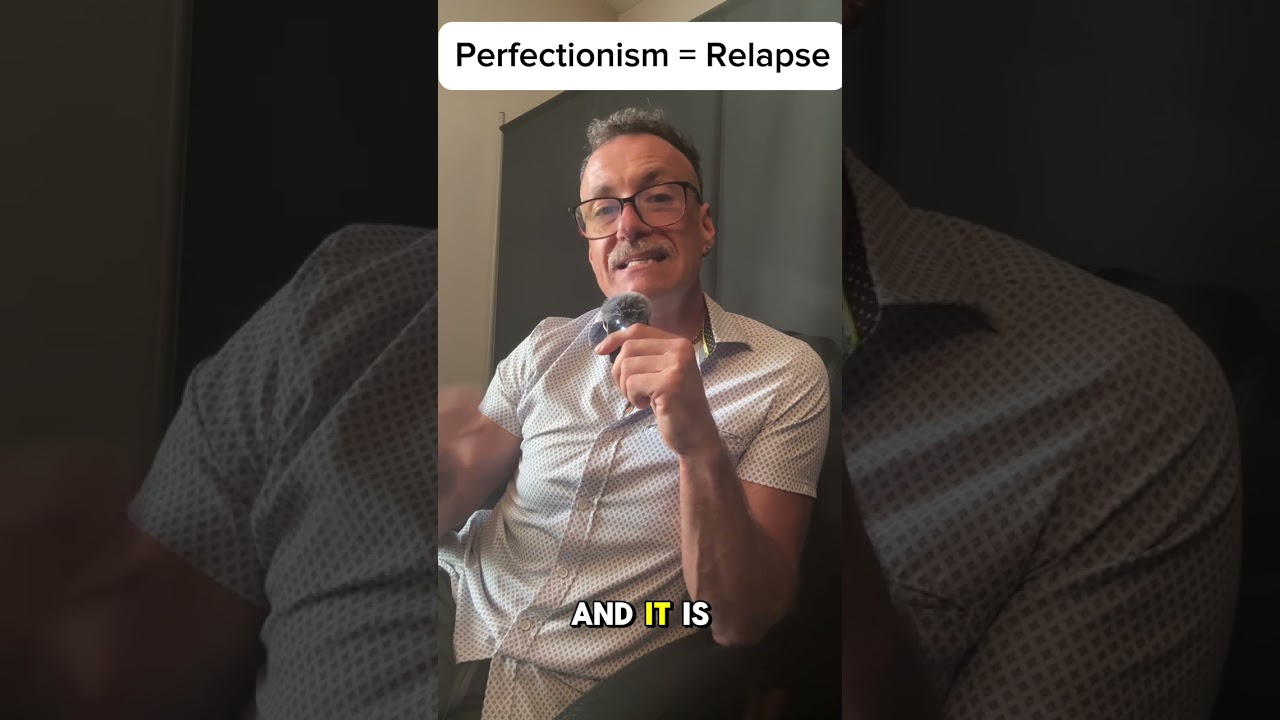
Dallas Bragg explains how perfectionism traps people in addiction: an internal critic says you're not good enough, so you use meth to escape the pain, which confirms you're broken, which drives relapse. Breaking the cycle requires self-compassion instead of self-judgment.
Chapters
Here's a common trend among my clients that are inhibiting their ability to be abstinent from meth, and that is perfectionism. Many of us grew up hearing messages, either directly or indirectly, that nothing we did was good enough. Maybe we were emotionally neglected by parents, so we tried extra hard to be perfect, hoping to be seen and noticed. Or maybe we had an oppressive religious culture that demanded perfection or hellfire. Or maybe our parents pushed us so hard in school that we developed anxiety at the mere thought that we were not performing the best on the math test. We are in a state of constant critique, and now we don't need anyone else to hold us to unnatural standards because we do it to ourselves just fine. The thoughts we entertain about ourselves lead us back to Matthews. Here is a little graphic representation that I use in my coaching plan to show the cycle of remaining in the thought process that nothing you do is good enough, which causes suffering in our lives. We built our own prison through the perspective we see in external situations. We focus on the negative. That suffering becomes so overwhelming That we seek meth for an escape. And once we've used meth, we have confirmed what we already knew. I am not good enough. So we use relapse to confirm our internal thoughts, which then cause us to look at life through that lens, which causes more suffering, and on and on and on. And it is time to break this pattern. It is time for self-compassion. Living in a life of peace. Aren't you tired? And aren't you ready?