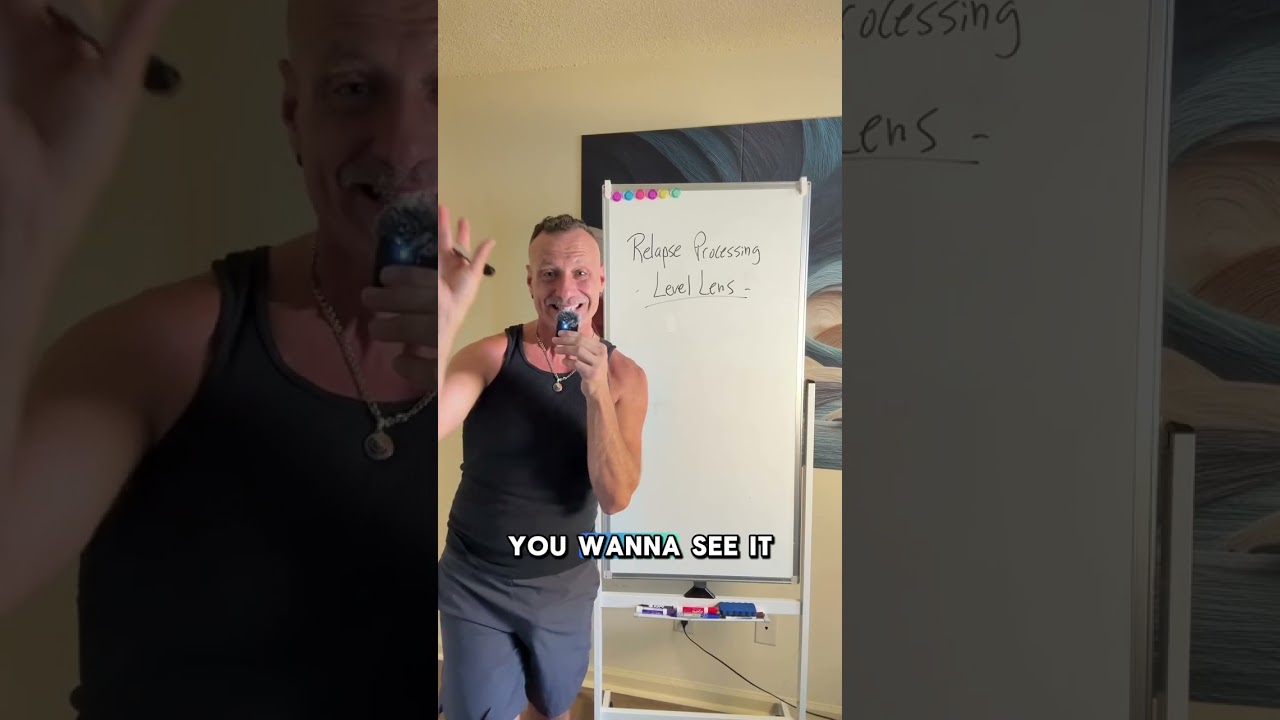
Dallas Bragg explains that relapse doesn't derail recovery, your story about it does. He introduces the level lens tool: write down what the relapse gave you (insights, learning) and what it cost you, aiming for balance so you can see it as neutral and extract the lesson without shame.
Chapters
Hey there. If you have watched my content for any length of time, you know that my philosophy is the way that we respond and the meaning we make of our relapse, if you want to call it a relapse. Sometimes I, I call it a using episode, or you just used. But the way that you respond to that will dictate to you how your recovery is going to go moving forward. It can hold you back. It can cause more suffering and more shame, or it It can be a trajectory forward. So a lot of times men will say, okay, Dallas, I get that concept, but how practically do I respond to a relapse as if it's not bad? So here is a practical example, and this is something that I use in my program. So what you wanna do is I call it the level lens because you want to see the reality of the relapse. Everything in your life, Every life event has upsides and it has downsides. There's an evil— a level amount of upsides and downsides. You want to see everything as a neutral event. A relapse is just a neutral event from your life, just like walking to the damn grocery store. You want to see it as not too negative and not too positive. So here's how you do it. So you're going to take a sheet of paper. And you're going to say with what my relapse gave me and what my relapse cost me. So what did it give me? Those are the upsides. Oftentimes, a relapse will give you the most rich data and knowledge that you could never ever get from any rehab or any treatment center or any coach or any worksheet anywhere. It's real-life experiential data. And we miss out on it because we see the relapses too negative. So what did it give me? And then what did it cost me? You do want— you don't want to bypass the negatives. You want to say, this also cost me some things, right? You want to see this equal, an equal weight. So this side needs to equal this side. And I'm not saying the number of things that you list. I'm just saying you want to start what it gave me, what it cost me, and then feel into it. And each side needs to be about the same. And then it is a neutral event that you see the reality of. And when you see it as a neutral event, you can move on from it. You take your learning, you move on. It doesn't disrupt or derail your recovery. I hope this helps. If you want a copy of this form, I'm happy to share it. Just comment below that you'd like it and I'll— or just DM me and I'll send it to you. And for anybody who's interested in working with me, you can comment the word group below and you can get into our next group coaching.