Turn Character Defects into Growth Opportunities (You Won’t Hear This Anywhere Else)
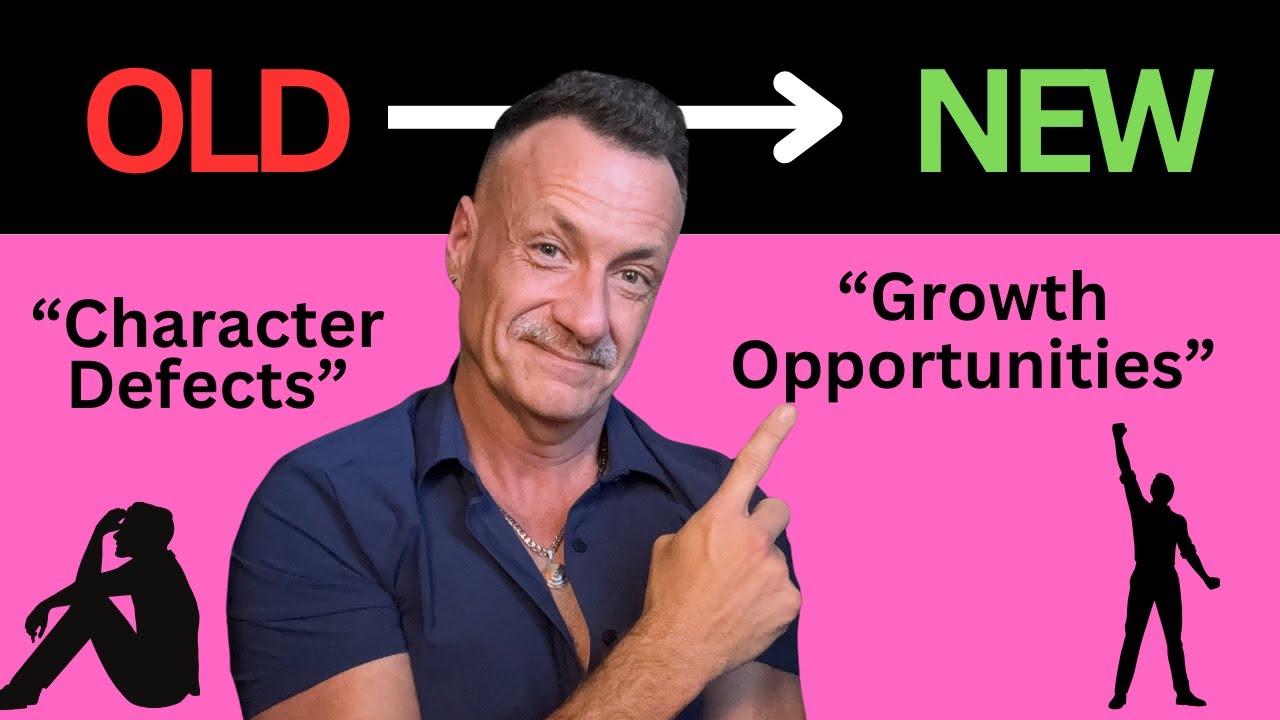
Recovery coach Dallas Bragg argues that calling addiction patterns "character defects" deepens shame in gay men in recovery. He reframes them as adaptive protective responses and offers "growth opportunity" as a replacement, with journal prompts and a four-step daily reflection exercise to build self-compassion instead of judgment.
Chapters
Hey there, Dr. Dallas Bragg here, recovery coach for gay men who want to break free from the addictive patterns of crystal meth and live their best and highest life. Today, we're talking about shifting from shame-based recovery to self-empowered recovery by dispelling a common recovery term, character defect. If you have had a feeling in your body that this term is demoralizing, and unhelpful to your recovery, I want you to keep listening. On this channel, you'll find lots of resources to help you break free from Tina and attain your best and highest self. Also, don't forget to look for my podcast called The Aftermath here on my channel as well. I'll drop a long-form video like this one every Saturday, so please turn on the notification bell so you don't miss any. By the way, if you are interested in my one-on-one coaching program, it's called Recovery Alchemy. The link to apply is in the show notes. Through weekly one-on-one sessions, weekly group sessions, and daily accountability, your life could look much differently than it does now in six months. So, a little story from my past. My father was a Marine Corps drill instructor, and many mornings he would burst into our bedroom with a thunderous command of "Revelly, revelly!" If you've heard that, if you've been in the military around it, you may have heard. The commands of Reveille, reveille! My brother and I, startled and disheveled, would bound from our bunk bed and stand at attention. And all I can remember is the trembling fear of the deep and that unfamiliar, like, deep register of my dad's booming voice. I never heard it anywhere else. Those instances imprinted onto my brain, and to this day, being yelled at brings me right back To my seven-year-old self, I'm sure you can relate to that. That seven-year-old little boy full of resentment and full of rebellion. This is why I do not respond well to negative reinforcement now. For instance, a coach's loud voice telling me to run faster, you like in physical in PE or a fitness trainer yelling one more rep. I will shut down physically and mentally the instant. Somebody tries to motivate me in this way. I believe many gay men are the same. We've been bullied. We've been marginalized and stigmatized so much that any negative forms of incentive backfire. No wonder the studies show the most effective form of chemsex recovery comes in the form of positive reinforcement. Gay men do not respond well to fear and shame-based tactics. Enter the 12-step philosophy. Among all the negative reinforcement offered today in the 12-step rooms, the one doing the most damage is the idea of a character defect. Think about this term, defect. Defective, rejected, different, wrong, damaged. What happens to a defective product? It's trashed. Wow. No wonder we keep coming back, because if that's the message we're given, then how will we ever love ourselves? How will we ever be set free from the shame of our addictive past? And if you've spent time in the 12-step rooms, you've likely been told that you need to identify, admit to, and have these defects removed. While this approach has helped some people, for many of us, it can reinforce shame and self-judgment that actually hinder the whole recovery process. So let's look at why this concept might be doing more harm than good. The problem with character defects is the term suggests that something is fundamentally wrong with who you are. It implies that parts of your personality are flawed and must be eliminated. This concept infers that addiction to a substance is a moral failing, and this could not be further from the truth. If you were— when you were born, not if you were born— when you were born, you were pure consciousness, a perfect ball of light. Nothing about your essential nature was defective then, and nothing about your essential nature is defective now. Think about it. Would you tell a child who's learned to lie to feel safe in an abusive home that they have a character defect? Would you tell someone who developed hypervigilance from trauma that their awareness is defective? Of course not. Those are adaptive responses to challenging circumstances, just like your patterns with meth developed as ways to cope, connect, or feel alive in a world That often felt overwhelming. A more compassionate understanding is instead viewing yourself not as defective, but consider this perspective. Your true nature is like a brilliant light that's simply been covered by layers of life conditioning. These layers, whether they're patterns with meth, challenges with shame, Behaviors you've been told are defects, they aren't. They, they're not signs of your brokenness. They're protective mechanisms that developed for valid reasons. When someone in a 12-step meeting tells you to list your character defects, they're asking you to shame parts of yourself that need understanding and integration. Every pattern you've developed, even your relationship with meth, arose as an attempt to meet legitimate Needs. Your need for connection, escape from pain, sexual expression, feeling powerful in a world that may have made you feel powerless. These characteristics were born to protect you. Now they are growth opportunities, which is my recommended replacement term. Growth opportunity. So take a moment and say, I have, and finish it with character defects. I have character defects. And then finish it again with growth opportunities. I have growth opportunities. How do each of these feel in your body? Think about that. By the way, here's a journal prompt. What needs was meth helping you meet? And how can you honor those needs while finding healthier ways to meet them? That question will break you out of chemsex addiction. I'm telling you. So here's the truth about your true nature. Your patterns with meth aren't character defects. They're symptoms of disconnection from your true nature. This disconnection didn't happen because you're flawed. It happened through life experiences that convinced you that you weren't enough, that you weren't safe, or you weren't lovable just as you are. So identifying the defects in your character Puts you in the victim role. Claiming them as part of who you are becomes a crutch, something to fall back on. Oh, this is my character defect. I can get away with this. Feeding them more and more attention only strengthens the idea that you are fundamentally flawed. This is the very definition of. Shame. Identifying with a growth opportunity puts you in the victor role. You are in control. A defective person needs external people to heal. A growth-oriented person is self-empowered. Would you rather feed energy into growth or defectiveness? Which do you want more of? Listen, it is time to claim Your true nature, a consciousness that rises above the circumstances of your life. So here's a reflective question for you. I want you to pause and ask yourself, if you could speak to your younger self before any layers of shame or conditioning were added, what would you tell them about your worth and potential? Think about that. Use that as a journal prompt. Okay. So moving beyond shame-based recovery is what we're going to talk about next. Instead of trying to identify and eliminate character defects, recognize that every part of you, even the challenging parts, developed for a reason. Approach your patterns with curiosity rather than condemnation, and understand that recovery is about remembering your wholeness. Not fixing your defects. Know that your shadows aren't enemies to be defeated. They're aspects of yourself waiting to be understood by the light of awareness. I invite you to begin tuning into your emotional guidance system. If anyone or any reading material in your recovery circles causes you to feel guilty, Fearful or obligated? Take notice. Feel what type of response occurs in your body once receiving shame-based messages. And I'll bet you want to shut down, just like I do when the, when the fitness trainer says, one more rep. It is time you start listening to your intuition. Do not gaslight yourself. When it comes to that feeling in your gut that something isn't sitting right, Do not gaslight yourself and do not let them gaslight you and tell you that you're making excuses or you don't want to follow the program. Listen to your gut. That is the most powerful gift you'll get from recovery that you can take elsewhere into your life. Self-empowerment through obeying your discernment is the best gift I'm telling you, you're going to give yourself. Question everything and maintain a healthy skepticism. So here's a daily reflection exercise. Each time you catch yourself thinking about your character defects, try this instead. Number 1, pause and take a breath. I'm gonna say that, and it, it's going to be number 1 in almost everything that I talk about. Number 2, remember your perfect nature. Get in touch with who is observing, who is observing your thoughts, who is observing your nature, who is observing your words, who is that? Number 3, ask yourself, what is this pattern? What is this growth opportunity trying to tell me? What need is it trying to meet? What is it trying to help me with? Number 4, respond to yourself with compassion rather than judgment. Another journal prompt for you. What would change in your recovery if you approached yourself with curiosity instead of judgment? condemnation. All right, so let's leverage growth opportunities. So how do we address growth opportunities in real life? So let's look at a common growth opportunity I see in men who come to me for meth recovery, people pleasing. And let's see how we can leverage people pleasing into growth. All right, so understanding the protection, people pleasing likely developed as a way to stay safe and loved. Right? It helped us navigate challenging relationships, probably with parents, and avoid conflict. This pattern protected us when we needed it the most. The growth invitation here is instead of trying to remove this pattern, we can grow through it by practicing awareness. Notice when you're saying yes when you want to say no. Pay attention to the physical sensations in your body. When you're compromising your boundaries. So example, when your friend asks you to stay out later than you planned, observe the tension in your chest as you consider abandoning your own needs. Honoring your wisdom is thanking this part of yourself for trying to keep you safe and connected. It's trying to help you by making you say no. Acknowledge that it served an important purpose in your past, and that's it. Here's a journal entry. Dear people pleasing part of me, I understand you're trying to help me stay connected and loved. Thank you for protecting me. Taking small steps is important. Start with low-risk situations to practice new behaviors. So begin with soft nos, right? Like, I don't want another biscuit. I don't know where biscuit came from. I don't want another whatever it is being offered to me, right? And gradually build to clearer boundaries. So real life example. I really appreciate the invitation, and I need to head home as planned to take care of myself. So there's a, there's a real simple way to say no. Your personal growth plan is a structured approach to working with any growth opportunity. So fill in the blank, right? Identify your pattern, your growth opportunity. What behavior do you notice recurring? And when does it typically show up? And what emotions precede it? What's going on around it? Uncover the protection. So how did you, how did this pattern help you survive, right? What did it help you avoid? What did it help you gain? And then define your growth edge. What would growth in this area look like? What small step could I take today? And create your support system. Share your growth intention with a trusted friend or find a therapist or recovery coach who understands addiction without shame. Try this today. And reach out to me to let me know your results. I would love, love, love to hear if you take your growth opportunity and put it into this process. You can get all of this in writing through my blog, my newsletter. If you want to be added to the mailing list or you want to see a copy of the newsletter, the link will be in the show notes. So listen, it may seem petty to you or inconsequential to pay attention to language this closely. But I believe our words are powerful, more powerful than we can ever realize. And if you've tried everything else and you still can't seem to break free from crystal meth, why not try navigating and observing your words? Start today. Start today by looking at each and every word. Is it a word of defect or is it a word of growth? Do you think of yourself as defective or Or do you think you're— of yourself as growing? Why not pay attention to your language? It may actually set you free. All right. Love you all. See you next week. Bye.










