Why You Resist Quitting Chemsex
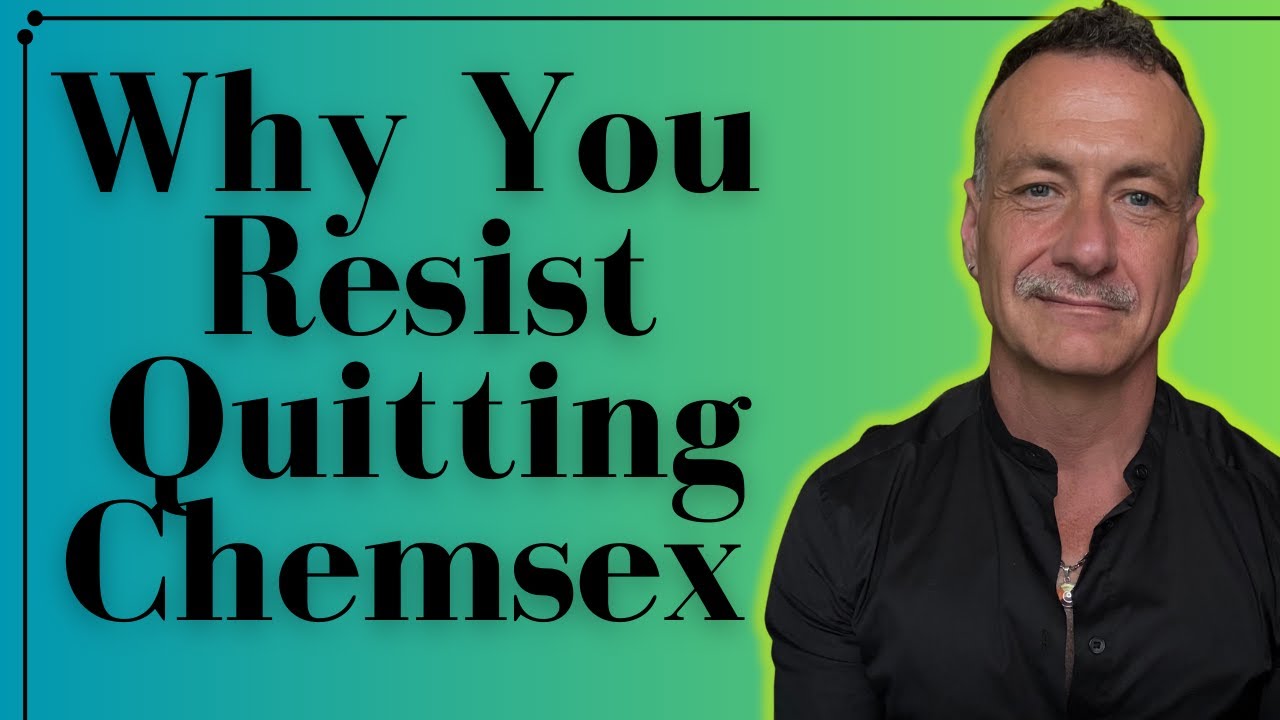
In this solo coaching video, Dr. Dallas Bragg addresses gay men who struggle to quit chemsex substances such as crystal meth, methadone, or “monkey dust.” He explains that resistance to quitting is not a sign of weakness but a protective response from the subconscious that fears the massive life change required for recovery. Using a tree‑and‑shadow metaphor (adapted from Steven Pressfield), he shows how the more important the transformation, the larger the “shadow” of protective parts becomes. Bragg outlines common resistance patterns—perfectionism, analysis paralysis, the “one more time” trap, distraction/chaos, claims of uniqueness, and minimization—and explains how each disguises itself as rational behavior while keeping the user stuck. He contrasts a “trying” mindset (transactional, conditional, driven by feelings) with a “being” mindset (identity‑based, unconditional, seeing oneself as a person who does not use). Practical guidance includes recognizing, naming, and thanking protective parts, then committing to recovery despite fear. Throughout, he promotes his Recovery Alchemy coaching programs, The Aftermath Podcast, weekly newsletters, and journal prompts as ongoing support resources.
Chapters
Hey there, Dr. Dallas Bragg here, recovery coach for gay men who want to break free from the addictive patterns of chemsex and live their best and highest life. Today we're talking about why you are resisting quitting the substance, whether that be crystal meth, methadone, monkey dust, whatever it is. You want to quit, but you also don't want to quit. It's an HO problem. Let's learn about why you are resisting the final decision to quit and how to overcome. If that resonates with you, keep watching. On this channel, you're gonna find lots of resources to help you quit chemsex and attain your best and highest life. Also, don't forget to look for my podcast. It's called The Aftermath Podcast here on this channel as well. I drop a long-form video just like this one every Saturday, so please turn on the notification bell and subscribe to the channel so you don't miss anything. By the way, if you're interested, I do have a one-on-one coaching and group coaching program called Recovery Alchemy. The link to apply to these programs is in the show notes. Through weekly one-on-one sessions, weekly group sessions, and daily accountability, your life could look much differently in 6 months than it does right now. Okay, so you know you need to quit. You've known for a while now. You can see what crystal is taking from you, the relationships damaged, the opportunities missed, the version of yourself that keeps slipping further away. You've had moments of clarity when you think, this is it. I'm done tomorrow. I'm gonna stop for real. And then tomorrow comes and you don't, or you make it a few days, or maybe you have a couple of weeks, or maybe a few months, and then you're right back at it wondering what in the hell happened. You start to think that maybe you don't actually want to quit, or maybe you're not ready, or maybe you don't have what it takes. All of that is story. Here's what I want you to understand. The reason you keep resisting that final decision to quit, the reason you know you should stop, but you can't seem to commit to it isn't because you're weak and it isn't because you don't want it bad enough. It's because your subconscious knows exactly what quitting will require of you and it's terrified. After years of guiding gay men through Chemsex recovery, I've discovered something very counterintuitive. It's hard to get through some— to some people. The more important something is to your soul's evolution, the stronger resistance you're gonna feel towards it. So let me say that again. Because it goes against everything we've been taught. The intensity of your resistance to quitting is directly proportional to how important quitting is for who you're meant to become. You're not resisting quitting because recovery doesn't matter. You're resisting because it matters more than almost anything else you do. And some part of you knows that the moment you truly commit, the moment you make that final decision, your entire life is going to change. That's fucking terrifying. And of course, you're going to resist that. So today I want to help you understand why you resist quitting meth and making any other change that would actually be good for you. Because once you understand resistance, you can stop being confused and ashamed by it. You can stop interpreting your resistance as evidence that you don't really want recovery or that you're not good enough. You can see it for what it actually is, protective parts of you trying to keep you safe in the familiar, even if the familiar is destroying you. So listen, the bigger the dream, the bigger the fear. I want you to imagine something with me. I want you to picture your recovery, your transformation, your substance-free life as a tree growing in the middle of a sunny field. Strong. It's alive. It's reaching toward the sky. And all of this is adapted, by the way, from the teachings of Steven Pressfield, who teaches about resistance in writing. That tree represents who you are becoming. Now, here's what most people don't realize though. The moment that tree starts growing, a shadow appears, right? That shadow represents all the protective parts of you that will try to stop the tree from growing. Every doubt, every craving, every reason to give up. Those are the protective responses trying to keep you in what feels safe and small. Here's the part that will change how you see the resistance. The bigger the tree grows, the bigger the shadow becomes. The more important your recovery is to who you're meant to become, your highest self, the more intense your protective responses will be, the larger they become. This is why you've been able to quit for months, but you can't seem to take the final step. You make it a few days and then something pulls you back in. The moment you consider getting serious about recovery, every reason not to suddenly seems very valid to you. You feel the pull to use most intensely when you're on the verge of real change. You want to return to old patterns most when transformation has actually started to begin. This isn't random. This isn't you becoming weak or broken or sabotaging yourself. This is your nervous system recognizing that transformation is on the horizon and activating every protective mechanism it has to keep you safe in the familiar patterns if those patterns are destroying you. I've watched men spend months circling around the decision to quit, getting close, pulling back, getting close, pulling back. I've seen clients go 3 months without touching crystal and then have the most intense cravings the week they finally process their childhood trauma or they get close to that milestone. I've seen men stay off the apps for weeks only to feel desperate to download them again the moment they start developing genuine intimacy with somebody. Traditional recovery would call this a moment of weakness or a character defect. I call it a moment of activation. The protective parts of your subconscious know you're right on the verge, you're close to freedom, and they're doing what they've always done, trying to keep you safe from keeping you in the familiar. The resistance isn't a sign you're doing something wrong. It's actually confirmation that you're doing something very right. When you find yourself resisting the decision to quit, When you keep telling yourself tomorrow or after this last time, or I'm just not ready yet, that resistance is actually evidence that your soul knows how important this decision is. It's holding you back. The resistance is proportional to the transformation waiting for you on the other side of this. So I want you to stop trying and start being. I've worked with many men in recovery and I've noticed something very crucial and very pivotal. The ones who succeed don't just try to quit meth. They become people who don't use meth. Can you feel that difference? Trying to quit is transactional. It depends on circumstances, feelings, motivation, willpower. I'll quit when I feel strong enough, right? I'll commit when I have more support. I'll stop after this party. Trying is conditional. Trying leaves room to negotiate, and you cannot negotiate with Chemsex. Being substance-free is an identity. It's who you are regardless of how you feel, regardless of circumstances, regardless of whether it's easy or whether it's hard. There's no negotiation with your identity. So let me show you what that looks like. People who are trying to take success and failure personally, people who are trying, right? They take success and failure personally. They get 1 week substance-free and they think, I'm finally fixed, right? And then they use once and they think, I'm hopeless. I'll never get this every day substance-free. is some personal victory and every slip is a personal defeat. They're on this exhausting emotional rollercoaster and it makes recovery unsustainable. People who embody recovery don't take anything personally. They understand recovery is a practice, not a perfection. Good days and hard days are just data points. They're not referendums on their worth, how well they're doing. They can have an intense craving, Without making it mean something catastrophic about themselves. They slip, they get back up without the drama of starting over. They just continue being who they are, a person committed to substance-free living. People who are trying wait to feel ready. They say, I'll quit when I feel stronger, or I'll commit to recovery when I have more support, or I'll make that decision after I figure out what's causing me to use. They're waiting for some magical moment When resistance disappears, like that's going to happen, and then everything feels easy. It ain't happening. People who embody recovery know that moment never comes. They do the hard things while they're scared. They make the commitment before they feel ready. They quit because they have all the— they quit before they have all the answers. They take the leap and they figure it out On the way down. People who are trying care deeply about how they feel. I don't feel like quitting today. I don't feel strong enough yet. I don't feel ready to face life without Crystal. Their decision to quit is held hostage by their moods, feelings, and emotions, which vary from minute to minute. People who embody recovery don't care how they feel. They do it anyway. They recognize that feelings are information. Not instructions. They can feel exhausted and commit to recovery. They can feel resistant and make the decision to quit. They can feel scared and step into substance-free life anyway. This isn't about being hard on yourself or pushing through in harmful ways either. It's about recognizing that you are the CEO of your recovery. You're not a victim of your cravings or your circumstances or the resistance you feel. You are the executive. Making decisions about your own life. The person who's trying asks, am I ready to quit? The person who embodies recovery says, I don't use meth. Now let's figure out how to live this truth. Let's do this. That shift is going to change the trajectory of your recovery and your life. So let's talk about resistance. It's a shape-shifter, right? This is how your— these protective parts we've been talking about show up in disguise because it gets very clever. Resistance rarely shows up as a voice in your head that says, Don't quit using crystal meth. Right? Instead, it has to get at you in different clever ways. It disguises itself as reasonable thoughts and behaviors that seem harmless to you, and they even seem protective to you. And in general, they are. But let me show you how protective parts show up when you're on the verge of committing to your recovery. They're protecting you, but they're trying to keep you safe. They're trying to keep you small. And here's some ways. Perfectionism, one of the biggest ones. You tell yourself you can't commit to quitting until you have the perfect plan, the perfect support system, the perfect timing. You need to finish this work project first. You need to wait until after the party. You need to find the right therapist before you can really commit. This protective part convinces you that if you can't do recovery perfectly, you shouldn't start at all. It's trying to protect you from the fear of failing, but it's keeping you stuck. while pretending to have high standards. I need to understand why first. You spend months analyzing your addiction, reading books, listening to podcasts, trying to figure out the root cause before you commit to quitting. Don't get me wrong, understanding is very valuable, but this protective part uses your desire for understanding to delay action. It's trying to keep you safe from the unknown by keeping you in this familiar territory of analysis. Analysis paralysis, right? You don't need to understand everything about why you use. Before you can stop using. Sometimes the why doesn't matter. The understanding often comes after you commit in the actual recovery. When the substance is cleared from your brain, then there's the just one more time. This is one of the most insidious protective parts and responses because it sounds so reasonable. One more party, one more weekend, one more goodbye to this chapter, one more, let me finish this pipe, one more this, one more that, but one more time. Is never one more time. A protective part's way of keeping you in the pattern indefinitely, always preparing to quit tomorrow, but never actually quitting today. The part is trying to ease you into change gradually, but in reality, it's preventing change altogether. Distraction and chaos. Suddenly everything else in your life is urgent. A relationship crisis, a work emergency, a friend needs you, a sick parent, your apartment needs organizing, your car needs repairs. Those protective parts Know that if your life is constantly on fire, you'll never have the bandwidth to address the biggest fire of all— your use. And the chaos gives you a built-in excuse. I can't focus on quitting meth right now. I have to deal with all this first. This part is trying to protect you from the vulnerability of focusing and prioritizing yourself. Then there's the I'm different. I see this one a lot. You convince yourself that your situation is unique. That the usual recovery approaches won't work for you, that your reasons for using are more complex than anybody else's. And some of this might be true, but every person's story is actually unique. But this protective part uses your uniqueness as a reason to stay stuck instead of taking action. It's trying to protect you from the risk of trying something and having it not work. The truth is you're not so different than recovery principles. You're not so different, right? These recovery principles are going to— Apply to you too, right? There's the minimization. It's not that bad. I'm not as bad as those guys. I'm still functional. I only use on the weekends. I only smoke. This protective part downplays the severity of you putting chemicals in your body to keep you from taking the drastic action of truly committing to quit. If it's not that bad, why would you need to quit completely, right? This part is trying to protect your self-image and avoid the discomfort. Of admitting the full impact of your use. It's very uncomfortable to come to the conclusion that this is impacting my entire life and the lives of those around me. The most important thing to understand is that these aren't enemies working against you. Almost every single man who comes to me for help has vilified these protective parts, which in turn is you fighting against and vilifying yourself, 'cause these are aspects of you. That's a zero-sum game. They're protecting parts that developed for a very good reason at some point in your life. Each one learned at some point how to get to you, its particular strategy. It knows you. It learns from your mistakes even when you don't. They're still doing their job. They just haven't updated their strategies to match your current reality and your current vision. When you can see these patterns, not as character defects, But as protective mechanisms. You can start to work with them instead of fighting against them. You can thank them for trying to keep you safe and gently let them know that you have new, healthier ways of protecting yourself. Why don't you help me with that? Right? All right. So what now? Understanding resistance, it doesn't make it disappear though, but it does change how you relate to it and see it. So the next time you find yourself saying, I'll quit tomorrow, You can recognize, ah, there's a protective part speaking. What is it actually afraid will happen if I do commit to this? The next time you catch yourself needing everything to be perfect before you can start, you can ask, what is this protective part trying to save me from? What does it need to hear from me to feel safe about moving forward? The next time you notice yourself creating reasons why now isn't the right time to quit, you can name it. This is a protective part. What would it look like to Honor this part's concerns and take action anyway. You're not resisting quitting because you're weak or you're broken or you don't want it bad enough or you're not good enough. You're resisting because transformation is terrifying, because your nervous system would rather keep you in familiar misery than risk unknown freedom. Because committing to recovery means the person you've been has to transform into the person you're meant to become. Becoming somebody new means that old version of you Has to be released, has to die. And of course, that's scary. Of course, protective parts resist that. Here's what I know though, after the years I've spent guiding men through the process and guiding myself through this process, on the other side of that resistance is the life you're meant to live. The tree is already there casting its shadow. Your recovery is already waiting for you. You don't need to create it. You need to work with your protective parts, the aspects of you So they can release their grip and feel safe. The resistance is part of that process. It's not a problem. The fact that you're feeling it so intensely means that you're right on the verge of something very significant. Feel the resistance, name it, thank the protective parts for trying to keep you safe, and then make the commitment anyway, no matter how you feel. That's how you shift from trying To embodying. That's how you become substance-free. That's how you step into your life. That's how you step into your soul. That's how you step into the vision of yourself that's calling you forward. The bigger the shadow, the bigger the tree. And you know, my friend, you're ready to grow into something magnificent. The question isn't whether you're ready to quit. The question is, are you ready to work with your resistance instead of against it? All right. I hope this helped today. Tell me in the comments. Love to hear what you think. Also, don't forget to subscribe and like and share and all the stuff. Put on the notification bell. Don't forget about my podcast. Don't forget I have weekly newsletters that come to your inbox. If you just go to my site, drdallasbragg.com, click on blog and subscribe, you will get a weekly newsletter just like this with journal prompts, reflective questions, and you will get a study guide for the podcast each week. All right. Thank you guys. See you next week. Bye.










