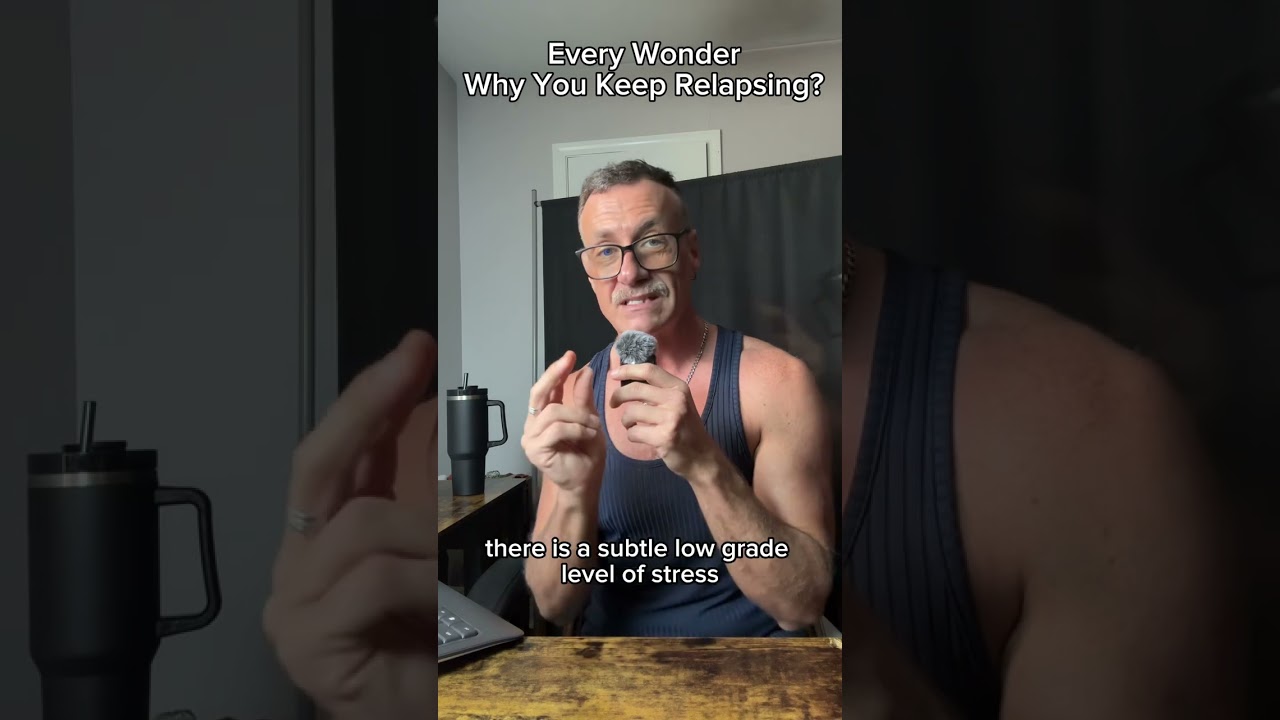
Dallas Bragg explains how your reactions to small stressors reveal relapse risk. When you're frequently activated by traffic, emails, or family comments, your brain can't process cravings properly. Use everyday frustrations as a gauge of your emotional regulation and recovery stability.
Chapters
Here's a quick way to measure how likely it is that you're going to relapse. And this is something that you may not be connecting to your recovery journey. How are you reacting to life? When someone pulls out in front of you on the road, when that coworker sends a nasty email, when that family member just has to make that snide comment, when your phone or your laptop is stuck, if you are being activated on a daily basis by these small things in the world around you, That is a likely sign that you are emotionally dysregulated. There is a subtle, low-grade level of stress hot under the surface that is making you constantly triggered by something or someone, and you think they don't have anything to do with recovery. But when we remain in an activated state, our ability to make informed decisions, think critically, and process cravings is severely So next time you found yourself in traffic, monitor your reactions, and I'll bet it's a clear indication of where you are on your recovery path.