Building a One Person Online Business with AI in 2026 | Part 3: Fulfilling for Clients
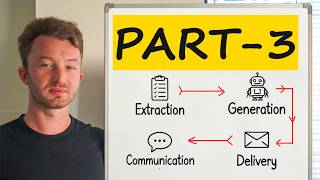
In this third installment of his series, Daniel Fazio explains how a solo entrepreneur can fulfill client work efficiently using AI, automation, and disciplined processes. He first reframes fulfillment as only about 20 % of a business’s effort, emphasizing that the primary goal is acquiring new customers and generating profit. He categorizes work into mindless (automatable) and mindful (cognitive) tasks and shows how a one‑person operation can handle them via three viable resources: the founder, automation, or AI. The core of the system is a detailed client‑intelligence document gathered through an exhaustive intake questionnaire; this document feeds AI to extract information, generate deliverables, and communicate results. Fazio then introduces the “fulfillment factory” metaphor, mapping each production station (e.g., domain setup, list building, script writing, campaign launch, reporting) to either the founder, an automation, or an AI agent. He walks through concrete examples for cold‑email and funnel agencies, providing time‑budget estimates per client. The video details a prompt‑chain workflow: load client context, generate angles, produce script variations, refine tone, and batch‑test them, illustrating the process with a mock PR client. Quality control, client communication cadence (weekly Loom reports, async expectations), and batching of similar tasks are presented as essential operational habits. Fazio explains how each fulfilled client creates assets (case studies, testimonials, refined prompts) that feed a flywheel, building authority, enabling higher pricing, and allowing the business to scale or add services. The video concludes with promotional calls to action for his AI Business Challenge live event and the AI‑Assisted Agency coaching program, citing several student success stories.
Chapters
All right, so we are back for building a one person online business with AI in 2026. This is part three, fulfilling for clients. So in part one and two, which will be linked in the description, we talked about building a one person online business and exactly what to sell. Then we talked about getting clients. In this video we're going to go over how to fulfill for clients. So my name is Daniel Fazio. I run two companies that make between 1.2 and $1.4 million. Probably normally hangs around there. Oh, let's get in client attention. Here's some revenue screenshots. So you know I'm not BSing you. Let's get straight into this. So the truth about fulfillment before, before we move forward, I need to establish with you that fulfillment of clients is 20% or less of the total operation of a company. Everybody who has never run anything at scale before thinks running this kind of business is fulfilling for clients. That's what you think most of your life is. You think it's all about fulfilling. It's not. So running a business is getting new customers and making more money. Like that's what it is. There's a lot of anxiety when you're a beginner around like fulfilling for clients. And like you think that that's going to be what the work of a business. It's not. That's 20% of the work of a business. The purpose of a business is to be profitable and get rich. It serves literally zero other function. The reason why you do this is for it to be profitable and to help get you rich. It serves zero other function. 80% of what you do for the rest of your life will be finding new customers. That's it. Not fulfillment. So stop freaking out about it. To fulfill for a client means to literally produce something for them which requires work. Work is able to be executed in five ways. One is by you, two is by a cheap low IQ person. Three is by an expensive high IQ person. Four is by automation, and then five is by AI. Don't get off when I say there's a low IQ person and a high IQ person. If you've never been exposed to like mass quantities of people doing anything before, like you think that everyone has the same mental capacity. They don't. You just have to come to grips with the reality there. So there's two kinds of work. You have mindless work and then you have mindful work. So mindless work is stuff like data entry, clicking a button. It's mindless work. So for instance, a lead submits a form and you want an email address and text message sent to them. This is mindless. So you would automate this or use a cheap low IQ person. There would be literally no point of hiring somebody to do this because it's so easily automatable. Mindful work is anything that requires cognition. An email needs to be written. You want the copy of the email to be good because you want the email to convert. This requires mindfulness, actual cognition. So either you, an expensive high IQ person or an I would do this. This is high person. That's actually funny. You don't want to get someone who's high to do it. You want the email to be sent based on a specific trigger. Like somebody books a call and you want to send the email. That has a bunch of case studies, right? This would be automation. You set a trigger in a CRM or email marketing software to send an email once somebody has been tagged as booked a call. I'm not going too deep into this, but like you might be asking something like Daniel, when somebody books a call, how do you tag them in a CRM? The answer is either through a direct integration with the CRM where like call is booked in calendly, mark this person as schedule, call, tag and go high level or HubSpot or pipedrive, whatever. And if there is no integration, you would use a tool called Zapier. I like zapier. Zapier is basically when this happens on this app, do this on this app. Maybe I'll make a video on that at some point. You want to run a one person business, our only options are you, automation and AI. That's what this whole kind of series is about. It's a one person in business, right? The only available of these five that you can do is you, automation, AI. Mindless work, you use automation, mindful work, use yourself and AI. The assistance of AI fulfillment as a one person business is actually three things. It's extracting information from the client, generating the deliverables and then delivering output and communicating results. So over here before I number two would take 85 to 90% of the work doing the actual fulfillment work of a client. So as an example, if you are running an agency where you build funnels, you would need to spend like 30 hours at your desk writing ad scripts, sales pages via sales scripts, email scripts, SMS scripts. That's what my job is in my companies. I do stuff like this. I do like the funnels and the marketing. I've actively done this now that I have AI. This goes from me needing to do this for 40 hours a week to like buy. It's so much easier. And if you're doing this for clients, it's the same thing. You save a completely tremendous amount of effort. That's where all the work is. An agency that's always been where all the work is with the agency. It's generating the deliverables, doing the actual thing. So all of this was either done manually through you or through somebody who already was an expert. But they're expensive. If you wanted to start an agency from scratch and you needed somebody to do this for you, like anyone who's competent at this in any regards is very expensive. And you probably don't have $5,000 a month to pay this person or $7,000 a month to pay this person. So the bottleneck previously was that you had to either spend hundreds of hours of learning how to be good or you had to spend a bunch of money and somebody already was. With AI, this no longer exists. You bypass. Real quick, guys, if you want my help building this business, so what to sell, who to sell it to, how to get clients, how to fulfill. For clients with AI, I have two offers versus the AI business challenge is a four day live event March 2nd to 5th. The first link in the description of this video. The tickets are less than $100. If you're watching this after that date, you have to get on the waitlist. That's Go Client Ascension. I also have the AI Assisted Agency program. That's our coaching program where we walk you through all of this. That's where you see all the big case studies on my channel. That's people in that program. So that's the second link in the description. Go to that page, watch video, book a call with us. We give you what to sell, who to sell it to, how to get clients, how to fulfill for clients with AI and there's a money back guarantee. For instance, Kabrim, he made $44,000 in one month. Matt 20k in one month. Dobby 12k in his first month. Cameron 50k in three months. Chris 10k a month in six weeks. That's from the AI assisted agency program that's at go client ascension. AI, I'm not promising you get those results, but I am saying that you'll be given access to everything that they had. So check that out if you're interested. Let's go through these the extraction phase, which is getting what you need from the client. You need to know every possible thing about a client before you. You need to feed this into AI AI is not bad at generating output, you are just bad at giving it input. So we need to teach you how to be good at it, right? So the number one reason somebody's AI output looks like garbage, because they gave it garbage to work with. This applies to everything. Cold email scripts, ad copy, VSL scripts, funnel pages, email sequences, literally everything. So when you sign a client, before you do anything, you need to run intake, extraction. Like you need as much data as you can possibly conceivably get. This is a very specific set of questions that pulls out everything AI needs to do its job at a high level for this client. You are essentially building a client brain dump document that becomes the foundation for every single thing you produce for them. Here's some example questions and then I'm going to show you an actual AI input, like an actual script to give to AI. What exactly do they sell? Not the category like you need, the exact offer, the price point, deliverables, timeline, who do they sell it to, what objections do they get, what's their current sales process look like, what's worked for them in the past, where their competitors and how are they different? Do they have any existing copies, scripts, case studies, testimonials, assets you can reference? Like as a side note, you can use AI to generate these for you. So like let me show you, you an example. This is a prompt I made and what I'm going to show you is an actual creation of this. So this is basically saying, hey, I run this type of business, this is what I do for them. What I need your help with this. Coming up with my intake process for a client. I need to collect everything that's necessary to do my job in one form that the client fills out. Therefore I need to know what questions and assets to ask them for. I am going to be dumping all of the answers and provided assets they give me into AI to help me create all the deliverables. Can you please generate a comprehensive list of every single question I should ask that would given the answers allow me to accomplish this? Only generate the questions that are absolutely necessary. We want this to be as thorough as possible to get everything we need, but not too long that it frustrates and annoys the clients. Please generate a full list. Now I got this document over here that gives me 40 something questions to ask to a client and you might be wondering, can you give a client 40 something questions? The answer is yes. Like you can do that? Ideally you want it a little short, but yeah, just convey to a client like the reason I'm asking all of this is because the better of an answer you give me and the more thorough of an answer I understand, the better this is going to work out for all of us, right? These are just examples of some questions. What's your business name? What industry? And what's the price point? What's the specific problem that your offer solves? Describe the IDE market. What's the minimum threshold of people you work with? What's somebody who's disqualified? What's disqualifying factors? What should we ask in the application for them? Are there any specific certifications? Do you have existing scripts? What are the objections? Do you have testimonials? What's the unique mechanism or proprietary process that makes your offer different? What's the main call to action you use? What booking tools do you use? Like how does that work? What's the five to seven most frequently asked questions? What tone of voice should your emails have for lead to opt in but don't book a call? How many days should we nurture them? What's the main hook or angle for your ad? What format do your ads typically use? What platforms you use for sms? Logos, colors, disclaimers, anything else we should know? You put this on a form, in a Google form which is free, the answer to this and then you are able to extract all of this information. And then now this becomes your client intelligence document. You have the answers to 48 different questions and you can just take the extraction of that doc, throw it into AI. And then now this AI contacts window has an understanding of who this client is. That's how you conduct that. We'll build on that later in this video. So stick with me here. But there's just some other things I need to explain to you before we get to that. So let's talk about the fulfillment factory real quick because you got to understand this. So in part one I told you that the reason reason we chose these specific services so cold email ads, funnels, content, E comm, email, AI automation is because these five business models here are fundamentally text based and digitally rendered. And because AI is good at text generation. Specifically like the deliverables of what you give these people in these business model is fundamentally text based. AI is good at text. Therefore these are the business models we run because we can use AI for you get what I'm saying? Now here's how you operationalize that. Think of your fulfillment like a factory. So a factory has an assembly line. Raw materials come in one end and then a finished product comes out the other. So in between there are stations. Each station does one thing. So in a traditional agency, each station is a person. You have a copywriter, a designer, a media buyer, a project manager. That's four plus salaries. That's why agencies need to charge five to $15,000 per month and still barely make a profit. Because each station is a human. But now with AI, it's not a human, it's AI. You get what I'm saying? If you're a one person business, each station is either you automation or AI. Let's walk through an example of a hypothetical cold email agency fulfillment factory. So step one would be domains and inbox setup. So that's registering domains and creating inboxes. So who does this? You manually for about 30 minutes per client. Or you can build a simple automation for it. Lead list building, scraping, targeted prospect list based on client criteria. So who does it? AI agent or data tools. So like list kit, that's automatic. You can just mass scrape lists that are thousands large. Script writing, writing called email variations. So who does it? AI using the client intelligence document as contacts. Campaign loading launch. Like literally uploading the leads list and scripts into the campaign manager. So that's you 15 to 20 minutes per client, right? Email sending. This is the literal sending of the email. Like tools like smartly do this Response management. This technically can be done with AI agents, but it's not as good as humans. What's mostly best for this right now is AI classification of replies, then automated sub sequences. So sub sequence is something like if this was a positive response, send this templated message. That's generally like what seems to work better than the AI response handlers right now. Reporting and optimization. So that's pulling metrics, identifying what's working and swapping scripts. This is you with AI helping analyze the data. So like for instance pull raw export, you'd go into the sending tool, pull raw export of everything, pull the the scripts, pull the responses, pull the entire leads list. Ask AI to make a summary of the results for the client. Tell it to make a PowerPoint presentation, send the presentation to the client, or film a 60 second loom video going over it. You get a full export of all the data. You just upload the raw data to AI and it will do that. It literally will. Total active time per client per week, like 2 to 4 hours total possible clients at once, 5 to 10. Do you see how this works? You're not doing cold email, you're managing a system that does cold email. Each station is clearly defined. Each one has a frequency. Most of the actual output generation is handled by AI and tools and automation. All right, Example two, add and funnels. Agency is the fulfillment factor and what that would look like. So you got the funnel built. So that's building the landing page, the opt in page. Thank you page sales pages. AI writes all the copy using the client intelligence doc. You drop it into a page builder. You do it once at onboarding the VSL and video script. It's writing the video sales letter script. Who does it? AI using the client intelligence document and examples of proven VSL frameworks. Frequency once at onboarding revisions needed obviously. Right. Okay. Ad script writing, creating 20 to 30 AD variations. AI generates them, you review and edit them. Email and SMS sequences, opt in nurture, pre call sequences, follow ups. AI writes it. Ad launching, setting up the campaigns, budgets, audiences, uploading creatives. You manually. This is like what the manual part is, you know what I'm saying? Reporting and client communication, performance reports, recommendations, client updates. It's the same thing. You pull the raw data, you upload all the raw data into AI, have it analyze it, you know what I'm saying? You can make literal like presentations to present to the client. Total active time per client per week, about four to six hours. You can handle like three to six of these people at once. These people might be paying you $3,000 a month. 3, 6, 9K a month, 18K a month. That's how this works. That's, that's, that's how you do this. Now it's really just as simple as imagining a factory. It's either you AI or automation doing it. Step two, it's either you AI or automation doing it. Step three, it's either you AI or automation doing it. It's the same thing over and over and over again for any business model. This applies to every single business model. It's always some form of fulfillment factory. Let's talk about the prompt chain. How to actually get AI to produce client ready work. So here's where most people completely fall apart. They open chatgpt, the type write me a cold email for a roofing company and then like it's just complete nonsense and garbage and doesn't work. So here's the thing, you understand. You don't give AI one prompt. You give it a chain of prompts. So each prompt of the chain has a specific job and each one builds on the output of the last. So I call this a prompt chain and it mirrors the factory concept. So let me give you like a real example of writing code. You want to script soon we're going to show you the output of this live. I'm going to go back over here. This was the client intelligence document, right? And then I said let's role play. Act like a fake client and fill out these questions for your hypothetical business. Assume your business is a PR offer. You sell PR services. I just made this up. Brand randomly fully fill out the answers to all the questions you generated just like a client would. Then return the document with the filled out questions and answers back to me once you're done. So this is the same exact document that we had before, but AI just filled it out exactly like a client would. So describe your core offer. It's a six month done for you service called the Authority Engine. It's designed to take a founder from relative obscurity to a recognized thought leader in their niche. Deliverables. This is the deliverables. What's the price point? It's $30,000. There's payment plans. What's the measurable result? This is the result. Describe your ideal target market. This is who they are. What's the minimum revenue they need to be at? This is it. This is a filled out document, exactly like a client would provide to you. Role playing. Here you have this document. Cool. This is your client's intelligence doc. So I'm telling my AI here, this document you just created is now our client intelligence document. We're going to be doing cold email for this hypothetical client. So step one, context loading. Here's a detailed document about my client's business. They're offered their ideal customer, their objections, their competitive advantages, knowledge that you've read and understood this. It already knows that because it understands it just created it. Next, based on this client's offer and target market, generate 10 different angles I could use in a cold email. An angle is a core hook or value proposition of the email. Each angle should be fundamentally different. For each angle, explain in one sentence why this would resonate with the target market. I said that exact thing. And then here's what it generated. So angle one competitor Social proof angle. I saw your competitor Name feature in TechCrunch last month. It's frustrating when you know your product is appeared but they're getting all the spotlight. Investor magnet angle. A single well placed article can be the difference between chasing investors and having them come to you. These are just angles. These aren't the actual scripts yet. Because again we're loading in context. We're kind of like priming it to write something good. We have a sales cycle acceleration angle. How much Faster. Could your sales team close enterprise deals or prospects already knew, liked and trusted you? A player talent angle this would be you're selling your PR pack packages to people who want to attract talent. This is best kept secret Ankle. You built a game changing product. You're the industry's best kept secret. Is that intentional? The authority and pricing power angle if you build your authority, you can charge more founders time angle founder, you're probably spending too much time Unique mechanism angle this is shitting on other people who do something that isn't unique. Like you case study angle asset building angle so you see like how these angles would resonate with different subsections of the market of people who you could potentially sell this hypothetical PR service to. Okay, so what do we do from here? We go back over here and we want to do script generation. So take angles 2, 3, 6 and 7. So I just identified those as angles I want to work with. For each angle, write three cold email variations. Each email should be under 80 words. The email should have a personalized variable for the first name. Do not use any filler phrases. The call to action should be a simple yes, no question, no subject lines. Yet I said that I gave that prompt to the AI over here and then it generated this. And now we can see some examples of actual cold emails that erote angle 2 investor magnet angle a first name, a single feature and a top tier publication could double your investor inquiries overnight. We build the authority that gets founders noticed by VCS before they even watch a pitch. Recently did this for a SaaS founder leading to the Series A. Would you be open to exploring how this could work for you? Angle 3 Shorter sales cycle Our B2B SaaS clients have shortened their enterprise cycles by up to 40%. They achieved just not through more sales trust, but through building authority. When prospects already see you as a trusted industry leader from publications like Forbes or TechCrunch, the sales team's job becomes dramatically easier. Is shortening your sales cycle something you're focused on? You get the point. It's created scripts based off the angles I identified that I want scripts for. I think these are still kind of like formally sounding, you know, it doesn't like hit like I kind of want it to. So now we want to refine it. Review the emails you wrote. Remove phrasing that makes it sound generic, generic, salesy or could apply to any business. Ensure you wrote the emails as if you already know the person in a friendly and casual tone. Cut any unnecessary words. Don't sound like a weirdo. Sound like a person with high social intelligence. So I said that to the AI and then rewrote them. And now here's what it looks like. Investor angle Again, quick question for you. How much easier would your next Fundraise be if VCs were already familiar with your name and story? We help founders get that specific kind of media. We did this for another SaaS founder and directly led to their Series A. Worth a quick chat over here. Hi Name. I was thinking about your sales process. How much friction would disappear if your enterprise leads already saw you as the trusted name in space before the first call. We help founders get this kind of press that sells or credibility. Is that something you're interested in? Your pricing? I'm sure you notice some companies just command higher prices because they've been seen as definitive authority. We help build that authority so you can stop competing. A price and anchorage value instead. Is increasing your pricing power a goal? One test you might want to do is you might have some angle where instead of just saying, are you open to this kind of approach? You might say, do you want to see a quick video about a case study from another client? Or do you want a quick loom explainer video that I can send to you? And then you would change the CTA for this specific angle. You have variation one, variation two, variation three. Right now what you could do is take variation one call to Action one, variation variation one call to Action two. You'd literally load these up into a campaign Manager, put like 500 to 1,000 leads for angle 2, variation 1A, then another 500 people for angle 2, variation 1B. Then another 500 people for angle two, variation 2A, then another 500 people for Angle 2, variation 2B. And then you go this all down the line and you have a shit ton of different variations that you're testing for this. You know what I'm saying? Now you do the same thing for subject lines, and I'll write three subject lines for each email. And then you run all these tests. You load all these tests and systematically test all of them with batches of leads. You now have a full testing suite of cold email scripts in under 15 minutes. Like super fast. And because you loaded the client intelligence document, these are specific to the client's exact business, not generic templates. So the same concept of this applies to everything. For VSL scripts, you'd load the client intelligence document, generate an outline, write the section, refine, add transitions, add copy. You'd load the context, generate hooks, write the body, create variations, refine CTA'S email sequences. Same exact thing. Funnel pages. Same exact thing. The chain is reusable because once you've built a prompt chain that works for one client no matter what the service is, it works for all, all clients for the same service. You just swap out the client intelligence document and you repeat the same process for every client. So this is what it means to build systems instead of doing work and like starting from scratch every single time, you do the same thing for every single person. You get what I'm saying? So quality control when using AI, just like if you were using humans, you have to quality check it. Does everything sound correct? Is it talking about the right things? Is everything it's producing true? It didn't make anything up? Does it sound cringy? Does the prospect have a clear reason to take action after reading the copy pull examples of live funnels? People are actively advertising right now. Just compare it just to look right. It takes maybe like 30 minutes to an hour to do this, but you're saving like 30 something hours writing real quick client communication. Because you got to understand this. You want to keep your clients longer. If you keep clients longer, they keep paying you, which means you make more money. And the entire purpose of you running a business is to make more money. Therefore you want to keep them. Right? Keeping a client is 80% whether they like you or not and 20% about the actual results that you get them. Super important to understand the way you get people to like you is to be communicating with them. There's a stat I read one time where it's patients will basically never sue a doctor for malpractice if they like the doctor. Doctors who are mean or rude. Rude are sued all the time. This is actually like real stat. A doctor could like completely screw someone's knee surgery up where they have a difficult time walking for the rest of their life. But if the patient likes the doctor, if they're like friends with the doctor, they just like him. They're not going to sue him, like ever. It very rarely happens. But if the doctor's a dick, they get sued all of the time for frivolous stuff they shouldn't get sued for. It's the same concept with you and your clients. You can have like a terrible month of performance with the client, but it's. But if they just like you, if they like enjoy you, they're not going to fire you. They're going to give you like significantly more time to correct the situation. Like multiple months or quarters to really get this down. If they dislike you as a person like super important concept to understand. Here are just some basic rules. Set expectations on day one. So during onboarding you have to explicitly tell these clients that communication is async. You do not do unscheduled calls. They're going to receive a weekly report and every specific day of the week, if they have questions, they send them via email, slack, whatever, and you'll respond within 24 business hours. You have one scheduled monthly strategy call. If you do not set the expectation and set guidelines upfront, then they're open to interpretation and they could potentially be expecting responses at 9pm on a Friday. You have to set the ground rules. This is what I'm doing. This is what I'm not doing. Rule two, Weekly loom reports. So every week you record a quick loom video. Like it'd be like a minute walking through the results. So screen share the dashboard, show the numbers, export results from your ads managers or cold email sends tool or whatever you're doing. Throw it into an AI and tell you to make a weekly client results presentation with that data. Explain what you're doing next to the client. This takes like five minutes per client and replaces what would otherwise be a 30 minute call. You want to operate this in a cadence. On Monday you tell them what you're doing this week. On Wednesday you tell them how it's going. On Friday you tell them what happened and what you're doing next week. And then Monday you're repeating what you said on Friday. Do this every Monday, Wednesday, Friday. Super quick message. That's it. One of the big problems is why client returns. They feel like you're not doing anything. If you're just communicating, it seems like you're doing much more. Okay, rules. Rule three, Batch everything. Do not context switch. This is super important for the operation of your business. You will get nothing done if you're constantly switching between different kinds of work. It might be that on Monday you do onboarding tasks for new clients. That's all you do on Monday. On Tuesday or Wednesday it's fulfillment production. This is when you run the prompt chains and load the campaigns. You do that on Tuesday and Wednesday. Only Thursday you review. You do quality control and optimization. You're reviewing results and trying to get stuff better for the client. Friday might be client reports, communication and strategy. This isn't exact and obviously days can be batched. I split my days into two parts. Before lunch and after lunch I will have a type of thing I do before lunch and then a totally different type of thing I do after so you might only have two days the week that you do client work. You have another two days where you do outreach. You might make it so that you only take sales calls after lunch. Like just batch similar activities together. So like for instance, I film before lunch. So right now it's 10am so I do all my filming before lunch because I feel like I have the most energy. Very important task for me is filming content and producing content. So I need high energy to do that and I have more energy in the morning. So now later in the day is what I do meetings. I always put that after lunch. I do not want to put that in the beginning of the day. So you just want to batch stuff together and not constantly be context switching, you know what I'm saying? Case study production and the flywheel. So remember in part one where we talked about the authority problem? So how you can't charge premium prices or sell courses because you have no credibility. You need to increase your credibility, obviously, right? The way you do this is by documenting the data of your clients and turning that into case case studies. Please don't get discouraged about this in the beginning. It's going to take so long to produce the kit. Everybody starts from zero, bro. I started from zero. It's completely fine. Maybe you've heard me tell the story about the Instagram growth agency, the first agency I ran where in order for me to get clients, I worked for five people for free for like four months. I had to work for somebody for free to show them the results, for doing it for free, to get more people to do it for them for free. That's literally what I did. It's okay. You will get your case studies over time. You can get money upfront with zero case studies. With the process called deliverable stacking, you're shifting the focus away from your credibility towards like the actual product that they're purchasing. I have some other videos on my channel talking about that. It's how to get clients without case studies. You'll see a video on my channel called that. That's how you do that. You still need to get case studies. Every single client you fulfill for is generating assets for you. They generate before and after metrics which turn into case studies, client testimonials, just social proof. The actual work you produce for the client becomes a portfolio and swipe file lessons from what worked and didn't work. That's content for YouTube, Twitter, newsletters, Instagram, refined prompts and system that's better fulfillment for the next client. Your first three to five Clients will be rough, like it's just new to you. You get what I'm saying? It's going to feel rough to you because it's just new. The systems won't be perfect. The AI output will need more editing. The onboarding will be clunky. That's fine. You're literally getting paid to build your system. Each client makes the system better. Each client makes the next client easier. By clients five to seven, you have a proven system that takes you two to four hours per client per week. Three to five case studies with real numbers, refined prompts that produce near perfect output. First try and confidence on sales calls because you've already an actual done this multiple times builds a flywheel. So fulfillment generates assets which build your authority which leads to getting more clients, which leads to more continuous improvement. Leads to better assets which leads to better authority. There's a constant flywheel that goes back and forth. So at this point you have real options. Once you've done this, you can raise your prices because you have case studies and authority. You can remove the guarantee because you no longer need to have a guarantee. You can add done with you and do it yourself offers coaching and courses because now you have the authority to sell them. You can keep running lean and just make more profit per client. You can bring on one to two contractors if you want to scale volume with without adding more hours. I will help you build an AI marketing agency. If this sounded interesting to you, I have two different things that you can purchase. You do the AI business talents which is a four day live event starting March 2nd to 5th. If you're watching this after that date you have to get in the waitlist. You can also join the AI assisted agency program. This is where we get like crazy results. So this is our coaching program that walks you through all of this. That's at Go Client Ascension AI. That's the second link in the description. So we give you the exact offers to sell who to sell it to Client acquisition systems, sales decks and and assets, pre built AI tools, client onboarding systems, exact client fulfillment guides one on one calls, private group of 400 plus people. Weekly coaching calls, direct access to me money back guarantee. If you want to watch case studies of people who have successfully run this business, I'll link that playlist down below. You can go watch that and if you got any value from this video and this whole series, please like it, subscribe, share it, throw it on your Instagram story, your group chats and WhatsApp, Telegram, whatever they're done. Your Twitter and your slack channels and whatnot. Leave a Comment what you you guys want to see next? I appreciate the comments hope you enjoyed this series. That's it for this one go check out these links in the description first one is the AI Business Challenge Second one is the AI Assisted Agency program. We're getting some really good results for this right now. Again if I go back up to all these case studies at the top cabrin hitting 44k in his first month inside matt was 0 to 20k a month in 3 months w is 12k a month in his first month all these people make more than this now cameron 50k in 3 months chris hit 10k a month in 6 weeks it's go client ascension AI again I'm not promising you get results like that I am saying you'll be given access to exactly what those people had. Yeah check it out leave a like subscribe whatever all right peace love you bye.










