Calendar & Application Tactics: Sales Call Booking for Maximum Profit
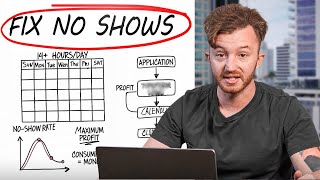
Daniel Fazio breaks down how to book more sales calls and close bigger deals through three tactics: spread your availability across many hours to cut no-shows, use application forms to filter out bad leads before they book, and call prospects immediately after they apply. He recommends Typeform for scoring and Chili Piper instead of Calendly to remove friction from the booking process.
Questions this video answers
Client Ascension and List Kit.
Approximately $1.2–$1.4 million per month.
About 14 hours per day.
More than 15,000 people.
Under $5k/month = 1 point; $50k/month = 4 points.
Chapters
I want to talk about calendar and application tactics and the form by which you should book calls and kind of operate all of the call booking maneuvers in order for you to maximize the amount of profit you make. If you don't know me, my name is Daniel Fazio. I run two companies. One called Client Ascension, another called List Kit. Client Ascension is coaching consulting and List Kit is software. We make somewhere between 1.2 and $1.4 million per month. Right now it's somewhere around there. I personally take home hundreds of thousands of dollars a month in profit. So my job is to convey enough information to you to give you the highest probability to make the maximum amount of money inside business. I'm not promising that you're going to make any money because you can be a complete dumb ass and not know how to do anything. Zero promises of income. Let's talk calendar, application and tactics. And we're talking about three things here. First is availability variance. Two is friction and three is speed and momentum. So let's first talk about availability variance. The one thing that you need to understand is that what you're trying to optimize for here, what you really want is you want qualified leads. You want them to show up so they can get an offer and therefore close. If you give somebody an offer on a sales call, so it's like an offered call, what that means is that you gave them the price. Sometimes you'll get on a call and you won't even pitch them at all because they're just not a good fit. That's what the purpose of discovery is. What you're trying to maximize here is you want the maximum amount of qualified leads who show up, who get offer and they're foreclosed. What you have to understand is that a massive determiner of whether people show up or not is convenience. There's all sorts of shit and fuckery that you could do. Making sure you get people information before the call with pre call sequences and pre call reminders and a thank you page that has a bunch of like thank you page breakout videos. Jeremy Haynes has really good content on this. But what you have to understand is that a huge determiner of this is just convenience. What's going to be the most convenient for some, it's when you have the maximum amount of slots available across the entire day. So huge problem I see with beginners when they're just starting out, they'll only want to take calls in like a three hour time block or like a four hour time block. They won't book a Sales call anytime after that. And one of the best pieces of advice you could possibly implement as a beginner, when you're just getting started out and you're below like 20k a month or 30k a month, keep your calendar open for like 14 hours a day. Just keep it so insanely wide open. And even me now with the sales team of like 15 or 16 people on it, what we do is that we hire people across time zones so that we're able to get hella call slot times available. And I'll just show you an example over here. So like this is an example of our availability. Tomorrow we have availability from 4am all the way to 7pm this is a profusely long amount of time. The variability of the possible times that somebody could pick is so, so why, so why is this? If a call slot is inconvenient, it increases the probability of a no show. The no show percent goes up. Why is that? The less call slot times you have available, the higher the probability that it's a less inconvenient time for every additional person who books on to the calendar. I personally only like to take sales calls or any kind of call whatsoever between like I would say 12pm and 2pm I don't want to do any kind of call outside of those hours. In the morning I like to do like, like actual work, like filming YouTube videos. Like this video right now for instance. It's like seven something AM right now. And then later in the day I like to again do like answering messages. Like I don't want to be on calls, I want to be in the calls in like the early afternoon. That's when I like my calls. So if somebody comes in and they have a sales call slot and the only call slot I can book is at like 5pm for me it's a disturbance to my schedule. And when it's a disturbance to my schedule, the probability that I'm going to no show this is severely higher than if it was at like 1pm, which is the time I like to take calls, right? And then every single human is different in their own set of shit that they need to be able to do their own preferences that they like to operate on their calendar. Therefore, if you have the highest availability variance possible with all sorts of times that somebody can pick, it increases the probability that they will actually show up to the call. Now what you'll find is that as your calendar availability goes down, what you'll find is that your no show goes up. Everything in life works in Cascading amounts. So like for instance, the less call slot times you have available, the higher the no show rate. Therefore the lower the offer rate. Therefore the lower amount of money you make, the more availability you have, the more offers you have and therefore the more sales you make. It's all intertwined together and everything cascades into one another. It's that same saying where it's like those who have nothing, everything will be taken for them. Those who have everything, more will be given to them. All the people who have money continue to make money. All the people have nothing, continue to have anything they do have taken away from them. Everything in life is like a death cycle or a life cycle. You're either getting better and better and better or you're getting worse and worse and worse. And where it's progressively faster and faster and higher quantities. You need to recognize when there's some kind of effect or activity that works like this in your life. And this is one of these. You need very high calendar availability all the time. What you'll find is some weeks. So this is no show percent. The higher this is on the graph, the higher the no show like you might want to be over here. And week one is like good. Week two, like fucking everyone is no showing. And then week three is down over here and then week four is back over here. Something like that. This just happens. Everything in life comes in waves that are longer from trough to trough off than you would otherwise like them to be. What I mean by that is your no show rate is not static. It's not like you just have like on week one your show up rate is 75%. That's what it always is. Every fucking call that's always stable like that. No, it doesn't work like that. You have like one week where it's like 62% and then you'll have another week where it's 84% and then you have another week where it's like 50%, then you have another week where it'S 90%. That's how it works. You think operating at scale, for instance, what you're thinking right now is if I just have quadruple or 5x or 10x the amount of calls, this will be more stable. No, it's actually just makes it way fucking worse. The troughs are still deep in the wave. It actually freaks you out more. You have to understand that when people say they're no show rate, they're saying an average over an elongated period of time. That does not mean that every individual week is going to Be exactly like that. That's just not how reality works, even at scale. Okay, so let's now talk about friction. Okay, so what you need to understand about friction is that you want to minimize the amount of unqualified people you have to talk to. So the best way to do this is via applications. If you look at anybody's funnel, about 99% of the time they are using Typeform. And I'm going to walk you through my Typeform and why I use Typeform and like the logic of how I go through my stuff. But the premise is that what you're trying to do is reject unqualified people from even speaking to you in the first place. That's what you're trying to do. Okay, now there's two types of friction. You have qualification friction and then you have tech friction. So qualification friction is any kind of friction where you're making the prospect qualify themselves in order to be eligible to book a call in the first place. Tech friction is you lacking the technology or ability to make it a smaller amount of buttons to click. It's just more conceptually difficult to even have the call booked in the first place. I want to give you one example of this. If you use type form and calendly, what happens is there can be an integration with calendly and Typeform. But the problem with that is that when you use a calendar, your Typeform integration is that a calendly booking counts as a question. So you can't do lead scoring point based routing to make it so that people can't see the calendar. You know what I'm saying? It counts as a question and not an ending. I've personally found that the integration of calendly on the Typeform, it looks weird on some people's phone. I don't like using it. I haven't had a good experience using the integration. So then what you'll find people do is that they'll submit a type form and then you can get the logic based routing and then they'll redirect to a page with a calendly embedded. Now the problem with that is that calendly doesn't allow for you to pass data into the URL and have it grab the name, email, phone number and just contact information of the person and automatically fill it into the calendly. If you use calend, they have to enter that information in on the type form and then they have to re enter that information again on the calendly. That's an example of tech friction. You don't Want that kind of friction. You only exclusively want qualification friction. You want the least amount of tech friction for the people who are qualified. I'm going to walk you through the logic of it. The way this works is I always like to get my questions first. Typeform did some study that if you put the contact information first, the completion rate is much higher. You can also put a partial submit point right after it. So if somebody abandoned ends the application and didn't complete the application, you can grab their data. First name, last name, phone number, email. You make this required. So this is for a B2B offer. What I'm trying to walk you through here is that my questions might not be what your questions are. You know what I'm saying? So this is for a B2B done for you cold email offer. We're going to do cold email for them. This is a free form response where they have to enter in their website. I've personally found that you always want to have a free form response. It just so happens here that my free form response can be a website because the quality of prospect that we're speaking to, we literally will not work with them if they don't have a website. But if you're selling some kind of B2C product, you're using a B2C application, then you obviously wouldn't want to have a website field because they don't have a fucking website, right? It's pretty obvious. Next is, do you sell a B2B or B2C product or service? And then I say we only work with B2B companies. It's important that when I show you this question, you're not taking this as me saying, ask this question. Your Typeform. The reason this question is present in my type form is because they have to be B2B. They have to. If they're B2C, we literally can't do cold email for them. They have to be B2B. Then I asked, do you estimate your total addressable market? Your TAM is more than 15,000 people. Yes or no? We want them to click yes. Look, why is this question here? Because in order to do cold email properly for them, they literally have to have a TAM that is above 15,000 people. They have to have that cold email literally, functionally will not work for them. If their TAM isn't large enough, this is a requirement. They select no. We tell them, it doesn't look like your market is big enough. Would you be open to expanding out to larger markets immediately? If they say no, it's just rejected if they selected their B2C, it's rejected. If their TAM isn't big enough and they say they won't expand it, it's outright rejected. You cannot book a call. This is the screen they go to. Sorry, it doesn't look like our AI app on engine offer is for your business. It's just an outright rejection. We literally can't work with them. And I don't want to train my pixel on people who sell B2C and say they don't have a website or they have a small town. That's not what I want. I can't train my pixel on that because we literally cannot work with those people. So next question is what is your approximate current monthly revenue in your business? They can stuck to any of these options. And then there's also what is your budget to invest in growth your business the next three months. So we have all these options right here. I'm not saying that you need to specifically make your questions on your type form current monthly revenue or budget to invest, depending on what you're selling. Selling. It might be totally irrelevant. It might be way more relevant to say something else. For instance, if you're like an email marketing business, you might want to ask how large their email list is. You might want to ask how much is your email list growing? If you're an ad agency, you might want to ask how much are you spending on ads per month? You need to adjust the questioning based off what is relevant to your specific business. So now the way this works, I go over here to scoring and these questions right here get points. If they make less than 5k a month in their business, they get only 1 point. If it's 50k a month, they get 4 points in their budget to invest. They also get points assigned based on that. What happens here is that based off how many points they get. So like if they get three points, they go to a URL with a calendar embedded on it for our setters for qualified they go to a different URL if they have four or higher points. If they get zero or two points, they just are outright rejected. That's how that works. Okay, so now going back to the iPad here. So like for instance I was saying earlier, this is your VSL page. This is the button for the application. They click this application, it opens the application, they answer those questions, yada yada yada. Once that's done, it redirects them to the page with the calendar embedded. If this was calendly they would need to re enter contact info. Now I use one instead, called Chili Piper for the sole reasoning that they can just pick time. They don't have to re enter their contact info because I just passed the contact info into the URL. And then what happens is Chili Piper just grabs the contact info from the URL, auto populates it and then they can literally just pick the time. They just pick the number and then boom, it grabbed it from the type form already and then they don't have to re enter it. So what I did, the reason why I switched to Chili Piper is specifically for that. Because of the qualified people, I want to remove all the tech friction. That's what I, I wanted it so that all of the qualified people could just click it. Boom. Book. And it actually works so much better. It's pretty awesome. Chili Piper is pretty expensive, but at our scale it's literally worth it. We save money doing that. Okay, I want to put a side note on friction. Friction for outbound marketing, this is a little bit different. If you're doing outbound, that means like cold email, cold DMs, dream 100, all this bullshit. Any kind of outbound marketing, it's different. If you send a cold email to somebody and they're like, yeah, send me more info or yeah, I'd be happy to talk. And then you fucking send them a type form, here's what's going to happen. You're going to get zero percent of people fill that out. Fucking dead zero. With outbound marketing, the qualification occurs on the phone. It's manual. That is part of the price you pay for you to not be doing content. Content is a lot of effort, perhaps also some money. Ads is a lot of money. But you want to skirt these rules and do outbound marketing instead. Part of the price of outbound marketing is an increased amount of labor, partly because the qualification is done manually. All this is manual qualification. If you run an opt in funnel, like I run some opt in funnels, it's like I have an ad. I send people to an opt in page that once they submit that it sends them to a VSL page after that. So first they have to enter in their name, email and phone. I then have my setters call and text these people. Now what they're doing is setting them onto a call, but they're not fucking sending them a type form. The call that the setter does is the qualification. The setter literally is doing the qualification manually on the phone and then booking them directly into the closer if they are qualified. If they're not qualified, they just don't book them. The setter is the type form. For instance, even with cold email and you get responses, you just have to get them on the call because they fucking won't submit a type form. If you're doing cold calling, the qualification is done on the phone. You don't send them a type form after it's manual. That's what outbound marketing is. What you have to understand is that if you want to reduce that workload in your lead list, that you're outreaching to adjust it so that you only send to qualified people in the first place. Now you have to understand like that's an additional amount of labor. Now in today's age you could actually take a lead list of a couple thousand people and have an AI agent run through it and tell it to visit the website and ask specific questions and remove it if it doesn't hit specific parameters. You could theoretically do that. I would personally do that. But it's still labor. You're just transferring labor from like the qualification call side over to the lead list side. You're just transferring where the labor occurs. Okay, so now let's talk about speed and momentum because this is super important for a lot of you guys. The first point that we're going to talk about is when somebody books in with you, call text immediately and offer to do call sooner. If you have time, just say hey, I can do the call now if you want. You have to understand like the person just booked a call and they're excited. Excitement level is up. If you let someone book a call in like a fucking week out, like the no show rate is going to go way high. They're just losing any kind of excitement. You really want to grab this person when their interest is peak. People just have shit to do. Like just shit happens. Something comes up later on, they see something new and they're intrigued in something else. You want to just make it so that they have the opportunity to do the call sooner a lot of times. But yeah, and if you have free time then yeah, just do the shit sooner. Second I want to put in here is pre call sequences. Okay, so like what I said earlier, shit comes up for people, they lose interest over time. You need to to constantly be feeding them shit that's like reaffirming that they've made the right decision to book a call and to actually show up to the call because people will just not fucking show up to the call. This is the thing is very common situation. So normally what you want to be sending people is case Studies and faq. This is like a meta concept. You have to understand is that consumption equals money. Anybody who consumes more of you in any capacity, whether that's read, listen to, been on a call with, the more somebody has consumed of you, the higher the probability they show up to shit. The higher the probability that they buy more shit, the higher the probability they don't churn. You need to increase consumption as fast as you can with every single one of your leads. This is why having a YouTube channel is so fucking powerful. Because what you do in your pre call sequences is like for instance, I send my YouTube videos and then I also retarget with ads with FAQ videos plus my YouTube videos. I'll literally upload my YouTube videos to Meta, make it as a video view campaign and target the people who have booked a call with us. They're just saying, seeing a fucking shit ton of my content. And then also in the emails, they're getting the links to my YouTube videos, they're getting links to my case studies which are also on my YouTube. They're getting a lot of shit for me because I'm trying to increase consumption. I want this to go up. I have to have the consumption go up. Okay, now especially for the beginners here, you need to understand that 10 calls in two days is better than 10 calls in two weeks. Do you need a high enough quantity of calls to actually like put reps in and get better at sales? Like when you're first starting out, you just have like zero concept of how sales works at all. And you need to to put a severe amount of practice in to actually get good at this. In a previous video I made, I talked about how if you feel like buried under rocks because you have like a shit ton of stuff to do, the way you get out is just by doing one thing at a time. Like you might feel like one of the things you're overwhelmed by is that you're scared to get on a sales call. And the answer is like you just need to fucking do sales calls. You need to batch these together. You need to do an absolutely fucking profuse amount of lead gen to bunch and get a fuck ton of calls done as fast as you possibly can and stop delaying shit out. You just have to have momentum because you need to get better at at this super fast. And if you elongate how many calls you have over too long of a time period, you're not going to get good. It's just not a high enough frequency. All right, that's it for this video. If you got any value, go share it in a group chat. You're in your telegrams, your slack, your discords, whatever the fuck. Leave a like comment if you got any questions, subscribe. If you want to watch more videos, I'll leave a link to another video over here. If you want to buy my shit, I'm going to leave two links in the description. One is for AI Assisted Agency. That's if you want to start an agency basically from scratch or you kind of already have an agency and you want to sell a better offer. You want something that can actually scale to cold traffic. And it'll also leave a link to Olympia, which is if you're at 30k a month and you want to scale with ads and learn how to build a sales team and learn how to build a fulfillment team, I'll leave that link in the description as well. All right, peace.










