Case Study: From 0 to 20k/mo in 3 months with an agency inside Client Ascension
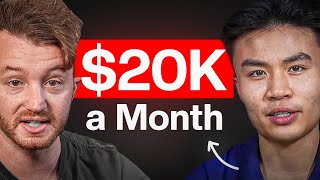
This YouTube case-study interview (host: Daniel Fazio; guest: Matt) profiles Matt’s transition from a six-figure 9-to-5 tech job in New York to running a LinkedIn ghostwriting + lead-generation agency. Matt joined Daniel’s Client Ascension program, started the agency while working his job, did free work and heavy LinkedIn posting to build case studies, landed his first paid client around month two, and reached $20,000/month within three months—then quit his job. The conversation emphasizes investing in yourself, ripping off the band‑aid to start before you feel ready, focusing on fulfillment and referral-driven growth, and coping with early-stage uncertainty (hiring, sales sequencing, tooling).
Chapters
What's up everybody? Got my boy Matt here. And Matt, you went from 0 to 20k a month in 3 months inside the program, is that right?
Yes, that's correct.
Just so everyone knows, a little disclaimer here. This is not the average result that you will get inside of my program. The U.S. bureau of Labor Statistics claims that 20% of businesses fail their first year and that 65% are going to fail in the first 10 years. The average person is more likely to fail instead of succeed. But my job is to just give you enough information and interview people like Matt who are in fact successful in order to arm you with a sufficient quantity of information to make the that you succeed higher. I want to talk about before you started this business. Just like really quick though, what do you sell and like who are you selling it to? And then we'll kind of like dive into it.
Yeah, that's a great question. High level overview. So I run a LinkedIn ghostwriting slash lead gen agency. You can think of our service as having two parts. First part is creating content, typically for founders. And then that content is going to drive inbound traffic. And so we also do a little bit of outbound support as well. If you want to think about setting up connection requests, message sequences, things like that, so they can actually capture that demand and book sales calls.
Good stuff. Let's start at the beginning here. So like before you joined the program, what were you doing? What was your job? What was your income? If you're cool with sharing it, what were you doing with life?
Yeah, 100%. I was actually working a 9 to 5 in tech. I'm based in New York. It's a pretty solid job to have. I was already making six figures, pretty comfortable, decent hours. But I think I've always had entrepreneurial side to me and just wasn't feeling super fulfilled in the work that I was doing. I was trying a lot of different things, trying to create content on the side. Also a YouTube channel by the way, which is completely unrelated to my business. But I've tried a bunch of different things. Launching paid community. Most people have probably tried dropshipping or some of that. I actually did not try drop shipping because friends had warned me to avoid that. But I was definitely in that world and always trying to think of ways to make money on the side. And so to answer your question, I was working a 9 to 5. It wasn't a bad job. I was pretty comfortable actually. And I think honestly a lot of people in my position probably would have just been completely happy Staying where they were. But for me, I just think there's more to life for me. Going into business, starting my own business, Even though it's a lot harder, it feels a lot more fulfilling.
You were comfortable at the job. What led you to attempting to try this at all? It's like a negging feeling behind you. You live a pretty good life. You were working six figures. It was a good job. Why'd you do this, dude?
Honestly, that's a good question. I mean, I think what helped me to make the decision is a couple years ago, you know, my family's childhood pet passed away. This was before I joined ca, before I even decided to launch a marketing agency. But it's relevant because that was the first time where I felt some sort of loss from someone or something close to me. This is like the cat that I'd grown up with.
I had cats, too.
Yeah, dude. Nothing against dog people. So I'm a cat person. And there's something very profound about that because you realize life is really short. And for me, that made me think, okay, life is so short, We've all got one shot at this. Why would you not go after the thing that you want if you have the chance to? So for me, like I said, I was really comfortable. And financially, I was already pretty well off. I've got a lot saved up and whatnot. But I also really believe in going after the things that you want in life, whether. Whether it's in your career or outside your. In your personal life, go ask the girl out, or, like, go and try to do the thing. And even if you fail, it's technically not a failure. Even if it doesn't succeed, that's probably, like, the most concrete moment I can give you for that. Like I said, it had been building up for a while. For years. Yeah. I honestly didn't see a better time to take the leap. I knew there was always going to be those excuses in the back of my mind of, yeah, just wait another year. Like, just save up another six months of income before you try to make it asleep. Or, yeah, like, you just need to take one more course and get a little bit more knowledge before you're ready. But I've realized over time that you never really feel fully ready. That's just a myth. Anyone who kind of acts like they've got it all figured out is full of bs. That was kind of my thinking. And one important thing, though, is I had a conversation with someone who was an existing business owner and agency owner, actually a former CA client. I Asked them in the very beginning, this was in like July or August when I first had the idea of starting the agency. I said, what's the number one thing that you wish you would have done or focused on when you were starting out? And they said, don't underestimate the power of learning from people who've done it before.
You started the business because you wanted to see what you could do. You wanted freedom or you want money? If you had to choose, which one of those do you like, lean towards one or the other?
Yeah, 100%. But for me, the freedom is actually the more important thing. And learning and money is great. But honestly, if the upside of running your own business money wise is much higher than staying in corporate. If I had stayed in corporate, probably still be pretty well off and have a comfortable life, but I'd never be a multimillionaire. And so that was definitely a factor. But I think what's more important to me is actually the freedom and autonomy of doing my own thing. So even though it's really hard in the beginning, basically like chewing on glass the first couple months, which we can get into later, it's still worth it and it feels more aligned to the version of myself that I want to be. If I thought about myself five, 10 years out, I definitely see myself as a business owner and not as someone who's still working in corporate.
I was a freedom guy. I hated needing to be somewhere at a specific time or needing to request time off. That made me like so angry. That made me feel so helpless. I was like, bro, there's no way I can go my entire life and I have to request to not, not be able to work. There's just no way that this is how this is supposed to be. I guess kind of moving on to more tactical questions that people might have. You left off saying, don't underestimate what you can gain by working with someone who's already done it. Imagine pretty much everyone watching this is probably familiar with something like client ascension, my program, they want to make AI assisted agency. That's obviously what you join. The investment obviously isn't small. Were you nervous about doing this? How did you justify doing this? Like, did people think you're crazy for doing it? What are your thoughts around that?
Yeah, I mean, it's not cheap and I think you just have to have an investment mindset and not the mindset of, oh my gosh, I'm parting ways with my money and I don't know how that's going to pan out. So to Answer your question? Yes, I definitely felt a little bit of apprehension in the beginning. I was like, holy shit, this is not an inconsequential sum of money. And like I said, I was making six figures in this nine to five, but that was still a pretty big part of my monthly salary. So basically, I don't know if you've heard the song by yg, there's this line that's like, scared money doesn't make any money. That kind of is my mentality when it comes to these kinds of things. Because if you're not willing to take a little bit of risk, then you're not going to see any huge upside if you play it safe and you never want to invest in yourself. Or maybe you're just like buying these really cheap, like low ticket courses. Yeah, maybe you're going to learn one or two things that's useful there. But the potential upside and I think of it as like the stock market as well. I also have a finance background. You don't have a really high expected return if you don't take at least a little bit more risk. So there's two ways to play the game. One is you are super risk averse and you just don't invest in yourself ever. But then you should know that you're probably not going to achieve some outsized outlier 10x result. You can try to take a little bit more risk and that's not guaranteed that you're going to succeed. But the chances of you actually achieving that outlier result that you probably are dreaming about, it's at least not zero to tie it back. The way I saw it was, yes, it's really expensive, but I see it as an investment myself. And there's far worse things you could be spending the money on. You could be just blowing the money on a car, a really expensive watch that really isn't going to do that much for you. But if you invest in yourself, that knowledge sticks with you forever. So to me it was almost a no brainer when I thought about it in that way. But yeah, absolutely. It's scary but again, you don't at least take a little bit of risk, you're not going to achieve the kind of result that you're looking for.
It's become apparent to me that especially like when I run ads to cold traffic for client ascension, which is like inherently it's kind of like a business type thing, it's like a make money online thing. It's come to my attention that there's a category of people in the world who believe that business opportunity stuff, like, they might see me and they think it's like, oh, like make money online scam. They believe it is all an outright scam 100% of the time. They legitimately actually believe that there's just like no deliverables. And the whole scheme is almost as if you get their money and then you never hear from them again, ever. Were you ever that person?
Absolutely. I want to be clear. I think that there's probably people out there that are scamming people. So it's good to have a healthy amount of skepticism. But again, this is why you got to do your research. And so before I even booked a sales call, I went and I obviously was looking at all the case studies and I was looking at the landing page and I was talking to people even that had been in the program. So it was not me just throwing a bunch of money into something that I didn't know much about. I was barely confident that this was legit. A fact that I now know to be true because I'm in the program now, and it's been great. I think that the people that just automatically write off any of these kinds of programs as a scam, that's a mindset issue. And it's almost like coping in a way, because any intelligent, reasonable person that does their diligence on the program is going to see that there's tons of tons of client results and case studies and people like me who have also been able to achieve that goal. I would say it's also really important to go into it realizing that it's not some silver bullet either. So the people that think it's a scam probably went into it thinking it was a silver bullet, and then they didn't want to put in the work, they didn't want to follow the program, and obviously they didn't get the results. And then they're upset and they're going out and they're typing online complaining on Twitter about how so and so program is a scam. To answer your question, at one point, yes, I definitely was. But over time, I realized that, look, it was more of a mental block of thinking that everyone out there selling this kind of educational program is not legit. But you do need to to also recognize that there's a ton of value in knowledge.
Speaking of work and what needs to be done, how much work did it take you? How many hours were you working when you first started trying to do this all? Did you quit your job immediately or, like, how did that Work? Were you doing it on the side?
So I started it while I still was working my 9 to 5. I only quit the 9 to 5 last month. So for the first two to three months, I was basically doing the 9 to 5 during the day, and then mornings and evenings, I would be working on the agency. Only now I'm fully dedicated to the agency. But, yeah, it was lot of work. I'm not going to sugarcoat it for people out there. This program will give you all of the knowledge and the tools that you need to succeed. But at the end of the day, you're the person that's going to have to actually execute on the stuff that the coaches tell you and actually stay consistent and not quit when you're not seeing the results. And for me, it was really, really difficult in the beginning. I worked for free for a bunch of people, which anyone who's done that knows it's a slog. But I had no credibility, no track record, no case studies. So the only thing I could really offer was, hey, I'll try to do a little bit of work for you for free and hope I can get them some kind of a result and either upsell them to a paid client or use that case study to then get paid clients. And I had no idea how long this was going to take. I also had no idea if it was actually going to work out. And there was also a lot of mental barriers around asking people to pay thousands of dollars a month. That's another really big unlock that I think the program helped with as well. I can go in depth on either of these directions, whichever is most interesting.
I think a lot of people hearing what you're saying, probably like, they might be working their own job, obviously have their own obligations, and they're thinking of starting, or maybe they've dabbled with some other stuff. They're thinking, I need to get ready. I need to, like, do more research or, like, get ready before I join something like Daniel's program or something like that. I'll say to them, I'm like, you're not computing that the content of the program is what makes it work. It's not like you make it work and then you go to the program, you can just join and immediately unlock the information that makes it work. For somebody who's maybe in that position. I'm not ready yet. What would you say to that person?
This is such a good question. What I would say to those people. If you're watching right now and you're, like, considering the program and you're like, oh, I don't know if I'm ready yet. You're never going to feel ready. And it's one of those things where you need to just rip off the band aid. Maybe that's not what you want to hear, but there's a reason why not everyone out there is running a successful business. Because there's a lot of people that want to do a business and a lot of people that have a ton of ideas for businesses. And I have a lot of friends like this too. And nothing against them. It's like we would just go on and on talking about different business ideas, but then none of us would actually do anything about it because it's so easy to just talk about, oh, dude, yeah, if we did this, we would be able to make so much money. Or look at so and so doing that, man, we could totally do that too. But then no one does anything about it. And for me, over time, just kind of got sick of that. That mentality of not taking action and that mentality of always needing to just over prepare. Because the thing is, you're never going to be fully able to anticipate every possible outcome when you're doing business. So you can't prepare for everything out there. And then two, you don't even have the knowledge or experience because you haven't even done the business yet or you haven't even taken steps to move towards that yet. So how do you even know that things that you're preparing for are the right things? You don't. I think there's a little bit of a mental thing, a mental barrier that needs to be overcome. And I personally, I did not feel read when I signed up for the program, but I also recognized that feeling of readiness is never going to come, especially in this kind of a thing. So rip the band aid off, take action, and you'll learn as you go.
So once you joined and once you were inside, I imagine you had a lot of confusion around, what do I sell? How am I going to get clients? So what were the first couple of steps you did that you were inside to determine what it is you're going to sell? How'd you end up choosing that?
Yeah, so there's a few things that are really helpful in the beginning. Number one is obviously there's a ton of course content. Number two is the initial onboarding sync with your student success coach. I actually think this is something that is extremely valuable that I didn't even think about when I was joining that I eventually found out was so Valuable talking with the student success coach. Also just talking with you, Daniel, about the offer, things like that. I think you give a lot of good feedback there. But for me, I would say in the first week or two, I was going through a ton of the course modules, talking to my student success coach. I was attending some of the coaching calls, and eventually I made the decision decision pretty quickly, to be honest, to land on LinkedIn ghostwriting as the main core offer, because I think there's a huge opportunity on LinkedIn and this is getting a little bit away from probably the purpose of this interview, but no, you're good. I have seen the power of content outside of the program, so I already believed in it as a concept. And LinkedIn I also believe, is a really powerful marketing channel for B2B. There's so many decision makers on there, and if you can do it right, then you can absolutely crush it. So there's clear market demand for this kind of a service. I think there's a lot of people offering it, but I felt like there was a way that I could do it in a more differentiated way. So that's how I landed on it. And then I obviously validated it with you and some of the other coaches.
Could you walk us through how you got clients? Because now you're at 20k a month. How did this happen? Because you mentioned you were doing some free stuff in the beginning. How did this process kind of like play out for you over the course of your three months?
So like I said, in the very beginning I was doing free work. So tactically I post a lot on LinkedIn. So I got my first initial free clients just by posting on LinkedIn. Hey, you know, I'm looking to help ex business owners with growing their LinkedIn presence, something like that. And then got like a few people that came through and I was working with maybe two or three founders, just writing content for them for free, and did that for probably a month, maybe a little bit longer than that. And eventually I was able to leverage the results from those free clients to get my first paid customer, which was huge. I felt also a ton of imposter syndrome when they paid me because I was like, oh my gosh, this is a lot of money. And now I have to actually deliver results. But you get confidence by actually doing and seeing that you can actually deliver results. So that one paid client, I just was laser focused on getting them as good results as possible, and they actually turned into one of the best case studies that I've had for the business so far. And that one client ended up referring me to a bunch of other people. And so the lesson that I actually learned, which I don't know how many agency owners focus on this, is I'm actually laser focused on fulfillment, less so on actually marketing. Yes, I do post a lot on LinkedIn and I get a lot of leads inbound that way. But a lot of the clients have actually come through referrals from existing customers. Because I do such a good job with the existing customers. And they're like, damn, this guy's good. Let me refer him to my friend who also runs another agency or who also runs a coaching business or a SaaS. So that was how, starting with the first paid customer, which was about two months in, that eventually ballooned to a bunch of other customers that either came through referral. I wanna say maybe, maybe 25 to 30% of current clients are from referral and the rest are just inbound through LinkedIn.
What would you say to someone, let's say they're Gonna also run LinkedIn, ghostwriting business, or even any other business, a cold email lead gen business, or ads funnels agency. What if they're saying, but I'm not good at the thing? Like you're saying that the way you get clients is because you get them really good results, but what if I'm not good?
The number one thing to understand is, yes, in the beginning you probably will suck. And you're also figuring it out if you've never run ads before and then now you're trying to run it for first time, yes, give yourself a little bit of grace and realize that you may mess things up a little bit and you might even lose that client. But that's kind of the process that you have to go through as you become more competent in any kind of skill. So the worst thing you can do is just have decision paralysis and not do anything at all. Because then even though you're not moving backwards, you're not moving forwards either, and you're not developing your expertise. And so what you have to realize is every incremental client that you work with builds your own knowledge and expertise. And so over time, I got more confident because I was working with more and more clients and I was seeing that I could consistently deliver results. The number one thing, though, I would also warn people of, is you need to also be discerning about who you work with. Because in the beginning it's very easy to be super desperate because you just want anyone to agree to work with you. And yeah, you can do that. With some of the paid clients, with some of the free clients in the beginning, but very quickly you should be very focused on getting very good clients. Have high standards, don't be desperate. Just because someone's coming to you and willing to throw money at you doesn't mean that you should necessarily, necessarily work for them. And that might sound counterintuitive to some people, but trust me, in the long run you're going to be glad that you didn't take on some horrible client just because they were willing to throw a couple thousand dollars a month at you. Because the standards that you have for the clients that you work with is half the battle when you're running an agency which is services based, very relationship based. So if they're a good client and you can focus on getting good, high quality clients that have a killer product or service that's already selling and they're really great to work with. For me, that's the number one thing that I look for now is not just are they willing to pay for my service, but are they also running a that's doing very well, there's clear market demand, their offer is really good and I actually like them and think there's potential to work with them for a really long time. That's what I look for.
What was the most challenging part of this? Going from 0 to 20 grand a month?
I think the most challenging part is honestly just the level of uncertainty, just all of the decisions that you have to make as a business owner that oftentimes when you're at the early stage, going from 0 to whatever, 10k, 20k, you're making a ton of decisions on a daily basis that you've never had make before and you don't really know if you're making the right decision or not. To give you a small example, even something as small as oh, what software do we pick for our CRM? Or how do I go into this sales call with a new client and maximize my chances of actually closing? Do I do a one sales call where you try to close them on the first call or do I do like a two call sales sequence? Like no one just knows that in the beginning and also when you have to start hiring. If you were like me and you came from corporate, I never had to hire anyone before. I was never a manager. I didn't have to think about what's my budget for bringing on a new team member. There's a lot of big financial decisions too around running the business that normal corporate workers don't have to even Think about. And so all that's to say, there's a lot of uncertainty on a daily basis. And that is again, though, why it's so important to be a part of a program or a community where there's people doing the same thing. And not just people that are also peers, but people that are two, three, four, five steps ahead. Because then I can hop on a call with one of the coaches, I can hop on a call with you, Daniel, and ask questions and. Or I can hop on a call with Dylan Rich, who's the sales coach, one of the sales coaches in the program and they can answer the questions much quicker and just give me that level of confidence that the direction that I'm pushing in is actually going to move the needle.
Do you think your life is much better now that you have this business than you were working your corporate job?
100%. I mean, I actually wake up and on Monday I'm actually excited to get to work. Let me tell you, that never happened. When I was working in corporate. I worked in few different companies too. So I know for a fact that it's not the company that I was working at before I quit. It wasn't that. I tried a couple other jobs out as well and I never got that level of excitement to just get going. And now that I am on my own, running this agency is just so much more fun on a daily basis. The level of freedom and autonomy is unrivaled. And that's not to say that you're not going to still work a lot. I want to be completely honest. I still work a lot, but it's because I want to and it's because I find it engaging and fun and the quality of the hours worked is different. It's not like eight hours a day of just soul sucking work at your desk and then you have a couple hours in the evening to yourself. Now it's like, oh, okay, I can work for eight hours on something that I actually find interesting. I'm learning way more and working on interesting problems, meeting interesting people. I know that the effort that I'm putting into is more correlated to the upside that I'm going to receive. I'm not capped like I am in corporate. So yeah, I could go on.
At your 20k a month level, let's say that you stopped all client acquisition efforts and you were like, I'm just going to coast at 20k a month. How many hours do you think you could get away working per week?
Ooh, that's a really good question. I think If I didn't try to scale the business, which is what I'm trying to do now, if I were not trying to scale it, I would probably work, let's say maybe the same amount of hours as I was in corporate. But again that's because I genuinely am pretty invested in my clients success and the quality of those hours is very different. But I'd say probably around the same if I were to just like host.
What has been the biggest change in your life? Just transitioning from having a job to being a business owner who's like fully support yourself. Is there like anything changed about how you operate as a person now?
I think I've just had a lot of mental barriers that have been destroyed. Honestly, money aside, I think that a lot of people, there's a part of them deep down that doesn't believe it's possible until they actually do it. But many people don't even take the steps to find out. So for me a lot of it has actually been mental benefits because now that I realize, oh, I can reach 20k in 3 months. And by the way, my wildly important goal, which for people listening is like a goal that you set with your student success coach, I had a wildly important goal of like, oh, within the first 6 to 12 months, I hope I hit 20k, that would be like a best case outcome. And then instead we hit it in three months. And I was thinking, wow, that's crazy. I should actually be aiming even higher. I think the mental unlock is the biggest benefit that's helped me and it's changed just everything in my life, even outside of the business because now I just feel motivated to go out there and if there's something that I want, just freaking go for it. What do you have to lose?
Let's say there's someone, they're in the exact same position you were like three, four months ago. They're on the fence. They're like super skeptical. They've never joined something like this before. Really. They're kind of just like afraid to do this. What is the one thing that you would say to them?
I would say something similar to what someone told me before I joined the program, which is you need to be willing to invest in yourself if you ever want to achieve anything really. And investing in yourself, I think it can take many forms. Money is one thing, investing in knowledge from other people, but the time that you spend outside of work, what are you doing with that? Are you learning about business or are you just going out and playing video games? Like there's A lot of different things that you can do. And everyone's got the same amount of time, everyone's got the same hours in a day. So if you really think about what separates the people that are doing the stuff that you dream about versus you or ordinary people, I guess you could say it really is just the mental block. You gotta be able to invest yourself, believe that's possible, take a little bit of risk. Because like I said in the beginning, scared money doesn't make any money. If someone's telling you that you can make a ton of money without putting in any kind of effort or at least some sort of investment, that's probably a scam. Yeah, I would say if you're on the fence right now and you're thinking about this kind of a thing, just do it. You're not going to regret it. Just do it.
It's interesting to me, something I wanted to say earlier was I know the number one indicator of when someone messages me or they email me or they say something in. The first thing they say to me is, how much does it cost? Without wanting to know anything else. And I always ask them. It's like your thought process around this is not conducive to being financially successful because you're not even asking what you get in the product, you're just asking the price. You're only concerned with what the price is. You're not concerned with what you get. You ever see those liquidation shows where it's. There's like a storage unit that no one's open forever and you can buy? Literally what's happening is you're asking what the price to get the storage unit is without caring what's inside the storage unit. Like, there can be like a brand new Lamborghini Lamborghini sitting in the storage unit and the price of the storage unit is 50 grand. And you know that you can immediately sell the lamborghini for like 150 grand or 200 grand and you're like, concerned with the 50 grand. Did you not understand that what is on the other side is so much greater than what you have to give up? But do you just not get that? It's not me saying I have a problem with people asking what the price is. Like, obviously you need to know what it is. But it's like, when that's the first question you ask, it's the only thing you're concerned with. It's the biggest tell that I'm talking to someone who just has no idea they're never going to do anything. So it's very interesting to me that it's like a whole different shift that is required in order to be successful is literally how you even think about money or sacrifice as a concept itself in order to be successful 100%.
I mean, just going off of that, I think you're absolutely right. It's a huge mental block that a lot of people have. I get it. I was in that position before. And if you've never run a business before, I think business owners, they understand you got to invest in stuff to see a result that may not come immediately but for people that are maybe first time founders or first time business owners, they're just getting into it. They maybe have never had to invest substantially in their own education. But again, if you don't try something different, how do you expect to get a different result? You're just going to keep getting the same results that you've been getting for years. And if you were like me, it's like, oh yeah, let me buy this low ticket course and hope that there's some nugget of wisdom in there that can help me out. No, I think if you're genuinely serious about succeeding then your first question is not going to be what's the price? It's going to be what's the value being delivered here? What am I going to learn from this? How is this going to benefit me in the long run, not just how much is this going to cost in the short term.
Matt, thanks so much for coming on brother. Appreciate for anybody watching this. Matt's links are going to be in the description so if you want to connect with him you can do so. His LinkedIn will probably be one of those. That's his main stuff. But if anybody got any value, leave a like comment, subscribe on YouTube if you're watching it there, the link to join AI Assisted Agency will be down in there as well. So if you want to check that out, go ahead. Thanks so much Matt. Appreciate you, appreciate it.
Thanks for having me on.










