From Minimum Wage to Financially Free in His 20s
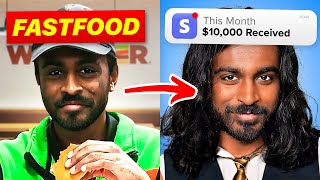
John Prince went from minimum wage at Burger King to running an email-marketing business making over $10,000 a month in his 20s. He learned copywriting, pivoted to Klaviyo, and used Twitter for leads. The Client Ascension program gave him systems, scripts, and a community that accelerated his growth.
Questions this video answers
Over $10,000 a month.
Burger King (working there in 2020).
$75 for a Facebook ads copy doc.
About $4–6k per month in total.
twitter.com/realjohnprince
Chapters
Picture this. Every single day, you go to work.
At Burger King for eight to nine.
Hours a day in terrible working conditions. And by the end of the day, you've only made a measly $75. You do this for years and years until you finally had enough. You search across the Internet and find this huge opportunity to make money and achieve financial freedom by learning a particular skill. You learn that skill, become good at it quick, and before you know it, you sign one client, then another, then five, and boom, you're making $10,000 a month and are able to work where and whenever you want. This is the reality for John Prince. Less than a year ago, he was working at Burger King for minimum wage. Today, he makes over $10,000 a month and is able to travel to some of our events in London and in places like Tampa. And in this video, I spoke to John, where he reveals exactly how he. He completely changed his life and achieved all of this in such a short amount of time.
Welcome back to a Student Spotlight interview, here with another legendary client, ascension student John Prince. Welcome to the show, brother.
Yo, what's up, man? Thanks for having me.
If you want to just get started by telling us a little bit about who you are and what you're currently working on.
Right now I'm running an email marketing offer. This is my first year basically doing this full time. So last year, I was still in university here in Canada, just doing copywriting on the side. 2020, I was working Burger King, still in university, and that's how I kind of discovered money. Twitter found cold email wizard Daniel's account. I was kind of, like, lurking that I was kind of seeing what people were doing, but, like, didn't really know what to do myself. It all just sounded like super intimidating to me, so I was just kind of lurking a bit around. Last year, though, I got into copywriting, and it started to work. Started off super small, so I made $75 selling Facebook ads copy to someone at the time, that was like, crazy to me. I had to work an entire shift at Burger king to make $75. The fact that someone was paying me for, like, a Google Doc that I took, like, an hour to write or whatever, that was just insane to me. I just kept increasing the price. So I was just like, okay, first guy would pay at least 75. Next guy paid me 200. The next guy paid me 500. I just saw how easy it was to, like, make money if you knew what you were doing. I was just kind of doing that on the side. I was Making enough to not have to work outside of copywriting, and then ended up getting hit up by a couple e commerce people at separate times. They were just like, they need help with their email marketing. So I was doing their copy, learned klaviyo, learned how to do everything else around email marketing, and then it just kind of organically happened. So I had two retainers going. At this point, I was making 4 to 6k a month in total. I saw all your guys marketing on Twitter too. This is around the time I found client ascension creeping your case studies and watching all these interviews for a little bit. And then I was like, okay, what the hell? Let me just book a call. Let me see what these guys are doing. To me, like, client work. I was able to make money, but I didn't see how people were scaling it. All these, like, case studies of people, like, oh, I signed two clients, three clients the next week. And for me, I was just like, are these people doing this? That sounds like a headache to me. Clearly, these people know something that I don't. So I ended up booking a call and joined Client Ascension. And, yeah, it's just been all uphill from there. It's been fun.
I love it, bro. So your journey is similar to most of the guys we talk to, right? You build the skill set first, which for you is copywriting. And then you realize, okay, I want to turn this a business, not just something I do as a side hustle. And that's where something like client ascension can definitely help with. I want to go back for a second, though. It's like, why copywriting? Were you naturally a good writer? How did you land on that?
Just by lurking on Twitter. It was just a word that existed in my brain. I didn't know exactly what it was. I ended up getting, like, this Facebook ad for, like, $150 course on how to get copywriting clients. I was like, okay, I've heard the word copywriting. People on money Twitter say it, and so clearly people are making a lot of money from it. And when I saw this course, it was just kind of, like, very serendipitous. I was just like, all right, let me just buy this. Let me see how it works. And then I started implementing exactly what the course was saying, and it worked. I got that first guy to pay me $75, and I was like, okay, it was just proof of concept to me. If someone's gonna pay me $75, someone else is gonna pay me 200. Someone else is gonna pay me 500. It was just one of those things where the stars kind of aligned for me in that moment and I just happened to be good at it, which kind of worked out. I tried a bunch of stuff before that that didn't work. If you just keep trying, if you just keep doing things, if you just keep staying in the mix, just doing random stuff, eventually something clicks. And I think a lot of people have that experience. And for me, copywriting was the thing that clicked.
That's so cool, Brown. When you started to pick up the skill set and get a couple of paying clients, was that while you were still at university or after you graduated?
I was still in university. It was enough to pay rent, it was enough to pay for food, that kind of stuff. So I was doing it on the side. So that kind of taught me how to work hard because I didn't have a ton of time. I was in teachers college. I would be in class sometimes and I would be teaching sometimes in a placement. So that was probably like the hardest I've worked in my life. Like even running a business, it's hard, but it's not as time consuming and as like mentally exhausting of like switching between studying, then this assignment, then like going to class the next day. So it was like super freeing when I finally graduated and I'm like, okay, all my focus is just on business. I don't have to think about anything else.
So spot on. I had lunch with a friend yesterday and all we talked about was he just graduated college and I was telling him how I started my business while in college as well. And that was definitely the hardest I've worked. College is technically a full time job. And then I had the business. Business is even more than a full time job, right? Especially in the beginning to try to get things going.
You're working, you're just always on and.
It'S not even the time. That was the hardest part is like you said, like switching between the two, like the mental bandwidth that was required to do both things. As soon as I graduated. It's not that so much time freed up because towards the end I'm sure you're the same. Like I stopped like giving a fuck in school, Like I was just getting by. And so it wasn't just the time, it was just like the weight off my shoulders and the mental capacity that cleared up. But you decided to go right back into university after you graduated. And the university this time is a little different as client ascension, which is actually cool because. Because client ascension turned two years old today. So we're a Little bit of a newer university. What was your decision to jump right back into an education program?
I think the university experience kind of gave me context. I saw how easy it was to do like, this big task when you have other people around you doing the same thing. Joining Client Ascension, I just treated it like university. I remember even in university I would always be like, involved in the community. We'd have different Facebook groups for, like, different things and I'd always be like, posting in there and active in there. I would just make sure I'm like a known figure. I was always kind of good at that. I always switched schools a lot growing up. Any community, I would kind of find myself. I found it very easy to like, connect and get myself known within that community. It was just like obvious that, like, okay, client Ascension is another one of these communities for me. So just joining that, being on the same path as other people doing the same things. My business before Client Ascension was very duct taped together. Like, I had people reaching out, wanting to work with me. I didn't know exactly how to respond to them or like, I would like respond to someone and then they wouldn't respond back and I would just never follow up. I would just assume they're not interested. After joining Client Ascensions, I just realized a lot of those are misconceptions. Like, once you learn how to properly follow up with a prospect, you can end up signing deals that you would otherwise lose just by, like, not following up the right way. Being in the room with people doing the same thing, seeing how they're doing something, being in a call where a certain person asks a question and you're just like, well, I wouldn't have even known to ask that question. And you kind of just like learn along the way. And a lot of the things that, like, I just kind of learned in passing, I would just kind of implement and it'll actually work. There's like more money in my bank account just by, like, being around these people.
It's like the original idea and concept of a mastermind is you put enough smart people doing the same thing with similar goals in the same room, you're all going to rise together. Especially if you're taking things and actually implementing. Taking action is a big thing too, right? A lot of people just sit there, consume the information, and then question whether or not it'll work for them rather than just going out and testing it. That's one thing you do really well, bro, is just actually implement the stuff that you're hearing and learning about. Kind of going into, like, the beginning stages for you. With Client ascension, it sounds like the biggest problem you're trying to solve was this aspect of, like, going from solopreneur to building out an actual agency. Was that what you'd say was, like, the biggest problem you had going into the program, like, trying to solve everything.
Was just kind of like, duct taped together. I just wouldn't follow up properly or, like, I was just doing client work and I wouldn't focus on acquisition. Daniel talks about this a lot. When your business is a mess, you'll just, like, sabotage your sales process. And that was, like, kind of the situation I was in where, like, someone new would reach out wanting to work with me. It would kind of just be like a headache to me. I'm just. I don't even know if I want to sign this person. And so I wouldn't, like, try as much to close them, and then that would obviously impact the monthly revenue there. I learned how to, like, properly have a CRM. I learned how to properly manage my time and properly have everything in place and properly run a sales call. I didn't have to be, like, stressed out before a sales call, like, wondering what to say because, like, someone inclined to Shenzhen told me how to, like, have my script, how to, like, figure all that stuff. Even without even touching lead gen, I think I doubled my revenue just by, like, implementing all that kind of stuff. I already had people wanting to work with me and stuff like that. So just learning how to properly handle those people, learning how to handle their responses, learning how to get them on a call, learning how to close them on the call, like, all that kind of stuff. I was just kind of, like, making it up as I went. Early on, this is the thing, like, I knew how to service my clients, but I didn't know how to run my own business. That's the thing. Like, I knew how to, like, grow their business. When it came to, like, how to run my own business, I was just kind of making it up as I went, and it was like, a very messy process. So the main reason I joined Client Ascension was to, like, fix all that.
Stuff up that sets you up for so much success. Because I feel like the problem most people have, which is still like, a fixable thing, is they just don't have the skill set or the service for you. You had that, like you said, you provided a good service. You're good at copywriting. You just were not certain how to turn it into, like, a business. Right? And not just be doing, like, side work all the Time and simple things. Like, you talked about putting together a CRM, having more confidence in your sales process. It was just an annoyance when people wanted to work with you because things were messy. But it's also a confidence thing, too, right? When someone reaches out and you look at how things are set up and it's not ideal. Like, you're almost not confident showing up to that sales call because you don't actually know, like, if you want to take them on based on where the business is currently at. So when you get things situated, when you get them cleaned up, you bring such a new level of confidence into those sales calls, which helps the close rate tremendously because you just show up with so much more conviction. What other things? Like, in the Legion space, what are some other problems that you've solved so far? You touched on, like, CRM, you touched on getting more organized with the business. Like, what are some other things you've learned and implemented in your business by going through the program that have just helped you?
Twitter has been, like, huge for my lead gen. Before client ascension, I think I was at a thousand followers. I didn't really know the type of content to post that would attract clients. So I was just kind of, like, posting my own stuff. I was just kind of documenting my own journey, I guess, which is also good. But I wasn't posting the kind of stuff that a client would want to see, which is more like, what is it like to work with me? What kind of results can they expect? I wasn't really, like, posting that kind of stuff, my followers. I was mostly just attracting other people like me. I wasn't really attracting clients with the stuff I was posting on Twitter. So I think even being on, like, Daniel's calls, like, he just knows what's going to work. He just kind of, like, watches what's happening. And he's like, this week, put out sales asset. That's like a swipe file or something like that. So literally, like, that day, I stopped what I was doing. I just made that sales asset, like, spent like 90 minutes on that and then scheduled it for the next morning. And then, like, I literally got a client off of that just by, like, doing what he told me to do. Another time, I was on Dakota's call, and he was like, oh, you should pin, like, a transformational thread or whatever, like, on your Twitter. So I did that. I was like, okay, this client was doing this before, and then after working with me, he's doing this. And I wrote an entire thread of, like, how I got him from Here to here, and literally closed the client off of that just by, like, doing what they told me to do. And then the other thing is, like, the connections you build within client ascension. So I found Matt, who does, like, upwork outreach, and I already had, like, solid up profile. So I was confident that if I have an expert in that space doing that and, like, now I don't have to think about the outreach. I just have to, like, focus on doing the client work. Getting rid of the amount of mental switches you have to make throughout your day just makes your process a lot faster. The fact that I don't have to think about my outreach, the fact that someone else is now doing the thing that I used to be doing, and there's like, one less context switch for me to make, it's hard to describe how much more effective it makes you. It's not just the time it saves. It's the fact that you don't have to make that mental switch. So, like, the calls are just on my calendar. So, like, that's the other thing that's, like, super underrated, the amount of connections you make within the program. And I'm also talking to, like, Diego, so I'm most likely going to be hiring him to do some of my email design next month. So that's another thing off my plate. Exactly what you said. It's starting to feel more like an actual business as opposed to me just running a service.
You're one of the more active students in the community, and so you're reaping those benefits. And as the community grows, I mean, we're adding new students pretty consistently. Some people look at that as, like, a bad thing. Is like, oh, I'm not going to get as much attention or I'm going to be forgotten about. But there's more opportunity coming your way because there's more people you can either work with or that can help you or that you can learn from. So as the community grows, the opportunities also exp exponentially. And I love what you said, too, about working with other people, allowing you to operate in your zone of genius. Once you start to unlock the ability to just do the things that you're really, really good at. I call it the zone of genius. That's when your business starts to grow exponentially because you're not trying to play so many different roles that either you're just not the best at or don't have as much time needed as to put towards that. By hiring Matt to do your upwork and Diego to do your email designs, like you can continue to narrow yourself into what you're best. Then a big part of your responsibility then becomes leading the team where you want them to go. Business becomes so much fun when you start to get into this space.
I think that's what separates the people that do well because all of this is just fun for me. Even when I come to the events, I purely come for fun. Like the fact that there's an ROI is like a benefit. It's like the cherry on top. When it's genuinely fun for you, you're just going to have a much easier time succeeding.
You've been to two events actually. You've been to the one in Tampa and then you were at the most recent one in London. What's been the overall vibe from those two events?
The fact that like I get knowledge and all the connections I make and like the ROI there, it's a space where you're just full of your kind of people. Like, it's so rare to find that in your daily life. When you find people like that on the Internet and there's like an opportunity to meet up, I would say go for it. It's so hard to replicate that for me. That was my thought process behind all that. A lot of people think it's like a bad thing. When the community is growing so big and they're going to receive less attention. It's kind of on you to show up and be a part of that community because it's not like it's impossible. The more you show up, the more you're like on the calls, the more you try to like attend these events, the more you're kind of going to stand out in that community and the more opportunities are going to come your way. That's always been my mindset behind any kind of community oriented thing. So like, even in university, anytime there's an opportunity to show up to like a study event or whatever, like I would always take that. So that's always been part of my mindset where like just by showing up you're gonna put yourself ahead of so many other people.
There's so much power in consistently showing up that is fully within our control. It's just time management. Imagine you show up to the same coaching call every single week for the entire time you're in the program. Whoever that coaches is gonna notice you and they're gonna reach out to you and they're gonna want to help you more than the person that shows beginning and then another time, three months later, and then another time, six months later. It's like the guys that show up consistently are the guys that get rewarded and get the most opportunity sent their way. All this strategy and skill set to just show up, that's step one that people just overlook.
This is like a mistake I made early on. I would only show up to a call if I felt like I needed something from it. But then I kind of made this switch. There are certain calls that I'm just going to show up to every week no matter what. And there's just been a huge benefit and we talk about this a lot where it's just inputs over outputs. You focus on the process. So like don't go to a call expecting something out of it and then if you don't get a specific thing, you don't show up to that call. That's just not the way to think about it. It's about consistency. You go to like seven calls without even realizing it. Something is going to happen that you don't even realize. You just kind of ascend, right? It's in the name client ascension. It's just you show up and things just happen and you just trust the process, you just trust that things will happen and you just do your part, put in the right inputs and like the outputs just kind of take care of itself.
This next question is my favorite question that I asked. So there's this stigma inclined ascension in any coaching program and even in university where people join and they set a goal and they have these expectations and then they just don't have the success that they want. Then there's guys like you that join the program, kind of get exactly what they want out of the program. What is your advice sitting here as someone that is having success in client ascension to students that are not getting the full value or hitting the goals that they initially set when they joined the program, like what would you do in their situation?
The main thing is show up to the calls. You don't necessarily have to go to like every single call, but like make a few that are non negotiable and show up no matter what. Ask at least one question, make at least one comment. If you just show up, someone's going to ask a question that you didn't even know you needed to hear. And by not showing up you're just kind of isolating yourself and you are literally cutting yourself off from the thing that's going to bring you success. So just show up to the calls and make it a priority. That's literally why huge thing of what you paid for, right? The main Thing in client ascension is the community. The way to be connected to that community is by, like, showing up to the calls. Just make that a priority. Make a list of calls that you're going to go to no matter what, and just don't miss them. Like, do everything in your power not to miss them.
It's almost as if I told you to say that answer, but I didn't. For the record, I didn't. But that's exactly the answer I look for because I've heard it so often. I think you're one of the first guys that I have on this series that is a regular attendee of the Bible study that we do within the program. That's something that we recently introduced. It's just been an amazing experience, at least for me, so I'm interested to hear what that's been like for you.
I was like, hyped when I saw you first announced the Bible study. I think it was like the day I joined, if not the day after or something like that. I was just like, oh, this is going to be a bunch of like, business dudes. I don't even know if anyone's like a Christian or whatever. I am a Christian. Faith is definitely, like central to the way I do everything in my life. Literally that day I saw that there's a Bible study and I'm right away, I just knew that, okay, those are going to be like my kind of people. So I like made it a priority to go to that and meet everyone. Having people, that's like the perfect blend of both has been a game changer. I never regret going to one of those calls. It's always like one of the highlights of my week. So that's been super sick.
Me too, bro. It's so worth it. It's so timely. It's so relevant. More so for you here to end it. Like, where can people find you, follow you, and learn more about working with you and your agency?
You can hit me up on Twitter, so twitter.com realjohnprince and my business name is Real Way Marketing. So if you run an E commerce brand and you need help with your email marketing, you can head to realwaymarketing.com and you can book a call with me there.
Thanks so much, John for coming on. Keep crushing it and we' will talk to y' all soon. If you guys enjoyed this episode, leave a comment below. If you want to see the unreleased episode from the London Rooftop event, A Couple Beers Deep, where we did a practice run of this exact interview, comment below and we'll see you all on the next one. Thanks so much.










