He Hated Work, So He Built a Successful Business
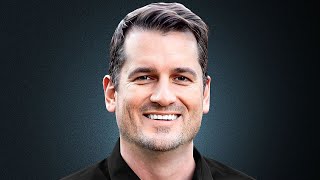
Andre Hagel Jr. interviews Travis Ziebro about building a tech agency after hating traditional work. Ziebro shares how he scaled Client Ascension and what he learned about marketing and business growth along the way.
Chapters
I was talking with one of my guys and I said, look, man, I'm just tired of being the guy. The guy to like, bring in the work. The guy to do the work. Let's find a better way of doing the different marketing techniques that frankly, in the industrial market and the market that I serve, people haven't really touched. Yeah, we do this, we do that, and then eventually you realize, like, we built an agency.
What's going on, guys? Andre Hagel Jr. Here from client Ascension, back with another student spotlight interview. And I'm here with my man Travis. How's it going, brother?
Thanks for having me.
And so, real quick for the audience, just to get us started, if you can tell us who you are and what you're currently working. Working on.
Yeah, sure. My name's Travis Ebro. I have what I call a tech agency. Launched it about seven years. Had its bumps and bruises, but really just a lot of clients off, word of mouth. And I was talking with one of my guys and I said, look, man, I'm just tired of being the guy. The guy to like, bring in the work, the guy to do the work. I said, hey, let's find a better way of doing this. Like, what's our marketing plan? He came back and was like, this is the marketing plan. You gotta check out Client Ascension. So joined up and, you know, been good times ever since.
I love that, man. So how did you hear about Client Ascension is through your business partner, essentially, or someone on your team.
Late at night, surfing through Twitter, I see this dude, like, cold email wizard. I sent it over to my guy Charles. We did a little bit of research and he came back and was like, you know what? Honestly, there is nothing really like it out there. I was like, okay, join Client Ascension.
Shortly thereafter, it's pretty cool because Daniel really did start like this cold email wave. And so that's a big reason why we've been able to capitalize is because we're really the originators of like, this way of doing marketing. And so is that the main thing for you guys that you're currently bottled up doing the marketing, the sales and the fulfillment? And it's like, these guys can probably give us some insights on how to get rid of the marketing fees.
Specifically, people in service businesses just enjoy helping out other folks. And so that's kind of where I've been. I worked a lot in the industrial market. Clients would come to me with a various problem. Sometimes it was around marketing, sometimes it was around infrastructure, software infrastructure. I started to develop a reputation like, hey, you know, go to Travis and he'll help you out with that problem, which is cool, but it's also highly not scalable. And so it wasn't just the marketing piece. It was is how do I scale this business in such a way that makes sense for my clients, that gives me and my family the life that I want as well. So that was an important consideration too.
Absolutely. And I think the community plays a big role in that. It's competitive. We put you in the team channel with your student success coach. And so what was that experience like for you coming into this culture that is definitely younger and maybe even a little immature compared to most business owners? Like, how did you slot in with that, and how did that have an effect on your results and just the overall experience?
I got to pick up some slang terms. The words are all slightly different, but it's the same conversation I had myself 20 years ago. So I will say this about anyone who goes through life is that I actually mentor a student at U of H in the entrepreneurship program. I've been a mentor to many others as well. So I think it's important, though, as you go through life to allow yourself to be a student as well. So sometimes you intentionally take a step back and say, like, what can I learn? And so being able to be in an environment and kind of dial things back and not be a mentor and just sit and listen and learn and hear from the different experiences that everyone was having. And I picked up a lot, too, as far as different marketing techniques that frankly, in the industrial market, in the market that I serve, people haven't really touched. So that was pretty interesting as well. The cold email you mentioned is one. But a lot of the outreach on LinkedIn and things of that nature were a little bit different. And so for me, I run what I call accidental agency. Like, I wouldn't even call it an agency. Up until about a year ago, I just said, like, yeah, we do this, we do that. And then eventually you realize, like, we've built an agency. So to actually get operational marketing staffing intel from people who knew they were building the agency and built it intentionally, that was tremendously helpful as well.
So maybe talk a little bit about, like, the struggles early on when you first joined the program. Like, what were those big bottlenecks that you were trying to solve for?
It was marketing slash fulfillment for myself. And the marketing piece was more me just pounding the pavement or sending DMs to my connections. We're very good at tactical marketing. We know how to work with Industrial companies to them more leads to get them in front of the right customers. But the strategic piece of it on like a higher level was something that I picked up a lot through client.
I love to hear that. And yeah, we talked a little bit through Slack. You shared how you were able to reduce your business complexity and make it a scalable business. And so for the audience out there, I know a lot of people are stuck in businesses that are just not scalable, whether it's because they don't have the team or the partners or the systems in place to scale. What were some things you did throughout the program that helped you to get to this new level of scalability?
It really helped me. Firm always been a philosophy, but I wouldn't have defined it as such. And that's like to run small experiments with low success rate. Like we would try out various different techniques on marketing or brand positioning or the way to say certain things. So getting that turnaround time a lot better. Client ascension, as you said earlier, it's filled with like a lot of guys in their 20s, frankly that have time to work 70 hours a week. I've got a family, so that's super important to me to be there for those guys. Just being able to have that kind of different perspective and kind of pushed a little bit in a different way was huge for me.
So maybe talk a little bit about the accountability structure, like how is that implemented and how'd that help you to get the most value? Because I feel like a lot of times with these programs you join and then you don't really feel like there's a spot for you in the community and so you kind of just check out and no one really comes back to grab you and pull you back in. What was the accountability structure like?
So that was huge. I had a personal coach, Chris, we'd get together once a month and he'd say like, okay, look, here's what we're doing now. How are we aligning our day to day actions to get to this goal? To me the important thing was the business that we built in. A lot of that was through these accountability meetings, through just thinking about things differently as opposed to grow enormously in the next year. So having the accountability and knowing that I'm checking in once a month with someone who cares deeply about my business and like there's a authenticity to the fact that not just my coach but everyone in the program celebrates each other's wins. You know, we got the WIN channel. It's also not in a boastful way Right. Like, people really trying to help folks that, hey, this is a new guy who's just trying to get his first few clients. That was huge. It was very positive environment, I'll say.
Yeah, I love to hear that. It's kind of the goal when you build any community, right. Is to keep it very friendly and supportive. In business, that's tough because ego comes into play. And when you see other people posting their wins, it can almost be discouraging that, like, you're not winning. And so you again, they just say, like, this isn't for me, but we just don't see that in the program. And I love what you said about Chris. Like, he genuinely cares. And like, when I'm going through the hiring process to bring coaches in, like, that's what I'm looking for is like, not really experience in business coaching, but more so just their care for students in the community. So I want to talk a little bit about now that you've gone through the program, I guess your favorite aspect, a certain coaching call, a specific channel, a competition. I know Chris already got a shout out, maybe another shout out. Like, what was your favorite part about it all?
Being able to talk over people that are going through very similar things as you are. Being an entrepreneur can, as many entrepreneurs say, is an isolating experience. And just having a community that's healthy, where people are encouraging each other and it's not, not just this pissing match. Right. Like genuinely wanting to support each other. So I really enjoyed just every week we would have a call, the group chat where it was office hours, Chris called it. And so we would just share stories of like, hey, here's what I'm dealing with in my business. How did you solve that? Right. No ego, just guys trying to help each other get a little bit better.
And that's what I love the WINS channel. It's not to boast like, hey, look at me, I'm winning. I look at a WINS channel as like, hey, look, I'm winning. So why can't you also win? Right? Look what's possible. I'm sitting there looking at people winning and seeing, you know, what's possible and being reminded, like, I could go harder and I can do more and there's just more growth, but that's to be had. One of the things that's unfortunate, but it's just the reality with anything in life is some people go through client ascension and they don't see the value. They don't get results. And they really just. Nothing happens in those six months because you're on the other side of that, where you went through the program and you did get value. What would you say to someone maybe halfway through the program, now they're just not seeing results or not getting value? Couple of things they should start to implement immediately, ideally, that you believe will help them to see the value and maximize their results while they're there.
More than anything, it's a mindset. If I tried to do what you're trying to do and run a coaching program, I probably wouldn't be successful at it. If you tried to do engineering, maybe not successful, Right. So I think that a lot of times people will unfortunately buy more into the outcome than the process. What I would say is just buy into the process. Someone who admittedly did not attend as many calls as a lot of the students. I don't want to be hypocritical here, but if you're not getting the results, it's not that there's anything wrong with you. It's simply another data point that, like, okay, I'm not getting the results. What can I do differently? For instance, you know, There's a whole LinkedIn section that I just barely scraped the surface because we decided to go more on the cold email. If you're halfway through the program not getting the results that you want, what I would encourage you is just to try to take a step back and think strategically. Like, hey, is my offer really aligned with, like, my personal desires and wants? Like, where I want to be in my life? Does this channel that I'm pushing the message through, is it really the right channel? These are tools, and the tools are only going to be good as the person wielding that. So that's my big advice, is that be cognizant. Am I using the right tool in the right spot?
Some wise words. Yeah. The way I described it at the event this past weekend is like, you have to become the person capable of achieving the results in the first place because the access to information is just one piece of it. Right? Like the tools. But if you're not the person capable of wielding and taking advantage of those tools and how they're used, it's not going to work for you. What is advice in general for someone that's just getting started with an agency?
Sometimes we can look at other people's successes and take the wrong conclusions from it. Like, oh, how is that guy 25 and he's making 100k, he's lying or whatever. So the important thing is don't worry about those conclusions. Worry about the market. So how can you satisfy the market, particularly when you're starting out? Your offer is important, but you know what's the most important thing is to make money. You don't exactly know how the market's going to respond to your offer. So how about you just go out there and try to get work and try to stay alive and then continue to build the systems as you do. And I can just say that as someone who took a business effectively for many years, I would do whatever work I could get my hands on and then over time, started to really solidify that offer. That's my number one piece of advice, anyone starting an agency is just do whatever you can do to stay alive with people that you trust, clients that you work with, and then continue to implement some of the things that client ascension says.
What I also love is the perspective of, like, turn to your audience or turn to your market and see, like, how you can best serve them. That should be what leads everything. And if you serve your market well, like, you will also be paid well. And if you're paid well, you're able to pay others well. And that's really, like, the larger goal of what we're doing is not just creating cash flow, but using that cash flow for good. The last thing I want to hit on you mentioned in the message before we hopped on just in Slack, like, the breakdown comparing client ascension to like, mechanical engineering degrees and your mba. So my bigger vision with client ascension is to be like the gold standard standard of online education. How you came up with that breakdown, like, what was the perspective of, like, all right, you've been through client ascension. How is that different than going to get a mechanical engineering degree or even a business mba?
I just mentally, I was thinking about what's my ROI on client ascension. So I looked at like getting an engineering degree and mba and depending on how you slice or dice it, either one of those decisions, so mechanical engineer by undergrad and then got my mba and there's a good, healthy payback period. Probably around anywhere from two years to four years. Right. Somewhere in that neighborhood. The client ascension was just a dramatic, like, not just return on investment, but just also, like practicality. Like, it's immediate. You can implement these things. There's a lot of wisdom in the client ascension group. I'm in my 40s, so guys like kind of my age will sometimes dismiss the younger crew. And it's like, no, there's a lot of great hard workers out there and there's a lot that can be learned from guys like you. And your team. And if you're either an agency owner or an independent freelancer looking to take it to the next level, I don't really see why you would do anything other than client ascension.
Frankly, that's the first time I've heard it phrased that way, and I feel like someone finally, truly gets me. Where can our audience find you and follow you and learn more about working with you and your agency?
Google my name Travis Z I E B R O. You'll find me. Connect with me on LinkedIn in particular. I'm active there. Reach out. Love to hear from you. Wherever you're at in your journey, appreciate.
You spending the time sharing value and keep crushing.










