How Dillon Made a $42k/mo Lead Generation Marketing Agency in 5 Months (Client Ascension Case Study)
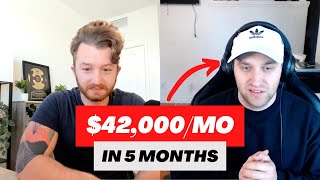
Dylan scaled an email lead-generation agency to $42k/month in five months by working with 14-15 financial services clients. He credits Client Ascension training, a Trello system, and a VA for handling operations. He targets companies with $1M+ revenue and charges either low or premium prices, avoiding the middle.
Questions this video answers
January 12, 2023.
About five months.
About $40–42k per month.
About 14–15 clients.
Prefer companies with 10+ employees; sometimes filter for $1M+ revenue; avoid selling done-for-you services to companies with under $500,000/year profit or under ~$20,000/month profit.
Chapters
Yo, what's up, everybody? I got Dylan Andrews here. Dylan is a very good friend of mine now, and brother, could you. Could you just introduce yourself, let everybody know what you do?
Yeah, so I run an agency. Well, I started an agency five months ago now from. From zero to here five months later. And we help, like, financial professionals, anything in the financial space, basically, you know, generate leads through email. And that's. That's it. That's all we do every single day. We do it for ourselves and then we do it for them. So that's it.
Yeah. And like, we, We. We've been friends on Twitter for a while, and normally in client ascension, we don't. We.
We.
We don't work with people who are at $0 per month primarily because they can't fulfill the service. There's no, there's no, like, proven track record that they have and that. That's why, like, you have to be able to deliver the service. But you. You were kind of.
Yeah, I guess I should have mentioned, like, we. We did. I've been around since Cold Email Mastery. And I was previously, I was running emails for people just kind of as a. As a hobby and some side money. I was working on other things at the time that I sold a company last year. And then it was like, there's nothing to do, and I was slowly going broke. So this is the quickest way to make money. Yeah.
And it was. I. I guess your foray into client ascension was kind of. It was kind of like a decision like. All right, let me just run something back up. So it was like five months ago, and you basically took it from zero to like, what is it, like 32k a month or something like that.
Yeah. So we just hit 15. So like, we're like scraping. Scraping in between 40 and 50 right now, seeing who's all. Who we can all. How does. If we can sustain them. The machine right now, it's going pretty well, and I'll. I guess I could dive into that too. But yeah, right now we're at about 40, 42.
I think that's with 15 clients.
For 14 times three. Whatever. Whatever that gives you 42. I'm trying to. I try not to get too obsessed with it.
Right.
We just try and run. It's not enough, basically.
I thought. I thought you were at 30k month. I didn't know you're at 40.
That's pretty. So, yeah, by the time last time we spoke, right, We. We kind of lost. Like, I was like, Like, I made you delete. We did this interview before I made him delete it because I was just kind of like, I was depressed about fulfillment. And that's kind of the stages of, of the whole thing, right, is that I joined Client Ascension and then it was like it ironed out all the nuances I needed to just rip. And that's what we did. We just ripped. And then we ripped. And I was like, God, this is. This is brutal. Like, what. What do we do with all the people that signed up? You know? And then, and then, yeah, I was just kind of like, dude, this is a monster. And then it. I told you I was doing some other shit. And this one of the clients got us chilling his offer and just distractions, you know. And then I kind of rebased. And three weeks later I'm like, well, it worked. Like, and why would, why would we not just do more of that? And you're like, just ask for some. I just work really hand in hand with Andre to fill out the fulfillment piece. So we went from like 10 clients and then we lost like five of them pretty much. And we just kind of hovered at that five for a while till we just rebased a little bit. I built a trello board with Andre that just kind of streamlined the whole thing. Got a VA and now we just went from 5 to. To 15, like super quickly with no, no issues, you know?
Yeah, that it's. Yeah, you went through that period. I always say this. It always happens that, like, it's anywhere from like 10 to 20k a month. You start to like, it's. It's like an absolutely absurd amount of work if you're the only person in the business. So you, you went through that and had to like actually make a system behind it. Yeah. Andre's.
I have one partner too. Yeah. Yeah, one partner too. And he does like, he's like the, he does the sales and more of the client facing stuff and then we kind of just scrap on all the back end stuff. But yeah, even between the two of us, so we got like. Because we don't let our clients do their own replies or anything, so we got an inbox manager and all just kind of. It really wasn't that big of a deal, you know, Just had to talk to someone who is, who's doing it. You know, when I talked to you last, I wanted to burn the whole thing and I was sort of on, on track to do so, but I'm thinking like, Andre don't seem that stressed out, you know, so just really, really helpful. And I, I Went through both phases. Right. It was like the no client phase, which there were things in ascension that help do that, obviously quick. And then a personal depression phase. And then. Okay, let's grow a dick here and figure this out. Because obviously, obviously people are doing it. Right.
The, the personal depression phase. Yeah. I mean, if you, if you say.
Not to pass, but I'm like, fucking torch it, man. I'll go work at Costco. This is Obs third. Yeah.
So like Knowledge X, I think has, I don't know, like 80 something clients. And I think Nick's has also 80 something. Something along those lines. And then client ascension is like 207 or something like that.
Nuts. You can't do that without a system.
Yeah, you can't. It's impossible. You, everyone, there's like, there's this concept of like, it's, it's cool if you want to sit here and make like 10, 15k a month. And like, you could probably do it alone, maybe like one va just to reclaim some time. But it's like if you're trying to get to 30, 40, 50, 100, it's like, it's just a completely different game. It's, it's so astronomically different than like 10, 20. And now we're starting to get into the phase of like, well, you get to like 400k a month and like you're approaching like very multiple million dollar business. And it's, it's like way, way different because like I've, I remember reading so many business books about this where it's like, as the organization expands, like the complexity of. Because there's so many different people to talk to and like relay information to, to the point now where like, if I want to change something in the business, I have to like make a, like a VSL to like sell people on the idea and like map out like you want to change something. It has to like, because like there's people on the page and like in the sales process already. And it just has to like at one shot just go. Everyone knows exactly what's gonna happen like right when you do it. And it's like 21 people to convey this message to. It's like super, super complex. So it's like, it's a pain in the ass. But yeah.
Go, go ahead.
It's. It's relatively simple up to about like 100k a month. So it's a kind of what, what you build to get past like 20, 25 is like pretty sufficient to keep you up to about a hundred.
Yeah. And then there's like, like we were talking about that. That 2030 zone is like a slippery slope where you're either going to go back to 6k a month or you're gonna rip to, you know, 100k. And that's just how you implement and develop I think your systems is how that goes. Right. And I think that it was just a huge help. Like, I'm like, why not? Like, it's here, I paid for it. Why not just ask the guy who's, who's doing it? He's like, oh, don't trip, man. And we, we built out a trello board and it's just really not. It's like we, we wake up and it's like one thing we started telling ourselves is it's just email. Like, people, people are gonna leave, people are gonna sign up. You're gonna crush for some people. Some people be suboptimal, but at the end of the day, you're just, you're just sending emails. Like, not the, you know, humanity's not right. It's not the craziest thing in the world. My creation. Yeah.
This is kind of what we were talking about earlier. I think we were talking about this. So there's kind of like two paths forward that you can take an agency, and one is that you really just productize it. Kind of like Andre and Nick have done. And it's like everything is ultra systematized, like mega systematized. And what inevitably happens, you just have some clients trust because there's just so many. Right. That that just happens. Or it's you kind of take on like a growth partner role where it's like, all right, well, we're getting you all these leads and like, you need to build out a sales team. So, like, how about I go recruit the sales team and like train the sales team? And then it's like putting more like SDRs in the business. And that would obviously come with like some form of profit share and probably some like, high retainer amount. So there's really two ways you can take it. Yeah, it's kind of, it's. Everyone kind of has a preference of it because you can only. You can only take somebody. You can only go that growth partner route if you find someone who are just very, very good their business. And this is a huge misconception with a lot of people is that they think like a business exists and it's just good, but they don't realize that actually 95% of people, like probably 98% of people don't make money in their business. Like these prospects. You're cold emailing. Like, they don't make money. Like, most people have a garbage business.
Like 90 of people. And it's just like on the Internet, there's no, I mean, there's really no check and balance, right? You put in LinkedIn, like, I want companies making $5 million. And you're talking to Fred, who tells you he has no clients, but he helped his uncle once. Well, that work is a case study. You know, I'm like, jesus, what is this absurd? Like, we, we went through a phase where we were talking to like, funded companies, like we knew got funding. And it's almost worse at that level. Like, some of these guys have made no dollars and they are on no mission to make money either. So it's kind of, it's kind of ironic. It's like they get, you know, $30 million and their goal is to, like, build out a team. I'm like, well, what have you sold? And they're like, well, we're still working on the beta. We got six dudes. Like, what? So, yeah, it's going to your point. Weird. It's so weird, that VC world.
It's like we build businesses to profit and use the profit to live our lives and survive, and if it doesn't work, you just, the business just ceases to exist. That's it. It's like literally eat, kill.
And then.
You'Ve got these VC dudes who like somehow raise like 30 mil and they don't even have a product. It's like, what are you doing, dude?
It blew us away, dude. He's like, well, I think we'll be ready to sell in March. What do you mean ready to. You haven't just confirmed you have sold nothing up until this point. I talked to six people to get to this phone call here. Right? Like, you talked to his dad, desk girl, his assistant, his, his partner, and now you're talking to him and there's never been. The only revenue made in that business was the, you know, on April 20th when they got the hundred million. And it's, it's crazy. But yeah, you go on with that topic. But I guess it just validates your point that you start running emails and. Yeah, that's the problem is that they, you realize, like, they can't sell. They've never sold. They've never sold anything. And it's, it's. Yeah. And then I can see how people be like, well, we'll help you do this and this. And now they're I've been seeing recently that the, the growth partner thing is kind of blowing up. But it, it's one of those things that sounds sexier to tweet about, I think, than the, the reality of it, in my opinion. Like you said, I just, you know, different, different folks, different strokes. But there are definitely, you know, pitfalls for that too, because who really holds the cards there too? I did it, I think. I think because one of my very first clients a long time ago is I got just a high tape. They pay me, they pay me like eight grand a month, right? And if they wake up one day and say, your services are no longer needed here, your services are no longer needed there. There's, you know, you're not on that. You weren't at the incorporation date, you know, so you're, you're just the marketer, no matter what you call yourself.
Dude. I was, um, I find this really interesting because I've been like, I mean, we're, we've kind of, we kind of originated from Twitter where I feel like people on Twitter, they're more sophisticated in their knowledge than like, I guess, like the SSMMA guys on YouTube. And I was sitting down with Scott and I was like, dude, let's just like, watch some SMMA guru videos and not like the big guys, like, like little guys, like smaller guys. Like, maybe they're like, maybe they haven't hit 10k a month or something like that. I just want to see what like.
All of them say. All of them.
So, but like, I'll give you, I'll get, I'll. I'll tell you what's, what happens with them is that like they, they, they talk about like, yeah, the client churned and like, I can't get the, the, the, the client's results. Or like, and what is actually, this is the guru.
This is the guru saying this.
Well, it's, I wouldn't say guru. It's just people sharing their story. They, they have good intentions, obviously, and they, yeah, they probably actually are capable of delivering the service. But what, what, what has actually happened is that they've sold their service to extremely low ticket, low quality businesses who just like, I'll give you like the, like the local nail salon or something like that. And maybe they, they spin up like a go high level CRM for them and do Facebook ads for them. And then what happens is like, all right, yeah, we're going to like, get these people to come into your business or like, we're gonna like, set the appointments and like, they, the, the Client won't follow up. And like, the client has no functional understanding of running a sales process in any capacity. And a lot of these SMMA dudes, they're probably sitting here, they're thinking like, dude, I'm selling these clients. None of it works. And it's like, it's actually not true. It's just that you signed on very low quality businesses. Because what happens is when you're, when you're a beginner or like you've been in business for like less than a year, you, you, you kind of operate on the scarcity mentality where it's like, if I can get any appointment, I'm gonna take the appointment, try to sell everyone, which actually isn't what you're supposed to do. You should be rejecting like 8 out of 10 people you get on the phone with because they just aren't a good quality business. Like we were just talking about this, like 90% of companies actually suck. Like they aren't good, they don't make money.
Yeah.
And it's, it's also the problem in, in selling to like locally based businesses. I think a lot of these guys, they overestimate how much money these businesses actually make. Like, like your local restaurant might legit make like 3,000, $4,000 a month in profit. Like maybe less.
Yeah, probably negative, to be honest. You know, it's, it's crazy probably. And I think that, I think the confusion, right, is it like you were saying earlier, people think businesses just are good because they're like a business and it's not like a freelancer on, it's not someone on upwork. Right. It's, they got a building. But I mean, walk into a nail salon and ask for the owner, say you want to discuss business with them. And I think in, you know, in 10 minutes you're gonna ask yourself, is this the guy I wanna, I wanna run, run the numbers with? And yeah, I think if people actually went into the business and was like, is the owner here? And realize it's like Billy's dad from high school, like, I think you would, they would stop doing that quick. But to your point, it's, yeah, that just like most people aren't making money and, and filtering out, it probably really deters people on the, you know, the agency come up.
If this is, if there's anybody watching who kind of falls within that category of maybe like you've done work for some clients and like you couldn't get them results or maybe you had to refund them or they said none of this Works. You should basically never sell a done for you service to any company that makes less than $500,000 per year profit. Like they like don't even try to sell any kind of done for you service to anybody that's making less than like 20 grand a month in profit. It's too hard to make it work, right? Like your, your pricing is a filtering mechanism in and of itself. Right. Like you can't be charging like if you're running like a, like an agency like you, you, you, you run a sales process for somebody's business. Like the thing that they sell has to be expensive. And it's also the case where it's like you see a lot of like E Com guys where it's like, like Colin, I just did an interview with him, 100k a month Google Ads agency. Like well who does Colin work with? E Comm brands. But they have to have a certain aov. Like their average order value has to be like above $200. So if you, if you're trying to work with some local client and like every customer they get only spends like $20. It's so impossible to make a lot of money from, from them because they don't make a lot of money. But if some, if you come, some dude and you're sending cold emails from some guy who's selling some like $8,000 product so you can charge, you can make like a, like a thousand to two thousand dollars for every customer acquisition. It's, you can't work with tiny business. You have to stop doing that. It's too hard.
Yeah, like, like how many cheeseburgers do you gotta sell to make up the dudes, you know, four thousand dollar retainer, you know, like you sold more cheeseburgers ever and he's still negative because he pays you. That's all he thinks, you know. But of course, like, of course, right? Like for example we run one offer, it's just complete, complete dog blown out offer with just. And we have too many of them. And I'll say this volume fixes it. So if you're out there like stop you have some, some crap offer and just like no results. Like you know, stop thinking about a first line. Just, just spray and pray on as many and tell them exactly what you're selling. Like hey, I'm reaching out because I do this and do you want to get on a call and to as many. Anything with a beating heart. That's how you fix a bad offer or at least you know, stop the bleeding. But yeah, for example though that, that crap offer, like they close one deal and it pays for us for half the year at least. So even in that case, right. It's just a risk to reward thing that's well in their favor even if they're not getting the volume. Other. Other offers would.
What kind of, what kind of qualification or like filtering are you doing for people that you're getting on the phone with right now? Like, how are you kind of running that? Like disqualifying people?
We set, like, we go for like we just scrap everyone under 10 employees. Sometimes we'll use like the filter like a million, a million plus for the company. But some, when you run like a ton of emails sometimes just because, like, sometimes people don't fill that out when they're doing their building their LinkedIn or their whatever profile that these databases pull from, they don't fill that out. So it will open that up if we need more leads in that space. But yeah, like pretty much close to what you mentioned. I figured if someone's paying 10 plus people, you know, they, they're making some kind of money. Unless vc, private equity, they're paying a hundred people making no money, but for the most part. Yeah, yeah, 50, you know, the 20 to, you know, 200 people zone. And then a lot of, A lot of solopreneurs actually like just kind of crush like the lean guy. The lean like consultant guy. So sometimes we'll just completely eradicate filters, but we get very specific for what they do. Right. So, so we kind of know like if he's doing this even with kind of successfully, like he's, he's making money at least more than most.
Yeah, I, I remember getting on a call with Nick Palazz, who's also in client ascension, like way, way, way back when he started. And he was, he was telling me, he's like, yeah, so let's, I can't, like, I'm, I'm not closing any of these calls. I don't think I'm good at sales. Like, none of these guys are closing. I was like, well, well, let me see, let me see your list. Like, what are you doing? He's like, show me what he's, what he's doing. He's going in and he's selecting sub 10 employees. And I'm like, no, no, no, no, no, no, no, no. It's not that you're bad at sales. It's that you're talking to only poor people. They don't have money. So I was like, scrap this list. Turn these campaigns off. All only do 10 plus employees. And then like in like three weeks, he comes back to me, he's like, dude, this is crazy. Like, I'm closing people now. And I'm like, yeah, because they have money.
Yeah, yeah, you no matter what. Right? Like, and you'll notice when you're on the call with them, it's like they're at. If they have money, they're actually on the call because they're actually trying to solve a problem right there. They want more business to make more money. They're trying to solve a problem. Not like, not, you know, Susan, Susan's dry cleaner. Who's like, this is the guy, honey, who's gonna save our company. You know, he's gonna save our.
Exactly.
Dry cleaner. And then in one month, when you don't, when you don't, you know, turn Kia Dry cleaning company. And they're like, well, that's it, that's it. We're closing shop. We can't afford to. And we're, we're not gonna make it.
That's exactly the phrasing that, like this, this guy will save my business. You can't work with people like that. You cannot do that because every dollar for them is so, so, so important. Where it's like, as you get to larger and larger companies, as it start, it kind of happens when they get to like 3 mil a year, 3 to 5 mil a year, they start to dissociate the company money from their personal money. Because it's like they, they've, at this point, they've been in business for like you get 10 employees, you've probably been in business for like two or three years at this point, like the company works. They've been taking dividends from it and get a salary from it. And they've stacked up money and they have like a personal net worth, right? So minus five grand per month to execute something is extremely inconsequential. Say they're profiting like 150 grand, 200 grand a month or something like that. And it's like five grand doesn't matter. Even if, like, like if they would pay you five to make like ten, they, they'd pay you five grand. Say they sell a high ticket product, they pay you five grand for like 10 qualified calls. Like actually like 500 a call. Like that makes sense. It just does.
Yeah. I was talking to one lady and she, she's running some company, you know, 900 bucks a call, right? Because one deal is worth 30k plus to them. So. But yeah, definitely, definitely the Phrasing like, of. You just want. We've noticed too. Like, we have. We have a couple clients. They pay. They pay more. And you hear from them the least. Sometimes it's like you kind of tell them something just to like, give them an update. And it's almost like you're bothering them, right? So it's like they care way less about. You're not. You're not a huge. You know, you're not. You're not. What's stopping their kids from going to private school because they pay you three grand a month. You know, this is.
I've. I've kind of. I've kind of talked about this before in, In. In. In many different regards of. I feel like there's. There's only two ways to make a lot of money. There's only two. It's either you are the cheapest or you are the most expensive. It's one of those two. You can't be like an average price.
Like, say you.
Let's say like it's a course or something like that. It's like, you can't. Don't sit here and charge like $300 for your course. Charge either like $30 or like 6,000. Like, pick.
Yeah.
And that's. That's how you do it. That's the only way it's. Or. Or like, let's take. Let's take like a Premier Steakhouse versus McDonald's all. There's no. Like, you don't see. Or like a Chipotle, it's super cheap or something like. You know what I mean? Like, it's either, yeah, cheap or it's really expensive. There's. Yeah, the middle ground, it's just. It's just dumb. There's no, like, efficiency in it.
And no one's running to get over to average steakhouse where we charge average prices for kind of all right. Meats, right? It's like, dude, I got. I got. I gotta scrap down this egg McMuffin, which is like, you have some weird nostalgic. It tastes great, you know, no matter what. Or I'm going to get the best steak in the state wherever I can find it, because I'm splurging. But you're not like, you know what? You know, babe, you know, it sounds great. Is a mediocre steak for co of too much money. That's like the worst. You're. You're furious when you leave. Even if you're a billionaire, you're upset that you paid a lot for something. Like, just gross, right?
It. Well, it makes, it makes a lot of sense if you think about like the socioeconomic distribution of like the entire population. Right? It's, it's. The middle class is very small, so you can't charge middle class prices. Most people don't have any money, and then people who have money have all of the money. So it's either you charge very, very little or you charge a lot. And only people with all of the money can afford it. And that's. So it's like an inverted normal distribution where it's like the, the, the, like the, like the amount of money dispersed per person or the amount of buying power per person. It's, it's, it's just on the ends. Was it people with no money and people with all of the money? And that's, that's how it works. So you have to charge on either.
End and the people with all the money pay the people in the middle and then the government pays these people. So the broke people get money from the government and the middle class hopefully get it from the people with all the money. And if not, they end up here and scoring from the government too. But yeah, it's super interesting.
Yeah, so I, I've been, I've, I've sold to both of those ends. So like a lot of you guys, like, like, if you're, if, if you're duty, like you're getting started with like a, like a, like an agency or just like selling any kind of product online, like, you're probably, you're probably like really scared about the concept of, of charging a lot of money because you've never done that before. And like, if you say the price like $10,000, that's a ton of money to you. So your conception of it is warped. You think no one has $10,000, but there are people that exist that just have like a million dollars liquid sitting in their bank account. And those guys exist and they make like 200 to a million dollars per month. Like just all of the time. Like average state of existence.
Yeah. For years now.
Yeah. Like for a long time we sold.
A company like I mentioned. It was like, it blew me away because I'm like, oh, this is a website, right? Like, I just threw some random price on it times whatever it was doing, times whatever I'm like 200 grand. That sounds like a lot. And then the amount of people going to the, to the interview call or to your like, what to meet you, right. To buy it. I was like, there's this many people just like sitting on 200 grand. Like, it was, it was, it was a huge eye opener. Right?
It's. I, I, I used to, like, my first agency was an Instagram growth agency, And I charged $97 a month. And I had like 97 and 147. And I think at the peak, I had like, I had like 88 clients or something like that. It was 80. 88 or 90 clients or something like that.
You weren't doing this under the I come up guys, were you?
What's that?
Were you doing this under the I come up team, like Cody Kearns and all those dudes out in Florida? You know those guys?
No.
Oh, yeah. Maybe you're too young. I did the exact same thing.
I saw some dudes. It was follow unfollow. This is way back on the work. This is like 2018.
I did it. I was doing it. I was doing it the exact same time as you selling it. Yeah, it worked.
It ripped it. Yeah, it worked. And like, people stayed for a long time, but it was that price point. So I probably could have sold it for like a thousand or two thousand a month, but it'd be a different kind of prospect. Yeah, but I was, I was just working with fitness coaches and, like, it was, it was cheap enough and they would get like 500,000 followers a month. They're like, wow, this is crazy. And it was great. And they really liked that and they stayed a long time. So that was, it was very perfectly priced right there and then, like, I've sold, I've sold courses for $30. I sold courses for $500. I've sold groups for $36 a month. Groups for $46 a month. I've sold $10,000 packages and I've sold, I've sold $5,000 per month packages for, like, done for you services. Right. I've, I've sold all of the stuff. Yeah, it is the easiest to make money when you sell the expensive stuff. Just indisputably, it is the most logistically less intensive thing than working with hundreds of people at a low price point. And the people who pay the most money always happen to get the best results somehow. They're always the happiest. They complain the least through the least amount of work. They spend the most money. They stay the longest, they have the highest ltv, they close higher. It's just, it really is just the best thing. Don't sell stuff. Like if you're an agency or you're like a coaching program, don't sell stuff to people who make less than $20,000 a month. It's too hard. It's logistically hard. It's, it's, it's emotionally distressingly hard because they just can't seem to get results ever. You're always going to be stressed, just charge a lot of money. It's so much, it's completely life changing aspect of business. It really is. It's so much better.
And the results, they'll never be happy. Right. Because they're like, it's, it's not enough. Because even if you're doing all right to them, it's like, oh my God, I'm still, I can't believe I'm paying him this much. And like the ten thousand dollar guys like dude things, it's just, you're a lot better than the last guy. Thanks Daniel. You know?
Yeah. And it's, they have, they have realistic expectations too. So like I'll give you a for instance. So you like did a little ROI calculator with a client and like what if, if they're paying you like $1,000, they want to make like minimum 10,000, $15,000 back. Like that's how they're operating. They need, they need you to save their business. And they need like a 10x15x guy who makes a million to 5 million a year. He pays you 10k. He's really cool with getting 20. Like he's, he's all right with that. He's like, oh, two times return of money.
That's great. Yeah. Usually he's shocked if you make him five realistically, but you come back with 20, he's ecstatic. Right. Because like the previous 13.










