How Dylan books 60 meetings a month with cold email and cold calling
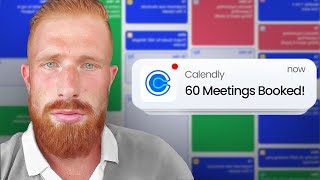
Dylan Rich combines cold calling and cold email to book 60 meetings a month. He calls high-value leads 7-10 times over two weeks, sends the first email and call the same day, and tracks connect rates around 7-15%. He's closed over $22M in sales using this approach.
Questions this video answers
40–60 meetings
15–20 meetings
Over $22 million in sales
7–10 calls
7–15%
Chapters
We actually have a team of cold callers. Internally, we book 40 to 60 meetings a month of cold calls on top of probably 15 to 20 from cold email.
What's going on, guys? Andre here from Liskit, and I'm pumped for today's interview. We're here with the SDR whisperer, Dylan Rich himself. What's up, brother?
How's it going, dude? Good to see you, dude.
Tell us what SDR whisperer stands for, because I think it goes in nicely to what we're about to talk about today.
Uh, so an SDR is a sales development representative. It's a fancy name for an appointment setter. So essentially, my business model is we train people to do cold calling and outbound sales, and then we also have a recruiting arm to our business where businesses come to us to hire our trained cold callers, cold emailers, sales reps.
I love it, bro. So you do a mix of cold email and cold call, which is essentially what we're going to be talking about today. So just for context, our audience, for the most part, they're using Liskit. They love it. But as you know, any marketer or salesperson that is good, they're striving for more. And I think today, if you listen intently and you actually implement some of the things Dylan is going to tell us about, you'll be able to see a major boost in your outbound campaigns by implementing cold call along with the cold email you're probably already doing. And the great part about all this is you can use list kit to find both your cold email and your cold call data, which Dylan will point out is so important to get good data for doing cold calling especially. And as we know, cold email. So let's just go back to the start. Dylan, actually, before we go into your story, let's get these guys excited about potential results. Right. For example, what are some results that you're seeing with either yourself because you run a business or multiple businesses and even the clients, since you're helping these guys to do cold calling. Like, what are some typical results you see or your clients see from cold calling?
Yeah, so we use cold email and cold calling. I treat them as similar but different client acquisition channels. One is more one to many. Obviously, cold calling is one to one. So cold calling gets us better results from, like, a total activity. Right. If we do 500 cold calls and 500 emails, the 500 cold calls are going to get us much better results. We're also seeing that our cold call meetings show up at a higher percentage and close at a higher percentage as well. So we actually have a team of cold callers internally. We book 40 to 60 meetings a month of cold calls on top of probably 15 to 20 from cold email. So more results, better show rates, more revenue. Absolutely.
Wow. Dude. So yeah, picture this right? If the audience is listening in and they're in that same similar range that you're in with cold email, getting 15 to 20 calls booked per month. Just by implementing the same level of activity with cold calling, you're going to see 40 to 60 calls booked from cold calling. That's like a 4 to 5x boost in results by just doing one additional activity or touch point, which I guess me super excited because it's available to these guys. Not just the data and the tools out there to do it, but also the strategy which you're going to help us unpack a little bit more today. But let's just go back to your story because I always find it interesting as to how people get into cold calling. It was actually my first real job was cold calling at a call center and that eventually led me into cold email and I, I realized the value of cold calling. So we always stayed doing cold calling alongside our cold emails and it always put us ahead of the curve. But how did you come across cold calling initially?
Yeah, so I started my career in door to door. So I did door to door. I sold copiers like Xerox and Conica Minolta. Don't do that if you're watching this video and take anything from it. Don't do, don't do door knocking for that industry. But I started in door to door. I did car sales. So I was very much a face to face salesperson. So like how you dress, your hair, your handshake, your demeanor all contributed a lot. My next sales job was an inside sales job in Manhattan at a startup company. And it was like a boiler room. 200, 250 dials a day. We didn't have all the cool technology like Liskit or HubSpot or go high level or none of that. It was like man dialing 200 to 250. There was like 15 people in a room no bigger than where I'm at right now yelling over each other doing cold calls. So I've been doing cold calls for like eight, nine years. I still do cold calls. Once you are good at cold calling, it translates into all areas of your business as well as like I talk a lot about how cold calling can help you in your personal life as well. Like if you can do cold calling, you can go date and get girls numbers. You can, it translates into relationships and confidence. There's so much that you can get from cold calling. But cold calling has been where I've made most of my money. I've closed over 22 million in sales. And all that has pretty much come.
From the phone, just by picking up the phone. I love it, bro. And I guess at what moment in time after learning or coming across cold calling, did you realize that this is like a valuable skillset that I need to go all in on? Was there like a certain memory that comes to mind or a result that was generated?
I think my first like commission check from cold calling. Because with door to door and in first in sales, it's not a high volume game, right? You can only go to so many doors or talk to so many human beings in person, right? Where cold calling allows you to just have way more conversations, which in sales it's all activity, right? The more people you speak with, the more opportunities you have to close them, the more opportunity you have to make money, right? So I was like, oh crap. When we got my got my first commission check, I was like, this actually works. And I was terrible at cold calling when I first started. Like, I was terrified of picking up the phones. My boss mentor, he gave me how to Win Friends and influence People by Dale Carnegie, gave me that book when I was really struggling. And I actually like read the book and understood it's a great book. If you haven't read it and just understanding that like human connection is really all that matters. And your tonality in cold calling is so important. It's not what you say, it's how you say it. And once I got that confidence on the phones and I can just have conversations as if it's like it's two friends. Like my buddy in college is having a conversation with a human being. It became so simple. And you have such a better high like efficiency rate with cold calling. Because if you send someone a cold email, they're reading it in their own tonality, in the mood that they're in, right? Like think about if I just got a flat tire, I'm on the side of the road waiting for AAA and someone cold emails me. I'm reading that cold email angrily. Like I'm not like excited about how you read it, right? So no matter how good you are copywriting, Christian, if you're watching this, sorry, but like copywriting is great. But at the end of the day when you send a cold email, that person's reading it with their level of understanding about what you do as well as you can't overcome any questions that they might have. Right. I could read your cold email and be like, I don't really understand this delete. In a cold call, it's a live environment, so you can overcome way more objections. You can get way more granular into what you do, how you do it, and why is it important, and you can actually have a fluid conversation. You create a personal attachment to the business.
Right?
Because it's not automated revenue, it's Dylan at automated revenue. Right. There's a human involved with cold email. Everyone knows that. It could just be you're a sequence of 10,000 people and you just so happen to match a criteria in a technology data provider. And it's not personal. Right. Cold calling is personal. You create a personal connection. You can overcome more. That's why you get more effectiveness and efficiency with cold call.
Love that. Yeah, it's super helpful perspective because again, I think for the most part, our audience and even myself included, we're mostly used to doing cold email. And you're kind of describing like, that sequence of different tactics you could use. Like door knocking is super low volume. Then cold calling is higher volume, and then cold email is like highest volume. Right? And so from what we've seen, and. And I'm sure you'd agree with this, but the best sales people don't use the word or they use the word and meaning. They do both cold calling and cold emailing and figure out a sequence in which they. They can leverage the best of both. Right. And so that's what I want to kind of get into next, because I know you're a cold emailer as well. And so how do you parlay those two touch points together? What have you found to be most effective there?
I mean, using them, like you said, additively, Right? And the way I look at cold email, if you're doing like sequences of cold email, it's high effort in the beginning to set up the campaigns, pull the leads, write the copy. But after you hit go, what are you doing all day? Are you just waiting for cold email responses like you have to. What are you doing in that free time? You can be cold calling the same people that you're cold emailing. Because if you think about how people actually operate, right? Take my dad, for example. My dad, if you looked at his phone, he probably has that red bubble on his Gmail and it's like 3,000 unread emails, right? You could send the Most fire cold email to my dad and he won't even know that he got it or read it. But if you call my dad, he's an old school guy, he's going to pick up on the first or second dial every time. So, like, understanding that some people will just never, ever open your cold email or never respond to it, you can still get that person on the phone. So understanding that both work, but a combination of both creates more exposure for you to actually book more calls.
Bro, that's so good. What she said about like. All right, you launch your cold email campaigns now what? And what are you doing?
Just waiting?
Yeah, well, I've seen people fall into the trap of like, just getting impatient with the results because they have nothing else to do. So, like, all they're doing all day is like looking at the cold email campaign stats and like overanalyzing whether or not it's working, which typically leads to making like rash decisions or changes before they even give the campaign a chance to perform. And instead of doing that, like you said, they could pick up the phone and actually call those same leads and increase the chance or the likelihood that they're converting a higher percentage of the list that they just paid money for. And so it's really cool to hear, like your perspective on it. And we've seen like a big change in the industry. Right. Like when we were doing cold email three years ago, you could get away with sending like 100 cold emails a day and convert probably like 3 to 4% to a call book, which was super high. Now it's like.01%, 0.2%. Right. If you're running a good campaign, then it got to the point where everyone started to learn about how cold email works. They started doing cold email, they got the skill set, developed their courses like what we put out, and then cold email got competitive. Right. And so what do you do when cold email gets competitive? Well, the most obvious thing initially was to ramp volume, right. Like you said in the beginning, sales is a numbers game. It's all volume. So you just scale volume. So now you're just sending more cold emails than your competitors and you're likely to get more results. But that can only go to a certain extent, right, because there's the bottom, there's one erase at the bottom. And there's such a thing as a target market. Right. A target market usually is not infinite. You have a certain number of leads or people in the world or in your market that are actually a fit and are interested in what you're selling. And so if you're just going through that list as faster, faster than ever else, like it might seem like you're winning in the short term, but it's not a long term sustainable strategy. And so now it leads us into like what do you do? Well, it's just adding more touch points. If you send emails to a list of 10,000 people, rather than trying to find a new list of 10,000, why not go back through that list and call all those 10,000 people to your point? And so it shows like expertise.
Like anyone from anywhere can set up a cold email campaign. They could go to your free school and go through the course programs and do cold email, right? So when you actually call someone of high value, I can guarantee that they've started in sales, right? Most high earnings individuals, high performers in the business world started in sales, right? Or always in sales, right? When you call them, you create alignment of like okay, this guy's got the shops, right? Like he knows he actually has the balls. The cold call as well. As you said like you had to stand out, right? It's business is ever evolving and there's going to be new things and new challenges and new constraints. Like everyone's doing cold email. My inbox gets destroyed with bad cold emails, right? I'm like sensitized to it at this point. When I get a cold email or if I see quick question I'm like delete. Like it's just like people are starting to get immune to it and it's so easy to say no to. It's a swipe of my thumb and you're just gone with cold calling. You're actually going to stand out now from your competitors because most people don't have the balls to pick up the phone and call people and actually do what's required to grow your business.
Yeah, I love that as well said. And I mean we're about 15 minutes in and so we're going to get into some like super strategic guides and workflows for you guys to follow to actually implement this in your business and in your outbound campaigns. But you brought up a good point earlier. This is kind of like an advert inserted in the middle of this video. If you guys want education, like really detailed education, probably industry leading education on both cold emailing and cold calling, you go to school.com list kit. It's a free community. There's over 2,200 people in the community already. And you get immediate access to a course from myself and cold email wizard or Daniel Fazio on how to do cold email and a course on how to do cold calling from the man himself, Dylan, the SDR whisperer. So jump in there if you want more education. And of course, all that's powered by ListKit, which you can go to Liskit IO to sign up and get triple verified email leads and mobile leads, mobile number leads so that you can do everything that we're telling you to do in this interview. So let's unpack it for him, Dylan.
Yeah. What's the one thing I will say, Andre? So my business is predicated on cold calling, right? We teach cold callers. We have to get high off our own supply. We use cold calling as an acquisition channel. We've spent tens of thousands of dollars a year on data. We use Cognizant, I've used Zoom info. They're very expensive. It's a high barrier to entry, right? If you're like a 10 to 20k a month agency, you not going to spend $20,000 on data, right? We have since canceled our Cognizant, our Zoom info, and we are on list kit. So as somebody who teaches cold calling teaches business owners. Business owners pay me good money to consult them on what to do for their business. We recommend Liskit. We use Liskit. We've transitioned everything to Liskit because the data is actually good. And when you're doing cold calling, the biggest constraint to your success in cold calling, right. Jordan Belfort could be on the phones, but if he's calling gatekeepers or like, press 1 for sales, press 2 for marketing type numbers, you will not be successful. You can have the best script, the best seasoned sales cold caller, but if you're just not talking to the decision maker, you can't be successful. So data is the most important aspect of cold calling. Because if I talk to 10 people on their cell phone versus 10 gatekeepers, who's going to have better success? It's just a simple. So just want to throw that out there. That, like list kid is legit.
Yeah, I appreciate that, dude. And it's the same thing with cold emailing, right? And it's such a shame because I see people put so much time and effort into the script and the setting up the email accounts or into like practicing cold calling just to reach the wrong person. Like they never had a chance. And it's sad to see the options are not, you know, far and wide either. Like you're saying, it's either you're a massive enterprise and you can go out and pay for a license for Cognizant or ZoomInfo, where you're paying an arm and a leg, or you can go the cheaper route through maybe an Apollo where the data quality is not great. So it's either you're paying a lot of money or you're not paying a lot of money, but you're getting crap data. And so that's kind of the void or the middle that Liskit is trying to fill. And I'm happy to hear that, you know, we're doing a pretty good job of that.
Even try cold calling.
Yeah, I've not had the greatest experience with that in my cold calling days. But now that you have the data, you have the understanding of why you need to implement cold calling in your cold email campaigns. What's the actual play? What does an ideal sequence look like? And then how do you go about executing it with the different tools and strategies?
Yeah. So I mean, if you think about like war, right, you need to have both artillery and more of a direct sniper approach. Right. Cold calling is more of a sniper because you can choose who you're actually calling from an individual perspective. Right. So maybe you have a list of 10,000 people that you're cold emailing. What is your top 1,000 of those? 10,000. Those are the people that you should parlay into calling. Cold calling is a manual thing, right. Where it's you can only do so much as a human in a daily basis. So really prioritizing who are the most high value leads in my list that I could actually cold call. Right. And then a sequence you want to be emailing and calling, right. So we do a first email, first call on the same day. You want to call them around seven to ten times in a two week period on average. After that kind of really like 5 to 7 is like the cliff of diminishing returns. If you call someone seven times on their cell phone and they don't pick up, let them cool off a little bit, put them into our nurture sequence. That's why it's so important to diversify cold email and cold calling. Plus when you call someone that you've emailed, you can reference that email saying, hey, did you get a chance to see the email I sent you over earlier today? No, what was that about? Oh, no worries. You know, if you're anything like me, you got an inbox full of spam emails. So just want to call, introduce myself. We're here at List Kit. We help do X, Y and Z. Right. So it helps you actually parlay your conversation because You've already emailed them as well.
Dude, that's so good. Yeah, that's so good. I've heard that strategy before and it's basically like intent, right? Like these are trigger events when someone opens an email or when someone responds to an email. Those are the hottest times, if you will, to actually pick up the phone and dial them. So to actually make this happen, right, you get the data from Liskit, but what are some other tools you use to actually call someone and then track things in like a CRM? What are some tools you recommend and what do they actually do?
Yeah, so if you're serious about cold calling, get a dialer. Don't use like closes dialer or go high levels dialer or whatever that is. All of them get their data from the same provider. It's all Twilio and it's all recycled numbers. Right. There's a, there's not an infinite number of phone numbers out in the world. Like the numbers get recycled. So you may get a number in close or go high level that was at like a telemarketing agency that the numbers just marked as spam from the carrier. Right. Because the same way that cold email has like your reputation and your inbox placement scores, the same thing happens for your phone. So making sure that you have a standalone dialer, we recommend Aloware. Other ones just call Kixie. Highly Recommend Aloware. It's like 60, 80 bucks a month per user. What it's going to give you is local presence. So essentially I have a 97 3, right? I'm in Florida now, but I have a Jersey number. So if I get a call from 973 and I wasn't in sales and knew what local presence was, I'm like, oh shit, is this like someone from my hometown calling or my doctor or something? So you mask your area code to match the person that you're calling. It increases your connection rate and that's like your biggest thing that you need to optimize for, right? Because your connection rate is how many people actually picked up that I intended to speak with. The more people you speak with, the more you can do to increase that number, the more likelihood you have of having conversations and bookings and clients.
So this might be a rookie question, Dylan, but I feel like this could help a lot of people. What's the difference between using a dialer and just using my, my cell phone to make these cold calls?
So the time it takes you to take the number off the screen and punch it into your phone and then call is time wasted. So you could upload a list of CSV directly into a dialer and hit go. And it's just going to go boop boop boop boop boop boop boop boop boop back to back. Plus, when you call off your cell phone, the calls aren't recorded. The best way to get good at cold calling is to listen to your cold calls and actually audit what you're saying, how you're saying it, what you could have done better, where your tonality was, if they hung up on you, why do they hang up on you? So when you use your phone, you lose the capability of recording that call. It's super manual and you have no idea who you called and how many times unless you also manually track that. Right. The dialer does custom dispositions. Was it a no answer? Was it a voicemail? Did you have a conversation? Did a book? You don't get any of that data, right? It's like using Google sheets versus an actual CRM. Same thought process.
Yeah, it makes a lot of sense. It's like manually sending cold emails instead of using a tool like smartly to automate the cold emails being sent. Okay, so that's super helpful. My favorite question, and probably at this point the number one question on people's mind is, okay, they answered, now what? Like what do I actually say? And you got a pretty fire script for this. Especially when the scenario is that they either replied to your email or you had already sent them an email.
Yeah, so there's a thing that I talk about a lot. Client essential community warm calling. So here's a for instance, right? You send out your cold email, someone responds saying, I'm interested to send me more. That could go a lot of different ways, right? You could then send them something that they don't even care about and then that conversation is ultimately dead and ghosted. Right? Just because you got a reply doesn't mean you got anything. So when you get the actual reply, treat it like an inbound lead. Right? As soon as they reply to that email, call them usually their numbers and their signature. If not, you can enrich it through something like list kit. Call that person, be like, hey, John, just got your email. Figured I'd save you the back and forth. You know, last thing you probably want is a long email chain. You got like 25, 30 seconds here to chat real quick and just get that permission to talk to them. The beautiful thing is if they say no to that, like, oh, sorry, I know I totally called you out of the blue here, are you actually free, like Wednesday at 3? You literally, the worst case scenario is you could book a call. Best case scenario is you could have an impromptu sales conversation, right? And you're using the cold email reply to necessitate and further that person down your funnel. Instead of like sending them a case study or a loom video and then being like, hey, did you see the.
Case study of the loom video?
And it's just. It just fizzes out more times than none if you guys do cold email, you know what I'm talking about? So being able to leverage a phone call on top of your cold email response works really, really well.
I love that, bro. Dude, as soon as you told me that for the first time, I was like, that is so genius, bro. Like, they can say no and you can still book a meeting. And as you said, the meetings that are booked this way, they have a higher show rate, a higher close rate. And just like imagine if you're sitting there listening and watching this right now. And again, you're like Dylan, getting 15 to 20 calls booked from your cold email campaigns every month. Like, what would another 40 to 60 calls book do for your business just by picking up the phone? Apparently not even picking up the phone. Right? Like, that's just a. You can literally use an automated tool to do the dialing for you. You just have to speak when someone answers. And Dylan just laid out exactly what to say when someone does pick up. That actually converts and it's been proven to. So this has been game changer so far. My. My next question is, let's just do a quick recap of the actual tech stock. Right? So we're using Liskit for the data, right? You get the triple verified emails and the mobile phone numbers from List Kit. You load those into Smart Lead that starts to send out the emails. And in Smart Lead you can set up automations and triggers so that when an email is either open or replied to, it sends that person's information somewhere. Remind me, where do we send that again? Is it Go High level? You said is what you prefer.
You could do Go High Level. You could do Slack. We use a zap. So from List Kit, it creates a contact in Go High Level and a Slack automation with the link in the Slack to the actual lead. Click on that. And then there's an integration with alaware in Go High Level where you just click the alaware button that dials it through.
Okay. And then so alaware is the dialer and. And that's pretty much it. Right. I mean there's not much else. Yeah, to book the meetings and stripe to collect your money. Right. So one of the things you mentioned earlier that I really want to point out is you usually call leads seven to 10 times within two weeks. And so I think this is actually where most people miss out is they call a lead once, they don't get that person actually answer and they move on to the next one and they never hit that next that same person back again. So what's the thought process behind like 7 to 10 in a 2 week span? Like how do you come up with these numbers?
Those are just data. It's not like I have some genie bottle that's just like industry data information from compiling hundreds of millions of dials. There's also specific times to which you should cold call. So if you're like looking at your calendar, be like, well like I have all these meetings and I have all these things like I can't cold call. You need to really get into a zone, right? Like you don't just want to make three cold calls, jump into a zoom meeting, make another five cold calls, jump into a team meeting or coaching call or whatever. You want to set aside a block of like an hour where you can just be in the cold call mode and rip dials. Usually the best two times depending on who you call. Right. If you're calling like a B2B type individual who works in an office and they're a decision maker, you want to call early before their day gets hectic or later in the day after their core meetings are done. Right. If you think about yourself as an entrepreneur, like when are you least likely to pick up your phone? During like 12 to 4.
Right.
You're usually pretty busy between 12 and 4. So call before and after those hours. Don't do your cold call block at 2 o' clock in the afternoon. Save that time for other things in your business. Cold call in the beginning of the day and then towards the end of the day.
Love it, bro. This is all so, so helpful and so I really do hope people listening actually take this information and go out and implement it. Because all of what you're, you're saying is readily available, right? The leads are there in this kit. You can do the sending in smart lead. You can easily set up things and go high level in the dialer and all the weare and implement the exact strategy you've laid out. So for the people that are, you know, the, the 1% or the few that actually do go out and implement this same way you went out and implemented and read the book that your manager told you to read at your job back in the day, how to influence win friends and influence people. Right. That's probably part of why you're sitting here today is because you're someone that actually takes the advice from someone that's further ahead and you implement it. And that's why you get further and further ahead and can now sit here and have the success that you do. So for people that do go out and implement this stuff, my biggest thing is well, how do I know I'm doing a good job of it? Like what are the KPIs, what are the benchmarks you shoot for?
Yeah, great question. I'll even preface that of like cold calling will help you validate your offer very fast. Right. You can send out a thousand emails and if you get no responses, you don't even know if that messaging worked, if it leads or bad, the deliverability was bad. But when you actually talk to somebody and have a real live conversation and you're able to pitch and ask questions and hear objections, you can validate your offer how you position your offer in a real live environment. So it's a very low cost way of validating what it is that you actually sell the price points in which you sell it at as well as you'll be able to pick up information that you can use in your marketing because they're telling you exactly how they're experiencing, what you're saying to them, what their first understanding of your offer is. So really good. Just outside of like cold calling to book calls, you're also can cold call to validate, get market feedback but in regards to KPIs and metrics. So there's a couple of specific things that you should be tracking. Right. Number one, very simple total dials from there is connects. So a connect is if the person you intended to speak with picked up the phone. That's not a gatekeeper, that's not anything like that. It's if you call John Smith and John Smith picked up even if he hung up on you, that's still a connected call. So a connected call is a data point of like your dialer and your lead quality. Right. Because that has nothing to do with how good you are cold calling if someone picks up or not. Right. So you're aiming for about a 7 to 15% is industry standard there on a connect rate from connect is conversation. So did you actually have a conversation, did not hang up on you? You actually could position and pitch your product or service. So that's a connect to convo percentage. You're aiming for about 40 to 65% of that. So about 40 to 65% of the people who actually pick up, you want to be converting into a conversation and then from convo to booking. So how many conversations you had to. How many people actually put time on your calendar?
You.
You're looking at around 10 to 30% there. Those are like baseline metrics to aim for.
Super helpful, bro. Yeah, super helpful. I hope if you're listening, you're writing these things down, because really, from there, it's just like cold email, right? You have the open rate, you have the response rate. How many of those were actually positive responses? And then how many of those do you turn into call booked? And you. You basically keep track of these stats and know where to fix things, right? If it's like a connect rate, as Dylan said, you either look at your dialer or you look at where you're getting your leads from. If it's the conversation rate that's failing, it's probably your opener, right? You probably need to have better tonality or a better opening sentence or opening line or opening question that engages someone in a conversation. And so you really know where to improve. Which is why I love KPIs and benchmarks and measuring the data, because you could just get so much better through that. One of my last questions from for you here, Dylan, is this is all great and I highly recommend, as a business owner or an SDR or whatever your role is, those of you listening, go out and implement this and try this yourself. There's no excuse, as Dylan said, especially if you're sending cold emails, like, what else are you doing during the day? Obviously there's things for you to get done, but like, pick up the phone and make some. Some calls, right? Again, think about it. What another 40? If you're booking 15 to 20 calls through cold email currently, what would another four?
What's another 10?
Yeah, exactly. What's another 10? Even if you're not up to Dylan standards, or what's another five even you're gonna do for your business, right? It's another client or two, which is.
Funny, but like the wolf of Wall street, like pick up the phone and start dialing. That is an actual real thing. Like if you're not your type, account doesn't look the way you want to look, pick up the phone and it's inputs, right? If you're not where you're at with your business, like Pick up the phone, call people, what else are you going to actually do?
Watching everything required, watching the campaign stats, not going to change anything, right? It's about doing the work. The activity is what leads to the results. It's an inputs over outputs game which we always love to talk about. So once you get it down yourself, once you dial it and you're ready to scale this thing up, like the difference between cold calling and cold emailing really is like you need people, you need more people to scale, which is not a problem or anything. But I guess my question for you is like, how do you go about hiring people to, to cold call for you? Can you hire people outside of the United States? Are you looking for people that speak really good English? Like how does that all work?
Yeah. So before you hire, make sure you validated that it works, right? Like don't hire a cold caller if you haven't done cold calls yourself and gotten results and actually put stats on paper, right? So once you as a business owner are able to effectively cold call and book meetings, then you can then just as you would hire anything else in your business, right? You wouldn't hire somebody in your business to do fulfillment if you haven't fulfilled on a client before, right? So make sure that it actually is a good viable channel for your business. Your target market works with cold calling. Once you have that proof of concept, then you go out and hire somebody. I would highly, highly, highly recommend only using US based if you're calling and doing business in the US because if you think about it, tonality matters in cold calls, right? If someone who's the CEO of a, you know, 5 million dollar, 15 million dollar company picks up the phone and hears an unfamiliar dialect on the call, you're going to have a greater hang up rate than if someone that actually sounds like a peer, right? So highly recommend us based if you want to hire people. You can hit me up. We place trained cold callers in businesses, but if you don't want to do that, Facebook groups is a really good thing. And I would look into communities where cold callers are actually mingling. Right? Hire people who've invested in themselves. Don't just hire someone who thinks cold calling sounds cool or is like hard up for cash.
Super.










