How to Find the Right Business Partner? - Client Ascension Event Panel
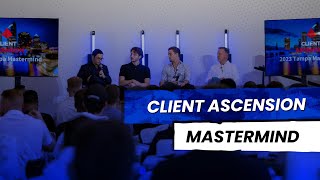
Panel discussion (recorded April 1, 2024) on finding and managing business partners. Panelists (Presley Milton, Joe Yoheim, Oliver Schmalholz, Andrew) share personal origin stories of partnerships, emphasize complementary skills, trust, overlapping roles, energy alignment (visionary vs integrator), practical tactics (events, audits, values alignment), and warning signs when partnerships diverge (different time horizons/exit goals).
Chapters
All right, so we're just gonna go right into Q and A again. A lot of storytelling because partnerships, I mean, there is some mechanism between behind finding like a business partner that suits you, but a lot of it is just happen chance. So first question for y', all. I mean, introduce yourselves, number one. And then just go into why you believe people should partner up in business, starting with Presley.
Thanks, Andrew. My name is Presley Milton, if you don't know me already. I run a YouTube slash content agency with Kim, who is graciously filming the event today. And I think you should partner up, in short, because you can find someone with complimentary skill sets that does the things that you hate every day so you can do the things that you love and just work off each other's strengths.
My name is Joe Yoheim. I'm the co owner of defaultkings.com we're an online men's fitness coaching company. And for me, I think the biggest thing behind the partnerships is something we talked about earlier. Obviously, complementary skill sets is a big thing, but also pressure. We're talking a lot about how you can put pressure on yourself. Of course, you always should, but it's a big difference when you have one or two or three other people breathing down your neck as well. And it's a good kind of pressure. So that's my short answer.
I'm Oliver Schmalholz. I turn data into profits at Liskit. And yeah, partnering is a great way to go for the moonshots that have a success, you know, a chance of success.
Super genius is who you are. And so I want to go again into the story of how did you guys find your business partner? And I'm selfishly super excited to hear Presley's answer as well as Oliver's, because it has a lot to do with these events. So, Presley, let's get it started.
Yeah. So to give you some context, around a year ago, I came to the same event. It was a different venue, obviously, but same event last year. And at the time I was freelancing. I had a few clients doing different stuff between social media, video editing, copywriting, just doing a bunch of stuff for myself. And I was like, you know what? We'll give it a shot. We'll meet some people, be social for once. And I had no intention of coming into the event looking for a business partner or, you know, trying to, like, network or anything like that. I was just like, oh, this is going to be a cool time. I know some of these people online and, you know, randomly just. Just Started having some conversations with people at the cigar lounge after the event. I talked to Cam a few times before and I just thought to go over to him in this, like, little corner of the cigar lounge at the end of the night. All of a sudden, we're chatting up. Two hours later, everyone's heading off to the club. At the time, I was freelancing, so I was literally doing all the film myself. Sold out of videos that night, and Cam was trying to beat Scott in a race to get the event recap out first. So he was like, I'm not going out. I'm trying to finish this video. So we both post up at the hotel. We're just like working at like 2 o' clock in the morning. I'm like editing some, like, short form videos. Cam is working on the recap, and we just kind of look at each other like, oh, like, we kind of like have the same attitude towards things. Like, we're both posted up, doing some work, we're both in the video. And didn't occur to us till like two weeks later that it would just make sense to partner up. We hung out in Miami for a few days after. He was helping me build out some systems and stuff like that. Two weeks later, he calls me up. He's like, yo, like, let's run it up. You know, I have the videography, you have like the editing, social media copy angle. Like, let's do this. And I'm like, yeah, sounds good. Left school like a week later and then here we are. That's a short version, but yeah, I'll let Joey go next.
Is Alex back there? Alex Hyden?
Yeah.
There's a 0% chance I'd be on this stage if it wasn't for Mr. Alex Hayden, which is awesome because he was talking about personal brands earlier. And that's really how I met my business partners. So I was playing college soccer about three years ago, and there's a guy on my team who happened to go to high school with Alex. So my buddy tells me, I know this guy that owns this thing called Closeify, and he makes 15 grand a month online with Close ify. I was like, how do you do that? Because at the time, I'm doing in person personal training, but you're not making 15 grand a month doing that. You're not. And so for me, that opened my eyes to the world of just the online money space, right? That led me to go to money Twitter, and Alex quickly pushed me to these guys named Jack Wyatt and Gabe Puges, who at the Time I did not know. But after a few months of interacting with them, I actually ended up hiring Jack to mentor me. And he was my first business mentor. Taught me how to literally just make my first dollar on the Internet. And then after a few months of that, they actually asked me to come in as an affiliate. A few months of that, they asked me to come in as an equity partner. And then I continued to scale up in that business. So I met my business partners all through this space through money, Twitter as we know it. And that's how I ended up meeting my partners. And now it's just me and Gabe plugas running default kings.com?
So cool.
I had a client that I was selling data to in the fintech space and I saw them performing very poorly on their response rates. So I did a little research and I found cold email mastery when it was on Gumroad, I think for 79 bucks or something. So that got me on Daniel, that got me on Daniel's email list. And then I get this thing about some new cohort at Client Ascension, you know, very first one, and I think it was October two years ago and I was, I think the third call that Dan jumped on and I went straight for signing up for the program. It was a 13 week thing, only one call a week, two hours. But had a hot seat and I just did, you know, whatever they told me to do for 13 weeks. And by the end of the 13 weeks I got 50 clients at, you know, 50K MRR. So that stuff really works. And then I came to the event in, yeah, it was last year in here in Tampa and we have a cigar and Andre starts talking about Lisk, how he's trying to turn it into a SaaS but hasn't been able to do it successfully yet and rest is history. We worked out a deal and built the product in six months and now got a great success story. Having a SaaS that turns data into revenue and profits.
It's amazing.
Who here is a user of Liskit? All right, Dan, check the ones that don't have their hands raised. Get your names. Someone get a snapshot. Wait one more time. Who here uses Lizkit? All right, we got them, we got them, we got them. All right, you guys are soon to be our customers. Appreciate your business. But point is being at these events, like that's where the opportunity is. And someone asked me earlier, like, how do you find a business partner? And I don't think there's like a set of steps that you have to follow. I think first number one is you yourself have to be a worthy business partner, right? Like someone before, I can't remember who today mentioned, like, you have to look in the mirror and be able to see who you also want to be in business with. I think it was actually Nick Verge. And it's just so true. Like you have to be. And I say this when it comes to hiring as well. Like if you want to hire an A player, like, you need to be an A player. Like an A player is not going to work for a B player. It just doesn't happen. And so it starts with you being a worthy business partner, number one. And then number two, it's really just showing up to events like these where the opportunity and the potential for you to meet a Cam like Presley met or an Oliver like I met is just sitting there. And it's one conversation away. Shout out to Christian. He wrote a book called One Conversation Away. He was complaining how nobody read that book yesterday. One connection away. And so not only are we selling liskit, but we're selling Christian's book that he was complaining about earlier that no one bought, but a couple of you will now buy. And so a question that also comes up all the time is like, especially for Daniel and I, is like, what do your day to day's look like? It's very different, right? You talk about the innovator and the integrator relationship. And so for Presley, what does that look like with you and Cam? Like the day to day the difference between what you do and what Cam does?
That's a great question. I think a lot of that stems from personality too. Cam, he rips around on his motorcycle in south beach and Brickell, just zipping through traffic, going to five different coffee shops, editing videos, shooting with people all day. I'd lose my mind and I would get nothing done if I stuck to that same routine. So with that in mind, what do I do? Well, I set up my computer and I write and I review videos. I can do that for 12 hours a day. That works for me. Right. To clarify, I'm back end canvas, front end, if that wasn't clear. And we have a very like trust fall relationship. Like, you know, trust fall is the things you did in elementary school when you know one person would fall and they would like all catch you. It's a trust fall relationship. Cam goes out to cigar lounges and like says, yo, like let us make videos for you. Like, has them like tap pay on like the stripe thing. And he's like, Presley like, we need scripts. We're shooting with this person tomorrow. Like, let's get it done. Trustful relationship. That's not going to work for everyone. For some people, they would, like, lose all their clients and burn a lot of relationships that way. But that works for us. It's a trustful relationship. I'm back and stuff. I do a lot of the copy for clients when it comes to YouTube scripts or, you know, making sure videos are going out on time, writing descriptions, all that stuff. And Cam, he's just the front end guy. He, like, handles the sales. He's really good at, you know, building relationships, prospects, meeting up with people. He does a lot of creative stuff for, you know, editing and Day in the Life vlogs and stuff like that. So that's our relationship. I call it the trustful relationship. I think that's very appropriate to what it looks like.
Yeah. So I'm in an integrator role as well. And I think a lot of ways that. Or excuse me, one of the ways that people break this down is this idea that one person builds it, the other person sells it. And so that's a very good way to think about it. But I was also listening to. I think it was either Alex or Layla, one of them talking about how their dynamic plays out in the business setting. And she basically said she locks Alex in a room, he fills the top of the funnel, and she does everything else. And that's pretty much the relationship that me and Gabe have. And any of my friends here that know Gabe, he made his first spreadsheet the other day. I was very proud of him.
That's huge.
Very proud of him.
That's huge.
We have a visionary making a spreadsheet. That's a huge deal. So I was very proud of him. Right. But that's the frame that I like to take. And I think there's something important to be said about an integrator. You guys were talking about a moat when you guys were up here with your founder story, putting a moat around that person like Daniel was talking about. He's not in the support channel. As far as Gabe knows, we've never. As far as Gabe knows, there's no problems, but that's intentional because I want his focus to be on pure conviction about selling the thing that we have. Right. I'll deal with those issues. I'll make those things right. If his mind goes anywhere other than pure conviction in what it is that we have to offer, that's gonna negatively impact our ability to sell it and acquire clients. So I think there's something to be said for as an integrator, you have a responsibility to protect your visionary and put a moat around that person. So that's how we play out our dynamic on a day to day basis.
I hate the support channel too. I'm only in the level three. Yeah. So I'm a high level guy. So Liskit is an interesting deal because typically I'm a generalist and I'm in a lot of different areas. And the Liskit deal, I'm purely tech product and I make my experience from other deals. I've been in over 10 SaaS, deals involved in various capacities. So I got a lot of benchmarks, a lot of lessons learned from other deals. So I tried to, you know, make that knowledge available. But day to day, I spent, you know, 14, 15 hours a day making the product better, rolling out new features, doing it at 80%. So sometimes, you know, you're not going to be a perfectionist, but that's part of, you know, moving fast. When you're competing with some players that have 200 people in the tech department, we got 10, they got hundreds of millions in their bank account. We're bootstrapped. Yet we were able to build a great product that's popular in the market. So it's always trying to balance what can you do quick, what are the most important features. And I think it's also good if you don't have access to all those resources because it really makes you think, how can we leverage with what we have? And we are in a very fortunate situation with our founding team that we got five complementary skills in each area. And Andre, for example, lefts to deal with operations and figuring out customer support, you know, processes and stuff. I hate it. I cannot stand dealing with details. I want to build the next big thing and I think high level. So it's super important that you're aligned with, you know, whom you're partnering up with and that you're not. That your skills aren't all in the same area.
Absolutely, yeah. Because one feeds into the other. Right. Like without customer support, product team doesn't really know how to make the product better. Where are they going to focus? And so everything is important and that's why I think you need a business partner that really serves each of those skill sets. So one of the main questions you're probably thinking now as well is like, am I an integrator or am I a visionary type?
And so what do you guys have.
To say on that?
I think it's it's really not black and white because Cam and I both have skill sets in both the visionary and the operator department. I really enjoy marketing still, you know, even though I've taken the backend role in the company, doesn't mean I can't market. Doesn't mean I don't enjoy it. It's just we realize that for it to function, it's really, really hard to do, like, the visionary visionary thing. And a lot of people want to do that, right? Because it's just. It's sexier. And something we've realized is having a little bit of overlap sometimes is not necessarily a bad thing. And yes, there's the visionary and there's the operator, but doesn't mean there's not overlap sometimes. I'm still making content. I write newsletters. I write to my list every day. Which, if you're not on that already, like, I'm gonna aggressively push it here. But there has to be some overlap too, because I think there's situations where the other person just has to jump in a roll for some reason, right? If you, like, block it off black and white of like, okay, you're visionary, you're operator. Like, yes, that works as a general rule of thumb. But there has to be some flexibility too, because there are situations that I would like. Presley's in a bad situation, like, Cam has to cover, vice versa. I'll give you a really good story right here. A few weeks ago, it was like, a Friday night. I had talked to Cam. I'm like, dude, I'm going out with this, like, girl from you Miami on Friday. Like, I can't wait. Like, I was. I was hyping up the whole weekend. Friday we were supposed to get a VSL out for a client, and then pretty much every possible problem imaginable just spawned up at, like, 8:30 at night. I'm, like, putting a nice shirt on. I, like, got out of the shower, and I just, like, grew up. Project file was like, a whole deal, right? And I was like, dude, this is, like, so lame. Like, I'm supposed to be done right now. And Cam's like, like, dude, don't worry about it. Like, I got you. And I'm like, seriously? Like, he's like, yeah. Even though that's not his, like, responsibility on a paper. Like, he helped me out because he knew I had, like, a event, right? And I'm like, damn, that goes a long way. Like, he's like, yeah, you know, I just had an event.
I had, like, an event like this.
Or a little Bit. A little bit. But I'll never forget this. He said, dude, like, someone said that you close.
I heard that.
He said, if I see that green dot IN Slack, I'm gonna kill you. Like, I do not want you touching your phone or opening, like, your notifications for the next hour. Like, just go enjoy yourself. Like, you've been, like, in the trenches all week. Like, just go handle it. Sure enough, you figured it out. We got the situation handled. And situations like that are really important. I know I'm going a little bit off topic where having that overlapping skill set is important, because there are times where just life happens, right? You have other things or, you know, somebody's in a tough situation, maybe they have family stuff or, you know, a date or whatever the case may be. And, you know, I've been in situations where I've had to fill in for Cam's role and he's had to fill in for mine. And it's important to understand that, yes, it's a partnership. Like, you want to have your clearly defined roles, but, you know, don't be afraid to fill in the shoes of the other person when they need it or offer that up. Even though they might be stubborn. Like, I was. I was like, no, no, I'll take care of it. He, like, you know, strong armed his way into, like, making me go on the date. So thank you for Cam for that. Once again, that was. That was pretty clutch.
Yeah. So I think you definitely have to be competent, like, baseline competency at just about everything, Right. I've been in situations where I have to write the headlines, I have to write the copy, I have to jump on a sales call. Like, these are things that I'm competent in doing, but what I've realized is they don't give me energy. So I think how you determine which one you are is you determine which one actually gives you energy and which one does it. Which one do you feel pushed to do? Which one do you actually enjoy doing more? Which one can you sit at the laptop and do for 12 hours a day if you need to? And that's the one that you lean into. But like, you're saying, I don't think you should ignore the other areas. So if there's ever a situation where Gabe wasn't available to write a headline or take a sales call, like, I could fill in, I would hate it. I wouldn't enjoy it. It would suck energy from me. But I could do it if I needed to. So what we focus on is doing the things that actually give us Energy and allow us to do it more and better. So that's how we've delineated that out, and that's how I think you figure out which one are you? Figure out what gives you energy. For me, dude, I can sit around and think about hiring people and budgeting and building SOPs and building systems and doing those things on the back, and I could do that all day. For me, I got maybe one thread in me in one day, maybe, right. That doesn't give me energy. It takes energy from me. So figure out what gives you energy and lean into that.
Yeah, I think you need both. You both need to be a visionary, and then you need to have the understanding of the detailed work. For example, if you're building a product, you've got a million ideas what the product could look like. But then you always got to think, you know, first, existing users, what percentage of the existing users will that new feature benefit? You know, is it 5% of the user base? Is it 100% of the user base? Then the same thing for sales. You know, how many more customers can we sell? If you had this cool new, for example, lookalike feature that we're currently working on? Well, that could be a real game changer if we make it way easier for people to define their ICP where they don't have to know everything about setting up the filters. So that's a huge thing. But then you gotta put that into a formula. What's the effort to do that? Because it could be a major thing that's a lot more complex to build than a bunch of smaller things. So if you can put that into a formula, then you're able to prioritize your how you want to roll things out. And then you got to be able to say no to everything else. If there is, you know, if support comes back with things like, oh, there is one customer having this problem, well, I would like the customer to be happy and have the problem solved. But we're building this big thing, and we got to push that over the finish line. So sometimes you lose some business because you can't make everybody happy. But if you keep focusing, focused on the big picture, and you come up with a formula, impact for existing customers, impact for sales for new customers, and the effort it takes to do that, then that's a pretty good, solid combination.
Absolutely. And I think two very practical things that you guys can do, like literally right now or today, is take an audit, like Joey said, of what gives you energy and what takes energy from you. Again, like, for Example, sales calls drain my energy, so I don't do them. What gives me energy is hopping on a call with my csms and my student success coaches and hearing about all the great things that they're helping our students with. Right? And so make that T chart or T diagram or whatever and just do a brain dump. What gives you energy? What takes energy, number one. And then number two, the thing I think a lot of you struggle with is like, if you are a visionary or if you are an integrator, you don't know what the other side is actually supposed to look like because you just aren't them. And so one of the guys yesterday asked this question is like, how do I find a good operator? And I said, number one is like, do you even know what a good, good operator looks like? And he was like, not really. And so go out and interview or talk to, I mean, any of us. Four, if you want to know what a good integrator operator looks like in, in a high level business, talk to us, ask us questions like, figure out what kind of people we are because the core competencies and the personality traits, like, we'll tell you everything like president was saying just like the day to day, right? Like, Cam is like wild, just likes like chaos and against order. And so, yeah, I think taking an inventory of what gives you energy, what takes your energy, and then going out and finding like, what does that actually look like at the highest level? Whether it's what does an innovator look like or what does an integrator look like? And so next question. This one is probably more so for Joey and I to speak on, but if you guys have anything to add as well, definitely appreciate it. But the reality is not every business partnership works out right. And so Joey and I, a lot of how we actually got connected and just really built like a good friendship is because we both were in bad business partnerships or partnerships that ended poorly. And so I want to ask Joey, like, how do you identify when the partnership is just not working? And what lessons did you learn from that experience?
Yeah, I think I want to preface as well the idea of like a business partnership ending poorly. It doesn't mean that it was a bad, ugly breakup either. But I think a business partnership ending, that's a poor business partnership. The goal is to stay together, to grow it as far as you can take it, right? So if it ends, it was a poor partnership, doesn't mean it was ugly breakup. Because for my situation, I'm still very good friends with the guy that I.
Was in business with.
We're no longer in business together. Now, how you recognize this and how me and Gabe started to recognize this, this partnership might not make the most sense long term is really in the time horizons in which you're making decisions. That was the biggest thing that jumped out to us. Cause there's moves that you can make that are going to collect cash today, but there's moves that you can make that are gonna collect cash in three, five, ten years. And that was the first area where we started to see a rift in terms of decision making. And so I think that's always a telltale sign. And you know that inherently, if. Whether or not this is a good decision, you know this, you have an idea of that. And when you start to sense that, that's when you need to start having conversations and asking probing questions about the future that they see for this company and where they're trying to go with it. And that has to be in complete alignment. It has to be.
Yeah, pretty much now. I just think it's important for people going into business partnerships to understand, like, it's not always going to work out. And as soon as you realize that it's not working out, like, have that conversation, like, really like, building a team, leadership, partnerships. All it is is conversations that most of you are probably not willing to have. Because, like Dan was saying, a lot of us are scared of confrontation. It's not an easy thing to do. And so that's. I think what goes into a great partnership is just that everyday communication and trust building. And so last question for you guys that I want to leave the rest of these guys with is, how would you sum it up? How do these guys go out and leave this event and find an ideal business partner if they don't already have one?
Don't partner with a hobbyist. And I think this is the best takeaway that I can provide anyone with. You almost have to be in very similar shoes in terms of, like, where you are in your life circumstances. And I think this will help a lot of people. So, for example, you know, like those videos on Instagram where, like, it's like the skit of the guys, like, bro, we should totally start a business. Like, and it's like, the two college kids are total tired. Kick it just like, oh, we should really go all in on this. And like, I don't know, man. Like, that's like a hobbyist, right?
You don't.
It's a. It's just like this extra thing that you kind of might do, right? And a really good test for somebody you're considering going into business with is what kind of sacrifice or upfront commitment are they willing to make to show you that they care? For me, I left school like, I was at a pretty decent business school. I just, like, gave up my scholarship to, like, go on in this business. For Cam, that was putting his trading stuff to the side, which was his main thing at the time, put that on pause to work on this business with me. So we set the precedent that both of us were putting this other thing in our life on hold or just, you know, eliminating it completely for the time being to work on this thing together. And when you start with that precedent, the frame of the relationship is totally different because you kind of not back against the wall, but you have this main thing that you need to focus on. You need to make this work, and it sets the frame of the relationship for each of you to go at it every day and just give it your all. Because there's just, like. It's not just this, like, little thing you're working on on the side. This is, like, this is your lifeline right here. And so having that precedent right up the front is just, like, so huge. And the second thing, I'm going to share a story from about a year ago that was completely unrelated to business, but changed the way I viewed relationships as a total. And it was not a business relationship at all. This was about May 2022, and at the time, I had a girlfriend. She lived, like, five minutes from me. Her parents were going through a really bad divorce at the time, and I was really naive, emotionally immature. And there was one time she called me. She's like, oh, can you, like, come give me a hug? Like, I'm going through a hard time right now. And I was like, I was such a dick. I was like, no, I have to go to the gym or something like that. Like, literally all she wanted was me to, like, drive five minutes down the road. I literally lived, like, in town with her, and she wanted me to give her a hug. She was going through a hard time. I was like, no, blah, blah, blah. Like, I can't do that. Just came up with some reason why I couldn't do that. And I didn't understand at the time. I'm like, like, why does she just, like, want to, like, why is this, like, so important? Why is. You know, I just, like, didn't grasp the concept of, like, why a hug was so important. And obviously, like, that didn't end up working out. Few months down the line. And I think that was one of the points that was brought up in, you know, the message. But after a while, I, I, I thought about this moment. It kept bugging me, and it kept lingering, and I was like, Like, I was just, like, never understood that. And then it finally occurred to me about a year later why these small gestures actually matter. It was never about, like, the hug or me, like, actually, you know, like, giving, like, physically hugging her. It was like the gesture, like, the gestures, the small gestures go a long way. And people remember that, good or bad, right? In that case, that was held against me because that small gesture, I was unwilling to show that affection, that moment or be there in that situation, right? And you're probably wondering, like, why is he going off on this projecting about his ex? I'm like, okay, just. Just hear me out. The gestures, the small details, everything like that, they add up. Like, even if it's just, like, going and, you know, it's been, like, a rough week in the business, and you're like, you know, maybe you're local with your business partner. You're like, hey, bro, I brought you, like, a coconut water or something like that. Like, just unprompted, like, little stuff like that. Like, just the small gestures go such a long way when either the other person in the business partnership is going through a tough time in their personal life, or, you know, maybe it's been, like, a rough week or month in terms of revenue or there's some kind of fire you got to deal with. Those small gestures actually mean everything. Like, literally, the banana, the coconut water, like, the. Those little, like, snacks you bring your business partner. Like, I know that's, like, a thing of Cam and I. Like, it's a love willing language. It actually is for you guys to maintain that relationship. And, like, if you have a business partnership right now, like, that's one thing that I say, I would say, like, has been so critical is just like, the small gestures of, like, the times that we've helped each other out, that both of us have been in, like, tough situations in our personal lives, or something's been going on. Like, hey, bro, do you need anything? Or just, like, unprompted, like, acts of love, if you want to call it that, like, whatever. Just those things will make such a long impact for, like, how easy they are to do. So, like, just try to stack up those small wins and just do those small gestures, because they will mean so much more to the other person than you think it means to you, if that makes sense. But, yeah, Those go a long way. Yes.
I think all the questions kind of before this were a conceptual idea of like, finding a partner. And I want to get really tactical with this idea of like, leaving here. How do you go and find a partner? So I think the first thing you need to determine is this something that I actually need an equity partner for, or is this something that I can hire? If you need a complimentary skill set, it doesn't mean you need to go and give up equity. But when you're early, you lack capital. So inherently, the most valuable thing you have to offer is equity, which kind of it. But you don't need to rush into that. We just got done talking about, in Eddie's talk, you can sell a vision, you can paint a picture longer term, and there's going to be people that are willing to come in and take salary hits and take less money now for the potential in the future. So I think tactically speaking, don't rush into giving up equity. However, it makes sense to give up equity if it allows you to create a bigger pie. Because I'd rather have 50% of a $500,000 pie than 100% of $100,000 pie. So there are times when it makes sense from a tactical perspective. Now, when it comes to qualities and things you need to be aware of, I think the biggest thing is values. There's successful businesses where founders or co owners aren't the best of buds. I'm lucky to be in a relationship with my business partner where we're best buds. We see eye to eye on just about everything in life as well. And that makes our business communication far easier because we see the same goal not only in our business, but in our personal lives as well. So I would push you heavily to find somebody that you agree on with all values, even outside of the business. That's what I think you should strive for. And that's number one. Right. So that's the biggest thing, in my opinion.
Talk to somebody whose vision is aligned with yours. I mean, Andrea and I were talking about this potential liskit deal. I mean, we lost track of time. We were sitting there, one cigar after the next, talking about all the great things we could build. One of the biggest, if I look at all the deals in the past that worked out versus the ones that didn't work out so well, and I don't have 100% track record, I had some really bad deals too. They always had one thing in common. And the end picture of why we're building this business wasn't aligned. Like somebody wanted to play the VC game, yet somebody else on the team wanted to have a lifestyle business that brings in a bunch of cash. So if your lifestyle vs VC funded goals aren't aligned, you're going to have a very tough time being aligned and building a great business. The other thing is when it comes, you know, to the exit, are you in this, you know, to sell it one day? And it's very good to agree to a number very early on at what you would sell it for. Because bad things can happen. If, you know, somebody thinks $10 million exit is great, but you want to have a $200 million exit, you're not aligned. So to put those things out on the table up front and have an agreement, that's when the magic happens and when you can do the best deals.
Enough said. Give it up for these guys.
They always had one thing in common and the end picture of why we're building this business wasn't aligned. Like somebody wanted to, you know, play the VC game, yet somebody else on the team wanted to have a lifestyle business that brings in a bunch of cash. So if your lifestyle vs VC funded goals aren't aligned, you're going to have a very tough time being aligned and building a great business. The other thing is, when it comes.










