How to make $1,000,000/mo using self liquidating funnels (FREE COURSE)
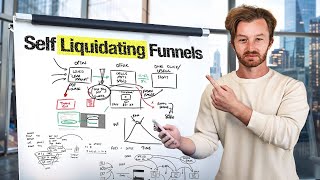
Daniel Fazio explains self-liquidating funnels: design front-end offers that immediately pay back customer acquisition costs so you acquire buyers at break-even or profit. He covers CAC vs LTV math, offer design for cold traffic, channel selection with concrete thresholds, and an operation hyperscale playbook with fulfillment efficiency and subscription upsells.
Questions this video answers
$1.117 million
About 70%
About $6,000 to $8,000 per day
Cost per qualified call ≈ $303; show rate ≈ 60% (effective cost per live call ≈ $500–$600)
CAC ≈ $2,000–$2,500; average initial order value ≈ $2,500
Chapters
There is a scaling strategy that lets you get hundreds or quite literally even thousands of clients without losing any money at all. And the strategy is called self liquidation. And as you can see in this screenshot right here, from January 29th to February 28th, I was able to do $1.117 million. So what I'm doing in this video is going to explain to you guys how to make a million dollars per month with self liquidating funnels. Now you're probably not going to make a million dollars a month, but the premise stands that this is one of the most powerful strateg. So it's all about acquiring clients at instant break even cash flow positive rates that enable unlimited scaling. So you don't need to go take out debt financing or go raise funds to grow your business. You just self liquidate on the acquisition of customers and that allows you to scale the company. If you don't know who I am, my name is Daniel Fazio, I'm the co founder of Client Ascension which is a coaching company list Kit, which is a SaaS company. And just for transparency here, about 70% of this $1.1 million is SaaS. So so not coaching. Right? So just for the kind of people who are selling done for you offers like actual real businesses and not just running coaching businesses. Just want to make that very clear. And this video is the second video in my playlist called Hypergrowth Tactics. So if you're interested in seeing the first one and all of the future ones, go to my channel. Just go to the playlist and look up Hyper growth tactics and you're going to see really long in depth videos that go into these advanced strategies. So here's what we're going to go over today. The CAC LTV ratio that makes this model actually work. Offers and funnel structures to use to make this work. How exactly to market and get clients with this model and how to execute operation hyperscale. So this is what we're doing in our companies right now, this whole self liquidation strategy. So I'm going to walk you through exactly how to implement it yourself so that you too also can acquire clients at instant break even cash flow positive rates that enable unlimited scaling. So if you're interested in that, pay attention, take notes or you can leave this video on in the background. But let's get straight into part one which is understanding CAC to LTV math. So let's talk about the math that makes or breaks your literal entire company. So CAC is your cost to acquire customer and LTV is Your lifetime value. So LTV is the total amount of money you'll make from a customer, considering churn, upsells, downsells and cross sells averaged out across all paying customers. So you might have a situation where you've signed a bunch of clients and some clients stay for two months, some clients stay for 12 months. You have to take all of them. You consider absolutely every singular variable at all. Ever average it out. That's your ltv, because that just is reality, right? And then CAC is how much money you spend to acquire the customer with their associated ltv. So if you make more money from a customer ltv, then you pay to acquire them cac, then you make money, full stop. This is how it works. This just is how reality works, right? So however, the math of this needs to be designed in a cash flow positive manner. Because if you are acquiring customers for more money than the amount that they pay you immediately this results in negative cash flow. So you might see something like, well, why do some companies go raise a bunch of VC funding and like what they're doing, you have to imagine is that let's say that they're selling like a $300 a month subscription and then they pay like $1200 to acquire a customer. So what happens is it takes them three, four or five months to actually even make the money back at all that they already spent. And it's negative cash flow. You see, it takes a while for it to recoup back. But if you don't have VC funding or millions of dollars to execute on this, you need to make the money back immediately. You need to pay $2,000 right now and immediately make the 2,000 back so that your cash flow doesn't go negative. That's what this strategy is all about. That's what I'm teaching you today and how to execute that so that you don't have negative cash flow, right? So you want to spend $2,000 immediately, get back at least $2,000, and then realize your profit in the following months. So this is a visual of how exactly this works. So in a negative cash flow would be. So right here on the Y axis you have cash flow and then on the x axis you have time in months. So for instance, right here, let's say you acquire a customer for $2,000, but you're only charging a thousand dollars a month. So month one, now you're at negative 1000, and then month two, now you're at break even. Month three is when you're in profit. Month four is in your is when you're in profit. That's negative cash flow though you can't scale that unlimitedly. So in a self liquidating cash flow model, what you have here is that you pay $2,000 to acquire a customer to immediately make back $2,000. And then immediately month one is the profit. You see what I mean? That's the differential between these. If you immediately make your money back, it is substantially easier to scale. It makes literally everything so much easier. So there's a payback period that must elapse. So for instance, let's say you charge $1000 per month, but your CAC is $2000. So you pay $2000 immediately and get $1000 back. You have to wait all the way to the second month just to break even and then another month to even start realiz issue because your cash flow is negative, which means your growth is too slow. So the ideal situation is that you immediately make all your money back. For instance, you pay $2,000 to acquire a customer. You are immediately paid $2,000 or more by the customer. This is what self liquidation is defined as what you are doing. The entire premise of it. You are acquiring paying customers for $0. I'm going to get more into this theory in a little bit. Let me show you how we think about this at our company. So we spend about 6,000 to $8,000 per day in ads. And our cost per qualified call is around 303. With the 60% show rate, that's about 500 to $600 per qualified live call. We closed about 25 to 30% of those calls. So our customer acquisition cost is approximately 2,000 to $2,500. Now here's where it gets interesting. Because our average initial order value is about $2,500. So we break even on the acquisition of a customer. But here's the magic, right? Our clients pay a monthly subscription. After that, with the 95% retention rate month over month, the actual LTV of the client is massive. So the second month is where we start making profit. By month three, we're in significant profit territory, right? So this is the fundamental math that most offer owners miss. You need to think about what's the initial CAC like, What does it cost you to acquire a customer? And then the initial A of what's the average order value? What do they pay you upfront, immediately on day one and the retention rate, how long do they stay because this influences ltv and then the monthly value, what do they pay you each month? Because that also influences LTV and aov. So if your initial aov, your average order value is greater than or equal to cac, you have a self liquidating funnel and everything after this is profit. So you need to be concerned with two things. Two things need to be severely concerned with. Are you, are you acquiring customers at a break even or positive cash flow so that you are not cash flow negative? And is your lifetime value of a customer high enough to actually make substantial profit in your business at all? See what I mean? So this is the fundamental math, right? So a successful business. So you have a CAC of $2,000 and LTV of $16,000. That would mean you have a LTV to CAC ratio of 8 to 1 and your profit per customer is $14,000. What influences LTV? Revenue per sale, purchase frequency, customer lifespan, referral value and profit margin. A failed business would have a CAC of 3,000, LTV of 2,000. So it'd be 0.67 to 1. So you'd be losing 33 cents for every dollar you spent. What are the components of that? Marketing costs, sales team commissions, advertising costs, onboarding, like fulfillment costs. Right. So let's walk through this. Right here is a CAC to LTV ratio calculus. So this is just simulating it out if you were spending on ads. Yo, real quick. If you want my personal help building and launching your funnel so you can add 10, 20, $30,000 per month in new business every single month, automated completely with ads, I can help you launch your funnel personally. So what's that include? Your offer funnel, VSL ads, sales team and fulfillment team. Exactly everything that we did to get to 1.2 million a month. It's the first link in the description. Click that. Watch that video over there once you're done with this YouTube video. See you over there real quick. I'm just going to go through this. So you're spending $30,000 per month on ads and your cost per qualified live call is $350 and your close rate is 25%. What that would mean is that over 30 grand of ad spend, you would get 86 calls, close 21 and have a 1400 dollars CAC. And then let's say your average revenue per customer is $3,000 per month. And then let's also say that you have a 70% gross margin per customer and a monthly churn rate of 14%. What this would mean is that your customer LTV is 21,429, but your lifetime gross profit per customer is 15,000. So the ratio of this cat to the lifetime gross profit is 10.7. And what that means is that if you spend $30,000 you will realize 291,429 do over the course of seven months. That's literally what that means. Right. So it's just a ratio of what does it cost you to acquire the customer versus how much gross profit do you make from the customer. And that's it. So let's keep going. So part two is designing offers that pay for themselves. How do we even design the offer that self liquidates? And I'm going to walk you through some examples and exactly how to execute yourself. So, so let's talk about how to actually design the offer. So the first principle is understanding what cold traffic actually buys versus what your existing clients are warm traffic by this is crucial. What cold traffic buys is not what warm traffic buys. Very clear distinction that needs to be made here. We need a proven front end code traffic offer that is actively being purchased in the market right now. I need to read this a second time so you like fully ingrained what I'm saying here. Because this is the number one most massive mistake when people try to do this. A proven front end offer that is. So do cold traffic that is actively being purchased in the market right now. Not a warm traffic offer. And we're going through some examples of this in a second to make sure you don't make this mistake. If you want to go extremely in depth on this, go to my channel. Watch the video how to scale an agency offer to 100k a month free course. Go watch that video. That's also in the Hybrid growth tactics playlist. It was the first one. So that's where I fully talk about designing an offer for cold traffic. But a quick synopsis of what exactly you need to do. Pick something that's already selling. Do not make it up. It must already have active proven market demand. This is going to save you tens of thousands of dollars and months of your life. Make it deliver a clear, concrete, quantifiable result. Have a clear value proposition as to why you're different. Price it appropriately for your level of market authority. If you have low authority, use a more aggressive guarantee in the offer to compensate for your low authority. And then make it a new opportunity for the client. Not something that improves something you're already doing. You want to start something new for them. That's how you want it to be positioned as a new opportunity for them to begin working with you. Right? So here's some Examples Front end offer needs to be simple, specific and solve an immediate pain point. Examples. We'll set up a cold email system for your business and books calls. We'll build you a webinar funnel. I'll set up your Google Ads account for a one time payment. Here's some pricing structures that work one time payment and then manually upsell them into a retainer later on after the setup has been completed. Monthly tech fee plus performance like $500 a month tech fee plus pay per call or setup fee plus immediate subscription. What you lose here is being able to say the phrase one time payment in your marketing which is a huge value proposition. But it makes the upsell process substantially easier. It's a trade off. So one thing that trips people up is trying to jam too many services into one offer. So if you look at the most successful agencies, they have one clear front end offer. It's very distinct what their front end offer is versus things that are upsold and cross sell to already active paying customers. Right? They might have eight to 10 services they can provide their cross sell to an upsell to already active clients. But they are only actively promoting 1 to 2 to cold traffic. Right. It's about what cold traffic buys. Why do you have to do this? Because cold traffic doesn't know you. They're skeptical. They need a low commitment way to work with you before they trust you with everything. So here's what's working right now on the front end. Substantially well one time setups. Why? Because it's low barrier, low risk, low commitment and fast. That's what you're trying to do with your with your front end cold traffic offer. It needs to be low barrier, low risk, low commitment and fast. Right? Again, just to reiterate this so you fully understand the premise of this business model. Cold traffic is not just going to magically pay you to take over integral aspects of their business. I'll do this for you and this for you and this for you and this. They don't know you, right? This is the equivalent of asking girls to marry you before you take them out on a date. It's weird, creepy, desperate. It doesn't work. Right? Low barrier, low risk, low commitment and fast. Right? Take them out on a date. One time payment setup offer first before asking them to marry you. Retainer. See what I mean? So retainers, consulting, multi month packages all come after the client has already gotten results with you. These are upsells, not cold traffic. Front end offers. Remember your front end offer is not your business model. It's the gateway to your business model. So this whole front end, this whole low barrier, low risk, low commitment, fast one time setup type offer is specifically and only used to self liquidate your cost to acquire a customer and then you sell them stuff later on. That's it, that's this model, right? This is not your whole business just needs to be very clear, right? So you're simply trying to self liquidate your marketing spend and acquire the maximum amount of buyers as is conceivably possible. Why is this important to understand? Because the value of a buyer is 100 times to 1000 times more valuable than a lead. So you're going to see this a lot as you go about your life and consume marketing materials from people don't actually make any money. So what you're going to see is people brag about their low lead cost. You to understand there's a vanity metric. The lifetime value of a lead, AKA somebody who just gives you their email and phone number might be $3, right? If the lead cost is $3 then the CAC is equal to the LTV and it's completely useless. See what I mean? You have to remember this phrase to again grain this. Buyers are buyers are buyers are buyers. What does that mean? It means that buyers continue buying and then non buyers are non buyers who do not buy that who don't buy stuff continue to not buy stuff. And people who buy stuff continue to buy stuff. You see what I mean? If you're just getting leads with a bunch of ad spend, they don't buy stuff and they will continue to not buy stuff. If you get buyers, they buy something and prove that they're a buyer and then they continue to buy things. This is just how the world works. It just is. People who do not buy continue to not buy. People who do buy continue to buy. So therefore the entire premise of the system is for you to acquire the maximum amount of buyers at a $0 loss. As the probability that they continue to spend money is mathematically certain, they will continue to buy. They literally will like 100% of the time. So let's walk through some funnel types. So if you're an agency or SaaS business, one time setup offers through a VSL funnel. If SaaS make the subscription auto renew so a smaller subscription. If agency manually upsell clients higher price retainers so multiple thousands instead of multiple hundreds. If you're a coaching or info business, do a low ticket course or challenge and then nurture buyers in a group of content that upsell higher ticket coaching, right? So you might ask something like, well, what about webinars? Let's go back to the core integral premise again of this system. I personally found webinars to only really work for me on cold traffic. To promote a webinar to cold traffic with ads is extremely difficult to convert. The other problem with it is that they don't self liquidate because it's free to register, right? So again, a webinar is free to register to. What does that mean? It's not a buyer. So it's substantially harder. You see what I mean? So this is why I like challenges where it's a paid off. So you make the actual contents of the challenge valuable and then you just upsell the people who specifically indicate they do want to pay you for more help, right? Webinars for you register, register to a challenge you have to pay for. And if someone pays for a challenge, they've therefore indicated that they're a buyer and their LTV is literally 100 times more than the people who just get a free webinar. This is what you got to understand. It's so important because the shit works so well. Like if you just do what I'm saying, like it's just insane how much easier your life really becomes when you like fully execute it like this. So again, main focus here, acquire buyers for a $0 loss, right? Do this, do this at the maximum scale conceivably possible. Like literally think of this. Get 1,000 people who have paid you any amount of money at all while incurring $0 of loss. That's what you're trying to do. Just get 1,000 people who have paid you any amount of money at all. And it will be severely, actively difficult to fuck this up actually. And I'm going to explain how just a little bit in this video. It is functionally impossible that you do not profit on this. You're more likely to get struck by lightning three times than have this not work. People who buy things continue to buy things at a rate 1,000 times higher than the general public. It's very simple. And you have to fully ingrain this, right? Sell them one thing, lose $0 and then sell them more things after that. It's really that simple. Like just do that. So let's get into part three. Capital efficient marketing. This is how to get buyers at a $0 loss. Once you have an offer that could self liquidate, you need to get in front of the right people. But most agency owners make critical mistakes here too. First, let's talk about what not to do. So don't spread yourself across 10 different marketing channels when starting. Like if you haven't taken something to multiple hundreds of thousand dollars per month or a million a month, like you're a beginner, maybe low, intermediate. Like it's too difficult to try and do this at once. Like you just got to pick one of these and only do that until you, until you really figure it out. Don't try to sell eight different offers on the front end at once. Take them one at a time and build systems around them. So it might be like each. Each one you launch and each marketing channel might be multiple months of work. See what I mean? Don't ever promote lead magnets when selling to Coltraps traffic. Right? Instead, identify which acquisition channels work for your specific financial situation. Right? So here's how we break it down. You got cold outreach, paid ads and content marketing. Let's go through these. Cold outreach is great when you have no or low budget. It works well for high ticket specialized services. Best for B2B. And extremely specific messaging is crucial. Right? So paid ads requires a budget of at least $200 a day. Like that's the absolute bare minimum. And I'm going to get into this later in the video explaining why this is. But if you try to get paid ads and spend less than $200 a day, it's literally actively completely useless. Like completely useless. Don't even both. So high risk for unproven offers, low risk for proven offers. You need solid filtering to remove the poor people from your funnel so they aren't allowed to book calls and you don't train the pixel to find more poor people. This is super important and I might get into this in future videos, so subscribe if you want to see them. But you need to actively run defense against poor people and not train your pixel to find poor people. You need to filter people out and not let them book calls. Right? You must have a VSL to reveals pricing qualifies prospects. This revealing pricing in a VSL single handedly was one of the determining factors of what allowed us to like really actually scale. It made everybody's life so much easier. It made the prospects life easier. It made our salespeople's life easier. I am such a fan of revealing prices now. It's actually so much better to B2B specifically if it's more B2C you might want to conceal prices. But if it's B2B, show the price. Actually this leads to substantially higher close rates and less sales team churn. People only show up to the cause. They know the price. Right? Right. Salespeople aren't talking to poor people. They therefore turn less and they stay longer. So it makes sales team management substantially easier too. All right. Content marketing. So it's slower but builds authority. It amplifies the effectiveness of other channels. YouTube is the one you want to focus on specifically for B2B. And then most videos should have a lead magnet because lead magnets only work on. On warm traffic. Right. So you know how I said over here, don't ever promote lead magnets when selling to cold traffic. Only do lead magnets when you're selling to warm traffic. Right. Okay, so let's walk through finding cac. So massive mistake is thinking free marketing doesn't have cac. I tell you to do cold outreach, which takes your time and content marketing, which takes your time and you're thinking it's free. Like, oh, it just takes my time. Right. I just post content. I do cold calling. That doesn't cost money. Yes, it does. It costs labor. And to scale it, you must replicate labor, which costs money. You need to hire other people to do it for you. You need to replicate yourself. That's money. Right? Time is money. Same thing. So here's a real conversation I had with a student of mine with actual numbers. He gave me on a call. This is real. I didn't make this shit up. This is literally what he reported to me. So cold calling is working for them. And he wants to scale it. So meetings booked via cold calling last month was 20. The show rate was 12 out of 20. So it's a 60% show up rate. He closed one person out of the 12. That's an 8.3% close rate. He was selling an $800 a month offer and it cost him $800 to do the cold calling. So that's to employ cold caller in a performance basis of $400 a book call. And the outcome was that he self liquidated. Cool. So he self reported that the leads are significantly lower quality than his cold email leads. They make less money and therefore can't afford to buy higher price services. This also leads to them closing at a lower rate. So 8.3%. It's pretty low. But they still self liquidated. So how do we scale this? This literally is. By this definition, this is a good marketing channel for him. It is. It's self liquidated. It is good. Scale it. Right, so how do we scale this? This is the core premise of his problem I was trying to relay to him. So let's Say hiring SDR for four hours a day. Let's say the all in cost Software, everything is $1,300 a month. Expected dollars are 5,000 per month. Projected meetings 25 to 30 per month. The expected show rate is 60%. The expected show calls is 15 to 18. So projected close clients per month. That's if the close rate improves to 13 to 15%. And the projected revenue $800 per month per client is $1,600 to $2,400 MRR. Okay, here's the problem. He's currently at 30k a month. He's telling me he wants to get to 100k a month by the end of the year, right? This is a $70,000 per month increase. If there's 10 months left in the year, that means he needs to sign $10,000 per month. A new business every month, right? There's also SDR churn via them quitting and then firing the other one ones if they have poor performance. So in the actual raw reality of the world, for every four SDRs he hires, only one of them will actually be able to produce $2,000 per month in new MRR, right? So if you want to be adding $10,000 per month in new revenue per month, you need to hire 4 times 5, 20 SDRs, right? And then you need to keep hiring more to replace those that self quit. So the idea that he could scale this business by hiring one SDR per month is completely backwards and not how reality works. And that's what I was telling him because he was saying like I'm going to hire one and test it out to bro, the mathematic of this don't work out if you're only hiring one in the next month. You need to hire four right now. Like bare minimum, if you're actually serious about about increasing your MRR $70,000 in the next 10 months, you can't hire fucking one, bro. Like you hire four immediately right now because you need to hire 20 to even get to the run rate that you need to sustain over 10 months. Can't hire one. All right, so why am I going on this tangent? Because the biggest mistake you will make when employing this self liquidation strategy is by being too much of a pussy to actually scale to the degree that is necessary to make any meaningful amount of money at all. That's the number one mistake here that I see constantly with even my students. Like they're pulling their punches. They're being too much of a pussy to make it even worth it at all, right? Let me keep going deeper into this concept. This is super, super important for you to understand. If risking 5 to $10,000 per month is too emotionally taxing on you and what backwards world you live in, believing that it's reasonable for you to hit $100,000 per month, your expectations in comparison to what you're willing to risk is completely out of line. Look, I want to make $100,000, $1.2 million per year, but I'm too scared to risk five grand. It's the most backwards, insane expectation of all time. It's like being a 4 and thinking that you're going to marry a 10. It literally doesn't make any sense at all, right? So the problem with going too slow is not really about that you're being a pussy or you're not trying hard enough to reach glory. Like that's not what it is. Like this masculine, oh, you gotta go harder and hate your life. That's not the angle I'm trying to push on you here. This business is going to take up so much of your time that if you go so slow, you're going to get burned out from working so much and not making enough money, right? So as a personal anecdote, I have no problem working 40 to 60 hours per week if I'm taking out at least 50 grand a month in profit. And anything less than that is not worth it. And ideally it's multiple hundreds of thousands per month taken out as profit. You're going to spend such a large segment of your life running this business, making so little money for so long that you will simply get discouraged and think it's a waste of time, right? So like, if you're 25 years old and we can assume that you gained full adult sentience and consciousness at the age of 18, this is the equivalent of spending 15% of your entire total conscious life on something that's just so completely uselessly slow. You need to move faster. Not because of glory or looking like a man, but because anything else is career suicide. And your self esteem is going to continuously plummet to the point where you quit. It's just too slow. Like you're, you only have so long of your adult career, I think like 20 years. And it's like you're going to spend a year or two years of it, but a good portion of it, dude, like maybe 10% of your entire adult career that you only get a singular time in your life, you're going to spend here around going two slow, literally making no money at all. Like you can't do that. It's too slow. You're not being serious. All right, cool. So let's walk through some projections. So if you're running automated outreach, you should expect to close one client for every 10,000 messages. If this is not the rate you're hitting, it's like it's likely, very likely, because you do not have a good offer. Rewind this video to make sure you have a good offer. Or go to the Hyper Growth Tactics playlist on my channel. Rewatch the first one, the first video in that playlist to make sure that you have a good offer. So for paid ads, expect your cost per acquisition to be $1500 to $2500 for a one time payment offer or set up offer. This is important here. If you're trying to sell retainer offer on paid ads, the CAC is going to be like 3,000 to $6,000 depending on your market and how competitive is. Right? So, so this is exactly why I steer people towards setup offers. Because. Because the CAC is generally 1/2 to 1/3 of acquiring a full retainer client offer. So if you're trying to sell a full retainer offer to cold traffic where it's not low risk, not low commitment, your CAC is going to be too high and the cost per call is going to be too high that you start freaking the fuck out. When you spend $3,000 on ads and find a client. Yet every single time I see somebody do this, they spend $2,500 on the ads, they spend $3,000 on the ads. Like I haven't closed the client yet. Look, this isn't working. This are freaking the fuck out. They turn the ads off because they're trying to sell a high ticket retainer offer. That's not low risk, not low commitment. In a competitive offer where they have zero differentiate, that's what you're trying to do. If the CAC is going to be $6,000 and you spend $2,500 on ads, you start freaking the out. Like I don't know know what to tell you. Like you haven't even spent the bare minimum amount of money yet based on what you're trying to sell. That's why I steer people towards one time setup offers. Because in the marketing you get to say one time payment. The specific phrase one time payment literally shoots the CAC down by like fucking half to a third. This is what I'm trying to do. And the reason I do that is specifically so that you don't freak the fuck out when you spend money. You see what I mean? That's literally why you do it. All right, cool. So for content market marketing, commit to at least six months before expecting significant results. But add a lead magnet to every piece of content. We're seeing like 20 to 30% opt in rates on YouTube videos. With the right lead magnets, it's actually pretty insane. So warm traffic only for lead magnets. All right, so key point, match your acquisition strategy to your resources, right? Don't try to run paid ads if you can't afford $6,000 in testing. You see what I mean? If losing $6,000 to you is like catastrophically like complete emotional turmoil, don't do it. It's literally completely useless to start running ads if this is a lot of money to you see what I mean? Don't rely on content if you need clients this month. Right? Because content's slow. And then don't expect cold outreach to work if you're not going to dedicate 20 hours per week to it. It's really simple. Just match the acquisition strategy to your resources, right? So you spend either time or money, but it's gotta be at least one of them, right? There's no free clients. They always have to be purchased via money or via time. All right, cool. Part for is how to execute operation hyperscale. Let's talk about turning your self liquidating front end offer into a sustainable growth model. Front end acquisition paid ads driving the VSL funnel with the application strict qualification. So we're qualifying them based on revenue, budget and ability to pay it's initial setup offer that covers the acquisition cost. Right. Then fulfillment optimization. Right. On your fulfillment side, you need low cost delivery through systems and AI. You really need to start leveraging AI. I had a client, he was spending $500 for YouTube script. Start doing AI. It's like fucking 20. You see what I mean? Like it like cannot afford to be overspending on your fulfillment team. Look, it's completely ridiculous the amount of money some of you guys spend on fulfillment. It's actually insane. Like you're getting completely screwed by some of the people you've hired. All right, cool. Clear scope boundaries to prevent scope creep with the clients. And then 50% of your team's compensation needs to be tied to output metrics. Absolutely nobody is on a 100% fixed salary. Not a single person in our team across every singular department. Like 40 something people, not even one is on a 100 fixed salary. 50. At least 50% of their compensation is tied directly to output. Why do you do that? Because if you pay people fixed salaries, they do the bare minimum. You see what I mean? But if they get paid based on their output, they magically start outputting more. It's crazy. Really insane content concept, but it works. All right, cool. So revenue expansion, monthly subscriptions, cross selling, additional services. Super important. And we're gonna, we're gonna, we're gonna dive super deep into this in a second. This, this is literally completely integral to making this work. Right. So increasing prices over time as you add more value and then creating new offers and re offering every person who knows of you in existence. Important. So here's what this looks like. In practice. We have a $2,100 startup fee and then subscriptions ranging from 600 to 6,000amonth. Month. The setup fee covers acquisition costs. The monthly subscription is all profit. Right. We signed five to ten clients per day. Even at our scale, we're still just barely profitable in month one. But by month six, we're making substantial profit. Right. Okay, cool. So if you spend $1,000 a day on ads with the $500 cost per qualified showed up call with a 25% close rate, you'll have two live calls per day. That's two to three new clients per week. This means your CAC is $2,000. If you have a $3,000 setup for fee minus 500 fulfillment costs and then the sales commissions you pay for a closer, you self liquidate. You've made $0. Congratulations, you self liquidated. Okay, so do this for one month and you've acquired eight to 12 clients. Let's say the subscription cost is $500 per month on each of these clients. This means by month two, you now have 4,000 to $6,000 in MRR. Assume your fulfillment cost is 30%, leaving you with a 70% margin, meaning you're profiting 2,000 2,800 to $4,200 in month two. Okay, let's model this out. If you want to make $50,000 per month in profit from here at this exact Moment, you have two available options. Option one, continue doing exactly this for 17 straight months, or raise your ad spend to $5,000 per day and do it in 3.4 months instead. Right. Like, this is what I'm getting at. Before when I was talking about like, you're going too fucking slow. Like, are you going to sit here and do this for a year and a half?










