How We Close $18,000 Deals Step-By-Step
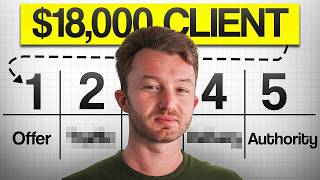
Daniel Fazio walks through his system for closing $18,000 B2B agency deals. The five components: an offer that creates new money for clients and feels low-commitment, reliable traffic sources, a standardized sales process with ROI calculators, scalable fulfillment using AI and hiring, and authority built through case studies and guarantees.
Chapters
So I want to talk about how we sign $18,000 deals step by step. If you don't know me, my name is Daniel Fazio. We've done $30 million over the past 4 years. That's across SaaS, done-for-you offers, consulting offers. Here are just some quick screenshots of some deals we've closed this week at the time of me filming this. So we got an $18,000 a quarter here, a $6,000 a month, another $6,000 a month, a $3,500 quarter. That was all in one day. And this is a pretty regular occurrence of what happens. Now, I started my first agency, marketing agency, probably, probably 6 years ago, and I was charging like $1,000 a month or $1,500 a month. And as time progresses, you're able to charge substantially more money over and over and over again until you're able to close like $18,000 a quarter deals here. And now, while yes, some of this has to do with like the thing you're selling, but a lot of it has not to do with the product you're selling. So like, yes, the base product of what you're selling, like the offer itself, needs to be worth that much money in the first place. But also there are a huge amount of components that don't involve the actual product that a lot of you guys are screwing up. You already have a product that could be sold for that much money, but you're just screwing those other components up. So we're We're going to talk about some various components today. And this is going to be more of a rant video. So if you want to just like leave this on in the background, like that's totally cool with me because I'm just going to like just talk what comes to my mind. All right. So component number 1, first and most importantly, is just an offer that cold traffic actually buys. So I just made 4 components here within a cold traffic offer. So the first is new money. And what I mean by new money is that the thing you sell must be positioned as making the client more money. Now compare this to like an optimization offer, and I'll give you examples of optimization offers that just do not work well on cold traffic at all. Like, they flat out just don't. So one example is a CRO agency, a conversion rate optimization agency. Now, it's very interesting about some of these conversion rate optimization agencies is they don't just sell conversion rate optimization. Like, they'll make like full landing pages and write copy and like they'll make ads and whatnot. And if that's what you're doing, good. Stop calling yourself a conversion rate optimization agency and start referring to yourself as something different that implies that the client makes new money that they weren't otherwise going to make before. So like, The conception of CRO agencies is that you just change a button color on the website and like you magically make— and then you get the credit for making all the money. Then you get paid because you changed the button colors. That's just not going to happen. Like, people just— they're not trying to pay you money based off you changing a button color. Let me give you another example of an optimization offer that flat out doesn't work on cold traffic. Never has, never will. Is a CRM reactivation offer. We do a lot of these AI business challenges, and I kind of talk to people about this where I'm like, listen, we had one guy come in, he was like, I paid $50,000 to learn how to make an AI business. And like, the guy was teaching me an offer where it's a— we run a CRM reactivation offer where we go to companies and they have a bunch of leads in their CRM and I send emails to them. I get a percentage of the deals that come through on that. And he was like, I'm having a really tough time signing clients. I'm like, yeah, bro, no shit, because you're never going to sign clients on that offer ever because it's not new money. Effectively, what you're saying here is, hey, Mr. Client, you have a bunch of leads that you are going to make money from anyway. And then now I'm going to write some emails that take me 30 seconds and then I'm going to get paid tens of thousands of dollars for the deals you close that we're going to close anyway. That's like what people think of that. And you're never going to get cold traffic to pay you for that ever. You're not making them new money they wouldn't have already otherwise made. It's so interesting because in that same room I was like, who in here has a CRM that has like 10,000, 20,000 leads in it? You've been in business for a really long time. You have a bunch of email addresses. A couple of people are like, yeah, me, me, me. I'm like, how would you feel if somebody pitched you that offer where they're like, pay me $3,000 and I'll reactivate some of your leads, or pay me a percentage of the deals closed? Every single one of them was like, no, absolutely not. Like, no, they're my deals. Like, they're going to close anyway. I don't need your help to close the deals that we're going to close anyway. It's not a new money offer. Compare that to something like, I don't know, you send cold emails for somebody and it's like, I'm going to generate you sales calls from cold traffic that absolutely were not going to occur outside of the thing that I just did for you. Or you run ads for them where it's like, I'm going to get you new sales from cold traffic. Get them— say you do something new, you make something new for them. So the product you're selling needs to generate new money, not an optimization of something that they already have. Right. Okay. The next is done for you. The more you position your offer to the client in a fashion that makes them understand you are doing most of the work, the better it's going to work. I'll give you, for instance, if you're trying to sell like a consulting offer to cold traffic where it's like, I'll teach you how to run your own ads or something like that, you're going to have a substantially more difficult time getting people interested in that offer. Like they don't want to learn from someone who they don't even know. They don't know you. Now you can have a warm audience of people who already know, like, and trust you, who already want to learn from you, and they'll buy that from you. But getting cold traffic to buy a coaching or consulting or course from you is extremely, extremely difficult. The more you can position your offer as done for you, especially when you're trying to sell an $18,000 deal— it's very rare that you're going to be able to sell an $18,000 deal to cold traffic unless there's like a heavy amount of done for you components involved in the delivery of that thing. Like, dude, I can almost assure you that you're not going to be regularly signing people from cold traffic for an $18,000 deal and it's like a coaching offer unless they already know, like, and trust you and you're like famous. It's just not going to happen. Again, that's what I'm saying. Cold traffic, it's not going to occur. Next is de-risking. So you want to make it less risky for the buyer to pay you money. So what does that involve? It involves having a guarantee or working on a performance basis. Now, what I have to explain to a lot of people is like, well, I don't want to have to give a guarantee. And then what I'll do is I'll kind of flip this. And I was like, okay, Mr. Whatever fucking person arguing with me, let's say I pitched you— me right now, I pitched you you your offer right now, everything that you gave me right here. Like, I'm gonna do that for you, and I'm not gonna give you a guarantee. Are you gonna buy it? And a lot of the times, like 99% of the time, they're like, no, I wouldn't buy that. I'm like, okay, so what makes you think that strangers on the internet are gonna buy it from you? What do you think this is? Like, do you think these people are just like dumb? Because they're not dumb. They have their own well-being in mind. Like, they're trying to not lose money, you know what I'm saying? So like, why is— you wouldn't buy your stuff, but you are expecting them to buy your stuff? Like, it doesn't make any sense. And a lot of times it, it plays in tandem with your level of authority and your level of market authority, unless you have amazing case studies and really big names behind you, like, you're gonna have an extremely, extremely difficult time not having a guarantee or working on a performance-based and trying to sell cold traffic that offer. It's really just not going to happen. It's just— your life is just going to be so much more difficult. It really just is. And a lot of people argue like, well, oh, well, what if they ask for the refund? It's like, that's why you have stipulations in the contract to make it so that— a lot of times someone will be like, well, what if it's the client's fault that they didn't get results? Okay, well, then you make client— you make stipulations in the contract where if it is the client's fault that they don't get the results, then they don't get a refund. It's what it's called stipulation. That's how every single person with a guarantee operates it. Like you only will give a refund if it's 100% your fault. And even then, like very little people ask for refund. It's just unless you're outright scamming people, right? Okay. Next is low commitment. So you must make the initial engagement seem less of a commitment. So like I give you, for instance, for this, if you have an offer where you say it's a one-time payment, there's no recurring fees like that, annihilate. It just absolutely annihilates. It's a low commitment. Or if you just charge a really, really low price, like that's also low commitment. Or you make like backout clauses like, oh, you can back out within the first week if you don't like it, or back out within the first 14 days or first month or something like that. If you make it low commitment, you're going to make it easier for people to say yes, because what people are scared of is losing money. That's what they're scared of. Like, it's like people are more concerned with not losing money than they are with getting the result that you're promising them. So you can increase the promise forever and ever and ever and ever. But what you actually need to do is decrease the risk, you know what I'm saying? And the commitment and just make it easier to say yes, because the pain of losing money hurts more than the joy of gaining it. It is a very studied phenomenon. Like, people— it hurts more to lose money than it feels good to gain money. So you need to use that to your advantage and understand that that's how people are evaluating the decision whether to work with you or not, to pay you any amount of money at all. You get what I'm saying? Okay, so let's go on to component number 2 is traffic. You need a way to get in front of the people who are buying your stuff anyway. There's only 3 ways to get clients. It's cold outreach, content, and ads. And you could consider like referrals or organic under content, like that would kind of like fall in there and you need to figure out one or all of these and absolutely blitz it to get a steady stream of people who are interested in hearing more about your offer. You just do. I think anyone who runs like a performance agency or a lead generation agency has had a client before and they say something like, you get me leads and I can close them. I close at 40%, I close at 50%. And what this client functionally doesn't understand is that, yeah, they do that with referrals of people who like you, they have an active client or they know someone or they're already interested with extremely high intent because they're warm traffic. And then, yeah, I'm sure you can close 40 or 50% of of your warm traffic, but it's like when it's cold traffic and you don't have an offer with these components, or at least most of them, then like, dude, you're not closing 30 or 40 or 50% of the people on the, on the call. It's just not going to happen. The problem is that they can't separate the statistics of their warm traffic between leads that are generated from cold outreach, cold content, or cold ads. They really just like don't understand that at all. And now there's another category of people out there who for some reason they think that like traffic just falls out of the sky, deals just appear. I'll give it, for instance, I see this all the time because I worked with literally hundreds of students who are learning from me and my coaching offer, like at any one given time. And what happens is it's so interesting because the amount of cognitive dissonance is so like profuse. It's actually impressive where someone will be like, they start, they build a bunch of stuff and then they like don't send any outreach at all and they're like not getting any leads. They're like, I'm having a really tough time, bro. I'm like, what do you mean you're having a tough time or something like that? And they're like, yeah, like I'm just not getting many leads. And I'm like, well, how much outreach have you sent? Zero. And they're like, well, I haven't started that yet. I'm like, dude, are you retarded? Are you like legitimately retarded? Do you have an IQ of like fucking 4? Like, is— what are you saying? You know what I'm saying? Or there's another category of person, say they're doing cold outreach or they're posting content or they're running ads and they're like, wow, I'm getting really backed up with fulfillment here. And it's like, I don't have time for enough sales calls. And like, I'm just going to like, I'm going to turn the outreach off and I'm going to turn the ads off. I'm going to stop posting content for a while to work on fulfillment. And then they work on fulfillment and it's like a month or two goes by and they have zero leads and they start the thing back up. And then like, it takes time for like the sales cycle to start lapsing and for things to warm up and for you to get momentum back. So that's like another like 6 weeks on top of the monthly. So now you're like 2.5 months. You're like, you spent an entire quarter of the year working on fulfillment because you turned your outreach off, you turned your traffic generation off. And it's like, well, you just like totally fucked yourself there. Like, of course your business isn't doing well right now. It's not surprising to me that like you're having a tough time now because like you turned off like the blood flow of your business. Like traffic is 33% of a business, sales is the next 33%, and then fulfillment is the next 33%, especially the people who are like, who haven't really started yet. If you're a beginner watching this, for instance, you think think that a business is fulfilling for clients. Like, that's what you think a business is, is like, I do the fulfillment for clients. No, no, that's one-third of the business. Two-thirds of the business is getting the people to buy the thing. That's what business is. A business is marketing and sales. It's most of the company. You know, it's the, the actual fulfillment of the thing is almost like a byproduct. It's just something you fucking have to do because like it would be illegal to not do that. You get to say like, that's if you could just spawn money with marketing and sales and have zero fulfillment, of course you'd have no fulfillment. Like, fucking no shit. So it's very important you understand, like, when I talk about like a cold traffic offer, like, you need something that people actually buy. You need to like get traffic to it. This isn't like a back thought. It's like the thing is the company, you know what I'm saying? Like, nothing is more important than that. Like, you just cease to exist without that. Like, straight up. Okay, so let's move on to sales. So largely every sale should look the same. Like, you pitch the offer the same way to every person, and 99% of people will have the same objections over and over again, right? When you learn how to diffuse those objections and make the logical case for buying, you'll start getting people to actually move forward. And I think something that's very important to understand is that there's a lot— there's a profuse amount of you guys who are like fear-based operators and like you're scarcity-based operators and you're like, you're scared to not close a deal or you're scared to disappoint someone and you're so overly scared to make any kind of like implication that somebody would get any result working with you at all. You got to like really believe that you're going to get someone a result because like, one, they're going to understand that and like how you're conveying it to them. You You can't sit here and be like, oh, you may or may not get results. It's like, no, you're selling someone like, yes, I'm pitching you because I think you're going to get results. I think you specifically are going to get really good results. That's like the demeanor of like— and this goes back to what I was saying earlier in the cold traffic offers thing where I'm like, dude, the only reason somebody is going to pay you money, like you're running an agency or any kind of B2B offer, like a service business, the only reason someone's ever going to pay you is because they want the result. They're not paying you to maybe get the result. You know what I'm saying? Like they're doing it to get the result. It's almost like if you were to go out to dinner, like you went to a nice steakhouse and it's like, all right, the steak, the New York strip is $80 and we may or may not bring it out when we bring everyone's food out. Like some people may not get their food and you'd be like, what the fuck are you talking about? You may— I may or may not get the food. What? I'm paying for the food. Give me the food. And the reason why you're eating the food is for sustenance to survive and secondarily to feel the pleasure of consuming the food because it feels good. Like that's what you're buying. The reason why why somebody pays you for lead generation or marketing or email marketing or AI or whatever the fuck it is you sell is for them to get a tangible, measurable business result. So therefore, when you're selling this to them, it needs to be very clear. The pitch is like illustrating to them that you're going to get a very clear and tangible result. A lot of that is facilitated through what we like to call ROI calculators. And it's like what an ROI calculator is. And you can make this in like a Claude artifact or something like that. And it's just like you punch numbers in where it's like, listen, I think for your offer, we could get this many calls booked. You'd probably close cold traffic at this percent. If you're paying me this much money, that means your cost per call is this much. If your offer price is this much and you close this much, it means that you're going to get a 3.5x ROI on what you pay us. Right. And it's like, that's what you do. You walk people through ROI calculators and we do this all the time. We have ROI calculators for our offers, like especially the $18,000 done-for-you cold calling offer that I just showed you pictures of above. And it's like someone comes on, they're like, yeah, I'm interested in buying cold done-for-you cold calling from you guys. Well, why is somebody going to buy done-for-you cold calling from us? Because they want sales meetings booked. They want sales meetings booked so they can close them and collect money. So it's like, well, don't you think it's a good idea then to have an ROI calculator to show them like, well, you could probably expect this many calls, and if you're paying us this much money, that means the cost per call is this much. You charge this much for your offer. Therefore, the cost to acquire a customer for you would be this, but you collect this much from them. So your cash-on-cash return would be this. But you also have the client LTV over here. So the client turn out to be is this. So that means your total ROI over the next year would be this much. Now they're like, oh shit, I can make like a lot of money if this works out. You know what I'm saying? Like, a lot of the problems with the sales that you guys have is that like you're not showing like the actual results that someone can get. You know what I'm saying? It's like a huge issue. You gotta stop doing that. You need to show people that like you get this result. And then they're all gonna have the same objections pretty much 99% of the time. You're never going to hear like a unique objection. Everyone thinks they're unique. It's like a little special snowflake fuckery where it's like, well, I'm an Amish gazebo installer and I need to see a case study from an Amish gazebo installer, in which case, like, you would need the same talk track for every single other person who also thinks that their special snowflake business is unique to everybody else's. It would go something along the lines of, hey, I actually get that proposition a lot, and you may think that your offer is like super niche and unique and obscure to make this actually work, but in fact, we actually get the best possible results when somebody has a really obscure business like yours. Let me show you examples of other obscure businesses that there would be no shot we ever get another case study of or just exists so little of you. You get what I'm saying? So like, that would be one kind of talk track you could use with that. And now what's important to note about that is like, if you have an objection, maybe you're testing out different objection handles for that specific objection, but then you find one that works. You don't fucking say a new one. You handle the objection the same way every single time because that way of handling it works. Now, it's not going to work for 100%, but you're looking for the way of handling the objection that works with the highest percentage of people. I think what's also important, if you're more of a beginner or you've been in business for less than in like 3 years or so, you're thinking all of this shit happens in like a fucking month. It doesn't work like that. It's going to take you just years to figure out gradually, like, what shit works or not. Yeah, I'm saying, especially if you're just figuring it out on your own. But if you work with someone like me, then I can just give you all the answers, right? Links in the description, by the way. Okay, so let's go to component number 4 is fulfillment. So if it's just you trying to do all the client fulfillment work manually, you're not going to last very long. Like, you're really just not. You have to learn how to use AI to automate everything possible and how to strategically hire and place key team members to manage the system for you so that you're not thinking about fulfilling for clients all day long. You have to be able to remove yourself from the manual day-to-day and communication with the client. What actually is the most integral here is the communication with the client. And you do this through customer success managers. That's generally one of the, like, the first things that you'll start hiring out for, along with people who actually, like, fulfill the components of it. So like, I don't know, say you were a cold email agency, like one of the first things you're probably hiring for, like lead list builders, right? It's like super easy to find people for this. You make what are called scorecards, called hiring scorecards. Cards. You lay out what the compensation is, you lay out what the actual job role is and the tasks involved with it. And then you go source people either from social media or you make job posts on LinkedIn. Or if like you're in something like my programs at Client Ascension, like we can connect you with specific people for specific roles. It makes it much easier for you. But the premise here is that you one by one figure out like, okay, you're fulfilling for a client and you just map it out like a construction assembly line. Like, okay, whenever I sign a client, this has to be done, then this, then this, then this, then this. Like, okay, it's really just as simple as going, looking at each step and first starting with with, can I automate this with AI? Yes or no? If you can, then automate it with AI. You go to step 2, can I automate this with AI? Yes or no? Say you can't. It's like, okay, so then I need to hire someone to manage that. Like, okay, then you hire someone to manage that. And it's like, okay, what about step 3? Step 3 is AI. Like, okay, cool. And then step 4, step 4 is AI too. And then like, now what'll happen is you'll spend significantly less time doing manual fulfillment for somebody. And then what'll happen is now your next annoyance is gonna be, I always have to fucking talk to these clients and I don't wanna talk to these clients. Okay, so then you're gonna get a customer success manager. And then generally what will kind of happen with a lot of times is you'll make like a pod. And a pod is like you have a customer success manager who has like clients under management, and then they manage like the people who like do the fulfillment work. So might be like this person gets the domains and does the lead list building or some bullshit like that. Or if it's like email, it's like they have copywriters under them and designers under them. Or there's just like someone who knows how to use AI tools for design and AI for copy. And then like now your customer success manager is managing people who are managers of AI themselves. You just go one by one in the fulfillment assembly line and just like AI or person, AI or person, AI or person. I go through this conversation with people a lot. You get to a point and you're like, your bottleneck is that you spend too much time even just thinking about your clients or you spend too much of your time physically talking to clients. You need to stop doing that. You can't do that. There's no way. There's just absolutely no shot you are ever going to build this company past like $20K or $30K a month. Of like, you're the one doing that shit. It's not going to happen, bro. And it's like, you may be under the impression that like, no one can do what I do like me. And that's just wrong. I think it's very important if you think like that, like, you need to understand that you have a skill deficiency of being able to teach and manage and train somebody how to do it. And that's just a skill you lack. And until you evolve and grow into that skill of being able to source and hire and manage somebody to do as good of a job as you, you're not going to make more more money. Flat out, you're just not. Sorry, it's not going to happen. You lack that ability right now. And if you have any intention of making significantly more money than you do right now, that is what you need to do. That just straight up is what you need to do. Like, there's just no ifs, ands, or buts about that. It's just— that is the final diagnosis. Component number 5 is authority. So let's talk about this real quick. So if you want to close an $18,000 deal, like, you need some level of authority here, bro. Like, you're really not gonna be able to— like, and there's different kinds of authority. There's like received authority, and then there's like competence as well. I'll give it, for instance, I don't know, let's say that like, oh, you run an ad— an advertising agency, you run Meta ads for like e-commerce brands or something like that. You're a software engineer slash performance marketer who worked at Meta for 6 years. Like, you've never signed a client, but you worked at Meta. When you talk to clients, you're like, yeah, I worked at Meta. Like, you know what I mean? Like, I saw all of these accounts. They'd be like, oh shit. Like, yeah, like, they would be like, slow down. Your level of authority would be extremely high without having clients. It would also be probably high in just a level of competence. You might have studied like thousands of ads and thousands of campaigns and know what works and doesn't work. Or you may have worked at like a really large company, just like really know how to get results. And it's like the way that will come across would be in how you speak about the thing. Like it would be pretty evident to somebody who isn't a complete retard that you know what you're talking about just based off the shit you're saying. Now, a category of you guys watching this, and I don't say to be a dickhead, but you literally don't know anything. You are not competent at all in any domain whatsoever. Like, you don't know shit. You really don't. You don't know anything about advertising. You don't know anything about hiring, sales, marketing, copywriting, operations. You know legitimately nothing at all. You couldn't have a conversation with anybody who runs any size of a business and give them any alpha at all. You know what I'm saying? That's where the issue is. You know what I'm saying? And if that's you right now, you're just straight up not gonna close an $18,000 deal. You're not gonna do that. You just won't. So what does that mean you have to do? It That means that if that's you and you don't have any authority, in order to close deals, you need to have a guarantee on your offer or you need to work on a performance basis. That's how you compensate for the fact that you don't have any authority. That is the only way to do it. So if that's you, like you really have no authority, like either external or implicit, and you are also saying, I'm not going to do a guarantee, I'm not going to do performance basis, you are fucked and there's a 0% probability you are successful ever. So sorry. But now for everybody who does have some levels of authority, I want to read off the these points to you. So like, you need case studies and to show you know how to get results. So if you go on Google, you search Daniel Fazio case studies, and then you're going to get to this YouTube playlist over here. This has a bunch of my case studies. There's a ton of them. There's 51 videos in here. I post one, like, either one a week or one every two weeks or something like that. When I sit here and like, why can I get people to pay me tens of thousands of dollars levels of consulting or like products for me? Like, why is that? And the answer is because I have these case studies. This guy hit $130,000 a month working with me. This guy hit $450,000 a month working with me, and he started at $2K a month. I have so many of these people, people who are running 7-figure businesses who like did it through me, through my help and my team's help, and like everybody at Client Ascension's help. So it's like when there's hella evidence of this continuously over and over and over and over again, the amount of money we're able to command goes higher and higher and higher because the perceived probability of success increases. As I show more and more and more and more and more and more people who are getting results, it's sits easier with you where you're like, okay, well, this guy like isn't like a scammer, you know, he's not going to outright scam me. Now, I'm sure like people have bought and gotten no results. And side note, that's because most of the time they don't fucking do anything. But secondarily, is that like, well, I know the guy probably has an actually good product if people are like actually getting results with it. As long as I believe in myself and I don't think I'm a complete idiot, I'll probably be able to get some pretty damn good results. Right. And like, that's normally the demeanor of somebody who does get results. Results who comes and joins in my shit like that right now. For you and your offer, it's the same thing. So it's like now we have like— I'm talking about like the Done For You Cold Calling offer and it's like we're on a sales call with someone and we just like pull up the dashboards of people who are also on the Done For You Cold Calling offer and we're like, yeah, this guy's booking like 4 meetings a day. And here's— and so far, like, oh, it's 2 p.m. right now. We've already done 1,614 dials for him. Oh, and we yesterday we did 2,041 dials for him. You know what I'm saying? It's like, holy shit, you know what I mean? You show like a live result. It's like, oh, okay, like this isn't bullshit, you know what I mean? And especially if you have a case study from like a huge name in the industry. Like, I know there's this one guy right now, he's teaching like content marketing or whatnot. And the reason why he was able to blow up so fast was because he worked on Hermosi's team. When he started his own content agency, he didn't have a case study. He was just like, I just was the director of content at Acquisition.com. I'm like, oh, okay, well, now everyone wants to hire for him just because of that. The fact that you even just worked with Hermosi is like— that's what I'm getting at here. That's what you're trying to facilitate, is shit like that. Okay, so I've got some good news and some bad news. Uh, the bad news is that this takes a tremendous amount of effort to perfect, especially if you're doing it from zero. You will encounter hundreds, if not thousands, of different problems you couldn't even conceive of existing, and you will more than likely give up and fail. That's what happens with most people. The good news is, is that you don't have to do that. You can just take the shortcut of getting everything you need from people who are already actively doing it, like the systems, the training, the coaching, the setups. And I've got two ways for you to do that. First is the AI-Assisted Agency Program. This is the intensive program where we do this one-on-one with you, where we help you build an AI-assisted agency. We don't just drop you in a group and a course and tell you to figure it out. We do biweekly one-on-ones and we make sure that you're getting everything done to give you everything as possible to build an AI-assisted agency and get it to $10K, $30K, whatever a month, just like a lot of these people and the ones I showed you earlier inside the case studies. There's 23 group coaching calls a week. There's a live community. There's DMs with all the expert coaches, there's DMs with me, you get on calls with me. Like, it's a huge thing, right? Getting really good results with that. There's also the AI Business Challenge. That's a 4-day live condensed version of this business model, the AI-assisted agency. It's 2 to 3 hours of teaching per day. There's no one-on-ones like the AI-assisted agency program, but you will see what to sell, who to sell it to, how to get clients, and how to build AI agents. This is only $67 right now and starts on June 1st. If you're watching this after that, you'll just have you don't have to get in the waitlist after because the sales close on June 1st and you will not be able to join after that. Right. I think that's one week from today after I post this video. So if you're watching this after that, then you got to get in the waitlist. Sorry, but if you're watching it now, get it now. Right. Okay. And again, like, these are the people who get results like Daniel Warner, $0 to $30K a month in 90 days. Matt Huang, $0 to $20K a month in 3 months. James Pimble, $0 to $15K a month in 60 days. Doby Lynette, $12K in his first month. I was just talking to Doby I mean, he just hit it. He just hit his first $60,000 a month. So I think that was like, I don't know, his 8th month in or something like that. He had a $60K a month. Chris Burns, $0 to $10K a month in 6 weeks. Cameron Hotel, $50K in 3 months. Onch, $21K a month in 6 weeks. Anas, $55K a month in 2.5 months. Like, we get results. Does everyone get results? No, because most people are bums. And like, quite frankly, a lot of people are straight up retarded. But if you think you have a level of competence where it's like, wow, I see a lot of these guys getting results, like, and I'm not an it, so I should probably be able to do this too. If you're thinking that right now, like, you might be right. I'm not promising you do, but we do have a money-back guarantee on it. 60-day money-back guarantee on this, right? If you come in, you think it's a bunch of BS, within 60 days you can ask for a refund and we'll give it to you. But so if you think you can get results with it, like, come on in, dude, because like, hella people are, right? All right, so that's it for this one, lads. Leave a like, comment if you have any questions, I'll get back to them. If you're watching this and you look below the video right now and if you see it says subscribe, just click subscribe. Like, you're probably not subscribed. I don't know why you're not. Doesn't cost you anything. It's not like it's like your entire YouTube feed is going to become exclusively me because you subscribe. It's just that there's a higher probability you'll see my next videos, and if you choose to watch them at that specific point, then you can. But so click subscribe. That's it for me, lads. All right, love you. Peace. Bye.










