Making $650,000/mo as an Ecommerce Email Marketing Agency
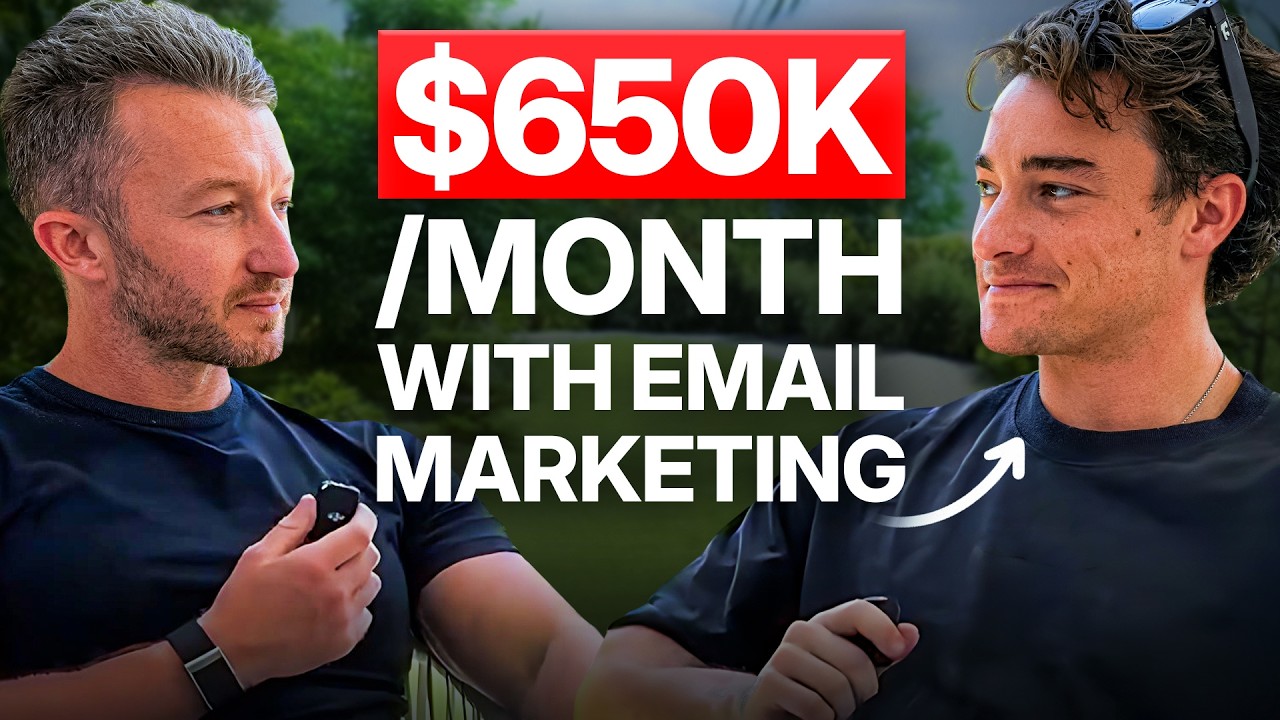
Max Sturtevant built an ecommerce email and SMS agency to $650,000 per month by charging $3K-plus monthly instead of underpricing, hiring a pod of part-time specialists, and using content to attract clients. He posts daily Instagram reels and weekly YouTube videos breaking down brand emails from Gymshark and Rihanna, funneling leads into a three-day newsletter sequence with a 50% close rate.
Chapters
So I finished the year around $40K a month. That was like 8 months later. Went from like $7K a month to like $40K a month.
You're at like $650,000 a month. How did the business change in terms of like the fulfillment, how you were getting clients when you started getting up to that level?
The biggest thing for me is always just like, go figure out how to sign clients, then figure the fuck out later. If you get better at something, then the content you put out, the ads you put together, whatever sales material, like people can see that, people can sense it. Back in the day, I'd have some months where I'd sign literally like 8 to 10 brands. I graduated at $250K a month and 50 employees. My first line in all my proposals and all my outreach when I was doing Instagram outreach and manual cold email was literally, I am not an expert recreating an email for Gymshark. That's like a recurring series that I do is, you know, you come on and you'd be like, Gymshark's marketing sucks. Got me like, Clive.
All right, what's up, everybody? I got Max Sturtevant here. And Max, you're at like $650,000 a month or something, right?
Yeah.
Tell us about the business. What do you sell?
Yeah, so we do email, SMS. I'm wearing the Well Copy shirt, had to represent, but we do email, SMS, SMS retention marketing for brands. We also do like subscription management. And so yeah, that's what we do. We run— as far as like getting clients, it's fully organic. I'm starting to launch ads here soon, but it's just been fully organic off of Instagram, YouTube, and full funnel into newsletter, all that sort of stuff.
Nice, nice. So my audience are people, a lot of them are starting from zero and they want to start an agency, but then we also got some more advanced people as well. So I'd want to get some information that'll help everyone along the entirety of the journey from going from zero to $650,000 a month, because you started at zero—
what was it, like 3 years ago?
Go and we were trying to get you into Client Ascension.
Yeah.
And it was, um, do you remember that you hopped off? You literally like ended the sales call because you were too scared to join to make that investment.
Yep, I ended it. I was too scared to spend over 5 figures. I was doing like, I was doing like in between $5,000 and $10,000 a month. I was a sophomore in college. This was beginning of 2023. Um, and I was just like too scared. I wasn't ready to make any sort of investment like that, but I had the money. I probably had like 30, 30, 40 grand in the bank account, but I was just too scared to make the investment. And then I was just like, all right, I'm just gonna watch these guys' YouTube videos, just gonna do that. Fiddle farted around, really didn't do anything for for a few months, just like, yeah, these guys give a ton of value on the internet, um, but no accountability, none of the true sauce was there. So I was just like, all right, fuck it. And so then I just got on the next call, I booked another call, and I was like, yeah, just, just send the, send the fucking— and then everything took off from there because I was like flat for those few months just trying to, try to teach myself just off your guys's content. And then finally joined, and then it was like the commitment and then also the inside value in there, the direct access to coaches, then everything skyrocketed from there. And so I finished the year at like, you know, around like $40K a month, uh, so that was like probably like 8 months 8 months later went from like, you know, like $7K a month to like $40K a month. And then everything kind of blew up from there.
Nice. Could you walk— so like starting from the very beginning, kind of from getting from zero to maybe like $10K or $20K a month and getting those first couple of clients, that's, that's something that a lot of people struggle with is one is like the first issue tends to be the mindset to even start your own business at all and like what you kind of have to go through internally to be able to make that shift to be like, I'm going to do this. And then secondarily after that, like how did you get your clients beyond that? Like what, like what did that process kind of look look like?
Yeah, for sure. So the first thing for me, like, when I was getting started and I was just like a fucking college kid, um, I didn't have any sort of like experience, uh, the big first jump was like realizing that most business owners are retarded. Yeah, because like you think, you think they're like, oh, this person runs a business, like they're not gonna, they're not gonna entertain me or anything, you know, they run a business. And so that was like the first block where I was like too scared to reach out, and then I have this imposter syndrome. A lot of people running businesses are retarded. They don't know what they're doing and they need help. And at the end of the day, also, they are so strapped on time. And so I realized that a lot of these people, they didn't give a fuck that I didn't have any experience. They just needed somebody to figure it the fuck out for them. And so that was like the first thing where, you know, I went at it at the mindset of let me do shit for free to start and just so I can learn.
Because that's what I tell a lot of people as well, or like performance basis.
Exactly. Purely like as confidence boosting for me, it's just like build up the confidence. But, you know, I wasn't thinking it at the time.
I was the same for me. That's why I wanted to do it, because I felt the imposter syndrome. Like, how am I going to get money from someone before I even know what I'm doing?
Exactly. Exactly. And so then it's like a win-win, you know, even if you fail, then the business owner's like, oh well, you know, I got it for free. And then after I did it like once or twice, I was like, all right, fuck it, I'm going to try to, try to pay, try to charge for it. And it was just like super cheap. I started on hourly, like I was ripping Upwork for my first clients. And so I was just like, I'm going to just do hourly. And if somebody's ever just like unhappy, I'm going to give them a refund. Like, that was just my mindset. And so it's just like, paid to learn, get paid to learn. That's how I treat it. And I was always transparent, upfront, and honest. I didn't start off the bat like literally my first line and all my proposals and all my outreach when I was doing Instagram outreach and manual cold email was literally like, I am not an expert. Like, I'm not an expert. I am like beginner. I am new. But here's like a video so you can get a sense of my energy. Here's some of my work. There's probably experts out there who are probably going to— they're probably a little bit safer of an option. They're going to be a a little bit more expensive, probably they're going to give you a little bit less time and dedication. But what you get with me is you're going to get a cheaper price and somebody who's hungry and ready to learn. And so people, people saw that authenticity as well. So that's how I was kind of like able to get over that jump because at the beginning I was trying to be like, hey, I'm an expert email marketer, copywriter. Like I studied David Ogilvy, direct response. I just didn't feel authentic and people could, people could pick up on that and everybody was saying that. But I, where I got my initial confidence in my first clients was just being transparent, like, Hey, I don't have much experience, but here's some of my work. If you like it, I can probably do it for you and I'll probably be a cheaper price than some of the experts. And really, I'm just here, here to learn and I think I could help you out. And it's just like pretty authentic. And then people like that and it was great low barrier to entry for me to, you know, not feel like an imposter.
All right, cool. So now the process of actually getting good at the thing, it was all you doing it or like the actual intricacies of conducting email marketing for an e-commerce brand. Were you like really shitty in the beginning and then like now, like, over time you've, you've built the skill of I'm probably one of the best e-com email marketers on the entire planet. And how have you found that as your skill level has increased, how has that affected your income and like how you get paid by clients? And like, do you— have you found that it's if I get really, really, really good at this, I tend to just make substantially more money? Exactly.
It is exactly that is if you get better at something, then the content you put out, the ads you put together, whatever sales material, like people can see that, people can sense it and like there are a lot of people like email marketing, like they just fucking rip my content, but it's not like authentic.
They do. I see that all the time. People be ripping your stuff. Yeah.
Oh yeah. Consistently. Everybody follows the same stuff, which is fine. Like I was doing that back in the day because like you kind of like got to replicate other people at first before you learn and find like your sort of voice. And so I was definitely like doing similar stuff. So it's like, I don't, I don't knock them. Like, obviously don't copy it bar for bar. Yeah, there are people who do a lot of that. But yeah, when starting out, like the way that I got good was you know, hands-on, like YouTube can only get you so far, but it always starts off with YouTube University. And a lot of people are like, hey, fucking like the biggest, biggest barrier is like figuring out where to start. The biggest, biggest thing is everybody's like, I don't know where to start, what do I do? And the answer— and that's like the biggest first block and something that I dealt with a bit, but I kind of got over it pretty quick, I think, compared to most people realizing that like there's no perfect way to start. There's not a step-by-step list of here's how to get good at email marketing, do this, then do this, and then do this, then do this. There's no perfect system, whatever. It's just you start off with a simple YouTube search, how to do email marketing, start with literally any one of those videos. Yes. Like you could try to find the perfect video, but there's not going to be a perfect video. And the odds of you finding it is going to be super, super low. So just pick one and you'll go down different rabbit holes. And so that was, that was me where I was just like, hey, I'm going to spend a couple of weeks just like literally all day, every day. I'm not even going to do shit. I'm just going to like take in some of the content to get a base level knowledge. So I started off getting a base level knowledge about like email marketing. And doing that. And then from there I just went straight into outreach. I was like, hey, let me do this shit for free. I created my own Klaviyo account, set up like a fake store so I could just get inside of Klaviyo and see what that's like. I hit up people that I knew who had businesses and just like friends, my friend's mom, like she ran like a small little, small little store. I was like, hey, can I like mess around with your email stuff? I won't do anything. And I was able to just click around and mess around in Klaviyo. And so then I got my bearings a little bit, but I just within a couple of weeks of finding out what email marketing was, I was already doing outreach and already trying to figure out how to get clients and get my hands dirty. And I just treated it as, hey, I'm gonna get paid to learn. I might either do it for free or I'm gonna get paid to learn. So I had some of my first few that I did where, you know, it was free, but at the same time I was also doing like some, some paid stuff. So some I did free, some I did paid, and then just get your hands dirty within the platform. And that was literally it. And so that's what I recommend for anybody. Like, if you're going to learn something, get a little bit of base knowledge, but don't spend fucking months trying to do something like the, the level and the, the speed of learning is just so much higher when you do it yourself and you're actually hands-on doing it. So I learned a ton just doing that and actually getting my hands in accounts. The other really valuable thing that I did was like, is just recreating emails. I was just like, hey, let me just like fucking recreate. So I'd go, I'd find like a brand that I liked, a brand that I knew of. Sign up to their email list, be like, all right, I'm just going to fucking recreate this welcome email just for fun, just to learn it and get and get myself in the—
just get some practice, design it and just, just.
Yeah, exactly. Exactly. And then what I do is I, I was like, hey, I'm going to do like 2 of these a day. And so I started doing those 2 a day. I started to get, get the hang of it. It took really long at first and the emails were shitty. They slowly started to get better and then What's great about that is it's practice and then it's also material that I can leverage in like, hey, look at some of my work. So it kills two birds with one stone. And then I was able to also kill three birds with one stone. By then I would only— I would do it for brands that I think I could work with. So then it's like, hey, I'm going to treat this as practice. I'm going to— I found a brand on Instagram and signed up to their email list. I've been doing welcome emails for like 30 days straight, so I have a sense of like what I think we should do. And then I'll just like be like, all right, I'm going to do this brand now. Recreate theirs, and then I'll be able to like, you know, leverage that in portfolios, be like, hey, this is— these aren't brands I've done, these are just mockups. So I could leverage that to sign more clients. And also I'm getting practice and then I just send it to the brand and be like, hey, made this. Yeah, if you like it, cool, hit me up. And I actually was able to get a couple of conversations and some deals from that as well. And so that was like really just like get your hands dirty. And the thing is, like most people, they just like don't fucking do shit. And that's the biggest problem. Like if you literally have to be retarded if you dedicate 8 to 10 hours a day towards something for 6 months and you're not making thousands of dollars. Yes. Like, literally retarded. If you have been in this for like 6 months and you're not seeing success, you just aren't working 8 to 10 hours a day doing it. Like, yeah, it's facts.
The self-education thing is probably where most people screw up because when I first started, I went on YouTube and I was like, Facebook ads, just how to do Facebook ads. And then I watched the first 2 pages of videos and it was like, email marketing, how to do that. You watch the first 2 pages of videos and then you just screw around in exactly the fashion that you said. I think the problem with a lot of people where they kind of get hung up is they're used to school where it's like, this is the laid out curriculum and then you take the test and the test is the epitome of the success. Yeah, but that, that's, that's just not how it works in real life. It's, it's the test is can you sign a client and can you make money with this? And like, no one's going to just like hand you a client that you need to go like manually find the work, which is another like reframe. People think that, well, why would I want to start something where I go off and I try to find more work? I don't want to work more, you know what I mean? And that's, that's where people kind of screw up, where I don't want to get sales calls booked because then I have to be on a sales call and I don't want to be on a sales call. Yeah, they don't make— yeah, exactly. They don't make that connection that that's just the beginning stage of creating an entity that is a business. And then you eventually have other people facilitate the things that you have built systems around.
Exactly.
And they just, they don't compute that. So when that kind of starts to flip is when people start to make substantially more money, which kind of brings me over to like when you start hitting $20K a month, $30K a month, $50K a month, how did the business change in terms of like the fulfillment, how you were getting clients when you started getting up to that level? For sure.
Absolutely. So for me, like the first $5K to $10K a month, I was a freelancer. And so like when I joined Client Ascension, it was like that was the transition from freelancer to like agency.
Yeah.
And so for me, like 5 to 10K, you know, first one thing that a lot of people fuck up early on that fucks them over that I didn't deal with, I don't know. I don't, I don't know why I didn't charge super low prices from the beginning. Like the lowest I've ever charged is $3,000 a month. But a lot of people I talk to, they're at, you know, $1,000 a month for, for their services. And so you max out at like maybe they're making maybe they have 8 clients at $1,000 a month, but they're working all day, every day. And so it's like they could hire people, but that like substantially dips into their income and then their margins get fucked and they're super scared to do it because there's a large part of my income to even just hire a fucking designer. A designer is going to be $2,000 a month. That's 25% of your income. And then you only get a certain amount of time back. So a lot of people fuck that up with that. And so but for me, I was like, I had 3 clients at $3K a month and I was making, you know, $9K a month and I wasn't working as much. And so I had, I had that time. So that's one thing that I don't think people do well enough. Is, you know, charge high prices, just like get, get to that point and don't get into the trap of specifically for email marketing. So I talked to a lot of those people who are charging $1K a month and they should get stuck where they're working all day, every day, but they don't have the cash to, you know, reinvest to free up their time. So that was one thing. But as far as like the big transition, so I was freelancer from like $5K to $10K, it was just me. And then the biggest thing for me is always just like, go figure out how to sign clients, then figure the fuck out later. And so, you know, I was still working all day, every day, but my extra hours I would spend on, you know, doing outreach and setting up cold email because I was then— which you guys helped me get set up with cold email. It was— that was then sign clients. There was one month where, you know, I signed like 3 clients and I was like, fuck, I cannot do all this. Yeah, but that was one thing where I didn't freak out. I just figured it the fuck out from there and started to hire some part-time people. And so that's what I did. So the— it was starting off with just freelancer and then I went to part-time sort of like people to help out. So part-time designer where I paid them like per project or like per email just so I had flexibility and it wasn't like, oh, I have a salary that I'm paying. It was just like, hey, per email. And I know for these brands I'm getting this. And then I had some— then I brought on somebody for, for uploading emails into Klaviyo. So I brought on these different contractors once I just got absolutely overworked. I, I waited as long as I could to not hire, but then I went to part-time to free up some of my time to be able to, you know, focus on cold emails and all that sort of stuff. And I naturally kind of built out my first pod where it was a copywriter, designer, a Klaviyo technician, somebody to upload the emails and develop them in, and then an account manager.
How many clients can they handle?
Yeah, about 6 to 8.
Okay.
6 to 8. So it just naturally like So when I was at 4 clients and I was doing everything and I was overworked, the first thing that I wanted to give up was fucking designing emails. Suck at design. So I brought on a part-time designer and it was like, hey, 4 clients, I'll pay you like, say, like $200 per client and hey, I'm going to get more clients. And so like, you can start out part-time and might move to full-time. So then I had them. And so, you know, for $800 a month, I was able to unlock, you know, 10 hours a week or whatever it was, maybe not that much. But then after we signed more clients, now we're at 6 clients. Now I'm back. So I saved some of my time, but we signed more clients and now I'm spending more time on copy and everything. And then I hit a breaking point. It's like, all right, cool, let's bring on a Klaviyo technician to upload the emails. Brought on the Klaviyo technician. So now all I'm doing is account management and copy. And then it was like, okay, sign more clients. And I'm at like 10 clients, 10 to 12 clients. And it's like, all right, I need somebody to help with strategy and account management, client communication, all the reporting. Then I brought that person on again. All these people were part-time. And then once we got to like, you know, 8-ish clients, it was like, okay, you guys, let's go like full time, be exclusive to me. And then I was able to free up all my time. I still overseeing them, still a lot of time with that, but that was like the natural transition. And so then, you know, when we have 6 to 8 clients, we're at roughly like $20,000-$25,000 a month because I was on average charging like $3,000 a month. So that would then be— so I joined Client Ascension in like April. This isn't like a case study, by the way. I'm not trying to like push a case study, but like that's how I view everything was like the Client Ascension, like before and after, because that to me was the shift from from freelancer to actually running a business. And so April is when I joined, and so by November I was doing like $30K a month. And so, um, or by October, um, and so then at that point, you know, I probably had like 6 team members and it was just like one of each person. And then I was doing strategy, and then things really took off like at the beginning of 2024.
Is that when you started doing content?
Yeah, so I'd been posting content kind of since day one, like literally like 2022, once I first got into it, I was documenting my journey because like that was also like the big thing for me. I was in college, I didn't know anybody doing this stuff and I didn't have anybody to talk to. And I just came across people on Twitter. And so some of the first— and so like I would have like the online people that I'd follow. And so some of the first people that I followed were like Christian and Andre, and I don't know how I came across them. Well, the first program I joined was Cardinal Mason's, and Mason, like he had podcasts and I heard about like, you know, Andre and Christian, and then I saw that they had a podcast and I'd listen to the Agency Founders podcast and then they're just like, hey, follow our Twitters. So then I had a stream of people on Twitter and I saw them posting. I was like, oh shit, let me start posting. And then so I was posting since like day one, kind of just like documenting the journey. And then so that was like mid-2022. I started posting, started to like, you know, get— talk a little bit about email, but it was mostly about like business. I didn't really have anybody to talk to. I'd get on networking calls and it was fun because because nobody else was talking about that at school. And so then I started posting YouTube videos at the beginning of 2023. So right like around when I joined Client Ascension, I started posting YouTube videos kind of like 2-ish per month. And it was at the end of 2020— 2023 when the YouTube video started to book calls. I remember it was September. I was in Croatia, I was studying abroad in Prague, and I remember I was in Croatia at the time and I had a brand. I took a sales call on the beach in Croatia and the dude was like, like, hey, yeah, I watched like your YouTube tutorials, and it's like, yeah, like, I'm ready to see sales calls, I'm ready to buy. Yeah, that just changed my whole life because like you guys were talking about, hey, like nobody's gonna like just start posting YouTube content, um, and I was like, nobody's really doing it for email, um, but use it as like a sales asset. So if somebody books a call off cold emails, just like send them a YouTube video. So that was my whole mindset. I was not expecting to get clients off of it, um, and so it was just like a sales asset and put it on my website to prove that I'm a real person. And then that just blew my mind because I was like, where'd you I was just like, hey, how's it going? Like, tell me a little bit about business. He's like, oh, you know, I have this brand. We're doing like $100K a month. I've like, I've been watching your YouTube videos. I set up one of the things that you taught and it like generated me money. And I'm just like, pretty, pretty filled up and I've watched all your stuff. And so it's like, what's the price? Like, I'd love to work together.
Nice.
Okay.
Yeah.
And then that just changed everything. I was like, okay, fuck, let's go crazy with this. So then I started posting every single day and then I was like, nobody was posting email on YouTube. There was one other guy and it was great because it was like instant and I was able to start signing like at least like 3 to 4 brands a month. Organic YouTube. Nobody else was doing it for email. And so I was really early with it. Now, like everybody's posting on it to try to get clients, but I was pretty early on it. I don't get as many clients today from it. Like, it's like back in the day, like I was even— I'd have some months where I'd sign literally like 8 to 10 brands on like the fucking recurring contracts just from YouTube. It was fucking insane., and so that's when like I started posting the YouTube content, started to pick up. And then also I started posting Instagram videos at the end of 2023. Nobody was doing that for email. Um, and I, that was like after I started to get clients off of YouTube, I was like, oh shit, like if there isn't a proven path for something, like you can still get clients from it and unlock a new acquisition channel. Cause for me, like my whole life in business was copy what other people do, copy what they say. Copy your guys' exact cold email systems, copy your YouTube video structures, like everything. And it served me well and I hadn't like found something new for myself. But when I saw like YouTube, I was like, oh shit, I can kind of just do stuff. So I saw the Instagram opportunity.
You just do stuff.
Yeah, you could just do stuff. And so that was the first thing that gave me confidence there of just you just do it. And so I was just like, all right, Instagram, everybody uses Instagram. So it's like it would be retarded that there aren't clients like watching videos on Instagram, potential clients. And so then I started posting and in 2023 I was posting like every single day, finally I had my first video to pop off in March of 2024, and that one reel alone got me like 5 clients just from—
How many views is it?
It's like 150,000.
Damn.
It was me recreating an email for Gymshark.
Oh, have you made a series on that? Like doing that? Yeah, that's so smart.
Everybody does it. Yeah, but— and so that's like a recurring series that I do is, you know, you come on and you'd be like, Gymshark's marketing fucking sucks. And so that grabs normies' attention. It grabs like anybody's attention. If you highlight a brand or something that people care about. Because like the problem, like I was just way too niche and tactical where I'm just like, here's how to optimize your cart abandon flow. Yeah, yeah. People see that. That's bottom of funnel stuff. Exactly. Exactly. And the thing is, like when the algorithm doesn't know who you are, you're getting shown to normal-ass people.
Yeah.
And so you, in order to get pushed to a wide amount of people, you have to appeal to the normies as well. Yeah. So that the algorithm— because like the average watch time for that is going to be so low because people who aren't in email marketing, everything, they're going to click off. But if I do, hey, Gymshark's email marketing team sucks and normally it's going to be like, oh shit. And then they watch it and then the algorithm sees, oh, okay, like people, people are watching this. Yeah, but it also applies because it's me remaking an email for a big brand. And so it's also showing my expertise. So that was the first one that popped off and I was like, holy shit, signed like multiple clients off and they were big clients too. And I was like, I bet. So then I started doing that once a week. And then just slowly after posting every single day, you find a couple recurring topics that do well for you. And so for me, it was like recreating emails. I just did one of those for Rihanna, her brand. It has 1.2 million views.
Damn, that's crazy.
Crazy. Well, it's kind of controversial and that's why it blew up, because I accidentally removed all the Black models in the email design. I was just like updating the imagery. I actually didn't even design it. It's my designer. Yeah, but then all the comments are just like, colonizer.
Yeah, yeah, that was an accident.
But like, thanks for the views. And I've signed a few clients off of it. But yeah, then that started to rip and, you know, I just found a, found like a couple of themes that just worked well. Yeah, but that was a little bit of a yap. But yeah, that was kind of like the transition in terms of like clients. And so then it's just like since then, 2024 to mid-2026 now, it's just been Instagram videos every single day, YouTube video once a week, kind of now I'm on twice a week. And that's gone as to where we are today. I also have a newsletter as well. Everything funnels to the newsletter. Hey, get these free guides. And then I have, you know, 30-day nurture sequence and I send manual newsletters as well. Monday, Wednesday, Friday. And so that's just been the whole funnel.
Do you write the newsletters yourself?
I have somebody who helps me. So we— I approve the topics and then he writes the base version and then every single one I go go through and pretty much do like— I'm rewriting the stuff, but it saves me, it saves me a bit of time. But that's been a recent thing within the past like 3 months. So now he's helping me on the— on that.
I do all of mine still, 100%. I write every single one. That's like one of my main drivers of like people coming through. I get a lot of people, dude, I read your newsletter all the time and they like forward it to other people. I'm like, that's so interesting. So for me, it's YouTube and newsletter, but it used to be Twitter for me. Twitter stopped working for me a while ago and then that was when YouTube just—
Yeah.
And then how are you building your newsletter though? Are you doing like lead magnet downloads or how's that go?
Yeah, so I did at the beginning of 2024, I started doing just creating a fuck ton of lead magnets. And so I figured out, so like right now I have at least like 20, but I have like a few core ones because it's like just essentially what's my service, what are the different parts of my service that people need to know how to do. And so it's like, you know, and I create a lead magnet for each one. There's a lead magnet on email copywriting, lead magnet on email design, lead magnet on the email welcome flow, lead magnet on cart abandonment flow. So I created lead magnets about each one of these specific things. And then I'll do like a giveaway once a week on like Instagram being like, hey, give me your email for this guide. And then on YouTube, I create YouTube videos about the lead magnets. It's like, hey, if you want this doc I'm talking about in the video, sign up below.
It's the comment thing, right?
So on Instagram. On Instagram. Yeah, that's what I do.
So how many, how many would you get? Say you post like some Weed Magnet video and it gets, I don't know, 30,000 views on it. How many people, how many emails?
Yeah, so I don't get that many views, but so like, for example, I have 120,000 followers and I should have giveaway the other day and that story post got like 14,000 views. Literally, I get thousands of signups.
Damn, that's a lot.
Yeah, but like net, net new ones, it's less because, you know, I'll get thousands of signups, but a lot of people are already on the newsletter. Usually it's a couple hundred, a few hundred. So right now I have like like 24,000 subscribers. Naturally, people would churn off a newsletter, you know, as they unsubscribe. So right now it's about 24,000 engaged. That's all just like e-com people. And so it's—
that's about what mine is.
It's about 24,000 right now. And so it's— and so that rips like all the ManyChat automations, comment this. I prefer stories. I don't like doing the— I don't like— it's kind of griftery if you do like too many posts where it's like, yeah, comment this.
Yeah, every single one.
Yeah, I prefer stories. It's way better because it's, you know, it's only up for 24 hours. It's a little bit more intimate and a lot of people get turned off when they're scrolling their feed and they see in the caption, comment, yeah, and so they won't even watch the video. So I noticed like those actually don't do too well unless I subtly mention at the end of a video, comment this for this thing. And it's not people, they automatically are watching and they're like, ah, it's just gonna be a fucking—
How are your signups from YouTube if you do the lead magnets on YouTube?
Yeah, great. They're— the thing that's great about them is they get signups for years.
Yeah.
So I get, so I get people just naturally, organically, I get about like 40-ish a day. So yes, to the newsletter off of just like random—
probably me too. Yeah, there's, um, depending on what it is, I've seen as much as like 10 to 15% of the viewers.
Yeah, to get the lead magnet. Crazy.
And what I found to make it way better is you want a CTA in the first third of the video and again at the end.
Exactly.
And right, I made like some AI one or a while ago and it was like a completely absurd amount of people who went and downloaded it. It was like, it was, it was a video with, I don't know, like 4,000 views and it got like 1,500. I was like, dude, this is completely insane. But, and then, and then you put them through a flow, like literally hilariously a welcome flow. And then, and then they can book calls. One thing I did was when we first launched AI Assisted Agency, I had just made some like welcome series and, and and but I also send the newsletters 3, 4, 5 times a week. So what I did was I exported all of them with Claude Code and put them all in a thing from HubSpot. It had all the stats as well. Then I throw that in and I asked it, what are all of these emails that had the highest open rates and click-through rates? And then I just turned the welcome series into all of the best ones.
I just did that last month.
Yeah. And then right when I did that, the conversions from the flows were shot up.
So that's like an evergreen thing as well. So it's every single day. Yeah, new people are going through that. And so it's something that like you instantly see the effects on where it's like you set it up once and you automatically are getting all that shit. They increase conversions, say you increase conversions, fucking, you know, 25%, that's 25% like every single day because it's automated. And so I did the same thing. It's the same sort of shit as well, dude.
It's like it's just like a market sophistication thing where it's like ecom email has— is high market sophistication. I'm in a high market sophistication market. So it's like the only way to really actually win with it is personal branding and people buy exactly for you. So it's like it's— it is tough for someone who's just getting started off. And that's literally why me and you say like, just work for free, work on a performance basis, and then start to do the process of making content over time. And then that's what allows you to make like a shit ton of money. And be hyper successful. And like, we didn't even mention this, but we're in the middle of Marbella right now, Spain, and just like going to dinners every night and going out. And we got a bunch of friends and, and business partners out here. And you travel the world a lot, so like, what is it like? Because you go all over the place all the time. What is it like being able to do that while working? And kind of like, how do you set that schedule up?
Oh dude, it's the dream. So I started, I started the company or I started freelancing like in between my freshman and sophomore year of college. So that was like 2022, middle of 2022. And so I like all throughout my company, you know, ever since I started, you know, it's like 10 hours minimum a day. And so I was doing that during college and taking calls, working through class, taking calls in between classes in like study rooms. So I've never had some sort and, you know, in shitty dorm rooms working. And so I've always like since I started, you know, I don't need a crazy desk setup. I don't need this optimized sort of setup. You look at my YouTube videos, different background every single week. Like, I don't need some sort of like set setup. And that's been with me since day one. And so I don't see like a lot of some people are like, hey, you need to lock in or like, hey, you like don't travel. Like for me, it's like, you know, since I started, I've always been, you know, on the move and not having an ideal setup. And so for me, it's no impact on my productivity. But I stayed through college all the way through despite, you know, I graduated with with at $250K a month and like 50 employees. And I stayed all the way through. And then since then, so that was a little over a year ago, a year and one month. And since then I've stayed in like 44 Airbnbs. So it's an average of a new Airbnb, it's like every like 9 days over the past year.
Insane.
Yeah.
Do you, do you have a camera you bring with you? Just use your phone?
Yeah, I have a camera. I have a Sony ZV-E10.
The same one?
Yeah. Hell yeah. Yeah. So I've done that. I have a little DJI mic as well, and I record a YouTube video once a week, sometimes twice a week, and then just go around fucking record on my phone my Instagram videos. Instagram's my— Instagram's my main lead source. It's over 50%. And so it's just literally just me, talking head. I don't do crazy edited stuff. I have like a backlog of edited stuff in case I don't get to—
Me too. I do that too.
Exactly. It's like I need to post every day. The shit that works the best is the organic stuff. But if I don't get to it that day, I have a backlog that it's just like, all right, fuck, I wasn't able to get to my post so I could do that. But no, it's electric. My schedule, it depends on where I am, whether it's South America or it's in California or it's in, you know, it's just New York for a month or I'm in Europe. It's different. So like today, for example, I woke up at 8 a.m., worked until 12:30, mostly content and audits. I still do audits in our sales process. I don't do any of the other sales stuff, but I do the audits for the brands coming in. So I usually have 1 or 2 every single day. So I was just doing content audits. And then some proposals as well for some bigger brands that I actually did take the calls for.
So you're still used to the bigger ones?
Yeah. So rarely, you know, there are a few 9-figure brands that came in. Yeah, you want to do it? I'll take this. I'll do this. Don't worry, I'll handle it. Yeah. Yeah.
What do you know?
They all closed. Yeah, yeah, of course. I'm literally 4 for 4 this month. And so, yeah, that's what it was today from 8 a.m. to 12:30. And now I'm here. Usually I work for like 4 5 hours in the morning in Europe, and then I'll go work out and eat from like 1 to 4, um, ish, 1 to 3, 1 to 4. But today we're filming this, uh, so I'll probably just like go on a little run, get back to work at 4 or 5 PM, work until 11 PM. And that's like where my team is online and where I'll have like the fuckery of the day today. Yeah, up and, and calls. Um, and then that's the schedule.
Um, yeah, you eat dinner here like 10, 11 PM anyway, so it's like, it's fine. Exactly.
So then then I finish at like 11 p.m., which is 5 p.m. Eastern, and then go to bed at midnight. And so for the week I'm pretty locked in. When I travel, I don't do too much during the week. I rarely will go out to dinner. I DoorDash everything. And so yeah, so like last week we, we went out on Thursday. That's like the rare case. Like if I have friends or something, then maybe I'll go out on Thursday, but then Friday, Saturday I go out. 100% of the time, pretty much. And that's where, that's where I'll like explore, like, you know, the cities and whatnot. And so that's like the typical schedule and it depends on where I am in the world.
Nice. So how is, how does the sales process work for these brands? Because you mentioned audit. So like, how does this normally go from like lead is generated to close? Is it like how many calls is it normally?
Just like all that stuff for sure. Yeah. So I have a closer. I, he started beginning of 2025. Everybody always asks like, when do I bring a closer? Like, like, if you're good at like founder-led sales will always perform better unless you like just suck dick at sales. Like, keep it as long as you can. I was doing sales like at least 6 hours a day before I gave it up, and that was on top of like my other stuff, like content I was doing and then having to keep up with the team. And so it was like beginning of 2025, I hired this guy. We were at like $100K a month roughly is when I brought on my closer. And so the sales process right now is, you know, somebody books a call, it's just full free audit. I'm just like, hey, book a call if you're interested in working with us.
All of them are free audits.
Yeah.
Do you have like a qualification thing where I have to fill something out in order to be— because you don't want to do audits for like just random little brands.
Exactly. So we don't advertise free audit like too heavily besides in my content. It's like, hey, if you book a call with us, you're going to get a free audit. The calendar page, it says like, hey, discovery call. Yeah, we don't say like, hey, we're going to audit your account. Okay. But it's, but it's, it's part of it. You know, we have ad funnels that we're launching tomorrow, and one of them is free audit where it is like, hey, we're going to give you free audit. Then we're doing a flow rebuild one as well. But the main one's just like, hey, discovery meeting, see if we're a fit. We'll walk through our process, we'll do what we say, like a quick audit on the account. And then we say like, what's your revenue level? We ask you that. $0 to $50K a month, do not book a call. You will be immediately canceled. Yeah, like all the others. And then another question where it's, hey, our prices start at the absolute minimum, $5,000 a month. If you do not have the budget and that's unrealistic, then do not book a call. And so we have those qualifications. And then the brands will book in and then they take the first call with my closer, who— he's a killer, super smart. You know, he's been taking all the calls for a year and a half and he's also trained on like email marketing. He had an email marketing background when he came in, so he had a base understanding. But like I force him to do at least one email marketing training every single day. Yeah, send me notes. And so like he's a weapon, probably better than my account manager. Yeah, it's good. And he's never like really managed an account.
How many of— so you're going to book a sales call, you're going to conduct the audit first for them. How many times or what is the percentage of you do audit, they just no-show the sales call?
Never, never, never really happen.
That's, that's very—
so we do it. So we— so they book a call with my closer first.
Okay. Yeah.
Okay. He's going to, he's going to try to close them on the first call. If you can do a one-call close, then perfect. Probably about 50% of our closes are one-call closes where it's like they don't have much email and he's already run because like usually what happens is, you know, it's a 45-minute call. It's set as 30 minutes, but we leave buffer so it can go 45 minutes to an hour. And so he'll do a tight discovery, figure out their situation, and then I'll be like, okay, let's like, how's email performing? He'll find out what the business gives a fuck about. We ask specific questions about LTV, CAC, AOV, and we have like a couple of things in there just like about e-com finance, even though my clothes are doesn't really know what the fuck that means too much, but it kind of just like positions us because like no other email agency is asking like, what's your CAC? Like, what's your LTV to CAC? Positions us in a different way. So we do that. And then also it lets us know a bit on their profitability and their numbers because we're like, how much are you spending on ads? And then like, what's your profitability? Da da da da da. What's your gross margin? All that sort of stuff. He's able to get that. And then it goes into the email performance section of the sales call where it's like he will audit the accounts, like what percentage of your revenue coming from email? How many campaigns are you sending? What flows do you have set up? Here, share your screen. Walk me through your flows. If it's like clearly like they suck and he knows, he sees all our case studies, so he's like, we're going to be able to fucking rip for this brand. He's like, we don't need to run an audit. He's like, look, you do this, you do this. This is what the roadmap is going to be like.
Guaranteed.
Like, it's going to be foolish if we don't get you to this point. Here are a couple of case studies. He has case studies prepped on like a side doc that he can pull up. He's like, look, like this is our bread and butter. Like, we can, we can crush this for you. And so he'll try to one-call close them right there. And so that's about like 50% of the cases. The other 50% are the brands where, you know, they're doing the base stuff. You know, they have, they have their pop-up forms, they're sending email campaigns every other day. They have like all their core flows or they're a bigger brand where it's like, okay, you know what, we don't usually do this, but our founder, he can— he's actually available this week and so he can actually audit your account. And so this is something where usually we charge for these audits, but our regular audit guy is actually out. This is all a lie, but like, so we're going to have Max, like, I'm sure you watch, watch his content. He's going to do the audit. So it's really important that we're spending a lot of time on this. He's spending his time on this. And so we're going to set up a follow-up call to go over the audit. If Max does this audit for you, are you 100% able to make it? Or else, like, I don't want to waste Max's time. And then they're like, oh yeah, absolutely. So we get like 100% show rates on it. So then he'll get access within the account on that call. And then I will get on the— and then in between those calls, I will run an audit of the account. So usually doesn't take me a lot of time, usually 30 minutes for most brands. It's like I can click around a Klaviyo account and just fucking know exactly what's, what's going wrong, what we need to fix. Some of them, if it's a bigger subscription brand, it's going to take a while. We have one brand is like the biggest brand in the space right now. They booked another call. I spent like 8 hours on that one. Damn. Yeah. And hope they closed, dude. Like $32K.
Yeah, that's the first month. That's so good.
Well, it's a big one. And so like that one I took a while, but I send a video so they— so he gets me access on the first call. And he books the second call for like a week later. In between that, I will audit the account and I will send a video breaking it down. And then with that video, my assistant will create a summary document, deliver it to my closer, and then on the second call, the brand will have watched the video. Daniel Fazio makes it clear as well. My closer is like, hey, we're not— I'm going to cancel the second call if you don't watch the video ahead of time. Make sure you watch the audit. It's just me ripping their shit to shreds and being like, yo, like, this is a home run. And then they get on the second call, they're pretty much ready to close. It's just like final questions on like, hey, like the actual like roadmap, some intricacy questions on everything. And then it's like, what's the actual scope and the pricing? So then he goes over that on that second call. And so really it's on my own time that I do the audits. And so I usually do— it's 1 to 2 a day roughly. So we have like 5 to 8-ish that we do per week. Then usually it's— usually it's around a 50% close rate for that, depending on how qualified they are.
Nice. But you're running ads now. But you said you were going to start, right?
About to start.
Yeah. Yeah.
So I brought on a director, a marketing director internally. He does all my content and then also like all the ad stuff. And so we're— they're about to launch. We— pretty simple setup. We're just going to use for as far as the video ads, it's just going to be Meta. I'm just going to take my best organic short-form videos, just loading a lot of those in. And then just running those ads. And then I recorded like 20 to 30 unique ads as well, just like simple case studies and then like direct offer pitches towards two different landing pages. One of them is free audit landing page, pretty simple VSL, GammaDoc VSL, just answer the best. Yeah, I got that from you. Yeah. And so I just did simple GammaDoc VSL and then a simple page. And then the second one is Flow Rebuild. GammaDoc VSL. Here's all the flows that we're going to build and then specific case studies for each one.
Try a, try a 1-hour free training.
1-hour free training.
That's open for me right now.
Really? And is that like for the— are you like gating that as the lead?
It's an opt-in. Yeah.
Gotcha.
But it's— it turns into like a mini VSL at the end. So it is actual value. And then at the end it's just you go through the pitch and it's a whole sales page below it. There's a nice book a call here, opens the Typeform.
Yeah.
Yeah, so that's been written for us. I've been thinking about doing like a portfolio of lead magnets and like the way I've been and I actually want to make a dedicated YouTube video on this is I found most the most reliable way for us to scale is like a portfolio of baby funnels because it's really difficult when you're running ads to get one singular funnel to like multiple thousands or tens of thousands a day. It depends on the offer and you can obviously do it, but costs go up over time and CAC will increase and and there's, there's a lot of a— it's very erratic.
Yeah.
So what I found personally is you have a funnel over here that spends $100 to $400 a day and it's for an hour free training. And then you have a direct VSL funnel for you. It could be— there's an audit one over here and then you have a low ticket thing over here and then you have a webinar over here and then you have a challenge over here and then you have another low ticket thing. And then now they're all getting on the email list too. And I like doing it with opt-ins. So I get the name, email, phone number first before they can see the VSL. And even getting the phone numbers is— and we got setters calling, there's books like crazy, 50, 60% of our calls from first, first click. It's like, dude, it absolutely annihilates. But then what I find a lot of time is you'll have someone who— because you could see it in Hiros now, you'll find someone came in first click on this funnel over here, and then 6 months later they ended up booking from this other funnel over here. And then you look into the profile and you see that like they watch this YouTube video, this one, this one, this one. They click this many emails.
Crazy.
And it's like, oh, you've been— yeah, like you've been like really investigating this here, right? And then you'll get on the sales call like, oh yeah, I looked at your Trustpilot and I watched all the case studies and I've been reading all your emails and I watched these YouTube videos and it's And so it's kind of like it's very interesting because people want to— people want to look at like a specific funnel and be like, is this funnel converting or not? And at a certain point, it's kind of like you don't really know. Yeah, because it's not— as you add additional funnels, it makes every other funnel work better. Exactly. But then it steals the attribution from the other one. So you don't actually know. It's like you just like throw and do stuff out and you just do a lot of stuff and ends up just working a lot.
Exactly. And if you have a fuck ton of lead magnets that attack different pain points, then it's like, you know, one person specifically, like for me, there might be a brand who they're actually chilling on like copy design. They have a really good creative team. So if I do just like some sort of funnel that's talking specifically about that, that they're not going to give a fuck, they're not going to click that ad and I lose that. Versus if we have all sorts of different lead magnets and different angles and different funnels and landing pages that talk specifically towards that pain point, eventually you'll get that person who hits on that pain point. It's just like, you know, with different niches and just like, you know, having a funnel specific to apparel brands versus supplement brands versus subscription brands versus all this sort of stuff, you get to hit those specific pain points in that specific person. It's like one big thing in e-com right now that the biggest brand scaling is, you know, you're able to scale horizontally by hitting a whole bunch of different buckets of different personas by having specific ads and then landing pages that talk specifically about that angle. So like AG1, for example, they have probably 50 different benefits about their product. But usually people only buy a product for one specific reason. Same thing with services. There's one specific fucking pain point. And so for them it's like they could make ads about like their general, you know, bestsellers. But, you know, one person, maybe that specific thing, the specific benefit that they give a fuck the most about is overcoming the 2 PM slump. And so an ad that specifically talks about the 2 PM slump and then a landing page that goes through the science of the 2 PM slump and how AG1 overcomes it, like advertorial. Yeah, it's going to convert a million times better than like a generic sort of setup.
Up.
Um, so absolutely, and that's the same thing for me. Like, I get— for me, like, my strategy as well, and what I see a lot with the big brands especially, is a lot of times, like, it's pretty rare that a brand doesn't have email. Like, that never happens, especially if you're a brand that, like, you have email set up. And especially with AI, you can get, like, base email systems, um, as well pretty set up. And a lot of times, like, the big brands especially, they've been watching my shit like a year, like at least a year. And then they finally book a call because they're like, you're just like the first guy I thought of. Like specifically, they're like, we're upset with our current agency or my current in-house manager quit. Like we just had a 9-figure brand where like their retention manager quit. They have a really good retention manager. Their email has been awesome. They've been watching my content for forever and they're like, hey, we like this guy. But like, you know, we have a great in-house, in-house team. That person quit. So what did they do? They went to the first person they thought of me. So eventually you just need to be top of mind. That's, that's for me, like the big part is just be top of mind so that when they get an acute pain point naturally in their everyday life, I'm the first person that they turn to. So that's like my— that's like one thing that I notice about like all the big brands and like decision cycles and how long it takes for somebody to come around.
Nice. Do you have any plans to expand out to other services besides email?
Yeah, so we were just starting to— we're not doing ads. That's just like too different. But the next thing is literally just what I was talking about, landing pages.
Okay.
Yeah. So that's like the thing, you know, a landing page is a long email. Yeah. So we can, we can fucking pump that shit out. And so we're starting to do it for free for some of our brands, just like to learn and get set up. And so we're, we just, we have somebody on our team who's, you know, going to start building out that department. And so we're starting to do it. We're going to do it for free for the next like 3-ish months and just like build our systems, get really good at it just because, you know, we get asked about it with a lot of our brands. Is just like, hey, landing pages. Because like, again, like I said, all the, all the brands right now scaling are doing a fuck ton of different landing pages, fuck ton of different landing page tests, persona-specific landing pages, pain point-specific landing pages. And also I post about it a lot because, you know, fastest growing brands, like, this is what they're doing. And so then all the brands that follow me are like, oh shit, we want this. Can you guys do this? And that was pretty interesting as well. It's just like, you know, I post about shit, people will ask about it. So like, why don't I have a service for it? So that's like the next thing. So that's what we're doing right now, kind of for free as we, as we learn about it. And then we'll start charging within the next like month or two probably, and then have a set package and a set team within 3 to 6 months.
Okay. So what is your LTV of your clients? So how long do they stay? What does the retention look like? And I'm sure it was shitty in the beginning and you made it like a lot better. Is there anything that you did that made like a substantial impact where you're like, like, oh, this is, this is like the best thing, or do you have like a, like everything you can talk about around retaining clients?
Yeah, for sure. So we do month-to-month only contracts. We don't have like 6-month, 12-month minimum clients like that. It's lower barrier to entry. We're going to explore extending that a little bit. But for brands that do churn, so I look at, I don't look at like our active clients. We have some clients who've been with us with like for like 2 years plus. But when we look at the brands that churn, the average across all of them is about like 8 months. And so that doesn't keep into account like our active clients as well. So like in reality, you know, we have a fuck ton of Brands that have been with us 12 months, 24 months plus. And so true LTV is probably higher than that. But for the brands that churn, it's around like 8 months. And for us, and so like our monthly, monthly client retention is about like 95% is kind of where we're at right now, which from what I see is pretty, pretty good. And so that's something that, you know, we take very seriously. And so the, the main things that like clients really give a fuck about, obviously, like results are one thing, but like relationships are the biggest. Like if you you can have— if you're— if your client actually likes you, they fuck with you, and they know that you give a fuck, like, they are going to stay. Because if they have a problem, they're just going to tell you because they like you and they trust you. And they're like, hey, I'm not happy with this. So the big— like, the worst sorts of churns are the ones that you don't see coming. So if you get like a lot of clients where like you don't really see it coming, like, that's an issue because they don't trust you and they haven't brought up like their concerns proactively to you because they don't trust you and like you. So the biggest thing for me, um, is, you know, fostering those relationships. So that's the big thing that we push with our team. But if I get like the biggest by far and away, like the number one way to increase client retention is just the quality of your team. Yeah, it's, it's everything.
It always goes down mostly just results.
It's, it's literally just like your people. Like we look at some divisions within our company that have the highest retention. It's just like, oh yeah, they have the best people.
Do you track retention based on pod?
Yeah, yeah, yeah. So we track based on pod, we give bonuses based on that. And then we have a point of, you know, if you give up a certain churns, then like we'll fire you. Yeah, yeah, yeah. And so we fired someone a couple weeks ago because of that. It's just like, hey, look at the numbers. Like, unfortunately, like, I don't know what's going on. I don't know the exact reason, but for some reason clients are churning from you. And so it's just like, even if I can't explain it, it's just like, you know, that's, that's the name of the game. And so the biggest thing is just like the people. And so that's like our big unlocks have been our big unlock at the beginning was finding client acquisition system or team acquisition systems and figuring out how do we get people to join us who are actually good at work.
Because it's a funnel in and of itself.
Exactly.
You really have to advertise it. So how do you find them?
Yeah, so we just headhunt. We specifically headhunt. And so it was hard to get off the ground, but I found like one recruiting agency who was good and they got us like when we were at around— it was beginning of 2024 when content started picking up. I'd hired everybody my first year. Off of just Twitter and just be like, hey, I'm hiring. So there's like freelancers and experienced people, but the real sauce, like where you get the full-time people, the people who have experience in agencies, is you got to get them off LinkedIn and that sort of stuff. I done job like the big tough one is account managers, people with and email strategists. And that's going to be the same for any sort of service. Like if you're an ad agency, for example, it's going to be the creative strategist. Like that's always the difficult, difficult one. And the real big unlock was headhunting, just like people who work at other agencies who are good and big. Let's just hire them. And so that was the first big thing. And so I just was like, all right, fuck it, I'm going to hire a recruiting agency. And they brought us a candidate. We were like, holy fuck, this person's really good. And then, and then they just absolutely crushed for us. And then we just started ripping that. Like designers, you know, you can train them on email, you know, if you just have design skills, copywriters, same as well. But the big one was the email strategist. And so we started, we started using recruiting agencies and so we just had them on retainer.. So they just bring us a certain amount of candidates every single month and we interview them. The ones we like, we hire. And then the biggest thing— so we started to get that. We maybe like headhunted, you know, 8 to 10 really good strategists. And of course, you know, with how fast we were growing, they saw the growth of the company and like the level of clients that we're bringing in. Like a big thing, like people just want to work with dope brands. And so we bring dope brands. And so— and they— our culture is also fucking sick and it's super fun to work with us. It's, it's a great company culture. And so then we, we started just like asking those people like, hey, you have you ever worked with anybody in the past that like you think is good that you could bring over? Do you like working here? And they're like, yeah, like, who else do you know? We'll give you $2,500 if— oh, yeah, if you, if you refer someone, because that's what I pay the recruiting agency, $2,500. So I'm just like, I'll just pay you $2,500 if you refer someone to us and we hire them. Them. So our best hires have actually been then from referrals because like if you're an A-player, you like working with other A-players and you know other A-players and you hate fucking shitty people. And so our best hires have all been referrals. So like we have some people who— I'm sure there's somebody on our team who's made just like $10,000 off like commissions referring us.
Yeah.
And so we started doing that. And so we have a certain commission for each role. Account managers and strategists are like the highest. So, you know, we, we literally have onboarding checklists internally for our HR people, just like how you would with a client in terms of like, what's the roadmap of delivering these deliverables? We have an internal roadmap of when we hire somebody, at what point do we ask them for team member referrals? Yeah, we're like, okay, we have like a day 45 where it's like, that's when we ask our team member for, for referrals of like their past companies. And so that's been our best. And so once we had like, you know, you know, uh, 20 good people, um, we were able to ask, just ask them. And so we didn't use a recruiting agency or anything from like 30 to 70 people. It was just all referrals, um, and those people were the best. They come in super bought in, um, and then we just needed, we needed more fire because we were growing fast. And so then we, uh, hired internally. So now we have 2 internal headhunters. We don't work with any recruiting agencies now, um, it's just 2 internal headhunters. That's all they do. One of them does designers, copywriters, Klaviyo technicians. The other, all he does is account managers and senior account managers. And I headhunted that headhunter. And so now we have that. And so those people are always coming in. And so that's the, the quality of people is just like everything in terms of client retention. And so that's, that's like been my biggest unlock is finding the right people and then being really strict about it as well with the people that we bring on. And so there's that. The other big thing is communication. Like you obviously have to keep your clients in the loop. There's a really good Leila Hermosi quote, lots of YouTube videos videos. There's one specific YouTube video where she essentially talked, and I make everybody in our team member onboarding watch it, is just like, you know, clients do not see the work you do. Like, they don't see the work you do. The only thing they see is literally the Slack channel. And that's literally all they see. And like the project management board. And so you could work, say you worked like 4 hours today on account strategy, doing like calendars. If you don't say anything, the client doesn't know that. And the client, especially in like the onboarding process, they're like, the fuck are these people doing? Yeah, they might be thinking that. So we— I tell everybody, overcommunicate. Like, even when you don't have a deliverable, tell the client what you've done. So like in our— so like every single day for the first 14 days is like, hey, give a daily update.
Yeah.
Even if you don't have anything to show for it, you'd be like, hey, I did this just to show that you're thinking about it and you're on top of it. Because we get people like— the worst message you can ever get from a client is like, what are we working on right now? Yeah, it's the worst thing. And so that's where we have, you know, especially in onboarding, we have like those daily, daily sort of updates which are super, super key because again, if the client doesn't see it, how do they know anything's happening? So that's a big one. And then of course we have our regular communication cadences. So every Monday we do a stat report which is automated. So that's going to get sent every Monday with the weekly stats. And then every Tuesday, a manual non-AI report. We make sure— literally, you got to make sure you manually do a report on what happened last week, week, a little bit more qualitatively, not like the first report is quantitative, like the actual numbers, account performance. And then the Tuesday is like qualitatively, like how many emails did we push out? What were the A/B tests we set up? What was good? What did we find? And it's also just like, what are we working on this week? So we do a manual one every Tuesday and clients really appreciate that. It's just like, hey, everything that's going on. And then so that's like the weekly sort of setup. We'll meet with our clients usually biweekly to start. It's kind of weekly and then it moves to biweekly and then it moves to kind of like monthly. So we have those calls, but you have those weekly sort of things and then also a monthly stat slide deck going over core winnings and everything and then quarterly business sort of like reviews and roadmap planning calls. And so that's like the communication cadence that we have and sharing all those numbers because if a client doesn't see it, you could also be generating the best results for a client. Client. And if they don't see it, then it doesn't fucking matter. And so for example, like that's the biggest thing I have to keep reminding my team about is because we have like an A/B tests channel and we have a client wins channel internally where it's like, hey, if you have a client win or an A/B test though that just had some sick results, like, hey, we were able to increase our pop-up opt-in rate by 50%, list growth has increased 50%. Sometimes I'll have a team member send that into our internal channel and show that A/B test and be like, fuck yeah, huge win, 50% increase. Our list growth. Then I'll go to the client channel and they didn't send that.
Yeah, yeah.
It's like, what the fuck's the point of doing any of that if the client doesn't know? And then I'm just like, send that shit to the fucking client. And then send it to the client and they're like, oh my God, this is awesome. And then boom, we just earn a ton of trust. And so making sure you update them, it's the random unprompted stuff that I've found is the best for client retention. Like, like the scheduled reports are great. Like you need them, you need that structured cadence. But the stuff that really moves the needle for client retention and client trust is the random unprompted stuff, the random random when, um, the random, hey, look at this, uh, I had this idea for an email that this brand did, like, check it out, like, is this something you guys would be open to? Because that just shows that, like, you're thinking about them and you're caring with them outside of, like, we gotta structure that. You gotta—
each account manager or coach or whatever, um, depending on the business, has a monthly budget of they could send stuff to a client, like, give to, like, random stuff like that. That works really well. You should read the book Unreasonable Hospitality.
So good.
Yeah, it's such a great book. That was in there, so we implemented that.
So good. Yeah, we do that for— we do that internally. We haven't done that, uh, externally with clients, like we say, like, hey, if you ever have a client, guess like you could do it, but we should set a budget because then it'll force people to actually—
Yeah, yeah. So the budget will expire. So it's like, yeah, they have to spend it. Last thing I want to touch on is how are you investing your money? Like, how are you planning for your wealth? And like, what is your, what is your, your, your take on doing all that?
Yeah, for sure. So I got fucked living in California and so California taxes suck. And so actually what I did was I a— well, I don't know how much I should say, but like for, for like taxes, I kind of like moved to Nevada, uh, like while I travel. So I got residence in Nevada, and then now I travel, and so Nevada is my home of residence. So I have an apartment there, that's where my, uh, idea is. Just got a shitter apartment. Yeah. Um, but I definitely live there. Um, and so like that's what I do like as far as the taxes side. But as far as like my, my money, like I pay myself a set salary, uh, so we definitely profit a lot more, but I pay myself a set salary of like, um, it's like $18K a month. Um, and so I just use that. And then all the business profits, um, I make sure to keep, uh, 3x our company, uh, expenses inside the business bank account. Just like set it right there. All the extra profit, uh, that we make, um, just goes straight into investments, straight into ETFs.
Uh, the, uh, S&P 500 VOO.
Yeah, that's what I buy too.
It's just I dump like everything.
Exactly. I do 75% in that and then like 25% in Bitcoin. Um, so I have that, so all the extra stuff. And so, you know, that's a lot of money, uh, going into there every single month. Um, and then other than that, I just keep, you know, um, a big chunk of change inside the business bank account, like, just in case, um, we need the— that, uh, big stuff. And then I also do, like, tax credit investments, so I buy a lot of solar. So I have, like, financial—
yeah, I do some stuff like that too now.
Yeah, so I have financial, um, team, financial managers who I got connected with from like another business owner. And so I essentially pay for solar panels to get installed on people's houses. Yeah. And then I get— that's a straight salary deduction. But then also I get as like tax credits or it's not salary deduction, I get tax credits essentially like 1.25x. So if I put like $300,000 on this, these solar projects, I get like $400,000 in tax credits. And then also I get depreciation.
Yeah.
So it usually comes out to like 2x tax credit. So put down $300,000, get back $600,000. That goes towards essentially— Yeah.
Reducing taxes.
Exactly. And so then I do that. And so I've done quite a bit of that over the past year and then everything else just like basic as fuck. I don't do any crazy trading and anything like that. It's just like, I don't want to think about it.
Yeah, too much.
Let me, let me focus on making more money.
Yeah. Just cash flow. Yeah, exactly.
And that's, that's exactly what I do.
Dope, bro. Thanks for coming on. Fuck, it is very, it's a very good podcast. You gave some alpha. Fuck, it's very good. This might be shared as one of the best internal e-com email marketing agency. Like, you watch this video. It's very good. I appreciate it.
It's fucking good. Thanks for having me, brother.
Yeah. Uh, links for all of Max's stuff will be in the description. Go follow him, his Instagram, his YouTube, all that. And thanks for watching.
Peace. Thank you. Peace.










