Beneath The Surface Podcast -Ep. 6 - Mental Health Over Hustle Culture (feat. Brian Cristiano)
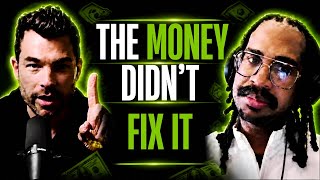
Brian Cristiano, who built multiple seven-figure businesses, talks about burning out from 120-hour work weeks and chasing a $100 million revenue target. COVID forced him to reassess. He now defines success by mental health and lifestyle, not revenue, and emphasizes setting boundaries and healthier coping mechanisms like hiking and time with family.
Chapters
Welcome back to another exciting episode of Beneath the Surface Podcast, where we dive beneath the surface of the stories we tell ourselves and the culture we live in. Today's episode is called Mental Health Over Hustle Culture, where we explore what happens when we chase the wrong goals, burn out, and find our way back to resilience. We are told to hustle harder, but what happens when the goal itself is wrong? Today we're exploring burnout, overwhelm, resilience, and everything in between. Joining me is a guest star who doesn't need any introduction. The man, the myth, the legend, my brother-in-law. I call him Mr. Do Everything because he has done everything, or at least almost everything. The man, Ben Cristiano, who brings powerful insight into breaking free from hustle culture and reclaiming mental health as the true measures of hustle. And success. Brian, welcome to the pod.
Danny, it's awesome to be here, man. I'm really excited to be on Beneath the Surface with you. And by the way, this is my first podcast back in, in a while. I've been a little quiet on the social media the last handful of years. And so I am stoked as my brother-in-law, as, as a guy that's kicking off this valuable podcast to be a part of it. So I'm happy to be here. Awesome.
Awesome. And thank you for diving with us beneath the surface. Brian, what can you tell us about yourself? Like give us a little introduction to the, to the viewers, listeners, anybody who's listening.
Oh man, you said I didn't need an intro, but I definitely need a little bit of an intro. I'm not, I'm not that well known, but the, the long story short is, you know, I, I, I got started in entrepreneurship at a very young age. I started making skate videos at 17 years old. And before I was even out of high school, eventually I started a production company that went sideways. Ended up living on a couch for a while, had to completely, you know, change the way that I thought about business, thought about life, had to learn new skills as I was, as as I was growing, as I was scaling, grew that production company, then started an ad agency, built it to 8 figures, and then COVID hit, had some challenges with the business. But what it did do is made me look inside at what I was doing versus what I really wanted to be doing, how I was living my life versus how I truly wanted to live my life. And now with my partner Alexis, we've started a company called The Bold Way. We've launched that where we help businesses actually scale from all of the lessons that I've had building multiple 7 and 8-figure businesses. Businesses, totally bootstrapping from zero all the way up, um, as well as how do you balance the life that you actually want with the business that you think you want? How do you combine those two things so that you can be on a path that's actually fulfilling while you're on the journey without totally detracting from your personal life, from your mental health, from your fitness, from your wellness? How do you combine all that? Because I used to believe that, you know, in order, you know, in order to grow a business, you had to sacrifice everything. But now what I believe is that you can have everything, but you got to have clarity, the right tools, the right process in order to have the life that you want and use your business to get there. So that's what we're doing at The Bold Way.
Well, I told you guys, he does everything and he helps everyone. So I mean, don't let him fool you. He's definitely a gem enough amongst the Nicole mines. So definitely. So I think that's a great introduction. I mean, I wish I had an introduction like that, but you know, here we are. There's always growing, we're always learning, but, um, let's dive on into it. All right, so Brian, um, going into your business and going into your personal life, right? Like when you said that you were on the couch and then you started a business and then you kind of picked back up from kind of rising from the ashes, right? So was there ever a moment when you were trying to figure out like the wrong goal and you have burnouts? Like how did hustle culture influence the way you define success? And did it change over the years of actually from point— from like ground, from the ground level to where you are now?
Sure. Yeah, 100%. Right. So, you know, I've been to hell and back a few different times. I've had my challenges. I've learned some really hard lessons. I say that I've lived more than a few lifetimes, you know, with the amount of experiences that I've had, good and bad. And, you know, what's interesting is when I really hit my business stride, when I was building my agency, Bold Worldwide, you know, once I kind of got the business tactics down, I really figured it out, right? And got past 6 figures, got into mid-7 figures, and then started really scale into the 8 figures. I thought that the goal was revenue target. I was aiming for this $100 million revenue number. Like, that was just— I just felt like, dude, I got to get to $100 million. I'm going to do it. I'm going to prove to myself that I can do it. I'm going to prove to the world that I can do it. And once I get there, the world's my oyster. Like, then I'm going to be able to do all these things that I truly really want to do. I'm going to be able to travel more. I'm going to be able to, you know, teach other business owners. I'm going to be able to speak more from stage and do keynotes and teach people because I enjoy that stuff. But it wasn't really my business model. It was just like the thing I did on the side because it was fun, right? And then what happened was COVID happened, right? I mean, we had a client that owed us $3 million and went bankrupt. We had, you know, yeah, like, like really like turned the whole business upside down. And, you know, I had to look at what I was doing then. And like, I was obviously just trying to figure it out and figure out what to do with employees and this humongous, you know, uh, almost the entire floor of an office space in, in the financial district of Manhattan. Like we had real interesting and, and very big challenges at that time when everything was shut down. And, you know, it's been what, 5 years now? And I feel like we forget like how much the world changed in that moment of time. And so I was just trying to figure it out and I was scrambling and I was talking to my clients, I was talking to contacts, I was talking to other people in business just to understand what they were doing, what they were seeing, and trying to figure out my own, you know, own path as well at the time. And I remember that I spoke to a friend of mine and he said something that really hit me between the eyes. He said, Brian, everybody's trying to get back to normal as fast as they can, but the people that are going to be the most satisfied in life are the ones that decide what they want their normal to look like. And that hit me and I was like, okay, this is interesting because I'm rushing to like figure out the office space in Manhattan. I'm rushing to figure out, you know, uh, uh, all the employees. I'm rushing to like try to make it all work. And then in that moment I was like, well, is this really what I want? And you know, the thing about it is I didn't not want it. Like, don't get me wrong. I'm not saying that like building a company of that size, right? Like at, at the peak, I think I had 40-something employees plus freelancers. This humongous, beautiful office space. Like, it was awesome. Like, don't get me wrong, there's a lot of really good things. I met a lot of great people. I worked with clients like PepsiCo, and Jennifer Lopez was a big client of mine. Alex Rodriguez. Like, you know, we're not talking about insignificant things from a business perspective, but I was chasing this number. And then I started to go like, well, wait a second. Here I am when I do go do the things I like, like keynotes. And I'm telling the story of my dad who died when I was 17, which is a story I've told a million times. And like the lesson from that story was that, you know, he had these bigger dreams than just being in the military. He loved the military. He loved serving his country, but he had these bigger dreams after and he didn't get to fulfill them because he died on the day of his retirement. And so I'm going, oh my God, here I am telling people that they need to go and chase their dreams, what they want their ultimate life to look like now and like get after it. And here I am building this company, which is great and all, but I'm chasing this number target, this revenue target, this $100 million number. 'Cause why? So that one day that I can either sell the company or put somebody else in charge, and then I can go do my keynotes. Then I can work with other business owners, you know, then I can go travel more and have more freedom. And in that moment when my buddy said, you know, it's the people that are going to be most fulfilled in life are the ones that decide what their normal should be. I was like, oh man, I'm not like, I had to eat the humble pie. Like, I'm not living the story that I'm telling. I'm not doing what I'm saying. I'm building this so that one day I can live the life that I want, not the other way around. And that, in that moment is when I realized like, damn, instead of me trying to figure out how do I make the office space work back in the financial district, I got to go, why am I trying to get back there? What do I want? I want freedom. I want stability. I want a solid relationship. I want, you know, I want to give back. I want to teach people what I know through all these like crazy stories and journeys and lessons, the wins and the losses. Like I want to do spend my time and energy doing that. I still want to build a really successful company, but I don't want to do it at the cost of my life. Because to build a company of that size, even to that point, I was working 100-hour weeks, right? Some weeks I was working more than that. Like, there was a period of my time when I'm not— this is not an exaggeration— when I was flying to LA and back from LA 3 times, sometimes 4 times in a week from New York, New York to LA. I would literally leave. I would literally leave first thing in the morning, arrive at LA in the morning. I would go, I would take meetings, and then I would take the 11 PM a flight back home to New York, Red Sox. And then I would do a day in New York and then the next night or the next morning, I would then fly back to LA. And I did that for months on end. Like, don't get me wrong, like some of it was pretty damn cool. Right. But like, and I enjoyed it and I was younger then, so I could get away with more of it. But the reality is I'm like ignoring, I'm ignoring the problems in my personal life. I'm ignoring my relationship problems. I'm ignoring my health. Right? Like I used to be a very competitive bike racer and like that was taking a backseat. Fitness was taking a backseat. My mental wellness was taking a backseat. Everything was taking a backseat, chasing this revenue target. And, and don't get me wrong. Like I learned so much from a business perspective by building a company that big, totally bootstrapped. Like I didn't take anybody's money. There was zero investors ever. Zero. Like living on a couch to having a $20+ million business per year. Like that's significant. And to put it in perspective, people get really caught up in these, like, especially nowadays with social media, it's like, oh, you feel like if you can't build a million-dollar business, you're a total failure. Only 1% of businesses ever make it to a million dollars in revenue. Only 1%. Right. So you put that into perspective and you go like, I don't know what percentile, you know, uh, an 8-figure business is, but it's significant. That's a very big challenge. It's a challenge to build something that big, to manage it. And so like, as much as COVID sucked, it made me look in the mirror.. And I have to, and I have to thank Terry, my friend who said that to me, because if COVID didn't happen, if Terry didn't say that to me, I might've forced making the New York City thing work. I might've forced figuring it out, which I could have, right? I could have continued. I could have made it work. I could have figured it out, but instead I reinvented. Instead, I changed my perspective and instead I now do what I wanted to do anyway. But instead of someday, I'm doing it today. And building a successful business that supports that lifestyle. It's amazing.
And I'm— which is amazing because it's like— because I want to stop you right there because it's kind of like what I talked about in my previous episode where it's like, at the end of the day, like, if you're not living the life that you want, then you're never going to go after what you need. And it's also— and it's also important to realize that, that it's very important to like Sometimes like, like you can move fast, you could do things like at lightning speed and everything, but at the end goal, like what's the, what's the point? Like you said, and it's, you gotta kind of like stop and realize what exactly matters to you in that moment and, and kind of reshift. And like you said, change your perspective.
Yeah. What are you, what are you doing? What are we doing all this for? Exactly. Because I feel like one of the biggest misnomers and that I believed, like, you know, you can call it hustle culture, but it's really just like, It's just like when you get into business, because business is very hard, right? Like, I'll just be honest, to be successful at business does require a substantial amount of learning, knowledge, experience, failures, time, energy. Building a business requires a lot. Today it's been romanticized, you know, on social media, entrepreneurship, even myself. Like, I've romanticized it, right? Like, hyped it up, you know, whatever you want to call it, hustle culture. Is fine. It kind of encapsulates it. But what we've all looked at, whether you're talking about social media or even talking about all the, you know, business management books, like all the old stuff that I've, you know, read and trained on, or even going and getting an MBA is like, you have to sacrifice everything to make this business. Right. And then it's like, what's your exit plan? How are you then going to build this thing? And then you're going to exit, you know, or you're going to cashflow it and then you're going to live this dream life. But just like my dad, it's like, what? So, so you do this and then you die of a heart attack and you don't fucking get to do any of that stuff. Why? What's the point? What's the point? See, it used to be like, you know, you ever hear the saying, you know, it's, it's, it's not personal, it's just business.
Yeah.
Yep. That's one of the worst phrases I've ever heard. Now looking backwards, and I'll tell you why, because it is personal. This is your life, right? Like we've been taught, and I used to feel when I was building that company before that, like, you know, okay, this is my business and this is my life and I'm gonna build a business and then I can live my life more. It's just your life, dude. You wake up at whatever o'clock in the morning, you're living your life, whether that's eating breakfast or spending time with your kid or being on a hike or going and working out or reading a book or just going back to sleep or going to the office. That's your life. So I stopped asking the question of like, what do I want my business to look like? And I started asking the question, what do I want my life to look like? And once I finally started saying, what do I want my life to look like? I had to look at all the hard things. I had to make a lot of hard decisions. I had to make a lot of really hard changes. I had to take a lot of steps backward in order to make those big leaps forward. So it's like, doesn't matter where you are, you're starting off, you got a huge business, you're living on the couch, you're somewhere in between. You're just at this existential moment in time of which, you know, you need to make a change. Stuff doesn't feel right. Well, you have to ask yourself, what do you want your life to look like? And then you're going to have to face the tough challenges in the mirror and say, well, now I got to make some hard decisions so that I can have the life that I actually want. But the goal is, because I am not saying that don't work hard in your business. I still really hustle. I still really work hard, but it's not. Ultimately at the expense of my health. It's not ultimately at the expense of my relationships, my fitness, none of that, right? Doesn't mean I don't sometimes spend more time in business when it needs it, but I'm cognizant of that because the business is part of what I would do anyway. So, I'm just doing in business now what I want to do anyway when the camera's off, when nobody's around, when nobody's paying attention. Like, I just do this anyway. Like, I have fun in my business. My business is my life. Right? My business is building the life and the lifestyle that I want instead of working in opposition of it. Because when I was building a $100 million company, right? And I'm working 120-hour weeks, but really what I want is I want, you know, I want a family. I want to spend time with my kid. I want a good relationship. That does not— 120-hour weeks does not give you that at all. It's in opposition. It's taking you down a totally different path. So, one day you can have what you really want. And this whole experience, this whole journey, these last, you know, COVID and the last, and the few years following was really a reckoning. Was like, if I really want this life that I, that I want, instead of just being this like CEO hustle grind, you know, be up till 4 o'clock in the morning guy, I had to make a lot of big changes. And those sacrifices were hard, but I can tell you 1 million percent, they were all worth it.
That's beautiful. Because like, it's, because going back to like, to echo what you're saying and basically talk about like, the, like, where I tell listeners and I tell viewers and I tell people in person what my podcast is about. It's not— we're here because we're real people talking about real issues about real life situations. And it's not to— and people should not get it twisted that we're not doctors, we're not psychiatrists, we're not therapists, we're not these people that basically have a definite answer of how to do things, how to go, what you need to do, what you need to strive for. But we're here to talk about real things because there are times that people, like you said, feel stuck sitting on their couch waiting for that big aha moment to come to them to, to basically give them that motivation to continue. But you're not always going to get there. And that's fine because you're still learning. We're still learning every day, especially with technology, especially with how we do things. We're learning every day something new. And I think it's important for people to understand that these episodes are not only to be more therapeutic in a sense, but to kind of show you that, like, if you know someone who's on the pod or someone that's gone through something similar to what's on these episodes, then you can maybe take these lessons, take these mantras, if you will, take these kind of like stories and basically use this as fuel to like basically be like, Well, if he could do it, I could do it too.
You just hit on the biggest thing, right? And this is a big lesson of mine, you know, just in general, which is oftentimes when we're struggling or when we're going through hard times, whether we're talking about business or mental health or something else, oftentimes we feel alone. We feel like we're the only ones that are experiencing this way. We feel like we're the only ones that are going through it in this way. And the reality is, even if it really sucks, even if it's really hard, there's somebody else that's been through it, going through it, or at least going through something similar. And there most likely is somebody that has been through much, much worse and has survived it or thrived during it or figured a way to get through it or figured a way to make the best of it. Right? Because sometimes life throws you shit and it's just shit, right? Like, I'm not, I'm not sitting here saying like, oh, like life threw you lemons, make lemonade. Sometimes life throws you shit and it just is. But the biggest challenge I think is realizing, and what's great about your podcast interviewing people is like, if one person realizes like, oh, they're going through something similar and they got through it, even if it sucks, or they're going through something really horrible and they're making the best of it, or they're finding some sort of silver lining, or they're finding a way to use that to get back, or whatever it might be. And it motivates them to take that next step in their life, or not even the next step, but just to go like, oh, I can release some of this weight, right? The biggest weight of anything when you're struggling is feeling alone. And like, people need to know they're not alone, man. Like, unfortunately, this is the human condition, right? And I'm not saying like my life is hard in comparison to a lot of people's because it's not, right? I have a lot of gratitude that my life, generally speaking, is pretty great. You know, I have my struggles and I've shared a lot of my stories. I probably shared less than 5% of my real struggles and my real challenges. And I don't need to share all of them, right? It's not a comparison, but it's also I have gratitude for the things that I do have and where my life is. And I also have gratitude to where I had made different decisions. My life could have been in a very different place, if that makes sense.
And I think it's important to, to realize that, like, if you have that strong core connection, like you said, relationships, like your kid, your everything, like your family, like it's good to have people in your corner to like not only boost you up, but also help bring you up when you're down, but also in a sense to try to give you that reassurance that you're doing the right thing. And it's important to realize that because especially when we met for the first time and my wife Bree basically told me about you and I'm just like, how am I going to compete with this guy? Like, this guy has done like literally everything. Like, I've like, maybe I got my bachelor's in computer science and I'm starting out at TD. Like, how am I supposed to compete with this? But It's like, you gotta stop— we gotta stop getting into that mental mindset where like we have to overtop one another and everything. And I guess it goes back to my previous, um, episode where basically instead of like trying to like go this way and then go up upper and trying to one-up everybody, let's just start like feeding each other and like let's start helping each other. Because by you helping me, I'm helping someone else, and then so on and so forth, and it's a water flow. And it works so well and elegantly. And I think that's what we really need to take a step back and realize that, like, let's— like, it's not a competition. We're all trying to get to where we need to get to. So, like, instead of competing, let's start helping and let's start assisting. And, like, with your seminars and your workshops and your teaching and your, um, anything really that you've done, like, let's start educating the future generation so that, that way, and normal— normalizing, like, the tough conversations, because that's the important thing, right? Because if people don't realize that this is a normal thing to talk about, whether it's business, whether it's mental health, whether it's, um, anxiety, or just anything at all, let's normalize that conversation because it's important to realize that, that these conversations are need to be had because if you don't, someone, it's going to eat away at you and it's going to drive you up a wall and it's going to basically be your downfall. And I think it's very important.
Well, I think I'm not the person that coined this term. I don't know who did, but comparison is the thief of joy. The minute that you start comparing yourself to somebody else, you already feel like a failure. You look at the gap, right? And it's like, why, what are you accomplishing? Right? Like one of the things I've been good at, um, you know, once I got off the couch and this is obviously like 20-something years ago, um, and, and to get off the couch, I had to do a lot of self-work. I had to change my mindset. I had to learn a lot of tools and, you know, and I actually, one of the biggest things, I went to a Tony Robbins event with the last $700 that I had. And, you know, one of the biggest things I learned from him was like, just coming to an acceptance of like where you are right now and that that's okay. Like there's no wrong. You're just here. And even if you made bad decisions in your past, so what? You're here right now. What can we do about it to where you can make your future what you want to look like? Number 1. And number 2, stop comparing yourself to everybody else. Social media over the last decade has made that so much easier and so much harder and so much worse. But the minute that you start looking at somebody else, you're like, well, they're doing this thing and they're successful. They're getting all this attention. They're blowing up. They're making all this money. I can tell you two truths about that. First of all, even if it's true, you're robbing yourself of your own growth because you don't have the same life as them, right? You don't. And you don't— and you don't know, like, how long have they been at it, right? You don't know the reality behind the scenes. And number two, more times than not, it's not what it looks like. The grass is always greener. It's not as big, it's not as exciting, it's not as successful. And oftentimes, like, all the stuff people leave off on social media, you probably don't want that shit that's in their life.. And so just focusing on you and going like, what do I actually want? What can I contribute? And looking beyond yourself, right? Like, what can I contribute? If you've got— you have, you have a daughter now. Like, that changed everything for me. Having a daughter changed everything because it was like, wow. Like, I didn't know how much I loved being a dad until I was a dad. Yes, exactly. Right. Like, seriously, like people that actually know me and not like my social media profile. They like actually know me, like I'm a pretty like go with the flow. Like I can work really hard and get super focused and I could get like really intense, but also I'm just like kind of go with the flow at the same time, right? Sometimes. Right. Sometimes depends. But once I had a daughter, I was like, oh, I'm this like goofy, like just, you know, I'm this goofy guy that like wants to get on the ground and be a kid again. And like I, and I really when I had my daughter, I really like truly owned that. And that was also part of the impetus because the timing of COVID my daughter was a year and a half old and had COVID not happened, I probably wouldn't have spent as much time as I, as I did with her and that I do with her. Right. I wouldn't, I wouldn't have known all that. I wouldn't have gotten to be the dad that I am. I wouldn't have gotten to have all these experiences and be on the ground and spend hours and hours doing that instead of hours and hours flying every single other day. Right. And so it's about being grateful for where you are. And even if you've got nothing, just being like, I'm grateful that I got up today. I get another shot at this. And even if it's heavy, even if it's hard, even if you do legitimately have a ton of shit, it's just shit. It's like, don't look at everybody else around you. Don't look at the other people that have it better than you, because again, they might not. Because the reality is when you get behind the scenes, you probably don't want most other people's lives. You got yours and that's it, right? Like actually accepting like, this is my life. What am I going to do with it? What do I want? Right? And then making those hard decisions regardless of your situation, so that you can either change it, accept it, move forward or something else, right? Like there's no wrong here. It just is, right? So comparison is the thief of joy is like the best saying ever, because you start comparing other people, you're robbing yourself of any possible growth, any possible joy in what you have, because it's your life. You're looking at somebody else's life pretending that you wish you were them instead of just living your own damn life. Live your own life, man.
No, it's true. I mean, because It— because like there's, there's times where like in the beginning stages of starting this podcast, right? Like I, I remember having this conversation with you, um, where I was skeptical. I was really skeptical about starting this podcast because like I was like, okay, there's a couple ideas. Maybe do, um, maybe write a book, like a second book about it, because I already talked about myself in the first book. So let me write a second book about it. And then I'm like Hmm, writer's block. This isn't working. Let me do a podcast. Look at all the podcasts that like basically people that I follow. And then I'm like, shit, I don't know if I could do this because these people have twice the following, if not 3 times the following that I have, this, that, and the other. So I put it on the back burner. Then I come back to it years later and I'm like, okay, let me dive into it. And then I'm looking around trying to get some ideas. And then I'm like, I don't know if this is for me because everyone, because there's always another there's always— let me rephrase that— there's always a mental health podcast. Um, so that's not going to be for me. So let me try to make it unique, something to myself. But by that time, I'm already basically burying myself up with more than I need to, and I'm just like, I don't know if I could do this. And then I put out that first episode, and then I got feedback, and then people were like, this is really good. Um, people were just like, this is like— it's important for African Americans, and not only that, but just men in general, to talk about their feelings on a deeper scale. And I think you're doing that, and, and the feedback keeps going and going and going. And then I'm just like, why was I doubting myself? And I basically even said this on a workshop that— with a mutual friend of ours, Andrew Devlin. And I'm just like, sometimes I need to stop comparing myself to other people and basically just do it. Because like, there's always going to be a mental health podcast but there's only going to be one mental health podcast that I do that's different than other people. And I think I should keep going because even if I don't see the growth, it's going to be there eventually. But at the end of the day—
go ahead. And I'll shift your perspective further. And even if it's not, even if you have, you know, 5 listeners and it's your friends and your family and that's it, and it never gets bigger than that, wouldn't you rather look backwards 10, 20 years from now and go like, you know what? I did that thing, even if it never grew, because this was the trap I got in. You want to talk about the hustle culture? The trap I got caught in was growth. I need the outcome. I'm not, I'm not successful unless I see the numbers going up. I'm not successful unless I see the growth. I'm not successful unless— Right. And while there's some good to like focusing on growth, right? Like, because that's what we're talking about. That's what I'm talking about, whether whether mentally, personally, or business-wise, growth is good, right? If you're not growing, you're dying. Of course. Of course. And this is the key, and this is what changed for me, you know, in the last 5 years. It can be both. You can say, hey, I'm going to grow this podcast. And, and, and more importantly, I'm doing it because I want to share my thoughts. I want to have these interviews. And even if it doesn't grow, I want to do it anyway. I want to look back and say, I had these interviews. I learned something. I got my voice out there. I learned. Guess what? Here's another lesson. I did it for 2 years and it didn't grow. And I learned that's not my thing. But you know what I did learn from it is X, because there's always a lesson, right? Our friend Andrew Devlin always says to me, I've known him for God, probably almost going on 20 years now. He always says, there's no losses. You're either growing or you're learning. And so it's like you either grow or you learn. And so if you allow that to be true, whether it's for your podcast, your business, or anything else, and say, hey, I want, I want to grow this thing. But if it doesn't grow, that's okay. Because what am I going to learn? I don't know. I might not even know what the lessons are going to be yet, but if I'm either growing or I'm learning, then I can't lose. Then there's no downside. There's no downside. And oftentimes when you take steps, when you take the leap, when you take the action, even you'll realize something. Sometimes you'll realize this isn't what I want to do. Perfect. It's great data. It's a good lesson. Now you can pivot. Now you can change. Sometimes you're like, I love doing this, but I'm not good at it as a business. And then it's data. And now you can make a decision. Am I just going to do this for fun because I enjoy doing it and I would do it I'm going to do it anyway. Or is it, hey, maybe this isn't a business thing. Maybe, you know, I don't know, but here's the beauty of it. It's either going to grow or you're going to have lessons, but most likely it's going to be both because most people get stuck where you were, which is overthinking it, doubting themselves and not doing anything about it. And then 10 years looking back, I wish I should have started that podcast. I wonder if it would have taken off. I'd rather know that I wasn't successful at doing it 10 years from now and say that I did it, then look back because I wanted to do it because I was interested in it. Because I felt like I could or should or I wanted to try or wanted to see what I was made of. I'd rather do it and fail and know that I did it than wonder if I ever—
Right. And that's kind of like when I did, when I did my first self-published book and I was just like, I don't know if this is going to work out, this, that and the other. And I was doubting myself. And then I had a talk with one of my mentors at the bank and basically he's like, he told me, he's like, if you're going to do this, I'm gonna, I'm gonna help you out, but you gotta promise me one thing. You gotta keep writing, keep putting your thoughts out there, and just keep coming with me with your drafts. And I did. And then one day I was talking to him, and then he was just— I was talking to them, and they were just basically like, I love what you've written so far, so what's the next step? Are you gonna get this published? I'm like, well, I want to. He's like, well, what's stopping you? I'm like, nothing. I mean, I need, I need to basically save some money to start it up and and put it on Amazon and then basically publish it and, and yada yada and all the theatrics and the semantics and everything, logistics. And then he's like, how much is it gonna cost you? I'm like, well, it's gonna cost me roughly like $550, $600 basically to get it started. And then basically to, to basically have all the copies shipped and then basically hand it out to people, this, that, and the other. He's like, all right, one second. He goes out of his office, he comes back. Goes to his car, comes back. He's like, he writes me a check. He's like, here's $500, do with it. And then I did it. And then basically it was the best decision that I ever made because I stopped doubting myself because he saw the potential and I start doing it. And then after maybe, oh God, this was, I think, uh, not COVID. It was like before, before COVID I wanna say 2017, 2018 when I published it. Um, and then basically I published it. I didn't look back, shared it on Instagram, Facebook, what have you, all social media. It blew up. And then I looked at the numbers. I was, I sold like over 100 copies, whether physical or digital, 100 copies.
That's awesome.
I was just like, that's awesome. So I was like, all right, let's go. Let's keep going. And then that's when I was just like, I don't care if I make revenue back, but If I could help one person, that's all that matters.
That's it, man. And here's the other thing too, right? Like, we get caught up because of social media. We get caught up in the numbers. It's like, oh my God, I only sold $100. I only got 1,000, you know, views on this video. I only got, you know, 10,000, you know, you know, 10,000 views or whatever it is. It's like, man, if you put 100 people in a room standing in front of you asking you about your book, you'd be so stoked. You'd be like, oh my God, this room is packed. 100 people. So like, you always got to put it in perspective too. Even if it was 50, imagine a room of 50 people. That's still a huge success. It's like, okay, you got only got 1,000 views. Imagine a room with 1,000 freaking people in it. That's huge, right? Again, comparison is the thief of joy. So it's just like, stop comparing. And just like, this is for me, you went from 0 to 100 and then from 100 to wherever it is now. And it's like, that's awesome. But let me ask you a question. I'm gonna flip this whole podcast around on you. Sorry. Because I'm interested, which is this. So your mentor, gave you that check and then you felt like, okay, I don't have any more reasons or excuses left so I can stop doubting myself and I took the leap. What was the biggest change for you aside from the money, from the— aside from the financial factor, what was the biggest change for you that took you from still being hesitant to write, finish writing and publish your book to actually doing it? What was the biggest shift?
Biggest shift would be that, and I tell this a lot of people and you're not the only one that told that asked me this, but asked me in a different way, not the Brian Cristiano way. But I think the biggest shift was that I start— I stopped doubting myself whether this was something worthwhile or worth pursuing to basically when I— when someone else saw the potential in, in me and basically showed me that like that they believed in me in a sense where they, they believed in you more than you believed in you. Yeah, yeah, no, definitely, because it was, it was one of those moments. It was that shift where it's just like, maybe if X person believes in me, then maybe it's possible. Maybe I need to stop doubting myself, quiet all the outside noise, right, put on my metaphorical headphones, and just basically just tune in and know that this is going to help someone down the line. And it did, right? Because my needs Sorry, go ahead.
No, go ahead. I was just, I don't mean to cut off your story, but I was just going to point out like there's two things here. And the first one is that when somebody else believes in you more than you believe in you, when you get that person, whether it's a friend, a mentor, a partner that really believes in you, when you've started to lose belief in yourself and you believe them, you can do magic, right? Which is why it's so important to have good relationships, personal, right? Like I'm in the most incredible relationship of my life and she believes in me sometimes more than I believe in myself. And I don't, And I'm the type of person who's going to go out and do stuff anyway. But to have somebody that really backs you up and believes in you and pushes you to that next level creates magic, number one. But let me ask you another question. What if for you, just you, I'm not talking about listeners. I mean, if somebody takes away from this is great, but for you, what if instead of waiting for somebody else to believe in you so that you can move forward, what if you believed in yourself as much as he believed in you? What would change?
I wouldn't have dragged my feet too much. I would have just gone ahead and do it. Like, I would have just like just took that leap of faith and kind of just, just been like, eff it, you know, fuck it, I'll just do it. Just—
so what, what stopped you in that time frame before he did it? What stopped you from believing in yourself that much? What was holding you back for underneath the surface?
I mean, I, I would say the doubt, like my self-doubt. Like, I guess like just I guess I wasn't— I didn't have that fire in me. I mean, I had that fire, but I didn't— but it didn't grow.
You believe it? Where does that— where did that come from for you? Like, where did that self-doubt of like questioning yourself when you knew you wanted it? You did some of the work, but questioning your— the actual like end result, following through to the very end, where does that come from?
Just, I guess, my past, really, because I want to say it, it was— it takes me back, and it takes me way back because even when I was writing about it, it was, it was an emotional progress— process, to say the least. But it took me way back to, I guess, self— like, not PTSD, but like just trauma from, from stuff that happened to me in high school where I talked about my issues, I talked about what I was going through And it brought me back to that point where I thought I could rely on people and I could talk to people about my situation and my, my past, and then being immediately shot down like the year after and basically be like, oh well, I don't want to be friends with you, or this is too much to handle and you're sharing too much, like you need to back off. Like kind of like it took me back to that sense and that what held me back. Because I don't know if I told you the story, but like in high school when I talked about my depression and my anxiety and even suicide. I had friends, basically now acquaintances, I had friends where basically I told them everything that was going on with me, and it worked out. I mean, they were there, they were just like, yeah, like, like, you shouldn't feel this way, like, you're not alone, yada yada, the typical cliché speech, what have you. And then a year later, we went to the same college, and I reached out to them when I was struggling a little bit, like, trying to find my own and trying to like find friends in college. And basically I still had some friends from high school that transitioned to the same college and everything. I talked to them, I'm like, hey, like, I really need to talk to you, like, I don't know what to do. And then they messaged me, and I remember clear as day because it's one of those things that burns into your memory bank. And then they're just like, I don't want to be friends with you. I don't— there's— I don't have a problem with you, but I can't be friends with you. And it hurts.
And that—
and yeah, it sucked.
Yeah. It's betrayal. It's betrayal. Right. And you said it, you said it a little bit earlier, which was you felt like you were too much, right? Because you, you were vulnerable to people, a group of people. And then when you needed them the most and you were vulnerable again, they dismissed you. So you see how later in life that comes up of like, oh, I'm going to be vulnerable. I'm going to write this book and I'm going to do it. But then when it came time to the very end of like publishing it, getting across the finish line, You doubted yourself, not because you actually doubted yourself, just because you're reliving patterns from the past. And so here's the thing. It's not easy. And you know, this is not easy, but like once you can recognize where it comes from, the actual pattern, the next time it comes up, you just go, oh wait, this isn't Danny now. This isn't Brian today. This is Danny from college, Danny from high school reliving that same pattern. That guy's, dude, it's been a long time, man. It's okay. We're good now. We can be vulnerable and then you can move forward. Like, see, that's, that's like the work that people should try to do, which is like the past is the past. It is what it is. But oftentimes, unless you recognize the patterns, unless you do the self-work, unless you dive deep, unless you look at why you're making these decisions, where that hesitation, those fears come from, it doesn't really matter, but it helps to go, that's me from being 7 years old talking. That's me in college talking. That's me when, you know, this person or my family, or, you know, this person in relationship betrayed me. Or betrayed my trust, I'm making a decision as that version of me instead of today's version. It doesn't make it always easy, but it gives you a path because a lot of people, myself included, when you get stuck, when you freeze, you want to think that that's like your brain today feeling that way. It's almost always not. It's past trauma. It's past patterns. It's past things that have been— that you experienced coming up in that moment. But you get to choose, is college Brian making this decision or is today Brian making this decision? Now, to be clear, I didn't say it was easy. Yeah. But when you can ask yourself that question, oftentimes you're like, now I can make the real decision that I want.
So, and shifting gears a little bit from, I guess I want to say from the wrong goal and burnouts, right? Was there ever like Were you ever overwhelmed in the aftermath of everything with everything that was going on with COVID and, and even in between, like with like relationships, job, like your creativity side, anything like— how did it affect— how did burnout affect you in that sense?
All of it. All of it. Complete overwhelm, right? Like business challenges flipped upside down, having to deal with, deal with thousands of challenges and issues with that. Right now, navigating a relationship failure, figuring that out, raising a daughter, figuring that out, having moved, figuring that out, like all of that stacking and trying to face myself in the mirror every day and make the hard decisions. Right. It wasn't easy. And there were days where I didn't make the hard decisions. There was days where I just let the day go by. Right. There was days where I would just mailed it the fuck in, to be honest. And was just like, dude, like I can't, I'm totally locked up. I'm overwhelmed. I can't do this. And I'm trying to build new business at the time. All things happening at once. One or two of those is probably more than most people can handle in any given moment in time. You stack all that plus a lot of other shit on top of it at once. That's a lot to handle. That's a lot to manage. That's a lot to make decisions on. But what kept me going, what got me through it was finally having clarity on what was the life that I really wanted. And I wanted to, I wanted to build a business that was also what I would do anyway. I want, I wanted to work with other people and business owners. That was the business side. On the personal side. I wanted the flexibility and the freedom to where if I wanted to go for a hike, if I wanted to go, you know, do something, you know, outside, I want to go ride my bike again. I wanted to get back in shape. I could just go do it. I wasn't tied to some external schedule and everyone else's timeframes. And I wanted, I wanted, you know, a healthy, strong relationship with my daughter. I wanted a healthy, strong relationship outside of that. I wanted to, I want to, I want a good family. I want to, I want to spend time. I want to spend time taking all the experience and knowledge that I've got and grow myself, grow my family, grow my friends, grow other businesses. Like, for me, life is about growth. But it used to be about growth in the sense of a revenue numbers target. And you make very different decisions. And you're a very different person when you're focused in on the dollars only, versus saying like, what's the experience I want out of life, right? And I got very clear on what the experience was that I really wanted, which made it very clear on what, what was the experience in my life that I didn't want, or wasn't taking me there or was in conflict of that. And to be honest, in that period of time, most of it was in conflict. So I had to make a lot of changes and I did.
Did you have any coping skills or coping mechanisms that you leaned on during that time?
Like, or— Luckily, coping mechanisms never became too unhealthy. Well, I'll tell you this, what I did realize in retrospect after doing a lot of work was my biggest maladaptive coping strategy prior to all of that was work. Some people, you know, some people hit the bottle, some people, you know, use prescription drugs, some people do other unhealthy things, right? Mine was working myself to death to ignore all of my problems and my reality and not making the tough changes and tough decisions, right? And so that was historically, but then how did I get through it? What were the healthier ways? At first, it was very hard. At first, it was very difficult. At first, there was more days that I didn't want to get out of bed than I did. At first, there were more days where I didn't make decisions or take action that I knew I should than I did take action on. But what kept me going was the vision. What kept me going was my daughter. What kept me going was creating the life and lifestyle that I really wanted and not the one that I found myself in. And that clarity, that clarity helped me, that clarity helped me, you know, take the the hard steps and the hard action, right? And the other thing was just being outside. I did a lot of hiking during that time, a lot of hiking, you know. And so that was the beauty of where I ended up in the Northeast. There's a lot of great hiking trails. And so I would go hike with my dog or I would go by myself and I would go for hours and hours and hours. And that gave me mental clarity, time to process. And I would come back and I would take action on the things I needed to. I, again, some days it was harder. Some days I didn't take any action, but over time I started taking more action and more action and started feeling more and more and more like myself until I was finally really aligned in, in my life and in my business that I wanted to. And it, it's not like a perfect formula. I'm not saying like everything's perfect, but I genuinely today live a life, have a relationship, um, that I am a million percent proud of. And I do the hard work and continue to do the hard work on. Because it doesn't ever stop.
Well, that's— I mean, I appreciate you being vulnerable enough to talk about that because sometimes, like, whether we look at it or not, like, healthy or not, like, overwhelm is definitely— over— being overwhelmed is definitely a challenge, and it's definitely, it's definitely, it's definitely difficult to try to manage it. And I think you hit the nail on the head. It's like some days, like, you just got to get up and kind of live your life and just do what you want, like try to find that re-fire that you have in your belly to keep going. But other times, like, it's okay to just sit there and just not want to get up out of bed because it's important to realize that we're all human, we all have struggles, but don't let those struggles consume you in the sense where we're like, you are in a dark place too long.
Well, here's the thing, okay? What I've learned is that we often beat ourselves up more than the problem that we have in front of us. Right? And so it's kind of like— is a terrible analogy, but it's the first one I can think of. It's kind of like you're walking to your car, you trip, you scrape your knee and you rip your pants. Okay, well, you could just go get a Band-Aid, put it on your knee, get back in the car and keep going forward. Right? But what do most of us do? Damn it. Why did I rip my pants? Now I look like shit. I'm such an idiot. How can I trip over the thing? This stupid car, this, this, this. And now we've ruined our entire day. The issue is like, I got a little scraped knee and I put a Band-Aid on it. I'm good. Like, the actual impact from the issue is very small., but then you beat the living crap out of yourself because of the problem. And now you feel worse and worse and worse and it ruins your whole day and it consumes you. And so if you can look at it that way, and when you're in that overwhelm, taking a step back and go like, wait a minute, am I just sitting here fueling my own fire? Am I beating myself up? Right? Sometimes you're like, oh my God, it's 4 o'clock. And, and, and I didn't really accomplish anything today. And now I feel like crap. Okay, just pause and go like, "Alright, am I going to beat myself up right now? I'm going to take the baseball bat and start hitting myself on the back because I had a hard day? Or am I going to go, 'Okay, I had a hard day. That's not ideal. I got 3 hours left. What can I do now?'" Because there is no history. There is no— It's just what am I doing right now? How you got here is really irrelevant. It's just like, I'm here right now. What can I do now? Instead of beating yourself up. That changes everything. Cause it's just small steps, a series of small steps that lead to slightly bigger steps that leads to some momentum.
No, that's, I mean, you hit the nail on the head. Cause like sometimes like you just, you, you just gotta, and you said this earlier, right? It's like changing that perspective and you gotta try to figure out what really matters because at the end of the day, like money, like this is another cliché. It's like money doesn't grow on trees, but also at the same time, like you can't take it with you. When you're gone. So like, you gotta— so you definitely have to shift your mindset and find your purpose and find your why. And I think that's very important for me to kind of figure out. And I think it's— it continuously reminds me, like, whenever I look at my lock screen, it's a picture of me, Bree, and, and Haley. And I look at it every single day because there are some times where like I'm just like struggling hard, and I'm trying to figure out why am I keep doing this day in, day out job, 9 to 5 and everything. Then I see that picture of all three of us, and I'm like, I'm doing this for them. I'm setting up a legacy for them, for my daughter, and I'm trying to show them that like when the going gets tough, I still go down swinging. So, so I think that's, that's really amazing that you shared that. That's, that's amazing. And I guess that kind of shifts from, from like burnout to trying to find the wrong goal to now that I had that resilience and that I had that and I realigned everything to basically try to figure out not my purpose, but kind of figure out my, like I said, my why. So in the, so in the middle of that, what has helped you, like aside from the extra people, what like, has there anything been internally or externally that helps you, that helps you rebuild after burnout?
Anything, um, I'll see, build or rebuild after burnout. Um, it, it all comes— hi, Haley— it all comes down to clarity, right? Like, you have to be clear on what you want, which means that you have to also get clear on what you don't want, which means you have to get clear on what needs to change. Which then forces you to look in the mirror. Because here's the thing, we oftentimes look at everyone else around us or in our lives and go, if this person would just do X, then it would be better, then I could. But here's the reality, you don't control anybody else. You're not going to necessarily get them to do what you want or change. They have to do it for themselves or for whatever reason they're going to do it or not do it. So the only person, the only thing that you control is you. That's it. And so you have to look in the mirror and go, at the end of the day, even if I don't want this to be all of my, my issue, it is all my issue. If I want to change it, doesn't mean I can change other people. It might just mean I have to change my perspective on my life, on my situation. And that's all I can change. Because sometimes that's it, right? Like there's no magical thing in here. It's not like, oh yeah, like just work hard and follow these 6 steps. And then all of a sudden everything's a miracle and everything's going to work out in your favor. Again, sometimes life is tricky. Sometimes life throws you shit. Sometimes there's a curveball. Sometimes there's variables so outside of your control, there's nothing you're going to do to change it. And sometimes it's really unfortunate and sometimes it really sucks and sometimes it's sad, right? And in those cases, it's about, well, I can't change it. Can't change that person. Can I change my perspective? Can I change my perspective? Right? Like, I mean, there's stories from survivors of the Holocaust. There's plenty of interviews out there. And the ones that survived, the ones that made it through, it was their mental resilience. It was about them changing their perspective, finding a bigger why, or just, "I woke up today. I got another day. Hopefully, one day—" You know, like it's a perspective change. Doesn't mean it's easy, right? Like some of those people went through the most horrific things on the planet that ever could possibly happen. There's other people in other situations and historically, and even currently today, they've been through harder things than any of us can even remotely imagine. But the people that get through it, they oftentimes change their perspective. They look at it a different way. They create some sort of internal hope, right? And they focus on what they can control because oftentimes when we're the most stuck, we're the most frustrated, there's a lot of things that we can't control. So what can we control? Sometimes it's just our perspective. Sometimes it's action. Sometimes it's steps. But it's about looking in the mirror, taking accountability for what you can change, including perspective, and then getting clarity on, well, what is it that I want, that I really want? Right? Because we all get caught in the surface level crap. That was myself too. I want a $100 million company. I'm going to scale this thing. I'm going to show everybody that I can do it. And listen, I was well on my way and I could do it and I can do it. But it was coming at the cost of the things I really actually wanted. And so, it was about getting clear and controlling the elements that I could control and making the hard decisions and taking action. You know? And that's what I help other people now do too, right?
Yeah, no, definitely. I mean, I'm a prime example of that. Like, you even, even listen, even listening. This is Haley. Hi, Haley. Haley wanted to join the party.
You're gonna run this interview?
So basically, it's like, like when we were in the beginning stages of like us connecting and us getting to know each other, right? I think it was like one of your seminars where basically it hit home because it's just like sometimes you just need to just stop listening to every— like you said earlier, like, stop listening to everybody else. Stop comparing yourself to other people and just like focus on you and focus and like find out like why are you doing the things that you're doing. And, and like if you're not happy with doing what you're doing, then find something else, do something else. And, and I think that's very positive and that's very informing. And I think that's what basically— and I said this in one of my other pod episodes where it's just like, it's crazy how you, you go from, from like meeting people, like, right, friends, family, acquaintances and everything, and you realize that like you're on two separate paths and you're just like, how can this person be anything like me and everything? But then you realize our paths are not so different. Like maybe like we took some scrapes and some hurdles along the way that are different, But we're ultimately trying to reach the same goal. We're just on different sides of the, of the track. So I think it's, it's very important to realize that. And I think it's very important to remind yourself that, like you said, you hit the nail on the head with this earlier. It's like that you're not alone and that you have to have like good people and, and good support system to, to keep going. And I'm really grateful to, like, the relationship and the friendship that we've built over the years, because I think it's like words can't explain, like, yeah, he's my brother-in-law. Like, I could say that, but I think before that, like, we hit it off immediately. And I think we were both kind of like driven with the same force. And I think it's very important to realize that. And I think it's important to realize that, like, we all need a Bryan Cristiano, or we all need a Danny Francois or someone in our corner to help us show or help us keep going. And I think it's very important that, like, what brings it full circle to why I want to do this is to show people that, like, you could do this and we'll help you through it. Like, either if you want to talk things out or want to, like, basically expand, expand upon your experience or give life lessons or what have you, but We're all in this together. Like we're all learning and we're all trying to get to the same goal. So let's not try to, like, like I said before, don't try to overtop each other. Let's just like start helping each other out and coalescing and trying to figure out the best way that we can build each other up. Absolutely, man.
Well, it's, uh, it's been a, it's been awesome watching you over the years grow and get through your challenges and get your book out there. And now this podcast and, uh, watch you, you know, watch you, watch you go through the steps and, and go through the challenges and push through and get to to the next level, right? Like, that's just, that's what it's all about. We all just want to grow. We all just want to experience growth in our personal lives and our businesses. If we have them or our careers, we want to, we want to be loved and love, right? Like at the end of the day, even if we don't think that we do, that's what we're looking for. And so it's like, if you can grow and you can find love and you can give love and you can give support, whether, whether that's romantically or just practically, like that's life, man, that's living. Because wherever you are right now, whatever the state of your business, whatever the state of your life, you're exactly where you need to be. And you can sit there and spend time and look backwards on all the decisions that you made that you would do differently, but you can't go back and make them differently. So now it's just about, well, what are you going to do? And it's about starting with the clarity of, well, what do you really want? And then you can make the hard decisions.
How did you— I want to say a couple of last points, right? So how did you define— how did you define or redefine success once you chose to focus on your mental health over hustle. And, and I guess like you already probably talked about this, but I kind of want to know more into that, right? So how did you choose like prioritizing your mental health versus doing the hustle every single day, or what you put it as, going to LA like almost every, every 3 to 4 days, right? Like how did you How did you change that, that mindset?
Well, I mean, listen, I mean, I, I think, I think I kind of explained like, you know, what the changes were for me, you know, getting clarity about what I really wanted. COVID being a wake-up call. Um, then looking in the mirror and making those changes, right? Slowly but surely realizing that like I had to, you know, again, it was, it was, you know, what's the life that I actually want to have versus the one I'm trying to get back to. And looking in the mirror and making those hard decisions. Right. And the thing is, it's like, you know, I've kind of mentioned this lightly, but I have to give a lot of credit to, to my partner Alexis, because, you know, her and I randomly— it's an interesting story. I won't get into every single detail, but her and I worked together now almost 18 years ago, right when I was building my first production company. It was the first million-dollar company I ever built. First 7-figure company I ever built. Um, it wasn't 7 figures at that time. Um, and she worked with me. We, and, and it's interesting because it was actually the biggest deal that changed the trajectory of my career that she had worked on with me. Um, which was a project for Ray-Ban. It was a viral video before viral videos were a thing, right? Before that was like a term. And, um, we worked together for, for that year or for that summer that, um, that she was there. And, you know, we'd stayed lightly in touch over, over the years, but her life went on a different path. My life went on a different path. Our paths kind of crossed a little here and there, but nothing serious. And then randomly throughout it all, through this, through this transition, through this change, our paths recrossed and we reconnected. And she had same thing, was going through a lot of, a lot of personal change as well, a lot of hard personal change. And I was going through a lot of hard personal change and we reconnected and it was like, oh wow, you know, not only somebody that also has been through some challenges and tough things and has big goals and big visions and we think similarly, but it was just one of those things I can't explain where it just all clicked. Like, it was wow. Like, I, I, I could tell you that 5 years ago, I would have said like, oh, you know, there's no like plan in the universe. It's all just like what you do. And then now, I definitely have a different perspective that I think sometimes when you are ready for it, when you're willing, when you give yourself the, the space to say, hey, I'm exactly where I need to be and I'm clear on what I really want and what I don't want, and then you just let life unfold, I do genuinely now believe that the universe will put the people, places, and things in front of you at the right moment in time. And but you have to be willing and open for that, right? Because if you're not ready, or you're not paying attention, or you're not open to it, or you're stuck in some other way of doing things, they might be in front of you, but you won't see them. And so, Alexis and I reconnected. And, you know, we've since blended our families. And, you know, we have the most powerful, most incredible relationship. I'm not just saying that, like, you know me personally, right? Like, you know, you know, you, You know, Alexis, and so, you know, you can attest to the fact that this is not me just saying this because it sounds nice. Like, we genuinely have an incredibly loving relationship and we, we have co-founded this business together and we both have a really big vision for what we can take from both our pasts in business and in our lives and the challenges that we have both been through. And we can take all that and we can give that to other people in business and in life. And really help them take those steps, learn from what we've learned. And it's not just like a, you know, what we're doing in The Bold Way is sort of this mirror of our own lives and taking those lessons, right? Like between the two of us, we've lived like 50 lifetimes for sure. Really, you know, and we both are very hungry for growth. We're both very hungry for, you know, self-work. And we've both made some very big pivots and some big changes and made the hard decisions. And independently and together. And, you know, that allows us to give perspective and lessons to other people going through, whether we're talking about personally or business-wise or relationship-wise, allows us to give that wisdom, that perspective from what we've been through, what we've experienced, what we see work. But also she has an amazing depth in business as well as I do. And so combining that with our, you know, our aligned vision for what we want out of our life, our lifestyles, what we want for our daughters. That being aligned is what we're bringing to the table with The Bold Way. And so, it's not just education, it's not coaching, it's, you know, we literally are in the process of finishing software. I was kind of hinting to you the other day. We've developed some serious software like business tools, like very different, like AI, like high-end, really complex business stuff while also helping people understand and gain that perspective and make those changes in their life so that they can align their life and align their business and make sure that they're actually building a life that they want and not having the business compete or take them down a separate path so that they can build their business, have the right tools, the technology, the, um, uh, the software to actually do it and then have the guidance along the way to make sure that they can align their business and their life and make sure they have healthy, good relationships. Because I can tell you the relationship that, that, that we have together is the most supporting, loving, kind, um, relationship. I didn't, even though I don't think either of us really realized could exist and it does and it's real. And, but we work very hard at it. And I think that's the key is understanding like none of this is by magic. None of this is by luck. Maybe there's legitimate serendipity of our paths crossing at the exact right moment in time for this to all be true. But we put in the work, we still put in the work, both in the business and in our lives. And we constantly check in with each other to make sure like, what are we, are we, what are we doing in the business? Is it also creating the life and lifestyle that we want? And sometimes we have to sacrifice a little bit more in the business to make that happen and vice versa. But it's a balancing act. We're aware of it. And so that we know that we're on parallel paths with the business and the life and the business is accelerating the life that we want and vice versa, which is a really exciting place to be because I get to spend my day doing what I love doing with the person that I love and helping other people in a way that I love to help other people. And I get to geek out and build technology and software and everything. I'm like, man, this is what I would do anyway. And I get to do it and grow a business. And the business is growing gangbusters. So it's really, it's a beautiful thing. And that's the difference in my life today where it's all aligned and I'm excited every single day that I wake up. Doesn't mean that some days aren't challenging, right? Right, right, right. But what it means is that more times than not, the vast majority of time I wake up excited, I go to bed excited, I have fun during the day, even when I'm working hard and I'm supported by somebody that backs me up and I support that person in a way that both accelerates our lives and our excitement and we continue to grow. Both the business and personally, and we get to give that back and grow a business together. And that's the alignment versus just chasing some number in a business because you think that's what you're supposed to do.
And it's like, that's the difference. And it's like when you— so you hit the nail on the head because like Bree does the same thing with me, but it's kind of like you have a person that not only pushes you when you need to, but also keeps you accountable as well. And that's, and that's important.
And I think balance, you gotta lift each other up and challenge each other and hold them to the standards that they, they, they know that they should be at while also having that love and that compassion, um, for them and not just pushing them, not kicking them just because, you know, like it's a real delicate balance and it's, and it, and it's a learned behavior and it's really like, it comes from a lot of love and, and a want for growth and a want for the best for the other person and vice versa. And they're willing to be vulnerable and they're willing to look in the mirror. And this is the thing, they're willing to look in the mirror and make the tough changes and listen to what the other person is saying and work together to make those changes and implement those things versus a me versus you. Alexis and I are a team, lockstep every day, even when it's difficult, right? It's a beautiful thing. Thank you. It is. It really is.
Brian, I can't thank you enough. I mean, for coming on this pod because I know that we're a little over time, but I mean, I just want to share like some last thoughts and then, then I'll let you go. And then my daughter is also trying to—
she's a part of this podcast too, apparently. Good for her. One day she'll listen back. She'll let you— you can, you can play this version like, oh, I was there. I love it.
It's like, I love it. It's like I see myself. It's like, yeah, exactly. So, so I guess last, last couple points, right? So how, if you could sum up what we talked about, how would you define resilience? Resilient.
It is. I'll give you this in two parts, right? Because I've always been a very resilient person. My dad died when I was young. Like, I've been through my— I lived on a couch, my first business in my early 20s. Every— all the other stories, some of the other stories I share with you today. And resilience is not giving up. Resilience is continuing anyway. Resilience is showing up when you're scared shitless, when you don't know what to do and showing up anyway and making the hard decisions and taking action even when you're scared, even when it hurts, even when you don't think it's going to work out. That's resilience. But the second part, and this is what took me 30-something years to learn, is you gotta be clear on what it is that you're willing to be resilient about. Because if you just show up in every part of your life and you just keep showing up because you think that's what you're supposed to do, when all the signs are pointing to, but this is bad for you, this is a bad environment, this is not what you want, this is taking you further and further away from the life or lifestyle that you want or the experience that you want outta life, or it's dangerous for you, but you don't give up because you feel like you have to be a resilient person, that's when it becomes toxic. And so it's about those two things of making sure that the thing you're going to be resilient about is something that actually gets you where, where you're trying to go or is healthy and good for you. And if it is, it's getting you where you want to go and/or is good for you or healthy for you, then just don't give up. Don't back down. Keep going even when you don't want to. That's true resilience, but true resilience in a life that you want. Versus resilience keeping you stuck.
So I was gonna ask you, because I can't really top that, I was gonna try to ask you, um, what reminder keeps you grounded, but I think you hit the nail on the head with what you just said. So you hit two birds with one stone. There you go. But, um, I guess last bit of advice, I don't know if it's going to be the same kind of advice that you just mentioned, but the last thing that I want to ask you is if someone's listening feel stuck in business, personal, um, all in between, everything in between, right? And hustle culture. What would you want them to take away from this? Like if you could sum it up in kind of one sentence?
You know, it's really interesting because I, I happen to see, I won't say anybody's name. I happen to see a social media post from somebody that I follow, um, somewhat recently. And I could tell in the way that they were writing that they were really struggling with life. With their life. And I hadn't worked with this person probably 6 years or something along those lines. I hadn't seen this person since then other than her face popping up on social media. And so I reached out, I said, hey, I don't know if this is true, if it's not, you can ignore me, but I, I just get the vibe based on what you just posted that you might be struggling a bit. I mean, I said a few other things and he said, yeah, I am. And he says he feels totally stuck and like really stuck, like where life's not worth living type of stuff. And I reminded him, I said, listen, you know, you've had an impact on people, even myself. And I gave some specific ways in which this person had an impact on me that they didn't know, because we only had work-related time together. And it wasn't a lot of time together. But I said, no, like, I learned this from you. And, you know, you have this amazing sense of humor. I remember this joke that you told me when we were together. And, you know, they appreciated that because it was specific. It wasn't generic. It was like, oh, like, You actually do remember me. You're not just saying this because I posted this on social media. And then I said this, I said, listen, I get it. I've been there. I've been in the times where I don't want to wake up or I don't want to push through when I'm ready to give up, when it feels like the world's against me. I get it. I said, first of all, remember that, you know, people really love you and that you're cared for, even if it doesn't feel like it. You don't remember, even if it's just somebody in passing like myself over a long time ago, you've had an impact on people. So remember that, number one. So remember that you're having an impact even if you don't see or feel the impact, even if nobody tells you you're impacting people no matter what you're doing, right? And then number 2 was just take a small step. You know, every one of us, no matter how stuck we are, knows what they should be doing, right? Which makes it worse because I know I should be doing it, but I'm sitting here and I can't get up, right? That was me when I was living on the couch for a long time. It was like, I know I should be doing X, I know I should be changing this, but I can't. I can't. I'm locked up. I'm stuck. I feel like I can't move. I feel like a failure and so on. And then again, what do we do? We beat ourselves in the back. Back. But I said to him this, I said, listen, figure out one thing that you need to do. And I don't mean some big thing, because that's what keeps us stuck. We're like, well, I may— I have to make all these huge changes. That's overwhelming. I said, think about the smallest thing that you need to do, even if it's getting out of bed and brushing your teeth, that would be helpful for you in any way, shape, or form. Even if it's just returning the text to that person that texted you that you, you know, you— that wished you well and you wanted to respond but you didn't. Even if it's just texting them a thank you. Even if it's just getting off of the couch and walking around your room, even if it's that small. Pick one thing that you can do right now that's a step in the right direction. Not big, not complicated. Even if it's just, I'm going to stand up and I'm going to walk around the room and sit back down. Even if it's that small, even if it's, I'm just going to text that person back, thank you. And that's all you got today. Take that one step. And the reason is because once you do that, no matter how small that step is, you go, oh, I did something. I'm moving in the right direction, and I am kind of capable. Okay. And even if that's all you do today, congratulate yourself. I made a move. I made a move when it was hard. I made a move when I didn't want to, when my body was locked up, my brain was locked up, and I made a move. Even if it was super tiny, I made a move. And celebrate yourself and say, hey, I made a move today. I did something. And if that's all you got today, great. And then tomorrow, do one more small thing. And over time, those little things start to add up. When you get focused on the really big thing that feels like it's impossible to change, like it's going up a mountain, you get even more stuck. But when you can go, hey, I just haven't brushed my teeth in 3 days, I've been really depressed today, I'm going to brush my teeth, do it. And they go, huh, I did it today. Okay, that's a start. That's all you need is you just need to start and you need to remember that you have impacted somebody somewhere along the line, even if you've never seen it.
Thank you. So you're welcome. Along with that, I encourage listeners to journal or share either wherever this is being showcased, Apple Podcasts, Podcasts, Spotify, YouTube, TikTok, what have you, right? What goal am I chasing that isn't mine, and how can I honor my mental health today? But like I said, Brian, thank you again for joining. I appreciate it, being raw, real, authentic, everything in between, for the man that does almost everything. But no, thank you so, so much for joining. I really appreciate it.
All right, man, I appreciate it, Danny. It was good to see you, man, and, uh, congrats with the podcast. Keep this up, man, keep doing it. You're definitely impacting people. I know that you are. You see the impact, but keep doing it. I love to see it. Thanks for making me a part of this. I hope I had some value to give. This was a lot of fun. And if anybody's interested in knowing more, you can go to theboldway.com.
I'll put a link in the bio.
So perfect. All right, brother. Give it to you.
In the description below. So take a look. But until next time, keep breathing, keep becoming, and keep going beneath the surface. Thank you.
More from Daniel





Beneath The Surface Podcast -Ep.9- Beneath the scans & Beyond the Migraines (feat. Brianna Van Tuyl)