Beneath The Surface Podcast -Ep.9- Beneath the scans & Beyond the Migraines (feat. Brianna Van Tuyl)
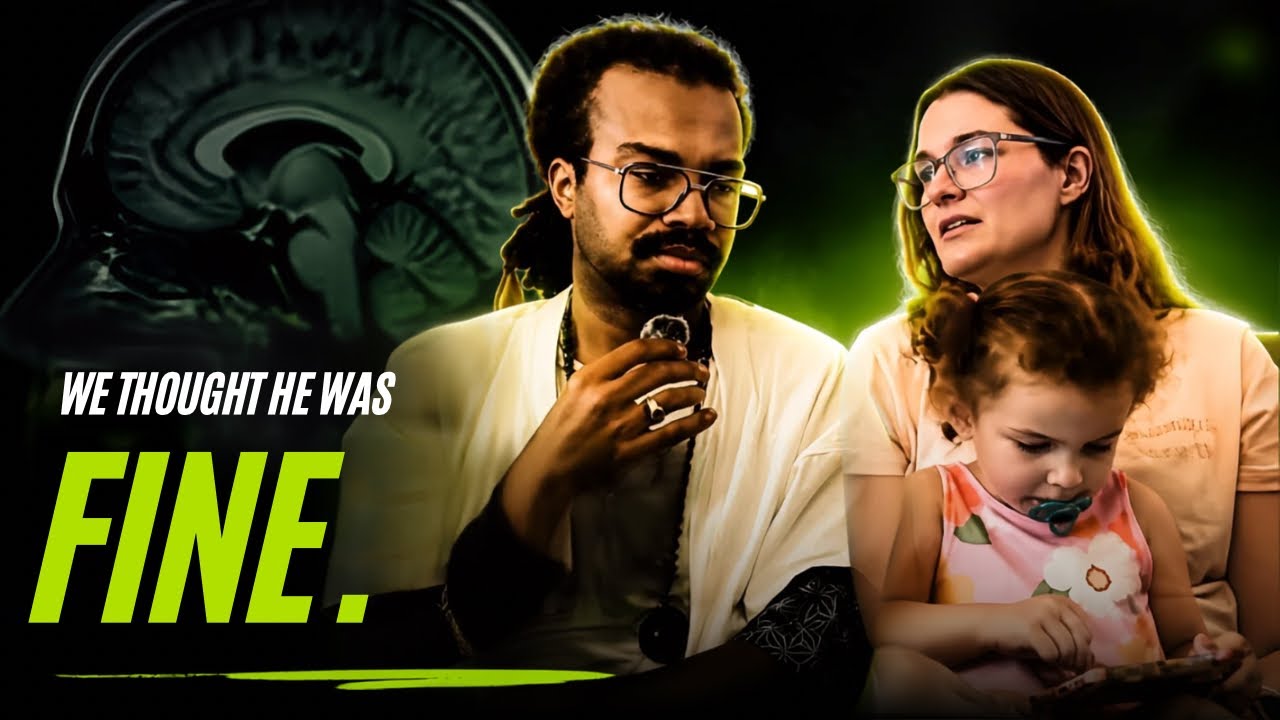
Daniel and his wife Brianna recount discovering a 1.6 cm brain tumor on an MRI after Daniel's migraines. They navigate a confusing healthcare system, find Dr. Maddox, undergo surgery, and lean on family and each other through recovery and the emotional weight of the diagnosis.
Chapters
You ready?
Uh-huh.
Okay.
Hey guys, welcome back for another episode of Beneath the Surface Podcast. Um, yeah, this one's been, uh, this one's been, uh, top of mind for me because I've been a little MIA recently. Um, so I'm back. Um, But, uh, yeah, let's dive into it. Um, just I guess for some clarity's sake and transparency, um, uh, I have my wife here, uh, Bree. Um, and I also have my daughter Haley.
Um, can you say hi?
Can you say hi to people? Can you say hi to the people? Yeah, that's my daughter. Um, yeah, but I mean We're talking about something very close to home to us. Um, yeah. So back in, I would say back in end of March, right?
It was more of the middle of March than the end of March, but yeah. Yeah.
Middle to end of March. Um, I was struggling with migraines for a long time and it was tough. Um, and. I had to go in for an MRI and that's when I found out that I had, uh, basically a benign brain tumor. Um, it was like 1.6 centimeters, I believe, of the mass. And it was just, that was the day that everything in our world kind of just slowed down. I mean, I don't know how you were feeling about everything.
I would, I would say it. Collapsed more than stopped.
Yeah.
But I don't think I was as prepared as I needed to be for everything that was about to happen.
Right.
No, I mean, I agree cuz it was just like, it was something that was definitely nothing that we were expecting or walking into. And I only went in because my neurologist told me that, hey, you have migraines, let's get this, let's get this, take a look at it and basically see if we can get to the bottom line of everything. And yeah, it was just like test after test after test after test after test. And waiting for results and all of that. And it was just, it was a lot. I mean, how was your emotional state about everything?
So when you first found out, we had just come off of, um, getting Haley baptized. So we were pretty, pretty much still on cloud nine with that. Um, I think when you initially told me that you had to go in for an MRI, I was like, okay, good. Seems pretty normal, pretty routine. Like, you know, sometimes people have to go in for scans and there's no reason for it. Um, but I, I think the thing that sticks out to me the most is like the day I heard from your sister.
Mm-hmm.
Before I heard from you.
Yeah.
And she basically was telling me, hey, I don't know if you've talked to my brother yet, but no. Um, but he has a benign brain tumor. And the minute, like, I know what, I know what benign means, but the minute I heard benign brain tumor, I think I kind of, yeah. It kind of felt like everything I, I had ever known, everything I had been, not even I had been, we had been planning for this year kind of just stopped. And I think I was like, well, what does this mean? Like, what do we do from here? How do we, how do we deal with this? Like, what, what's gonna, what's gonna happen? And I think. I think what happened with me was I kind of went down, down the what-if rabbit hole. And if you know me, like I, if I go down the what-if rabbit hole, there's no coming out of it easily.
Right.
So I think that it kind of, I mean, it obviously took me by surprise, but I also think that as, as weird as this is gonna sound, it kind of humbled me because I didn't know.
Hi.
Hi.
Hi.
I didn't know how this was gonna affect us.
Right.
I mean, like you, I think when I heard the word benign, right, everything kind of like muffled after that and it was just like, oh my God, is this cancer? Is this, this not like, would I need chemo? Will I need to do this, that, and the other? And it was just like, and then like flash forward, it was just like, I was just like thinking about all my relatives and everybody that I knew who had chemo and who went through cancer and all of that. It was just like, it was, came, came all rushing back and it was just like, crap, do I have to go through this too? Like what's, what's gonna happen next? And it was just, I was not prepared for it. And then when I guess I first got the diagnostics diagnosis, it was kind of,, it was just like, I don't know how to process everything. And it was just like, there's a lot of big medical terms and, and I'm like, I need to call someone that I know that, that maybe might familiarize myself with this or help dumb this down in like simple terms, you know, like, like—
Explain it to me like I'm 5.
Yeah, exactly. Explain it to me like I was 5. And then after that it was like, okay.
Great.
And then I was trying to retain everything. And then that's when I'm like, um, mom, like, can you explain what you explained to me to Bri? Because I'm taking this all in and I'm in complete shock at this moment and everything. And that's when my mom told my sister and my sister called you. And that's when, that was the expectation that I thought was gonna happen. I mean, And I apologize for not telling you right from the bat. It was just like, I was just in a whirlwind of like trying to process all this, like these terms and like these meanings and next steps and trying to plan for like X, Y, Z, A, B, C, all the way back to Z. And it was just like, um, hmm, I don't know what to do here and, and everything. But like after that, it was just like,, it was, it was crazy because it was like, we were planning to go to Florida, like we were packing to go to Florida.
We were packing.
Yeah. We were packing.
It wasn't even plan. It wasn't a plan. It was a packing.
Yeah. We were packing to go to Florida like a couple weeks.
Yeah.
And it was just like, we have to get these appointments ASAP.
Yeah.
Before then.
Yeah.
Because otherwise we're not gonna have time to do anything. Or we're gonna just, this is gonna be put on the back burner. And who knows, like, if this is like, at the time, if it was impacting my, my eyesight or my vision or what have you or anything.
We didn't really know anything at that point. It wasn't until your first disastrous doctor's appointment that we found out everything. And I say disastrous kind of jokingly now, cuz we can now laugh about it, but Yeah. That guy was a nightmare. No, he was an absolute nightmare.
The doctor that we had was just, um, the, the neurosurgeon, I guess, specialist that, that we had and everything. Like he, he didn't really have like the best bedside manner because it was just, he didn't have any bedside manner. Cause it was like one of those things. It was just like, he went in there, he's, he was kind of blunt about everything and he was just kind of like, and like, mind you, like And mind you, like my daughter and Bri and you were in the room, like our daughter was in the room and everything. And it was just like, and it was just like one of those things where like they were trying to figure out like, okay, so you had this benign brain tumor and we're just like, well, we were told it was a mass and it was just like, no, no rapport, no.
His exact words were, eh, brain tumor, mass, same difference. Yeah.
And it was just like, um, okay, well read the room, guy. Cuz um, we have our daughter and we have basically my wife who, who— meanwhile, you were emotional about everything.
Like I'm sitting there staring at the computer screen behind him of the photo of Daniel J. Francois, his brain.
Yeah.
And I'm like, okay, what am I looking at? And I'm thinking to myself like, Okay. He's gonna go over it. He's gonna, he's gonna explain everything that's in the MRI. He didn't touch the computer once.
Yeah.
And I'm like, okay. And then, you know, he says, your husband essentially has a benign brain tumor. And all of the, all of the color in my face just drained.
Yeah.
So I basically looked like a ghost at this point.
Yeah.
And then he looks at me. As he's talking to Danny, he looks at me and he's like, you look upset. Why are you so upset? And I'm like, how do you expect me to react? Because you just said straight-faced.
Yeah.
That my husband has a benign brain tumor. And yes, I understand that benign is not the same as malignant.
But, or even terminal.
That's what malignant means.
But yeah, no, no, but no, definitely. But like, no, I agree with you. And it's going back to that. It's just like, I get it. I respect people in the medical field. I do. But it's just like, there's a better way to go about certain things and certain, and saying things and conveying to like family members, like about life-changing things because like if you don't know or if you're not familiarized with the terms or the procedure or even like—
medical—
or medical or even the process, it's like, it's hard because it's just like, how can you jump from brain tumor? Okay.
Any questions?
Do you have this? Like, cut and dry. Like you can't do that. Like you gotta, you have to be emotional. You gotta be empathetic. You need to understand that like not everyone's gonna be reacting or basically able to pick up what you're putting down at the same rate or at the same pace. I think that's what that is.
And I mean, like, you know me, like I don't, I don't do well with here's the information. Yep. I'm not gonna hold your hand until you process all of this.
Yep.
Like, I'm not saying I have to be babied about it, but I have to be like slowly introduced to it and then supported so I can understand absolutely everything that needs to be understood.
Yep. Yeah.
And this guy was just, oh my God, he was, he was terrible. Yeah. But the PA, yeah, the PA was worse.
No.
Yeah. The PA went in before we talked to the neurosurgeon oncologist specialist, was just like, all right, well, I'm gonna ask you a couple questions, get your background, do some vitals, all of that, the whole nine, the whole workup before we talk to the neurosurgeon, just to make sure that we're comfortable and we're ready and everything. And it was just like, it went from, we're gonna ask you a whole bunch of questions to, we're only gonna ask you one question. And then I'm gonna have straight poker face throughout the rest of it and walk out of the room without any explanation, which is wild to me, which is wild because, which is wild because it's just like, how can you do that and not also convey empathetic? Because that's the premise. Like if you're seeing the PA and they're doing the workup and everything and they're doing like the, the preliminary like questions and everything, like, That sets the bar for like how the rest of the appointment's gonna be. So like if they're not empathetic, then it's like, okay, well what am I walking into and everything?
Like, do you remember, I'm not trying to change the subject here, but do you remember how Carrie was?
Yeah.
Back when I had to go through the surgery I went through a couple years ago.
Yeah.
She was there for, with me from the minute I walked in. Until the minute they put me to sleep.
Yeah.
And the last thing I remember was me reaching out for her hand cuz I was so scared.
Yep. Yep.
That's what you, that's, that's the attitude that every PA I feel like needs to have because whether it's what I went through or what it, what if it's what you went through. Yep. You're gonna be scared out of your mind.
Yep. Yeah.
I mean, to have that level of empathy is important because then it makes the process not only smoother, but it makes it more comfortable.
Yeah.
And more safe.
Yeah.
And I think that's, that's very important too. So after all of that, it was just like, and I always, and after that it was just like, Okay. So what do we do here? Like, do we do surgery? Like, do we do, like, at this point, cuz my neurologist at the time when they first saw this, they were just like, okay, well we could do medicine to try to see if we could bring it down. And I'm like, okay, medicine's the best case, but worst case surgery. So we weren't planning for surgery. We were hoping for the best case scenario. So it was hard.
But I mean, in reality, the best case scenario was for you to have it removed.
Yeah.
So, yeah, the worst case scenario would've actually been the best case scenario. The best case scenario.
Yeah.
No.
Yeah.
You're not wrong there. Cause it, when we look at it now, it was just like, yeah, that was, that was, that was the best case scenario.
Yeah.
But I just, I'm kind of glad that, um, You took that call at the office.
Yeah.
That was, I think that was Maddox's office.
I think so.
Yeah. That was Maddox's office. Yep. And, you know, you made that initial appointment with him. Yeah. Which if you hadn't taken that call.
Yeah.
And you were still dealing with the other doctor and I'm not naming the doctor cuz that's not.
Yeah, no, of course.
Okay.
No, that's not going to go there.
Yeah.
I don't think he would've gotten the same level of care.
Yep.
That you did, because how many times have we been told that the neurosurgeon that did your surgery is one of the top tier neurosurgeons? All right. Dog just fell off my lap. Um, one of the top tier neurosurgeons in our area.
I, we've been told that multiple times.
Countlessly.
I mean, even with our post-op, even with my post-op appointments. Yeah. No, definitely.
And you know, when, you know, I didn't go with you to that first initial appointment.
Mm-hmm. Mm-hmm.
Sorry, dog's biting me. Um, but you had me on FaceTime and I was so scared that You know, we were gonna be told, you know, this is it. You have to figure out X, Y, and Z and do this, that, and the other.
Mm-hmm.
The way your neurosurgeon was able to calmly explain everything.
Yeah.
Go over the images.
Yeah.
Without me being able to even see the screen.
Mm-hmm.
Um, ask questions, make sure that we were both okay. Because I don't know if he could have seen my face, but I was, I was against the wall cuz I'm just like, this is either gonna make me feel better than the first appointment or this is gonna break me.
Yeah.
And you know, I'm so glad that they suggested that second appointment because if it hadn't been for him, I would've been like, we need a second opinion, a third opinion, maybe even a fourth opinion. And by that time, I feel like it would've been so much worse than it ended up being.
Yeah.
But I mean, but when we walked in there for that appointment, we walked in there knowing that like, hey, like if this doesn't work out, when we get back from Florida, from our trip from Florida, we will find a second or third opinion.
Yeah.
So we already had that, that, um, in mind, concise decision.
Yeah.
Right. So it was just like, it was in that moment that we like, we were like, okay, if this doesn't work out, we have, we have plan B, C, D, just in case.
Yeah.
And And after that, it was just like, but after that first doc, after when we met with the, like Dr. Maddox's office, like it was just like, oh man, like, okay, this makes me feel comfortable. This makes me feel safe. This makes me feel calm and heard and everything. And like he made me feel— he stressed, he stressed our concerns and everything.
He made me feel so at ease with everything that was about to happen that I was just like, we would be crazy not to go with this second neurosurgeon.
Yeah.
Like, yeah. Are there great neurosurgeons out where we live? Absolutely. Yeah. But are they like him? No, no, no, absolutely not.
No, not at all.
So it's just, it's just one of those things that just, it's, it's a great thing that we found him when we did.
But to veer off of the diagnosis of the whole thing. Yeah. I think once after we had that first initial appointment that we both were like, no, you're, you're, you're basically fired as our neurosurgeon, X, Y, and Z. Yeah. I think, I think my anxiety kind of hit a high at that point because I didn't know what was gonna happen next. I didn't know if I needed to be, you know, on top of absolutely everything. I didn't know if I needed to make sure that you had, you know, everything that you absolutely needed and go from there. And I'm not gonna go down there cuz we didn't have to deal with that. But, um, no, but you can go ahead and say it took, it took a toll on me. Yeah. Like I, I think worst case scenario when it comes to medical situations, whether it's from me or for Haley or for you, it, it just, I just go down that scary little rabbit hole and I think it kind of got to a point where I'm just like, is he gonna come out of this? Yeah. Am I gonna have to? Oh, you know, raise her by myself. Like, what, what, what's gonna happen? Because I didn't know anything. And, you know, I've, I've been through previous surgeries before, but nothing that was like what you were about to go through. And I think I think, um, that kind of had me unprepared in a way that I was just like, what do I do? But at the same time, I said to myself, I have to keep it together. Yeah. Not only for my sake, but I have to keep it together for Haley's sake. And I have to keep it together for your sake because if I, I felt like If I fall apart, everything's going to hit the fan. Yep. And was that a smart idea looking at it now? No, but I did what I had to do.
You did what you had to do with what you were given because of the situation and everything. And I get that. And I, like you, I also went through that rabbit hole. I. I may not have vocally spoken about it up until now, but no, I went through that rabbit hole too because it was just like, oh God, um, do I need to find an attorney? Do I need to like create a will? Like, do I need to have that conversation where like if something happens, like these are my assets, these are my— this goes here, this goes there. Like, like all of that. Like I, I wasn't even, I wasn't like, I wasn't Like, I wasn't even thinking about work. I was just thinking about, like, you guys. I was just like, oh crap, like, do I have to leave them with the brunt of, like, all, like, these expenses that we have to take care of and this, that, and the other? And, and call, like, certain, like, banks and everything and, like, financial institutions and make sure that X, Y, and Z is set up accordingly and all this, that, and the other? Which, it's important to have that set up and everything at the beginning. Like, God forbid if something happens,, but it was just like something that we weren't— that was, that wasn't something that we were actively doing because we didn't think that this would've been extensive.
Hi, baby.
But yeah, so it's just, so yeah, it's just like, it's, it's, it's one of those things. It's like, it was gonna be a tough conversation to have, and I knew that we were gonna need to have it eventually. But that's what I thought about that conversation was eventually.
So that's— I mean, it definitely got me thinking, you know, I'm 33 years old. Well, at the time I was 32 years old, but do I have to, do we have to set up an appointment with, like you said, with an attorney that, you know, we basically lay it out and say, this goes here, this goes there, Haley gets X, Y, and Z and situate it. But I'm just like, I don't wanna, I didn't, I didn't wanna go down that rabbit hole because I was emotional enough as it was. Mm-hmm. And I'm not gonna lie about it. Like there were nights that I literally, it was either I couldn't sleep, so I would be staying up all night. Mm-hmm. Or I would literally cry myself to sleep because I was so scared about what was about to happen.
Yeah.
And then fast forward, it's like, how do we proceed with everything that we've been given up until this point? And they go to Florida, like, and then act like nothing happened.
Exactly.
Like, we're cool. It's like, it's like our friends come up to us, how are you? Fine. Why is your eye twitching? What are you talking about? I don't know what you're talking about. Like, I'm totally fine.
Yeah. No, definitely. 'Cause it's like, how, how do we pretend like that's normal? Like this is like a normal conversation. Like, like do we just tell them like the truth? Do we just like, oh yeah, nonchalant. Oh, I have a benign brain tumor. No big deal. Going through surgery in a couple months. No big deal. And it's just like, wait, what?
Like, huh?
I think I, I honestly think that our trip to Florida was absolutely needed.
Of course.
Yeah.
But I also think that the fact that we got to bring home Peaches. And for those of you that don't know, um, we now have a dog.
The dog that basically Bri was holding earlier, Peaches.
Yeah.
This one. Yeah. Yeah. Um, um, so I think bringing her home was kind of, I, I felt like it was kind of God's way of saying, yes, you're gonna go through this path and it's gonna be absolutely terrifying, but you guys are gonna be fine. Yeah. You're gonna get through this. And it took me a very, very, very long time to kind of accept that, accept the fact that You were gonna go through surgery except the fact that this was going to happen and there was nothing I could do that was gonna change it. Mm-hmm. Um, but I, you know, I'm still dealing with every single emotion that I put on the back burner. Right. Because I was so mm-hmm. I was honestly so scared that I was gonna lose you that I needed to figure out like how to hold it together for Haley.
Yeah.
Because she's like, thank goodness that this happened when she was 2 and not when she was 7, because how do you explain that? How do you explain an adult situation?
Mm-hmm.
To a 7-year-old.
Yep.
That's not going to scare them.
Mm-hmm.
Into thinking. I'm never gonna see my dad again.
Yeah.
Like, or, you know, if it's, if it's your dad, if it's your mom, if it's your sister, if it's whoever, any family member, how do you explain that to a 7-year-old and not scare them?
Yep.
So I'm kind of glad it happened when it did because she, this little one is so like observant. Yeah. But she doesn't understand everything yet. Right. Right. So it kind of, that part kind of just gave me a little bit of relief because I'm just like, I don't have to figure out, you know, I don't have to sit her down and be like, hey, daddy's not gonna be home for 24 hours.
Mm-hmm.
And then, you know, deal with all the why.
Yep.
And then, you know, you know how the why questions go.
Yeah. The why phases.
Yeah.
Yeah. But going back to what you were saying about like how you feel like God put Peaches in front of us, um, I agree. And I think also, like, not to be— not to make this super religious, but like, it's like God puts things in our paths to test us. And I think this was like another testament that like, as long as we got each other and we and we hold down the— and we hold our faith strong and we basically lean on one another, like through the thick and thin of everything, I think we can get through this. And this is just like a testament to show that like, if we can get through this, we can get through anything.
I mean, honestly, like look at what's happened to us before this. I mean, like we've, we've been through a lot. Hell and back.
Yeah.
At this point.
Yeah.
And we've only, we've only been married for 5 years.
Yeah.
So it's like, I don't want us to think, you know, this is gonna keep happening and like events like this are gonna keep repeating themselves. Like I, that's not how this is about to go, but it's like, you know, the way things were presented to us, we kind of just had to like, deal with it.
Yeah.
We had to rip off, rip off the bandaid cuz there's no easy way to say this. We just had to deal with it. I had to deal with that. I had to deal with, and you have, you've had to deal with this. Mm-hmm. And like now it's, you know, it's annoying having to drive an hour and a half to 2 hours up the island. Yeah. Because they can't find a closer office for us to go to for, you know, you know, your nose cleanings and your appointments and all of this. But we're through the worst.
Yeah.
At this point, this, this, this is, this is nothing compared to what April was like and what May was like and even what June was like.
Yeah. Like, yeah.
But like, I don't know. I just.
But like after those, like, like it was like one by one as we were prepping for surgery in June, but also like trying to enjoy our vacation. It was like, it's like it became, it was becoming closer and closer to being real and everything. And it was just like nerve-wracking because it was just like, all right, well, we got one appointment down. We got like 6 more to go. And it was just like, and it was just like nerve-wracking. It was nerve— I was nervous. I was just like, holy crap, we're coming down the wire. Like, this is like, this is sooner. It's coming sooner than later. And like, what do we do? Like, it's kind of like that moment when like I was skydiving. It's like, do I— can I tell him like, hey, can you turn the plane around? Like, can I—
can we land the plane?
Can we postpone the surgery like a little bit longer, please? And it's just like, nope. Like, we're already down this journey. And everything, I already talked to my job and they're on board and they're gonna support me any way that I can. But it's just like, I just had to keep telling myself like, this is good. We're doing the right decision. This is like, we, we need to get this done like this, that, and the other. And then after a while it was just like, down. And after a while it was just like, it was just like trying to figure out like what, like what, like what are the next steps and everything. But like, it was. It was a lot. And then surgery day came around and it was just like, oh God.
Okay.
So we're actually gonna do this. Shout out. I mean, shout out to my mom who, who came out like 2 weeks prior or the, the 2 weeks leading up.
A week before surgery.
A week before. Yeah. But 2 weeks of total care of helping us through everything and navigating through that. It was just like, it was great. It was great.
In a minute.
Okay.
It was great. And it was just like, if we didn't have that help, we would've been scrambling and we would've been, it would've been like 10 times more nerve-wracking.
So, I mean, yes, I agree with you. I definitely agree with you. I also think that having her sit with me for the 12 hours we were at the hospital.
Yeah.
Helped because I don't know how much you know, but when you, you came out of, you came out of surgery almost around, I think 4:30. And you know, I got a phone call from Dr. Maddock and he said, you know, he, he did great and he's waking up from surgery and Mm-hmm. You'll be able to see him soon. So I was like, great, that's fantastic. Thank you for letting me know. And thank you for doing all that you've done for my husband. Like, yeah, that was great. That was at 4:30, right? Yep. And I was expecting to hear from the nurse within the next 20 to 30 minutes.
Mm-hmm.
Your mom and I sat downstairs.
Mm-hmm.
In that waiting room for an additional 3 hours.
Oh wow.
And we weren't told a thing.
No, I, I, I wasn't told anything.
So by 7:15-ish, your mom and I, your, well, not even me, but your mom was like, let's go upstairs. And I was like, but they told us that we can't go upstairs. I'm, I'm, I'm thinking I'm gonna sit down here until I hear something. Like, I'm not gonna, I'm not gonna go up there and get yelled at cuz I saw it happen. Before you even went back for surgery.
Yeah.
Your mom was like, nope, we're going upstairs.
I was like, okey dokey. Yeah. My mom is one of those people. She's like, she's definitely like a go-getter. She's like, she doesn't deal with BS easy. So she's just like, oh, all right, soon. 3 minutes later, let's go now.
Like, so, so we, we go upstairs, we go, we go up the elevator, we go and we're in the same waiting room you were in earlier that morning. There's nobody there.
A lot.
Whole waiting room is empty. Nobody's there. So we sit, we sit down for like 5 minutes. Mm-hmm. And then, and then your mom was like, nope, we're gonna, we're gonna figure out what's going on. So your mom and I get up and we go, we, we, we go towards the door that they told me to go to.
Yeah.
I rang the doorbell and there's like, who are you here to see? And I said, Daniel J. Francois.
Yeah.
And they're like, he's not, he's not ready for visitors yet. And I was like, what are you talking about? Like, he's been up here for 3 hours. I've been waiting in the lobby for 3 hours.
Like, mm-hmm.
I haven't been told a thing.
Yeah.
I heard from his doctor like almost 4 hours ago. What the heck is going on? And then they had somebody come out and they're like, So the nurse that is gonna handle your husband is on break. And I'm like, okay.
There should have been like proper handoff or something.
Okay. And I'm like, okay, so what do I do? And she's like, go back. Did, were you, did you, were you upstairs already or were you downstairs? And I said, we came from downstairs. And she's like, go back to the waiting room upstairs.
Mm-hmm.
So we just had to walk a couple feet, whatever. And somebody will be in contact with you. So I, I was like, okay, fine. Thank you. I turn around, right?
Mm-hmm.
I'm walking back to the waiting room.
Mm-hmm.
Not even 5 minutes had gone by.
Mm-hmm.
And I get a phone call from your nurse, the one that was on break, the one that was on break. Okay. That said, hey, this is the nurse for, for Daniel J. Francois. And I was like, cool. Like, hi, like what, what, what can you tell me? This, that, and the other. Mm-hmm. And she was like, first of all, I wanted to apologize because I was on lunch when he came back from surgery, so I didn't get a chance to call you and tell you. I was like, okay.
I mean, at least they were apologetic about that.
But, but, but tell me now, tell me more now. Um, and she's like, and then she goes, mm-hmm. And then she goes, Mm-hmm. So I, we know you wanna see him, but we don't wanna kick you out. Mm-hmm. After seeing him for 5 minutes because he needs a CT scan. And I went, in my head I went, what do you mean he needs a CT scan? Which is why they never, they never told me anything about a CT scan.
Like, no.
Dr. Paddock never said anything. Hey, he's gonna need a CT scan and a follow-up MRI after surgery.
Mm-hmm.
Why?
You, he just came out of a 4-hour brain surgery. Like, leave him alone. Like, I never, I would never say any of this.
No, no, no.
I, yeah, yeah, yeah.
But I was, I was, this was what was going through my head. And she's like, it should only take 5 or 10 minutes and then I'll call you. 7:30. That was at 7:30, right?
Mm-hmm.
Hang up. And your mom and I are still waiting in the lobby, right?
Mm-hmm.
8:15.
Oh my God.
She calls and she says, hey, so he's in the neuro ICU. I was like, okay, where is that? And she goes, so it's in another section of the hospital. And I said, it's not on the 4th floor. And she goes, No. And I'm like, I wasn't told any of this. I was told, you know, he's gonna go from surgery to, to recovery on the same floor in the same section of the hospital.
Right.
Nobody told me he was gonna be in the neuro ICU. Nobody told me any of this. And I'm just, I'm sitting there and that's when my anxiety hit cuz I'm just like, what's going on? Like, why have I not been told anything? Like, right. Why is the communication so hard to be given at this hospital? Like I had to call and call and call and wait and call and wait. And I'm like, what if you were in a more serious situation?
Yep.
Then what would've happened? Like, I, I, I need to know all of these things.
Yep.
Like, I don't recollect, I don't remem— I don't remember any of this. All I remember, all I remember, all I remember is that, all I remember is that like I went in, I was walking in towards the operation table. It was cold. It was dark. It was, it was empty.
In an OR, like.
Yeah.
It was an OR, like.
Yeah. And then lay down on the table and then I shut my eyes and then I woke, when I woke up, I was just laying there in recovery. And then basically they were doing like all these like nerve testings to make sure that like like I was moving, I was able to like move my feet, move my hands, gra— like basically like have a grip on everything. Like making sure like that, like everything was working properly and everything that they, they didn't do any lasting damage or what have you. But that's all I remember. Like I, I don't remember, like I don't, I didn't know all that you and my mom went through till I—
I'm not done. I'm not done. Um, So we go downstairs and we ask the security guard, who is very, very nice by the way. Mm-hmm. And we're like, how do we get to the neuro ICU? And he goes, go to the front. You need new passes.
Mm-hmm.
Do this, do that. So we do that.
Mm-hmm.
We go to the front, we give our old passes, we, and then we get new passes.
Mm-hmm.
Your mom and I got lost twice.
Oh my God.
Getting to the neuro ICU. Um, So, but we finally found it after we walked into the cardiac part of the hospital.
Oh, okay.
So we went, we made a left instead of going straight and we went into the cardiac part of the hospital where, you know, people are hooked up to heart monitors and people are like, you know, coming out of open heart surgery and like bypass surgery and all of this, that, and the other. And I'm just like, Where's my husband? And they're like, who, who are you here for? And I was like, Daniel J. Francois. And they're like, you know, they look it up on the computer and they're like, he's not here. And I said, what do you mean?
Yeah. So is that, and then instead of brain you went to, all right, well we're gonna go down a level to heart.
Yeah. So, yeah.
It's like, God forbid I wasn't there and it's just like, all right, we're gonna, I guess we're gonna go from heart to like foot or something, or knee or something like. Head, shoulder, knees, and toes kind of thing. Like, what's going on?
Go to the DBT apartment.
Like, what?
No, but then I explained it to them and they were like, oh, and they literally walked around the desk and they're like, come on. So we walked like a couple, you know, feet back and they're like, you want that door? I was like, oh. But, um.
It's like when you go to Bed Bath and Beyond, it's like, I went to the beyond section instead of the bath section.
Classy, baby.
It's like, this is not what I wanted. This is not where I wanted to go.
No, but, um, you know, once we got back there, I kind of, it kind of brought me back to, um, seeing my grandfather the 2 days before he passed away, because you were hooked up to a, you know, you were hooked up to oxygen. You had. You know, the tubes in your nose and stuff like that. Mm-hmm. And I kind of just stopped in my tracks and I'm like, that, that's not, that's not him. Like there's no, how is that him? Like they, they, they just did, they just, basically what we were told, we were told like he was gonna get a nose job. You had oxygen, you had, you know, the tubes in your nose, you, you were hooked up to you know, heart monitors. And I was just like, what? What happened to him? And, and I just, I like, I tried to, I tried to, I, I'd bought you a bear.
Yeah, I have it somewhere.
I bought you a bear and I tried to give it to you and you're just like, you were not, I was not expecting you to not be out of anesthesia yet.
Mm-hmm.
Because I've only ever dealt with. How I've been out of anesthesia, you know, I'll wake up and I'll be a little groggy, but I'll be with it. I'll be like aware. I'll be like, yeah, I'm here. This happened. Blah, blah, blah, blah, blah. You were out of it.
Yeah.
And I was just like, what do I do? And then, you know, we stayed for maybe an hour to an hour and a half. And then your neuro team was Phenomenal. Right before your mom and I left, your neuro team came back and they said, we're gonna do a neuro exam. Oh, before I get to that, you couldn't, you were having issues breathing out of your mouth.
Yep.
Because I kept watching the screen and it kept going apnea.
Oh.
And I'm like, what does that mean? Because all the machines are like beeping. Like, you know how like the, the machine, like the— when I was pregnant with Haley and I was in triage because of all the falls I had to go through, how the, how the machines would kind of beep because my blood pressure would kind of like spike. That's what would happen, but it wouldn't be for blood pressure. It would be because you, you couldn't breathe. And then your nurses would come over and be like, hey, Hey, hey. And you were really, yeah. And I was like, is that normal? And they're like, yeah, he's, he's fine. You just gotta shake him out of it. And I'm like, okay. And that happened like 4 extra times. And I was like, hey, wake up. Uh, but, um, yeah, you, you were having issues breathing out of your mouth cuz you were so used to breathing outta your nose and they had your nose so packed. Like it was, it was an issue. But, um, yeah, your neuro team came over and they woke you up and they're like, what's your name? You gave them your name. What's your birthday? You gave them your birthday. You said, and they said, where are you? You gave, you said you knew where you were. And then they looked at me.
That I faintly remember.
Yeah.
And they're like, he can go home tomorrow. And I went, everything I was feeling from that day, from the anxiety to the panic, to the lack of communication, all of that, like, it felt like it all came off of my shoulders and I could finally breathe.
Mm-hmm.
Because I thought you would have to be in the hospital for 3 days.
Yeah.
Because of how knocked out you were. So your mom and I left.
Yeah.
And, uh, we got home and Haley was ready to knock out. And I was scared about that because, you know, my history with putting Haley to bed has not been great.
But the fact that you were able to do all that you were doing and you still came back, like how you were feeling and everything, and then you still came back home and you were able to like, prioritize like Haley's well-being and like you were able to like hold down the fort, quote unquote, hold down the fort as if you will, like while I was gone. Like that, that's phenomenal. And I don't give you enough credit for that. But like that, like you, like you were a superhero in that moment and, and you definitely deserve your flowers because like, like honestly, because I know if the roles were reversed, I would just be freaking out. I would just be like every 10, every 5, 10 minutes I'm like, "Mom, what to do?
I don't know what to do." This, that, and the other. Basically I'm the glue.
Yes.
That's basically what we're saying.
Yeah.
Oh no, definitely. I mean, it's on camera and everything. Yeah. We're, yeah, you were basically the glue and it was just, it was just like, it was one of those moments. It was just like, I don't, I don't know. Like it was just, it was just like one, it was just like one of those moments. It was just like, I, I just had this like newfound respect for you cuz I'm just like, like when the going gets tough, Brie goes down swinging and she's definitely able to knock down those doors and knock down, um, those obstacles that like basically that we were struggling with. So like, I, I definitely appreciate you and I definitely like look at you in a different light and everything. So thank you.
I just did what I had to do for her because She didn't know anything. She, so when I got home, she was like, dada. And she, she was just like looking for you. She didn't, she didn't really cry. She cried a little.
Mm-hmm.
When she realized that it was just me and your mom. Mm-hmm. But Leslie had her so tired out. Mm-hmm. Because Leslie, my dad and Leslie watched her that entire day. Mm-hmm. The, you know, the, yeah, almost 15 hours we were gone.
Yeah.
I've never seen this girl get into bed and immediately fall asleep.
Yeah.
I've seen that maybe happen once when she was maybe 4 or 5 months old. She goes down swinging every single night.
Not to mention the time that like she basically cried herself to sleep when We put her to sleep. Yeah.
I don't wanna talk about that. That, that, uh, no. Yeah. Um, but you know, I don't think I could've, you know, staying away from her for that long. It's hard because it's like, I hold you together. Yeah. But she, she makes sure that I don't fall apart. Like I, I, without Haley, I kind of just. I don't know what to do with myself. And like, I was, you know, I'm fortunate enough that my parents really just stepped up and made sure that, you know, they could do what they, they could to make sure that I didn't have to worry about Haley. Cause, you know, up until September of this year, she's going to start preschool and she's You know, I, there's nobody really, nobody else to really watch her. But, you know, luckily for you, you had surgery in June and not in July.
Yeah.
Cause you know how busy their schedules get in July and it's like, it's crazy.
Can you see? Yeah.
But like fast forward to like after the procedure and everything, like Stop biting. Like we're doing like, we're doing like post-op appointments and everything. And it's just like, stop biting. And like, we're at the tail end of everything. And it just, it just, it definitely reassures us that like we, stop biting, that we made the right decision with like surgery and, and like going through like the hoops, the many hoops that we jumped through. And the fact that like we had so many people willing to basically do all hands on deck. Like, it's just, it shows, that speaks volumes. And it shows like how, not only like how like important we are to other people, but how like if we need to lean on other people, they will be there for us one way or another. So I think that's very important too. I mean, I mean, I don't know like about you, but like one self thing that like, that kind of, that I kind of like been thinking about, like after everything is just like listening to your body and just like, and it just tells me that like, hey, like don't procrastinate. Like one thing that I learned is like, don't procrastinate on getting the help that you need because. One, it could always be worse. And two, you don't know what all that entails until you dive into it.
You also realize you're not invincible.
Yeah.
You're, you're still here.
Right.
Good. You know, like when we found out, when we found out we were pregnant for the first time in 2022.
Mm-hmm.
It did. It was like the day I found out.
Mm-hmm.
I don't know what it was, but something stopped me from being really excited and really, really happy and like really ready to step into the role of mom and dad. And I didn't know what it was. And like that first, that first OB appointment we had, and I was like telling them everything I was going through and they kind of just brushed it aside.
Mm-hmm.
I was like, no, something, something's not right about this. Like something feels, something doesn't feel normal.
Right.
And then we found out what we found out and I'm like, and I was like, I knew something was wrong, but I didn't think it was gonna be to the extent that it was.
Yeah, no, definitely.
But, but, but like with everything that, that with, with, with what we dealt with there, like, yeah, the, the, the bedside manner was definitely not there at the office, but I knew something was wrong.
Yeah.
And you know, I would've gone down swinging if they basically said, if like, if they hadn't done what they did and they hadn't found what they had found, I would've gone down swinging and I would've said, no, there's something going on and you guys need to figure it out.
So in turn, you did what I did now, which is listen to your body and been like, and advocated for yourself and advocated for your health and basically Even if it would've made you look like a bad guy, you're like, no, no, no, no, no, no. We need to do more testing.
Yeah.
Right here, right now.
It needs to be figured out today. Exactly. Because it, you know, God forbid they hadn't found what they had found.
Mm-hmm.
That, that could have killed me.
Yeah.
Honest. And I hate to say it cuz this is, this is gonna be on the internet, but yeah.
No, no, but no, that could have killed me.
Yeah.
Like. It, it's like yours wasn't as severe and life-threatening as mine was.
The base of your throat.
But you know, you need to trust. That's, that's, that's what I think of when I hear trust your gut.
Mm-hmm.
Because you know if something's wrong, you know that it's that it's wrong.
Yeah. Yeah.
Cause like, you know, when I got pregnant with Haley, I was so excited.
Yeah.
I was like, oh my God, like, this is the best day ever. And—
Cause you trust your gut and you know, and this was a different—
And I was like, but it took me a while to feel, to realize, you know, I knew that everything was okay before I knew anything.
Yeah.
Versus I knew something was wrong from the minute I found out. Yeah. So trust your gut, people.
Please.
And advocate for yourself. Like if, if like the doctors are not advocating for you or anything like, or whatever you do, like just advocate for yourself.
You saying hi?
You're your best critic. You're your best critic. And you're also, and also you're, you're your worst, you're your worst critic, but you're also your best. Um, cheerleader. So I would say, yeah, so definitely. But no, I mean, aside from that, I mean, because I know like we just poured a lot of emotion into everything, but I mean, this was good. I mean, we finally got a lot off of our chest and, and everything about with everything with the surgery and just moving forward and, and know that like I'm continuously making strides and, and doctor appointments have been very phenomenal so far. And people have been, and all the doctors and nurses have been saying like, they got it all out. There's no sign of it coming back.
It didn't even, it didn't get near your optic nerves, which is phenomenal because a lot of the times that's what happens, but it was kind of rare that it happened to somebody as young as you. Yep.
Yep.
But it is like, I did Google it a lot once we found out and—
Yeah, I was scared to Google it, to be honest with you.
I was too, but I still did it. Okay. But it's more common in men than it is in women. Okay. I didn't know that.
Okay.
Like it can happen to women too, but it happens more so to men than it does to women. Yeah.
Okay.
At a, at a decreasing rate versus—
Yeah.
Okay. But it doesn't usually happen this young.
Mm-hmm.
It usually happens, you know, when you're in your 70s and 80s and Yeah.
Like when the doctor said that basically he had to do it with a person that was like in their 80s or what have you.
Yeah.
No, but this was good. I mean, I appreciate you, uh, like just being there with me through everything and helping me understand your side of everything. Cuz like I said, like I only know the appointments, the diagnostics. Walking into that OR.
And then waking up in that room over there.
Waking up in the bedroom and just basically recovering. No, I mean, just thank you. Just no, but I, I just can't thank you enough for all that you did.
In a few minutes, Haley.
I think Haley's trying to tell us that our time is up, unfortunately. But this won't, but this won't be, this won't be the only time, but this won't be the only conversation that we have together.
I will get it for you in a second, baby.
Yeah, but, um, this won't be the, this won't be the only conversation that we have because we have plenty of more to, to dive deep into and talk about.
But you guys can't get rid of me that easily.
No, but I'm pretty sure everyone out there listening, watching, what have you, is glad to, uh, to know that you're real and that you're I'm not a figment of his imagination.
Woo!
But yeah, no, um, but no, thanks for, uh, joining us, um, on a very special episode of the pod where we talk about where I've been and everything, kind of just everything that's been happening to us so far. So we just like to keep the transparency, uh, there and everything. So I do So yeah, but that's it from us. Uh, we're signing off and, uh, yeah, thanks so much. I appreciate it.
Haley, can you say bye?
Haley, can you say bye?
Say bye.
Bye bye. All right.
Thanks guys. And tune in for the next episode.
More from Daniel





Beneath The Surface Podcast -Ep. 8- The Stage We Set for Each Other (feat. Alexis Garcia)